Thailand Currency (Thai Baht, THB): Denominations, Exchange, Rates, and How to Pay
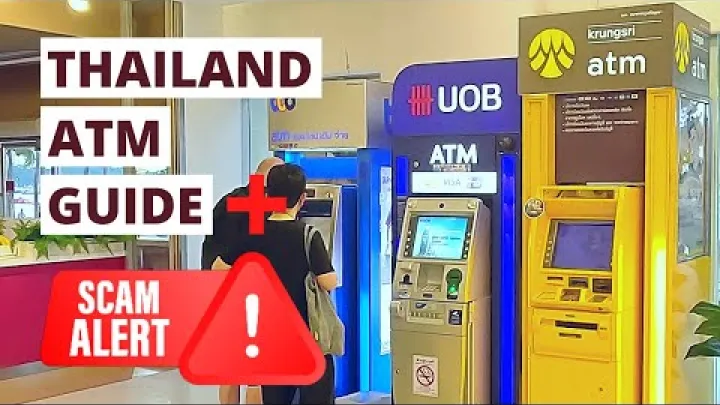
The currency of Thailand is the Thai baht, written with the symbol ฿ and the code THB. Understanding denominations, exchange options, ATM fees, and digital payments helps you get fair rates and avoid unnecessary costs. This guide explains how the baht works, where to exchange money, and the best ways to pay across Thailand.
Quick answer: what is the currency of Thailand?
Symbols and codes (฿, THB)
The currency of Thailand is the Thai baht. You will see it shown as the symbol ฿ and the three‑letter ISO code THB. One baht equals 100 satang. In shops, menus, and ticket machines, amounts are commonly written as ฿1,000 or THB 1,000, and both formats are widely understood.
In major cities and tourist areas, the baht symbol is usually placed before the number (for example, ฿250). Receipts, hotel folios, and airline websites often display the code format (for example, THB 250), sometimes with the code either before or after the number depending on the system. Regardless of format, prices and payments are set and settled in Thai baht within Thailand.
Who issues the baht (Bank of Thailand)
The Bank of Thailand is the central bank that issues banknotes, maintains monetary policy, and oversees payment systems. Coins are produced by the Royal Thai Mint under the Treasury Department. All baht notes and coins are legal tender throughout the Kingdom of Thailand and circulate together, even when different series are in use at the same time.
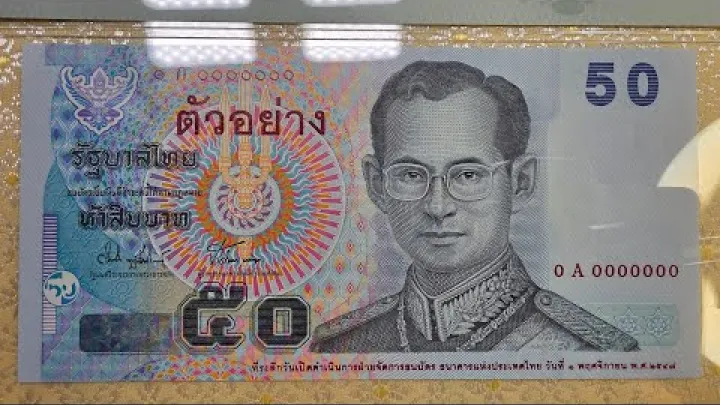
For travelers, recent series feature the current monarch and updated security features. Thailand introduced the 17th banknote series in 2018, and subsequent updates have included a polymer ฿20 note released to improve durability in high-circulation denominations. Commemorative notes are occasionally issued for national events and are legal tender, though many people keep them as souvenirs; you may encounter special designs in circulation along with the standard notes.
Denominations at a glance (notes and coins)
Banknotes: 20, 50, 100, 500, 1,000 baht
Thai banknotes most commonly come in ฿20 (green), ฿50 (blue), ฿100 (red), ฿500 (purple), and ฿1,000 (brown). Sizes generally increase with value, which makes sorting easy by touch and sight. Current designs feature the reigning monarch along with landmarks and cultural motifs on the reverse.
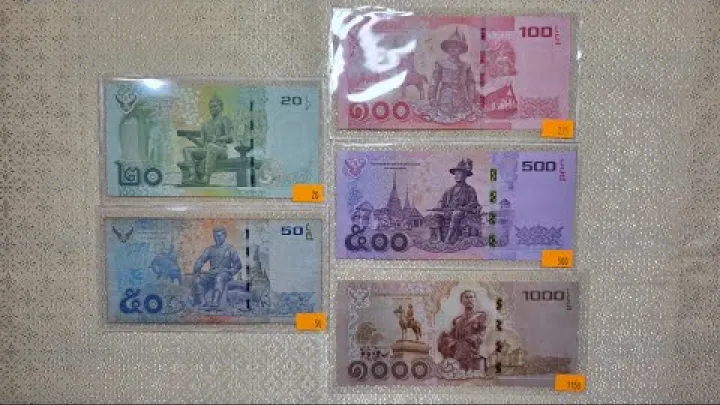
For everyday purchases, especially taxis, markets, and small food stalls, it is practical to carry small notes. While ฿500 and ฿1,000 banknotes are widely accepted, some small vendors may not have enough change or may ask for a smaller bill. ATMs often dispense large notes, so consider breaking them at convenience stores, supermarkets, or transit stations where change is easier to provide.
Thailand has adopted polymer for the ฿20 note to improve durability and cleanliness, while other denominations remain on paper substrates in recent series. You may encounter multiple series in circulation at the same time; all are valid. If a note is damaged, banks can usually exchange it if the required portion is intact.
| Note | Primary color | Notes for travelers |
|---|---|---|
| ฿20 | Green (polymer in recent issues) | Useful for small purchases and transit |
| ฿50 | Blue | Common change from convenience stores |
| ฿100 | Red | Handy for restaurants and taxis |
| ฿500 | Purple | Accepted widely; may be harder to break at small stalls |
| ฿1,000 | Brown | Often dispensed by ATMs; break at larger shops |
Coins: 50 satang, 1, 2, 5, 10 baht
Circulating coins include 50 satang (half a baht) and ฿1, ฿2, ฿5, and ฿10. The ฿10 coin is bimetallic with a distinct two-tone design, making it easy to identify. ฿1 and ฿2 coins can look similar at a glance, so check the numerals on the reverse to avoid confusion when paying quickly at busy counters.

In everyday city transactions, satang coins are uncommon and many amounts are rounded to the nearest baht. However, large supermarkets, convenience stores, and some transit kiosks may still issue or accept satang, particularly for prices ending in 0.50. If you prefer not to carry small change, you can round up your payment or leave satang as part of small charity boxes commonly found at checkout.
Security features you can check (feel, look, tilt)
Feel: Genuine Thai banknotes have raised intaglio printing, especially on the portrait, numerals, and some text. The surface should feel crisp and slightly textured, not waxy or limp. On polymer notes, you will still feel distinct ink textures, even though the substrate is smooth.
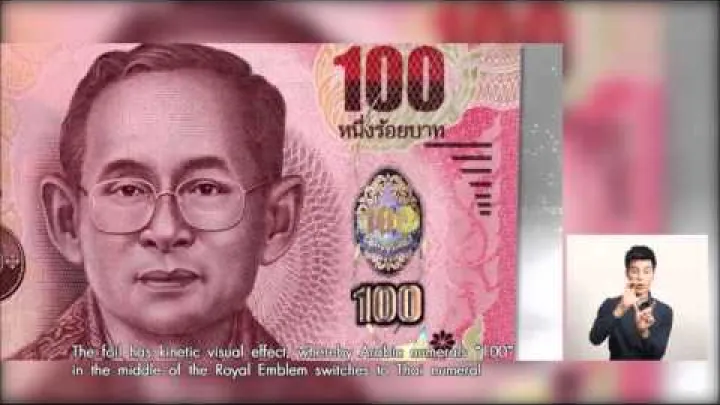
Look: Hold the note up to the light to see a clear watermark portrait, a see‑through register that forms a complete design, and fine microtext around key motifs. Serial numbers should be even and well-aligned. Any blurry edges, flat colors, or missing elements are warning signs.
Tilt: Higher-value notes show color‑shifting ink on numerals or patches and a visible security thread that may shift or show text when tilted. Iridescent bands or latent images may appear from certain angles. For the latest details, travelers can consult public education pages from the Bank of Thailand, which provide up‑to‑date visuals and explanations of each series.
Converting THB: THB↔USD, INR, PKR, GBP, AUD, CAD, PHP, NGN
How to check live rates and calculate quickly
When converting Thailand currency to USD, INR, PKR, GBP, AUD, CAD, PHP, or NGN, start by checking the mid‑market rate. This is the “real” rate you see on global currency trackers, before banks or exchangers add their spread. Your effective rate will include that spread and any fixed fees, so it will be slightly worse than the mid‑market figure.
Build a quick mental anchor for your trip. For example, decide what ฿100 roughly equals in your home currency so you can estimate prices without constant lookups. This approach keeps you grounded when shopping, tipping, or negotiating fares, even if exact live quotes are not available.
- Step 1: Check the mid‑market THB rate for your currency using a reputable source or your bank’s app.
- Step 2: Identify your card’s foreign transaction fee, the ATM operator fee, and any exchange counter fees or spreads.
- Step 3: Estimate your effective rate by adding the spread and fixed charges to the mid‑market rate.
- Step 4: Do a sample calculation for a typical amount (for example, ฿1,000 and ฿10,000) to see the fee impact.
- Step 5: Set alerts or reminders to recheck rates before large exchanges or withdrawals.
If you plan frequent conversions such as “Thailand currency to INR” or “Thailand currency to USD,” save your preferred calculator in your phone. Rechecking before big purchases helps you avoid surprises on your statement.
Tips for conversions without hidden fees
To avoid hidden costs, always pay or withdraw in THB and decline dynamic currency conversion (DCC) at ATMs and card terminals. Compare buy/sell rates at a few licensed counters on the same day; even small differences can add up on larger exchanges. Watch the spread between the buy and sell rates rather than only the headline figure.
Minimize fixed ATM fees—commonly around 200–220 THB per withdrawal—by making fewer, larger withdrawals within safe limits. For example, a 220 THB fee on a 2,000 THB withdrawal equals about 11% in fees, while the same 220 THB on a 20,000 THB withdrawal is roughly 1.1%. Balance this with personal safety, daily card limits, and how much cash you actually need. Consider using a card that refunds international ATM fees, if your bank offers it.
Where to exchange money in Thailand
Airports vs banks vs licensed exchange counters
Airports are open long hours and are convenient on arrival, but their exchange rates often include a wider spread than what you will find in city centers. If you need immediate cash for transport, exchange only a small amount at the airport and seek better rates later. Many terminals have multiple counters, so you can still compare boards quickly before committing.

Banks provide reliable service and standardized rates. You will be asked for your passport due to anti‑money‑laundering rules. Business hours vary: bank branches in office districts often follow weekday hours, while bank outlets inside malls commonly open later and on weekends. Licensed exchange counters in downtown areas typically offer the most competitive rates; they post transparent boards and handle a wide range of currencies with minimal fuss.
Typical ID requirements include your passport for exchanges and sometimes a hotel address or contact number. As a practical rule, keep your passport and entry stamp or a high‑quality copy handy when exchanging money at banks or formal counters.
Popular licensed exchangers and how to compare rates
Well‑known licensed exchangers include SuperRich Thailand, SuperRich 1965, Vasu Exchange, and Siam Exchange. In Bangkok’s central districts and major transit hubs, you often find several competitors within walking distance, which makes it easy to compare posted rates and service speed.
![Preview image for the video "[Bangkok Talk] Top 5 Money Exchange in Bangkok SEP 2022".](/sites/default/files/styles/media_720x405/public/oembed_thumbnails/2025-10/MhTfMG8iknh8KSVuvPI3_i3XQznySkJoBLr758STXX4.jpg.webp?itok=ZFqrU2s9 "Preview image for the video \"[Bangkok Talk] Top 5 Money Exchange in Bangkok SEP 2022\".")
When comparing, focus on the “you receive” amount after all fees, not just the board rate. Ask about any minimum amounts, per‑transaction fees, or conditions that may not be obvious on the display. If you plan to convert Thailand currency to INR, USD, GBP, AUD, CAD, PKR, PHP, or NGN, check each counter’s specific buy/sell lines for your currency because spreads differ by currency pair and stock on hand.
Safety, receipts, and counting cash
Count your cash at the counter under the camera before leaving and request a printed receipt. This protects both you and the cashier. Keep a neat stack, verify denominations, and put money away discreetly before stepping into the street.
Avoid unlicensed street exchangers and pop‑up offers. If you discover a discrepancy after leaving, return to the counter immediately with your receipt; most reputable counters will review CCTV and till records. If you cannot return the same day, contact the branch using the details on the receipt and document what happened as soon as possible.
Cards, ATMs, and digital payments
Typical ATM fees and withdrawal strategies
Most Thai ATMs charge a fixed fee to foreign cards, commonly around 200–220 THB per withdrawal. The machine will display the fee and ask for confirmation before dispensing cash. Per‑transaction limits are usually in the 20,000–30,000 THB range, though exact options depend on the bank, the ATM, and your card’s own limits.

Plan fewer, larger withdrawals to dilute fixed fees while balancing personal security and daily spending needs. Before traveling, check your home bank’s international ATM policy, including foreign transaction fees, network partnerships (for example, Visa Plus or Mastercard Cirrus), and any fee reimbursements your bank may offer. Always decline DCC at the ATM and choose to be charged in THB.
Credit/debit card acceptance and DCC warnings
Small vendors, local markets, and some taxis remain cash‑first, so carry small notes for flexibility. Some merchants add a surcharge for card payments; check the receipt or ask before authorizing.

Beware of dynamic currency conversion. A terminal may ask, “Charge in your home currency or THB?” or display options such as “USD” vs “THB.” Select THB to avoid poor exchange rates. Before tapping or inserting, glance at the screen and the printed receipt to confirm the billing currency and total amount.
QR payments (PromptPay) and tourist e-wallets
PromptPay, Thailand’s QR payment standard, is widely used in cities for person‑to‑merchant and person‑to‑person payments. Tourists can often scan Thai QR using bank apps and wallets that support EMVCo QR cross‑border acceptance. In many convenience stores, cafés, and attractions, you will see the PromptPay logo next to a QR placard at the counter.

Some tourist‑focused wallets offer onboarding via passport verification and may require an email, phone number, and a top‑up method. The usual steps are: download the supported app, complete identity checks (passport and selfie), add funds by card or bank transfer, confirm the merchant name and amount shown in the QR, and authorize payment. Acceptance is growing, but cash remains essential in markets and rural areas, so keep small notes even if you prefer QR for city spending.
Etiquette and respectful handling of Thai money
Do not step on notes; treat currency with respect
Thai banknotes depict the monarch, and respectful handling is expected. Avoid stepping on a fallen note, writing on it, or crumpling it on purpose. When paying, present notes neatly rather than tossing them onto the counter.

There is a legal and cultural expectation to treat images of the monarchy with respect. While travelers rarely encounter issues when acting in good faith, defacing currency or showing deliberate disrespect can be both offensive and unlawful. Keep notes flat in a wallet and handle them carefully in public settings.
Temple donations and cultural context
Many visitors give small donations at temples and community sites. Carry ฿20, ฿50, and coins for donation boxes and offerings. Do not place money on the floor or near feet; use the designated boxes or trays provided at the site.
Do not place money on the floor or near feet; use the designated boxes or trays provided at the site.
Some temples offer QR donation options; follow posted instructions and verify the organization name on your screen. As a broader cultural practice, dress modestly, speak quietly, and move calmly in temple areas. These small steps, together with respectful handling of money, help you integrate smoothly during your visit.
Background: history and exchange‑rate milestones
From silver “bullet money” to decimal baht
Early Thai currency included silver ingots known as phot duang, sometimes called “bullet money” because of their shape. Over time, coinage and paper money developed alongside regional trade and modernization, with the baht becoming the standard unit.

Thailand adopted a decimal structure in the late 19th century, defining 1 baht as 100 satang (widely cited as 1897 under King Chulalongkorn). Modern banknotes have evolved through multiple series, each improving security and durability. Today’s notes include features such as watermarks, security threads, microprinting, and color‑shifting elements, and the ฿20 has moved to a polymer substrate in recent issues.
Pegs, the 1997 float, and today’s managed float
Before 1997, the baht was effectively pegged to a basket of currencies. On 2 July 1997, during the Asian financial crisis, Thailand allowed the baht to float, ending the peg and ushering in a new exchange‑rate regime. The move marked a major turning point for Thailand’s financial system and regional markets.
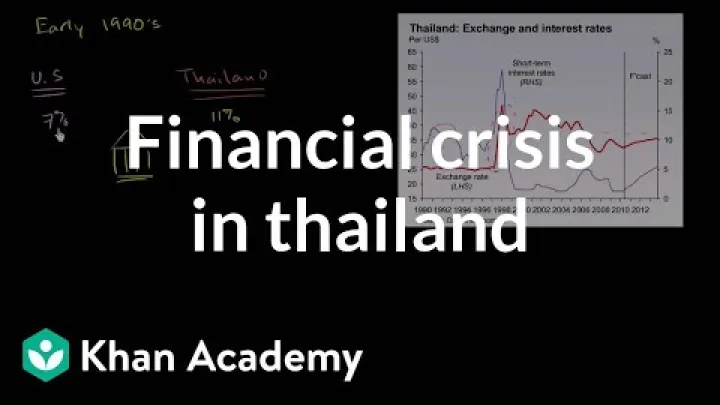
Since then, the baht has operated under a managed float. This means the exchange rate is largely determined by market forces, while the central bank may intervene to reduce excessive volatility or maintain orderly market conditions. Over time, milestones in the baht’s value have reflected global risk cycles, trade flows, tourism patterns, and domestic policy decisions.
Frequently Asked Questions
Can I use US dollars, euros, or Indian rupees in Thailand?
You generally cannot pay with foreign cash; prices are set in Thai baht (THB). Exchange your currency at licensed counters or withdraw THB from ATMs. Major cards are accepted at hotels, malls, and larger restaurants. Small vendors usually require cash in THB.
Is it better to bring cash or use ATMs in Thailand?
Use a mix: exchange larger amounts at licensed counters for better rates and use ATMs for convenience. Most ATMs charge a fixed 200–220 THB fee per withdrawal to foreign cards. Make fewer, larger withdrawals to dilute fixed fees, while balancing safety and limits.
Where is the best place to exchange money in Bangkok?
Licensed exchange counters with transparent rate boards typically offer the best rates (e.g., SuperRich, Vasu Exchange, Siam Exchange). Compare buy/sell rates the same day before exchanging. Avoid unlicensed street exchangers and always collect and keep your receipt.
Can tourists pay with QR codes like PromptPay in Thailand?
Yes, QR PromptPay is widely accepted, and tourists can pay if their bank or wallet app supports Thai QR or a tourist e-wallet. TAGTHAi Easy Pay and some international wallets offer QR payment options. Always confirm the total and merchant name before authorizing.
What are typical ATM fees and withdrawal limits in Thailand?
Most Thai banks charge 200–220 THB per withdrawal for foreign cards, plus any fees from your home bank. Per-transaction limits commonly range around 20,000–30,000 THB, but the machine will show options. Daily limits depend on your card issuer.
What is dynamic currency conversion (DCC), and should I accept it?
DCC lets you pay in your home currency at the point of sale or ATM, but the rate is usually worse than paying in THB. Decline DCC and choose to be charged in Thai baht. Check receipts to confirm the currency before authorizing.
Do taxis, markets, and street vendors accept cards in Thailand?
Many small vendors, markets, and taxis are cash-first and may not accept cards. In big cities, some taxis and shops accept cards or QR payments, but cash in small denominations is still essential. Always carry enough THB for transport, markets, and tips.
Conclusion and next steps
The currency in Thailand is the Thai baht (THB), and you will use it for nearly all purchases. Knowing the symbols, denominations, and basic security checks helps you handle cash confidently. Carry smaller notes for taxis and markets, and expect satang coins mainly at large chains or when prices land exactly on fractional amounts.
For exchanging money, compare licensed counters in city centers, keep your passport ready, and always count cash before leaving the counter. If you use ATMs, plan fewer, larger withdrawals to reduce the impact of fixed fees around 200–220 THB, and always decline dynamic currency conversion. Cards are widely accepted at larger venues, while cash remains essential in small shops and rural areas.
Digital payments are expanding, especially PromptPay QR, which many tourists can use through compatible bank apps or tourist wallets. Treat banknotes respectfully and follow local etiquette at temples and cultural sites. With these practices, you can convert, carry, and spend Thai baht efficiently while avoiding common pitfalls and enjoying a smooth experience throughout your stay.
Select area
Create a post
Posting is free and no registration is required.