Thailand 10 Baht Coin: Value, Price in India and Philippines, Design, and Specs

Its two-tone ring-and-core design, tactile dots, and consistent specifications make it friendly for both users and vending machines. Collectors value it for its long-running Rama IX series, the updated Rama X portrait, and numerous commemoratives. This guide explains identification, specifications, value in India and the Philippines, rare years, and practical tips for buying and preservation.
Quick facts and identification
The thailand 10 baht coin is easy to recognize thanks to its bimetallic look and slightly larger size than other Thai coins. Whether you are spending it in Bangkok or adding it to a world coin collection, a few visual cues and tactile features help confirm what you have in hand. These basics also help separate common circulation issues from commemoratives and potential counterfeits.
- Denomination: 10 baht (THB)
- Type: Bimetallic, copper-nickel ring and aluminum-bronze center
- Diameter: 26.00 mm; Mass: about 8.5 g; Thickness: ~2.15 mm
- Edge: Segmented reeding (alternating reeded and smooth sections)
- Portrait: Rama IX (1988–2017) or Rama X (from 2018)
- Tactile dots: Raised dot cluster near 12 o’clock on most circulation coins
Obverse, reverse, and Braille dots
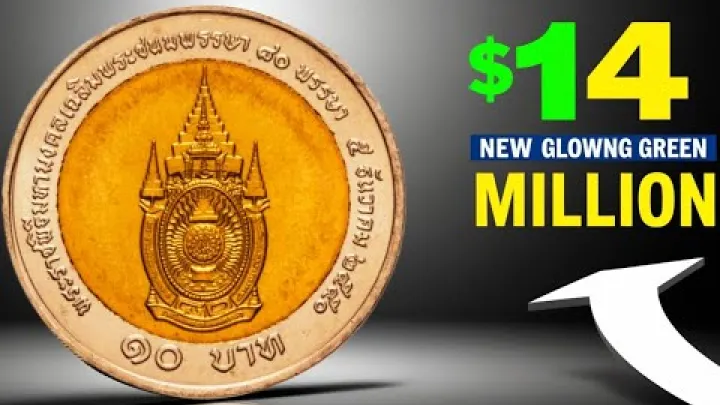
On circulation pieces dated before 2018, the obverse shows King Bhumibol Adulyadej (Rama IX) with Thai inscriptions, while issues from 2018 onward show King Maha Vajiralongkorn (Rama X) in a modern portrait style. The legends are in Thai script and include the country name and date, which many collectors learn to read as part of identifying types and years. Commemorative coins may present event-specific portraits, royal symbols, or additional wording in place of standard inscriptions.
The Rama X series replaces Wat Arun with the Royal Cypher, while retaining the denomination prominently. Standard circulation 10 baht coins include a cluster of raised tactile dots near the rim at the 12 o’clock position. These are often called “Braille dots,” although they are not Braille code letters. The cluster’s position and style are consistent across regular circulation issues under both Rama IX and Rama X. Many commemoratives omit these dots to allow more design space, so their absence can be a quick sign you are holding a special issue.
Weight, diameter, composition, and edge
The coin’s core specifications have been stable: about 8.5 g weight, 26.00 mm diameter, and roughly 2.15 mm thickness. The outer ring is copper-nickel (silvery color), while the center core is aluminum-bronze (gold/brass tone). The edge shows segmented reeding, meaning there are alternating reeded and smooth sections around the circumference. This edge is easy to feel, improves grip, and supports machine recognition. Together, these features make the coin straightforward to identify in mixed change and in coin rolls.

As with any circulating coin, small manufacturing tolerances exist. Variations of a few tenths of a gram in weight and fractions of a millimeter in diameter or thickness are normal and not a concern. These tolerances, combined with the coin’s unique ring-core alloy pairing, create a stable electromagnetic signature that vending and sorting machines can read reliably. For counterfeit detection at home, basic checks include a precise scale and caliper measurements, visual inspection of the edge segmentation, and a close look at fine design details and lettering.
Value and conversions (India, Philippines, and other currencies)
When travelers search for thailand 10 baht coin value in india or the philippines, there are two separate ideas to consider. First is the face-value conversion: how much 10 THB equals in rupees or pesos today. Second is any collector premium if the coin is a high-grade, commemorative, or error piece. Currency rates change throughout the day, so always use a live source at the moment you convert.
Keep in mind this is a face-value calculation. If you plan to sell a coin to a collector or dealer, condition, rarity, and demand may increase the price beyond the current exchange value.
How to convert 10 baht to rupees and pesos
Converting 10 THB to Indian rupees (INR) or Philippine pesos (PHP) is straightforward and takes only a minute. This helps travelers budget small purchases and gives collectors a quick baseline for face value before thinking about premiums. Rates fluctuate, so always verify the latest figures with a current currency source before you calculate.

Use this three-step method:
- Find the live THB→INR or THB→PHP rate from a reliable source.
- Multiply the rate by 10 for a single coin’s face value.
- For multiple coins, multiply your result by the quantity.
Example (illustrative): If the THB→INR rate is 2.3, then 10 baht ≈ 23 rupees. If the THB→PHP rate is 1.6, then 10 baht ≈ 16 pesos. Treat these as examples only; always check the current rate at the time of conversion, because exchange values move daily and can vary between banks and money services.
Collector value vs face value
Most common circulation-year 10 baht coins trade near face value when they show normal wear. However, uncirculated pieces, commemoratives with special designs, mint sets, and certified high-grade coins can sell for more. Error coins and low-mintage dates also attract collector interest and may sell at premiums far above face value, depending on demand and authenticity.

Grade strongly affects price. As a general guide, coins in Very Fine (VF) to Extremely Fine (XF) often bring little to modest premiums; About Uncirculated (AU) and Brilliant Uncirculated (UNC) pieces can achieve higher prices; and Proof or prooflike coins and top-graded Mint State (MS) examples can be more desirable still. Third-party certification from services such as PCGS or NGC can increase buyer confidence, improve liquidity, and support stronger pricing, especially for rarities and errors.
Price guide for collectors (circulated, uncirculated, and commemoratives)
Collectors ask about thailand 10 baht coin value because prices vary by issue and condition. Circulation-strike coins with typical wear usually sell near face value, while bright uncirculated coins, prooflike commemoratives, and certified examples may trade higher. Before assigning a price, confirm whether your coin is a standard circulation type or a commemorative, and evaluate the grade using a consistent standard.
For a balanced view, consider where the coin fits in the market. Many commemoratives were widely distributed and are common, while others are seen less often. Error coins must be genuine and not post-mint damage. Reliable images, weight/diameter checks, and comparison to known diagnostics help prevent overpaying or misidentifying a coin.
Common market ranges and grading impact
Circulated standard issues typically trade at or just above face value, especially when they show visible wear or handling marks. Bright uncirculated coins and mint-set pulls can command small premiums due to eye appeal and scarcity in pristine condition. Special finishes like proof or prooflike, usually from official sets, are more collectible and tend to sell for higher prices.

Grading influences liquidity and pricing. Coins professionally graded and encapsulated by PCGS or NGC are easier to buy and sell across borders because buyers trust consistent grading and tamper-evident holders. High-grade Mint State examples attract registry set collectors and can realize strong prices. Still, certification fees should be weighed against expected value—common coins in lower grades may not justify grading costs.
Notable years (1996 type; 1998 low mintage) and error coins
The 1996 period includes popular circulation issues and commemoratives, making it a frequent focus for collectors searching for “thailand 10 baht coin 1996.” Some late-1990s dates, such as 1998, are cited for lower mintages and can draw extra attention, though availability varies by region and market cycle. Always confirm the exact type and obverse portrait, and compare inscriptions and finishes to ensure you have the intended coin.

Authentic mint errors—such as off-center strikes, broadstrikes, or wrong-planchet strikes—are scarce and can command significant premiums. Before paying an error premium, compare your coin with verified examples, check for consistent weight and diameter, and rule out post-mint damage. If the value appears substantial, consider third-party grading, which documents the error type on the label and improves market confidence.
Design and specifications
The thailand 10 baht coin has two major design families: the Rama IX series with the Wat Arun reverse and the Rama X series with the Royal Cypher reverse. Despite the design change, the coin’s specifications remained broadly consistent. Understanding the design details helps with dating, identifying commemoratives, and distinguishing normal circulation issues from proofs or special finishes.
Another important aspect is the date format. Thailand uses the Buddhist Era (B.E.) on its coins, which differs from the Gregorian system used internationally. Learning how to read B.E. dates is essential for collectors who want to match coins to specific calendar years and historic periods.
Rama IX and Wat Arun reverse (1988–2017)
The long-running Rama IX circulation design shows King Bhumibol Adulyadej on the obverse with Thai inscriptions. The reverse features Wat Arun, the Temple of Dawn in Bangkok, with the denomination in Thai numerals and script. This bimetallic look defined the 10 baht in everyday commerce for nearly three decades, making it one of the most familiar designs in Southeast Asia.

Dates on these coins are written in the Buddhist Era (B.E.). To convert B.E. to the Common Era (C.E.), subtract 543. For example, B.E. 2540 corresponds to 1997 C.E. Reading the date correctly is vital when you are searching for specific years or verifying whether you have a notable issue or a commemorative from the same period.
Rama X and Royal Cypher reverse (from 2018)
From 2018 onward, circulation issues bear the portrait of King Maha Vajiralongkorn (Rama X), reflecting a refined, modern portrait style. The reverse changes from Wat Arun to the Royal Cypher, while keeping a clear denomination and maintaining the bimetallic format that users recognize. The overall “look and feel” remains consistent in hand and in coin machines.
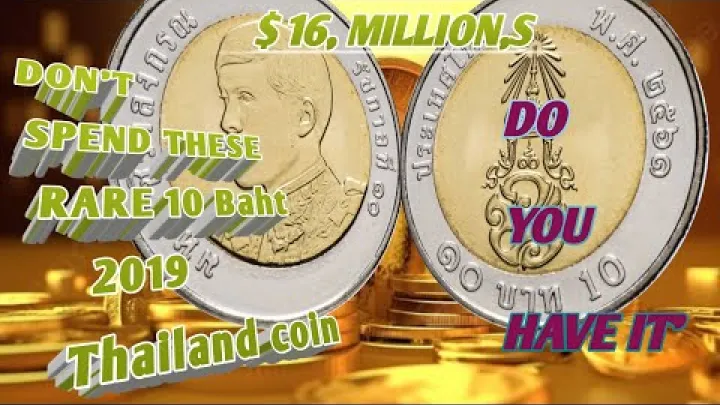
Most post-2018 standard circulation coins continue to include the raised tactile dots near 12 o’clock to assist with denomination recognition. Many commemorative 10 baht coins, however, use the available space for event-specific imagery and omit the dot cluster. The continued use of tactile features on circulation issues helps ensure usability for visually impaired users and maintains continuity across design generations.
Security and machine-read features
Several elements support authentication in vending, transit, and sorting equipment. The coin’s bimetallic ring and core produce a distinct electromagnetic signature, while the segmented reeded edge offers a physical pattern that machines can detect. Visual cues such as the contrasting metals, sharp lettering, and accurate portrait details further help screen out altered or plated pieces.

At home, a weak response to a household magnet is normal for the alloys used and does not conflict with machine sensing. Machines do not rely on simple magnet “stickiness”; they measure how a coin interacts with electromagnetic fields as it passes through sensors. This combination of tactile, visual, and electromagnetic properties gives the 10 baht coin strong protection against casual counterfeiting.
History and production overview
Thailand introduced the 10 baht coin in 1988 to replace the 10 baht banknote in everyday use. Bimetallic construction improved durability, and the coin’s size and tactile dots made it simple to recognize. Over time, the coin became a reliable workhorse in commerce and public transit, with stable specifications supporting wide machine acceptance.

Collectors appreciate the series for its long history and variety, including commemoratives and the portrait transition from Rama IX to Rama X. Understanding how and why the coin was adopted helps explain its presence in global vending references and its similarity to other bimetallic coins of the late 20th century.
1988 introduction and replacement of the 10 baht note
The 10 baht coin was launched to improve durability and reduce replacement costs compared with the paper note of the same value. In many countries, coins often circulate for a decade or longer, while small-denomination notes may last only a fraction of that time. The change therefore offered long-term savings for the monetary authority and improved reliability in coin-operated systems.

Production by the Royal Thai Mint ramped quickly, and the public accepted the 10 baht coin due to its practical size and easy identification. The segmented reeded edge, clear denomination, and two-tone construction supported a smooth transition from note to coin in daily transactions such as fares, vending, and small retail purchases.
Bimetallic technology and Italian influence
Thailand’s adoption of bimetallic technology aligned with global trends. Italy’s 500 lire, introduced earlier, showed how a ring-and-core coin could be secure, distinctive, and machine-friendly. The concept later appeared in several world coins, including the Euro area’s €2 coin, which shares the same general two-tone appearance but differs in alloys and other specs.

Because these coins look similar at a glance, cross-market vending considerations became important. Modern EU coin validators are calibrated to accept €2 and reject other bimetallics, including the 10 baht coin. This illustrates how size alone is not decisive; alloy composition and electromagnetic profiles are central to accurate machine identification.
Thailand 10 baht vs the €2 coin
Despite the resemblance, they are not interchangeable. Their alloys, weights, and electromagnetic signatures differ, and modern machines in Europe are designed to reject non-euro coins. In Thailand, local machines accept 10 baht reliably because validators are tuned to its specific profile.

To avoid confusion when traveling, segregate local coins by country, check the inscription language, and look at the denomination. The 10 baht shows Thai script and numerals, while the €2 coin shows Latin alphabet legends and Euro symbols. If you use coin machines, keep a small pouch for local coins to prevent accidental mix-ups.
Key differences and vending machine acceptance
Although both coins are bimetallic with similar diameter, they diverge in several technical attributes that machines detect. These include exact weight, ring and core alloy composition, edge patterns, and the electromagnetic signature measured during validation. As a result, the €2 and the 10 baht coin are easily distinguished by modern readers even if they appear similar to the eye.

Practical tips to avoid cross-currency errors: keep Thai and Euro coins in separate pockets, verify the denomination before inserting coins into machines, and look for design cues such as Thai script versus Euro maps and stars. In Thailand, the 10 baht coin works as intended in vending and transit systems; in Europe, modern machines are programmed to accept only genuine euros and reject other coins.
| Feature | Thailand 10 Baht | €2 Coin |
|---|---|---|
| Diameter | 26.00 mm | Approx. similar range |
| Weight | About 8.5 g | Heavier than 10 baht |
| Alloys | Cu-Ni ring, Al-Br core | Different ring/core composition |
| Edge | Segmented reeding | Distinct Euro edge pattern |
| Machine acceptance | Accepted in Thailand | Accepted only in Euro systems |
Buying, selling, and authenticity tips
Whether you are purchasing a single coin or building a set, a few practices can reduce risk and help you get fair value. Buy from reputable dealers or marketplaces with clear return policies, and document the coin with good photos. If a coin appears unusual or expensive, double-check the type, finish, and diagnostics before committing to a price.
Authentication begins with measurements and careful observation. Many suspect coins are revealed by incorrect weight, diameter, edge style, or by soft details in lettering and portrait. A simple toolkit—digital scale, calipers, a mild magnet, and a bright light or loupe—can catch most problems before you buy.
Where to buy and how to avoid counterfeits
Reliable sources include established coin dealers, auction platforms with buyer protection, and marketplaces that offer escrow or clear return policies. Study seller feedback, request clear images of obverse, reverse, and edge, and ask for measurements if they are not listed. If a coin is presented as prooflike or high grade, look for matching surfaces and sharp details to support the claim.

For a basic check at home, use simple tools: a scale to verify weight near 8.5 g, calipers to confirm the 26.00 mm diameter, and a mild magnet to observe only a weak response consistent with the alloys. Inspect the segmented reeding pattern for uniformity, look for the raised dot cluster at 12 o’clock on standard circulation pieces, and compare lettering and portrait details with known authentic examples. Be cautious with plated tokens or altered coins that mimic the two-tone appearance without matching specifications.
Storage, handling, and preservation
Handle coins by the edges to avoid fingerprints and residues. Use clean, dry hands or cotton or nitrile gloves. For storage, select inert holders or capsules and avoid PVC-containing plastics that can release chemicals over time. Keep coins in a dry, temperature-stable environment, and consider silica gel desiccants for humidity control.

Avoid cleaning coins. Cleaning can leave hairlines, alter original color, or remove mint luster, all of which reduce value. If a coin requires conservation beyond routine dusting, consult a professional. For long-term organization, label holders with the year (B.E. and C.E.), type (Rama IX or Rama X), and any special attributes such as commemorative themes or proofs.
Frequently Asked Questions
What are the weight, diameter, and materials of the Thailand 10 baht coin?
The coin weighs about 8.5 g and measures 26.00 mm in diameter and roughly 2.15 mm in thickness. It is bimetallic with a copper-nickel outer ring (silver color) and an aluminum-bronze center (gold/brass color). The edge shows segmented reeding for grip and security, and these specifications help vending and sorting machines authenticate the coin consistently.
Which Thailand 10 baht coin years are rare or valuable?
Most circulating years trade near face value unless they are in uncirculated condition. Certain dates and types—such as late-1990s low runs, including 1998—can be more sought after. Commemoratives, authentic mint errors, and high-grade certified examples often command premiums. Final value depends on condition, demand, and solid authentication.
What is special about the 1996 Thailand 10 baht coin?
Coins dated 1996 include circulation issues and popular commemoratives that attract collectors. Values vary by exact type and grade: standard worn pieces are near face value, while prooflike commemoratives or certified high grades can be worth more. Always verify the precise design, finish, and inscriptions before pricing or listing for sale.
Do Thailand 10 baht coins include Braille dots for accessibility?
Yes. Standard circulation 10 baht coins include raised tactile dots near the 12 o’clock position to help visually impaired users identify the denomination. Many commemoratives omit the dot cluster to allow additional design elements. The dots are tactile markers and are not standard Braille code letters.
How can I identify a commemorative 10 baht coin?
Look for non-standard portraits, event symbols, or special inscriptions on either side. Many commemoratives omit the raised dot cluster seen on circulation issues. Compare the design to standard Rama IX (Wat Arun reverse) or Rama X (Royal Cypher reverse) coins to confirm whether you have a commemorative or a regular circulation type.
Are Thailand 10 baht coins magnetic and suitable for vending machines?
The coin’s alloys are not strongly attracted to a household magnet, which is normal. Machines authenticate the coin using a measured electromagnetic signature rather than simple magnet “stickiness.” In Thailand, validators accept the 10 baht reliably; in Europe, modern machines are set to accept only euros and reject other coins.
Conclusion and next steps
The Thailand 10 baht coin combines practical utility with collectible interest. Its enduring specifications—26.00 mm diameter, about 8.5 g weight, bimetallic construction, and segmented reeding—support reliable machine acceptance and user-friendly identification. Two main design families define the series: the Rama IX portrait with the Wat Arun reverse (1988–2017) and the Rama X portrait with the Royal Cypher reverse (from 2018). Standard circulation coins also feature a raised tactile dot cluster near 12 o’clock, while many commemoratives omit this feature.
For value questions, separate face-value conversion from collector pricing. Use live exchange rates to estimate 10 THB in rupees or pesos, and then consider grade, rarity, and demand to assess any premium. Notable highlights include the active commemorative tradition, attention to certain late-1990s years such as 1998, and the occasional genuine mint error. When buying or selling, rely on clear measurements, careful design comparisons, and, when warranted, third-party grading to document quality and authenticity. With a methodical approach, the 10 baht coin offers both reliable spending power in Thailand and satisfying opportunities for collectors worldwide.
Select area
Create a post
Posting is free and no registration is required.