Thailand Jobs for Indians: Work Permits, Visas, Salaries, and Hiring Sectors (2025)

Thailand jobs for Indians are accessible in 2025, provided you follow the correct legal steps and target roles that match market demand. This guide explains how to secure the right visa and Thai work permit, which sectors are hiring, what salaries look like, and how to avoid common scams. You will also find city-by-city insights for Bangkok jobs for Indians, budgeting tips, and a complete documents checklist. Use it as a planning reference and always confirm the latest rules with official authorities before you travel.
Can Indians work in Thailand? Key requirements at a glance
Legal basis: visa + work permit before any work
Indians can work in Thailand if they hold both a work-eligible visa and an approved Thai work permit linked to a specific employer and job role. A tourist visa, visa-exempt entry, or visa-on-arrival does not allow employment. The most common routes are a Non-Immigrant B visa followed by a physical work permit card, or the Long-Term Resident (LTR) visa for eligible professionals, which comes with a digital work permit.

Applications typically involve two touchpoints: a Royal Thai Embassy or Consulate abroad for the visa, and Thailand’s Ministry of Labour (or the Board of Investment/One Stop Service Center for BOI-promoted firms) for work authorization. Overstays also carry fines and possible blacklisting. To avoid risk, ensure your visa category matches your job offer and do not begin work until your permit is issued.
- Where to apply: Royal Thai Embassy/Consulate (visa), Ministry of Labour or BOI/One Stop Service (work permit).
- Do not work on tourist/visa-exempt entry; always wait for the approved permit.
- Keep copies of your passport, visa, and permit on hand for inspections.
Prohibited occupations and employer obligations
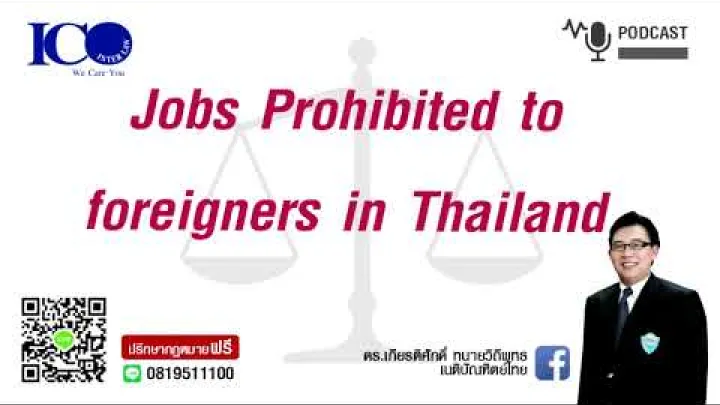
Thailand maintains a list of occupations reserved for Thai nationals. Foreigners cannot perform certain roles, especially those involving manual labor or services that the government protects for local workers. Examples often cited include street vending, tour guiding, hairdressing/barber, Thai massage therapist, and driving taxis or tuk-tuks. Employers must place foreign hires into permitted roles that require skills and experience not readily available in the local market.
Companies that hire foreigners must meet compliance criteria such as paid-up capital, Thai-to-foreign staffing ratios, valid business registration, and proper tax and Social Security filings. Typical benchmarks used in practice for non-BOI firms include around 2 million THB in paid-up capital and a ratio near 4 Thai employees per 1 foreign employee, though thresholds vary by company type, industry, and scheme. BOI-promoted companies may receive relaxed ratios and expedited processing through the One Stop Service Center. Always confirm the exact requirement for your employer’s registration and sector.
- Employer duties: provide corporate documents, maintain tax and Social Security compliance, and keep reporting up to date.
- Ratios and capital: vary by structure and program; typical ranges are used as guidance rather than absolute rules.
- Employee duties: work only in the approved role and location; notify authorities if job details change.
Visa and work permit pathways
Non-Immigrant B (Business/Work): documents and process
The process often begins with the employer requesting a WP3 pre-approval from the Ministry of Labour. In parallel, the applicant gathers degree legalization and a Police Clearance Certificate from India. After WP3, you apply for a Non-Immigrant B visa at a Royal Thai Embassy or Consulate, then travel to Thailand to complete the medical certificate and work permit issuance.

Processing times vary, but once you arrive with the correct visa, the work permit filing can be approved in about 7 business days if all papers are complete. Ensure your passport has sufficient validity and that the visa category matches the employment offer to avoid re-filing.
- Applicant documents (core): passport with 6+ months validity and blank pages; degree and transcripts; resume; passport photos; Police Clearance Certificate; degree notarization and legalization/apostille; Thai translations (if requested); medical certificate (after arrival).
- Employer documents (core): company registration certificate; shareholder list; VAT/tax filings; Social Security records; office lease/address proof; staffing ratio summary; employment contract/offer letter; WP3 approval notice.
- Where to file: Royal Thai Embassy/Consulate (visa) and Ministry of Labour or provincial labour office (work permit).
LTR visa for professionals: eligibility, benefits, tax
The Long-Term Resident (LTR) visa targets qualified professionals and offers up to 10 years of stay, annual reporting instead of 90-day reports in many cases, a digital work permit, and access to designated fast-track services. One of the program’s key attractions is a flat 17% personal income tax for certain eligible categories under program rules. The LTR is best suited for high-income professionals, specialists, and executives working in targeted industries or organizations.

Common LTR thresholds include annual income around USD 80,000 for the past few years, with some categories allowing about USD 40,000 if the job is in a targeted sector or a Thai government/higher-education institution. Health insurance is required, often with at least USD 50,000 coverage (or equivalent deposit/coverage alternatives, subject to program rules). Employers must be in qualifying sectors or meet program criteria, and documents will be assessed by designated authorities before issuance.
| LTR aspect | Typical requirement/benefit |
|---|---|
| Stay | Up to 10 years (in 5+5 segments) |
| Work authorization | Digital work permit tied to employer/role |
| Income threshold | About USD 80,000/year (some categories around USD 40,000) |
| Health insurance | Minimum around USD 50,000 coverage or accepted alternatives |
| Tax | Flat 17% PIT for eligible profiles/categories |
Step-by-step timeline: from offer to work permit (3–4 months)
Plan a 3–4 month end-to-end journey from signing an offer to receiving your Thai work permit. The longest parts usually involve document verification, legalization/apostille, and consular scheduling. Starting early and keeping consistent document details (names, dates, spellings) helps prevent rework.
The work permit itself can be fast once you are in Thailand with the correct visa, but do not underestimate embassy appointment lead times or background checks. Use the following planning timeline as a practical guide.
- Offer and contract (1–2 weeks): finalize role, salary, and start date; confirm the correct visa category with the employer.
- Document preparation in India (3–6 weeks): collect degree/transcripts, reference letters, photos; obtain Police Clearance Certificate; notarize and complete state/university verification as needed.
- Legalization/apostille and translations (2–4 weeks): get MEA apostille; prepare certified Thai/English translations if requested; keep both digital and physical sets.
- Employer WP3 pre-approval (1–2 weeks): employer submits to the Ministry of Labour; you receive approval to support your visa filing.
- Non-Immigrant B visa appointment (1–3 weeks): apply at a Royal Thai Embassy/Consulate; factor in appointment availability and processing time.
- Arrival and medical certificate (1 week): enter Thailand on the correct visa; complete a medical check at an approved clinic/hospital.
- Work permit filing and approval (about 7 business days): submit at the labour office; receive permit; start work legally after issuance.
- Extensions and reporting (ongoing): maintain 90-day reporting, re-entry permits if traveling, and stay extensions aligned to your job.
In-demand jobs and sectors in Thailand for Indians
IT jobs in Thailand for Indians: roles and salaries (Bangkok, Chiang Mai, Phuket)
Thailand’s technology market is expanding, with steady demand in software engineering, backend platforms, data/AI, cloud infrastructure, cybersecurity, and product management. Indian professionals compete well when they present hands-on experience, measurable achievements, and clear stack expertise. English is often the working language in multinational teams, while Thai is an advantage for client-facing roles.

Bangkok offers the highest pay. Mid-level software engineers often see THB 80,000–150,000 per month, with annual packages around THB 800,000–1,500,000 depending on seniority and skills. Backend engineers working with Java, Go, or Node.js generally command mid-to-high bands; data scientists and ML engineers with Python, TensorFlow/PyTorch, and MLOps exposure can reach the higher end. Chiang Mai and Phuket provide lower base salaries but lower living costs; remote and hybrid models are increasing, especially for cloud/SRE and cybersecurity roles.
- Bangkok: strongest demand and highest pay; fintech, e-commerce, telco, and enterprise IT.
- Chiang Mai: emerging startups and remote teams; better lifestyle-cost balance.
- Phuket: hospitality tech, travel platforms, and seasonal demand.
Teaching jobs in Thailand for Indians: requirements and hiring
Teaching remains a consistent pathway for Indians who can show proof of English proficiency and appropriate qualifications. Most schools ask for a bachelor’s degree, a clean criminal record, and an English test such as IELTS, TOEFL, or TOEIC. A 120-hour TEFL certificate is not strictly mandatory everywhere but is widely preferred and can significantly improve hiring chances and salary offers.

Non-English majors can still qualify if they prove language proficiency and complete a TEFL/TESOL. Typical monthly salaries range from THB 35,000–60,000 in public and standard private schools, THB 60,000–90,000 in better-resourced private or bilingual schools, and higher for international schools if you hold a teaching license and experience. Benefits may include work permit sponsorship, paid holidays, and sometimes housing allowances. Hiring peaks before new terms (May and November), while private language centers recruit year-round.
- Common tests: IELTS 5.5+, TOEFL iBT 80–100, or TOEIC 600+ (schools vary).
- Legal path: Non-Immigrant B visa plus Thai work permit; degree legalization is usually required.
- Document consistency: names and dates must match across degree, passport, and clearances.
Hospitality and culinary roles (including Indian chefs)
Hotels, resorts, and F&B groups recruit Indian chefs, kitchen leads, tandoor specialists, and restaurant managers, especially in cities and tourist hubs. Larger brands and established restaurant groups are more likely to provide visa sponsorship and structured benefits. Basic Thai language skills and food safety certifications are strong differentiators, especially for supervisory roles.

Indicative pay varies by city and brand. Indian chefs may see THB 35,000–80,000 per month for junior to mid-level roles, and THB 80,000–150,000 for head chefs or multi-outlet leads in premium venues. Phuket, Bangkok, Pattaya, and Chiang Mai are hotspots for Indian cuisine, with Phuket and Bangkok offering stronger peak-season demand. Packages may include service charge, meals, uniforms, and sometimes shared accommodation.
- Cities with demand: Bangkok, Phuket, Pattaya, Chiang Mai, Koh Samui.
- Helpful credentials: HACCP/food safety training, regional cuisine portfolios, and team leadership experience.
Emerging sectors: EV, data centers, e-commerce, green tech
Thailand’s policy focus on innovation and infrastructure is supporting growth in electric vehicles (EV), data centers, logistics tech, and sustainability. Indian professionals with engineering, project, and compliance backgrounds can find opportunities through multinationals and local firms engaged in the Eastern Economic Corridor (EEC) and Bangkok’s tech clusters. Roles are also appearing in standards and certification bodies as these industries mature.
Typical job titles include EV powertrain engineer, battery safety engineer, data center infrastructure engineer, cloud operations manager, supply chain planner, sustainability officer, and ESG reporting specialist. Certifications that help include PMP or PRINCE2 for project managers, AWS/Azure/GCP for cloud and data center roles, CISSP/CEH for security, Six Sigma for operations, and ISO 14001/50001 experience for green projects.
Salaries and cost of living
Salary ranges for Indian professionals (industry and seniority)
Salaries vary with sector, company size, and city. In Bangkok, mid-level professionals commonly receive THB 80,000–150,000 per month, while senior finance, risk, and executive roles can reach THB 200,000–350,000 or more. Tech compensation often spans THB 800,000–1,500,000 per year, with higher bands for scarce skills like data science, cloud security, and AI/ML engineering.

Compensation structures may include performance bonuses, annual increments, health insurance, transport or housing allowances, and meal benefits. Always evaluate the total package rather than base salary alone. These ranges are indicative and can shift with market conditions; validate current figures with recent reports and multiple offers before deciding.
- Review total rewards: base pay, bonus, allowances, insurance, leave.
- Compare offers by cost-of-living and commute time, not only salary.
- Clarify probation terms and how benefits start during probation.
Bangkok jobs for Indians vs secondary cities: pay and lifestyle trade-offs
Bangkok has the widest role variety and the strongest pay across most industries. It also has higher rents, denser traffic, and longer commutes. Air quality can fluctuate seasonally, which may affect families and those with respiratory sensitivities. International schools are concentrated in Bangkok, offering more curriculum choices but also higher fees.

Secondary cities such as Chiang Mai offer lower pay but more affordable housing, shorter commutes, and a slower pace of life. Phuket and other resort areas can be seasonal for hospitality roles; compensation may include service charge and housing benefits that change with occupancy. When deciding between cities, weigh salary against rent, travel time to work, air quality, and access to international schools or hospitals.
- Bangkok: highest pay, heavy traffic, extensive public transport, many international schools.
- Chiang Mai: moderate pay, better air part of the year but seasonal haze, strong lifestyle appeal.
- Phuket: hospitality-driven, seasonal variability, higher living costs in tourist zones.
Budgeting and typical monthly costs
Thailand is roughly 58% more expensive than India overall, with housing and food driving most differences. Many single professionals target about USD 2,000 per month for a comfortable lifestyle, though this varies by city and personal choices. Couples and families should add rent, schooling, and healthcare according to their needs.

Plan for one to two months’ rent as a security deposit plus the first month’s rent, initial utility setup, and transport costs. Currency conversions in this guide are approximate and fluctuate. Build a buffer for insurance, visa renewals, and occasional flights home.
- Core costs: rent, utilities, internet/mobile, food, transport, healthcare, and visa-related fees.
- One-off setup: deposits, furniture, appliances, and professional translations.
- Variable costs: travel, entertainment, and seasonal air quality solutions (e.g., air purifiers).
How to find jobs in Thailand from India
Top recruitment firms and job boards
Start with reputable recruiters and job boards that actively cover Thailand. Well-known firms include Robert Walters and Michael Page, while JobsDB, LinkedIn, and WorkVenture are widely used portals. Tailor your resume for Thai market expectations: a concise professional summary, quantifiable outcomes, and a clear note on your visa status and availability.

Avoid agents who ask for upfront fees; legitimate recruiters are paid by employers. To widen coverage, add sector-specific boards. For tech, check Stack Overflow Jobs (regional postings vary), Hired, and community groups on LinkedIn or GitHub discussions. For teaching, consider Ajarn.com, TeachAway, and school network sites. For hospitality, use HOSCO, CatererGlobal, and hotel brand career pages.
- General: JobsDB, LinkedIn, WorkVenture, JobThai (Thai-language focus).
- Tech: company GitHub org pages, Hired, local meetup job channels.
- Teaching: Ajarn.com, TeachAway, school groups and association listings.
- Hospitality: HOSCO, CatererGlobal, brand sites (Marriott, Accor, Minor, Dusit).
Company career sites and startup platforms
Applying directly on company career sites improves response rates, especially for multinationals and leading Thai firms. Track roles at banks, telcos, e-commerce platforms, and manufacturers with operations in Bangkok and the EEC. Startup roles appear on platforms like AngelList and e27, and through local incubator or accelerator communities.

Examples of Thailand-based employers that often sponsor foreign talent include Agoda, Grab, Shopee/Lazada, True Corp, AIS, SCB TechX, Krungsri (Bank of Ayudhya), LINE MAN Wongnai, Central Group, Minor International, and BOI-promoted manufacturers in the EEC. Always check language requirements; some positions require Thai proficiency, while many regional teams operate in English.
Networking: Indian expat and professional communities
Networking opens access to the hidden job market. Use LinkedIn groups, alumni communities, and sector meetups in Bangkok, Chiang Mai, and Phuket. Indian expat associations and professional clubs can provide local context and trusted referrals that speed up interviews.

For first-contact outreach, keep messages short and specific. Introduce yourself, state your focus (role/stack/industry), and ask a clear question. For example: “Hello, I am a backend engineer with 5 years in Java and AWS, relocating to Bangkok in July. Do you know any teams hiring mid-level backend engineers? Happy to share my resume.” Follow up politely once if there is no response and always thank people for their time.
- Attend sector events: tech meetups, TEFL fairs, hospitality job days.
- Offer value: share insights, refer candidates, or propose small collaborations.
- Build consistency: engage weekly, not just when you need a job.
Fraud prevention and safe job search
Common scams and red flags
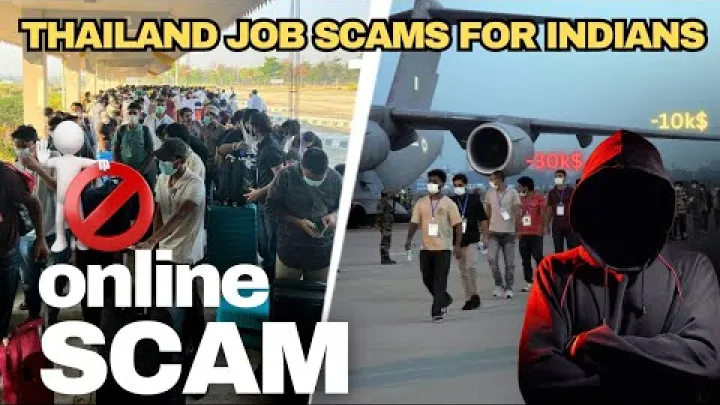
Be cautious of offers that push you to enter on a tourist visa, ask for upfront payments, or demand that you surrender your passport. Scammers often use fake BPO or customer service jobs and lure candidates to border areas near Myanmar or Cambodia, where coercive work has been reported. If an employer refuses to provide a verifiable address or registered company details, walk away.

Protect yourself by saving all evidence—emails, chats, payment requests—and maintaining independent return travel funds. Pressure tactics, vague contracts, and inconsistencies between what recruiters say and what documents show are strong warning signs. Verify the company independently using official registries and direct phone numbers published on their website.
- Never pay for a job offer or a guaranteed visa.
- Avoid illegal border crossings and “visa runs” to start work.
- Refuse to hand over your passport; provide copies only when needed.
Verification checklist and official channels
Use a structured process to verify offers before you commit. Independent checks can help you confirm the employer’s identity, the job location, and the legal sponsorship process. If something feels wrong, stop and seek advice.
Keep the following checklist and contact official channels if you suspect fraud or need validation. Report crimes or trafficking risks to Indian missions and Thai authorities promptly.
- Company verification: check legal name, registration number, and address on official registries; call the main line listed on the company’s website.
- Offer verification: ensure the contract states title, pay, benefits, work location, and who sponsors the Non-Immigrant B or LTR visa and work permit.
- Document requests: decline to send original passports; provide copies as needed; confirm where and how originals will be checked.
- Visa route: confirm embassy/consulate filing, WP3 pre-approval (if applicable), and who pays government fees.
- Red flag review: tourist-visa start, upfront fee demands, pressure to travel immediately, or non-existent office addresses.
- Official help: contact Royal Thai Embassy/Consulate, Thailand’s Ministry of Labour, BOI (if relevant), and the nearest Indian Embassy/Consulate in Thailand.
- Safety net: retain evidence of communications and keep funds for emergency return travel.
Documents checklist and preparation
Applicant documents (degree legalization, police clearance)
Prepare core documents early to avoid delays. You will typically need a passport with at least 6 months’ validity, degree and transcripts, resume, passport photos, and reference letters. Most applicants also require a Police Clearance Certificate from India, plus degree notarization and legalization or apostille. Some authorities may request certified Thai translations of key documents.

A common sequence in India is: notarize your degree copies; complete state or university verification as required; obtain an MEA apostille; prepare certified translations (Thai/English as requested); then proceed to the Royal Thai Embassy/Consulate or Thai authorities who will accept apostilled documents. Requirements vary by case, so confirm the exact steps with the embassy/consulate handling your visa and with your employer’s HR team.
- Keep both digital and physical sets; ensure consistent names and dates.
- Bring extra passport photos meeting Thai size guidelines.
- Carry originals for verification at visa and work permit appointments.
Employer documents and compliance
Employers need to provide company registration certificates, shareholder lists, VAT/tax filings, Social Security records, office lease evidence, and staffing details that show they meet foreign-hire criteria. A formal employment letter and WP3 pre-approval (for Non-Immigrant B) are often required to initiate filing. For provincial roles, local labour offices may request additional site evidence.

BOI-promoted companies may receive exceptions to standard staffing ratios and capital thresholds and can process visas and digital work permits through the One Stop Service Center. This can shorten timelines and reduce the document load for certain steps. However, even BOI firms must maintain compliance with tax, Social Security, and accurate reporting for foreign employees.
Relocation basics: banking, housing, and initial costs
Bank accounts, deposits, mobile and utilities
Opening a Thai bank account is easier once you hold a work permit or a long-stay visa. Policies differ by bank and branch, but major banks known to onboard foreigners include Bangkok Bank, Kasikornbank (KBank), Siam Commercial Bank (SCB), and Krungsri (Bank of Ayudhya). Documents that help include your passport, visa, work permit (or employer letter), and a lease or utility bill for address proof.

Budget for utility activation (electricity, water), internet installation, and initial furniture or appliance purchases if the unit is unfurnished. You can obtain a Thai SIM card with your passport; keep SIM registration and utility bills as address evidence for banking and immigration needs.
- Bring multiple ID copies; some branches scan and keep them.
- Ask your employer for a bank introduction letter to smooth onboarding.
- Confirm international transfer fees and online banking activation at account opening.
Arrival tips and healthcare onboarding
Upon arrival and move-in, TM30 address reporting must be completed to notify immigration of your residence. Typically, the landlord or hotel files TM30, but tenants can also file if needed. Separately, 90-day reporting is the responsibility of the foreign resident on long-stay visas; it confirms your current address and can be filed online or in person depending on eligibility.

Enroll in Thailand’s Social Security through your employer for basic healthcare coverage; this starts after registration and is tied to designated hospitals. For LTR holders and higher-income professionals, maintain private health insurance that meets program minimums and consider supplemental coverage for international care. Keep copies of your passport, visa, work permit, TM30 receipt, and emergency contacts (including embassy details) in your first weeks.
- TM30 vs 90-day: TM30 reports an address change; 90-day confirms ongoing residence.
- Confirm with HR who files which report and when.
- Carry digital backups of all key documents at all times.
Frequently Asked Questions

Can Indians work in Thailand and what visa do they need?
Most employees use a Non‑Immigrant B visa followed by a Thai work permit; qualified professionals may use the LTR visa with a digital work permit. Working on a tourist or visa-on-arrival status is illegal. Your employer sponsors and supplies company documents for the process.
How long does it take to get a Thai work permit and start working?
The end-to-end timeline typically takes 3–4 months from offer to final work authorization. The work permit filing itself often takes about 7 business days once documents are complete. Degree legalization, police clearance, and consular steps are the main time drivers. Start document preparation early to avoid delays.
What salaries can Indian professionals expect in Thailand?
Verified averages indicate around INR 20–50 lakh per year, with top profiles above INR 50 lakh. In Bangkok, mid-level roles often pay THB 80,000–150,000 per month; senior finance can reach THB 200,000–350,000. Tech roles range roughly THB 800,000–1,500,000 per year depending on stack and seniority.
What are the requirements to teach English in Thailand as an Indian?
Most schools require a bachelor’s degree, English proficiency proof (IELTS 5.5+, TOEFL 80–100, or TOEIC 600+), and a clean criminal record. A 120-hour TEFL is not legally mandatory but widely preferred. Degree legalization and the correct Non‑Immigrant B visa plus work permit are required to teach legally.
Which jobs are in demand in Thailand for Indians in 2025?
Consistent demand exists in English teaching, hospitality and Indian cuisine, and growth roles in EV, e-commerce, data centers, and green tech. Banking, manufacturing, logistics, and healthcare also hire steadily.
Is Thailand more expensive than India for expats?
Yes, Thailand is about 58% more expensive than India overall. Food is roughly +70% and housing about +81% versus India on average. Many expats target about USD 2,000 per month for a comfortable budget, with costs varying by city and lifestyle.
How can Indians avoid job scams related to Thailand and Myanmar?
Avoid unknown agents, upfront payments, and offers that ask you to enter on a tourist visa. Independently verify the employer’s registration, office address, and contract details; contact the firm directly. Reject illegal border crossings and report suspicious cases to Indian missions and Thai authorities.
Which is better for long-term work: LTR visa or Non-Immigrant B?
The LTR visa is better for eligible professionals seeking a 10‑year stay, digital work permit, and tax benefits (e.g., 17% PIT). The Non‑Immigrant B is the standard employment route for most roles and employers. Choose based on income thresholds, employer type, and sector eligibility.
Conclusion and next steps
Indians can work in Thailand by securing the right visa and a Thai work permit before starting any job. The Non‑Immigrant B route suits most roles, while the LTR visa benefits eligible professionals with long stays and tax advantages. Bangkok offers the widest opportunities and higher salaries, while secondary cities trade pay for lifestyle and cost savings. Prepare documents early, validate offers carefully, and plan realistic timelines and budgets to ensure a smooth move and a safe start in Thailand.
Select area
Create a post
Posting is free and no registration is required.