Thailand Currency to Euro (THB to EUR) – Live Rate, Calculator, Fees, and Best Ways to Exchange

Looking for the Thailand currency to euro rate and the best way to convert Thai baht to euro? This guide brings together today’s THB to EUR context, a simple calculator method, and practical tips to save on fees. You will find live-rate context, quick examples like 10,000 Thailand currency to euro, and reverse checks such as 1,000 euro to Thailand currency. Always compare the final amount you will receive, not only the headline rate.
Rates change during the day. Providers add spreads and fees on top of the mid-market rate, so your final outcome depends on where and how you convert. Use the sections below to understand fees, avoid Dynamic Currency Conversion (DCC), and choose between banks, exchange houses, and trusted apps.
Introduction: Thailand currency to euro explained
Travelers, students, and remote workers often need to convert Thailand currency to euro for cards, cash, or transfers. While most people search for a single “best rate,” the real number that matters is the all-in amount after spreads, fixed fees, and delivery method. Exchange rates update many times per minute, and the price you see at a bank, exchange house, ATM, or app is usually the mid-market rate plus a margin, sometimes alongside a fixed charge.

The mid-market rate is the midpoint between buy and sell prices on global currency markets. It is a useful benchmark because it shows the raw value without retail markups. When you exchange THB to EUR in practice, you will receive slightly less than mid-market due to provider margins. When you convert in reverse—such as checking 1,000 euro to Thailand currency—the same concepts apply, and you will see a markup on the EUR to THB side as well.
Different methods lead to different outcomes. Cash exchanges at airports or hotel desks tend to have wider spreads. Specialist city exchanges often quote tighter spreads. Card payments can be convenient but watch for DCC prompts that convert your purchase to your home currency at a marked‑up rate. ATMs in Thailand typically add a per‑withdrawal fee, so your strategy for small versus large cash needs matters. For transfers, traditional SWIFT payments include sender, intermediary, and receiver bank fees, while app-based services often show clearer, all‑in quotes.
Use the quick calculator approach in this guide to estimate outcomes for common amounts, including 10,000 Thailand currency to euro and small sums like 100 THB. Then compare providers by the final “you receive” figure, and confirm terms before you commit. This practical process helps you make informed decisions, especially when rates move intraday.
Live THB to EUR rate today
Today’s mid-market rate and recent range
As an indicative snapshot for late October 2025, the mid-market rate is around 0.0263 EUR per THB, which is another way of saying 1 EUR is roughly 38.1 THB. This figure is not guaranteed and can change during the day as markets move. Most providers add a spread to the mid‑market and may also charge a fixed fee, so your net outcome will be lower than the raw benchmark.
Through 2025, the THB to EUR context has generally sat in a band close to 0.0261–0.0287 EUR per THB, corresponding to about 35–38.3 THB per EUR for the inverse rate. Always check a live source immediately before you exchange or send money. For cash, compare at least two reputable in‑city providers; for cards and transfers, review the final quoted amount inclusive of all fees.
Quick examples (100 THB, 1,000 THB, 10,000 THB to EUR)
Using the same indicative 0.0263 EUR per THB mid‑market: 100 THB ≈ 2.63 EUR, 1,000 THB ≈ 26.3 EUR, and 10,000 THB ≈ 263 EUR before fees. Your actual amount depends on provider spreads, any fixed charges, and the method you choose (cash exchange, card, or transfer). Airport and hotel counters usually offer worse rates than specialist exchanges or transparent apps.
When comparing options, focus on the final “you receive” figure rather than the headline rate alone. A slightly worse rate with no fixed fee can beat a better rate with a large flat charge on small amounts. Conversely, for larger amounts, tighter spreads matter more than small fixed fees. The mini table below shows quick, fee‑free benchmarks to help you sanity‑check quotes.
| THB amount | Approx EUR (0.0263) |
|---|---|
| 100 THB | ≈ 2.63 EUR |
| 1,000 THB | ≈ 26.3 EUR |
| 10,000 THB | ≈ 263 EUR |
Quick THB to EUR calculator (with formula and steps)
How to calculate THB to EUR manually
The core formula is simple: EUR = THB amount × (EUR per THB rate). If we use an indicative mid‑market of 0.0263 EUR/THB, then 3,500 THB × 0.0263 ≈ 92.05 EUR before fees. To estimate your net amount, subtract any fixed fee and account for the provider’s spread by using their quoted rate instead of the mid‑market.
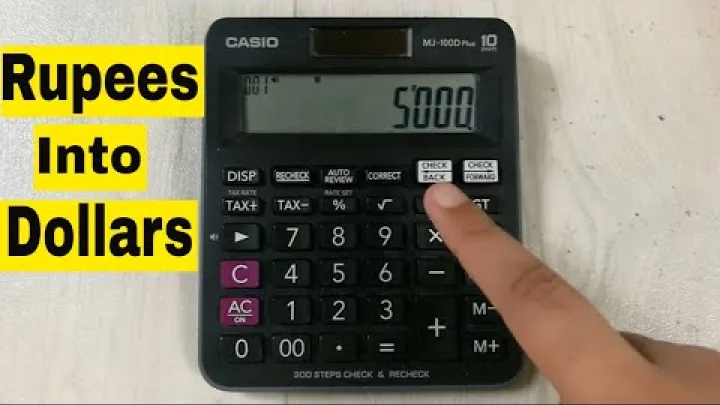
For example, if a provider quotes 0.0259 EUR/THB and charges a 1.50 EUR fixed fee, 3,500 THB × 0.0259 ≈ 90.65 EUR; net after the fixed fee is about 89.15 EUR. This shows the difference between the mid‑market and provider rate in practical terms. A small spread looks minor but adds up on larger sums, and a flat fee can significantly affect small conversions.
- Find the current mid‑market rate (EUR per THB) and the provider’s specific rate.
- Multiply your THB amount by the provider’s EUR/THB rate to get the gross EUR figure.
- Subtract any fixed fee to estimate the net amount you will receive.
- Compare multiple quotes using the same steps and pick the best net outcome.
Reverse conversion: EUR to THB (including 1000 euro to Thailand currency)
The inverse formula is: THB = EUR amount ÷ (EUR per THB rate). At 0.0263 EUR per THB, 1 EUR ≈ 38.1 THB. Using that reference, 50 EUR ≈ 1,905 THB, 100 EUR ≈ 3,810 THB, and 500 EUR ≈ 19,050 THB before fees. For the query 1,000 euro to Thailand currency, the benchmark is roughly 38,100 THB before any provider margin or fixed charges.
Fixed ATM fees in Thailand mean withdrawal size matters. On small cash withdrawals, the flat fee takes a larger percentage bite; on larger withdrawals, the same flat fee becomes less significant. If your card and bank terms allow, plan fewer, larger withdrawals rather than many small ones, and always review the on‑screen fee prompt before you accept a transaction.
- Check your card’s daily limit and any local machine cap.
- Batch cash needs to reduce the frequency of per‑withdrawal fees.
- Compare the net outcome of ATM withdrawal vs. exchange house rate for the same THB amount.
Where to exchange THB to EUR and how to compare rates
Banks versus exchange houses in Thailand
Banks are reliable and widely available, but their counter rates often include wider spreads. Some also add service fees for foreign exchange. By contrast, specialist money changers such as SuperRich, Vasu, and Siam Exchange commonly quote tighter spreads for major currencies, including Thai baht to euro, especially during business hours in central locations.
Most importantly, ask for the all‑in “you receive” amount, which reflects the applied rate and any fee. Avoid airport and hotel counters for large amounts because their convenience premium tends to be expensive compared with city exchanges.
Online and app-based options (Wise and Revolut)
App-based services often use the mid‑market rate with a transparent fee, making THB→EUR conversions competitive and easy to compare. Delivery can be instant or same day, and multi‑currency cards from these providers usually give good travel rates if you always choose to pay in local currency and decline DCC prompts.

Account verification, limits, and availability vary by country of residence, regulations, and corridor. Check supported routes, fees, and expected delivery times inside the app before sending. For large amounts, expect additional KYC checks; for small amounts, the clarity of the quote and the ability to see the exact “recipient receives” figure are key advantages.
Fees to watch: ATM charges, spreads, and DCC
Typical Thai ATM fee and how to reduce costs
Most Thai ATMs charge foreign cards a fixed fee of about 220 THB per withdrawal. This is on top of any fees your home bank may charge and any exchange rate margin used by your card network. Because the fee is flat, it hurts small withdrawals more than large ones.
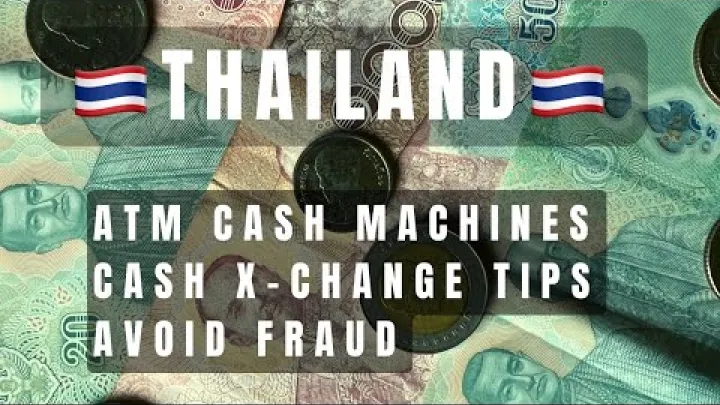
To reduce costs, plan fewer, larger withdrawals within your daily limits, and check whether your bank refunds foreign ATM fees or participates in partner networks. Always confirm the machine’s fee on screen before accepting the transaction. If the fee looks higher than expected, cancel and try a different bank’s ATM nearby.
- Know your card’s daily withdrawal limit and possible per‑transaction caps.
- Use reputable bank ATMs and avoid out‑of‑service or isolated machines.
- Track total fees: local ATM fee + home bank fee + exchange margin.
How Dynamic Currency Conversion works and why to decline it
Dynamic Currency Conversion (DCC) is when an ATM or card terminal offers to charge you in your home currency instead of local THB. The convenience comes with a marked‑up exchange rate. If you accept, you lock in that higher rate and often pay more than if you were charged in THB and let your card network or bank do the conversion.

Example: Suppose a 2,000 THB card purchase. If the fair mid‑market is 0.0263 EUR/THB, the base conversion is about 52.6 EUR. A DCC markup of 4% would inflate the rate to the equivalent of roughly 0.02735 EUR/THB, costing around 54.7 EUR—about 2.1 EUR more on a single transaction. Always choose to be charged in THB and decline DCC to avoid hidden markups.
Thai baht basics (denominations, symbol, issuer)
Notes, coins, and the role of the Bank of Thailand
Common banknote denominations are 20, 50, 100, 500, and 1,000 THB. Designs and security features can vary by series.

The Bank of Thailand (BOT) issues and regulates the currency and continually updates security features to deter counterfeiting. When exchanging abroad, note that some foreign exchanges may refuse damaged notes or high‑denomination bills. To avoid problems, keep notes clean and unfolded, and, if needed, ask a bank in Thailand to replace badly damaged banknotes.
Respectful handling of Thai currency
Avoid defacing, tearing, or stepping on money, and handle banknotes carefully in public settings. If you receive a damaged note, do not push it onto a merchant; instead, visit a bank branch to exchange it.
While issues are rare for ordinary travelers, violations can result in fines or legal trouble. Being mindful of local norms ensures a smooth experience when paying in cash or exchanging money during your stay.
Market drivers and 2025 context for THB–EUR
What moves the THB–EUR rate
The THB–EUR exchange rate responds to monetary policy, inflation, trade and tourism flows, and global risk sentiment. Policy guidance from the Bank of Thailand and the European Central Bank, including interest rate paths and balance‑sheet moves, can shift expectations and therefore the currency pair.
Broader USD moves and commodity price swings can also ripple into THB–EUR through cross‑currency effects and shifting risk appetite.
2025 year-to-date performance at a glance
In 2025, the baht has generally been weaker versus the euro within a band of roughly 35–38.3 THB per EUR, consistent with an indicative 0.0261–0.0287 EUR per THB mid‑market range. Day‑to‑day moves have reflected interest‑rate differentials, regional growth signals, and changing risk sentiment.
This overview is for information only and is not investment advice. If you plan a large conversion, consider rate alerts and compare multiple providers on the same day to see which yields the best net result after spreads and fees.
Sending money from Thailand to Europe (THB to EUR)
Bank SWIFT transfers: cost and timing
International bank transfers over SWIFT usually involve several charges: the sender bank fee, possible intermediary or correspondent bank fees, and a receiver bank fee. In addition, the applied exchange rate commonly includes a margin to the mid‑market, which reduces the final EUR amount delivered to the recipient.

Delivery often takes 1–3 business days, depending on cut‑off times, compliance checks, and the receiving country. Typical details required include the recipient’s full name, IBAN, and the bank’s SWIFT/BIC code. When comparing providers, focus on the final amount the recipient will receive, not just the transfer fee or the advertised exchange rate.
Fintech alternatives and when they win
Fintech services such as Wise and Revolut often win on price and clarity by using mid‑market rates with transparent, low fees. Transfers can be faster, with in‑app quotes that show the exact “recipient receives” figure and a clear estimated arrival time.

Know‑your‑customer limits and compliance checks apply to all providers, and large transfers may require extra documentation. While fintechs are competitive for many amounts and corridors, certain banks can be cost‑effective for very large sums or specific routes. Always compare both approaches on the same day to see which one provides the best net outcome.
Frequently Asked Questions
What is today’s THB to EUR exchange rate and how many baht per euro?
As of late October 2025, the mid‑market is about 0.0263 EUR per THB (1 EUR ≈ 38.1 THB). Rates move during the day, and providers add spreads and fees. Always check a live source before converting or sending money. Airport and hotel rates are usually worse than city exchanges or fintech apps.
How much is 1000 THB in euros and 100 euros in baht?
At 0.0263 EUR/THB, 1,000 THB ≈ 26.3 EUR and 100 EUR ≈ 3,810 THB before fees. Actual amounts vary by provider spreads and fixed charges. Compare the final “you receive” figure across options before you convert.
Is it better to exchange money in Thailand or before traveling?
You usually get better rates in Thailand at reputable exchange houses than in your home country or at airports. Bring a small amount of cash for arrival and do larger exchanges in the city. Card withdrawals can work if you plan fewer, larger ATM transactions to reduce per‑withdrawal fees.
Where can I get the best THB to EUR rate in Thailand?
Specialist exchanges like SuperRich, Vasu, and Siam Exchange often beat bank counters. Compare two to three nearby providers during business hours for tighter spreads. Avoid unlicensed street exchangers and hotel desks due to poor rates and risk.
What fees should I expect at ATMs and how can I avoid DCC?
Thai ATMs typically charge about 220 THB per withdrawal to foreign cards. Decline Dynamic Currency Conversion (DCC) at ATMs and card terminals; always choose to be charged in local currency for a better rate. Check if your bank refunds ATM fees or has a partner network.
Nights and weekends often have wider spreads or extra margins. For large exchanges, transact on weekdays and compare providers.
Is it safe and legal to exchange money on the street in Thailand?
No, use only licensed banks and authorized money changers. Unlicensed operators are risky and may be illegal, with fraud or counterfeit concerns. Always request a receipt for your exchange.
Which is cheaper for THB→EUR transfers: bank SWIFT or Wise/Revolut?
For many amounts, Wise or Revolut are cheaper due to mid‑market rates and transparent, low fees. Bank SWIFT transfers add bank and correspondent fees and use less favorable rates. Always compare the net amount the recipient will receive before choosing.
Conclusion and next steps
As a late‑October 2025 reference, the mid‑market sits near 0.0263 EUR per THB (1 EUR ≈ 38.1 THB). Actual outcomes depend on spreads, fixed fees, and method. Compare the net “you receive” figure, avoid DCC by paying in THB, and plan ATM use to minimize per‑withdrawal charges. For transfers, review both bank SWIFT and fintech quotes and choose the option that delivers the best final amount.
Select area
Create a post
Posting is free and no registration is required.