Thailand Time (UTC+7): Current Time in Bangkok and Time Differences

Thailand time follows Indochina Time (ICT), a fixed UTC+7 offset used nationwide. There is no daylight saving time, so the time in Thailand stays the same throughout the year. This consistency makes planning travel, meetings, and study schedules simpler.
Current time in Thailand and time zone basics
Understanding the time in Thailand is straightforward because the country uses one national time zone and never changes clocks. ICT remains at UTC+7 all year, which helps reduce confusion for international travelers and remote teams. You can convert quickly by adding seven hours to Coordinated Universal Time (UTC) to get Thailand time.

Many nearby countries share similar timekeeping practices. Cambodia, Laos, and Vietnam also use UTC+7, while Malaysia and Singapore are at UTC+8. Because Thailand stays on a fixed offset, it is a reliable anchor for scheduling across Asia, Europe, and the Americas, even when those regions shift for daylight saving time.
- Thailand time zone: Indochina Time (ICT), UTC+7
- No daylight saving time (DST)
- One time zone nationwide (Bangkok, Phuket, Chiang Mai have the same time)
- Example offsets: UK (Thailand is +7 vs GMT, +6 vs BST); US Eastern (Thailand is +12 vs EST, +11 vs EDT); Sydney (Thailand is −3 vs AEST, −4 vs AEDT)
Is Thailand on a single time zone?
Yes. Thailand uses a single, national time zone: Indochina Time (ICT), which is UTC+7. This uniform time applies to every province and city, including Bangkok, Chiang Mai, Chiang Rai, Pattaya, Phuket, Krabi, and the islands. There are no regional time differences within the country, and you will not see local clock changes between north and south or between the mainland and islands.
Thailand also does not observe daylight saving time. The clock stays at UTC+7 in January, July, and every month in between. Several neighboring countries follow a similar approach, notably Cambodia, Laos, and Vietnam (all UTC+7), which helps simplify cross-border travel and logistics across mainland Southeast Asia.
Bangkok time (ICT) quick facts
Bangkok follows ICT at UTC+7 throughout the year, with no daylight saving time. The IANA time zone identifier used by operating systems and cloud services is Asia/Bangkok. Bangkok shares exactly the same time as all other Thai cities and provinces.
Current local time in Bangkok (ICT, UTC+7): add 7 hours to UTC. For example, when it is 12:00 UTC, it is 19:00 in Bangkok. Typical differences: Thailand is +7 hours ahead of the UK during GMT and +6 during BST; +12 ahead of US Eastern during EST and +11 during EDT.
- Time zone: ICT (UTC+7), no DST
- IANA identifier: Asia/Bangkok
- Ahead of UK: +7 (GMT) or +6 (BST)
- Ahead of US Eastern: +12 (EST) or +11 (EDT)
- Same time nationwide: Bangkok = Phuket = Chiang Mai
Global time differences with Thailand (ICT, UTC+7)
Because Thailand stays on UTC+7 year-round, time differences with other regions depend on whether those regions use daylight saving time. Europe, the United Kingdom, the United States, Canada, and parts of Australia and New Zealand shift clocks, which changes the offset with Thailand by one hour during their summer or winter seasons. Always reconfirm around local DST changeover dates.
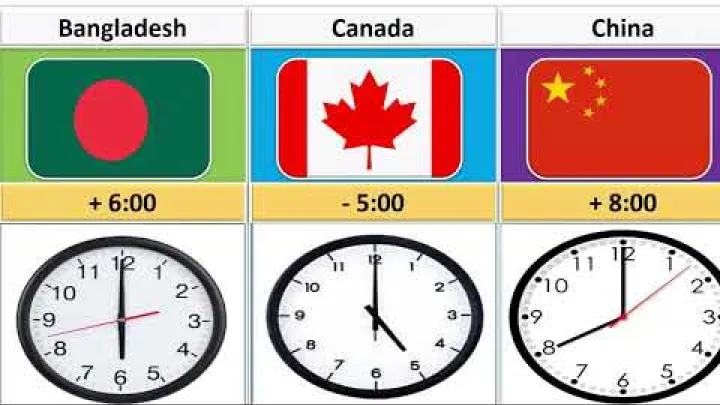
The summary below highlights common reference points. Detailed subsections explain the regional context and give worked examples to help you schedule calls, flights, and delivery windows more accurately.
| Region/City | Typical difference vs Thailand |
|---|---|
| London (UK) | Thailand is +7 vs GMT; +6 vs BST |
| Berlin (Central Europe) | Thailand is +6 vs CET; +5 vs CEST |
| New York (US Eastern) | Thailand is +12 vs EST; +11 vs EDT |
| Los Angeles (US Pacific) | Thailand is +15 vs PST; +14 vs PDT |
| Sydney (Australia) | Thailand is −3 vs AEST; −4 vs AEDT |
| Singapore/Hong Kong | Thailand is −1 hour (UTC+8) |
| Tokyo/Seoul | Thailand is −2 hours (UTC+9) |
| Delhi (India) | Thailand is +1:30 hours (UTC+5:30) |
Europe and the United Kingdom
In the UK, Thailand is 7 hours ahead during standard time (GMT) and 6 hours ahead during British Summer Time (BST). Across Central Europe, Thailand is 6 hours ahead of CET and 5 hours ahead of CEST. Eastern Europe follows similar patterns, with Thailand 5 hours ahead of EET and 4 hours ahead of EEST. These offsets shift by one hour when Europe enters or exits DST.

Worked examples: London—when it is 09:00 in London during BST, it is 15:00 in Bangkok. Berlin—when it is 10:00 in Berlin during CEST, it is 15:00 in Bangkok. Near the DST transition dates in March and October, verify local clock changes, as the difference with Thailand can change overnight.
United States and Canada
For US and Canadian Eastern Time, Thailand is 12 hours ahead of EST and 11 hours ahead of EDT. In Central Time, Thailand is 13 hours ahead of CST and 12 ahead of CDT. In Mountain Time, the difference is 14 hours vs MST and 13 vs MDT. In Pacific Time, Thailand is 15 hours ahead of PST and 14 ahead of PDT.

Note exceptions: most of Arizona stays on Mountain Standard Time year-round, so Thailand is typically 14 hours ahead of Arizona in winter and 14 or 15 hours ahead depending on the season and locality. Some parts of Canada, such as Saskatchewan, also do not observe DST, which can make the offset steady while neighboring provinces shift. Always confirm the local rules for your city.
East and South Asia
Thailand is one hour behind China, Singapore, Malaysia, Brunei, Hong Kong, and the Philippines, which are all on UTC+8. It is two hours behind Japan and South Korea (UTC+9). Compared with India, which uses UTC+5:30, Thailand is 1 hour 30 minutes ahead.
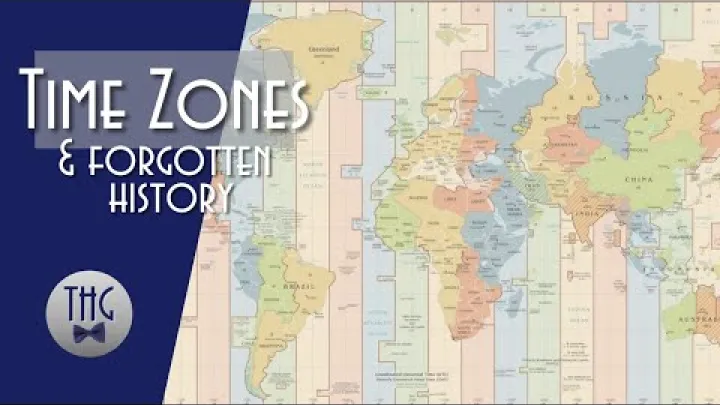
Several immediate neighbors share Thailand’s time: Cambodia, Laos, and Vietnam are all UTC+7. Indonesia has three time zones; Jakarta and most of Java and Sumatra use WIB (UTC+7), which matches Thailand. Bali and much of eastern Indonesia use WITA (UTC+8), so Bali is one hour ahead of Thailand. Farther east, Papua uses WIT (UTC+9), two hours ahead of Thailand.
Australia and New Zealand
Thailand is three hours behind Sydney and Melbourne during AEST (UTC+10) and four hours behind during AEDT (UTC+11). Western Australia (Perth) stays on AWST (UTC+8), so Thailand is one hour behind Perth year-round. In the Northern Territory (Darwin) and South Australia (Adelaide), the differences range roughly from 2.5 to 3.5 hours depending on local observance of DST.

New Zealand runs further ahead: Thailand is five hours behind NZST and six behind NZDT. Australian states change clocks on different dates and not all states participate, so if your schedule involves multiple Australian cities, check each city’s rules near the transition periods.
Does Thailand use daylight saving time (DST)?
Thailand does not observe daylight saving time, and the offset remains at UTC+7 in every season. This policy provides continuity for travel, finance, education, and digital services. For international coordination, this means you only need to track changes in other regions, such as when North America or Europe moves between standard time and daylight time.
The absence of DST also reduces confusion around flight arrivals, live broadcasts, and online event listings. If you prepare schedules across several continents, note that your Thailand time blocks will remain stable while others shift one hour forward or back around March/April and October/November, depending on the region.
Why Thailand does not use DST
Thailand’s tropical latitude results in relatively small seasonal changes in daylight length, so the potential gains from daylight saving time are limited. Keeping a constant UTC+7 offset year-round simplifies life for residents and visitors, and it reduces transition costs for airlines, logistics companies, schools, and government services.

Another practical factor is regional alignment. Most neighboring countries also stay on fixed offsets without DST, which supports seamless cross-border travel and trade. There are no official DST trials scheduled in Thailand, and the policy remains stable and predictable for planning purposes.
Thai six-hour clock (colloquial system)
Alongside the 24-hour clock used in transport, media, and government, Thai speakers often use a colloquial system that divides the day into four six-hour blocks. This everyday phrasing is helpful to understand if you are traveling, socializing, or listening to local broadcasts. The terms change with the time of day, even when the 24-hour numbers look similar.
Once you learn the small set of words for morning, afternoon, evening, and night, you can map most common times quickly. It is also useful to know a few special words like noon and midnight, which have unique forms in Thai. The outline below provides a simple mapping for first-time learners.
How to say common hours in Thai
The colloquial day divides into four named periods with different counting styles. Morning runs roughly 06:00–11:59 and uses “mong chao.” Afternoon runs 13:00–15:59 and uses “bai … mong.” Late afternoon to early evening uses “mong yen” around 16:00–18:59. Night uses “thum” or “toom” from 19:00–23:59, while the early hours 01:00–05:59 use “dtee …” for counting after midnight. Special terms include 12:00 (tiang, noon) and 24:00 or 00:00 (tiang keun, midnight).

Quick mapping examples to 24-hour time help reinforce the pattern. Examples: 07:00 = “jet mong chao,” 13:00 = “bai neung mong,” 18:00 = “hok mong yen,” and 19:00 = “neung thum/toom.” The midnight-to-dawn hours use “dtee,” so 01:00 is “dtee neung,” 02:00 “dtee song,” and so on. With practice, you will recognize both the 24-hour clock and the Thai colloquial forms in everyday conversation.
- 00:00 = tiang keun (midnight); 01:00–05:59 = dtee neung, dtee song, …
- 06:00–11:59 = “mong chao” (morning): 06:00 hok mong chao; 07:00 jet mong chao
- 12:00 = tiang (noon)
- 13:00–15:59 = “bai … mong” (afternoon): 13:00 bai neung mong; 15:00 bai saam mong
- 16:00–18:59 = “mong yen” (evening): 18:00 hok mong yen
- 19:00–23:59 = “thum/toom” (night): 19:00 neung thum; 22:00 sii thum
History of time in Thailand
Thailand’s timekeeping has evolved with advances in navigation, trade, and global coordination. Before standardized time zones were adopted, cities used their own local mean time based on the sun’s position. In Thailand, this was known as Bangkok Mean Time. The shift to a unified, internationally recognized time offset helped align the country with maritime schedules and modern communications.

Today’s UTC+7 standard reflects a long-standing commitment to stable, practical timekeeping. While there have been occasional discussions about changing the offset to match regional trading hubs, Thailand has maintained one national time since the early 20th century, keeping clocks in step with the 105°E meridian.
From Bangkok Mean Time to UTC+7 (1920)
On 1 April 1920, Thailand officially moved from Bangkok Mean Time (UTC+06:42:04) to UTC+7. The change advanced clocks by 17 minutes and 56 seconds, simplifying schedules and aligning the country with an even-hour offset used across much of continental Southeast Asia.
The UTC+7 standard corresponds to the 105°E meridian, a logical reference that suits Thailand’s longitude. Since this adoption, the national time has remained unchanged, which has supported consistent planning for railways, shipping, aviation, and international diplomacy over the last century.
The 2001 proposal to move to UTC+8
In 2001, there was a proposal to shift Thailand’s clock to UTC+8 to align with major trading partners such as Singapore, Malaysia, and China. Advocates argued that sharing the same time as these economies could ease market coordination and cross-border business hours.
The change was not implemented. Key concerns included operational impacts on transportation timetables, broadcasting, financial settlements, and the limited consensus among stakeholders. Thailand remained on UTC+7, preserving a familiar standard that also matches neighboring Cambodia, Laos, and Vietnam.
Scheduling tips for travelers and businesses
When planning from abroad, start with Thailand’s fixed UTC+7 time and then check whether the other side is on standard time or daylight time. This quickly reveals if the gap is, for example, +12 vs US Eastern in winter or +11 in summer. Flexible, overlapping windows help teams and travelers find reasonable hours without very early mornings or late nights.

Building a small set of “go-to” meeting slots based on your counterpart’s location reduces back-and-forth. The examples below suggest practical windows that fit most office hours while respecting Thailand’s consistent offset.
Best overlap windows for meetings
United Kingdom and Europe: Thailand afternoons align with UK mornings and Central Europe’s early work hours. Typical windows include 14:00–18:00 ICT, which is 08:00–12:00 in London (BST/GMT) and 09:00–13:00 in Berlin (CEST/CET). This range keeps the day civilized for both sides without pushing into evening in Thailand.

United States: Thailand mornings suit North America’s evenings. For US Eastern, 07:00–10:00 ICT maps to 20:00–23:00 (EDT) or 19:00–22:00 (EST) in New York. For the US West Coast, earlier starts in Thailand are often needed; 06:00–08:00 ICT maps to 16:00–18:00 (PDT) or 15:00–17:00 (PST) in Los Angeles. Australia and New Zealand: late morning to early afternoon in Thailand overlaps well with east-coast business hours, for example 10:00–14:00 ICT equals 13:00–17:00 (AEST) or 14:00–18:00 (AEDT) in Sydney.
- Example slot: 15:00 ICT = 09:00 London (BST) = 10:00 Berlin (CEST)
- Example slot: 08:00 ICT = 21:00 New York (EDT) = 18:00 Los Angeles (PDT)
- Example slot: 11:00 ICT = 14:00 Sydney (AEST) or 15:00 Sydney (AEDT)
Technical timekeeping in Thailand
Modern timekeeping in Thailand combines international standards with national distribution. Systems reference UTC for precision, while users see local time as ICT (UTC+7). Consistent naming and identifiers prevent errors in databases, APIs, and cross-border services. For software, the key principle is to store timestamps in UTC and convert to local time only for display.

Accurate synchronization matters for financial transactions, digital signatures, transport operations, and broadcast schedules. Both public and private networks rely on standardized time sources exposed through protocols like NTP so that devices and applications keep consistent, reliable clocks.
Royal Thai Navy and national standard time
Thailand’s official time is maintained and disseminated by the Royal Thai Navy. The service provides authoritative time signals that feed institutional systems, telecommunications, and research networks. Distribution typically uses network time services such as NTP and radio signals to keep systems synchronized nationwide.

Developers should reference the IANA time zone identifier Asia/Bangkok for local conversions. A best practice is to store and compute in UTC internally and convert to Asia/Bangkok for user-facing displays. This approach reduces DST-related issues abroad and supports accurate time arithmetic across regions.
Related: Best time to visit Thailand (weather overview)
Thailand is warm year-round, but weather varies by region and season. The broadly dry and cooler season runs from roughly November to February, making it a popular time for city sightseeing and many beach destinations. Temperatures are more comfortable, humidity eases, and skies are clearer across much of the country.

March to May is hotter, especially inland and in the north, where daytime highs can feel intense. This period suits travelers who prefer fewer crowds and are comfortable with heat, but it requires planning for hydration and midday breaks. Afternoon thunderstorms can bring short, heavy showers.
Because local patterns shift from year to year, always verify conditions for your specific destination and month. If your goal is broad weather reliability, November to February is a safe window for many itineraries. For quieter travel at potentially lower prices, consider shoulder months like late October or March, being ready for some heat or showers.
Frequently Asked Questions
How many hours ahead is Thailand of the United Kingdom?
Thailand is 7 hours ahead of the UK during UK standard time (GMT) and 6 hours ahead during British Summer Time (BST). The UK changes clocks twice per year; Thailand does not. For example, 09:00 in London (BST) is 15:00 in Bangkok. Reconfirm around UK clock-change dates.
How many hours ahead is Thailand of US Eastern Time?
Thailand is 12 hours ahead of US Eastern Standard Time (EST) and 11 hours ahead of US Eastern Daylight Time (EDT). For example, 08:00 in New York (EDT) is 19:00 in Bangkok. The one-hour shift follows the US DST schedule.
Is Bangkok on the same time as Phuket and Chiang Mai?
Yes, all of Thailand uses Indochina Time (ICT, UTC+7). Bangkok, Phuket, Chiang Mai, and every province share the same time year-round. There are no regional time zones and no daylight saving time in Thailand.
What is ICT and what does UTC+7 mean for Thailand?
ICT stands for Indochina Time, Thailand’s official time zone at UTC+7. UTC+7 means Thailand’s clock is 7 hours ahead of Coordinated Universal Time. This offset is constant throughout the year because Thailand does not use DST. Neighboring Cambodia, Laos, and Vietnam also use UTC+7.
Why does Thailand not observe daylight saving time?
Thailand does not observe DST because it is near the tropics, where daylight length varies little across seasons. The potential benefits are minimal compared to disruption costs. Staying on UTC+7 year-round also simplifies travel, business, and IT systems.
When did Thailand adopt UTC+7 as its national time?
Thailand adopted UTC+7 on 1 April 1920, moving from Bangkok Mean Time (UTC+06:42:04). The change advanced clocks by 17 minutes 56 seconds. The 105°E meridian underpins this standard, and it has remained unchanged since. A UTC+8 proposal in 2001 was not implemented.
What is the time difference between Thailand and Sydney, Australia?
Thailand is 3 hours behind Sydney during Australian Eastern Standard Time (AEST, UTC+10) and 4 hours behind during Australian Eastern Daylight Time (AEDT, UTC+11). For example, 12:00 in Sydney (AEDT) is 08:00 in Bangkok. Check local DST dates in Australia.
How do people say times in Thai using the six-hour system?
Thai colloquial time divides the day into four 6-hour periods with distinct terms. Morning uses “mong chao,” afternoon uses “bai … mong,” evening uses “mong yen” at 18:00, and night uses “thum/toom.” Special terms apply at 06:00 (hok mong chao), 12:00 (tiang), and 24:00 (tiang keun).
Conclusion and next steps
Thailand time is simple: ICT at UTC+7, one national time zone, and no daylight saving time. Bangkok time equals the time in every Thai city. Differences with the UK, Europe, the US, Canada, Australia, and Asia vary as those regions change clocks, so verify near DST transitions. With a clear view of UTC+7 and the Thai six-hour clock, planning travel, study, or remote work around Thailand becomes straightforward.
Select area
Create a post
Posting is free and no registration is required.