Hong Kong National Anthem: March of the Volunteers
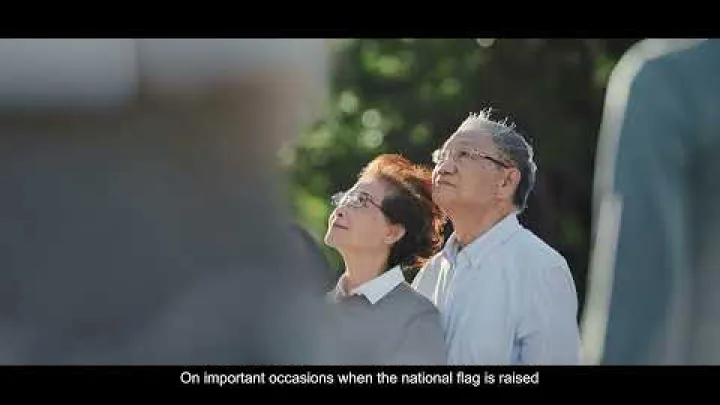
Hong Kong’s official national anthem is March of the Volunteers, the national anthem of the People’s Republic of China. It is not a separate anthem created for the Hong Kong Special Administrative Region, so the names Hong Kong national anthem and national anthem of Hong Kong are usually search descriptions rather than separate official titles. The distinction becomes important at ceremonies, in schools, at sports events, and when local songs are mistaken for the official anthem. This guide explains the anthem’s names, history, legal framework, protocol, uses, and relationship with songs such as Glory to Hong Kong and Below the Lion Rock.
The Official Answer: Which Anthem Does Hong Kong Use?
The short answer is clear: Hong Kong uses the national anthem of the People’s Republic of China. Its official status comes from Hong Kong’s constitutional relationship with China, not from a separate local anthem-selection process.
What Is the National Anthem of Hong Kong?
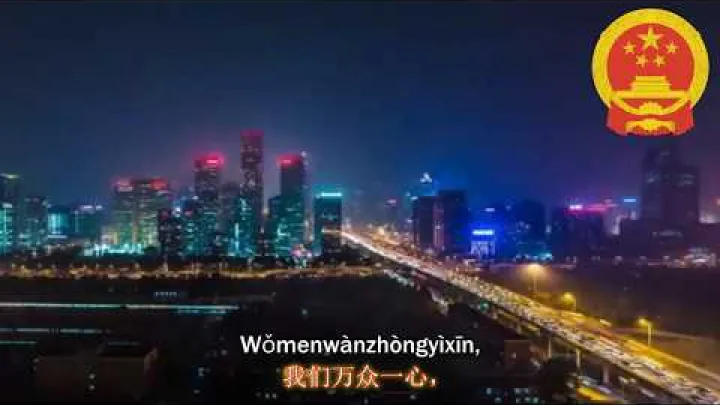
The official national anthem used in Hong Kong is March of the Volunteers. Its formal state designation in English is the National Anthem of the People’s Republic of China. The song itself is commonly identified by the English title March of the Volunteers and by its Chinese title, 《義勇軍進行曲》.
Two Chinese names can therefore appear in official information. 中華人民共和國國歌 means the National Anthem of the People’s Republic of China and identifies the state symbol. 《義勇軍進行曲》 names the musical work that serves as that anthem. In English, people often use the song title when they ask for the Hong Kong anthem name, while formal documents may use the state designation or simply refer to the national anthem.
The Constitutional and Mainland Affairs Bureau explains Hong Kong’s local arrangements for the national anthem. Under the current constitutional arrangement, Hong Kong does not have a separate official national anthem. The Hong Kong regional flag and regional emblem are distinct regional symbols, but their existence does not create a separate regional anthem.
This is why March of the Volunteers is the correct answer in a school ceremony, an official reception, or a qualifying international sports ceremony involving Hong Kong. A local song may have cultural importance or be described informally as an anthem, but that description does not change the official designation.
Why the Chinese National Anthem Applies in Hong Kong
Hong Kong is a Special Administrative Region of the People’s Republic of China. As a result, the national anthem of the state is used when Hong Kong performs official functions connected with the state. The arrangement is similar to the distinction between a national flag and a regional flag: both can appear in Hong Kong’s public life, but they do not have the same constitutional status.
Basic Law Annex III lists national laws and instruments to be applied in the Hong Kong Special Administrative Region. It includes the Resolution on the Capital, Calendar, National Anthem and National Flag. This provides part of the constitutional connection between the national anthem and Hong Kong’s legal framework.
The 1997 transfer of sovereignty explains the historical change in official state symbols. Before 1997, official ceremonies under British colonial rule used the British royal anthem. After the establishment of the Hong Kong Special Administrative Region, official ceremonies adopted the national anthem of the People’s Republic of China. The change did not turn March of the Volunteers into a Hong Kong-only song; it confirmed that Hong Kong uses the national anthem of the state of which it is a Special Administrative Region.
It is useful to keep the categories separate. The Chinese national flag represents the People’s Republic of China, while the Bauhinia flag is the regional flag of Hong Kong. The national anthem belongs to the national level. A regional symbol, a local patriotic song, and a national anthem may appear in the same discussion, but they are not interchangeable.
History, Creators, and Meaning of March of the Volunteers
March of the Volunteers became Hong Kong’s official anthem through its status as China’s national anthem, but the song itself has a much longer history. It began as a 1930s film song linked to resistance and later moved through several stages of national adoption.
Tian Han, Nie Er, and the Song's 1930s Origins
The lyrics were written by Tian Han, and the music was composed by Nie Er. The song emerged in the 1930s, a period marked by Japanese expansion in China and intense political and military pressure. Its language and musical form expressed a call for people to act together in the face of national danger.
The song is associated with the film commonly translated as Sons and Daughters in a Time of Storm. Its original setting was therefore cultural as well as political: it was part of a film and a wider patriotic resistance culture before it became a formal state anthem. That history matters because the song’s first identity was not simply an official ceremony tune. It was a mobilizing work connected with wartime experience and public resistance.
Tian Han’s lyrics and Nie Er’s composition gave the song two complementary qualities. The words present collective action and resolve, while the melody is suitable for a large group to sing together. The combination helped the song travel beyond the film in which it appeared and become associated with a broader national movement.
Its film origins should not be confused with its later adoption. A song can begin as a work of popular culture, acquire political meaning, and only later become a national symbol. That is the path followed by March of the Volunteers.
From Provisional Anthem to Constitutional Status
The song’s official history can be understood as a sequence of important milestones:
- 27 September 1949:March of the Volunteers was provisionally adopted as the national anthem shortly before the founding of the People’s Republic of China. It was performed in the period surrounding the new state’s establishment.
- 1982: The song was formally confirmed as the national anthem, ending its status as only a provisional choice.
- 2004: A constitutional amendment expressly identified March of the Volunteers as the national anthem, giving the designation an explicit constitutional reference.
These milestones show how the song moved from a resistance-era cultural work to a state symbol. The 1949 decision connected it with the founding of the People’s Republic of China. The 1982 confirmation gave it settled formal status, and the 2004 constitutional recognition strengthened that status in the country’s constitutional text.
Hong Kong’s later legal arrangements should be viewed as a separate stage. The song was already China’s national anthem when Hong Kong became a Special Administrative Region in 1997. The local question was how the national symbol would be used, protected, and taught in Hong Kong. Those matters were addressed through the constitutional framework and the National Anthem Ordinance, rather than through the creation of another anthem.
Themes and Musical Character
The title March of the Volunteers emphasizes people who are prepared to act for a shared cause. The word volunteers gives the song a collective focus: it is not centered on one ruler or one individual hero, but on people rising together during a national crisis.
In broad terms, the lyrics express resistance, urgency, courage, unity, and national survival. They call listeners toward action rather than passive observation. The song’s march-like character supports that message. Its firm rhythm, direct melodic movement, and strong group-singing quality make it effective in public ceremonies where many people hear or perform it together.
The historical and official meanings overlap but are not identical. Historically, the song was connected with resistance to aggression and the danger facing China in the 1930s. In its present official role, it represents the People’s Republic of China and is used as a state symbol. Those layers can lead listeners in contemporary Hong Kong to focus on different aspects of the song. Some may emphasize its anti-aggression origins, while others may understand it mainly through its current political and constitutional status.
There is no need to reproduce the full lyrics to understand the anthem’s role. For a formal performance, the approved lyrics, score, and recording are the relevant materials. For general readers, a summary of the themes is usually more useful than a long quotation, especially when searching for reliable and authorized lyric resources.
Hong Kong's National Anthem Law and Protocol
Hong Kong’s national anthem arrangements combine constitutional rules, local legislation, and administrative guidance. The law establishes duties and offences, while protocol and education materials help institutions conduct ceremonies correctly.
The Basic Law and the National Anthem Ordinance
The national anthem’s status in Hong Kong is connected to Basic Law Annex III and the national legal framework applied to the Hong Kong Special Administrative Region. Hong Kong then enacted its own local legislation to set out how the anthem is played, sung, protected, and promoted within the territory.
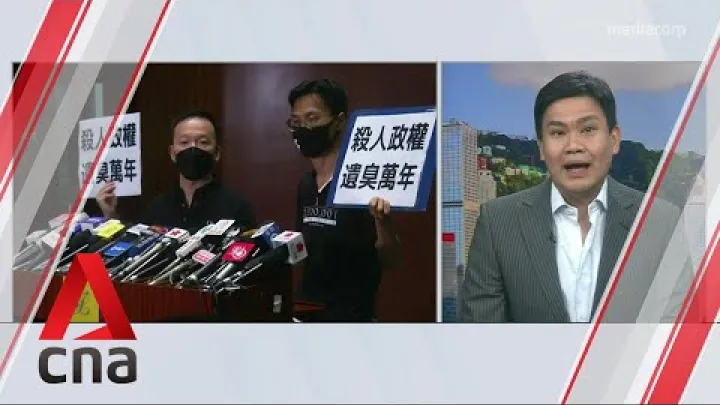
The National Anthem Ordinance, Cap. A405, came into effect on 12 June 2020. The Hong Kong e-Legislation text is the primary place to read the ordinance’s current provisions.
The ordinance has several connected functions. It regulates the playing and singing of the national anthem on specified occasions, establishes protections against misuse or insult, and supports the promotion of knowledge and respect for the anthem. It also provides a local legal framework for investigation and prosecution when an alleged offence falls within the ordinance.
The ordinance does not create a Hong Kong national anthem. Instead, it implements the use of the national anthem of the People’s Republic of China in Hong Kong. This distinction is important when reading headlines or online discussions that use the phrase Hong Kong national anthem as a convenient shorthand.
Legal duties should also be separated from general ceremonial guidance. The ordinance identifies statutory requirements, while government departments, schools, event organizers, and other institutions may issue practical instructions for rehearsals, equipment, timing, and conduct.
When the Anthem Is Played and How People Should Behave
Schedule 3 of the National Anthem Ordinance identifies occasions on which the national anthem must be played and sung. The full schedule is more precise than a general list, but representative categories include:
- major government ceremonies and specified flag-raising ceremonies;
- National Day celebrations and related official receptions;
- oath-taking or declaration events identified by the law; and
- specified sports occasions in which the national flag or Hong Kong regional flag is raised.
The exact legal obligation depends on the event and the wording of the current schedule. Not every public gathering, school activity, concert, or sporting event has exactly the same legal status. Some events are covered by statutory requirements, while others may follow official protocol or institutional practice.
When the anthem is played in a formal setting, the expected approach is to stand solemnly and behave with dignity. People should avoid conduct that mocks, interrupts, or deliberately disrespects the anthem. Event instructions may also explain when participants should face the flags, how a procession should pause, and whether the anthem will be performed live or played from an official recording.
The version used in a formal ceremony matters. Organizers should use the approved form of the melody, lyrics, and score rather than an altered arrangement, parody, remix, or unofficial recording. A choir, band, or recorded track may be used according to the event’s arrangements, but the performance should preserve the official work and follow the applicable protocol.
For a detailed question about whether a particular event is covered, the safest approach is to consult the current Schedule 3 text and the relevant government or institutional instructions. A general statement that the anthem is played at official events should not be treated as a substitute for checking the category of a specific ceremony.
Misuse, Insult, and Legal Boundaries
The National Anthem Ordinance creates offences involving intentional misuse or insult. At a high level, the restrictions can include intentionally altering the lyrics or score, deliberately performing the anthem in a derogatory way, using it in a prohibited commercial advertisement, or making other uses that the ordinance identifies as improper.
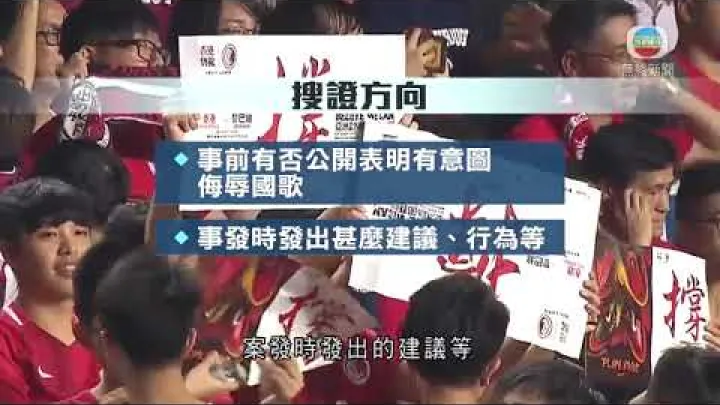
The legal question is not simply whether a performance was unpopular, imperfect, or criticized. A musical error, an incorrect entrance, or a poor rehearsal should not automatically be described as a criminal offence. Whether conduct falls within the law depends on the specific statutory provision, the facts of the incident, and the required elements such as intention where the provision calls for it.
Commercial use also requires care. The law may regulate particular uses of the anthem in advertisements or other commercial material, but that does not mean every appearance of the song in every business setting has the same legal result. Anyone planning to include the anthem in a public performance, video, advertisement, application, or other commercial material should read the current ordinance and obtain qualified legal advice when the situation is uncertain.
Investigations and prosecutions take place under Hong Kong law and procedure. Readers should therefore avoid assuming that commentary about a reported case describes every possible performance or every use of the anthem. The wording of Cap. A405 and the facts of the individual situation remain important.
Where Hong Kong Uses the Anthem
The national anthem appears in settings where Hong Kong represents the state or conducts formal public activities. Its use is most visible at official ceremonies, in education, and at international sporting events.
Official Ceremonies and Flag-Raising Events
Official uses include specified government ceremonies, flag-raising events, National Day activities, and other settings covered by the applicable law or protocol. The anthem can be heard alongside the Chinese national flag and the Hong Kong regional flag, but the presence of the regional flag does not change the anthem’s national status.
In these ceremonies, the anthem connects sound, symbols, and public representation. The national flag represents the People’s Republic of China, while the regional flag represents the Hong Kong Special Administrative Region. The anthem is the national anthem of the former, even when it is performed at an event held by the latter.
Some ceremonial uses are required by the National Anthem Ordinance, while others reflect established official practice or event guidance. This distinction matters for organizers. A program that includes a flag ceremony should identify the relevant rules, use the correct sequence, and make sure participants know the expected conduct.
For visitors and international residents, hearing March of the Volunteers at a Hong Kong government ceremony is not evidence that Hong Kong has a separate national anthem. It is the expected use of the national anthem of the People’s Republic of China in the Hong Kong Special Administrative Region.
Schools, Education, and Official Audio Resources
Schools have an important role in explaining the national anthem and other national and regional symbols. Education may cover the anthem’s name, history, meaning, correct lyrics and melody, flag-raising procedures, and respectful conduct. It also helps students distinguish the national flag and national anthem from Hong Kong’s regional flag and regional emblem.
The Education Bureau provides educational materials relating to the national flag, national anthem, and regional flag, including official audio resources. These materials can support classroom learning, school assemblies, rehearsals, and explanations of the symbols’ different roles.
People searching for national anthem lyrics, an MP3, or a download should begin with an official government or Education Bureau resource. Third-party uploads may use an incorrect arrangement, incomplete lyrics, altered audio, or outdated information. The availability and format of an official file can change, so users should follow the current resource page rather than rely on an unlabeled file-sharing link.
School practice is not identical to the anthem’s formal legal status. Education Bureau guidance explains how schools should teach and conduct activities, while the ordinance defines the legal framework for specified conduct and occasions. A school resource can therefore be useful for learning the anthem without being the source of its constitutional designation.
International Sports and Olympic Use
International sports events often create questions about which anthem represents Hong Kong. Hong Kong participates in many international competitions under the designation Hong Kong, China. When the event’s official protocol calls for a national anthem, the anthem used is March of the Volunteers, not a separate Hong Kong city song.
This principle applies to Olympic-related questions as well as other international competitions, but the exact ceremony can depend on the organizer’s rules. Medal ceremonies, team events, opening ceremonies, and other presentations may have different arrangements for flags, anthems, uniforms, and announcements. The fact that Hong Kong competes separately in some sporting structures does not give it a separate national anthem.
Correct identification matters because a wrong recording or wrong song can affect the ceremony, broadcasting, athletes, officials, and audience. It also avoids confusing a popular Cantonese song with the official anthem used for Hong Kong’s representation in an international event.
Event organizers and participants should obtain the authorized recording and confirm the current ceremony instructions with the relevant international federation, Olympic organizer, or sports body in advance. Do not assume that every competition uses the same sequence or the same combination of national and regional flags.
Local Songs, Protest Music, and Historical Alternatives
Hong Kong has many songs that carry local, cultural, patriotic, or political meaning. Their importance helps explain why online searches sometimes produce answers other than March of the Volunteers, but cultural importance and official status are different categories.
Glory to Hong Kong and Other Unofficial Songs
Glory to Hong Kong emerged as a Cantonese protest and movement song during the 2019 protests. It became widely associated with a particular political movement and was sometimes treated by supporters as a symbolic song for Hong Kong. It is not Hong Kong’s official national anthem.
Confusion can arise when a video, online post, event organizer, or search result labels a song as an anthem without explaining whether the term is legal, cultural, or political. An unofficial song may be popular at a particular time or among a particular group, but popularity does not change the national anthem’s constitutional designation.
Below the Lion Rock is another culturally significant Hong Kong song. It is often discussed as an unofficial anthem or as an expression of the Lion Rock Spirit, especially in conversations about community, resilience, and local identity. That description refers to cultural meaning rather than a constitutional title.
The same distinction applies to phrases such as national song, city anthem, unofficial anthem, and movement anthem. These labels can describe how people use or interpret a song. They do not confer the legal status held by March of the Volunteers.
The Colonial-Era Anthem and the 1997 Change
During British colonial rule, official ceremonies in Hong Kong used the British royal anthem, known as God Save the Queen when the monarch was a queen and God Save the King when the monarch was a king. The title therefore depended on the reigning monarch. It was a colonial-era royal anthem, not a separate Hong Kong national anthem in the present constitutional sense.
The 1997 transfer of sovereignty brought a change in official state symbols. The colonial-era royal anthem was replaced in Hong Kong’s official state ceremonies by March of the Volunteers. This change reflects the new constitutional status of Hong Kong as a Special Administrative Region of the People’s Republic of China.
Informal searches for Hong Kong national song can therefore refer to several different historical or cultural subjects. The categories can be summarized as follows:
- Current official national anthem:March of the Volunteers, the national anthem of the People’s Republic of China.
- Former colonial royal anthem:God Save the Queen or God Save the King, depending on the monarch.
- Local cultural song:Below the Lion Rock, often linked with Hong Kong identity and the Lion Rock Spirit.
- Movement song:Glory to Hong Kong, associated with the 2019 protest movement.
These categories should not be merged. A former royal anthem, a local patriotic song, and a movement song may all be important in Hong Kong’s history or public culture, but only March of the Volunteers is the current official national anthem used by Hong Kong.
Conclusion: The Official Answer in Context
Hong Kong’s official national anthem is March of the Volunteers, or 《義勇軍進行曲》, the National Anthem of the People’s Republic of China. Hong Kong has no separate official national anthem under its current constitutional arrangement.
The song’s 1930s origins, its creators Tian Han and Nie Er, its adoption in 1949, and its later constitutional recognition explain how it became a national symbol. The Basic Law framework and National Anthem Ordinance explain how it is used in Hong Kong today, while education, ceremonies, and sports protocol show where readers are most likely to hear it. Local songs such as Glory to Hong Kong and Below the Lion Rock may carry strong cultural or political meanings, but they belong to different categories from the official national anthem.
Select area
Create a post
Posting is free and no registration is required.