Hong Kong Country Facts: Quick Facts & Complete Profile

These Hong Kong country facts bring together the basic identifiers and current figures that readers often expect from a country profile. Hong Kong is frequently listed alongside countries in statistical databases, but it is not a sovereign country; it is a Special Administrative Region of the People’s Republic of China. This profile explains that distinction before covering Hong Kong’s history, geography, society, government, legal system, currency, and economy. Numerical figures are paired with reference years or measurement notes so that comparisons are easier to interpret.
Hong Kong Quick Facts at a Glance
The quick facts below provide a starting point for students, international readers, business professionals, and anyone looking for basic information about Hong Kong. The official Hong Kong Government – The Facts profile is a useful reference for standard terminology and territory-wide identifiers.
Official Identity and Political Status
The official name is the Hong Kong Special Administrative Region of the People’s Republic of China. The common name is Hong Kong, and the shorter form Hong Kong SAR is useful when the constitutional or statistical context needs to be clear.
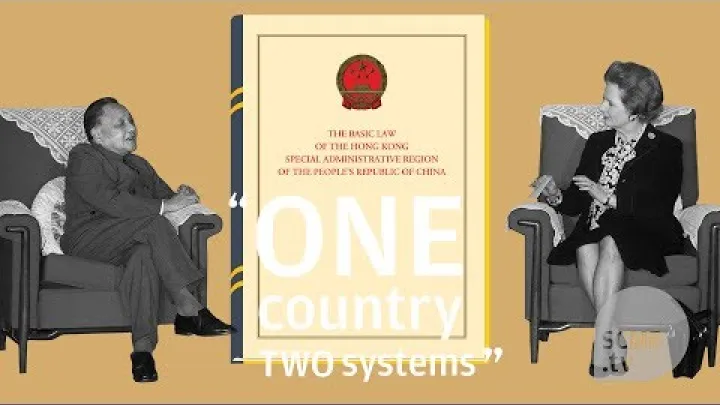
Hong Kong is not an independent country or sovereign state. It is a local administrative region of China with a high degree of autonomy in many internal matters under the Basic Law. China holds sovereignty, while Hong Kong maintains separate local institutions in areas such as courts, public finance, customs, immigration, and monetary affairs.
| Fact | Hong Kong | Reference |
|---|---|---|
| Official name | Hong Kong Special Administrative Region of the People’s Republic of China | Current constitutional designation |
| Common name | Hong Kong | Current common usage |
| Political status | Special Administrative Region of China; not a sovereign state | Current constitutional status |
| Demonym | Hongkonger or Hong Kong resident | Common usage |
| Capital | No separate constitutional capital; the government is based in the Admiralty area | Administrative structure |
| Largest city | No separately designated largest city; Hong Kong is a unified urban territory with several major urban cores | Administrative structure |
| Region | Eastern Asia; southern coast of China | Geographic classification |
| Population | 7,534,200 | Provisional estimate at end-2024 |
| Area | Approximately 1,100 square kilometres of land; water-inclusive figures vary by measurement basis | Approximate land-area convention |
| Currency | Hong Kong dollar, HKD | Current currency |
| Official languages | Chinese and English | Current official usage |
| Calling code | +852 | International telephone code |
| ISO alpha-2 code | HK | International identifier |
| ISO alpha-3 code | HKG | International identifier |
| Country-code top-level domain | .hk | Internet identifier |
| Time zone | Hong Kong Time, UTC+8; no daylight saving time | Current time standard |
| Form of government | Executive-led system under the Basic Law within a Special Administrative Region of China | Current constitutional framework |
The table separates political status from the way Hong Kong may appear in databases. After the initial definition, Hong Kong SAR is used where constitutional or statistical precision matters. When comparing population, area, GDP, or another numerical figure, confirm the reference year, geographic label, and measurement basis first. A mainland China figure may exclude Hong Kong SAR, while an international database may list Hong Kong SAR, China as a separate statistical economy.
Location, Area, Population, and Urban Form
Hong Kong is in Eastern Asia on the southern coast of China. It borders Guangdong Province and lies immediately south of Shenzhen, with the South China Sea to the south and east. Its territory includes Hong Kong Island, the Kowloon Peninsula, the New Territories, Lantau Island, and many smaller outlying islands.
Population figures describe the territory as a whole. The provisional end-2024 population was 7,534,200, but this does not mean that Hong Kong is divided into separate city-states. Hong Kong functions as one highly urbanized territory with dense built-up districts, suburban areas, villages, industrial zones, islands, and large rural spaces.
Hong Kong has no separate constitutional capital. Central and Admiralty on the northern side of Hong Kong Island contain major government, legal, financial, and business institutions, so they are often treated as the territory’s principal administrative and commercial core. Kowloon has extensive high-density urban districts, while the New Territories contain much of the territory’s land area, newer towns, villages, reservoirs, and countryside.
For the same reason, Hong Kong does not have a separately incorporated largest city in the way that many sovereign countries do. It is more accurate to describe Hong Kong as a unified metropolitan territory with several principal urban cores. This distinction prevents a conventional capital or largest-city answer from suggesting an administrative structure that Hong Kong does not use.
Languages, Currency, Codes, Time, and Government
Chinese and English are the official languages. That official status does not mean that every resident uses both languages in the same way or with the same frequency. Cantonese is the dominant everyday spoken variety for many residents, Putonghua is important in education and cross-border communication, and English remains prominent in government, law, finance, professional services, and international business.
The currency is the Hong Kong dollar, commonly abbreviated as HKD or written with the dollar sign in local contexts. It is separate from the renminbi used in mainland China. The international calling code is +852, the ISO codes are HK and HKG, and the country-code top-level domain is .hk. These identifiers are useful for forms, shipping records, websites, travel bookings, and international databases.
Hong Kong Time is UTC+8. The territory does not use daylight saving time, so clocks normally remain on the same standard throughout the year. Its government is executive-led: the Chief Executive heads the Hong Kong SAR and its government, while the Legislative Council makes laws and examines public expenditure within the Basic Law framework.
Hong Kong’s Status, History, and Autonomy
Hong Kong’s present identity is easier to understand when its historical transition and constitutional arrangements are considered together. Sovereignty, local autonomy, economic separation, and international data treatment are related, but they are not identical concepts.
From British Colony to Hong Kong SAR
Hong Kong’s modern political history was shaped by British administration, agreements with China, and the 1997 transfer of sovereignty. The main milestones are:
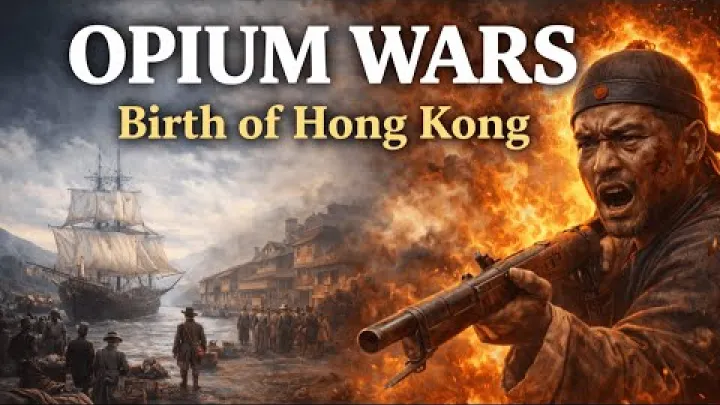
- 1842: Following the First Opium War, the Treaty of Nanking ceded Hong Kong Island to Britain.
- 1860: The Convention of Peking ceded the southern part of the Kowloon Peninsula and Stonecutters Island to Britain.
- 1898: The Second Convention of Peking granted Britain a 99-year lease over the New Territories and associated islands.
- 1984: The United Kingdom and China signed the Sino-British Joint Declaration, setting out the planned return of Hong Kong to Chinese sovereignty.
- 1 July 1997: British administration ended and the Hong Kong Special Administrative Region was established.
The Basic Law was adopted in 1990 and came into force when the SAR was established. It provides the constitutional framework for Hong Kong’s institutions, rights, finances, courts, and relationship with the central authorities. The historical change therefore did not create an independent state; it created a Chinese Special Administrative Region with a distinct local system.
One Country, Two Systems in Practice
One country, two systems describes the framework under which Hong Kong is part of China while retaining a separate system in many domestic areas. The phrase should not be read as a claim that Hong Kong has sovereignty. It describes a constitutional and administrative arrangement within the sovereignty of the People’s Republic of China.

Hong Kong has its own courts, legal procedures, public finances, tax system, currency, customs administration, and immigration controls. It also develops its own economic and commercial policies within the powers given by the Basic Law. These arrangements help explain why a traveller can encounter a separate Hong Kong immigration boundary, why the Hong Kong dollar is used locally, and why Hong Kong companies and trade records can be treated differently from mainland entities.
Defence and foreign affairs are responsibilities of the central authorities. Hong Kong’s local government is responsible for a wide range of internal matters, but its autonomy is not unlimited and does not make it equivalent to an independent country. The practical meaning of the framework can also differ by subject, so constitutional wording, local law, and international economic practice should be kept distinct.
Why Hong Kong Appears Separately in Global Data
Hong Kong SAR, China may appear separately from mainland China in population, trade, finance, and economic databases because it has a distinct statistical and economic framework. A database may be recording a separate customs territory, a separate currency area, a separate financial market, or a separate reporting unit rather than making a statement about sovereign statehood.
Hong Kong has retained separate customs-territory treatment and participates in international economic bodies in its own name, commonly as Hong Kong, China. This is especially relevant to trade statistics, re-exports, tariffs, shipping documents, and World Trade Organization records. A separate entry allows the data to reflect Hong Kong’s own customs and economic flows.
Statistical separation, economic participation, and diplomatic recognition are different questions. A label such as Hong Kong, China identifies the geographic or institutional scope used for a particular dataset. It does not establish that Hong Kong is an independent country. Readers should follow the definition and geographic coverage stated by each database before comparing figures with China, neighbouring economies, or other jurisdictions.
Geography, Territory, and Climate
Hong Kong combines a compact coastal setting with steep terrain, reclaimed urban land, busy harbour areas, islands, and protected countryside. Its geography explains both its intense urban concentration and the limited amount of land available for development.
Location, Islands, and Territorial Layout
Hong Kong lies on China’s southern coast, south of Shenzhen and east of the Pearl River estuary. Victoria Harbour separates Hong Kong Island from the Kowloon Peninsula and has long been central to the territory’s transport, trade, and urban development. The territory also extends across the New Territories, Lantau Island, and numerous outlying islands.
Hong Kong Island contains the historic central business and government corridor, including Central and Admiralty, as well as steep residential slopes and southern coastal areas. Kowloon is a densely settled peninsula connected to the island by major road, rail, and tunnel links. The New Territories stretch north toward the mainland border and include new towns, older villages, industrial areas, wetlands, reservoirs, and large areas of open land.
Lantau is the largest island and includes rural areas, mountains, coastal settlements, and major transport infrastructure. This mixture means that a short distance on a map can separate very different environments. A profile of Hong Kong should therefore describe the whole territory rather than treating its central business district as representative of every district.
Terrain, Reclamation, and Country Parks
Hong Kong is predominantly hilly and mountainous. Flat land is limited, especially on Hong Kong Island and the Kowloon Peninsula, so settlement has concentrated in coastal plains, valleys, reclaimed waterfronts, and planned new towns. Reclamation has expanded land for roads, commercial districts, housing, ports, and transport facilities, including areas around Victoria Harbour.
Tai Mo Shan, at approximately 957 metres, is Hong Kong’s highest point. Slopes and valleys influence where roads, railways, reservoirs, housing estates, and villages can be built. They also create sharp contrasts between high-rise districts and wooded or scrub-covered hillsides.
Hong Kong is not completely built up. Official descriptions commonly identify country parks and special areas as covering roughly two-fifths of the land area, although the exact figure depends on the land classification and reference date. These areas protect hills, forests, reservoirs, coastlines, and habitats. Territory-wide density therefore gives only a broad average: built-up districts can be extremely crowded even though substantial parts of Hong Kong remain rural or protected.
Climate, Seasons, and Typhoons
Hong Kong has a subtropical monsoon climate. Winters are generally milder and drier than summers, spring can be humid and cloudy, summers are hot and rainy, and autumn is often more settled and comparatively dry. Weather conditions can vary between exposed coasts, dense urban areas, valleys, and higher ground.
Rainfall is concentrated in the warmer part of the year. Heavy rain can occur during monsoon weather, while tropical cyclones are a recurring feature of the regional climate. May to November is a broad period in which tropical cyclone activity can affect Hong Kong, with the greatest practical relevance usually occurring during summer and early autumn.
Climate averages should be read with their reference period. A single annual temperature or rainfall average cannot describe every month, elevation, or neighbourhood. For current warnings, transport interruptions, and outdoor conditions, readers should use the Hong Kong Observatory and local government information rather than treating a country-profile average as a forecast.
Population, Languages, and Society
Hong Kong is a densely populated and highly urbanized society with a changing age structure and a diverse population. Population totals, language use, nationality, ethnicity, religion, and living conditions describe different aspects of society and should not be treated as interchangeable categories.
Population Trends and Demographic Change
The provisional Hong Kong population at the end of 2024 was 7,534,200, an increase of 6,400 people, or 0.1 percent, from the end of 2023. The Hong Kong Census and Statistics Department identifies this as a year-end provisional estimate.
A year-end figure is not the same as a mid-year estimate. Different population series can use different dates, revision schedules, definitions of usual residence, and treatment of temporary movements. For this profile, the end-2024 government estimate is the primary current figure, rather than combining it with an international estimate that may use another method.
Recent population change reflects both natural decrease and migration. Births and deaths affect the natural balance, while arrivals and departures can change the total more quickly. Over the longer term, low fertility and high life expectancy contribute to population ageing. That trend affects demand for health care, housing, public services, accessible transport, employment policies, and support for older residents.
Ethnic Composition and Religious Plurality
Hong Kong is predominantly Chinese, but it also has substantial communities from the Philippines, Indonesia, India, Nepal, Pakistan, the United Kingdom, the United States, and many other places. Filipino and Indonesian communities are especially visible in the territory’s international social and employment landscape, while residents of South Asian, European, North American, and other backgrounds contribute to business, education, professional, cultural, and community life.
Nationality, ethnicity, place of birth, language, and employment status are different demographic measures. For example, a person’s nationality does not necessarily describe their ethnic identity, and a group’s visibility in a particular occupation does not define the whole community. Census categories and population shares should therefore be read with the date and definition used by the source.
Hong Kong’s religious landscape includes Buddhism, Taoism, Chinese folk religion, Christianity, Islam, Hinduism, Sikhism, and other faith traditions. Temples, churches, mosques, gurdwaras, and other places of worship reflect this plurality. Religious identity is not always exclusive or formally recorded, so broad descriptions are more reliable than assuming that every resident belongs to one clearly defined category.
Official Languages and Everyday Speech
Chinese and English are Hong Kong’s official languages and are used in government, courts, public administration, education, and business. In practice, language use depends on setting. Cantonese is the main everyday spoken variety for many residents, while Putonghua is important in education, tourism, cross-border communication, and interactions connected with mainland China.
English remains particularly important in the legal, financial, professional, academic, and international business sectors. Many residents use more than one language or shift between languages depending on the audience. Calling Hong Kong simply monolingual, bilingual, or trilingual can therefore be misleading unless the context is specified.
Spoken language and written language also differ. Traditional Chinese characters remain important in public communication and written culture, while English is widely used alongside Chinese in official and commercial settings. Language statistics should always identify whether they measure a person’s usual spoken language, ability to read or write, or broader language proficiency.
Health, Life Expectancy, and Human Development
Life expectancy at birth in Hong Kong was about 85 years in 2024 according to the World Bank’s Hong Kong SAR, China data. This is a notable feature of Hong Kong’s demographic record and is connected with its health services, public infrastructure, living environment, and long-term social development.
The Human Development Index can add context by combining indicators related to health, education, and income. However, an HDI score is meaningful only when its publisher, edition, reference year, geographic treatment, and methodology are stated. A score from one United Nations Development Programme series should not be combined casually with GDP or life-expectancy figures from another year.
High life expectancy, strong infrastructure access, and high aggregate development do not describe every income group or every living condition. A country-style profile can identify broad achievements, but it should not present averages as a complete account of housing conditions, household resources, health outcomes, or access to opportunity.
Government, Law, and Administration
Hong Kong has territory-wide executive, legislative, and judicial institutions, together with district-level administration. These institutions operate under the Basic Law and within the constitutional relationship between the Hong Kong SAR and the central government.
Executive-Led Government and the Chief Executive
The Chief Executive is the head of the Hong Kong SAR and the head of its government. The office leads the executive branch, sets major policy priorities, presents budgets and policy programmes, and represents the government in the exercise of its local responsibilities.
The Chief Executive is selected through the Election Committee process and formally appointed by the Central People’s Government. The term is five years under the Basic Law, subject to the constitutional rules governing the office. The Chief Executive is supported by the Executive Council, which advises on important policy decisions, and by principal officials who lead major government bureaux and departments.
This structure is executive-led rather than based on a directly elected presidential model. The Chief Executive, principal officials, the Executive Council, the Legislative Council, and the civil service have different responsibilities. Current officeholders and detailed institutional arrangements should be checked against official government information because personnel and administrative portfolios can change.
The Legislative Council and Electoral Structure
The Legislative Council is Hong Kong’s unicameral legislature. Its responsibilities include making laws, examining and approving public expenditure, scrutinizing government policies, and handling other functions assigned by the Basic Law and local legislation.
The electoral framework in force since the reforms introduced for the 2021 Legislative Council election provides 90 seats. They are returned through three channels: the Election Committee, functional constituencies, and geographical constituencies. The current structure allocates 40 seats to the Election Committee, 30 to functional constituencies, and 20 to geographical constituencies.
Functional constituencies represent defined professional, occupational, or sectoral groups. Geographical constituencies return members connected with geographic areas, while the Election Committee channel uses representatives selected through the committee system. This produces a combination of indirect, sector-based, and geographical representation. Seat totals, boundaries, eligibility rules, and electoral procedures are time-sensitive details and should be read with the relevant election year attached.
Judiciary, the Basic Law, and National Legislation
Hong Kong’s judiciary is rooted in the common-law tradition. The Court of Final Appeal is the highest local court, and the judicial system includes courts and tribunals with different jurisdictions. English and Chinese are used in the legal system, and legal institutions remain distinct from the mainland Chinese court system in their ordinary local operation.
The Basic Law is the constitutional document of the Hong Kong SAR. It defines the powers of local institutions, the rights and duties applicable in the SAR, the financial and monetary system, and the division between local responsibilities and central responsibilities. The Basic Law also provides the framework for interpretation, including the role of the Standing Committee of the National People’s Congress in interpreting provisions of the law.
Hong Kong’s local laws are not the only laws that can apply in the territory. National laws may be applied through the constitutional mechanisms set out in the Basic Law, including laws listed in Annex III. The National Security Law for Hong Kong is a major example; it was enacted by the Standing Committee of the National People’s Congress and applied in Hong Kong on 30 June 2020. It should be distinguished from ordinary local legislation enacted by the Legislative Council.
Constitutional and national-law questions can depend on the specific provision, institution, date, and factual situation. For a current legal question, consult the applicable text of the Basic Law, Annex III, the National Security Law, and other official legal materials rather than relying on a simplified country-profile description. This is especially important when making claims about jurisdiction, interpretation, national legislation, or the relationship between local and central authority.
Districts and Local Administration
Hong Kong is administered as a unified territory rather than as a federation divided into provinces or states. Its internal administrative geography is organized into 18 districts, covering areas on Hong Kong Island, in Kowloon, and across the New Territories.
District-level bodies and district councils deal with local and community matters such as neighbourhood needs, public facilities, environmental concerns, and communication between residents and government departments. They are not a territorial legislature equivalent to the Legislative Council and do not exercise the same lawmaking or budgetary role.
District-level structures, council composition, and assigned functions can change as local governance arrangements are revised. The 18-district framework remains a useful way to understand the territory, but current local responsibilities should be checked against the latest Hong Kong government information.
Economy, Currency, and Global Role
Hong Kong is a high-income, service-oriented economy with strong links to mainland China and global markets. Finance is prominent, but the economy also depends on trade, logistics, professional services, business services, aviation, tourism, and other activities connected with its international location.
Economic Model and Main Service Sectors
Finance is one of Hong Kong’s best-known sectors, including banking, capital markets, insurance, asset management, and related professional services. Trade and logistics are also central because of Hong Kong’s location on the southern China coast, its port connections, its airport, and its role in regional supply chains. Legal, accounting, consulting, technology, telecommunications, education, retail, and other business services add to the service economy.
Hong Kong’s relationship with mainland China is a major economic factor, but it does not make the territory’s economy identical to the mainland economy. Hong Kong operates its own currency, financial regulation, customs arrangements, and many commercial institutions. At the same time, cross-border investment, trade, transport, tourism, and business links connect it closely with the Pearl River Delta and the wider Chinese economy.
High average output and an important global financial role do not mean that every resident has the same income, housing conditions, or access to opportunity. GDP and financial-market importance describe the scale or structure of an economy, not the complete experience of households. Specialist discussions of Hong Kong finance, trade, or business should therefore separate economic performance from personal financial advice.
The Hong Kong Dollar, Trade, and Financial Connectivity
The Hong Kong dollar is a separate currency from the mainland renminbi. Hong Kong’s monetary system operates under a linked exchange-rate arrangement that connects the Hong Kong dollar to the US dollar through a defined convertibility mechanism. The Hong Kong Monetary Authority supports the operation and stability of the monetary system.
The Hong Kong dollar is not interchangeable with the renminbi simply because both currencies are used in the same broader economic region. Prices, salaries, bank accounts, contracts, and financial reports should identify whether an amount is in HKD, renminbi, nominal US dollars, or another unit. Before comparing any monetary figure, check the currency, exchange-rate date, valuation method, and whether the amount is nominal or adjusted for purchasing power.
Hong Kong is also known for its free-port tradition and separate-customs-territory status. Goods entering or leaving Hong Kong are recorded under its own customs arrangements, and the territory has long functioned as a trading and re-export centre. Its participation in international trade institutions as Hong Kong, China reflects this economic distinctiveness; it does not turn the territory into a sovereign state.
GDP, Income, and Economic Data Caveats
For one current international benchmark, World Bank Data360 lists Hong Kong SAR, China as a high-income economy and reports GDP per capita of approximately 56,983.07 current US dollars for 2025. The World Bank Data360 figure is an international indicator, not a measure of the salary or disposable income of a typical resident.
GDP per capita can be reported in nominal local currency, converted at market exchange rates, expressed in current US dollars, or adjusted using purchasing power parity. These methods answer different questions. A market-exchange-rate conversion can change when currencies move, while a purchasing-power measure attempts to account for differences in local prices. Local government estimates may also use different prices, revisions, and accounting conventions.
For that reason, every economic comparison should place the year, currency, valuation method, and geographic scope next to the number. Nominal GDP growth is not automatically the same as an increase in real production or household welfare. GDP per capita is an average and does not show income distribution, housing costs, debt, unpaid work, or differences between households.
Key Takeaways About Hong Kong
Hong Kong is best understood as a highly urbanized Special Administrative Region of China with a distinct constitutional, legal, monetary, customs, and economic profile. Its country-style identifiers are useful for international forms and comparisons, but they should not obscure its political status.
- Hong Kong is not a sovereign country; it is the Hong Kong Special Administrative Region of the People’s Republic of China.
- The provisional population was 7,534,200 at the end of 2024, and Hong Kong is a unified territory rather than a country divided into separate cities.
- Its geography combines dense urban districts around Victoria Harbour with mountains, islands, country parks, and rural areas.
- Chinese and English are official languages, while Cantonese is central to everyday spoken life and Putonghua and English are important in wider communication.
- The Chief Executive leads an executive-led government, the Legislative Council is the unicameral legislature, and the judiciary operates within the Basic Law framework.
- The Hong Kong dollar, separate customs territory, international financial system, and close mainland links explain why Hong Kong often appears separately in global economic data.
These features make Hong Kong a distinctive subject for study in geography, law, politics, demography, finance, and international business. The most reliable comparisons use clearly dated figures and keep political status, statistical treatment, and economic function separate.
Select area
Create a post
Posting is free and no registration is required.