Hong Kong Capital: Victoria, Central, or Tamar?
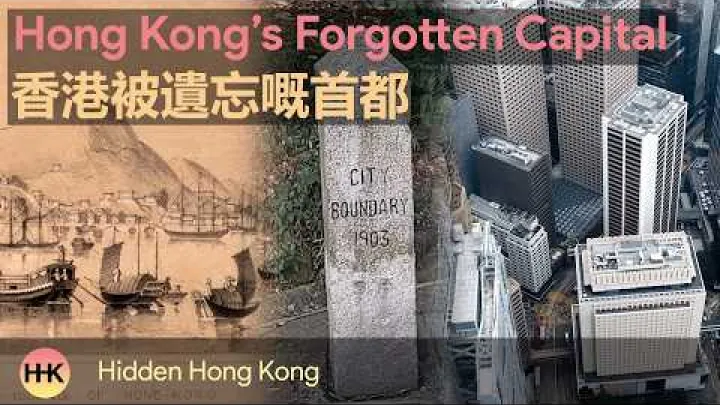
The capital of Hong Kong is traditionally identified as Victoria. In practical terms, however, the Hong Kong Special Administrative Region (HKSAR) Government is concentrated in Central and Tamar on the northern shore of Hong Kong Island, which is why all three names appear in maps, reference works, and search results. Hong Kong is not a sovereign country with a national capital of its own; it is a Special Administrative Region of China, whose national capital is Beijing. This guide separates the historical capital name from the modern government seat, explains the area's role, and clarifies the capital-versus-largest-city question.
What Is the Capital of Hong Kong?
The short answer depends on the type of reference being used. Victoria is the traditional capital name, while Central and Tamar identify the modern administrative area where the HKSAR Government carries out its main executive and legislative work.
Victoria Is the Traditional Capital Name
Victoria is the traditional and commonly listed capital of Hong Kong. The name usually refers to the historic City of Victoria, the colonial administrative settlement that developed on Hong Kong Island. International statistical references, including UNdata, use Victoria in the capital-city field for China, Hong Kong SAR.
Victoria should not be understood as a separate contemporary municipality that operates like a national capital city. The historic name describes the origin of Hong Kong's central government and administration. In modern location terms, Central is the surrounding urban district and Tamar is the waterfront government precinct within the broader Central area.
When a directory or general-knowledge quiz asks for the capital, Victoria is the clearest conventional response. When the question is practical—where to find the HKSAR’s central administration—the more useful answer is the Tamar government precinct in Central. Official building names are more precise than using “Victoria” as a current address, because Victoria is mainly a historical label while Central identifies the district. This is also why a map, a statistical profile, and a government website may use different names without describing different governments.
This distinction is useful when reading addresses or planning a visit. If a form asks for the capital of Hong Kong, Victoria is the conventional answer. If it asks where the government is located, references to Central, Tamar, or the Central Government Complex point to the current practical seat of government.
Hong Kong's Capital and China's National Capital Are Different
Hong Kong is a Special Administrative Region of the People's Republic of China, not an independent sovereign country. Its constitutional and administrative position is therefore different from that of a country with its own national capital. The Hong Kong Government describes the HKSAR as having executive, legislative, and independent judicial power within its own system.
For a question about China's national capital, the answer is Beijing. For a question about Hong Kong's traditional capital, the answer is Victoria. These answers are not contradictory because they refer to different levels of government. Victoria, Central, and Tamar relate to the administration of Hong Kong, while Beijing is the national capital of China.
The safest wording is to call Victoria Hong Kong's traditional or commonly listed capital and Central-Tamar its practical government seat. This avoids suggesting that Hong Kong has the same constitutional status as an independent country while still answering the capital question directly.
Where Is Hong Kong's Capital Located?
The capital area is on Hong Kong Island's northern shore, beside Victoria Harbour. It is part of Hong Kong's dense urban core and is closely associated with the Central business district and the Tamar waterfront.
Central and Tamar on Hong Kong Island
Modern government activity is concentrated in and around Central and Tamar. This waterfront area includes the Central Government Offices, the Office of the Chief Executive, and the Legislative Council Complex. Together, these buildings make the area the clearest physical expression of Hong Kong's present-day capital function.
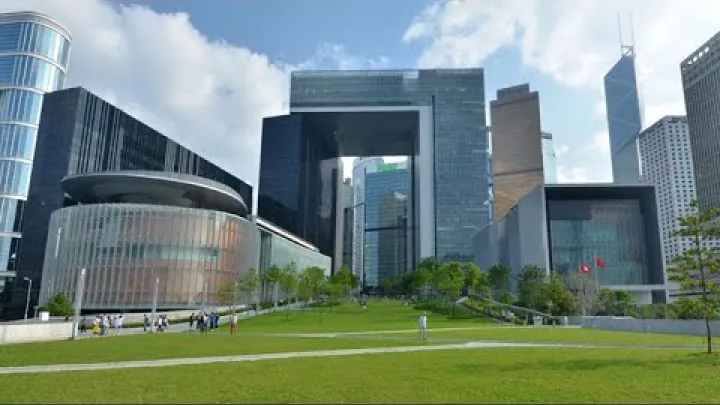
Tamar is best understood as a government complex and precinct, not as a replacement name for all of Victoria. Victoria is the historical capital label; Central is a modern urban district; and Tamar is a specific government-focused waterfront site. Keeping these terms separate makes maps, official addresses, and historical descriptions easier to interpret.
The location also explains why Hong Kong's capital area can look different from a capital city in a less concentrated country. Government offices, financial institutions, legal organizations, transport connections, and major commercial buildings stand close together around the harbor. The result is a compact political and administrative core inside a much larger urban territory.
The Capital Area within the Wider Urban Fabric
Central and Tamar occupy only a small part of Hong Kong. The HKSAR also includes Kowloon, the New Territories, Hong Kong Island outside Central, and numerous outlying islands. Government decisions made in the Central waterfront precinct apply across this wider territory, not only to the district where the offices are located.

The word “Hong Kong” can therefore have several meanings in ordinary writing:
- Hong Kong may mean the entire Special Administrative Region.
- Hong Kong may also mean the main built-up city-region in everyday speech.
- Victoria is the historical and conventional capital name.
- Central and Tamar identify the current institutional core of government.
Central is not a separate country or a city with its own national-style boundary. It is an important district within the HKSAR. This is why a map may show Central as the government location while a reference profile lists Victoria as the capital.
How Victoria Became Hong Kong's Capital
Victoria's capital role developed from Hong Kong's first colonial settlement on Hong Kong Island. The name is historical, so the chronology is more useful than treating the capital as the result of a modern city-planning decision.
The City of Victoria and the Colonial Administrative Core
British forces occupied Hong Kong Island in 1841 during the aftermath of the First Opium War. The Treaty of Nanking formally ceded the island to Britain in 1842, and the colonial government was formally established in 1843. The settlement around the present Central area then became known as the City of Victoria, a name associated with Queen Victoria.
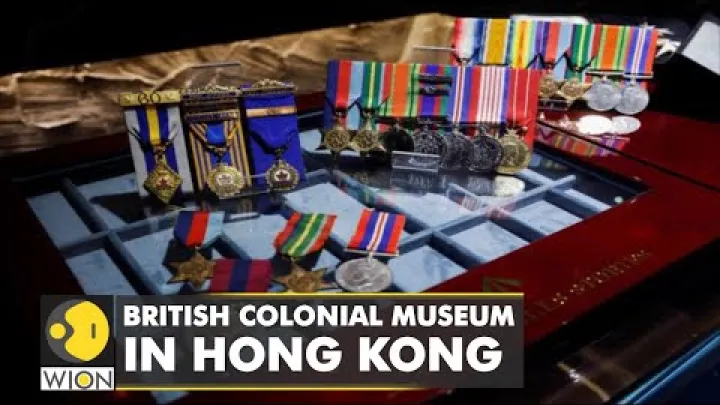
These events represent separate stages. Occupation created the initial British-controlled settlement. Formal cession changed the legal position of Hong Kong Island. The naming and organization of Victoria established the administrative center that later references describe as Hong Kong's capital. Treating all three stages as one event can make the historical record seem simpler than it was.
Victoria's importance came from its location beside the harbor and from the concentration of government, military, commercial, and port functions around the settlement. As Hong Kong's territory later expanded beyond the original island settlement, the main administrative center remained on Hong Kong Island. The capital function therefore continued through an expanding territory rather than moving from one city to another.
For this reason, the historical capital question is not mainly a story of a former capital being replaced. It is a story of an original administrative center whose name continued in reference works even as its modern government facilities and surrounding urban districts changed.
Continuity after the 1997 Transfer of Sovereignty
On 1 July 1997, sovereignty over Hong Kong transferred from the United Kingdom to the People's Republic of China, and Hong Kong became a Special Administrative Region. This was a major constitutional and political change, but it did not require the territory's established government core to move away from Hong Kong Island.
The continued importance of Central reflects institutional and geographic continuity. Government administration remained associated with the historic Victoria area, while new facilities were developed at Tamar to accommodate modern executive and legislative work. Tamar therefore represents an updated government precinct within the established capital area, not a separate capital created after 1997.
This distinction is important for current readers. The handover changed sovereignty and Hong Kong's constitutional framework; it did not turn Victoria into an independent national capital or replace the Central waterfront with a different regional capital. The practical location of government has remained connected to the same northern-shore urban core.
What Functions Does the Capital Perform?
Hong Kong's capital function is primarily political and administrative. Central and Tamar are where key institutions coordinate policy and public administration for the entire HKSAR.
Executive and Legislative Functions at Tamar
The executive side of government is represented at Tamar by the Central Government Offices and the Office of the Chief Executive. These institutions support the administration led by the Chief Executive and the work of government bureaux and departments. Their responsibilities cover territory-wide matters such as policy, public finance, infrastructure, housing, education, health, and external economic links within the applicable framework.
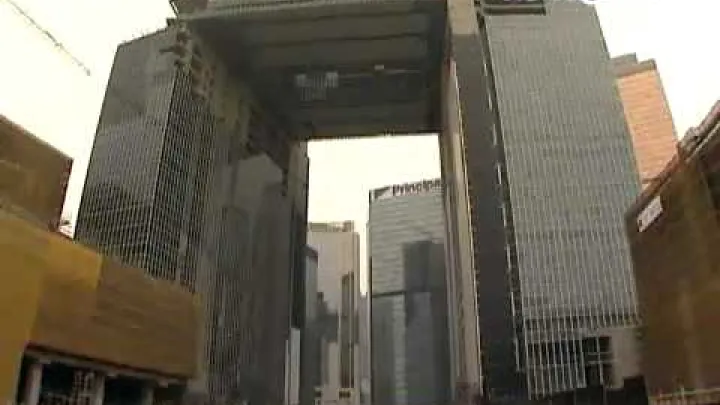
The Legislative Council Complex provides the main setting for Hong Kong's legislature. Legislative Council members debate and scrutinize proposals, examine public spending, and conduct other legislative work there. Having the executive and legislative facilities in the same waterfront precinct gives Tamar a strong practical claim to being the modern seat of government.
Architectural project information from HOK describes the Tamar development as an integrated group of facilities for the HKSAR. The complex is therefore more than a local district office. Its institutions serve the whole territory, even though the buildings stand in Central's immediate urban area.
Judicial and Administrative Functions across the HKSAR
Hong Kong's government system includes executive, legislative, and independent judicial functions. The capital area's role is to concentrate major political and administrative activity, not to contain every public institution in one small location.
Courts, government departments, public agencies, and service facilities operate at different locations across Hong Kong. Some institutions have offices in or near Central, while others are located elsewhere for operational, geographic, or public-access reasons. A person attending a hearing, submitting an application, or visiting a government department should therefore use the address provided by the relevant institution rather than assuming that every service is in Tamar.
This distribution is normal for a large, highly urbanized territory. Central and Tamar are the best places to understand the structure of government, but they are not a complete physical directory of the HKSAR's courts, departments, or public services.
Is Hong Kong's Capital Also Its Largest City?
The answer depends on whether “capital” means a historical name, a district, or a wider urban area. Victoria and Central should not be compared with the whole of Hong Kong as though they were equivalent administrative units.
Capital District versus Hong Kong-Wide Population
Hong Kong's population is normally reported for the entire HKSAR. The Census and Statistics Department lists a year-end 2025 population of 7,510,800 for Hong Kong as a whole. That figure covers the territory-wide administrative unit, not only Victoria, Central, or the Tamar government precinct.
There is no simple capital population figure that can be compared directly with the HKSAR total without defining the boundaries first. A district population, the built-up urban area, the entire territory, and a wider metropolitan region are different statistical concepts. They may produce very different results even when they refer to the same densely developed urban landscape.
When population information is needed, use the label and date attached to the number. The Census and Statistics Department is the appropriate starting point for current Hong Kong-wide figures. A number for Central would describe a much smaller district area and would not measure the population served by the HKSAR Government.
Central's importance comes from the functions concentrated there rather than from having the largest residential population. It combines government offices with major legal, financial, corporate, and commercial activity. Many people travel into the area for work or official business, so its daytime importance is not captured by a district population count alone.
Why the Capital and Largest-City Question Is Confusing
Hong Kong is often described both as a territory and as a single highly urbanized city-region. In everyday conversation, a person may say “Hong Kong” when referring to the whole HKSAR, the main urban area, or the internationally recognized city. Statistical and administrative sources may use the same name more narrowly or more formally.
That layered usage explains why different references can appear to give different answers. One source may list Victoria as the capital because it is using the traditional capital label. Another may describe Central as the government seat because it is identifying the current location of executive and legislative institutions. A travel or business source may use Hong Kong as the city name because it is discussing the wider urban area rather than a historical district.
The most useful answer to the largest-city variation is that the wider Hong Kong urban area is the relevant comparison, while Victoria or Central is the institutional capital core. The capital area lies within Hong Kong's principal urban concentration, but it is not itself a separate largest city competing with the whole territory.
So, if the question asks whether Hong Kong's capital and largest urban area overlap, the practical answer is broadly yes: the government seat is located within the territory's dominant urban region. If the question asks whether Victoria or Central is a separately defined city with the same population boundary as Hong Kong, the answer is no. The apparent disagreement comes from different geographic and administrative definitions.
Conclusion: How to State Hong Kong's Capital Clearly
The clearest short answer is: Victoria is the traditional and commonly listed capital of Hong Kong, while Central and Tamar are the modern areas where the HKSAR Government is based. Victoria grew from the early colonial administrative settlement on Hong Kong Island, and the government core continued there after the 1997 transfer of sovereignty.
Beijing is the national capital of China, not a replacement answer for Hong Kong's regional capital. Central and Tamar should also not be treated as separate sovereign cities. Once the historical label, present government location, and wider urban area are distinguished, the capital question becomes straightforward.
Select area
Create a post
Posting is free and no registration is required.