Hong Kong National Symbols: Official and Cultural Icons

Questions about Hong Kong national symbols often mix formal emblems with familiar city images. The clearest official answer is that Hong Kong, as a Special Administrative Region, uses regional symbols within the national framework of the People's Republic of China. The Bauhinia × blakeana is the territory's floral emblem, while claims about a national animal, bird, tree, fruit, or motto require more caution. This guide explains the official status of each symbol and separates documented designations from cultural associations.
What National Symbols Means in Hong Kong
The word national can be used broadly in everyday searches, but it has a more precise meaning in constitutional and administrative contexts. This distinction matters because Hong Kong is not a sovereign state with a separate national-symbol system. It is a Special Administrative Region of the People's Republic of China.
Regional Symbols and the National Symbols of China
Hong Kong's formal local symbols are therefore described as its regional flag and regional emblem. These represent the Hong Kong Special Administrative Region. They should not be presented as sovereign national symbols separate from the national flag and national emblem of the People's Republic of China.
The national symbols of China remain part of the wider official framework that applies in Hong Kong. Annex III of the Basic Law lists national laws to be applied in Hong Kong, including provisions concerning the design and use of the national emblem. The relevant text is available through the Basic Law.
This does not make Hong Kong's regional emblem identical to the PRC national emblem. They are separate designs with different functions. The regional emblem identifies Hong Kong's local administration, while the national emblem represents the country as a whole. The same distinction applies when discussing the regional flag rather than the national flag.
For practical purposes, readers can use national symbols of Hong Kong as a broad search phrase, but regional symbols and floral emblem are more accurate terms for Hong Kong's own official identity. The flag and anthem are important parts of the wider framework, but the most distinctive Hong Kong-specific image is the bauhinia.
Official, Cultural, and Unconfirmed Labels
Not every symbol that appears in public imagery has the same status. A government-designated emblem, a familiar cultural icon, and a popular answer on an informal list should be described differently. The following classification gives a quick guide.
| Symbol or subject | Status | Typical role |
|---|---|---|
| Regional flag | Official regional symbol | Hong Kong SAR identity |
| Regional emblem | Official regional symbol | Official local representation |
| Bauhinia × blakeana | Official floral emblem | Hong Kong-specific visual identity |
| Chinese white dolphin | Cultural association | Maritime and environmental identity |
| Black kite | Informal candidate | Familiar urban bird association |
| Tree, fruit, and motto | No designation identified | Do not treat popular claims as official |
This classification also explains why a symbol can be highly visible without being legally designated. Tourism material, school projects, public campaigns, and media imagery may repeatedly use an animal or landmark. Repetition can create strong cultural recognition, but it does not by itself create an official title.
The Bauhinia: Hong Kong's Floral Emblem
Among all Hong Kong-specific symbols, the bauhinia has the clearest documented status and the most visible official use. It answers the common search for Hong Kong's national flower, with one important terminology qualification.
The Botanical Identity and Official Status of Bauhinia × blakeana
The direct answer to the question what is Hong Kong's national flower is Bauhinia × blakeana, commonly known as the Hong Kong orchid tree. The more accurate formal description is Hong Kong's floral emblem or regional floral emblem. In everyday English, national flower is understandable, but it can suggest a sovereign-state designation that is not the best description of Hong Kong's constitutional position.
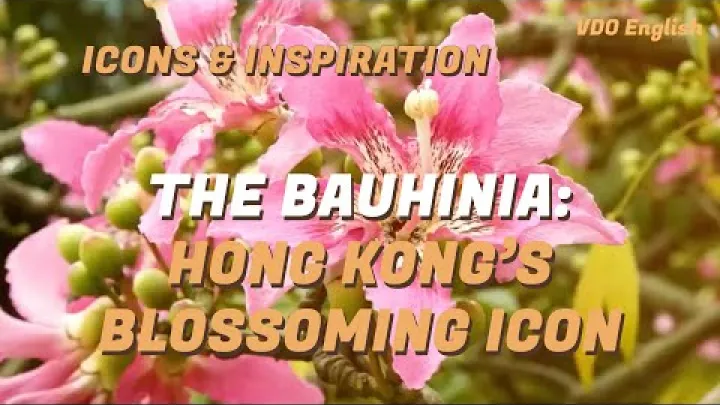
The exact botanical name matters. The common name orchid tree can be used for more than one plant, and not every plant in the wider Bauhinia group is the emblem species. Using Bauhinia × blakeana avoids confusing Hong Kong's floral emblem with similar plants that may have orchid-like flowers or overlapping common names.
The documented history has two important stages. The flower was first chosen as Hong Kong's City Flower in 1965 by the Urban Council. It was later selected as the regional emblem of the Hong Kong Special Administrative Region on 1 July 1997. This sequence is described by the official Greening Hong Kong resource.
That history supports calling the bauhinia an official floral emblem. It does not require the article to invent a separate national-flower law or to treat the flower as the equivalent of a sovereign country's national flower. The strongest answer is therefore simple: the bauhinia is Hong Kong's official floral emblem and is commonly called its national flower in search language.
People also attach broader meanings to the flower, including harmony, unity, or a connection between different cultural traditions. These may be useful interpretations, but they should be identified as interpretations unless an official source specifically defines them. The documented facts are its selection as the City Flower, its later regional adoption, and its repeated use in official Hong Kong imagery.
Why the Bauhinia Appears on Hong Kong's Official Symbols
The bauhinia is the central visual motif of Hong Kong's regional flag and regional emblem. On the regional flag, a stylized five-petal flower provides the most recognizable local element. Its use makes the flag and emblem immediately distinguishable from the national symbols of China while keeping them within the official regional framework.
The flower's official role also extends beyond flags and emblems. The NParks Flora and Fauna Web identifies it as Hong Kong's official floral emblem and notes its appearance on the regional flag and on the backs of Hong Kong coins. This repeated use helps explain why the bauhinia is more than a botanical answer: it is a daily visual sign of Hong Kong.
The formal presence of the flower should be separated from assumptions about every design detail. For example, people may assign fixed meanings to the flower's colors, stars, or arrangement. Unless an official design explanation gives those meanings, they are better described as popular readings rather than confirmed definitions. The secure point is the flower's status and placement, not an invented symbolic code.
The Regional Emblem and Hong Kong's Formal Identity
Hong Kong's regional emblem is the main official mark that represents the territory as a Special Administrative Region. It is related visually to the bauhinia but should not be confused with either the PRC national emblem or the historical colonial coat of arms.
The Current Regional Emblem Versus the Former Coat of Arms
The current Hong Kong SAR regional emblem has a circular format centered on a stylized bauhinia. It also identifies Hong Kong in Chinese and English. In practical use, it is the official local emblem of the Hong Kong Special Administrative Region rather than a sovereign national coat of arms.
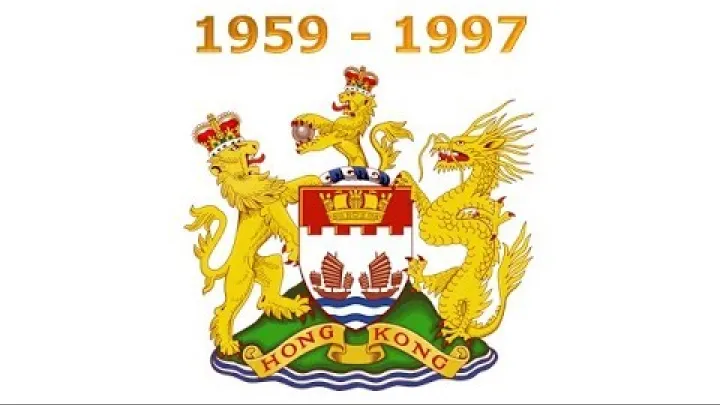
The present emblem replaced the former colonial coat of arms as Hong Kong's official emblematic representation after the transition on 1 July 1997. The former arms belong to Hong Kong's colonial history. They may be relevant in a historical discussion, on heritage material, or when identifying older buildings and documents, but they should not be described as the current Hong Kong national symbol.
The phrase coat of arms can therefore cause confusion. It may refer to the historical colonial design, while regional emblem refers to the current official symbol. Using the labels current regional emblem and former colonial coat of arms makes the time period clear and prevents the two designs from being treated as interchangeable.
The regional emblem is also distinct from the national emblem of the People's Republic of China. The Constitutional and Mainland Affairs Bureau provides official context for the national flag, national emblem, and national anthem in Hong Kong. A precise explanation can acknowledge both levels: national symbols apply within the national framework, while the bauhinia-centered regional emblem expresses Hong Kong's local official identity.
Hong Kong's National Animal, Bird, Tree, Fruit, and Motto
Unlike the bauhinia and regional emblem, several frequently searched categories do not have a confirmed official Hong Kong designation in the reliable material considered here. The best answer is sometimes an explicit statement that no official title has been identified.
The Chinese White Dolphin as an Unofficial Animal Symbol
Hong Kong does not have a formally established national animal identified in the official material used for this overview. The Chinese white dolphin is nevertheless widely associated with Hong Kong's coastal waters and public identity, making it the most common cultural answer to the national animal question.
The dolphin is often linked with Hong Kong's maritime setting, the public imagery surrounding the 1997 handover, and environmental awareness. Those associations give it real cultural importance, but they do not turn it into a legally designated national animal. A campaign mascot, a conservation symbol, or a flagship species can be influential without having the formal status of a national emblem.
The safest wording is therefore Chinese white dolphin as an unofficial animal symbol or cultural icon. This wording recognizes why the animal appears in discussions of Hong Kong while keeping conservation and symbolism separate. It also avoids presenting the dolphin as an official counterpart to the bauhinia.
The National Bird Question and the Black Kite
No formally designated national bird for Hong Kong is identified in the official material reviewed here. The black kite is sometimes proposed in informal answers because it is a familiar bird associated with Hong Kong's urban skies. That makes it a possible cultural or city-bird association, not a confirmed national bird.
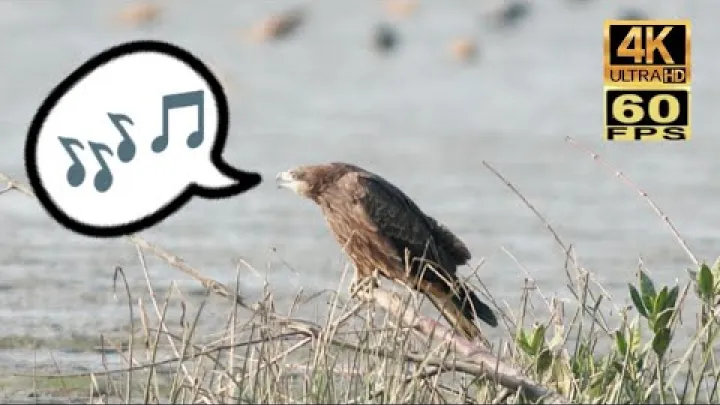
Hong Kong's birdlife is much more diverse than any single informal answer suggests. The Agriculture, Fisheries and Conservation Department states that Hong Kong has more than 580 recorded bird species, representing more than one third of the species recorded in China. Its Hong Kong Biodiversity Online bird information provides that broader context.
This diversity is one reason visibility alone should not be treated as evidence of official status. A photograph or casual list may also use the word kite loosely, so species identification matters when discussing a particular bird. If a source calls the black kite Hong Kong's national bird, treat that as an informal claim unless a current official designation is provided.
Why No Tree, Fruit, or Motto Should Be Added Without Evidence
For a Hong Kong national tree, national fruit, and national motto, no official designation is identified in the reliable sources reviewed for this article. That is the clearest responsible answer. It is better to state that no confirmed formal title has been found than to choose a candidate simply because it appears in a list of national symbols online.
This does not mean Hong Kong lacks important trees, plants, fruits, slogans, or landscape traditions. A tree may be prominent in parks, a fruit may be associated with local food culture, and a slogan may be widely used by an institution or campaign. Cultural importance and commercial visibility are different from formal designation.
Tourism pages, user-generated lists, and search suggestions can also combine official emblems with representative objects. Such lists may be useful for discovering cultural themes, but they should not be used alone to establish a national tree, fruit, or motto. The documented bauhinia and regional emblem have a stronger evidential basis because their selection and official use are specifically described.
When a new claim appears, look for a current Hong Kong SAR government or other authoritative source that gives the exact title, the responsible body, and the date of designation. Without that information, use wording such as cultural association, popular symbol, or no official designation identified. This keeps the answer accurate without denying the value of informal local meanings.
How Formal and Cultural Symbols Represent Hong Kong
Hong Kong's symbolic vocabulary is layered. Its official imagery expresses both its place within the People's Republic of China and its distinctive regional identity, while cultural icons add meanings that do not depend on a formal legal title.
What the Official Symbols Represent
The official structure can be understood at two levels. The national flag, national emblem, and other applicable national symbols represent China as a whole. Hong Kong's regional flag and regional emblem identify the Hong Kong Special Administrative Region within that national framework.
The bauhinia gives this regional identity a distinctive local visual element. Its documented history begins with selection as Hong Kong's City Flower and continues with its adoption as the regional emblem motif after 1 July 1997. This is a concrete form of representation: the flower identifies Hong Kong in official designs, on currency imagery, and in public institutions.
Broader claims that the flower officially means harmony, unity, or a particular political message should be treated as interpretation unless they are tied to an explicit official explanation. A neutral description is stronger: the bauhinia represents Hong Kong through its established floral-emblem status, while the regional emblem represents the territory's formal administrative identity.
How Cultural Icons Add Local Meaning
Informal cultural icons work differently. Images such as Lion Rock, the Star Ferry, and red-sailed junks are often used to evoke Hong Kong's landscape, harbor, transport history, or maritime character. They may be immediately recognizable and emotionally meaningful without being official emblems.
Cultural recognition develops through repeated public experience. Television and film can make a landscape image familiar. Daily travel can give a ferry lasting local importance. Environmental campaigns can make an animal a symbol of the harbor. Public memory and repeated visual representation can therefore build a strong association over time without a formal act of designation.
These examples should remain in the cultural category. They add local meaning to Hong Kong's symbolic vocabulary, but they do not replace the bauhinia or regional emblem and should not be described as national symbols unless a specific official designation supports that wording. The distinction allows both kinds of meaning to be discussed without confusing popularity with legal status.
Conclusion: Use Precise Terms for Hong Kong's Symbols
The most accurate short answer is that Hong Kong's defining floral symbol is Bauhinia × blakeana, the official floral emblem commonly called the Hong Kong orchid tree. Hong Kong also has an official regional emblem centered on the bauhinia, while the national symbols of the People's Republic of China apply within the wider national framework.
The Chinese white dolphin and black kite are useful cultural associations, but they should not be presented as confirmed national animal or bird designations. No official Hong Kong national tree, fruit, or motto is identified in the reliable material considered here. Using regional emblem, floral emblem, cultural icon, and unconfirmed candidate precisely gives readers a clearer and more accurate understanding of Hong Kong's national symbols.
Select area
Create a post
Posting is free and no registration is required.