- Tay Son Heaven and Earth Esplanade: Historic Shrine in Quy Nhon
- Quang Trung Museum: Tay Sơn History & Culture in Quy Nhon
- Banh It Cham Towers: Ancient Heritage & Photography in Quy Nhon
- The Thon Beach in Cat Tien: Clean Shores & Affordable Watersports
- Linh Phong Pagoda in Quy Nhon: The Sacred Mountain Temple
Vietnam GDP per Capita: Latest Data, Trends, and What It Means

Vietnam GDP per capita is one of the fastest ways to get basic context about the country’s economy and typical living-standard comparisons. It is simple to calculate, but it is also easy to misunderstand if you treat it like a measure of wages or household income. This guide explains what GDP per capita means, how nominal and PPP versions differ, and what recent data and trends suggest. It also covers practical implications for travelers, students, and remote workers who need realistic expectations for costs, pay, and economic stability.
What GDP per capita means and how it is measured
GDP per capita is used in news headlines, country profiles, and international comparisons because it compresses a large economy into a single “per person” figure. That makes it useful, but it also means readers should understand the definition and the limits before drawing conclusions about salaries or affordability.

GDP per capita in plain language
Gross domestic product is the total value of goods and services produced inside the country during a year. When you divide that total by the number of people, you get an average level of economic output per person. This is why the metric is often used as a quick summary of a country’s development level.
GDP per capita is not the same as what a typical person earns. It is an average, and it includes economic activity that does not flow directly to households as wages. It can also hide differences between regions, industries, and income groups. International readers still use it because it helps compare broad living standards across countries using a single number.
Nominal versus real GDP per capita and why growth rates matter
Nominal GDP per capita is measured in current prices for the year being reported. It answers a question like, “How large is output per person valued in today’s money?” Real GDP per capita adjusts for inflation, usually by valuing output in constant prices from a chosen base year. It answers a different question: “How much did output per person increase after removing the effect of rising prices?”

Here is a hypothetical example that shows why the difference matters. Imagine GDP per capita rises from 4,000 to 4,400 in one year, but prices also rise by 10% during the same year. In nominal terms, GDP per capita grew by 10%. In real terms, the growth could be close to 0% because the higher number mostly reflects higher prices rather than more production per person. This is why comparisons across time should rely on real growth rates when you want to understand improvements in living standards.
In charts and headlines you will also see annual growth and multi-year change, such as “change since 2000.” A large cumulative increase over decades usually indicates sustained productivity gains, investment, and structural change, not just a single strong year. When reading claims about progress, check whether the series is nominal or real, and whether it is measured per person. For cross-country comparisons, many readers use both nominal GDP per capita and PPP-based GDP per capita, because they answer different practical questions.
Purchasing power parity (PPP) and what it changes
Purchasing power parity, usually shortened to PPP, is a method that adjusts for differences in price levels between countries. Instead of converting GDP into another currency using market exchange rates, PPP uses a conversion rate based on the cost of a comparable basket of goods and services. For countries where many local goods and services are cheaper in local currency terms, PPP-based GDP per capita is often much higher than nominal GDP per capita converted at market exchange rates.

PPP is useful when your main question is about local purchasing power and broad cost-of-living comparisons. It can help you understand how far local incomes and local spending go inside Vietnam. Nominal measures are often more relevant when your costs or income are tied to international prices, such as imported products, international tuition, overseas travel, or contracts paid in foreign currency. Readers frequently search for this topic using phrases like “vietnam gdp per capita ppp” or “vietnam gdp ppp per capita,” and the key is to match the metric to the decision you are trying to make.
PPP is not “more correct” than nominal figures. It is a different lens. Use nominal figures for financial comparisons across borders and for exchange-rate exposure. Use PPP figures for local affordability comparisons and for a first-pass view of living standards inside the country.
Vietnam GDP per capita: latest available numbers (2023–2025)
Vietnam’s GDP per capita can be found in several widely used international databases. The latest confirmed historical year is often reported by the World Bank after national accounts are compiled and harmonized. More recent years, such as 2024 and 2025, are commonly available as estimates from institutions that publish macroeconomic outlooks, and these estimates can be revised as new data arrives.
Latest nominal GDP per capita and where it is reported
For nominal GDP per capita in current US dollars, World Bank data is a common reference for cross-country comparisons. In the World Bank’s “GDP per capita (current US$)” indicator, Vietnam’s 2023 value is widely reported in the low-to-mid US$4,000 range, and many summaries cite a figure around US$4,300 for 2023 based on that dataset. Some U.S.-focused dashboards also surface World Bank-based series through platforms such as FRED, which can make it easier to visualize trends, but the underlying value typically traces back to the same international source family.
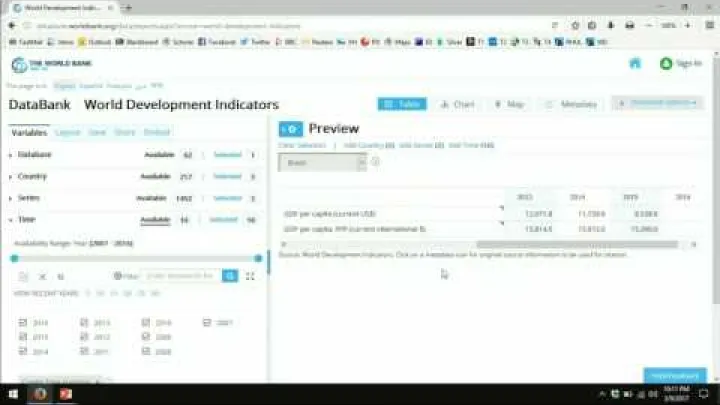
You may see different nominal values depending on the database and the update date. Differences can come from exchange-rate choices, the timing of annual revisions, and methodological updates to national accounts. IMF estimates can also differ from World Bank values because they may use different assumptions for the latest year or apply updates sooner. A practical rule is to always note the year and the organization name in the same sentence as the number, because “latest” can mean different things in different products.
It is also normal for last year’s value to change after updates. Governments refine surveys and administrative data, and international databases incorporate those revisions. If you are comparing two articles published months apart, a small mismatch may not be an error. It may reflect a revised historical series.
Latest PPP-based GDP per capita and what it suggests
For PPP-based GDP per capita, international sources such as the World Bank’s PPP indicators and IMF PPP series are commonly used. In recent releases, Vietnam’s PPP-based GDP per capita is often shown at several times the nominal level, commonly in the mid–five-figure range when expressed in international dollars, with many summaries placing it roughly around the mid-teens (for example, about 14,000–16,000 international dollars) for the early 2020s depending on the dataset and year. The key takeaway is the size of the gap, not a single exact value.

PPP methodology aims to answer a simple question: how much local currency would be needed in Vietnam to buy what one unit of currency would buy in a reference country at that country’s prices. To do this, statisticians compare prices for many categories, such as food, housing-related costs, services, and other typical consumption items. They then compute a conversion factor that reflects overall price levels. This is why PPP comparisons are often used when discussing living standards and affordability across countries.
A large difference between nominal and PPP suggests that many domestic goods and services are cheaper in Vietnam than in higher-price economies. That can be meaningful for people spending mostly locally. However, PPP does not mean wages are paid at PPP levels, and it does not eliminate the real burden of internationally priced costs.
Recent growth context for 2024–2025
GDP per capita tends to rise when real GDP growth is strong and population growth is slower. Vietnam’s recent performance has been discussed in terms of a post-pandemic normalization, a rebound in some manufacturing and export segments after weaker periods, and shifts in global demand conditions. Reported annual growth rates and quarterly patterns can vary by source because some figures are preliminary while others are revised after more complete reporting.

For 2024–2025, it helps to separate reported outcomes from forecasts. Reported outcomes are what national statistical releases publish after the fact, while forecasts are scenario-based projections from organizations such as the IMF or World Bank. Many outlooks for 2025 have emphasized that continued export performance, manufacturing momentum, and stable investment conditions are key for sustaining per-person gains. These outlooks can change if global demand weakens or financing conditions tighten.
Why this matters for readers is practical. Stronger growth tends to support job creation in expanding sectors, raises demand for services, and can improve business confidence. It can also affect prices and rents in fast-growing areas. If you are planning to study or work in Vietnam, a simple approach is to watch both real GDP growth and inflation together, because “fast growth” with rising prices can feel very different from fast growth with stable prices.
GDP per capita versus household income per person
GDP per capita is not the same as average household income per person. GDP includes components that are not paid out directly to households, such as business profits that are reinvested, depreciation, parts of government spending, and output produced by firms that may be foreign-invested. Household income measures, by contrast, usually come from surveys and are designed to capture what residents receive and can spend or save. Because of these differences, household income per person is typically lower than GDP per capita, and it can follow a different trend in the short run.

Vietnam’s household income statistics are commonly discussed using survey-based reporting from national institutions such as the General Statistics Office, which publishes household living standards and income-related summaries. These figures are useful for understanding what residents may experience, but they are a different concept from GDP. Household measures can also be sensitive to survey design, sampling, and informal income reporting, which matters in economies where informal work exists alongside formal employment.
For international readers, this distinction matters when you interpret wages and affordability. GDP per capita can rise even if many workers see smaller pay gains, especially if growth is concentrated in high-productivity sectors or capital-intensive investment. Incomes also vary widely by region and sector, so it is safer to treat national averages as background context and then focus on city-level costs, industry pay ranges, and contract details for your specific plan.
Historical trend and key turning points in Vietnam’s income growth
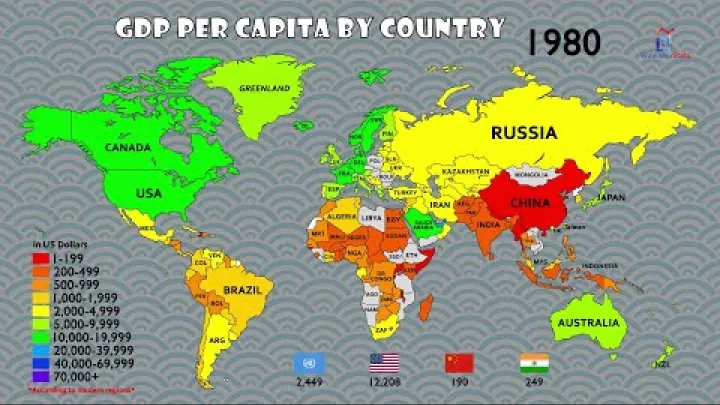
Vietnam’s GDP per capita story is best understood as a long-run trend rather than a single-year snapshot. Over decades, the country moved from a lower-income baseline toward a more diversified economy, with expanding manufacturing, services, and trade links. The result is that “income per person” measures, including GDP per capita, show a strong upward direction across long time horizons, even though short-term cycles still occur.
Market opening reforms and the foundation for growth
Vietnam’s modern growth trajectory is often linked to a shift from a more centrally planned model toward a more market-oriented approach. This period is often called Doi Moi in common transliteration. The core idea was to enable more flexibility for private enterprise, improve incentives in production, and expand engagement with international trade and investment. Over time, these changes supported a broader private sector and deeper connections to global markets.
Reforms influence GDP per capita through clear channels. When firms can invest, hire, and respond to demand, productivity can rise. When trade expands, producers can reach larger markets, and competition can push efficiency improvements. When investment conditions improve, capital accumulation increases, which can raise output per worker. These mechanisms do not guarantee equal gains for every household, but they help explain why a country’s GDP per capita trendline can move upward for many years after major policy shifts.
Acceleration after 2000 and long-run gains in GDP per person
Looking at the period since 2000, Vietnam’s real GDP per capita is commonly described as having increased substantially over multiple decades in international datasets. A “since 2000” view is useful because it smooths out short-term shocks and shows whether growth has been sustained. In Vietnam’s case, the broad pattern is a long-run rise that reflects a development process rather than a one-time jump.
Several mechanisms help explain why sustained growth over decades matters more than one strong year. Long-run gains usually require steady improvements in productivity, better infrastructure, and a workforce moving into higher-output activities. Urbanization and the growth of manufacturing and services can lift average output per person when workers shift from lower-productivity jobs into higher-productivity roles. Trade and investment can accelerate this by expanding markets and bringing in capital and management practices. The key point for readers is that multi-year consistency is what changes living standards most reliably.
Key milestones: trade integration and industry development
Trade integration has played a central role in Vietnam’s economic development narrative. When a country signs major trade agreements or deepens participation in global trade rules, it can reduce tariff barriers, improve market access, and increase investor confidence. These changes can expand export opportunities, attract investment into production capacity, and support learning-by-doing in competitive industries.

Manufacturing expansion and participation in global value chains can raise output per worker, which is a direct pathway to higher GDP per capita. In simple terms, value chains break production into stages that happen across different countries. Vietnam’s role in assembling, processing, and increasingly producing higher-value components can increase value added, meaning the extra value created at each production stage. Over time, export mixes often shift from raw or minimally processed goods toward processed and manufactured products, which typically supports higher value added and stronger productivity growth.
These milestones matter because they compound. Improved market access can lead to more investment, which can lead to more jobs and supplier networks. The pace and distribution of benefits can vary by region and sector, but the overall mechanism helps explain why trade and industry development are frequently linked to rising GDP per capita over long periods.
Nominal versus PPP in Vietnam: purchasing power and cost of living
Nominal and PPP measures can tell different stories about Vietnam because they reflect different realities. Nominal GDP per capita is influenced by the exchange rate and is useful for cross-border financial comparisons. PPP-based GDP per capita adjusts for domestic prices and can better reflect how far local spending goes inside the country. Understanding both helps you avoid common planning mistakes, especially when you mix local costs with internationally priced expenses.

Why the same income buys different baskets of goods
Domestic price levels shape real living standards. If everyday services and local products are cheaper in Vietnam than in higher-price economies, a given amount of money can buy more locally. This is the main intuition behind PPP. It is also why PPP-based GDP per capita often looks much higher than nominal GDP per capita for countries with lower average price levels.
In practice, the PPP lens is most helpful for categories that are mainly local: meals at local restaurants, many domestic services, and some local transportation options. Nominal comparisons become more relevant for expenses tied to global pricing: imported goods, international flights, foreign-currency subscriptions, and some education costs that are benchmarked internationally. Your personal experience will depend on where you live and what you buy. A lifestyle focused on local consumption can feel much more affordable than one that depends heavily on imported products.
Urban cost differences and why big cities feel different
In these environments, the practical advantage suggested by PPP can feel smaller, because local prices in popular districts can rise quickly as incomes and demand grow.
A large city can offer better job networks, more healthcare options, and more international services, while a smaller city can offer quieter living and lower pressure on major monthly expenses.
Concrete, non-numeric examples can clarify the decision. In big cities you may pay more for a central apartment, but you might reduce commuting time and have more transport options. You may have better access to specialized healthcare and international schools, but you may also face more competition for housing. These differences are not captured by national GDP per capita figures, but they shape daily affordability.
Budgeting framework for visitors, students, and remote workers
A simple budgeting framework can reduce surprises when you use Vietnam GDP per capita as background context. Start by splitting costs into fixed costs and variable costs. Then split costs again into local expenses and international expenses. This helps you see which parts of your budget depend on local prices and which parts depend on exchange rates or global pricing.

Expenses that are often most sensitive to location include housing quality and neighborhood, commuting choices, and school-related costs for international programs. Expenses that are often less sensitive across many areas include basic mobile plans, many local food options, and common domestic services, although quality and convenience still matter. Your goal is not to find a perfect national average. Your goal is to build a plan that fits your city, your lifestyle, and your risk tolerance for price changes.
Use this checklist to validate up-to-date costs without treating informal sources as official statistics:
- Housing: check multiple recent lease listings for the same district and housing type
- Education: use official tuition pages for universities or programs you are considering
- Food: compare prices across a major supermarket website and nearby local markets
- Transport: review common routes and time costs, not only fares
- Healthcare: confirm what is covered by insurance and what is paid out of pocket
- International expenses: list items priced in foreign currency, such as flights and subscriptions
This framework is a planning tool, not financial advice. It is designed to help you connect macro indicators like GDP per capita with the categories that actually determine monthly spending.
Vietnam compared with Southeast Asia and the world
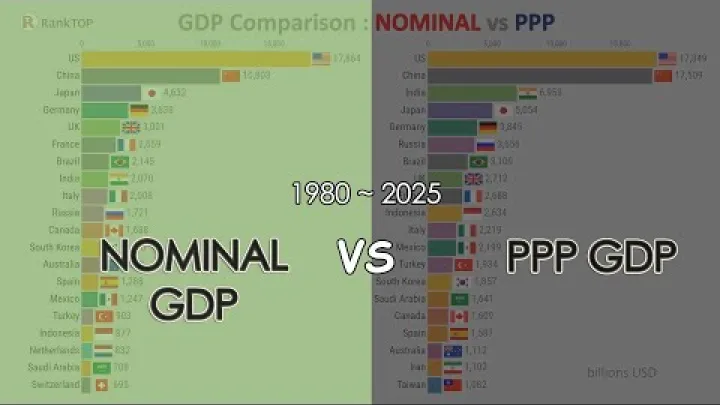
Comparisons are one reason people search for “gdp per capita vietnam” or “gdp vietnam per capita.” Regional context can be helpful, but only if you compare consistent definitions. If one country is measured in nominal current US dollars for 2023 and another is shown in PPP international dollars for 2024, the comparison will be misleading. Consistency is the difference between a useful benchmark and a confusing headline.
Comparing Vietnam with regional peers using consistent definitions
To compare Vietnam with nearby economies such as Thailand, Indonesia, Malaysia, and the Philippines, use the same year and the same basis. First choose nominal or PPP. Then choose one dataset family, such as World Bank indicators or IMF DataMapper, and stick with it for every country in the comparison. This prevents “apples to oranges” results driven by different methods rather than real differences.

Nominal comparisons can shift noticeably due to exchange rates, even when local-currency growth is stable. A currency depreciation can reduce nominal GDP per capita in US dollars even if the domestic economy is still expanding in real terms. PPP comparisons are usually more stable year to year because they are less sensitive to market exchange rates, but they depend on price surveys and periodic benchmark updates. For a clear reading, treat nominal as a cross-border financial snapshot and PPP as a local purchasing-power snapshot.
When you read comparisons in articles, check whether the author states the year and the source organization for each country. If you do not see the year, you should assume the comparison may mix periods. That is especially risky in years with large currency moves or large revisions to national accounts.
What rankings can and cannot tell you about living standards
GDP per capita rankings provide quick context. They can help you understand whether Vietnam is closer to lower-middle-income or upper-middle-income peers in broad output-per-person terms, depending on the measure used. Rankings are also convenient for scanning regional patterns, such as which economies have higher nominal income levels and which have higher PPP-adjusted purchasing power.

Rankings do not directly measure inequality, the quality of public services, the size of the informal economy, or environmental costs. Two countries can have similar GDP per capita but very different access to healthcare, education, housing quality, or clean air. GDP per capita also does not show who receives the gains from growth, which matters in fast-changing economies where some sectors grow much faster than others. If you want a fuller picture, consider complementary indicators such as poverty rates, inequality measures, education outcomes, and health metrics.
The practical approach is to use GDP per capita as one lens. Use it to set broad expectations and to understand the direction of economic change. Then use more specific indicators and local information when you make personal decisions about work, study, and living arrangements.
A comparison table readers can scan quickly
The table below is designed as a consistent comparison template rather than a definitive snapshot, because “latest” values can change with revisions and different release schedules. It uses one source family concept for all countries. If you want to fill in current values, use a single platform such as World Bank indicators for both nominal and PPP series, or use IMF DataMapper for both columns, and keep the year consistent across the row.
| Country | Nominal GDP per capita (current US$) | PPP GDP per capita (international $) | Year and source to use consistently |
|---|---|---|---|
| Vietnam | Use World Bank: GDP per capita (current US$) | Use World Bank: GDP per capita, PPP (current international $) | Same year for all rows (for example, latest complete year in World Bank) |
| Thailand | Use the same World Bank nominal series | Use the same World Bank PPP series | Match Vietnam’s chosen year and release |
| Indonesia | Use the same World Bank nominal series | Use the same World Bank PPP series | Match Vietnam’s chosen year and release |
| Malaysia | Use the same World Bank nominal series | Use the same World Bank PPP series | Match Vietnam’s chosen year and release |
| Philippines | Use the same World Bank nominal series | Use the same World Bank PPP series | Match Vietnam’s chosen year and release |
To read the table, remember that nominal and PPP columns answer different questions. Nominal figures help compare international purchasing power for globally priced items and cross-border financial capacity. PPP figures help compare local living standards and affordability inside each country. If the nominal gap looks large but the PPP gap looks smaller, that often signals differences in price levels and exchange-rate effects rather than a simple difference in “quality of life.”
What drives Vietnam’s GDP per capita growth
Vietnam’s GDP per capita growth is shaped by how much the economy produces per worker and how productively capital and labor are used. Over time, the most durable increases come from productivity improvements, structural change toward higher value activities, and steady investment that supports better jobs and more efficient firms. Several drivers are commonly discussed in connection with Vietnam’s development path.
Manufacturing expansion and export-oriented production
Manufacturing can raise GDP per capita by increasing productivity and value added per worker. Value added is the extra value created when inputs are transformed into products. In practical terms, producing more complex goods, reducing waste, and improving production processes can raise the amount of output created by each worker. When these improvements happen across many firms, the country’s total output per person tends to rise.

Export-oriented production can reinforce this process. Selling into global markets can expand demand beyond the domestic market, allowing firms to scale. It can also increase competitive pressure, which often encourages efficiency and quality upgrades. Vietnam’s export profile has been widely discussed as having a large share of processed and manufactured goods, which typically aligns with higher productivity than reliance on raw commodity exports alone.
Export growth does not automatically benefit everyone equally. Gains can be concentrated in certain regions, industries, and skill groups. That is why it is important to connect growth drivers to distribution and regional gaps, especially when GDP per capita rises faster than household incomes for parts of the population.
Foreign direct investment and global supply chains
Foreign direct investment, or FDI, can support GDP per capita growth by adding capital, expanding formal employment, and building supplier networks. Foreign-invested firms often bring standardized processes, quality systems, and management practices that can improve productivity. They can also create demand for logistics, packaging, maintenance, and other supporting services, which spreads activity across the economy.

Vietnam is often discussed as a key location in global supply-chain diversification strategies, sometimes described as a “China plus one” approach. The basic idea is that multinational companies diversify production across countries to reduce concentration risks. When investment increases in export-oriented manufacturing, it can raise output and improve the balance of payments through stronger export capacity.
Technology transfer and spillovers are possible but not guaranteed. The benefits depend on skills, local supplier readiness, and policy choices that support learning and linkages. Constraints can include skill shortages, limited domestic supporting industries for high-spec components, and uneven productivity among local small and medium enterprises. These constraints help explain why sustaining per-capita gains usually requires continued improvements in education and the business environment.
Infrastructure, logistics, and energy as productivity enablers
Infrastructure affects GDP per capita through productivity and connectivity. Better roads and rail reduce transport time and spoilage, which lowers costs for manufacturers and farmers. Stronger ports and logistics systems support exporters by making shipping more predictable and efficient. Reliable electricity and modern energy systems reduce downtime and allow firms to operate higher-value production lines that need stable power.

Vietnam’s development planning has frequently emphasized major infrastructure and logistics upgrades. Even without focusing on specific budget figures, the categories matter: ports, highways, urban transit, industrial-zone connectivity, and grid reliability. These investments help both exporters and domestic consumers. Exporters gain from lower logistics costs and faster delivery times. Consumers gain from more stable supply and potentially lower costs over time when distribution becomes more efficient.
Infrastructure also affects labor mobility. When commuting options improve, workers can access a wider set of jobs. This can raise per-person output by matching workers to more productive firms and by supporting the growth of dense service economies in urban areas.
Skills, innovation, and moving up the value chain
Sustaining GDP per capita growth over long periods usually requires skills upgrading and higher-value activities. Early-stage growth can come from moving workers into basic manufacturing and expanding investment. Later-stage growth depends more on improving what is produced and how it is produced. This is why education, vocational training, and workforce quality matter for the next phase of per-person gains.
“Moving up the value chain” means doing more of the high-value steps, not only the final assembly. Examples include producing specialized components, running product testing and quality assurance, doing design work, providing engineering services, and building software and business services that support manufacturing. These activities tend to pay more because they require higher skills and create more value per hour worked.
Plans and trends toward innovation and higher value production should be read as conditions, not promises. Progress depends on training capacity, firm-level investment, and how well education aligns with labor-market needs. It also depends on the ability of local firms to connect to supply chains in ways that raise capabilities rather than locking them into low-margin roles.
Income distribution and regional gaps inside Vietnam
GDP per capita is a national average, so it cannot show how income and opportunity are distributed inside the country. Vietnam has substantial differences between urban and rural areas and between fast-growing regions and less industrialized regions. Understanding these gaps helps international readers interpret what “average output per person” means for real wages, living costs, and job prospects in specific places.

Urban and rural income differences
Urban and rural income differences are a common pattern in developing and middle-income economies. Urban areas usually have more jobs in industry and services, and these sectors often generate higher output per worker than small-scale agriculture. Rural areas can depend more on seasonal work, informal work, and agriculture, which can lead to lower average cash incomes even when living costs are also lower.
Vietnam’s measured urban–rural gaps are often discussed using survey-based reporting, which tracks household income and living standards by area type. These surveys can show meaningful differences without implying that every household fits the average. The gap matters for newcomers because it affects job availability, language requirements, and the type of housing and services you can expect.
The causes are usually structural. Cities concentrate firms, infrastructure, education institutions, and networks that support productivity. Rural areas may have fewer formal employers and less access to specialized services. When you plan where to live or study, treat “urban versus rural” as a spectrum with many local variations rather than a fixed stereotype.
Regional variation across Vietnam
Survey patterns and regional reporting often show higher average incomes in major industrial and service centers, and lower average incomes in more remote or less connected areas. This does not mean opportunity is absent in lower-income regions. It means the mix of jobs and the density of high-productivity firms is different. Migration trends can follow these differences as people move toward areas with more formal employment and higher pay potential.
For practical decisions, regional variation affects more than wages. It affects infrastructure quality, healthcare access, and the availability of international-facing services. If you are choosing a city for work or study, consider the local industry base, typical contract terms, and everyday convenience, not only national indicators like GDP per capita.
Income inequality indicators and what they show
An inequality indicator commonly used in international comparisons is the Gini coefficient. In one sentence, it summarizes how unevenly income is distributed, where a higher value generally indicates more inequality. The main benefit of such an indicator is that it complements GDP per capita by addressing distribution rather than average output.

Inequality can rise during periods of fast growth if the highest productivity sectors and the best jobs concentrate in certain places or among workers with certain skills. This pattern can happen when cities grow faster than rural areas, or when export-oriented manufacturing and high-skill services expand faster than other sectors. Inequality can also shift after shocks, such as global demand changes or health-related disruptions, and then change again as policies respond.
It is important not to treat inequality measures as proving a single cause. They show outcomes, not a complete explanation. For readers, the practical value is simple: if GDP per capita is rising, inequality measures and household income data help check whether gains are broad-based and how living standards are changing across groups.
Why averages can mislead: sector, age, and household structure
GDP per capita can look strong while many people remain on lower wages because the economy includes sectors with very different productivity and pay. High-productivity sectors can raise the average even if a large number of workers remain in lower-paid roles or informal employment. Age structure also matters. A country with more dependents per working adult can have a different lived experience than the “per person” average suggests, even when output is rising.
Household structure changes the meaning of “per person” in daily life. Larger households with more children or older dependents may have lower spending power per working adult, even if national GDP per capita is increasing. Migration can also affect household income patterns, such as when one person works in a city while supporting relatives elsewhere. These realities help explain why a national average should not be used as a proxy for an individual wage offer.
When you assess an earnings opportunity, compare details that matter at the household level:
Check base pay, expected working hours, housing support, health insurance coverage, taxes and social contributions, paid leave, and the cost of commuting. Also compare which costs are priced locally and which are priced internationally. This approach is more reliable than assuming your experience will match a national GDP per capita average.
Outlook to 2030 and beyond: targets, opportunities, and risks
Long-term outlooks for Vietnam often combine national targets with external forecasts and scenario analysis. Targets describe what the country aims to achieve, while forecasts describe what analysts think is likely under stated assumptions. For readers, the most useful approach is to understand what conditions support higher GDP per capita and what risks could slow progress.
National development targets and what they imply for GDP per capita
Vietnam’s national development discussions have often included goals such as reaching higher income status by future milestone years. These are targets, not guarantees. Targets can guide policy priorities in areas like infrastructure, education, industrial upgrading, and institutional reform. They can also change as domestic and global conditions change.
In general, reaching a much higher GDP per capita requires sustained productivity growth. That usually means stable investment conditions, continued improvements in infrastructure and logistics, higher workforce skills, and an environment that supports efficient firms. It also requires macro stability, because high inflation, financial stress, or large external shocks can interrupt investment and job creation. For international readers, targets are best used as context for direction, while actual data and reforms determine the realized path.
Middle-class expansion and domestic demand
Middle-class expansion can support GDP per capita by increasing domestic demand for services and higher-quality goods. As more households gain stable incomes, consumption patterns often shift toward better housing, education spending, healthcare utilization, and a wider range of services. This can create new jobs in sectors that are less dependent on external demand than export manufacturing.
Some projections from international and consulting-style outlooks discuss a rising middle-class share over time in Vietnam, but projections should be treated as conditional. If incomes continue to rise and employment remains resilient, domestic demand can become a stronger growth pillar. That can create opportunities for businesses serving local consumers and for professionals working in services, education, healthcare, logistics, and technology-enabled sectors. Examples of neutral consumption categories include home improvement, private education services, preventive healthcare, domestic tourism, and financial services.
For students and remote workers, stronger domestic demand can also change the feel of cities. It can improve service availability and quality, but it can also raise competition for central housing and premium services. These are normal transitions in fast-growing urban economies.
Key risks: climate exposure, demographics, and global trade
Climate exposure is a meaningful risk for long-run GDP per capita because extreme weather and sea-level-related challenges can damage infrastructure, disrupt agriculture, and impose recurring recovery costs. These impacts can reduce output in affected regions and divert resources from long-term investment to repair and adaptation. Adaptation measures can reduce risk, but they take planning and funding.

Demographics also matter. Aging trends and fertility dynamics can affect the share of working-age people in the population. If labor-force growth slows, GDP per capita can still rise, but it depends more heavily on productivity gains per worker. That increases the importance of skills, health, and technologies that raise output per hour worked.
Global trade and policy uncertainty can affect Vietnam through exports and investment. If major export markets slow, or if trade rules become less predictable, firms may delay expansion and hiring. Supply-chain shifts can create opportunities, but they can also be disrupted by geopolitical shocks, shipping disruptions, or sudden changes in demand. The practical takeaway is to watch both domestic reform progress and global conditions when interpreting long-run GDP per capita outlooks.
Indicators to watch and how to interpret projections
If you want to keep track of Vietnam’s economic direction, focus on a small set of indicators that link directly to GDP per capita and to daily living conditions. Use official releases and large international databases for consistency, and always confirm the year, the price basis, and whether a figure is a forecast or a reported result.
Short-term changes can be noisy. Exchange-rate moves can shift nominal US dollar GDP per capita even if domestic output is stable. Revisions can change last year’s number after a database update. Inflation can make nominal growth look strong while real growth is more modest. The best habit is to look at multi-year trends and to compare like with like.
Here is a practical set of indicators to watch:
- GDP per capita (nominal, current US$) and the year of the value
- GDP per capita (PPP, international $) for local purchasing-power context
- Real GDP per capita growth (inflation-adjusted) over several years
- Inflation and core price trends that affect daily costs
- Productivity signals, such as output per worker where available
- FDI commitments and disbursements as signals of investment momentum
- Export growth and manufacturing activity as demand indicators
- Household income surveys for distribution and lived experience
For updates, check recognized sources that publish regular country profiles and databases, such as IMF releases, World Bank indicators, and national statistics publications. If two sources disagree, compare definitions and timing before assuming one is wrong.
Frequently Asked Questions
What is the current Vietnam GDP per capita?
Vietnam GDP per capita depends on the measure and the year you choose. For nominal GDP per capita in current US dollars, many readers use the World Bank’s latest complete historical year, while near-term values may appear as IMF estimates. Always read the year label because “latest” can mean actual data in one source and a forecast in another.
Is GDP per capita the same as the average salary in Vietnam?
No, GDP per capita is not the same as the average salary. GDP includes profits, government output, and investment-related activity that does not show up as wages. To understand pay, look for wage ranges by occupation and city and compare them with local costs.
Why does Vietnam’s PPP GDP per capita look much higher than the nominal figure?
PPP figures adjust for domestic price levels, which are often lower than in high-price economies. This makes local purchasing power look higher when expressed in international dollars. PPP helps compare local affordability, while nominal figures are more relevant for expenses priced internationally.
Which is better for comparing countries: nominal GDP per capita or PPP?
Neither is universally better; each is suited to a different question. Use nominal GDP per capita for cross-border financial comparisons and exchange-rate exposure. Use PPP GDP per capita for living-standard comparisons that depend on local prices.
Can Vietnam’s nominal GDP per capita go down even if the economy grows?
Yes, it can happen when the currency weakens against the US dollar. In that case, the US dollar value of output per person can fall even if real domestic output rises. This is why real growth rates and local-currency measures are important for time comparisons.
Where should I look to verify Vietnam GDP per capita figures before moving or studying?
Use major international databases and official national statistics releases. World Bank indicators are commonly used for historical cross-country comparisons, and IMF releases are often used for near-term estimates. Confirm the year, whether it is nominal or PPP, and whether it is reported data or a projection.
Conclusion: key takeaways and how to keep the numbers current
Vietnam GDP per capita is a useful summary of economic output per person, but it is not a direct measure of wages or household income. Nominal GDP per capita is best for cross-border financial context, while PPP-based GDP per capita is best for understanding local purchasing power and broad affordability. Over time, real GDP per capita growth is the most reliable way to judge whether living standards are improving, because it adjusts for inflation.
The long-run rise in Vietnam’s output per person is commonly linked to market-oriented reforms, trade integration, manufacturing expansion, investment, and enabling factors such as infrastructure and skills. At the same time, distribution matters. Regional differences, urban–rural gaps, and inequality indicators explain why national averages can feel far from daily experience. For practical planning, combine GDP per capita context with city-level costs, job-market information, and clear contract terms.
Key takeaways about Vietnam GDP per capita
Vietnam GDP per capita measures average economic output per person, not what a typical resident earns. It is most useful as a high-level comparison across countries and over long time periods, especially when you pay attention to whether the series is nominal, real, or PPP-based. Nominal and PPP measures often differ widely because they reflect different price levels and different comparison purposes.
Long-run trends matter more than one year because they capture sustained productivity improvements and structural change. Manufacturing and export-oriented growth, FDI-linked supply chains, infrastructure and energy improvements, and skills upgrading are key mechanisms that can raise output per person over time. For international readers, the safest way to use these numbers is to treat them as context, then validate wages and costs using local, current information for the city and sector you care about.
Where to find updated GDP per capita data
To keep figures current, use sources that update on a regular schedule and clearly label methodology. Common options include IMF country profiles and outlook tables, World Bank indicators for GDP per capita and PPP series, and national statistics releases for GDP and population updates. Reputable economic reports from major institutions can also help interpret changes, especially when revisions occur.
When selecting a series, confirm whether it is nominal (current prices), real (constant prices), or PPP-based. Also confirm the currency unit and the year. If you are comparing across countries, use the same series name and the same year for every country. If you are comparing across time, prefer inflation-adjusted measures for growth interpretation.
Different sources can differ because they update at different times, revise historical data, or use different assumptions for estimates. To reconcile differences, compare the definition, the year coverage, and whether the number is reported or forecast. If you keep those labels consistent, GDP per capita becomes a clear and practical tool rather than a confusing headline number.
Select area
Create a post
Posting is free and no registration is required.