- Tay Son Heaven and Earth Esplanade: Historic Shrine in Quy Nhon
- Quang Trung Museum: Tay Sơn History & Culture in Quy Nhon
- Banh It Cham Towers: Ancient Heritage & Photography in Quy Nhon
- The Thon Beach in Cat Tien: Clean Shores & Affordable Watersports
- Linh Phong Pagoda in Quy Nhon: The Sacred Mountain Temple
Vietnam War: Dates, Causes, Major Events, and Impact

The Vietnam War was one of the most important and controversial conflicts of the twentieth century. Fought mainly between the mid‑1950s and 1975 in Southeast Asia, it drew in global powers and left deep scars on Vietnam, the United States, and neighboring countries. Understanding when the Vietnam War started and ended, why it was fought, and who won helps explain today’s politics, landscapes, and communities in the region. For travelers, students, and professionals visiting Vietnam, this history is part of the backdrop of daily life. This guide walks through the war’s timeline, causes, major events, and long-term consequences in clear, accessible language.
Introduction to the Vietnam War
Why the Vietnam War still matters today
The Vietnam War still shapes the world in visible and invisible ways. It changed the political map of Southeast Asia, led to the reunification of Vietnam under a single government, and influenced how countries think about intervention, alliances, and the limits of military power. In the United States, the conflict transformed domestic politics, eroded trust in leaders, and reshaped debates about foreign policy that continue when new wars are discussed. For Vietnam, the war overlapped with a long struggle for independence and nation-building that continues to influence national identity and public memory.

The war’s legacy is not only political. It also affects culture, education, and how people from different countries see each other. Students and professionals working in Vietnam often want to understand why there are unexploded bombs in rural areas, why Agent Orange is still discussed, or why older people remember “the American War” so intensely. Common questions include: when was the Vietnam War, when did the Vietnam War occur and end, who fought in it, and who won the Vietnam War. This article answers these questions while placing them in a broader global context, including the Cold War rivalry between the United States and the Soviet Union.
Quick facts: Key Vietnam War dates, sides, and outcome
For readers looking for quick answers, it helps to start with a short summary. However, its roots go back to earlier struggles against French colonial rule, and fighting in Laos and Cambodia means some historians prefer to talk about a wider Indochina conflict. Still, when people ask “when did the Vietnam War begin” or “when did the Vietnam War occur,” they usually mean this roughly 20‑year period of intense fighting involving North Vietnam, South Vietnam, and the United States.
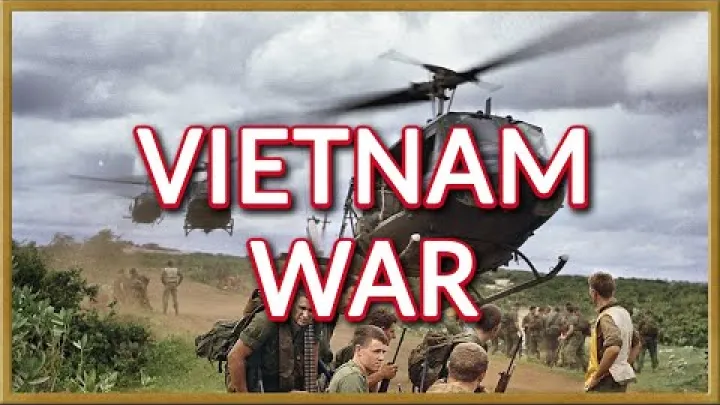
The main sides were the Democratic Republic of Vietnam (North Vietnam) and its allies, including the Viet Cong in the South, against the Republic of Vietnam (South Vietnam) supported by the United States and several other countries such as Australia, South Korea, Thailand, and New Zealand. North Vietnam and the Viet Cong sought to reunify the country under a communist government, while South Vietnam and its allies aimed to maintain a separate, non-communist state. In political and military terms, North Vietnam eventually won the war. Saigon, the capital of South Vietnam, fell on 30 April 1975, leading to the unification of Vietnam under the government in Hanoi. The following sections explain how this outcome developed over time and why the war still affects everyday life and international relations.
Overview of the Vietnam War

What was the Vietnam War?
The Vietnam War was a long and complex conflict in Southeast Asia that combined an internal struggle within Vietnam and a broader confrontation between global powers. At its core, it was a conflict over who would rule Vietnam and under what political and economic system. North Vietnam, led by the Communist Party and figures such as Ho Chi Minh, aimed to reunify the country and complete a revolutionary program that included land reform and close ties to other socialist states. South Vietnam, supported by the United States and its allies, sought to maintain an independent state aligned with Western powers and opposed to communism.

Because of this mixture of local and international factors, the war is sometimes described both as a civil war and as part of the global Cold War. North Vietnamese forces and the Viet Cong (also known as the National Liberation Front) used guerrilla tactics, political organizing, and conventional military operations. The United States and South Vietnam relied heavily on airpower, large ground units, and technological advantages. The conflict did not stop at Vietnam’s borders; it spread into neighboring Laos and Cambodia, where competing factions and external powers also fought. In many histories, these related struggles are discussed together under the term “Indochina wars,” emphasizing how the region’s fate was tied to decolonization and superpower rivalry.
When did the Vietnam War start and end?
People often phrase this question in many ways: “when was the Vietnam War,” “when did the Vietnam War start,” or “when did the Vietnam War end.” The most common answer is that the Vietnam War lasted from 1 November 1955, when the United States formally assumed responsibility for training South Vietnam’s army, until 30 April 1975, when Saigon fell to North Vietnamese forces. This 20‑year span covers the period when North and South Vietnam existed as separate states and when outside powers intervened on a large scale.
However, different sources use slightly different dates, depending on what they emphasize. Some historians argue that the war began earlier, in 1954, with the signing of the Geneva Accords and the division of Vietnam after the First Indochina War. Others focus on large-scale U.S. combat operations starting around 1964–1965, especially after the Gulf of Tonkin incident and the deployment of major American ground units. On the ending side, the United States ended its direct combat role with the Paris Peace Accords in January 1973, but fighting between North and South Vietnamese forces continued until the final offensive in 1975. In practical terms, the capture of Saigon on 30 April 1975 marked the end of the war inside Vietnam and the victory of North Vietnam.
Who fought in the Vietnam War and who won?
The main opponents in the Vietnam War were North Vietnam and South Vietnam, each supported by different international allies. North Vietnam, or the Democratic Republic of Vietnam, was backed primarily by the Soviet Union, China, and other socialist states with weapons, training, and economic assistance. South Vietnam, or the Republic of Vietnam, received extensive military and financial support from the United States, as well as from countries such as Australia, South Korea, Thailand, New Zealand, and the Philippines. These external powers did not simply send aid; they deployed combat troops, aircraft, and ships, making the war a major international conflict.
Within South Vietnam, the Viet Cong played a critical role. The Viet Cong was a communist-led insurgent movement composed mostly of South Vietnamese opponents of the Saigon government. They conducted guerrilla warfare, organized political networks in villages and cities, and coordinated closely with the leadership in Hanoi. The North Vietnamese Army (NVA), officially the People’s Army of Vietnam, was the regular military force of North Vietnam. Over time, the NVA took on an increasing share of the fighting in the South, especially in larger conventional battles. In terms of outcome, North Vietnam and its allies, including the Viet Cong, won the war. South Vietnam’s government collapsed in 1975, and the country was reunified under a single communist-led state. At the same time, discussions of victory and defeat often consider the enormous human and material losses on all sides, and the fact that many objectives of the external powers, especially the United States, were not achieved.
Historical Origins and Causes of the Vietnam War
French colonial rule and the First Indochina War
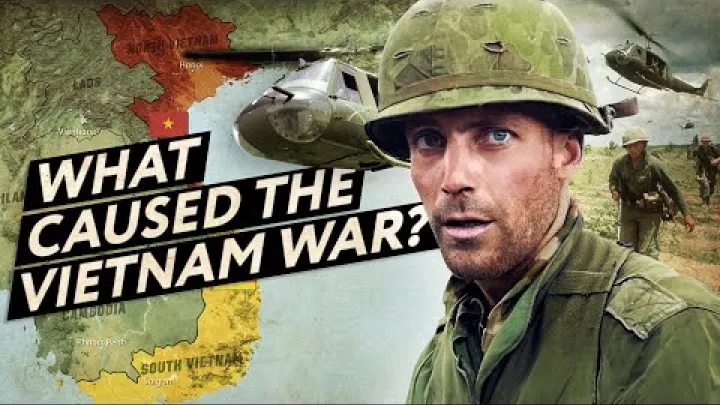
To understand why the Vietnam War started, it is important to look back to the period of French colonial rule. From the late nineteenth century, France controlled much of mainland Southeast Asia, including the territories that became Vietnam, Laos, and Cambodia, under a structure known as French Indochina. Colonial authorities extracted resources, imposed new economic systems, and limited political freedoms. These policies produced resentment and inspired several generations of Vietnamese nationalists, reformers, and revolutionaries who wanted independence and greater social justice.

One of the most influential figures to emerge from this environment was Ho Chi Minh, a nationalist and communist organizer who helped found the Viet Minh, a broad front that fought for independence. During and after World War II, the Viet Minh battled both Japanese occupation forces and the French. This struggle developed into the First Indochina War, which lasted from 1946 to 1954. The conflict combined guerrilla tactics with conventional battles, and it drew growing attention from the United States and the Soviet Union as part of the early Cold War. The decisive event came in 1954 at the Battle of Dien Bien Phu, where Viet Minh forces surrounded and defeated a major French fortress in northwestern Vietnam. This victory forced France to negotiate and led directly to the Geneva Conference, where the future of Vietnam would be debated and decided in principle.
The 1954 Geneva Accords and the division of Vietnam
The Geneva Accords of 1954 were a set of agreements intended to end the First Indochina War and create a framework for peace in the region. Representatives of France, the Viet Minh, and several other countries met in Geneva, Switzerland. They agreed to a temporary military line, roughly along the 17th parallel north of the equator, which would separate Viet Minh forces in the north from French-backed forces in the south. This line was described as a provisional military boundary rather than an international border, and both sides accepted that Vietnam was, in principle, a single country.

The Accords also called for nationwide elections in 1956 to reunify Vietnam under a single government chosen by voters. In the meantime, two temporary administrations emerged: the Democratic Republic of Vietnam in the North, led by Ho Chi Minh, and a state in the South that would later become the Republic of Vietnam under Ngo Dinh Diem. However, the planned elections never took place. Leaders in the South, backed by the United States, believed that free national elections at that time would likely result in a victory for Ho Chi Minh and the communists. As a result, they refused to participate. Over the next few years, the temporary partition hardened into a long-term division, with competing political systems, armies, and foreign backers. This breakdown of the Geneva plan and the deepening separation between North and South Vietnam created the direct conditions for the later Vietnam War.
Cold War context and the domino theory
The Vietnam War cannot be understood without the broader context of the Cold War, the global rivalry between the United States and its allies on one side and the Soviet Union, China, and other communist states on the other. After World War II, both superpowers tried to expand their influence and prevent the other from gaining strategic advantages. Conflicts in Asia, including in Korea and Vietnam, became key testing grounds for ideas about containment, revolution, and the balance of power. For many Vietnamese, the struggle was mainly about independence and social change, but for outside powers it was also part of a worldwide ideological competition.
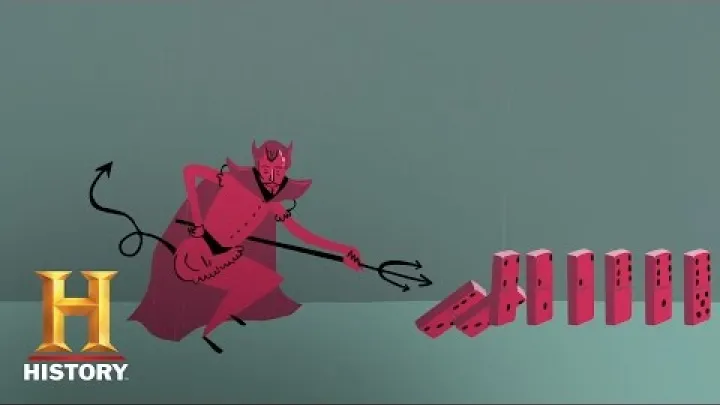
One of the most influential concepts shaping U.S. thinking was the “domino theory.” American leaders argued that if one country in a region fell to communism, neighboring countries might also fall, like a row of dominoes. They worried that a communist victory in Vietnam would encourage similar movements in Laos, Cambodia, Thailand, and beyond. This belief pushed the United States to support South Vietnam more strongly, first with money and training, and later with combat forces. At the same time, North Vietnam received substantial support from China and the Soviet Union, including weapons, advisers, and economic aid. Local Vietnamese goals for independence and reunification thus became tightly linked with superpower strategy. This combination of local nationalism and global rivalry was a central cause of the Vietnam War and helps explain why it was so intense and long-lasting.
Escalation and U.S. Involvement in the Vietnam War

Early U.S. support for South Vietnam
In the years immediately after the Geneva Accords, the United States did not send large combat units to Vietnam. Instead, it began with financial assistance, equipment, and military advisers to help build up South Vietnam’s armed forces and government. President Dwight D. Eisenhower’s administration viewed South Vietnam as a key barrier against the spread of communism in Southeast Asia and saw Ngo Dinh Diem as a potentially strong anti-communist leader. American aid funded infrastructure, training programs, and security forces, while U.S. advisers worked closely with South Vietnamese officials.
Under President John F. Kennedy, this commitment deepened. The number of U.S. advisers and support personnel grew, and new initiatives were introduced to try to win support in rural areas, such as “strategic hamlet” programs that relocated villagers into fortified settlements. U.S. involvement was framed publicly as assistance to a friendly government defending itself against communist aggression. However, as insurgent activity by the Viet Cong expanded and South Vietnam’s internal problems worsened, advisers increasingly took on operational roles. The gradual shift from limited support to a more direct military role laid the foundation for later large-scale escalation under President Lyndon B. Johnson.
The fall of Ngo Dinh Diem and political instability
Ngo Dinh Diem became the first president of the Republic of Vietnam (South Vietnam) in 1955. Initially, he enjoyed support from the United States and parts of the South Vietnamese population for his anti-communist stance and his promise to bring order after the French withdrawal. However, his government developed into an increasingly authoritarian regime, dominated by his family and close allies. Policies that favored certain religious and social groups, coupled with harsh repression of opponents, alienated many citizens, especially Buddhists and rural communities who felt excluded or targeted.
By the early 1960s, protests against Diem’s rule, including dramatic acts by Buddhist monks, drew international attention and raised questions in Washington about his effectiveness. In November 1963, South Vietnamese military officers carried out a coup with at least tacit U.S. approval. Diem and his brother Ngo Dinh Nhu were assassinated. Instead of stabilizing the situation, the coup led to a period of intense political turmoil in Saigon, with frequent changes of government and rival military factions competing for power. This instability weakened the South’s ability to counter the Viet Cong and increased pressure on U.S. leaders, who feared that without stronger support, South Vietnam might collapse. These conditions were a major factor in the decision to escalate American involvement into a full-scale war.
Gulf of Tonkin incident and legal basis for war
A crucial turning point in U.S. involvement came in August 1964, with events in the Gulf of Tonkin off the coast of North Vietnam. U.S. officials reported that North Vietnamese patrol boats had attacked the destroyer USS Maddox on 2 August and claimed a second attack on the Maddox and another destroyer on 4 August. In response, President Johnson ordered retaliatory air strikes against North Vietnamese targets and presented the events to Congress as unprovoked aggression. The situation was used to justify a significant expansion of presidential authority to use force in Southeast Asia.
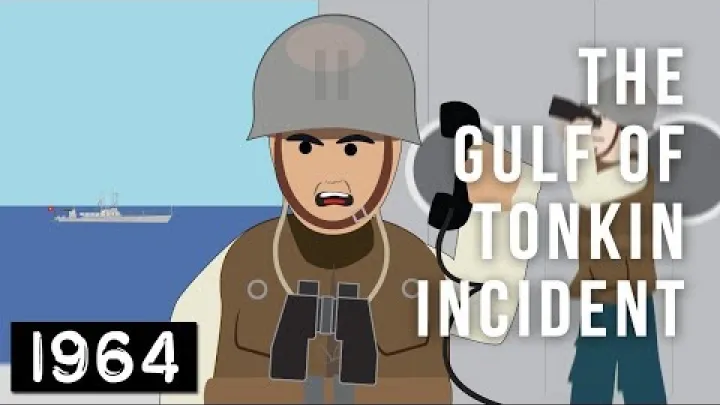
Congress soon passed the Gulf of Tonkin Resolution, which authorized the president to take “all necessary measures” to repel any armed attack against U.S. forces and prevent further aggression. Although it was not a formal declaration of war, it served as the main legal basis for large-scale U.S. military operations in Vietnam over the next several years. Later investigations and historical studies raised serious doubts about the second reported attack, and some evidence suggested that the information presented to Congress and the public was incomplete or misleading. This controversy contributed to later skepticism about official statements regarding the war and became an important example in debates about government transparency and war powers.
From advisers to full-scale ground war
After the Gulf of Tonkin Resolution, the United States moved from an advisory and support role to direct combat involvement. In early 1965, U.S. Marines landed at Da Nang to protect air bases, marking the arrival of the first large American ground combat units in Vietnam. Over the next few years, troop levels expanded rapidly, reaching hundreds of thousands of U.S. soldiers deployed in South Vietnam. Air operations also intensified, with the launch of Operation Rolling Thunder, a sustained bombing campaign against North Vietnam that lasted from 1965 to 1968.
This escalation meant that the Vietnam War became a central focus of U.S. foreign and domestic policy. American and allied forces conducted large search-and-destroy missions, fought major battles in rural and border areas, and attempted to disrupt the Ho Chi Minh Trail, a key supply route through Laos and Cambodia. Allies such as Australia, South Korea, and Thailand sent tens of thousands of troops, adding to the international character of the conflict. Despite the immense firepower and resources committed, the combined forces of North Vietnam and the Viet Cong proved resilient, and the war settled into a grinding, costly struggle with no quick victory in sight.
Communist Strategy and Major Campaigns

North Vietnamese and Viet Cong strategy
North Vietnam and the Viet Cong developed a multi-layered strategy that combined military, political, and psychological elements. From the start, they understood that they could not match U.S. and South Vietnamese forces in terms of technology or firepower. Instead, they relied heavily on guerrilla warfare, using small units to engage in ambushes, sabotage, and hit-and-run attacks. These operations aimed to wear down opponents, stretch their forces, and undermine their sense of security. At the same time, communist organizers worked inside villages and towns to build support networks, recruit fighters, and challenge the authority of the Saigon government.
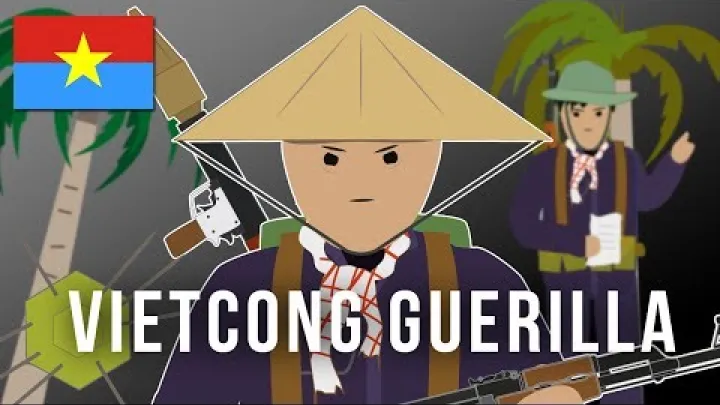
The leadership in Hanoi coordinated closely with the Viet Cong but maintained separate structures. While the Viet Cong was largely composed of South Vietnamese, it received guidance, supplies, and reinforcements from the North. Over time, North Vietnam also increased the role of its regular army, the People’s Army of Vietnam, in fighting major battles in the South. The Ho Chi Minh Trail, a network of paths and roads running through Laos and Cambodia, was central to this effort. Despite heavy bombing, this system allowed the movement of people, weapons, and supplies from North to South. The communist strategy shifted flexibly between smaller guerrilla actions and larger conventional operations, always with the long-term goal of weakening South Vietnam’s political structure and convincing external powers that the war could not be won at an acceptable cost.
Key battles before the Tet Offensive
Before the famous Tet Offensive of 1968, several major battles and campaigns tested the strategies of both sides. One of the most notable early clashes between U.S. forces and the North Vietnamese Army took place in the Ia Drang Valley in November 1965. This battle in the Central Highlands showed that American troops, supported by helicopters and airpower, could inflict heavy casualties on communist forces in open engagements. However, it also demonstrated that North Vietnamese units were willing and able to face high technology and still fight effectively, suggesting that the war would not be quickly decided.
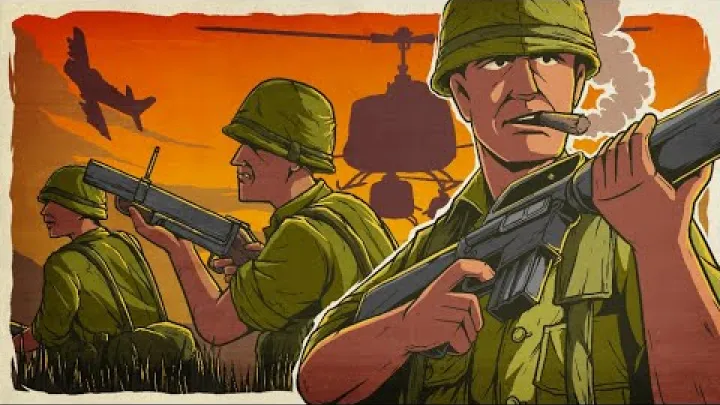
Other important operations occurred across the central highlands, the coastal regions, and areas near the Demilitarized Zone that separated North and South Vietnam. Campaigns such as Operation Cedar Falls and Junction City aimed to disrupt Viet Cong bases and supply networks near Saigon by deploying large U.S. and South Vietnamese forces. While these operations sometimes succeeded in capturing territory and weapons, many communist units managed to slip away, later returning to the same regions. Both sides studied these engagements closely. U.S. commanders refined tactics for air mobility and fire support, while North Vietnamese and Viet Cong leaders looked for ways to draw American forces into prolonged conflicts, strain their logistics, and exploit weaknesses in local political control.
The Tet Offensive of 1968 as a turning point
The Tet Offensive, launched at the end of January 1968 during the Vietnamese Lunar New Year holiday, marked a dramatic shift in the war. North Vietnamese and Viet Cong forces carried out coordinated surprise attacks on more than 100 cities, towns, and military installations across South Vietnam, including major centers such as Saigon and Hue. In Saigon, attackers even reached the U.S. Embassy compound, shocking viewers around the world. The offensive aimed to spark uprisings, weaken the South Vietnamese government, and convince the United States that continued involvement was futile.

Militarily, the Tet Offensive was costly for North Vietnam and the Viet Cong. Many of their fighters were killed, and they failed to hold most of the positions they briefly captured. However, the political impact was enormous. For many in the United States and other countries, the scale and intensity of the attacks contradicted earlier claims that the war was nearing a favorable end. Television images of fierce fighting and destruction in supposedly secure cities undermined confidence in official reporting. Public opinion shifted more strongly against the war, and debates intensified in Congress and within the administration. In March 1968, President Johnson announced that he would not seek re-election and that the United States would begin limiting bombing and exploring negotiations. In this way, the Tet Offensive became a turning point that pushed the war toward gradual de-escalation and eventual U.S. withdrawal.
Conduct of the War and Civilian Impact
U.S. bombing campaigns and firepower
One of the defining features of the Vietnam War was the extensive use of airpower and heavy weapons by the United States and its allies. Operation Rolling Thunder, launched in 1965, involved sustained bombing of targets in North Vietnam, including transportation networks, industrial facilities, and military installations. In later years, additional operations targeted supply routes in Laos and Cambodia, especially sections of the Ho Chi Minh Trail. The goal was to cut off North Vietnam’s ability to support the war in the South, pressure its leaders to negotiate, and give South Vietnam breathing space to strengthen its own forces.

The scale of these bombing campaigns was very large, with millions of tons of bombs dropped over the course of the conflict. While they destroyed bridges, roads, and depots, they also damaged or destroyed many villages, farms, and infrastructure vital to civilian life. In Laos and Cambodia, heavy bombing contributed to displacement, hunger, and political instability. On the ground in South Vietnam, artillery barrages and air strikes supported infantry operations but often affected surrounding communities. The intensity of firepower produced high civilian casualties, long-term unexploded ordnance problems, and significant changes to the physical environment, including cratered landscapes and destroyed forests.
Agent Orange and chemical warfare
Another distinctive aspect of the Vietnam War was the use of chemical agents, particularly herbicides like Agent Orange. U.S. military planners believed that dense forests and thick vegetation gave guerrilla fighters cover and allowed them to move supplies undetected. They also suspected that food crops supported Viet Cong and North Vietnamese forces. To counter this, the United States carried out a large defoliation campaign known as Operation Ranch Hand between 1962 and 1971. Aircraft sprayed millions of liters of herbicides across South Vietnam, focusing on forests and agricultural areas.
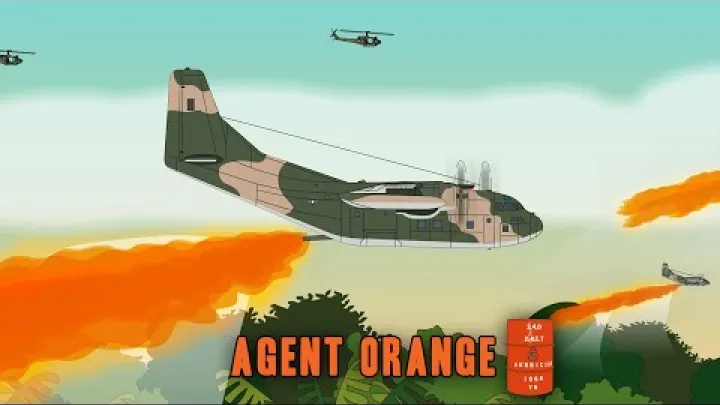
Agent Orange contained a highly toxic contaminant called dioxin, which later became associated with serious health and environmental effects. Over time, researchers and medical practitioners documented increased rates of certain cancers, immune system disorders, and birth defects among people exposed to the chemical. This included Vietnamese civilians living in sprayed areas and U.S. and allied soldiers who handled or operated near the herbicides. Some soils and sediments in Vietnam remain contaminated “hot spots,” and affected families continue to seek treatment and support. The short-term military goal of denying the enemy cover and food came at a long-term humanitarian cost that is still being addressed through health programs, environmental cleanup, and international cooperation.
Free fire zones, refugees, and atrocities
Ground operations during the Vietnam War also had a major impact on civilians. Policies such as “free fire zones” allowed U.S. and South Vietnamese troops to fire at any suspected enemy in designated areas where civilians were believed to have left. Search-and-destroy missions sent units into rural regions to find and eliminate Viet Cong fighters and their supporters. In practice, it was often difficult to distinguish combatants from noncombatants, especially in villages where guerrillas moved among the population. These operations led to the destruction of homes, crops, and local infrastructure, forcing many people to flee.

As a result, millions of Vietnamese became refugees or internally displaced persons, moving to cities, camps, or new settlements. Some of the most painful episodes of the war involved atrocities against civilians. The My Lai massacre in March 1968, in which U.S. soldiers killed hundreds of unarmed villagers, became a symbol of the worst abuses. Other incidents, including executions, torture, and mistreatment of prisoners by various sides, were also reported. Careful, factual documentation by journalists, courts-martial, and later historical work has shown that civilians bore a heavy share of the suffering. Describing these events requires respectful language that recognizes their gravity while noting that violence against noncombatants occurred in different forms on all sides of the conflict.
Media, Public Opinion, and the Anti-War Movement
Television coverage and the "living room war"
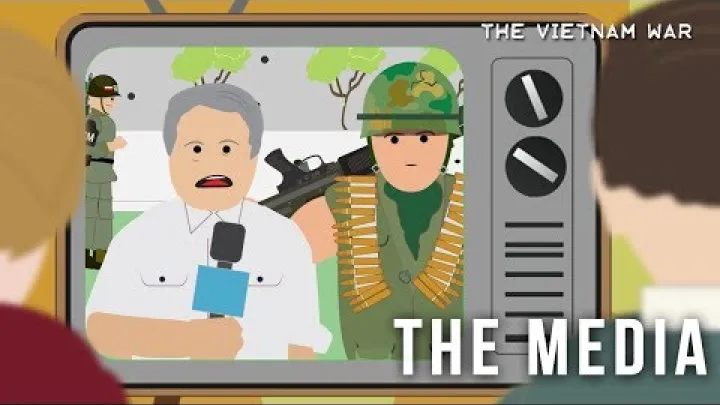
The Vietnam War was one of the first conflicts to be widely broadcast on television, especially in the United States. News crews traveled with units, filmed combat, and showed images of wounded soldiers, burning villages, and civilian casualties. For people watching at home, the war was no longer distant or abstract. Scenes of firefights, interviews with soldiers, and coverage of major events such as the Tet Offensive appeared regularly on evening news programs. This created a powerful link between what was happening on the ground in Southeast Asia and public perceptions far away.
This intensive media coverage influenced how citizens understood the war and judged government policies. While television did not create opposition by itself, it gave viewers a more immediate sense of the costs and uncertainties of the conflict. Some broadcasts, including commentary by respected news anchors, began to question optimistic official statements about progress and victory. The gap between the harsh realities shown on screen and the more positive tone of some government briefings contributed to growing doubts. Because of this, the conflict is often described as a “living room war,” meaning that many people experienced it through daily televised images and reports rather than through official speeches alone.
Media exposure of atrocities and deception
Journalists covering the Vietnam War played a significant role in bringing hidden or contested aspects of the conflict to public attention. Investigative reporting uncovered events such as the My Lai massacre and documented the suffering of civilians in both rural and urban areas. Photographs of napalm victims, executions, and the destruction of villages circulated worldwide, raising moral questions about the conduct of the war. These images and stories challenged simplified narratives of purely defensive or humanitarian motives and forced audiences to confront the human cost of military strategies.
Another major moment in media and public awareness came with the release of the Pentagon Papers in 1971. These leaked government documents revealed internal debates, doubts, and misrepresentations about the war’s progress and rationale over many years. They showed that some officials had privately believed that the war might not be winnable at an acceptable cost even while public statements remained more confident. The disclosures increased skepticism about government honesty not only regarding Vietnam but also about foreign policy in general. For many people, the combination of graphic media coverage and evidence of official secrecy or deception made it harder to support continued fighting.
Growth of the anti-war movement in the United States
As the war dragged on and casualties rose, opposition to the conflict grew in the United States and in other countries. The anti-war movement was not a single unified organization but a broad collection of groups and individuals. Students protested on campuses, sometimes linking their activism to other causes such as civil rights and social justice. Religious leaders from various traditions spoke out on moral grounds. Some veterans returning from Vietnam joined the movement, bringing powerful personal experiences to public hearings and demonstrations.
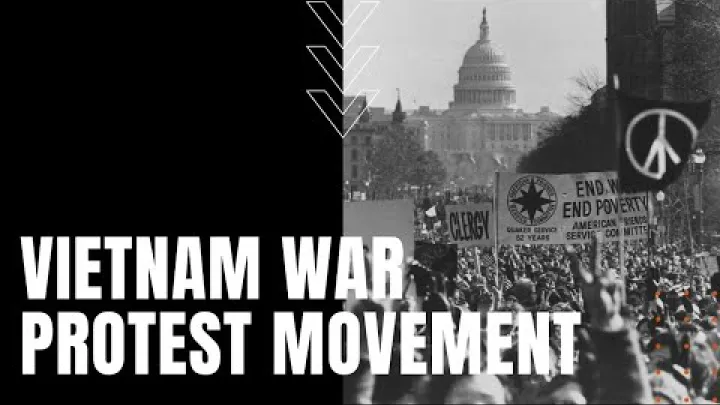
The movement used many forms of protest, including marches, sit-ins, teach-ins, draft resistance, and symbolic actions such as burning draft cards. Large demonstrations in cities like Washington, D.C., and San Francisco drew hundreds of thousands of participants. Opposition to the draft, which required many young men to serve in the military, was especially intense. Political leaders could not ignore this growing unrest. Debates about the war became central in election campaigns, including the 1968 and 1972 presidential races. At the same time, it is important to remember that attitudes were diverse and changed over time: some Americans supported the war, others opposed it from early on, and many shifted their views as new information and experiences emerged.
Withdrawal, Fall of Saigon, and Reunification
Paris Peace Accords and U.S. exit
By the late 1960s, it became clear to many U.S. leaders that a purely military solution to the Vietnam War was unlikely. Under President Richard Nixon, the United States pursued a strategy sometimes called “Vietnamization,” which aimed to strengthen South Vietnamese forces while gradually reducing American troop levels. At the same time, diplomatic efforts intensified to reach a negotiated settlement. Talks in Paris between representatives of the United States, North Vietnam, South Vietnam, and the Viet Cong went on for several years with many setbacks and delays.
These negotiations eventually led to the Paris Peace Accords, signed in January 1973. The agreement called for a ceasefire, the withdrawal of U.S. and allied combat forces, and the exchange of prisoners of war. It also allowed North Vietnamese troops already present in the South to remain in place, a point that later became very important. For many people in the United States, the Accords marked the end of direct American involvement in the conflict, even though military and economic aid to South Vietnam continued. However, the Accords did not bring a stable peace inside Vietnam. Fighting between North and South resumed soon after, revealing the difference between the end of U.S. combat involvement and the eventual end of the war within Vietnam itself.
The final offensive and fall of Saigon in 1975
After the Paris Peace Accords, the balance of power on the ground in Vietnam gradually shifted in favor of the North. South Vietnam faced economic difficulties, political divisions, and declining external support, especially as U.S. domestic opinion turned away from further involvement. In early 1975, North Vietnamese forces launched a major offensive in the Central Highlands that quickly exceeded expectations. South Vietnamese units retreated in disorder from key cities such as Ban Me Thuot, and the collapse spread as northern forces advanced rapidly down the coast and toward the Mekong Delta.
By April 1975, North Vietnamese troops were approaching Saigon. The United States organized emergency evacuations of embassy staff, foreign nationals, and some South Vietnamese allies. Dramatic scenes of helicopters lifting people from rooftops and crowds at the U.S. Embassy gates became iconic images of the war’s final days. On 30 April 1975, North Vietnamese tanks rolled into central Saigon, and the South Vietnamese government formally surrendered. The raising of the North Vietnamese flag over the presidential palace symbolized not just the fall of Saigon but the effective end of the Vietnam War. For many Vietnamese, this day is remembered as liberation and reunification, while for others it marks the loss of a country and the beginning of exile.
Reunification and postwar challenges in Vietnam
After the fall of Saigon, Vietnam moved toward formal reunification. In 1976, the country was officially declared the Socialist Republic of Vietnam, with Hanoi as its capital and a single communist-led government. The leadership faced enormous tasks: integrating two very different political and economic systems, rebuilding war-damaged infrastructure, and managing social divisions created by decades of conflict. Many former officials and soldiers from the South were sent to “reeducation camps,” where they underwent political indoctrination and, in some cases, years of detention. Land reform and nationalization policies were introduced, sometimes leading to economic disruption and local resistance.
The late 1970s and 1980s were difficult decades. Vietnam experienced shortages, international isolation, and further conflict, including war with Cambodia and border clashes with China. Large numbers of people fled the country by boat or through land routes, creating a global Vietnamese diaspora. Over time, the government began to adopt economic reforms known as “doi moi,” starting in the mid‑1980s. These reforms introduced more market-oriented policies, encouraged foreign investment, and helped integrate Vietnam into global trade networks. Today, visitors encounter a country that has changed rapidly, with growing cities and a dynamic economy, but where the memory of war still appears in museums, memorials, and the stories of older generations.
Human Cost, Veterans, and Health Legacies
Casualties and disproportionate civilian deaths
The human cost of the Vietnam War was extremely high, and civilians bore a large portion of the suffering. Estimates vary, but historians generally agree that several million people died as a direct or indirect result of the conflict. Roughly 58,000 U.S. military personnel were killed, and many more were wounded. South Vietnam lost hundreds of thousands of soldiers, while North Vietnamese and Viet Cong military deaths are often estimated at over one million. These figures give only a partial picture, since they do not account for the psychological trauma, long-term disabilities, and social disruption experienced by survivors and their families.
Civilian deaths in Vietnam are often estimated in the range of one to two million or more. Many noncombatants were killed by bombing, artillery, and small-arms fire, or died because of displacement, hunger, and lack of medical care. The related conflicts in Laos and Cambodia also caused very high casualties, including from bombing campaigns and later internal violence. The fact that civilians made up such a large share of the total casualties highlights the nature of modern warfare, especially in conflicts involving guerrilla tactics, aerial bombardment, and blurred lines between battlefields and residential areas. Understanding this disproportionate impact is essential when discussing the war’s legacy and why its memory remains painful in many communities.
PTSD and psychological aftermath for U.S. veterans
For many soldiers who fought in Vietnam, the war did not end when they came home. Large numbers of veterans experienced what is now widely known as post-traumatic stress disorder (PTSD), although that specific term was not commonly used at the time. Symptoms included nightmares, flashbacks, anxiety, depression, and difficulty adjusting to civilian life. Some veterans also experienced moral injury, a deep feeling of distress or conflict over actions they had taken or witnessed during the war. These psychological wounds could be as disabling as physical injuries and often lasted for years or decades.
Returning veterans sometimes faced social challenges in addition to personal ones. Because the Vietnam War was controversial, some veterans felt that their service was not fully recognized or respected, and they encountered misunderstanding or even hostility in certain settings. Access to adequate mental health care and support was uneven, and many people struggled alone. Over time, advocacy by veterans and researchers led to greater awareness of PTSD and improved treatment options. Experiences from Vietnam helped shape later policies and programs for mental health support in the military, influencing how countries approach the care of soldiers and veterans in subsequent conflicts.
Agent Orange health effects and veteran policy changes
The health effects of Agent Orange and other herbicides used during the Vietnam War have been a major concern for veterans and civilians alike. Many people exposed to these chemicals later developed illnesses such as certain cancers, nerve disorders, and skin conditions. There is also evidence of congenital disabilities and other health problems among the children of exposed parents. Vietnamese communities in heavily sprayed regions have reported clusters of severe birth defects and chronic diseases that they link to wartime contamination. While establishing direct scientific causation can be complex, a broad consensus has grown that exposure to dioxin, the contaminant in Agent Orange, poses serious long-term risks.
These health issues prompted legal actions, scientific studies, and policy debates in multiple countries. In the United States and other allied nations, veteran groups campaigned for recognition of Agent Orange-related illnesses and for government compensation and medical care. Over time, new laws and regulations expanded the list of conditions presumed to be connected to exposure, making it easier for affected veterans to receive benefits. International organizations and non-governmental groups have also worked with Vietnamese authorities to clean up contaminated sites, provide assistance to disabled children, and support affected families. Although much progress has been made, discussions about responsibility, adequate compensation, and the full extent of the damage are still ongoing.
Long-Term Political and Global Consequences
"Vietnam Syndrome" and U.S. foreign policy
One of the most significant long-term effects of the Vietnam War on the United States was a change in how leaders and citizens thought about overseas military interventions. The term “Vietnam Syndrome” came into use to describe a reluctance to commit ground troops to large, open-ended conflicts far from home. Many people believed that the war had shown the limits of military power, especially when political conditions on the ground were unfavorable or unclear. This experience influenced debates about when and how the United States should use force, and under what legal and moral conditions.
In practical terms, the war led to reforms in how military decisions are made and overseen. The U.S. Congress passed the War Powers Resolution in 1973, seeking to increase legislative control over the deployment of armed forces. Later presidents and policymakers often referred to Vietnam when considering interventions in places such as Lebanon, Grenada, the Persian Gulf, the Balkans, Afghanistan, and Iraq. They debated how to avoid being drawn into another quagmire, how to maintain public support, and how to ensure clear objectives and exit strategies. Although the term “Vietnam Syndrome” has been interpreted in different ways, it remains a reference point in discussions about the risks and responsibilities of military action.
Impact on Vietnamese society, economy, and diaspora
The Vietnam War and its aftermath reshaped Vietnamese society and the country’s physical landscape. During the conflict, many rural areas were depopulated as people fled bombing or ground fighting, while cities like Saigon (now Ho Chi Minh City), Hanoi, and Da Nang expanded rapidly. After reunification, government policies on land use, collectivization, and urban planning further altered the distribution of population and economic activity. War-related damage to roads, bridges, irrigation systems, and farmland took years to repair, and in some places unexploded ordnance still restricts land use and poses daily risks.
In the late 1970s and 1980s, hundreds of thousands of people left the country, many in small boats crossing dangerous seas. Others were resettled through international refugee programs. Today, significant Vietnamese communities live in the United States, France, Australia, Canada, and many other countries. These communities maintain ties to Vietnam through family connections, remittances, cultural exchanges, and business. Inside Vietnam, economic reforms since the 1980s have encouraged private enterprise and foreign investment, helping to reduce poverty and integrate the country into regional and global trade networks. This combination of internal transformation and global dispersion means that the legacy of the war is felt not only within Vietnam’s borders but also across the world wherever Vietnamese people live and work.
Memory, reconciliation, and ongoing issues
How the Vietnam War is remembered differs from place to place, but memorials and museums play a central role in shaping public memory. These institutions often emphasize the impact of bombing, chemical warfare, and atrocities on civilians, as well as the heroism of fighters on the winning side. For visitors, they offer powerful and sometimes difficult experiences that encourage reflection on the costs of war.
In the United States, the Vietnam Veterans Memorial in Washington, D.C., with its long list of names of the dead, has become a central place of remembrance and healing. Other countries that participated in the war also maintain monuments and educational programs. Over the past decades, Vietnam and the United States have normalized diplomatic relations and developed cooperation in areas such as trade, education, and the search for missing soldiers. Joint projects work to clear unexploded ordnance, remediate environmental damage from Agent Orange, and support affected communities. At the same time, ongoing issues remain, including debates over historical interpretation, unresolved personal losses, and the presence of unexploded bombs and contaminated lands. Memory and reconciliation are continuing processes rather than completed tasks.
Frequently Asked Questions
How this FAQ section supports quick answers about the Vietnam War
Many readers search for direct answers to specific questions about the Vietnam War, such as when it started and ended, why it began, who won, and how many people died. This FAQ section brings together concise responses to some of the most common queries in one place, using clear and straightforward language. It is designed to be easy to scan so that busy students, travelers, and professionals can quickly find the information they need without reading the entire article.
Each answer is written to stand alone, while also connecting to the broader discussion in the main sections above. The questions focus on dates, causes, outcomes, human costs, and lasting effects such as Agent Orange and the Vietnam War Remnants Museum. Readers who want more context can move from these brief explanations to the longer sections of the article, but those who need a quick summary can rely on the FAQ for accurate and translation-friendly guidance.
When was the Vietnam War and how long did it last?
The Vietnam War is usually dated from 1955 to 1975, lasting about 20 years. Many historians point to 1 November 1955 as the start, when the United States began formal military assistance to South Vietnam. Large-scale U.S. combat operations expanded after 1965, and the war ended on 30 April 1975 with the fall of Saigon. Earlier fighting in the First Indochina War (1946–1954) provides important background but is counted separately.
Why did the Vietnam War start in the first place?
The Vietnam War started because of a clash between Vietnamese nationalism and Cold War-era efforts to contain communism. After French colonial rule ended in 1954, Vietnam was divided into a communist North and an anti-communist South, with promised nationwide elections never held. The North, led by Ho Chi Minh, sought reunification under its system, while the United States supported South Vietnam to stop a perceived spread of communism in Southeast Asia. This combination of local and global conflicts pushed Vietnam into a long, full-scale war.
Who officially won the Vietnam War and what happened after?
North Vietnam and its allies in the South effectively won the Vietnam War. On 30 April 1975, North Vietnamese forces captured Saigon, leading to the unconditional surrender of the South Vietnamese government. After the victory, Vietnam was formally reunified in 1976 as the Socialist Republic of Vietnam under communist rule. The country then faced years of economic hardship, political repression of former South Vietnamese officials, and a large refugee exodus.
How many people died in the Vietnam War, including civilians?
Researchers estimate that several million people died during the Vietnam War, including civilians. About 58,000 U.S. military personnel were killed, more than 200,000 soldiers from South Vietnam died, and over 1 million North Vietnamese and Viet Cong fighters were killed. Civilian deaths in Vietnam are often estimated at up to 2 million, meaning civilians made up a very large share of the total casualties. These numbers do not include additional deaths in neighboring Laos and Cambodia connected to the wider conflict.
What was the Tet Offensive and why was it important?
The Tet Offensive was a large, surprise series of attacks launched by North Vietnamese and Viet Cong forces in late January 1968 during the Lunar New Year holiday. They struck more than 100 cities, towns, and bases across South Vietnam, including Saigon and the U.S. Embassy compound. Militarily, U.S. and South Vietnamese troops eventually repelled the attacks and inflicted heavy losses on the attackers. Politically, however, the offensive shocked the United States, undermined claims that victory was near, and became a turning point that increased opposition to the war.
What is Agent Orange and how did it affect Vietnam and veterans?
Agent Orange was a powerful herbicide and defoliant used by the U.S. military in Vietnam between 1962 and 1971 to destroy forest cover and crops. It was contaminated with dioxin, a highly toxic compound linked to cancers, birth defects, and other serious illnesses. Millions of Vietnamese civilians and U.S. and allied soldiers were exposed, and some areas of Vietnam remain contaminated hot spots today. Many veterans later developed health problems tied to Agent Orange exposure, leading to long legal and political struggles for medical care and compensation.
How did the Vietnam War end and what were the Paris Peace Accords?
The Vietnam War formally ended for the United States with the 1973 Paris Peace Accords and for South Vietnam with its collapse in 1975. The Accords called for a ceasefire, the withdrawal of U.S. and allied forces, and the return of prisoners of war, while allowing North Vietnamese troops already in the South to remain. After U.S. troops left, fighting between North and South Vietnam quickly resumed. North Vietnam launched a final offensive in early 1975 that led to the capture of Saigon and the unification of the country under communist rule.
What is the Vietnam War Remnants Museum and what can visitors see there?
The War Remnants Museum in Ho Chi Minh City is a museum dedicated to documenting the Vietnam War and its effects, especially on civilians. Visitors can see military equipment such as aircraft, tanks, and artillery, as well as photographs, documents, and exhibits on bombing, Agent Orange, prisons, and anti-war movements. The displays strongly emphasize the suffering of Vietnamese civilians and the destructive power of modern warfare. The museum is one of the most visited historical sites in Vietnam and often leaves a deep emotional impact on visitors.
Conclusion and Key Takeaways
Summarizing the Vietnam War’s timeline, causes, and impact
The Vietnam War grew out of a long struggle against colonial rule, the division of Vietnam at the 17th parallel, and the pressures of the Cold War. From the First Indochina War and the Geneva Accords through U.S. escalation after the Gulf of Tonkin incident, the conflict evolved into a prolonged and costly confrontation that lasted roughly from 1955 to 1975. Key phases included early advisory support, full-scale ground combat, the Tet Offensive, gradual U.S. withdrawal after the Paris Peace Accords, and the final North Vietnamese offensive that led to the fall of Saigon and reunification.
At its core, the war was driven by competing visions of Vietnam’s future, Vietnamese nationalism, and the global competition between communist and non-communist systems. Its consequences were enormous: millions of deaths, widespread destruction, long-term environmental damage from bombing and Agent Orange, and deep psychological and political scars. The conflict reshaped U.S. foreign policy, contributed to the concept of “Vietnam Syndrome,” and helped give rise to a global Vietnamese diaspora. It also set the stage for later reforms in Vietnam and ongoing efforts at reconciliation and remembrance.
Continuing to learn about Vietnam and its history
Understanding the Vietnam War requires looking beyond dates and battles to consider causes, strategies, human experiences, and long-term legacies. Readers who wish to explore further can study the First Indochina War, examine related conflicts in Laos and Cambodia, or learn about modern Vietnam’s economic and social changes since the doi moi reforms. Visiting museums, memorials, and former battlefields in Vietnam and abroad can provide valuable insights when approached with respect and openness.
Accounts from Vietnamese civilians and veterans, U.S. and allied soldiers, journalists, and scholars each add pieces to a complex picture. By engaging with this history carefully, students, travelers, and professionals can better understand the places they visit or work in, and appreciate how past conflicts continue to influence present-day societies.
Select area
Create a post
Posting is free and no registration is required.