- Tay Son Heaven and Earth Esplanade: Historic Shrine in Quy Nhon
- Quang Trung Museum: Tay Sơn History & Culture in Quy Nhon
- Banh It Cham Towers: Ancient Heritage & Photography in Quy Nhon
- The Thon Beach in Cat Tien: Clean Shores & Affordable Watersports
- Linh Phong Pagoda in Quy Nhon: The Sacred Mountain Temple
Vietnam War (Vietnam Krieg): Causes, Timeline, and Impact
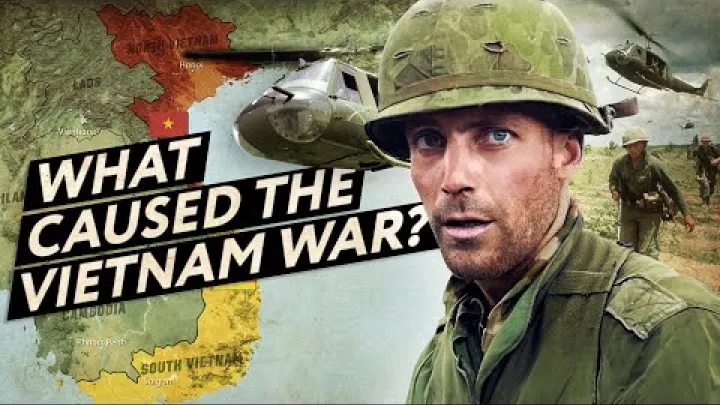
It shaped modern Vietnam, deeply affected the United States, and influenced Cold War politics across Asia. Understanding its causes, course, and consequences helps readers make sense of today’s international relations and of how wars affect societies for generations. This overview uses clear language, short sections, and a logical structure so that students, travelers, and general readers can follow the story from colonial rule to reunification.
Short Overview of the Vietnam War

Key Facts at a Glance
It ended with the fall of Saigon and the communist reunification of Vietnam. The war caused very high casualties and left deep political and social scars.
For many readers, a short, translation-friendly definition and a few core data points give a quick orientation before going into details. Historians debate exact numbers, but there is broad agreement on the main actors, the time frame, and the outcome of the Vietnam–USA conflict. The following key facts summarize the war in a compact way for people who want the Vietnam Krieg kurz erklärt, or “briefly explained.”
- Main time frame: Large-scale fighting roughly 1955–1975; major U.S. combat involvement 1965–1973.
- Main belligerents: North Vietnam and the Viet Cong versus South Vietnam, the United States, and smaller allied forces from countries such as Australia, South Korea, and Thailand.
- Outcome: Victory of North Vietnam; fall of Saigon on 30 April 1975; reunification of Vietnam under communist rule in 1976.
- Casualties (approximate): Around 2–3 million Vietnamese civilians and soldiers combined; more than 58,000 U.S. military deaths; tens of thousands of deaths among other foreign troops.
- Geography: Fighting mostly in Vietnam, but also heavy bombing and violence in neighboring Laos and Cambodia.
The Vietnam War took place in the wider Cold War context, when the United States and the Soviet Union competed for global influence. For U.S. leaders, the conflict was part of a worldwide struggle between communism and anti-communism. For many Vietnamese, however, it was above all a war for independence, national reunification, and the end of foreign domination. This mix of local and global motives is essential for understanding why the war was so intense and so difficult to end.
Because of this Cold War background, international involvement was much larger than in many other regional conflicts. The Soviet Union and China supported North Vietnam with weapons, training, and economic aid. The United States and its allies supported South Vietnam with money, equipment, and eventually hundreds of thousands of soldiers. As a result, a regional civil war was transformed into a major international confrontation, even though it never became a direct war between the superpowers themselves.
Brief Timeline from French Rule to Reunification
A clear timeline helps readers see how Vietnam moved from colonial rule to a divided country and then to reunification after a long and devastating war. The key dates below show how French control weakened, how the Vietnam USA Krieg escalated, and how communist forces eventually prevailed. Each event marks a change in who held power and how much outside powers were involved.

The focus here is on a small number of turning points rather than on every battle. This structure supports readers who want the Vietnam Krieg kurz erklärt while still offering enough context to understand how one phase led to the next. The list also shows how decisions made in Geneva, Washington, Hanoi, and Saigon shaped the fate of millions of people.
- 1946–1954: The First Indochina War pits French forces against the Viet Minh. It ends with the decisive French defeat at Dien Bien Phu and growing international pressure for a settlement.
- 1954: The Geneva Accords temporarily divide Vietnam at the 17th parallel into a communist North and an anti-communist South, with planned nationwide elections that never take place.
- 1955–1963: The Republic of Vietnam (South Vietnam) under Ngo Dinh Diem consolidates power with strong U.S. backing, while communist-led insurgency (later called the Viet Cong) grows in the South.
- 1964–1965: The Gulf of Tonkin Incident leads to a U.S. congressional resolution that allows large-scale intervention. Operation Rolling Thunder begins, and the first major U.S. combat units arrive in South Vietnam.
- 1968: The Tet Offensive shocks global opinion by showing the reach of communist forces, even though it is a military setback for them. It becomes a political turning point and starts U.S. de-escalation.
- 1973: The Paris Peace Accords provide for a ceasefire and the withdrawal of U.S. troops, but fighting between North and South Vietnam continues without American ground forces.
- 1975–1976: North Vietnamese forces capture Saigon in April 1975, effectively ending the war. In 1976, the country is formally reunited as the Socialist Republic of Vietnam.
Historical Background and Road to War
The Vietnam War cannot be understood without its deeper historical roots. Long before American combat troops arrived, Vietnam had already fought against colonial rule and foreign domination for many decades. The background includes French imperial control, rising Vietnamese nationalism, and the way Cold War ideology reshaped local struggles.
This historical context explains why Vietnamese leaders and ordinary people were willing to endure extremely high human costs. It also shows that the Vietnam Krieg Grund, or causes of the Vietnam War, were not only about communism versus capitalism. They were also about land, dignity, national unity, and resistance to outside control.
French Colonial Rule and Rise of Vietnamese Nationalism
French colonial rule in Vietnam, which solidified in the late nineteenth century, had a deep impact on society, the economy, and politics. France integrated Vietnam into French Indochina and reshaped land ownership, taxation, and trade mainly to serve French interests. Large areas of fertile land were controlled by colonial authorities and local elites, while many peasants faced heavy taxes and debts. French companies profited from rubber, rice, and other exports, but most Vietnamese people remained poor.

Politically, the colonial administration allowed very limited Vietnamese participation in decision-making. French authorities censored newspapers, restricted political organizations, and repressed demonstrations. Education for Vietnamese people was limited, yet a small educated elite emerged. This group was exposed to ideas of nationalism, self-determination, and sometimes socialism or communism. These ideas inspired resistance to colonial rule and fed a growing sense that Vietnam should be independent.
Nationalist movements appeared in different forms. Some were moderate and hoped for reforms within the French system; others were radical and called for full independence. One important figure was Ho Chi Minh, who spent many years abroad, studied Marxist theory, and helped found the Indochinese Communist Party. He and his allies saw communism as both a social program and a tool to mobilize people for the anti-colonial struggle.
It is important to distinguish the anti-colonial goal of independence from the Cold War conflict that developed later. For many Vietnamese nationalists, the main objective was to end foreign rule, whether French, Japanese, or later American. Communist ideology became influential because it promised land reform, equality, and strong organization, but the movement’s popularity was also rooted in long-standing anger about economic exploitation and political repression. This combination of nationalism and communism shaped the later Vietnam War.
First Indochina War and the 1954 Geneva Accords
After World War II, tensions between returning French forces and Vietnamese nationalists quickly escalated into open conflict. In late 1946, the First Indochina War began, pitting the French army and its local allies against the Viet Minh, the nationalist-communist movement led by Ho Chi Minh. The war involved guerrilla warfare, conventional battles, and heavy casualties on both sides, and it spread across large parts of Vietnam, Laos, and Cambodia.

The Viet Minh gradually improved their military strength, supported by China after 1949 and by the Soviet Union. The French, in turn, received increasing material support from the United States, which saw the conflict as part of the global fight against communism. By the early 1950s, the war had become costly and unpopular in France, while Viet Minh forces controlled significant rural areas and built a broad base among peasants through land reform and political education.
The turning point came with the battle of Dien Bien Phu in 1954. French commanders set up a heavily fortified base in a remote valley, hoping to draw the Viet Minh into a decisive battle. Instead, Viet Minh forces surrounded the base, moved artillery into the surrounding hills, and slowly tightened the siege. After weeks of intense fighting, the French garrison surrendered. This major defeat shocked France and made further military effort politically unsustainable.
Following Dien Bien Phu, international negotiations took place in Geneva. The 1954 Geneva Accords ended the First Indochina War and temporarily divided Vietnam at the 17th parallel. North of this line, the Democratic Republic of Vietnam under Ho Chi Minh controlled the territory; south of it, the State of Vietnam under Emperor Bao Dai held power. Crucially, the partition was described as temporary. The Accords called for nationwide elections in 1956 to reunify the country under a single government. Many powers, including the Soviet Union and China, supported this compromise, while the United States did not formally sign the Accords but stated it would not use force to upset the settlement. This incomplete acceptance laid the foundation for future tensions.
Division of Vietnam and the Missed 1956 Elections
After the Geneva Accords, Vietnam effectively became two states. In the North, the Democratic Republic of Vietnam, led by the Vietnamese Workers’ Party (communists), began to consolidate power, carry out land reforms, and rebuild after years of war. In the South, a new political arrangement emerged when Ngo Dinh Diem, a nationalist and strong opponent of communism, became prime minister and later overthrew the emperor to form the Republic of Vietnam. Diem’s government was supported politically, economically, and militarily by the United States.
The Geneva Accords had promised nationwide elections in 1956 to reunify Vietnam, but these elections never happened. North Vietnam supported the elections, expecting to win, because Ho Chi Minh and his movement were very popular in many parts of the country. In the South, Diem and his supporters feared that free elections would bring a communist victory. The United States also worried that countrywide elections might unify Vietnam under a communist government, which did not fit with its Cold War strategy.
There is debate among historians about who bears more responsibility for blocking the 1956 elections. Many argue that the South Vietnamese leadership, with U.S. backing, refused elections because they expected to lose. Others note that conditions for truly free elections in both North and South were doubtful, given political repression and lack of independent institutions. What is clear is that the elections did not occur, and the temporary division hardened into a more permanent separation.
This failure gave both sides arguments about legitimacy. The North claimed that it was the original government of Vietnam and that the South was an artificial creation supported by foreign powers. The South claimed it represented the “free” Vietnamese who rejected communism. Over time, communist activists in the South built an underground network that later became the National Liberation Front (Viet Cong). The missed elections and growing repression in the South thus prepared the ground for insurgency, civil conflict, and ultimately the full-scale Vietnam War.
Early U.S. Involvement and Cold War Logic
The United States first became involved in Vietnam not by sending combat troops, but by supporting France financially and logistically during the First Indochina War. U.S. leaders saw French defeat as a possible opening for communist expansion in Southeast Asia. After 1954, when France withdrew, the United States shifted its support to the new government of South Vietnam under Ngo Dinh Diem, providing economic aid, military advisors, and training. At this stage, the Vietnam USA Krieg was not yet a direct war, but the foundations were being laid.

Cold War thinking strongly shaped U.S. decisions. One key idea was the “Domino Theory.” According to this theory, if one country in a region fell to communism, nearby countries might also fall, like a row of dominoes. U.S. leaders worried that if Vietnam became communist, Laos, Cambodia, Thailand, and even more distant states could follow. This fear helped justify deeper engagement, even though the local causes of conflict in Vietnam were complex and deeply connected to nationalism and colonial history.
In practice, U.S. involvement expanded step by step. At first, Washington sent advisors to help train the South Vietnamese army and supported internal security programs. Economic aid flowed into South Vietnam to build infrastructure and support the government. Special forces units and intelligence agencies worked with South Vietnamese officials on counterinsurgency efforts. Each measure seemed limited on its own, but together they created a strong dependence of South Vietnam on American support.
For many Vietnamese, however, these actions looked like a new form of foreign interference, replacing French colonialism with American influence. Local struggles were increasingly reframed as part of a global ideological battle, which made compromise more difficult. The United States focused on stopping communism, while many Vietnamese saw themselves as continuing a long anti-colonial struggle. This gap in perception would later undermine U.S. strategy, as military and economic power could not easily overcome deep-rooted political and historical grievances.
From Advisors to Full-Scale War
By the early 1960s, Vietnam moved from limited conflict to large-scale war. The number of U.S. advisors and military equipment in the South increased, the insurgency intensified, and political instability in Saigon grew. Decisions made in Washington and Hanoi during these years transformed a primarily local civil war into a major international conflict.

This period is crucial for understanding how the Vietnam USA Krieg escalated. It shows how small steps, such as sending advisors or passing a congressional resolution, can gradually lead to massive troop deployments and sustained bombing campaigns. It also reveals how internal weaknesses in South Vietnam contributed to U.S. choices to take on a more direct combat role.
Kennedy’s Escalation and Growing Viet Cong Insurgency
When John F. Kennedy became U.S. president in 1961, he inherited a fragile situation in South Vietnam. The Diem government faced growing opposition from Buddhists, students, and rural populations. At the same time, the communist-led National Liberation Front, often called the Viet Cong, was expanding its influence and guerrilla activities. Kennedy believed that losing South Vietnam to communism would damage U.S. credibility in the wider Cold War.
Under Kennedy, the number of U.S. military advisors in Vietnam rose sharply, from a few thousand to more than 15,000 by 1963. The United States sent helicopters, armored vehicles, and advanced communications equipment. Special Forces units trained South Vietnamese troops in counterinsurgency tactics, and American personnel sometimes took part in combat operations even though they were officially “advisors.” This shift marked a significant escalation, because it tied U.S. reputation more closely to the survival of the South Vietnamese state.
Meanwhile, the Viet Cong insurgency grew stronger. Using guerrilla tactics such as ambushes, sabotage, and assassinations of local officials, they slowly eroded government control in rural areas. The Viet Cong benefited from support networks in villages, from supplies and guidance from North Vietnam, and from the dissatisfaction of peasants who faced corruption, forced relocations, or unfair treatment by South Vietnamese authorities. Their strategy combined military action with political work, promising land and social change to gain local backing.
Inside South Vietnam’s leadership, problems multiplied. Corruption, favoritism, and repression weakened public trust. The Buddhist crisis of 1963, during which the Diem regime violently suppressed Buddhist protests, drew global criticism and alarmed U.S. officials. In November 1963, Diem was overthrown and killed in a military coup that had at least tacit U.S. approval. However, the succession of unstable governments that followed did not solve the underlying issues. The growing insurgency, combined with political chaos in Saigon, pushed the United States further toward direct military intervention.
Gulf of Tonkin Incident and the 1964 Resolution
In August 1964, events in the Gulf of Tonkin, off the coast of North Vietnam, became a turning point for U.S. involvement. The U.S. destroyer USS Maddox reported being attacked by North Vietnamese patrol boats on 2 August during an intelligence-gathering mission. Two days later, there were reports of a second attack in bad weather and confusing conditions. These incidents, especially the alleged second one, remain disputed, with later research suggesting that some of the reported attacks may not have occurred as initially described.
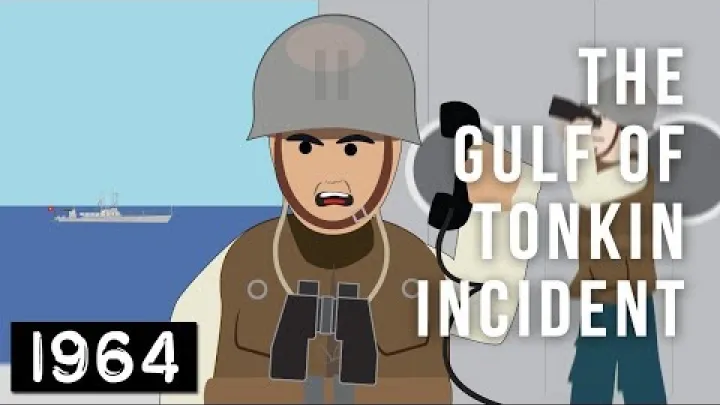
Despite these uncertainties, President Lyndon B. Johnson used the reports to ask the U.S. Congress for broad authorization to respond. Congress passed the Gulf of Tonkin Resolution almost unanimously. This resolution was not a formal declaration of war, but it gave the president wide authority to use military force in Southeast Asia to repel attacks and prevent further aggression. Legally and politically, it served as the main foundation for the later large-scale escalation of the Vietnam USA Krieg.
Over time, the Gulf of Tonkin Incident became controversial. Critics argued that intelligence had been presented in a way that made the situation seem clearer and more threatening than it actually was. They claimed that this helped Johnson secure congressional support for a policy that many members might have questioned if they had known all the details. Supporters of the initial response argued that North Vietnam’s actions still showed a pattern of hostility that required a firm U.S. reaction.
The key point is that this short episode opened the door to full-scale war. After the resolution, Johnson had political cover to order sustained bombing campaigns and send combat troops without going back to Congress for a formal war declaration. The episode later influenced debates about presidential power, congressional oversight, and how intelligence is used to justify military action, both in Vietnam and in later conflicts.
Operation Rolling Thunder and U.S. Ground Troops
In 1965, U.S. policy shifted from limited support to direct combat. Operation Rolling Thunder, a sustained bombing campaign against North Vietnam, began in March and continued, with pauses, until 1968. The goal was to pressure North Vietnam to stop supporting the Viet Cong and to accept a negotiated settlement. U.S. leaders also hoped that bombing would raise the morale of South Vietnam and demonstrate American resolve.

At the same time, the United States deployed large numbers of ground troops to South Vietnam. The first major combat units arrived in early 1965, and the total number of U.S. military personnel in Vietnam eventually rose to more than 500,000 by the late 1960s. U.S. forces took over many frontline combat roles, while South Vietnamese units played a mixed role depending on their training, equipment, and leadership. This period marked the peak of the Vietnam USA Krieg in terms of foreign troop presence and intensity of fighting.
The strategy guiding these efforts was often described as a war of “attrition.” U.S. commanders believed that superior firepower, mobility, and technology could inflict such heavy losses on North Vietnamese and Viet Cong forces that they would eventually be forced to negotiate. Helicopters, B-52 bombers, advanced artillery, and large-scale search-and-destroy missions were used to find and kill enemy units. Success was often measured by “body counts,” meaning the number of enemy soldiers reported killed.
However, this approach had limits. Bombing damaged infrastructure and caused civilian casualties but did not break the political will of North Vietnam. Guerrilla tactics meant that enemy fighters could often avoid large battles and then reappear elsewhere. In rural areas, U.S. and South Vietnamese operations sometimes alienated the local population, especially when villages were destroyed or civilians were killed or displaced. Thus, even with massive military power, the United States found it difficult to achieve its main political goal: a stable, non-communist South Vietnam that could stand on its own.
Major Campaigns, Tactics, and Atrocities
During the late 1960s, the Vietnam War reached its most intense and visible phase. Large operations, surprising offensives, and shocking atrocities shaped both the battlefield and global opinion. Understanding these events helps explain why the war became so controversial and why public support, especially in the United States, began to decline.

This section looks at key campaigns like the Tet Offensive, the My Lai massacre, and the different tactics used by both sides. It shows how military actions were closely connected to political and moral questions, including civilian protection, wartime conduct, and the gap between official statements and realities on the ground.
The Tet Offensive of 1968 and Its Significance
The Tet Offensive was one of the most important events of the Vietnam War. In late January 1968, during the Vietnamese Lunar New Year holiday called Tet, North Vietnamese and Viet Cong forces launched a large, coordinated series of attacks across South Vietnam. They struck more than 100 cities, towns, and military bases, including the capital Saigon and the historic city of Hue. The scale and surprise of the offensive shocked both South Vietnamese and U.S. forces.

Militarily, the offensive eventually failed. U.S. and South Vietnamese troops regrouped, fought back, and inflicted heavy casualties on the attackers. In Saigon, they retook key positions, including the U.S. embassy compound, which had been briefly infiltrated. In Hue, some of the fiercest urban fighting of the war took place, and many Viet Cong and North Vietnamese units were destroyed or badly weakened. From a narrow military perspective, Tet could be seen as a costly setback for the communist side.
Politically, however, Tet was a turning point. Before the offensive, U.S. officials often claimed that victory was near and that communist forces were weakening. Images of heavy fighting in cities that had seemed relatively secure contradicted these optimistic statements. Television coverage brought scenes of combat and destruction into homes around the world. Many Americans began to question whether official reports could be trusted and whether the war could be won at an acceptable cost.
The shock of Tet led President Johnson to limit further escalation, announce that he would not run for re-election, and start to explore negotiations more seriously. It also strengthened the anti-war movement inside the United States and affected the views of allies abroad. Thus, even though U.S. and South Vietnamese forces repelled the offensive on the ground, Tet greatly weakened public and political support for continuing the war in its existing form.
The My Lai Massacre and Moral Crisis
The My Lai massacre became a symbol of the moral crisis of the Vietnam War. On 16 March 1968, soldiers from a U.S. Army unit known as Charlie Company entered the hamlet of My Lai in South Vietnam during a search-and-destroy mission. Expecting to find Viet Cong fighters, they instead encountered mostly unarmed civilians, including women, children, and elderly people.
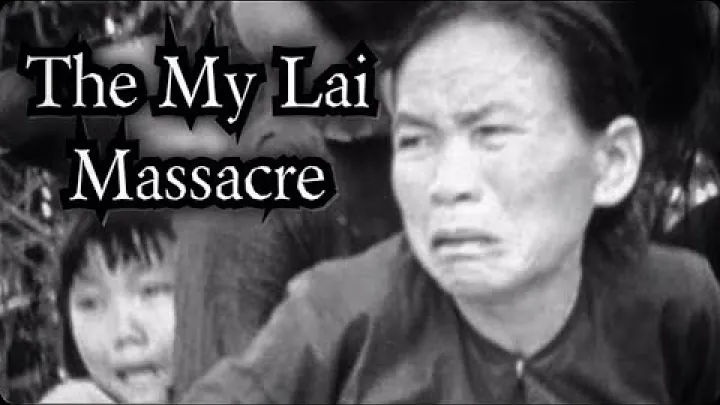
Over the next few hours, hundreds of civilians were killed. The exact number of victims is uncertain, but most estimates range from around 300 to more than 500 people. The killings included shootings at close range and other serious abuses. A U.S. helicopter crew led by Warrant Officer Hugh Thompson intervened at one point, helping some villagers escape and later reporting what they had seen. Their actions highlighted that even within the U.S. military, some individuals resisted unlawful orders and tried to protect civilians.
Initially, the massacre was covered up. Official reports described the operation as a successful engagement with enemy forces. It took more than a year before investigations began in earnest, after a soldier wrote letters to officials and journalists. In late 1969, investigative journalist Seymour Hersh published detailed reports about My Lai, and shocking photographs taken by an Army photographer became public. The revelations provoked outrage and deepened public doubts about the conduct of the war.
Legal proceedings followed, but only a few individuals were charged. Lieutenant William Calley, a platoon leader, was convicted of murder for his role in the killings, but his sentence was later reduced, and he spent only a short time in prison. For many observers, this outcome showed the difficulty of holding individuals and institutions fully accountable for wartime atrocities. My Lai raised urgent questions about training, command responsibility, and the pressures soldiers faced in a confusing, brutal environment. It reinforced the view that the Vietnam Krieg involved not only strategic and political failures but also serious moral and humanitarian problems.
Viet Cong and North Vietnamese Tactics
Viet Cong and North Vietnamese forces relied heavily on guerrilla tactics, which were well suited to the geography of Vietnam and to their relative lack of heavy equipment. Instead of seeking large, conventional battles, they often used ambushes, hit-and-run attacks, and small-unit raids. These tactics allowed them to exploit surprise, mobility, and intimate knowledge of the terrain while reducing exposure to superior U.S. firepower.

One important tool was the extensive network of tunnels, especially in areas such as Cu Chi near Saigon. Fighters could hide, store weapons, move between locations, and survive bombing campaigns by going underground. Booby traps, mines, and simple but effective weapons turned jungles, rice paddies, and villages into dangerous environments for U.S. and South Vietnamese troops. The ability to disappear into the countryside after an attack made it hard for conventional forces to identify and engage the enemy.
Beyond military operations, Viet Cong and North Vietnamese strategy gave great weight to political work. Cadres, or political organizers, lived in or frequently visited villages and hamlets. They explained their goals, recruited supporters, collected information, and sometimes punished local officials seen as collaborating with the enemy. Land reform programs, promises of social equality, and appeals to nationalism helped them build support, even though methods sometimes included intimidation and violence.
This combination of irregular warfare and political organization made the conflict very difficult for U.S. forces, which were trained and equipped mainly for conventional battles. Large search-and-destroy operations could kill fighters and destroy bases, but new recruits often replaced the losses. When villages were damaged or civilians harmed, it sometimes pushed more people toward the insurgents. Understanding these tactics helps explain why sheer military strength did not translate into decisive victory for the United States and its allies.
U.S. Military Strategy, Firepower, and Technology
U.S. military strategy in Vietnam relied heavily on advanced firepower, mobility, and technology. Commanders used search-and-destroy missions to find and engage enemy units, often with the help of helicopters that could insert troops quickly into remote areas. B-52 bombers and other aircraft carried out large-scale bombing runs against suspected enemy positions, supply routes, and infrastructure. Artillery and armored vehicles supported infantry units in the field.
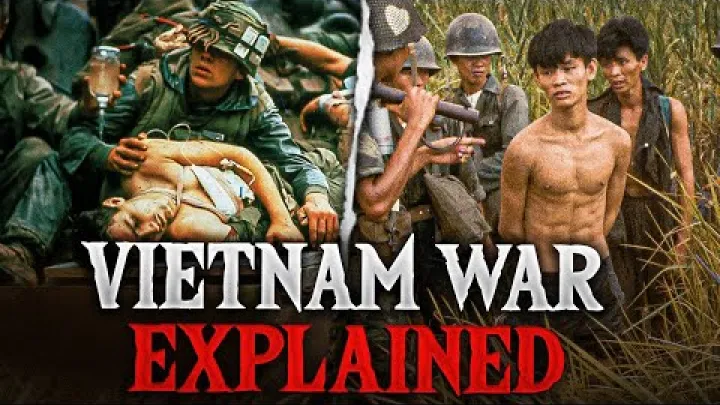
A key measure of success was the “body count,” or the number of enemy combatants reported killed. Because the enemy rarely held fixed positions for long, U.S. planning often assumed that enough casualties would eventually force North Vietnam and the Viet Cong to negotiate. Technological superiority was also expected to compensate for difficult terrain and local support for the insurgents. This approach reflected a belief that wars could be won through measurable destruction of enemy forces.
Several large operations illustrate how this strategy worked in practice. For example, Operation Masher/White Wing in 1966 and Operation Junction City in 1967 involved tens of thousands of U.S. and South Vietnamese troops sweeping through areas believed to be strongholds of the Viet Cong. These operations often reported high enemy casualties and large amounts of captured equipment. However, the territory cleared during such campaigns was hard to hold permanently, and insurgent forces sometimes returned once U.S. units moved away.
Critics argued that this focus on attrition and body counts had serious flaws. It sometimes encouraged over-reporting of enemy deaths, and it did not reliably measure political control or civilian attitudes. Heavy use of air power and artillery increased the risk of civilian casualties and destruction of villages, which could undermine efforts to win “hearts and minds.” Over time, it became clear that even massive firepower could not fully overcome weaknesses of the South Vietnamese government or the determination of North Vietnam and the Viet Cong. The gap between tactical successes and strategic goals is one of the central lessons often drawn from the Vietnam Krieg.
Human, Environmental, and Economic Costs
The Vietnam War’s toll went far beyond battlefield statistics. It caused widespread human suffering, long-term environmental damage, and severe economic hardship in Vietnam and across the region. Understanding these costs is essential for appreciating why the conflict remains such an emotional subject for survivors, veterans, and their families.
This section looks at casualties and displacement, the impact of chemical defoliants such as Agent Orange, and the economic challenges Vietnam faced after the war. It also discusses how postwar policies contributed to the refugee crisis known through the term “Vietnamese Boat People.” Together, these aspects show that the end of fighting in 1975 did not mean an end to suffering.
Casualties, Destruction, and Displacement
Casualty figures for the Vietnam War are estimates and vary between sources, but all agree that the human cost was very high. Historians commonly suggest that around 2 million Vietnamese civilians died as a result of combat, bombing, massacres, and war-related hunger and disease. Military deaths are usually estimated at about 1.3 million for North Vietnamese and Viet Cong forces and several hundred thousand for South Vietnamese troops. More than 58,000 U.S. military personnel were killed, and tens of thousands more from allied countries also lost their lives.
Beyond those who died, millions were wounded, disabled, or psychologically traumatized. Land mines and unexploded ordnance continued to injure and kill civilians long after the war ended. Many people suffered amputations, blindness, or other permanent disabilities. Families were separated, and countless households lost breadwinners, creating long-term social and economic strain.
The physical destruction across Vietnam, Laos, and Cambodia was immense. Intensive bombing and artillery fire destroyed cities, towns, and villages. Key infrastructure such as roads, bridges, railways, dikes, and factories suffered severe damage. In rural areas, rice fields and irrigation systems were ruined, affecting food production. Neighboring Laos and Cambodia, heavily bombed as part of efforts to disrupt supply routes and sanctuaries, also endured major destruction and civilian casualties, even though they were formally neutral or separate from the main conflict.
Displacement was another major consequence. Millions of Vietnamese became refugees inside their own country as they fled fighting, bombing, or forced relocations to strategic hamlets and new settlements. After the war, further movements occurred as people left border areas, resettled from former combat zones, or moved abroad. These population shifts put pressure on housing, services, and employment and reshaped Vietnam’s social landscape.
Agent Orange, Environmental Damage, and Health Effects
Agent Orange was a powerful herbicide used by the U.S. military during the Vietnam War as part of a broader defoliation program. Sprayed from airplanes and helicopters, it was intended to remove forest cover that guerrilla fighters used for concealment and to destroy crops that might feed enemy forces. Between the early 1960s and 1971, millions of hectares of land in South Vietnam were treated with Agent Orange and other herbicides.

The problem was that Agent Orange contained dioxin, a highly toxic and persistent chemical. Dioxin does not break down quickly and can accumulate in soil, water, and the food chain. This contamination damaged ecosystems, killed or weakened trees, and disrupted habitats for wildlife. In some areas, forests turned into grasslands or shrublands that were slow to recover. Rivers and lakes received runoff, spreading the contamination beyond the original target zones.
Health effects among humans have been severe and long lasting. Many Vietnamese civilians and members of the military, as well as U.S. and allied veterans, were exposed directly during spraying or through contaminated food and water. Studies have linked dioxin exposure to increased risks of cancers, immune system problems, and other serious illnesses. There have also been reports of higher rates of birth defects and developmental problems among the children and grandchildren of exposed individuals, suggesting intergenerational consequences.
In the decades since the war, governments, international organizations, and non-governmental groups have worked on remediation and support efforts. These include cleaning up “hot spots” of heavy contamination, providing medical aid and social assistance to affected people, and reforesting damaged areas. While progress has been made, the legacy of Agent Orange remains a sensitive and complex issue in relations between Vietnam and the United States, and for many families the effects are still very personal and immediate.
Postwar Economic Hardship and U.S. Embargo
When Vietnam was reunified in 1976, the new government faced enormous economic challenges. Years of war had destroyed infrastructure, disrupted agriculture and industry, and depleted the skilled workforce. Many educated people and experienced administrators had left the country or had been associated with the defeated South Vietnamese regime. Rebuilding roads, bridges, power lines, schools, and hospitals required resources that were scarce.
At the same time, Vietnam’s international environment was difficult. The United States imposed a trade embargo after the war, limiting Vietnam’s access to markets, credit, and technology in the Western world. Many Western and some regional countries were reluctant to engage with Vietnam, partly because of Cold War politics and later because of its military actions in Cambodia. Economic aid came mainly from the Soviet Union and other socialist allies, but it was not enough to fully support reconstruction and modernization.
Domestically, the government initially pursued a centrally planned economic model similar to that of other socialist states. This included state ownership of major industries, collective agriculture, and tight control over trade. In practice, this system often led to inefficiency, shortages, and limited incentives for productivity. Combined with the costs of continued military commitments, especially in Cambodia, Vietnam experienced prolonged economic hardship, including periodic food shortages and low living standards for much of the population.
In the mid-1980s, faced with these persistent problems, Vietnam introduced a series of reforms known as Đổi Mới (“Renovation”). These reforms relaxed central planning, allowed more private enterprise, encouraged foreign investment, and opened the country gradually to international trade. They marked a shift toward a “socialist-oriented market economy.” The U.S. trade embargo was lifted in the 1990s, and diplomatic normalization between Vietnam and the United States followed. While the transition was not easy, these changes eventually contributed to higher growth and a significant reduction in poverty.
Property Confiscation and the Vietnamese Boat People
After the fall of Saigon in 1975, the new authorities in Vietnam introduced policies aimed at reshaping society and the economy along socialist lines. In the South, this included land reform, collectivization of agriculture, and the nationalization or confiscation of businesses, especially those owned by people associated with the former regime or by members of the ethnic Chinese minority. Many former officials, officers, and intellectuals were sent to “re-education camps,” where they spent months or years under harsh conditions.
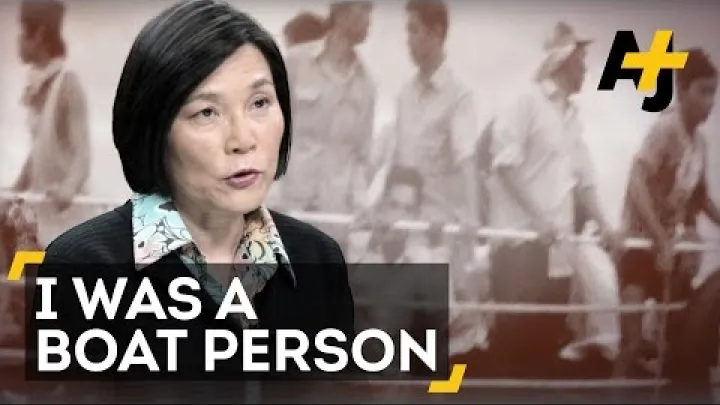
These policies had deep social and economic effects. Families lost property, savings, and business networks built over decades. The combination of political pressure, economic insecurity, and uncertain futures led many people to consider leaving the country. Some were particularly targeted because of their previous roles in the South Vietnamese state or their connections to Western organizations. Others feared renewed conflict or further crackdowns as the new system tightened control.
Out of this situation emerged the Vietnamese Boat People, a large refugee movement that became one of the most visible humanitarian crises of the late 1970s and 1980s. Hundreds of thousands of people attempted to flee Vietnam by sea, often in small, overcrowded, and unsafe boats. They faced storms, hunger, disease, and the risk of attacks by pirates. Estimates of the total number of Boat People vary, but many sources suggest that at least several hundred thousand, and possibly more than a million, left by sea over the years, with an unknown number dying during the journey.
Neighboring countries such as Malaysia, Thailand, and Indonesia received large numbers of refugees, sometimes reluctantly. Camps were set up with support from the United Nations and international organizations. Over time, many Boat People were resettled in countries including the United States, Canada, Australia, and various European states. The crisis prompted international agreements to manage arrivals and resettlement but also sparked debates about responsibility and burden-sharing. For Vietnam, the Boat People episode remains a painful reminder of the difficult and divisive early postwar years.
Regional Conflicts Involving Vietnam after 1975
The end of the Vietnam War did not bring immediate peace to Southeast Asia. In the years that followed, Vietnam became involved in new regional conflicts, including war with Cambodia and a brief but intense border war with China. These events are sometimes connected in search queries such as krieg kambodscha vietnam and vietnam china krieg, reflecting interest in how Vietnam’s struggle extended beyond its borders.
![Preview image for the video "The Cambodian - Vietnamese War - Third Indochina War [45 Years of War - 3/3] - Documentary".](/sites/default/files/styles/media_720x405/public/oembed_thumbnails/2025-12/ytqKMOBU82bFPRuuztew00i6gZX3IsRe7YAKMdjn3b8.jpg.webp?itok=85666o9G "Preview image for the video \"The Cambodian - Vietnamese War - Third Indochina War [45 Years of War - 3/3] - Documentary\".")
These later conflicts grew out of unresolved border disputes, ideological differences, and shifting alliances in the postwar period. They further strained Vietnam’s economy and international relations, but they also shaped the regional balance of power and the country’s later foreign policy choices.
War Between Vietnam and Cambodia
After 1975, Cambodia came under the control of the Khmer Rouge, a radical communist movement that established the regime known as Democratic Kampuchea. The Khmer Rouge carried out brutal policies that led to the deaths of a large portion of the Cambodian population through executions, forced labor, and starvation. Relations between Vietnam and Democratic Kampuchea quickly deteriorated, partly because of border disputes and ideological differences.
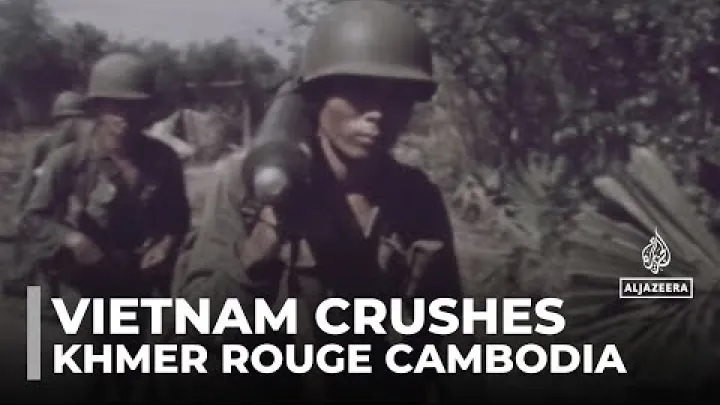
Khmer Rouge forces carried out cross-border attacks into Vietnamese territory, killing civilians and targeting villages near the frontier. Vietnam, already dealing with postwar reconstruction, saw these attacks as a serious threat to its security. Diplomatic efforts failed to resolve the tensions. In late 1978, after especially severe attacks and amid reports of mass killings inside Cambodia, Vietnam launched a large-scale invasion.
Vietnamese forces quickly defeated the Khmer Rouge’s regular army and captured the capital, Phnom Penh, in early 1979. They helped install a new government made up largely of Cambodian opponents of the Khmer Rouge. While many Cambodians welcomed the end of Khmer Rouge rule, Vietnam’s presence was controversial internationally. Some countries, especially within the Association of Southeast Asian Nations (ASEAN) and the Western bloc, saw the invasion as an act of aggression and continued to recognize the Khmer Rouge as Cambodia’s official representative at the United Nations for several years.
China, which had supported the Khmer Rouge and was wary of Vietnam’s close ties to the Soviet Union, strongly opposed Vietnam’s actions. The conflict in Cambodia turned into a long and costly occupation for Vietnam, with continued fighting against Khmer Rouge and other resistance groups along the borders. It contributed to Vietnam’s isolation, worsened its economic problems, and played a role in the later border war with China. Only in the late 1980s and early 1990s, with international peace agreements and withdrawal of Vietnamese troops, did Cambodia’s situation begin to stabilize.
Border War Between Vietnam and China
In early 1979, tensions between Vietnam and China exploded into open conflict along their shared border. Several factors contributed to this war. China opposed Vietnam’s close relationship with the Soviet Union and strongly disliked Vietnam’s invasion and occupation of Cambodia, where China’s ally, the Khmer Rouge, had been overthrown. There were also long-standing border disagreements and disputes over the treatment of ethnic Chinese communities in Vietnam.

In February 1979, China launched a large-scale but limited invasion of northern Vietnam, officially describing it as a “punitive” operation to teach Vietnam a lesson. Chinese forces attacked several border provinces, capturing some towns and causing significant destruction. Vietnamese forces, many of whom were experienced from years of fighting in Cambodia and against the United States, mounted a strong defense. After about a month of heavy fighting, China announced that it had achieved its objectives and withdrew its troops, though both sides claimed victory.
The border war was short compared to the long Vietnam War, but it caused thousands of deaths on each side and deepened mistrust between the two countries. Skirmishes and tensions continued for years, and both sides kept significant forces along the frontier. The conflict also influenced regional alignments, with Vietnam moving even closer to the Soviet Union and China seeking stronger ties with other ASEAN countries and the West.
Over time, Vietnam and China gradually worked toward normalization of relations, and in the 1990s they signed agreements to settle many border issues. However, historical memories of the 1979 war and earlier disputes still affect how people in both countries view each other. The border war shows that even after the end of the famous Vietnam Krieg, the region remained unstable and shaped by complex rivalries.
Impact on the United States
The Vietnam War deeply affected the United States far beyond the battlefield. It changed politics, society, and military institutions and left lasting marks on culture and national identity. For many Americans, the conflict raised difficult questions about government honesty, military service, and the country’s role in the world.

This section looks at the anti-war movement, the draft and social inequalities, political consequences and institutional reforms, and the economic and psychological impact often discussed under the term “Vietnam Syndrome.” Understanding these aspects is essential for anyone studying how the Vietnam USA Krieg reshaped the United States itself.
Anti-War Movement and Social Protest
As U.S. involvement in Vietnam expanded in the mid-1960s, criticism and protest grew at home. The anti-war movement brought together students, religious groups, civil rights activists, artists, and many ordinary citizens. Early demonstrations were relatively small, but they increased in size and visibility as casualties rose, the draft widened, and shocking events such as the Tet Offensive and the My Lai massacre came to light.

University campuses became important centers of activism. Student groups organized teach-ins, marches, and sit-ins to question the war’s legality, morality, and effectiveness. Veterans also played a key role; organizations of former soldiers, sometimes wearing their uniforms and medals, spoke publicly about their experiences and joined protests, which gave the movement additional credibility. Large national demonstrations, including major marches on Washington, attracted hundreds of thousands of participants and became symbolic moments in U.S. political history.
Television coverage had a strong influence on public opinion. Images of heavy fighting, civilian suffering, and U.S. casualties appeared on screens in homes across the country. For many viewers, the gap between official optimistic statements and what they saw in news reports created confusion and anger. The anti-war movement used these visual impressions to argue that the war was unwinnable, unjust, or both.
The movement intersected with other social struggles, such as the civil rights movement and second-wave feminism. Some leaders of these movements criticized the war as a misallocation of resources that could have been used to fight poverty or racial inequality. Others opposed what they saw as discrimination in the draft and in military justice. At the same time, supporters of the war argued that protests undermined morale and aided the enemy. This clash of views contributed to a broader sense of division and tension in U.S. society during the late 1960s and early 1970s.
The Draft, Inequality, and Social Division
The U.S. military draft, or conscription system, was central to how the Vietnam War was fought and how it was perceived at home. Young men, typically aged 18 to 26, were required to register and could be called for service through local draft boards. In 1969, a draft lottery system was introduced, assigning numbers to birth dates to determine the order in which men would be called. However, not everyone was equally likely to end up in combat.
Various forms of deferment allowed some men to delay or avoid service. Common deferments included enrollment in college, certain medical conditions, and some types of employment. Critics pointed out that these rules often favored those from wealthier families or with better access to education and healthcare. As a result, working-class and minority communities were more heavily represented in combat units and suffered a disproportionate share of casualties. Many African American and Latino leaders highlighted these inequalities as part of broader struggles against systemic racism.
Resistance to the draft took many forms. Some men legally obtained conscientious objector status based on religious or moral opposition to war. Others refused induction, burned draft cards, or fled to countries such as Canada or Sweden. High-profile cases of draft resistance, as well as large demonstrations outside draft board offices and induction centers, brought intense public attention to the issue. For many families, the draft created anxiety and moral dilemmas, especially when they disagreed internally about the war.
These tensions contributed to long-term divisions in U.S. society. Some citizens viewed draft resisters as courageous and principled; others saw them as unpatriotic or irresponsible. Veterans often felt both pride in their service and frustration at being drawn into a conflict they could not control. After the war, the United States abolished the draft and moved to an all-volunteer force, partly in response to the deep social conflicts the draft had created during the Vietnam era.
Political Consequences and Institutional Reforms
The Vietnam War led to a major decline in trust in U.S. government institutions. As information about internal decision-making became public, many citizens felt that leaders had not been honest about the war’s progress, objectives, or costs. Two key episodes in the early 1970s highlighted this crisis of confidence: the publication of the Pentagon Papers and the Watergate scandal.
The Pentagon Papers were a secret government study of U.S. involvement in Vietnam from World War II to 1968. When parts of the report were leaked and published in major newspapers in 1971, they revealed that several administrations had made decisions and given public explanations that did not fully match internal assessments. This fueled the belief that the public had been misled about the Vietnam Krieg. Shortly afterward, the Watergate scandal, involving illegal activities and cover-ups connected to President Richard Nixon’s re-election campaign, further damaged trust and led to Nixon’s resignation in 1974.
In response to these experiences, the United States adopted several institutional reforms aimed at increasing oversight and limiting unilateral presidential power in matters of war. One of the most important was the War Powers Resolution of 1973. It required presidents to inform Congress promptly when sending armed forces into hostilities and to withdraw them after a limited period unless Congress granted authorization. Although debated and sometimes contested, this law represented an effort to prevent future large-scale wars without clear legislative approval.
Other reforms included strengthening Congressional oversight of intelligence agencies and defense spending and enhancing transparency in foreign policy. The end of the draft and the move to an all-volunteer military also changed the political dynamics of future interventions. Together, these changes showed how the Vietnam War pushed the United States to rethink the balance between executive authority, legislative control, and public accountability.
Economic Costs and the "Vietnam Syndrome"
The Vietnam War was expensive for the United States in financial as well as human terms. Government spending on the conflict reached many billions of dollars, contributing to budget deficits and inflation in the late 1960s and early 1970s. Money devoted to the war effort was not available for domestic programs, leading to debates about whether social initiatives such as anti-poverty measures and urban development were underfunded.
Economic pressures from the war period interacted with other global changes, including shifts in oil prices and the international monetary system. These combined factors produced a sense of economic uncertainty that affected everyday life for many Americans. While it is difficult to separate the exact effects of the war from other forces, it is clear that Vietnam influenced public debates about the costs and benefits of overseas military interventions.
The term “Vietnam Syndrome” became popular to describe what some saw as the United States’ reluctance to engage in large, open-ended ground wars abroad after the conflict. For some political leaders and commentators, this term had a negative connotation, suggesting excessive caution or a loss of confidence. For others, it reflected a healthy skepticism toward interventions that lacked clear goals, local support, or public backing at home.
Later conflicts, such as the 1991 Gulf War, were often discussed in relation to the Vietnam experience. U.S. leaders emphasized clear objectives, broad international coalitions, and limited, well-defined missions. They also tried to maintain strong public support and avoid the impression of a long, stalemated war. In speeches, presidents referred to overcoming the “shadow” or “lessons” of Vietnam, showing how deeply the conflict continued to shape U.S. strategic thinking and political rhetoric.
Long-Term Lessons and Legacy
Decades after the guns fell silent, the Vietnam War continues to influence how governments, militaries, and citizens think about conflict. It offers lessons about power, nationalism, civil-military relations, and the ways societies remember traumatic events. These lessons are discussed in academic studies, military training, and political debates around the world.
This section explores what analysts often identify as the main strategic lessons, how the war reshaped the relationship between civilian leaders and the armed forces, and how the conflict lives on in memory and culture. Understanding these legacies helps readers connect the Vietnam Krieg to current international challenges.
Limits of U.S. Power and Strategic Lessons
One of the most frequently discussed lessons of the Vietnam War concerns the limits of military power. Despite vast technological advantages and a large economy, the United States could not achieve its political goals in Vietnam. Many analysts argue that this failure resulted from unclear objectives, misunderstandings of local conditions, and overreliance on military solutions to fundamentally political problems.
U.S. decision-makers often framed the conflict mainly as a struggle against communism, viewing North Vietnam as an instrument of larger powers such as China or the Soviet Union. They tended to underestimate the nationalist dimension of Vietnamese communism and the depth of popular desire for reunification and independence from foreign influence. As a result, they misjudged how far North Vietnam and the Viet Cong were willing to go and how much sacrifice they would endure.
Another key lesson concerns the importance of local partners. The South Vietnamese government suffered from corruption, factionalism, and limited legitimacy among large parts of the population. Efforts to build its capacity through foreign aid and training had only partial success. Without a strong and credible local government, U.S. military victories on the battlefield often failed to translate into lasting control or stability. This experience has been compared to later interventions where outside powers depended on fragile local allies.
Different schools of thought interpret Vietnam in varying ways. Some see the main problem as a flawed strategy of attrition that focused on body counts instead of political outcomes. Others argue that political leaders did not allow the military to use enough force or the right tactics, or that domestic opposition undermined the war effort. Still others emphasize moral and legal criticisms, such as civilian harm and violations of international law. All of these perspectives show how complex and contested the strategic lessons of the Vietnam Krieg remain.
Civil-Military Relations and the All-Volunteer Force
The Vietnam War changed the relationship between civilian leaders, the military, and the broader public in the United States. During the conflict, tensions grew as military commanders and political leaders sometimes disagreed about tactics, troop levels, and the chances of victory. Public protests and media criticism added pressure, creating a sense that the country was divided not only about the war but also about its armed forces.
One major institutional change after the war was the end of conscription. The United States gradually moved from a draft-based system to an all-volunteer force in the 1970s. The goal was to create a more professional military composed of individuals who chose service as a career or temporary commitment. This change was intended to reduce domestic tensions over compulsory service and to improve the quality and motivation of troops.
Over time, however, some observers expressed concern about a growing social gap between the military and parts of civilian society. With no draft, many citizens had little direct contact with the armed forces, and the burden of service fell disproportionately on families with strong traditions of military participation or fewer economic opportunities. Debates emerged about whether an all-volunteer force made it easier for political leaders to undertake foreign interventions without fully engaging the broader population.
Commissions, policy reviews, and academic studies examined these issues in the decades after Vietnam. They discussed recruitment patterns, representation of different social groups, civilian control of the military, and the role of public opinion in decisions about war and peace. While there is no full consensus, it is widely recognized that the Vietnam experience played a central role in reshaping U.S. civil-military relations and continues to influence how military service and national responsibility are understood.
Memory, Culture, and Ongoing Debates
In Vietnam, official narratives often emphasize the struggle as a heroic war of national liberation and reunification. Museums, such as the War Remnants Museum in Ho Chi Minh City, display photographs, weapons, and documents that highlight the suffering caused by bombing and chemical warfare as well as the determination of Vietnamese fighters and civilians.
In Vietnam, official narratives often emphasize the struggle as a heroic war of national liberation and reunification. Museums, such as the War Remnants Museum in Ho Chi Minh City, display photographs, weapons, and documents that highlight the suffering caused by bombing and chemical warfare as well as the determination of Vietnamese fighters and civilians.
In the United States, memory is more divided. The Vietnam Veterans Memorial in Washington, D.C., with its black granite wall engraved with the names of more than 58,000 fallen service members, has become a central site of mourning and reflection. It focuses on individual loss rather than political interpretation, allowing visitors with different views about the war to share a space of remembrance. Many local communities also have memorials and ceremonies honoring veterans.
Films, books, songs, and other cultural works have played a major role in shaping global images of the Vietnam Krieg. Movies such as “Apocalypse Now,” “Platoon,” and “Full Metal Jacket,” and novels and memoirs by veterans and journalists, explore themes of trauma, moral ambiguity, and the gap between official narratives and personal experience. Protest songs and contemporary music from the era remain widely known and continue to influence how younger generations imagine the conflict.
Debates about responsibility, heroism, victimhood, and how the war should be taught remain active. In Vietnam, some voices call for more open discussion of internal mistakes, such as excesses in land reform or the hardships of re-education. In the United States, discussions continue about the treatment of veterans, the accuracy of textbooks, and comparisons between Vietnam and more recent conflicts. Different generations and countries bring their own perspectives, ensuring that the meaning of the Vietnam War remains contested and evolving.
Frequently Asked Questions
This FAQ section collects common questions that readers often ask about the Vietnam War (Vietnam Krieg). It offers short, clear answers on causes, outcomes, casualties, and key events, so that students, travelers, and general readers can quickly find information without reading the entire article. The questions reflect typical interests such as why the United States became involved, who won, and what happened during famous episodes like the Tet Offensive and the My Lai massacre.
These answers use simple, translation-friendly language and stay close to the most widely accepted historical understanding. They can serve as a starting point for deeper research, museum visits, or preparation for study abroad programs in Vietnam or the United States.
What were the main causes of the Vietnam War?
The main causes of the Vietnam War were Vietnamese anti-colonial nationalism, the division of the country after 1954, and Cold War conflict between communism and anti-communism. France’s earlier colonial rule and the failure to hold promised 1956 elections created deep political tensions. The United States intervened heavily to prevent a communist victory in South Vietnam, turning a local struggle for reunification into a large international war.
Who won the Vietnam War and when did it end?
North Vietnam and its allies effectively won the Vietnam War. The war ended with the fall of Saigon on 30 April 1975, when North Vietnamese tanks entered the South Vietnamese capital and the government of South Vietnam collapsed. Vietnam was formally reunified under communist rule as the Socialist Republic of Vietnam in 1976.
How many people died in the Vietnam War?
Estimates suggest that around 2 million Vietnamese civilians and about 1.3 million Vietnamese soldiers, mostly on the North Vietnamese and Viet Cong side, died in the war. More than 58,000 U.S. military personnel were killed, along with tens of thousands of soldiers from South Vietnam and other allied countries. Millions more were wounded, displaced, or suffered long-term health and psychological effects.
What was the Tet Offensive and why was it important?
The Tet Offensive was a large, coordinated series of attacks by North Vietnamese and Viet Cong forces across South Vietnam in January 1968. Although U.S. and South Vietnamese troops eventually repelled the attacks and inflicted heavy losses, the offensive shocked U.S. public opinion by contradicting official claims that victory was near. It became a political turning point that accelerated U.S. moves toward de-escalation and withdrawal.
What happened at the My Lai massacre?
At the My Lai massacre on 16 March 1968, U.S. soldiers from Charlie Company killed hundreds of unarmed Vietnamese civilians, mainly women, children, and elderly people, in the hamlet of My Lai. The killings were initially covered up but later exposed by journalists and military investigations. My Lai became a symbol of the moral damage caused by the war and strongly influenced public opinion against continued fighting.
What is Agent Orange and how did it affect people and the environment?
Agent Orange was a powerful herbicide mixture used by the U.S. military to defoliate forests and destroy crops in South Vietnam. It contained dioxin, a highly toxic and persistent chemical that entered soil, water, and the food chain. Millions of Vietnamese people and many U.S. and allied veterans were exposed, leading to increased rates of cancers, birth defects, and other serious health problems, as well as long-lasting environmental damage.
Why did the United States fail to achieve its goals in Vietnam?
The United States failed in Vietnam because military superiority could not overcome political weaknesses and strong Vietnamese determination to reunify the country. U.S. leaders underestimated the nationalist character of Vietnamese communism and overestimated the strength and legitimacy of the South Vietnamese government. Heavy reliance on attrition warfare, bombing, and search-and-destroy operations alienated many civilians and did not create a stable, credible state in the South.
How did the Vietnam War change U.S. politics and society?
The Vietnam War deeply divided U.S. society, fueled a mass anti-war movement, and eroded trust in government leaders. It led to the end of the military draft, the passage of the War Powers Resolution to limit presidential war-making powers, and a lasting caution about large ground interventions abroad, often called the “Vietnam syndrome.” The war also influenced civil rights activism, culture, and debates about U.S. global responsibilities.
Conclusion and Next Steps
Summary of Causes, Course, and Consequences
The Vietnam War (Vietnam Krieg) grew out of a long history of colonial rule, nationalist resistance, and Cold War rivalry. Its main causes included French imperial control, the division of Vietnam after the First Indochina War, the failure to hold reunification elections, and the decision of the United States to support South Vietnam against a communist-led movement that was also deeply nationalist.
From small advisory missions, the conflict expanded into a large-scale war involving hundreds of thousands of U.S. and allied troops, massive bombing campaigns, and intense guerrilla warfare. Key turning points such as the Gulf of Tonkin Resolution, Operation Rolling Thunder, the Tet Offensive, and the Paris Peace Accords shaped the course of the war. It ended in 1975 with the fall of Saigon and the reunification of Vietnam under communist rule.
The consequences were profound. Millions of people were killed, wounded, or displaced, and large areas of Vietnam, Laos, and Cambodia were devastated. Agent Orange and other wartime practices caused long-term environmental and health damage. Postwar policies and international isolation led to economic hardship, property confiscation, and the flight of the Vietnamese Boat People. In the United States, the war triggered intense social protest, changes in the draft and civil-military relations, and enduring debates about presidential power and foreign intervention.
Studying the Vietnam War remains important because it highlights the limits of military power, the impact of nationalism and local politics, and the human costs of protracted conflict. These lessons continue to inform discussions about international crises and the responsibilities of states toward both their own citizens and people in other countries.
Further Reading and Learning Paths
Readers who wish to deepen their understanding of the Vietnam War can explore a variety of sources. General overview books provide narrative histories of the conflict, including its colonial background, diplomatic decisions, and military campaigns. Collections of primary documents, such as government papers, speeches, and personal letters, show how leaders and ordinary people experienced events at the time.
Those interested in specific topics, such as the anti-war movement, Agent Orange, combat tactics, or the experiences of refugees, can consult specialized studies, memoirs, and documentaries focused on those subjects.
It is useful to compare works by Vietnamese and international authors, as national narratives and personal memories can differ. Critical reading and attention to diverse perspectives help create a more complete and balanced picture of the Vietnam Krieg. By engaging with multiple viewpoints, readers can better understand not only what happened, but also why interpretations of the war remain varied and sometimes contested.
Select area
Create a post
Posting is free and no registration is required.