- Tay Son Heaven and Earth Esplanade: Historic Shrine in Quy Nhon
- Quang Trung Museum: Tay Sơn History & Culture in Quy Nhon
- Banh It Cham Towers: Ancient Heritage & Photography in Quy Nhon
- The Thon Beach in Cat Tien: Clean Shores & Affordable Watersports
- Linh Phong Pagoda in Quy Nhon: The Sacred Mountain Temple
Vietnam GDP: Growth, GDP Per Capita, and What Drives the Economy

Vietnam GDP is often used as a quick way to understand how large the economy is, how fast it is changing, and what that may mean for jobs, costs, and business opportunities. Because GDP figures are updated on regular schedules and can be revised, it helps to read them as “latest available releases” rather than as permanent, final numbers. This guide explains what Vietnam GDP and Vietnam GDP growth mean in plain English, how GDP per capita is calculated, and what parts of the economy tend to drive changes over time. It is written for international readers such as students, travelers, remote workers, and business professionals who want a clear framework for interpreting headlines like “gdp vietnam 2024” or “gdp vietnam 2023.”
Introduction: Why Vietnam GDP Matters
GDP is one of the most widely used indicators for describing an economy, and Vietnam GDP is followed closely because Vietnam is a major manufacturing and trade hub in Asia with a large domestic market. For a student, GDP helps frame how quickly an economy is developing and which sectors are expanding. For a traveler or remote worker, GDP trends can provide context for infrastructure investment, service availability, and how quickly consumer markets are changing. For companies, Vietnam GDP growth often signals shifts in demand, hiring, and investment conditions.
At the same time, GDP is not a complete scorecard. A strong growth rate can occur alongside uneven wage gains across regions, and a rising GDP number can reflect inflation rather than higher real production. That is why it is useful to treat Vietnam GDP as the start of the analysis, then confirm the picture using other indicators such as employment, inflation, trade activity, and investment flows. The sections below focus on the questions most people are trying to answer when they look up Vietnam GDP, then connect those headline figures to the structure of the economy and the forces that can move it up or down.
What people mean when they search for Vietnam GDP
When people search for “Vietnam GDP,” they are usually looking for one of four things: the size of the economy in a recent year, the latest growth rate, Vietnam GDP per capita, or a practical explanation of what is driving changes. In other words, the search is often about both a level (how big) and a rate of change (how fast). Common related searches such as “vietnam gdp per capita,” “vietnam gdp growth,” “gdp vietnam 2024,” and “gdp vietnam 2023” show that many readers want a quick, year-specific answer and also want to understand what moved the number.
This guide aims to match those needs without forcing a single “one-number” view. GDP is best interpreted alongside employment (how many jobs exist and where), prices (inflation and cost pressures), trade (exports and imports), and investment (especially foreign direct investment and domestic credit conditions). For international readers, this broader context can help avoid misunderstandings, such as assuming that a rise in “GDP in USD” always means domestic living standards rose by the same amount. GDP can be a useful map, but it is not the full territory.
GDP basics in plain English: output, income, and spending views
GDP can be explained from three angles that are designed to match each other: what the economy produces (output), what people and firms earn from that production (income), and what is spent on final goods and services (spending). The spending view is especially practical for reading headlines because it breaks GDP into understandable parts: consumption by households, investment by businesses, government spending, and net exports (exports minus imports). Vietnam’s economy is often discussed through this lens because trade and investment can move quickly, while services and consumption reflect domestic demand.

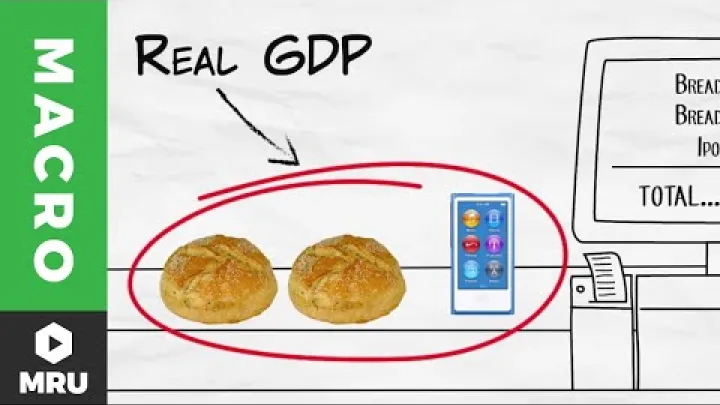
Two distinctions matter immediately: GDP level versus GDP growth rate, and nominal versus real GDP. A country can have a smaller GDP level than larger economies but still show a fast growth rate because it is expanding from a lower base. Nominal GDP is measured at current prices, while real GDP is adjusted for inflation to better reflect changes in actual production. For translation-friendly reference, keep these definitions in mind:
- GDP level: the size of the economy in a period (often a year).
- GDP growth rate: how fast GDP changes compared with an earlier period.
- Nominal GDP: measured using current prices (includes price changes).
- Real GDP: measured using constant prices (removes inflation effects).
A simple example shows why this matters: if prices rise by 4% and real production rises by 3%, then nominal GDP could rise by roughly 7% even though the economy produced only 3% more in real terms. That is why growth discussions usually focus on real GDP growth, while “GDP in USD” headlines often reflect both domestic price changes and exchange-rate movements.
Where Vietnam GDP numbers come from and how to check updates
Vietnam GDP figures typically originate from national statistical releases produced by Vietnam’s official statistics system, then are summarized and republished by international organizations and data platforms. International users often see GDP values through global databases and reports that standardize country data, such as widely used development indicators and macroeconomic datasets. Because these platforms may update on different schedules, the “same year” can show slightly different Vietnam GDP values across websites, especially around recent years that still include estimates or partial-year information.
Revisions are normal in national accounts. As more complete surveys arrive, seasonal patterns are refined, or the statistical base year is updated, earlier GDP values can be revised. A practical way to validate a Vietnam GDP number before using it in a report or decision is to check three basics: the unit (VND or USD), the price basis (current prices or constant prices), and the time period (annual or quarterly). If you see a mismatch, such as comparing current USD GDP with a constant-price growth rate, the interpretation can become incorrect. When tracking changes, it helps to use a “latest available release” mindset and compare like with like.
Vietnam GDP and GDP Growth: Latest Figures and Recent Trends
People often want a single, current Vietnam GDP number, but it is more useful to understand what that number represents and what can make it change even when the domestic economy is steady. Headline GDP in USD is typically nominal GDP converted into US dollars, which means exchange rates matter. Growth rates, on the other hand, are usually reported in real terms and can be presented annually or quarterly. This section explains how to read those two headline formats and how to compare Vietnam with regional peers without oversimplifying.
Because recent-year values can still be estimates in some databases, treat “latest” figures as time-bound. If you are comparing “gdp vietnam 2023” to “gdp vietnam 2024,” make sure both numbers come from the same type of dataset and use the same price concept. The goal is not to find one perfect figure, but to build a consistent view that matches your purpose, such as studying long-term development, planning relocation, or understanding market size for a business plan.
Vietnam GDP in USD: understanding the headline number
A headline “Vietnam GDP (USD)” figure usually means nominal GDP measured in local currency at current prices and then converted into current US dollars. That conversion can shift even if Vietnam’s domestic output does not change, because exchange rates can move. For example, if GDP in VND rises but the VND weakens against the USD, the USD GDP figure can look smaller than expected. This is one reason why USD GDP comparisons across years should be treated carefully, especially for recent years.

Many widely cited international datasets place Vietnam’s nominal GDP in the mid-hundreds of billions of USD in the mid-2020s, and some summaries describe 2024 nominal GDP as roughly in the USD 475–480 billion range. This type of number is best read as “an estimate from a commonly used source at the time of publication,” not as a final audited total. If you want a year-by-year view, a simple table format helps, but it should clearly label whether each entry is an actual value or an estimate and whether it comes from an official release or an international database.
| Year | Nominal GDP (current USD) | Status | Source type |
|---|---|---|---|
| 2023 | Check latest release for current USD conversion | Actual or revised | Official or international database |
| 2024 | Often reported around USD 475–480 billion (time- and source-dependent) | Estimate or preliminary | International database or market summary |
| 2025 | Check latest projections and clearly label as forecast | Forecast | International organization or analyst estimate |
A common mistake is mixing “current USD GDP” with “constant-price GDP” in the same comparison. If one number is in current USD and the other is in constant prices (inflation-adjusted), you are combining different measurement concepts. For clean comparisons, either use real GDP growth rates for performance over time or use nominal GDP in the same currency basis for market-size snapshots.
Vietnam GDP growth rate: annual vs quarterly readings
Vietnam GDP growth can be reported as an annual rate (full-year growth compared with the previous year) or as a quarterly year-on-year rate (a quarter compared with the same quarter in the prior year). Quarterly year-on-year figures are useful for tracking momentum, but they can fluctuate due to seasonality, export cycles, and short-term policy timing. Quarter-to-quarter growth, if shown without seasonal adjustment, can be misleading because the economy does not produce the same mix of output each quarter.
In some recent releases and tracking summaries, Vietnam has posted quarterly year-on-year growth readings in the high single digits in a strong quarter, sometimes described as just above 8% in that period. A single quarter like that should not be treated as a permanent baseline. The drivers can vary by quarter, such as an export rebound, higher manufacturing output, stronger services activity, or faster public investment execution.
To read a GDP growth headline well, first confirm what period it covers. “GDP grew 7%” can mean “full-year real growth,” or it can mean “a specific quarter compared with the same quarter last year.” Next, check whether the number is real (inflation-adjusted) or nominal. Growth headlines are usually real, but not always, and the label may be small.
Finally, connect the headline to drivers rather than treating it as a standalone result. If exports and manufacturing are strong, growth can rise even if some domestic-demand indicators are softer. If services and consumption accelerate, growth may become more broad-based. This approach helps international readers interpret whether a growth rate reflects a narrow export cycle or a wider expansion across jobs and incomes.
How Vietnam compares with regional peers without oversimplifying
Comparing Vietnam with regional peers can be helpful, but simple rankings often hide important differences. A higher growth rate does not automatically mean a higher income level, because countries start from different GDP per capita bases. Likewise, a larger GDP level can reflect a larger population rather than higher productivity. For practical comparisons, it is better to use a small set of dimensions: real GDP growth, GDP per capita, sector mix (services versus manufacturing versus agriculture), and trade exposure (how important exports and imports are relative to the economy).
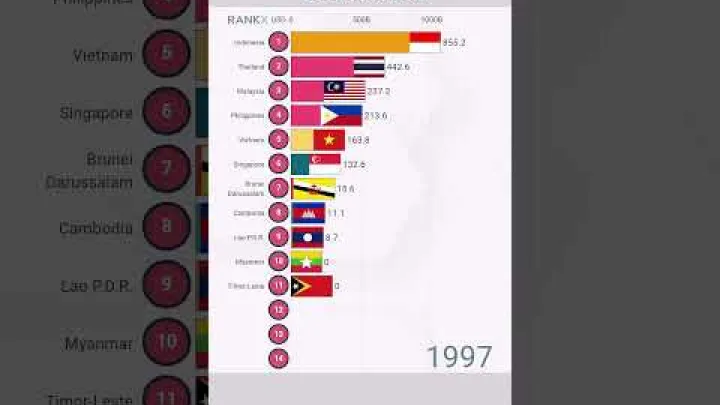
If you do not have a consistent table of peer metrics from the same dataset, a narrative comparison can still be meaningful. Vietnam is often described as more manufacturing- and export-oriented than some neighbors that rely more heavily on domestic demand or commodity cycles, while still having a large and growing services sector tied to urbanization and rising consumption. This structure can make Vietnam more sensitive to global goods demand, but it can also support rapid productivity gains when investment and supply chains improve.
For cross-country comparisons, purchasing power parity (PPP) is another option. PPP adjusts for price-level differences across countries and can give a more comparable sense of domestic purchasing power than current USD. However, PPP is not a measure of trade capacity, and current USD figures remain useful when thinking about external payments, imported equipment costs, and international market size. Using both concepts side by side often gives the clearest picture.
Vietnam GDP Per Capita: What It Means for Living Standards
Vietnam GDP per capita is widely used as a quick proxy for average living standards, especially by international readers trying to compare countries. It is calculated by dividing GDP by population, which makes it sensitive not only to economic growth but also to demographic change. GDP per capita is best read as an average level of output per person, not as a direct measure of what a typical household earns. Still, when tracked over time, it can help describe whether the economy is becoming more productive and whether the “economic pie” is growing faster than the population.
For relocation or business planning, GDP per capita can provide context for the maturity of consumer markets and the likely demand for different types of services. For students and researchers, it is a starting point for understanding development stages and for selecting complementary indicators like education outcomes, health access, and labor market structure. The key is to know which version you are reading: nominal GDP per capita in USD or GDP per capita in PPP terms.
GDP per capita explained: nominal and PPP
GDP per capita is GDP divided by the population in the same period, usually a year. When you see “Vietnam GDP per capita (USD),” it typically means nominal GDP per capita converted into current US dollars. This version is useful when comparing market size and international purchasing capacity, such as the ability to import technology or the USD cost of international services. It is also the number that often appears in quick “country profile” summaries.
PPP GDP per capita adjusts for differences in local price levels. In practical terms, PPP per capita can be more informative for understanding what income can buy inside Vietnam, because it accounts for the fact that many goods and services have different prices across countries. Readers who are considering studying, living, or working in Vietnam often find PPP comparisons helpful alongside cost-of-living information.
Recent nominal-per-capita values reported in common international datasets for Vietnam are often described as around the USD 4,000 level in the mid-2020s, with some summaries placing 2024 near roughly USD 4,000 per person (measurement type and revision status matter). These figures can shift due to exchange rates, inflation, and revisions to GDP or population estimates.
What GDP per capita does not measure is as important as what it does measure. It does not show income distribution, so it cannot tell you whether gains are broad-based. It also does not directly measure cost-of-living differences inside the country, the quality of public services, or informal economic activity. Use it as a neutral, high-level average, then confirm with wages, prices, and labor market data.
What changes GDP per capita: growth, population, and currency effects
If GDP grows at 6% and the population grows at 1%, then GDP per capita grows at roughly 5% in local-currency real terms, assuming the growth rate is measured in real GDP.
However, when GDP per capita is reported in USD, exchange rates can change the picture. A hypothetical illustration shows the effect: imagine GDP per capita is 100 million VND one year and remains 100 million VND the next year, but the exchange rate moves from 23,000 VND per USD to 25,000 VND per USD. The USD per-capita figure would fall from about USD 4,348 to USD 4,000 even though local-currency output per person did not change. This is why year-to-year USD comparisons should always be paired with local-currency and real-growth context.
Inflation adjustments matter as well. If nominal GDP per capita rises mainly because prices rose, real living standards may not improve at the same pace. When you track “gdp vietnam 2024” versus “gdp vietnam 2023,” try to keep a small checklist:
- Is the per-capita figure nominal USD, nominal VND, or PPP?
- What is the real GDP growth rate for the same year?
- Did the exchange rate shift noticeably year to year?
- Were there revisions to GDP or population estimates?
This routine helps you separate genuine output gains from currency and price effects, and it keeps comparisons consistent across datasets.
Connecting per capita numbers to everyday costs and opportunities
GDP per capita trends can relate to wages, job creation, and consumer spending, but the relationship is not one-to-one. Output per person can rise because productivity improves in manufacturing or services, even if wage gains are uneven across regions or industries. Conversely, wages in a specific sector can grow quickly even if the overall GDP per capita trend is steadier, especially when labor demand is concentrated in certain cities or export-oriented clusters.
To interpret living standards more realistically, pair GDP per capita with complementary indicators that are commonly available across countries. Examples include inflation (to understand purchasing power), employment by sector (to see where jobs are expanding), and retail sales trends (as a signal of household demand). For international readers considering study, relocation, or business decisions, this combination is often more useful than GDP per capita alone, because it highlights both opportunity and cost pressures.
A practical takeaway is to use GDP per capita as a starting point, then confirm the story with sector data and prices. If services are expanding and inflation is stable, rising per-capita output may align more closely with broad domestic demand. If growth is driven mostly by exports while domestic indicators are mixed, the per-capita number may still rise, but everyday conditions can vary more by industry and location.
Economic Structure: Sector Shares in Vietnam GDP
Vietnam GDP is not produced by one sector. It comes from a mix of services, industry (including manufacturing and construction), and agriculture, forestry, and fisheries. Understanding this structure helps explain why some global events matter more than others. For example, strong global demand for manufactured goods can boost industrial output and exports, while services activity can be more tied to domestic income, urban consumption, and tourism. Agriculture remains important for employment and food supply even when its GDP share is smaller than services or industry.

Sector shares can vary depending on classification methods and whether you are looking at value added at basic prices or other national accounting conventions. The goal of this section is not to lock in one exact percentage, but to explain how each sector contributes to output, jobs, and resilience. If you are using sector shares for a project, confirm the dataset’s definitions and keep the time period consistent.
Services and consumption: the largest share of Vietnam GDP
Services typically cover a wide set of activities: retail and wholesale trade, transport and logistics, finance, real estate services, telecommunications, hospitality, education, health, and public administration. Services growth can be broad-based because it often reflects many separate spending decisions across households and firms.

Some recent sector summaries describe services as roughly in the low-40% range of GDP in a recent year, with one commonly repeated figure placing services around 42% in 2024. The exact value can differ by classification and revision, so it is best used as an approximate indicator of “largest sector” rather than as a precise target. When services expand faster than other sectors, it can signal improving domestic demand, stronger tourism-related activity, or growth in high-value services such as finance and information services.
A useful clarification is the difference between market services and public services. Market services are sold in markets, such as retail, transport, banking, and telecommunications. Public services include administration, public education, and public health services, which can grow due to policy decisions and demographic needs. If you are reading a headline about “services driving GDP,” it helps to ask which part: a tourism and retail rebound is different from growth in public-sector services.
Industry and manufacturing: productivity, exports, and investment
Industry includes manufacturing, construction, and related activities such as utilities. Manufacturing is often highlighted in discussions of Vietnam GDP growth because it can deliver high productivity and connect directly to export markets. Even when manufacturing is not the largest share of GDP, it can “punch above its weight” through investment, technology adoption, and strong linkages to logistics, business services, and supplier networks.

Vietnam is commonly described as integrated into global value chains in areas such as electronics and components, machinery-related production, footwear, and textiles. These industries often involve foreign direct investment and imported intermediate inputs, which is important for interpreting GDP correctly. GDP measures value added inside Vietnam, not the full value of exported goods. If a factory imports components and assembles final products, GDP captures the local value added from labor, local services, and local production stages, rather than counting the entire export price as domestic output.
Some high-level summaries report that a large portion of merchandise exports is manufacturing-related, but the exact share varies by product classification and time period. If you cannot verify an export composition percentage from a consistent dataset, it is safer to describe the mechanism: manufacturing supports exports, exports support factory utilization, and investment supports capacity expansion. This mechanism is often more stable and informative than a single percentage in a fast-changing supply chain environment.
Agriculture, forestry, and fisheries: smaller share, ongoing importance
Agriculture, forestry, and fisheries generally represent a smaller share of Vietnam GDP than services and industry, but the sector remains important for employment, rural livelihoods, and food supply. It also contributes to exports through a range of agricultural and aquatic products. Because the sector is exposed to weather and biological risks, its output can be more volatile than some service activities, and it can be affected by climate variability, floods, droughts, and salinity intrusion in vulnerable regions.
When agricultural growth is discussed in official summaries, it is often framed as steady but sensitive to seasonal conditions. Rather than focusing on long lists of commodities, it is usually more helpful to interpret agriculture through three lenses: productivity improvements (such as better inputs and logistics), resilience and adaptation (water management and climate readiness), and value addition (processing and cold chain). These factors determine how agriculture contributes to GDP value added, not just how much is produced in raw volume terms.
Regional variation matters in agriculture. Delta regions can be major contributors to crop and aquaculture output, while highland areas may have different crop mixes and land constraints. This regional diversity can support resilience, but it also means that localized weather shocks can affect national output and prices. For readers tracking GDP, the key point is that agriculture may not dominate GDP share, yet it can influence inflation, rural incomes, and export stability.
Trade and Investment: How the External Sector Affects Vietnam GDP
Vietnam is often described as an open economy with strong trade connections, which makes exports, imports, and investment important for understanding Vietnam GDP growth. In the GDP equation, net exports (exports minus imports) are one channel through which global demand affects domestic output. Foreign direct investment is another channel, supporting factory construction, equipment upgrades, and the development of supplier ecosystems. These external links can boost growth when global conditions are supportive, but they can also increase sensitivity to demand slowdowns and policy shifts in major markets.
It is helpful to separate trade “flows” from GDP “value added.” Exports represent sales to the rest of the world, but GDP counts the domestic value created in producing those exports. If exports rise because imported inputs rise by the same amount, the net effect on GDP can be smaller than the export headline suggests. The same logic applies to investment: large investment pledges can signal confidence, but GDP is affected more directly by what is actually built and used in production.
Exports, imports, and net exports in the GDP equation
In the spending identity, GDP equals consumption plus investment plus government spending plus net exports. Net exports are exports minus imports, so a rise in exports can increase GDP, but a rise in imports can reduce net exports even if imports are healthy for the economy. This is why a trade surplus does not automatically mean domestic demand is strong, and a trade deficit does not automatically mean weakness. Imports can rise because factories are buying machinery and intermediate goods for future production.

Monthly trade headlines can be useful as snapshots, but they should be read as short-run indicators that can fluctuate with shipping schedules and seasonal patterns. In some reported months, Vietnam’s exports have been described in the low-40s billions of USD while imports were in the high-30s billions of USD, producing a monthly surplus. These figures are illustrative of scale, but the more important question is the trend: are exports accelerating, are imports rising due to capital goods, and is demand concentrated in a few markets?
Three ways trade changes GDP in the short run are:
- Export volume changes: more goods shipped can raise industrial output and services linked to logistics.
- Import composition changes: more machinery imports can signal future capacity, even if net exports fall now.
- Inventory and timing effects: firms may ship earlier or later, shifting quarterly growth without changing long-run demand.
When you read a trade-driven GDP story, avoid assuming a single cause unless it is clearly supported by broader data. A change could reflect global demand, local production capacity, price shifts, or administrative timing, and the best interpretation usually uses multiple indicators.
Foreign direct investment and why it matters for GDP growth
Foreign direct investment (FDI) matters for Vietnam GDP growth because it supports capital formation, technology diffusion, job creation, and export capacity. It is important to distinguish between pledged (registered) FDI and realized (disbursed) FDI. Pledged FDI signals investor intent and future projects, while realized FDI reflects actual spending on factories, equipment, and operations. Realized FDI has a more immediate connection to GDP through investment and production activity.

Recent reporting often describes Vietnam’s realized FDI as reaching the mid-20s billions of USD in a recent year, with some summaries labeling 2024 as a record-high period for realized FDI. Partial-year figures for subsequent years are sometimes reported as well, but they should be interpreted carefully because partial-year totals are not directly comparable to full-year totals. For readers, the practical point is to focus on direction and composition: manufacturing projects, infrastructure-linked projects, and higher-value services can have different impacts on productivity and local supplier development.
FDI also has limitations that matter for GDP interpretation. Profits may be repatriated, which affects national income measures differently from GDP. Some export-oriented projects can have high import dependence, which reduces domestic value added compared with gross export revenue. FDI can also be regionally concentrated, creating uneven benefits across provinces. Keeping the “value added” concept in mind helps: GDP rises with the domestic contribution of labor, local services, and local production stages, not with total sales alone.
Key partners and industries: electronics and supply-chain positioning
External trade narratives about Vietnam often focus on electronics, components, and related high-tech product categories, alongside established sectors like textiles and footwear. These industries matter because they combine manufacturing activity with logistics, business services, and a broad ecosystem of suppliers. They can also bring learning-by-doing effects that support productivity gains over time, especially when supplier capabilities deepen and more complex production stages move onshore.

Major destinations for Vietnam’s manufactured exports often include large consumer markets, and the United States is frequently cited as an important destination for some higher-value and electronics-related categories. The exact product and partner mix can change from year to year depending on global demand and pricing. Partner concentration can create sensitivity to policy changes, demand shifts, and logistics disruptions, so a diversified set of markets can improve stability even if it takes time to build.
Consider a simple “case study” mechanism for electronics in prose. A new investment in electronics assembly typically begins with construction spending (investment), followed by equipment imports and workforce hiring. Once production ramps up, exports increase, but GDP is driven by the value added in Vietnam: wages paid, local services purchased, and local supplier inputs used. Over time, if more components and engineering services are supplied locally, value added can rise even if export revenue grows at the same pace. This is why investment quality and supply-chain depth can matter as much as export volume.
Domestic Demand and Policy: Inflation, Interest Rates, and Spending
Domestic demand is a major part of GDP in any country, and Vietnam is no exception. Household consumption, business investment, and government spending interact with inflation and interest rates, shaping how strong domestic activity feels on the ground. For international readers, these factors often translate into practical questions: Are prices rising quickly? Is credit easily available? Is public infrastructure improving? GDP is the accounting framework that ties these questions together, but the interpretation depends on whether you are looking at nominal values or real, inflation-adjusted measures.
This section explains why inflation matters for reading Vietnam GDP, how interest rates and credit conditions influence investment, and how government spending and public investment can support growth while facing practical constraints. The goal is to provide a neutral toolkit, not a forecast. When these indicators move together, they often explain why growth speeds up or slows down across quarters.
Inflation and real growth: why prices matter for GDP interpretation
Inflation matters because it changes the meaning of nominal GDP. If prices rise, nominal GDP can increase even if real production grows slowly. That is why real GDP, which adjusts for inflation, is the standard measure for discussing economic growth. When you see a Vietnam GDP growth rate in official communications, it is typically a real growth figure, while “GDP in USD” is generally a nominal concept affected by prices and exchange rates.

In recent periods, inflation in Vietnam has often been discussed as being in a moderate single-digit range, sometimes described around 3% to 4% in certain reported periods. The exact reading depends on the month and basket, so it should be treated as time-specific. From a household perspective, inflation influences purchasing power and consumer confidence. From a business perspective, inflation can raise input costs, affect wage negotiations, and influence pricing decisions, which in turn can shape consumption and investment activity.
It is also helpful to distinguish headline inflation from core inflation. Headline inflation includes all items, including food and energy, which can be volatile. Core inflation excludes some of those volatile components to better reflect underlying price trends. If headline inflation rises due to a temporary food-price shock, real GDP may still be stable, but households can feel pressure quickly. Reading both measures together can help explain why policy communication may emphasize “underlying” inflation even when headline prices move month to month.
Interest rates, credit conditions, and investment activity
Interest rates influence borrowing costs for households and firms. When borrowing costs fall, businesses may find it easier to invest in equipment and capacity, and consumers may find housing and durable purchases more affordable. When borrowing costs rise, investment can slow and construction activity can cool, which can affect GDP through the investment component. Credit conditions also matter beyond the headline rate, including lending standards, collateral requirements, and bank risk appetite.

Some market trackers describe Vietnam’s benchmark policy rate as being in the mid-single digits in certain recent periods, with figures around the mid-4% range often cited at times. The precise level depends on which rate is being referenced and the date of the observation. For interpretation, it can help to think in “real” terms without heavy jargon: if the interest rate is close to inflation, borrowing is less costly in inflation-adjusted terms than if rates are far above inflation.
Credit growth can lift short-term GDP by supporting consumption and investment, but it can also create risks if lending expands faster than productivity and income. For that reason, readers should interpret strong credit growth as a signal that demand may be improving, while also watching whether productivity indicators, exports, and business formation support the expansion. Keeping the focus on balance helps: rates and credit can support growth, but sustainable gains usually require rising efficiency and value added.
Government spending and public investment: support and constraints
In many economies, public investment can help smooth slowdowns by supporting construction and enabling private-sector productivity over time. For Vietnam, infrastructure improvements can also strengthen logistics performance, which matters for an economy that is closely connected to international trade.

However, the effectiveness of public investment depends on how quickly projects move from planning to execution. Administrative capacity, land clearance, procurement processes, and coordination across agencies can affect how fast budgeted spending becomes real output. This is why headlines about “stimulus” may not translate into immediate GDP impact if implementation is slow. A neutral way to interpret such headlines is to separate announcements (intent) from disbursement (actual spending) and then from completion (usable assets).
An optional way to keep the GDP framework clear is to summarize the components in a simple table:
| GDP component | Meaning (one sentence) |
|---|---|
| Consumption (C) | Household spending on goods and services inside the economy. |
| Investment (I) | Spending on capital such as buildings, machinery, and inventories. |
| Government (G) | Public consumption and investment that deliver services and infrastructure. |
| Net exports (NX) | Exports minus imports, capturing the external contribution to spending. |
If detailed fiscal numbers are not available or are not comparable across sources, focusing on these concepts still helps you interpret how government actions can support GDP in the short run and productivity in the long run.
Jobs, Productivity, and the Transition to Higher Value Growth
Vietnam GDP growth is most meaningful when it translates into stable jobs, rising productivity, and improved economic resilience. Employment patterns show where opportunities are expanding, while productivity differences explain why some sectors generate more GDP per worker than others. For international readers, this is often the bridge between macro headlines and real-world decisions such as choosing a study field, identifying growing industries, or assessing business demand for services.
This section explains how employment by sector can differ from sector shares of GDP, why productivity gains matter for wages over time, and how human capital and innovation can support a shift toward higher value-added activities. The goal is to provide interpretation tools rather than specific wage claims. As with other GDP topics, it helps to keep time periods clear because labor market indicators can change across quarters.
Employment by sector and what it implies for inclusive growth
Sector employment shares often differ from sector GDP shares because productivity varies across activities. Services may be the largest share of GDP, but employment can be spread across services, manufacturing, construction, and agriculture in different proportions. Agriculture may employ many workers relative to its GDP share because output per worker can be lower, while some high-productivity manufacturing and modern services can generate large value added with fewer workers.

In some recent labor market summaries, manufacturing and construction employment has been described as a very large group, sometimes summarized as around one-third of total employment in a recent period. Exact counts depend on the quarter and the survey method, so it is best to treat these as time-specific indicators rather than permanent shares. The interpretive point is stable: when employment shifts from lower-productivity activities into higher-productivity ones, GDP per worker can rise, supporting the potential for wage growth over time.
Informal employment is also relevant. Informal jobs can provide income but may offer less stability, fewer protections, and weaker links to training and productivity improvement. Informality can make productivity measurement harder because some output may be underreported or harder to classify. When reading GDP and employment together, it helps to consider whether job gains are happening in formal sectors with training and capital investment, which often have stronger long-term productivity dynamics.
Human capital and skills: why education quality affects GDP
Human capital refers to skills, knowledge, and health that influence how productive people can be at work. For Vietnam GDP growth, skills development supports movement into higher value services and more advanced manufacturing tasks. It also improves resilience, because workers and firms can adapt more easily when global demand shifts or when technology changes production processes. Over time, stronger skills can raise the domestic value added captured in export industries.
A common recommendation in many countries is better coordination between education systems and employers. The practical challenge is matching training content to real job needs while keeping pathways flexible enough for workers to change roles as the economy evolves. For readers who want indicators to watch alongside GDP, consider labor force participation (how many people are working or looking for work), productivity proxies (output per worker or value added per hour where available), and sectoral value added (which sectors are gaining share over time).
If you encounter international assessments of education or skills, focus on what the indicator measures rather than on rankings. For example, an assessment might measure reading and math proficiency for a given age group, which connects to future workforce readiness. Clear measurement concepts are more useful than a single placement in a global list, especially because methods and participation can vary across countries and years.
Innovation and the digital economy as emerging growth engines
Innovation and digital adoption can raise productivity by reducing transaction costs, improving logistics coordination, and enabling new business models. Over time, digital infrastructure can support services exports such as software development, business process services, and digital content. These activities show up in GDP through higher services value added, higher productivity in existing sectors, and new forms of investment in technology and skills.

Signals of a growing digital economy can include faster adoption of digital payments, expansion of e-commerce, and more firms offering software and IT-enabled services. Vietnam is often discussed as having growing startup activity and improving innovation capabilities, but the most reliable way to interpret this is to look for consistent indicators over time rather than one-time headlines. Digital growth can be uneven, with strong adoption in major cities and slower uptake in rural areas, which matters for inclusive development.
What to watch next, without needing precise figures, includes:
- Broadband and mobile data coverage improvements
- Digital payments adoption in retail and public services
- Business spending on software, automation, and training
- R&D and innovation-support indicators where consistently reported
These signals help explain whether GDP growth is moving toward higher value-added activities that can support long-run income gains and resilience.
Risks and Outlook for Vietnam GDP
Vietnam GDP is shaped by both external and domestic conditions. External demand can raise or reduce export orders quickly, affecting manufacturing output and related services. Domestic conditions such as inflation, credit cycles, and public investment execution can influence consumption and investment. For international readers, the most useful approach is often a scenario mindset: understanding what could move growth higher or lower, rather than expecting a single fixed path.
Outlook discussions also depend on who is producing them. International organizations, research institutions, and market analysts can each use different assumptions about global demand, commodity prices, and policy settings. Forecasts are updated frequently as new quarterly data arrives, so a responsible reading treats projections as conditional. The sections below summarize typical risk channels and provide a repeatable checklist for monitoring changes.
External risks: global demand and trade-policy uncertainty
As an export-oriented economy, Vietnam is sensitive to slowdowns in major markets and to changes in trade rules. If global demand for consumer goods and electronics weakens, factory orders may decline, which can reduce industrial output and related logistics services. If demand strengthens, the same channels can support higher growth. This sensitivity is not a weakness by itself, but it does mean external conditions can show up quickly in quarterly GDP readings.
International organizations sometimes frame Vietnam’s outlook using projections that may show growth easing or strengthening relative to the previous year, depending on global conditions and domestic policy settings. These are not certainties. Projections can change as trade data, inflation readings, and investment signals evolve. It is safer to interpret them as “what growth could be if conditions follow the stated assumptions.”
A simple scenario framework can help:
- Baseline: steady global demand, stable inflation, and continued investment support stable growth.
- Downside: weaker exports or trade-policy disruptions reduce manufacturing momentum and hiring.
- Upside: stronger investment and broader services expansion lift domestic demand and productivity.
Using conditional language is important because the same economy can look very different depending on external orders and supply-chain conditions across a few quarters.
Domestic risks: inflation pressure, financial stability, and climate impacts
Domestic risks often involve inflation surprises, financial stability concerns, and climate-related disruptions. If inflation rises faster than expected, real household purchasing power can weaken, and policymakers may have less room to support demand. If financial stress increases, credit conditions can tighten, reducing private investment and slowing construction and business expansion. These channels can affect GDP even if exports are stable.
Financial stability discussions typically focus on general vulnerabilities such as credit cycles and exposure to property-related activity, because real estate and construction can be important for investment and banking-system health in many economies. Without relying on specific balance-sheet claims, the key interpretation is straightforward: when credit expands rapidly and then slows sharply, GDP growth can become more volatile. For international readers, watching credit conditions alongside investment and inflation can clarify whether growth is broad-based or driven by leverage.
Climate and extreme weather can also affect GDP through multiple channels: agricultural output volatility, logistics disruptions, damage to infrastructure, and effects on tourism activity. The uncertainty is high, but the economic link is clear: shocks can reduce output and raise prices in affected regions. A practical monitoring checklist includes:
- Inflation and core inflation trends
- Interest rates and credit growth conditions
- Exports and imports (especially capital goods imports)
- FDI signals (pledged and realized)
- Retail sales and services activity indicators
Tracking these together provides a balanced view of whether Vietnam GDP momentum is strengthening or facing constraints.
How to interpret forecasts and medium-term targets
Forecasts, targets, and realized outcomes are different things. A forecast is an estimate of what may happen based on assumptions and available data. A target is an objective or plan set by an authority, often used for policy guidance. Realized outcomes are what the data eventually show, sometimes after revisions. Confusing these can lead to overconfidence in a number that was never meant to be final.

When comparing forecasts across sources, focus on three questions. What assumptions are used about global demand, commodity prices, and policy settings? What time horizon is being forecast (next quarter, next year, or several years)? And is the forecast about real GDP growth, nominal GDP, or GDP in USD? Two forecasts can differ simply because one uses different inflation and exchange-rate assumptions.
A single-year forecast should not be treated as a long-term trend. Growth can accelerate or slow due to temporary trade cycles, one-time policy timing, or unusual base effects. For readers who revisit this topic annually, especially when comparing “gdp vietnam 2024” and “gdp vietnam 2023,” it is useful to compare revisions as well as the newest headline. If a previous year’s GDP is revised, the growth narrative can change even if the latest year stays the same.
A quick refresh approach you can reuse each year is: confirm the latest annual GDP level and real growth, note whether figures are preliminary or revised, check inflation and exchange-rate context, then identify the largest drivers (services demand, manufacturing/export performance, and investment conditions). This keeps your interpretation consistent even when numbers shift across datasets.
Frequently Asked Questions
What is Vietnam GDP?
Vietnam GDP is the total value added produced within Vietnam’s borders over a period, usually a year or a quarter. It can be reported in local currency or converted into USD. GDP is a broad measure of economic activity, not a direct measure of household income.
Why do different websites show different Vietnam GDP numbers for the same year?
Different sites may use different update dates, revision vintages, currency conversions, or price bases. Some show current USD values, while others show constant-price series or PPP measures. Using the same dataset and the same measurement type across years is the best way to keep comparisons consistent.
Is Vietnam GDP growth the same as an increase in living standards?
No, GDP growth is not the same as living standards. GDP growth measures changes in production, while living standards also depend on prices, job quality, income distribution, and public services. GDP per capita and inflation data help provide additional context.
What is the difference between nominal GDP and real GDP?
Nominal GDP is measured at current prices and rises with both production and price increases. Real GDP is adjusted for inflation and is used to describe changes in actual output. When reading “GDP growth,” it usually refers to real GDP growth.
Why can Vietnam GDP in USD change even if the economy is stable?
USD GDP depends on the exchange rate as well as local-currency GDP. If the VND strengthens, USD GDP can look larger; if it weakens, USD GDP can look smaller. This can happen even when local production grows steadily.
Which sectors matter most for Vietnam GDP?
Services are typically the largest share of GDP, while industry and manufacturing are often major drivers of exports and investment. Agriculture has a smaller GDP share but remains important for employment, food supply, and some exports. The balance across sectors helps explain why growth can change across quarters.
Conclusion: Key Takeaways for Readers Tracking Vietnam GDP
Vietnam GDP is a useful headline indicator, but it becomes much more informative when you separate level from growth and nominal from real. Headline GDP in USD is a market-size snapshot that can move with exchange rates, while GDP growth rates are usually real and are best interpreted with clear time framing (annual versus quarterly). Vietnam GDP per capita adds population context and can help approximate average living standards, but it does not measure distribution, cost-of-living differences, or service quality.
The structure of the economy provides the “why” behind many GDP movements: services reflect broad domestic demand and activity such as retail, transport, and hospitality; industry and manufacturing connect to exports, investment, and global value chains; and agriculture remains important for employment and can be sensitive to climate and weather. Trade and FDI influence GDP through value added and investment, while inflation, interest rates, and public investment shape domestic demand conditions.
A practical summary: what Vietnam GDP, growth, and per capita tell you
Vietnam GDP tells you the size of the economy, but it does not tell you how that output is shared across households or regions. Vietnam GDP growth tells you how fast output is changing, but it can vary by quarter depending on exports, services momentum, and investment timing. Vietnam GDP per capita provides an average-per-person lens, but it is most useful when you keep the measurement type clear (nominal USD versus PPP) and pair it with inflation and labor market context.
The most reliable way to interpret these indicators is to focus on consistent definitions and time periods. Compare real growth rates to understand performance, use nominal measures for market-size snapshots, and treat recent-year values as potentially revised. Sector structure adds clarity: services often anchor broad-based activity, manufacturing can drive export-linked cycles and productivity gains, and agriculture can influence prices and rural livelihoods even with a smaller GDP share.
- GDP level and GDP growth answer different questions.
- Nominal and real measures can move differently when inflation changes.
- USD figures are sensitive to exchange rates.
- GDP per capita is an average, not a direct measure of household income.
- Trade, investment, and sector mix help explain why growth changes.
How to keep your Vietnam GDP view current
A repeatable update routine helps you stay current without relying on one headline. First, check the latest available official release for annual and quarterly GDP growth and note whether figures are preliminary or revised. Second, compare the same year in a widely used international database to confirm that units and definitions match your needs. Third, review key drivers that commonly explain changes: trade performance (exports and imports), investment signals (including realized FDI), and inflation trends.
A simple tracking template can keep your notes consistent across years: year, GDP level (with unit), real growth rate (annual), GDP per capita (nominal USD and/or PPP), major drivers (services, manufacturing/export, investment), and notable risks (external demand, inflation pressure, climate disruptions). Students may focus more on long-run per-capita trends and sector transformation, travelers and remote workers may watch inflation and services activity, and business readers may prioritize trade, FDI signals, and sector momentum. This approach supports economic literacy and clearer comparisons when you revisit “gdp vietnam 2024” and “gdp vietnam 2023” in the future.
Select area
Create a post
Posting is free and no registration is required.