- Tay Son Heaven and Earth Esplanade: Historic Shrine in Quy Nhon
- Quang Trung Museum: Tay Sơn History & Culture in Quy Nhon
- Banh It Cham Towers: Ancient Heritage & Photography in Quy Nhon
- The Thon Beach in Cat Tien: Clean Shores & Affordable Watersports
- Linh Phong Pagoda in Quy Nhon: The Sacred Mountain Temple
Vietnam Memorial in Washington DC: Wall, Names, and History
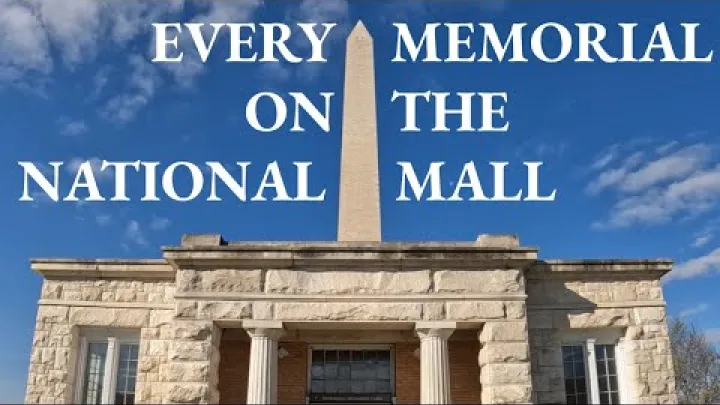
The Vietnam Veterans Memorial in Washington DC is one of the most visited and emotionally powerful places on the National Mall. It honors members of the U.S. armed forces who served and died in the Vietnam War, and those who remain missing. For many veterans, families, students, and international visitors, the Vietnam memorial is a place to reflect on the human cost of conflict. This guide explains the history of the Vietnam War Memorial, how the wall was designed, what the names and symbols mean, and how to plan a respectful visit in Washington DC or at a traveling wall near you.
Introduction to the Vietnam Veterans Memorial
Why the Vietnam Memorial in Washington DC matters today
The Vietnam Veterans Memorial is far more than a tourist stop. It is a national place of remembrance where the country recognizes the service and sacrifice of those who fought in the Vietnam War. The long black granite wall, engraved with tens of thousands of names, turns abstract casualty numbers into individual lives. For many visitors, standing in front of the Vietnam Memorial Wall is their first direct emotional connection to the war.
This memorial helps bridge the distance between past and present. Veterans come to remember comrades, families come to honor loved ones, and students come to understand a conflict they know only from textbooks. International visitors often see it as a symbol of how a nation can acknowledge loss, even when public opinion about a war is divided. By quietly presenting the names and inviting reflection, the site supports healing and a deeper public understanding of what war means at a human level.
In this guide you will learn how and why the Vietnam War Memorial in Washington DC was created, what its design represents, and how the wall’s reflective surface shapes the visitor experience. You will also find clear explanations about the names on the Vietnam Memorial Wall, including how they are arranged and how to find someone specific. Finally, you will get practical information for planning a visit, from directions and hours to etiquette, as well as options for digital remembrance and traveling Vietnam memorial walls that bring the experience to communities across the country.
Brief overview of the Vietnam War and the creation of a national memorial
The Vietnam War was a long conflict in Southeast Asia that involved North Vietnam and its allies on one side, and South Vietnam and its allies, including the United States, on the other. The fighting caused heavy casualties among soldiers and civilians, and it left deep social and political divisions inside the United States.

When U.S. troops returned home, many did not receive the public recognition that veterans of earlier wars had received. Protests, debates about policy, and disagreements about the war sometimes overshadowed the individuals who had served. Over time, veterans and citizens began to call for a national memorial that would focus not on the politics of the war, but on honoring the people who had borne its burdens. The idea was to create a place where all Americans, regardless of their views about the conflict, could come together to remember and reflect.
Out of this desire for healing, the plan for the Vietnam Veterans Memorial emerged. A group of Vietnam veterans and supporters began to organize, raise funds, and work with Congress and federal agencies to establish a memorial in the nation’s capital. Their efforts led to the creation of the Vietnam Veterans Memorial Fund and eventually to the black granite wall that now stands on the National Mall. The memorial is therefore both a response to the war itself and to the years of tension that followed, offering a quiet space where service and sacrifice are at the center.
Overview of the Vietnam Veterans Memorial
Purpose and origins of the memorial
From the beginning, the Vietnam Veterans Memorial was designed with a clear purpose: to honor the men and women of the U.S. armed forces who served during the Vietnam War, especially those who died or went missing. Its focus is on individuals rather than battles or victories. By engraving the names of the dead and missing on the wall, the memorial ensures that each person is remembered as more than just part of a total number.
The push to create the memorial began in the late 1970s, when Vietnam veteran Jan Scruggs proposed a national monument to recognize those who had served. In 1979 he and other veterans founded the Vietnam Veterans Memorial Fund (VVMF), a nonprofit organization that became the driving force behind the project. They aimed to build the memorial entirely with private donations as a sign of broad public support. Congress authorized the memorial in 1980, and the site on the National Mall in Washington DC was approved soon afterward.
The design competition opened in 1980 with specific goals: the memorial must be apolitical, list the names of all those who died or were missing, and harmonize with the surrounding landscape and nearby monuments. By focusing on remembrance instead of political judgment, the organizers hoped to create a place acceptable to people with many different views about the war. Out of more than a thousand entries, a simple but powerful design was selected in 1981. Construction began the following year, and the memorial was dedicated on November 13, 1982, in a ceremony attended by thousands of veterans, families, and officials. Over time, additional elements such as the Three Servicemen statue and the Vietnam Women’s Memorial were added, but the core purpose remains the same: to honor service and sacrifice and help the nation remember.
Key facts and quick statistics about the Vietnam War Memorial
For travelers planning a visit, it is useful to have a few basic facts about the Vietnam Veterans Memorial before arriving. These details help you understand what you are seeing and how the memorial fits into the larger landscape of the National Mall in Washington DC. The site is often simply called “the Vietnam memorial,” but it is actually a collection of related elements centered on the famous black granite wall.
The memorial is located just northeast of the Lincoln Memorial, within the area known as Constitution Gardens. It consists of the Vietnam Veterans Memorial Wall, the bronze Three Servicemen statue and flagpole, and the Vietnam Women’s Memorial statue. The wall itself is made of polished black granite panels set into the earth, forming a shallow V shape that opens toward the Washington Monument and the Lincoln Memorial.
The following quick facts summarize the essentials:
| Feature | Details |
|---|---|
| Official name | Vietnam Veterans Memorial |
| Location | National Mall, near Henry Bacon Drive NW and Constitution Avenue NW, Washington DC |
| Designer of the Wall | Maya Lin |
| Dedication year | 1982 (Wall); 1984 (Three Servicemen); 1993 (Vietnam Women’s Memorial) |
| Material of Wall | Polished black granite |
| Approximate length | About 150 meters (nearly 500 feet) across both wings |
| Maximum height | About 3 meters (just over 10 feet) at the center |
| Managing agency | U.S. National Park Service |
| Number of names | More than 58,000, as of recent counts |
| Nearby landmarks | Lincoln Memorial, Korean War Veterans Memorial, Washington Monument, Constitution Gardens |
These facts give only a brief picture of the Vietnam War Memorial. The following sections explore the location, design, and meaning of the wall, statues, and names in more detail, along with guidance to help you experience the site respectfully.
Location and How to Visit the Vietnam Memorial in Washington DC
![Preview image for the video "[4K] Walking Washington, DC / National Mall: Reflecting Pool, Vietnam War Memorial".](/sites/default/files/styles/media_720x405/public/oembed_thumbnails/2025-12/9KxX5EaPkCkUEFMQruE6NYQx65U-hutyyeJlZ0MHY-Q.jpg.webp?itok=X8MVfd5N "Preview image for the video \"[4K] Walking Washington, DC / National Mall: Reflecting Pool, Vietnam War Memorial\".")
Exact address, directions, and nearby landmarks
The Vietnam Veterans Memorial is located on the National Mall in Washington DC, along Henry Bacon Drive NW near the intersection with Constitution Avenue NW. In simple terms, the Vietnam Memorial Wall stands just northeast of the Lincoln Memorial, within the green area known as Constitution Gardens or Vietnam Veterans Memorial Park.
If you are navigating by map or GPS, searching for “Vietnam Veterans Memorial, Henry Bacon Drive NW, Washington DC” will bring you close to the main pathway leading down to the wall. The memorial does not have a traditional street address like a private building, because it is part of the larger National Mall parkland. Instead, it sits between the Lincoln Memorial to the west and the Washington Monument to the east, with Constitution Avenue NW forming the northern boundary.
There are several easy ways to reach the Vietnam War Memorial in DC:
- By Metro (subway): The nearest Metro stations are Foggy Bottom–GWU (Blue, Orange, Silver lines) and Smithsonian (Blue, Orange, Silver lines). From Foggy Bottom, it is about a 15–20 minute walk south and east. From Smithsonian, you walk west across the National Mall toward the Washington Monument and then continue toward the Lincoln Memorial.
- By bus: Several city bus routes and tourist-focused circulator buses stop along Constitution Avenue NW near the memorial and other monuments. Check current local transit maps for the best route from your starting point.
- By car: Parking on the National Mall is limited and often time-restricted. Some street parking is available along Constitution Avenue and nearby streets, but spaces fill quickly, especially during peak tourist seasons. Public transport or ride-hailing services are usually more convenient.
- By bike or on foot: Many visitors explore the National Mall on foot or by bicycle. Bike-share stations exist near major monuments, and there are paved paths that connect the Vietnam Memorial to the Lincoln Memorial, Korean War Veterans Memorial, and Washington Monument.
Understanding nearby landmarks makes it easier to orient yourself. If you are standing on the steps of the Lincoln Memorial facing the Washington Monument, the Vietnam Veterans Memorial is slightly to your right, down a gentle slope among the trees. The Korean War Veterans Memorial lies to your left across the Reflecting Pool. Constitution Gardens, a landscaped area with a small lake, extends north and east of the Vietnam memorial grounds. This cluster of monuments allows visitors to walk between several key sites in a short amount of time.
Opening hours, cost, and accessibility for visitors
The Vietnam Veterans Memorial is open 24 hours a day, every day of the year. Because it is an outdoor site managed by the U.S. National Park Service, there are no fixed closing times or entrance gates. This constant openness allows visitors, especially veterans and family members, to come whenever they feel ready, whether early in the morning, in the middle of the day, or late at night.
There is no admission fee to visit the Vietnam War Memorial in Washington DC. You do not need a ticket or reservation for individual visits, and you can approach the wall and the surrounding statues at your own pace. For school groups or large tours, it is helpful to plan ahead and coordinate with park rangers, but there is still no cost for entry. This free access reflects the memorial’s purpose as a public place of national remembrance.
The site is designed to be accessible for visitors with different mobility and sensory needs. The main paths leading to the wall are gently sloped and step-free, making them suitable for wheelchairs, strollers, and people who prefer to avoid stairs. The surface is paved and relatively smooth. The names on the wall are engraved at heights that allow many visitors to touch or make rubbings without stretching or bending too far, and the polished surface increases legibility in most lighting conditions.
National Park Service rangers and trained volunteers are usually on site during daytime and early evening hours. They can help with directions, explain the layout, and assist in finding specific names. Services for visitors with disabilities, such as sign-language interpretation for scheduled programs or information in alternative formats, are generally available on request, though it is wise to check the current National Park Service information before visiting. Some security presence is maintained on the National Mall, especially after dark. While many people choose to visit at night for a quieter atmosphere, travelers should stay aware of their surroundings, keep valuables secure, and remain on well-lit paths.
Best times to visit and respectful visitor etiquette
Because the Vietnam Memorial Wall is open 24 hours a day, you can visit at many different times and seasons, each offering a slightly different experience. Early morning, just after sunrise, is often calm and less crowded; the air is cooler in summer, and light on the black granite can be soft and gentle. Late evening visits can be equally moving, with the names emerging from the darkness under carefully placed lights and the surrounding city quieter than during the day.
Midday and afternoons, especially in spring and summer, tend to be the busiest times. School groups, tour buses, and individual travelers often arrive during these hours. While these periods are more crowded, they also bring more ranger programs and opportunities to hear veterans share personal stories. In terms of seasons, spring and fall usually offer the most comfortable weather, while winters can be cold and windy and summers hot and humid. Whatever the season, bring comfortable walking shoes, weather-appropriate clothing, and water, especially if you plan to walk between several memorials on the National Mall.
Visitor etiquette at the Vietnam War Memorial is based on respect. People come to mourn, to remember, and to think quietly, so it is important to keep voices low, avoid running or playing on the pathways, and move gently around individuals who seem to be having a private moment. Photography is allowed and common, but try to be sensitive when taking photos near those who are grieving or praying. Avoid loud music, speakerphone calls, or anything that could disturb the reflective atmosphere.
For group visits and school trips, it can help to speak with participants before arrival about the solemn nature of the site. Teachers and guides often encourage students to walk slowly, observe carefully, and save questions for a designated discussion spot away from the wall itself. International visitors who may be unfamiliar with U.S. memorial customs can follow the general practice used in many countries: remove hats if you wish, keep a quiet tone, and treat the names on the wall as you would graves in a cemetery. Most visits last between 30 minutes and an hour, but some people stay much longer. Allow enough time not only to see the wall, but also to visit the Three Servicemen statue and the Vietnam Women’s Memorial nearby.
Design and Symbolism of the Vietnam Memorial Wall

Maya Lin and the national design competition
The design of the Vietnam Veterans Memorial Wall is closely linked to its creator, Maya Lin, and to the unusual process through which her concept was selected. In 1980, after Congress authorized the memorial, the Vietnam Veterans Memorial Fund organized a national design competition open to both professionals and students. The competition was anonymous, with entries identified only by numbers. The goal was to choose the idea that best met a set of requirements rather than the reputation of a particular architect.

The competition guidelines stated that the design should be apolitical, list all the names of the dead and missing, and harmonize with the surroundings of the National Mall. It needed to promote reflection and healing and avoid making a political statement about whether the war was right or wrong. A jury of architects and artists reviewed more than a thousand submissions. In 1981 they selected a proposal from Maya Lin, then a 21-year-old undergraduate architecture student at Yale University. Her design was a simple V-shaped cut in the earth with two walls of black granite inscribed with the names of the fallen, arranged chronologically.
At first, her abstract and minimalist approach generated strong reactions. Some veterans and members of the public feared that the dark color and lack of heroic statues would seem negative or shameful. Others, including many architects, artists, and veterans, found the design powerfully honest and moving. Debates in the press and in Congress followed, discussing whether such a modern form was appropriate for a national war memorial. Eventually, a compromise took shape: the Lin design would be built as the central element, and a more traditional bronze statue with a flagstaff would be added nearby.
Over time, as millions of people experienced the site directly, Maya Lin’s concept gained wide respect. Many visitors now consider the Vietnam War Memorial a landmark of modern memorial design. The way it centers individual names, invites personal reflection, and avoids political slogans has influenced how later monuments around the world have been planned. The story of “Maya Lin Vietnam Memorial” is therefore both an artistic achievement and a lesson in how societies negotiate memory and meaning.
Physical layout, black granite, and the V-shaped form
The physical layout of the Vietnam Memorial Wall is simple in description yet rich in meaning. Two long walls of polished black granite meet at a central point, forming a shallow V shape that is set into the earth. As you approach, you see only a low edge at first. The walls gradually rise in height as the ground slopes down toward the center, and then they gradually fall again as you walk toward the opposite end.
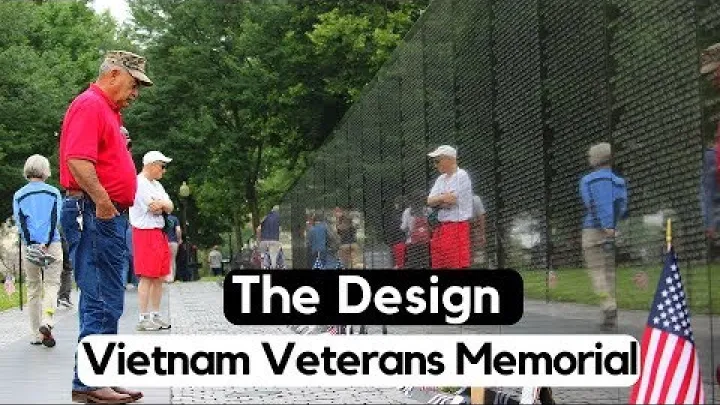
The V shape is not random. One wing of the wall points roughly toward the Lincoln Memorial, while the other points toward the Washington Monument, visually connecting the Vietnam memorial to two of the nation’s most recognized symbols. This alignment suggests that the story of the Vietnam War is part of the broader history of the United States, linked to ideas of unity, leadership, and national identity represented by those landmarks. The total length of both arms together is nearly 500 feet, with the highest point at the center just over 10 feet tall.
Black granite was chosen for several reasons. Its polished surface creates strong contrast that makes engraved names clear and legible, even from a modest distance. The stone is hard and durable, suitable for a monument that must endure for generations. Most importantly, the dark, reflective surface turns the wall into a mirror. As visitors approach, they see their own reflections appearing among the names, visually joining the living and the dead in the same space.
Walking along the Vietnam Memorial Wall is a physical journey as well as an emotional one. You start at ground level, where the wall is low and the first casualties of the war are listed. As you move down the path, the wall grows higher until it towers above you at the center. It then gradually lowers again as you continue toward the end, where the last casualties are recorded. This descent and re-ascent creates a sense of entering into and then emerging from a place of loss. The layout and materials work together to make the experience calm, direct, and deeply personal.
Emotional experience and meaning of the reflective surface
Many people describe their first encounter with the Vietnam memorial wall as unexpectedly emotional. At a distance, the wall can look like a simple architectural feature, but as you come closer, thousands of small letters resolve into individual names. At the same time, your own image appears faintly on the surface of the black granite. This reflection is central to the design’s meaning. It allows visitors to see themselves literally in the same field as the names, suggesting a relationship between the living and those who died.
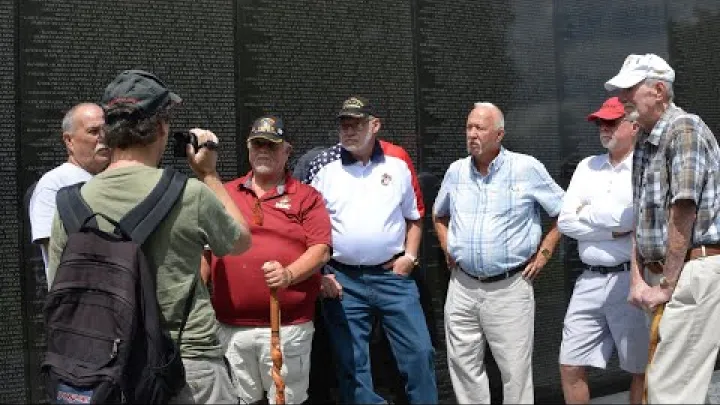
The gradual descent along the pathway intensifies this feeling. As the wall grows higher beside you, it can seem to surround your field of vision, focusing attention almost entirely on the names. For some visitors, this closeness brings memories or feelings that are difficult but important to experience. For others, especially those with no personal connection to the war, it provides a clear, quiet space for learning and empathy. When you reach the center and begin to walk upward again, the lowering wall and the opening view back to the trees and the city can feel like a return from a deep place of grief.
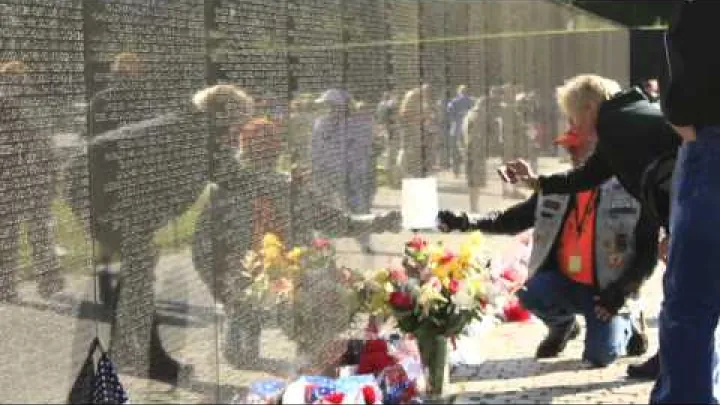
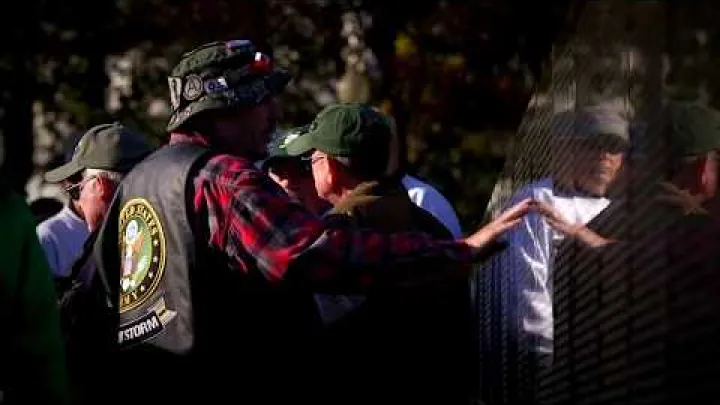
Visitor behavior at the wall reflects this emotional impact. People often walk slowly with their fingers brushing the stone, pausing at certain panels to read or to trace a name. Many bring flowers, letters, photos, and medals to leave at the base of specific sections. Some stand silently with their hand resting on one inscription for a long time. Others kneel or sit nearby, sometimes in groups, to share memories or simply to be together. Even for those who do not know anyone on the wall, these scenes communicate that each name represents a real life, a family, and a story.
The design’s simplicity supports many different forms of remembrance without prescribing a single way to feel. It does not tell visitors what to think about the war itself. Instead, the reflective surface, the subtle change in height, and the long sequence of names gently invite each person to consider their own relationship to history, loss, and responsibility. This flexibility is one reason why the Vietnam War Memorial has become an enduring symbol of both sorrow and healing.
Names on the Vietnam Veterans Memorial Wall
How many names are on the wall and who is included
The most important feature of the Vietnam Veterans Memorial Wall is the list of names engraved into the granite. As of recent counts, the wall carries more than 58,000 names. Each inscription represents a member of the U.S. armed forces who died as a result of service in the Vietnam War or who is still officially listed as missing in action. The exact number can change over time, as additional cases are reviewed and confirmed for inclusion.
The names on the Vietnam memorial wall come from all branches of the U.S. military: Army, Marine Corps, Navy, Air Force, and Coast Guard. They include officers and enlisted personnel, men and women, and people from many racial, ethnic, and religious backgrounds. Importantly, the list does not separate names by rank, branch, or background. Everyone is recorded together, using the same size letters, on the same continuous surface. This equality in presentation emphasizes that in death, no person’s sacrifice is ranked above another’s.
Eligibility for inclusion on the wall is based on service-connected death related to the Vietnam War. This includes those killed in action, those who died of wounds or injuries received in the combat zone, and some who died later from causes directly linked to their service. It also includes those missing in action (MIA) and prisoners of war (POW) who were not recovered at the time the names were first inscribed. Over the years, additional names have been added as records were corrected and new information became available, showing that the memorial is not a fixed record but a living one that can be updated to reflect the best current understanding.
The fact that all Vietnam Veterans Memorial names are displayed together—without separate sections for officers, enlisted personnel, or specific units—helps visitors see the war as a shared experience across many kinds of people. For families and friends, finding a loved one’s name connects personal grief to the larger story recorded on the wall. For students and travelers, the sheer scale of the list can transform abstract history into something immediate and human.
How the names are ordered and how to find a specific name
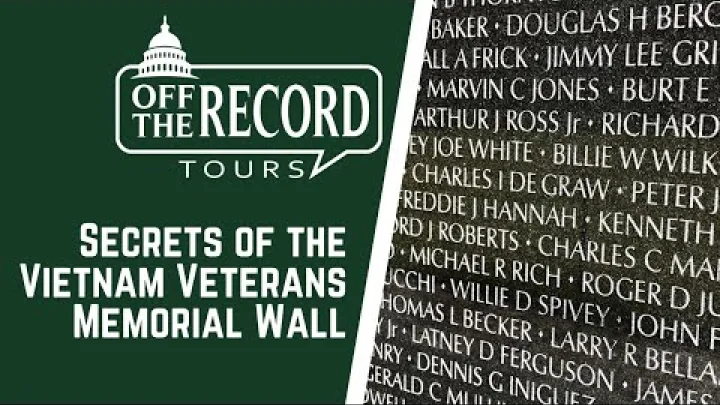
Unlike many war memorials that list names alphabetically, the Vietnam Veterans Memorial organizes its names in chronological order by date of casualty. This arrangement begins at the center of the wall on the east side, where the earliest deaths are recorded, and then proceeds outward along that wing. When the east wall reaches its far end, the sequence continues on the far end of the west wall and moves back toward the center, where it concludes with the last casualties. In this way, the list forms a symbolic circle of the war, with the first and last deaths meeting at the central apex.

This chronological order reflects the unfolding of the war over time. Visitors who walk the full length of the Vietnam memorial wall can sense the passage from early involvement to peak conflict to withdrawal, even if they do not know the specific dates. Veterans who served together may find that their friends’ names cluster in certain sections, matching the periods when their units were engaged. The arrangement also underscores that the war did not end suddenly for everyone, but took lives throughout many years.
For someone trying to find a specific name on the Vietnam Memorial Wall, there are several helpful tools. Near the entrances to the memorial, the National Park Service and the Vietnam Veterans Memorial Fund provide printed or digital directories. These directories list names alphabetically and give a panel number and line number for each entry. The panel numbers are marked at the bottom of the wall’s sections, while the lines can be counted from the top of the panel downward.
You can follow a simple process to locate a name:
- Look up the person’s name in the directory (on site or online before your visit). Note the panel number and line number.
- Go to the correct wing of the wall and find the panel with that number. Panels low in number are closer to the center, while higher numbers are farther out.
- Once at the panel, count down the lines from the top until you reach the line number you wrote down. The names on that line will include the person you are seeking.
- If you have difficulty, ask a ranger or volunteer for assistance. They are experienced in guiding visitors to specific locations on the wall.
Many visitors now use online databases, including ones that support the Wall of Faces project, to research Vietnam War Memorial Wall names before coming to Washington DC. These tools often allow searches by name, hometown, or military unit and can provide background information as well as exact locations. Even if you arrive without preparation, however, staff on site can usually help you find who you are looking for.
Meaning of the symbols next to each name on the Vietnam Memorial Wall
In addition to names, you may notice small symbols engraved next to some entries on the Vietnam Memorial Wall. These symbols are important because they indicate the status of the person at the time when the name was first inscribed and whether that status has changed. Understanding them helps visitors better interpret what they are seeing and recognize that some stories are still unresolved.
The main symbols used on the wall are a small diamond shape and a small cross-like symbol. A diamond indicates that the person was confirmed dead or was presumed dead when the name was added. A cross indicates that the person was missing in action or a prisoner of war when the list was created and that their ultimate fate was not yet known. If a person who was listed as missing is later confirmed dead, the cross can be changed to a diamond by engraving an additional line, symbolizing the transition from uncertainty to final confirmation.
For quick reference, visitors can think of the symbols this way:
- A small diamond shape means the person is known or presumed to be dead.
- A small cross shape means the person was missing in action or a prisoner of war at the time of inscription.
- A diamond engraved over a former cross indicates someone who was once missing but later confirmed dead.
These marks are subtle, and many people do not notice them on their first visit, but they carry deep significance. They show that the Vietnam War’s impact did not end for all families when the fighting stopped. For relatives of those still missing, the cross is a public statement that their loved one’s story is not yet complete. For others, seeing a diamond engraved over a cross can signal that years of waiting and uncertainty have finally come to an end, even if the outcome is painful.
By including these symbols, the designers of the Vietnam Veterans Memorial ensured that the wall would recognize both confirmed deaths and unresolved cases in a clear, respectful way. When combined with the names themselves, they help tell a complex story of service, loss, and ongoing remembrance.
The Three Servicemen Statue and Flag at the Vietnam War Memorial
Reasons for adding the Three Servicemen statue and flag
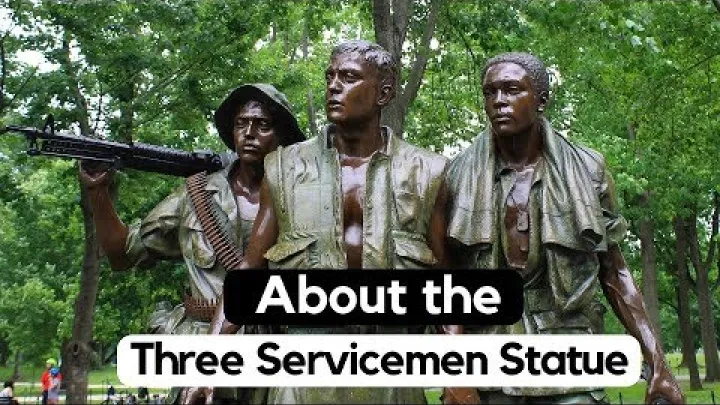
The Vietnam memorial site today includes not only the black granite wall but also a bronze statue known as The Three Servicemen and a flagstaff flying the U.S. flag and the flags of the military services. These additions grew out of debates that followed the selection of Maya Lin’s abstract design. Some veterans and members of the public supported the wall but felt that a more traditional, representational element was needed to show human figures in uniform.
Critics worried that the minimalist design might seem too stark or incomplete, and they believed that a statue of soldiers would better reflect their own experiences. Supporters of the original design were concerned that adding large new elements might overshadow the wall’s quiet power. After discussion and negotiation, a compromise emerged: a realistic bronze statue and flagstaff would be installed nearby, not as a replacement but as a complement to the wall. This solution aimed to respect both the modern design and those who wanted a more familiar form of military memorial.
The Three Servicemen statue and flag were dedicated in 1984, about two years after the wall itself opened. The statue stands a short distance from the wall, positioned so that the three figures appear to be looking toward the names. The National Park Service recognizes these elements together as integral parts of the Vietnam Veterans Memorial complex, even though they were added after the original dedication.
Today, visitors move easily between the wall, the statue, and the flag, often without knowing the history of the debates that led to their arrangement. The final layout reflects a balance between different views about how to honor veterans while preserving the central role of the wall as the main record of names.
What the Three Servicemen represent to visitors
The Three Servicemen statue depicts three young soldiers standing together, dressed in combat gear typical of the Vietnam War. Their uniforms and equipment—such as rifles slung over shoulders and ammunition belts—are detailed and realistic, grounding the sculpture in the everyday reality of soldiers in the field.
The posture and expressions of the Three Servicemen communicate a sense of comradeship and alertness rather than celebration. They are not shown in a triumphant pose; instead, they look forward with serious faces, as if watching over the wall and the names engraved there. This watchful stance suggests both care for their fellow soldiers and an ongoing link between those who survived and those who did not return. Many veterans say that seeing the statue gives them a sense that their service is recognized in a personal way.
Visitors often move between the bronze figures and the Vietnam memorial wall, experiencing two complementary forms of remembrance. At the wall, they see a vast list of names that can seem overwhelming in scale. At the statue, they see three individual faces and bodies that stand in for the many thousands who served. Some people feel connected more strongly to one element than the other, but most appreciate how the combination provides both a human presence and a space for quiet reflection.
The arrangement of the statue, flag, and wall also forms a visual unity. From certain viewpoints, the Three Servicemen appear in the foreground with the wall stretching behind them and the American flag flying above. This composition brings together themes of service, sacrifice, and national identity without relying on words or inscriptions. In this way, the statue adds another layer of meaning to the Vietnam War Memorial while respecting the wall’s role as the central focus.
Vietnam Women’s Memorial and Women’s Service in Vietnam
Story behind the Vietnam Women’s Memorial
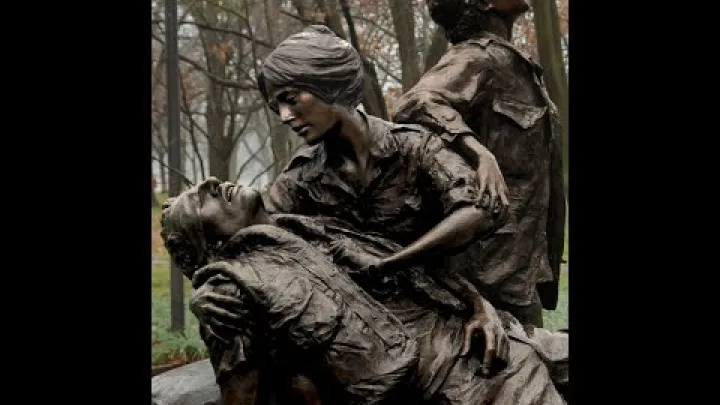
For many years, the official Vietnam memorial in Washington DC did not include a specific tribute to the women who served during the war, most of them as nurses and medical personnel. Yet approximately eleven thousand U.S. military women served in or near Vietnam, and several of their names appear on the wall among the dead and missing. To address this gap in public recognition, former Army nurse Diane Carlson Evans and other advocates began a campaign to create a Vietnam Women’s Memorial.

Evans and her supporters formed the Vietnam Women’s Memorial Project (later the Vietnam Women’s Memorial Foundation) in the 1980s. Their goal was to educate the public about women’s roles in the war and to secure authorization for a new sculpture near the existing memorial. The effort required years of testimony, fundraising, and design review. Some officials questioned whether additional monuments should be added to the National Mall, while supporters argued that women’s contributions had long been overlooked and deserved explicit acknowledgment.
Eventually, Congress and the appropriate federal commissions approved the plan, and a design competition selected a bronze sculpture that would stand within sight of the main wall and the Three Servicemen statue. The Vietnam Women’s Memorial was dedicated in 1993, more than a decade after the original wall opened. Its installation recognized not only the service of military nurses and other women in Vietnam, but also the emotional and physical burdens they carried caring for the wounded.
The story of the Vietnam Women’s Memorial shows how national remembrance can evolve. It demonstrates that public understanding of who “counts” as a veteran or a war participant can expand over time, as new voices and experiences are brought into the conversation. Today, the women’s statue is an integral part of the Vietnam memorial landscape, giving veterans, families, and visitors a more complete picture of the war.
Design and symbolism of the Vietnam Women’s Memorial statue
The Vietnam Women’s Memorial statue is a bronze sculpture depicting three women and a wounded male soldier. The figures are arranged in a triangular composition that draws the eye around the group. Each woman represents a different aspect of women’s service and emotional experience during the war, while the injured soldier reminds visitors of the patients they cared for under demanding and often dangerous conditions.
One woman sits on the ground, cradling the wounded soldier in her lap and supporting his shoulders. Her expression and posture suggest active caregiving and immediate responsibility. Another woman is standing, looking upward as if calling for a medical helicopter or assistance, symbolizing alertness, communication, and hope. The third woman kneels near a stack of medical supplies or equipment, her head bowed slightly, representing reflection, fatigue, or perhaps prayer. Together, they show the physical and emotional effort required of those who treated the injured day after day.
Visitors typically experience the Vietnam Women’s Memorial as an intimate, human-scale sculpture. Many people walk around it slowly, noticing different details from each angle. The realistic style and recognizable emotions make it easy for people of all backgrounds to understand, even if they do not know much about the Vietnam War. Veterans, especially former nurses and medical personnel, often leave flowers, military patches, or small tokens at the base of the statue in memory of colleagues and patients.
The women’s statue complements the main wall and the Three Servicemen statue by broadening the story the site tells. While the wall focuses on names and the male soldiers highlight combat service, the Vietnam Women’s Memorial brings caregiving, medical work, and women’s experiences into view. For students and travelers, it is a reminder that wars involve many roles beyond direct fighting, and that recognition of service should include the people who heal as well as those who carry weapons.
Visitor Traditions, Offerings, and Digital Remembrance

Leaving items and messages at the Vietnam Memorial Wall
One of the most striking features of the Vietnam Veterans Memorial is the tradition of leaving personal items at the base of the wall. These offerings are not organized by any official schedule; they are individual acts of remembrance. Visitors bring objects that connect them to someone named on the wall or to the experience of the war in general. Over the years, this practice has become a powerful, living part of the memorial.
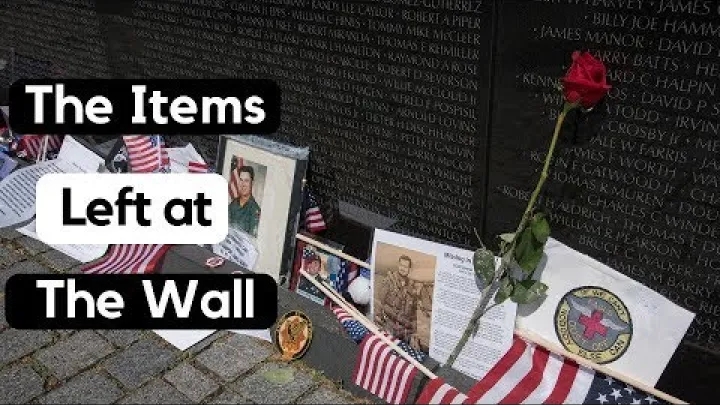
Common items left at the Vietnam memorial wall include fresh or artificial flowers, handwritten letters, photographs, military unit patches, medals, and small flags. Some visitors leave dog tags, pieces of clothing, or personal objects that had meaning for the person they are remembering. Families may place notes written by children or grandchildren who never met the relative whose name is engraved. These items transform the base of the wall into a place of ongoing conversation between the present and the past.
The National Park Service treats these offerings with respect. Rangers and staff regularly collect items left at the wall, catalog many of them, and store them as part of the Vietnam Veterans Memorial Collection. Particularly meaningful or historically significant objects may be preserved for study, exhibition, or archives. This process recognizes that visitor contributions are themselves part of the memorial’s history, documenting how people have engaged with the site across decades.
Visitors should not remove items that others have left, even if they appear abandoned. Doing so can cause distress to those who placed them there and may interfere with the Park Service’s responsibility to manage the site. If you wish to leave something yourself, it is best to follow park guidelines: avoid anything that could damage the stone, create a safety hazard, or violate regulations. Simple, respectful objects and notes are most appropriate. By participating in this tradition thoughtfully, you add your own voice to the wider story of remembrance at the Vietnam War Memorial.
The Wall of Faces and online ways to remember
Not everyone can travel to Washington DC to visit the Vietnam Veterans Memorial in person, but digital projects now offer additional ways to connect with the names on the wall. One of the most significant of these efforts is the Wall of Faces, an online initiative to collect photographs and biographical information for each person whose name appears on the Vietnam Memorial Wall. The goal is to ensure that no one is remembered by name only, but also by face and story.
The Wall of Faces and similar online platforms allow users to search for individuals by name, hometown, branch of service, or other details. Many entries include a portrait photo, information about the person’s life and service, and sometimes personal memories shared by family members, friends, or fellow veterans. For students and researchers, these resources provide a deeper understanding of the people behind the list of Vietnam Veterans Memorial names. For families, they offer another space where loved ones can be honored and remembered.
People can often contribute to these digital remembrance projects by submitting photographs or written remembrances through the websites of organizations that manage them. When doing so, it is important to respect privacy, accuracy, and sensitivity. Contributors should ensure that they have the right to share images and information, avoid posting details that could harm living individuals, and focus on honoring the person rather than debating political issues. Moderators usually review submissions before they go online to maintain a dignified environment.
Digital remembrance tools do not replace the physical experience of standing at the Vietnam War Memorial wall, but they extend its reach. Someone living far from Washington DC can read names, see faces, and learn stories from their own home. Teachers can use online materials to prepare students before a field trip or to teach about the war even if a visit is not possible. In this way, the combination of the physical wall and digital projects like the Wall of Faces helps keep memories alive for a global audience.
Traveling Vietnam Memorial Walls and Nationwide Access
“The Wall That Heals” and other traveling replicas
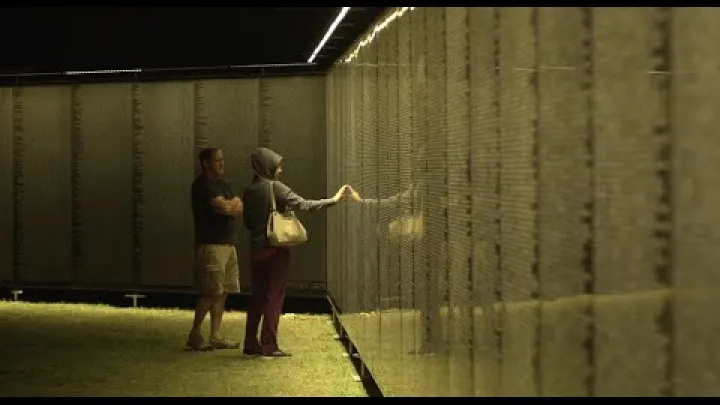
To make the experience of the Vietnam memorial more accessible to people across the United States, several traveling Vietnam Memorial walls visit communities each year. These are replicas of the original wall in Washington DC, built to scale or in reduced size, and mounted on portable structures so they can be moved from town to town. For many people who cannot easily travel to the nation’s capital, seeing a traveling wall is a deeply meaningful way to connect with the names and the history.
One of the most well-known traveling Vietnam memorial walls is “The Wall That Heals,” operated by the Vietnam Veterans Memorial Fund. It is a three-quarter-scale replica of the wall, accompanied by a mobile education center that provides exhibits and information about the Vietnam War and the memorial. Another notable traveling wall is The Moving Wall, which has been touring communities since the 1980s. There are also other replicas that visit regional events and local observances, often hosted by veterans’ organizations or civic groups.
These traveling Vietnam memorial walls are replicas, not pieces of the original Vietnam Veterans Memorial in Washington DC. They are constructed specifically for travel and are designed to be assembled and disassembled safely at each location. While they may not be full-size in every case, they still carry the complete list of names, allowing visitors to find and honor individuals just as they would at the main site.
The comparison below summarizes some key differences between major traveling walls:
| Traveling wall | Organizer | Approximate scale |
|---|---|---|
| The Wall That Heals | Vietnam Veterans Memorial Fund (VVMF) | Three-quarter-scale replica of the Vietnam Memorial Wall |
| The Moving Wall | Separate nonprofit group associated with early replicas | Approximately half-scale replica |
| Other regional walls | Various local or regional organizations | Usually half to three-quarter-scale replicas |
By bringing these replicas to cities, towns, and military bases, organizers make it possible for more people to experience a version of the Vietnam War Memorial wall close to home. This is especially valuable for older veterans, people with health or financial limitations, and families who find long-distance travel difficult.
What to expect when a traveling Vietnam Memorial wall visits your community
When a traveling Vietnam memorial wall such as The Wall That Heals or The Moving Wall visits a community, organizers usually create a temporary display area, often in a park, near a civic building, or on school or university grounds. The replica panels are set up in a long, slightly angled line that resembles the original wall’s shape, though on a smaller scale. A pathway allows visitors to walk along the panels and read the names.
Support areas around the wall typically include an information tent, printed or digital name directories, and sometimes small exhibits about the Vietnam War and the national memorial in Washington DC. Volunteers, many of them veterans or family members, help visitors find names, answer basic questions, and maintain a respectful atmosphere. Lighting is usually installed so that people can visit during evening hours as well as in daylight.
Communities often plan special events during the time a traveling Vietnam Veterans Memorial wall is present. These may include opening and closing ceremonies, candlelight vigils, honor guards, educational talks, and programs for school groups. Local veterans’ organizations, civic leaders, and religious groups may participate. These events provide chances for public recognition of service and for sharing personal stories.
If a traveling wall comes to your area, you can prepare in several ways:
- Check the schedule and any posted quiet hours or ceremony times.
- Plan for crowds during major events and consider visiting during early morning or late evening for a more private experience.
- Learn how to use the on-site directories to find names, or research online in advance.
- Follow the same respectful behavior you would at the Vietnam War Memorial in Washington DC: speak softly, avoid disruptive behavior, and treat the names and offerings with care.
For many people, especially those who may never travel to the National Mall, visiting a traveling Vietnam Memorial wall can be as emotionally powerful as visiting the original. The proximity to one’s own community can make the experience even more immediate, reminding visitors that the names on the panels come from towns and cities across the entire country.
Frequently Asked Questions
Where is the Vietnam Veterans Memorial located in Washington DC?
The Vietnam Veterans Memorial is located on the National Mall in Washington DC, just northeast of the Lincoln Memorial along Henry Bacon Drive NW. It sits within Constitution Gardens, between the Lincoln Memorial and the Washington Monument, near the intersection of Henry Bacon Drive NW and Constitution Avenue NW.
How many names are on the Vietnam Memorial Wall and who do they represent?
The Vietnam Memorial Wall bears more than 58,000 names of members of the U.S. armed forces who died or went missing in the Vietnam War. They include those killed in action, those who died of wounds or other service-related causes, and those still listed as missing in action or unaccounted-for prisoners of war. Names can be added when new eligible cases are confirmed.
How are the names arranged on the Vietnam Veterans Memorial Wall?
The names on the Vietnam Veterans Memorial Wall are arranged in strict chronological order by date of casualty, not alphabetically or by rank. The sequence starts near the center apex on the east wall, moves outward to the far end, then continues from the far end of the west wall back to the center, creating a symbolic circle of the war. Directories on site and online tools list names alphabetically with panel and line numbers to help visitors locate them.
Who designed the Vietnam Veterans Memorial and why is it black and V-shaped?
The Vietnam Veterans Memorial was designed by Maya Lin, a 21-year-old architecture student who won a national design competition in 1981. She chose a V-shaped wall set into the earth to form a quiet, contemplative space that lists all the names without political symbols. Polished black granite was selected because it is durable, makes the engraved names highly legible, and allows visitors to see their own reflections among the names.
What is the Vietnam Women’s Memorial and what does it depict?
The Vietnam Women’s Memorial is a bronze statue near the Wall that honors women who served in the Vietnam War, especially military nurses. It shows three women caring for a wounded male soldier: one cradling him, one looking upward as if calling for help, and one kneeling in reflection. The statue recognizes the service and sacrifices of about eleven thousand U.S. military women who served in or near Vietnam and the women whose names are on the Wall.
How can I look up or find a specific name on the Vietnam Memorial Wall?
You can find a specific name on the Vietnam Memorial Wall using printed or electronic directories located near the memorial, which list names alphabetically along with their panel and line numbers. Online databases run by organizations connected to the memorial also allow you to search by name, hometown, or other details before your visit. Once you have the panel and line information, rangers and volunteers can help you locate the exact spot on the Wall.
Does it cost anything to visit the Vietnam Veterans Memorial and when is it open?
There is no admission fee to visit the Vietnam Veterans Memorial, and no ticket is required. The memorial is open 24 hours a day, every day of the year, as it is an outdoor site on the National Mall managed by the National Park Service. Rangers or volunteers are usually present during daylight and early evening hours to assist visitors.
What are the traveling Vietnam Memorial walls such as “The Wall That Heals”?
Traveling Vietnam Memorial walls are portable replicas of the Vietnam Memorial Wall that visit communities around the United States. “The Wall That Heals,” operated by the Vietnam Veterans Memorial Fund, is a three-quarter-scale replica accompanied by a mobile education center. Other traveling walls, such as The Moving Wall, follow a similar model. They allow people who cannot travel to Washington DC to experience a version of the memorial and to find and honor names in their own communities.
Conclusion and next steps for learning about the Vietnam Memorial
Key takeaways about the Vietnam Veterans Memorial and its meaning
The Vietnam Veterans Memorial in Washington DC brings together a distinctive design, a powerful list of names, and evolving traditions of remembrance. The black granite wall, created by Maya Lin, presents more than 58,000 names in a chronological sequence that visitors experience as a physical and emotional journey. Nearby, the Three Servicemen statue, the flagstaff, and the Vietnam Women’s Memorial broaden the story to include visible representations of those who served in combat and in caregiving roles.
Symbols next to the names, personal offerings left at the wall, and digital projects like the Wall of Faces all contribute to making the Vietnam War Memorial a living place of memory rather than a static monument. Whether you visit the original wall on the National Mall, encounter a traveling Vietnam memorial wall such as The Wall That Heals, or explore online resources from afar, the memorial invites thoughtful reflection on service, loss, and the human impact of war. It does not attempt to resolve the political debates surrounding the conflict, but instead provides a space where individuals can remember, learn, and consider their own responses.
How to continue exploring related memorials and Vietnam War history
After visiting the Vietnam Veterans Memorial or learning about it from a distance, many people choose to explore related sites and sources to deepen their understanding. On the National Mall, nearby memorials such as the Lincoln Memorial and the Korean War Veterans Memorial offer additional perspectives on U.S. history, leadership, and the experience of war. Walking between these monuments can give a broader sense of how different generations have been remembered in the same civic landscape.
Beyond Washington DC, you can continue learning about the Vietnam War through museums, books, documentaries, and educational websites that present diverse viewpoints, including those of veterans, civilians, journalists, and historians. University courses, public lectures, and oral history projects often highlight personal stories that connect large historical events to individual lives. For students, travelers, and remote professionals from many countries, combining firsthand experiences at memorials with careful study of historical materials can provide a more complete, balanced picture of the Vietnam War and its lasting impact.
Select area
Create a post
Posting is free and no registration is required.