- Tay Son Heaven and Earth Esplanade: Historic Shrine in Quy Nhon
- Quang Trung Museum: Tay Sơn History & Culture in Quy Nhon
- Banh It Cham Towers: Ancient Heritage & Photography in Quy Nhon
- The Thon Beach in Cat Tien: Clean Shores & Affordable Watersports
- Linh Phong Pagoda in Quy Nhon: The Sacred Mountain Temple
Vietnam Country Guide: Location, History, People, and Key Facts

Vietnam is a country in Southeast Asia that often appears in news reports, travel blogs, and history books, but many people still look for a clear, simple overview of what the country is like today. When people search for “Vietnam country”, they usually want to know where Vietnam is on the map, how it is governed, and what everyday life is like for its people. This guide brings together basic facts about Vietnam’s location, history, population, economy, and culture in one place. It is written for travelers, students, and professionals who need reliable context before a first visit, a study project, or a work move. The goal is to offer enough depth to understand Vietnam the country without becoming overly technical or difficult to translate.
Introduction to Vietnam as a Country
Why people search for information about Vietnam the country
People look up Vietnam the country for different reasons, but many of their questions fall into a few clear groups. Students and teachers often want a country profile for school projects or university research, focusing on geography, history, and politics. Business people and remote workers usually search to understand Vietnam’s economy, legal framework, and digital infrastructure before making investment or relocation decisions. Travelers, on the other hand, search for information to plan trips, checking where Vietnam is, which cities to visit, and what cultural norms to expect.
Understanding basic facts about Vietnam country helps all of these groups make better choices. Knowing the political system and recent reforms helps professionals prepare for local regulations and ways of working. Learning about population size, ethnic diversity, and religion helps students interpret social trends and cultural practices. Travelers who know about weather patterns, regional differences, and major festivals can plan safer and more enjoyable routes. This guide therefore introduces Vietnam’s location, political system, geography, history, people, economy, and key travel insights as a connected story, using neutral language that is easy to read and translate.
Overview of Vietnam country in today’s world
Vietnam today is a fast-changing Southeast Asian country with a population of around 100 million people. It stretches along the eastern edge of the Indochinese Peninsula and plays an important role in regional trade routes that link East Asia, South Asia, and the wider Pacific. Over the last few decades, Vietnam has moved from being a low-income, largely agricultural society to a lower-middle-income country with strong manufacturing and services. This shift has brought rapid urbanization, visible growth in cities, and rising expectations among young people.
On the global stage, Vietnam is a member of organizations such as the Association of Southeast Asian Nations (ASEAN) and the United Nations, and it participates actively in international trade agreements. Politically, Vietnam is a one-party socialist republic, but its economic policies are market-oriented and open to foreign investment. This combination of socialist politics and a “socialist-oriented market economy” shapes many aspects of life, from state planning and social programs to private business growth and tourism development. The following sections explore these dimensions in more detail so that readers can see how Vietnam country fits into today’s world system.
Quick Facts About Vietnam as a Country
Basic country profile: capital, population, currency, and key data
Many people searching “Vietnam country capital”, “Vietnam country population”, or “Vietnam country currency” want quick, direct answers. Vietnam’s capital city is Hanoi, in the northern part of the country, while its largest city and main economic hub is Ho Chi Minh City in the south. The country’s population is just over 100 million people as of the early 2020s, making it one of the most populous nations in the world. The official currency is the Vietnamese đồng, written in English as “dong” and commonly abbreviated with the code VND.
The table below summarizes some essential facts about Vietnam country in a format that is easy to scan. Figures such as population are approximate and may change over time, but the core information gives a solid reference point for travelers, students, and professionals.
| Field | Information |
|---|---|
| Official name | Socialist Republic of Vietnam |
| Capital city | Hanoi |
| Largest city | Ho Chi Minh City |
| Approximate population | Around 100+ million people (early 2020s) |
| Official language | Vietnamese |
| Political system | One-party socialist republic |
| Currency | Vietnamese đồng (VND) |
| Time zone | Indochina Time (UTC+7) |
| Location | Southeast Asia, eastern Indochinese Peninsula |
These quick facts help answer several common search queries in one place. If you want to know “What is the capital of Vietnam country?”, the answer is simply Hanoi. For “Vietnam country population”, you can remember that it is now above 100 million and still growing, though at a slower pace than in the past. For “Vietnam country currency”, you can note that most everyday prices are listed in VND, with large numbers due to low denomination banknotes. This basic profile provides a foundation before moving into deeper topics like politics, history, and society.
Where Vietnam is located on the world map
Vietnam is located in Southeast Asia on the eastern edge of the Indochinese Peninsula. It forms a long, narrow S-shaped strip of land running roughly from north to south along the western coast of the South China Sea, which Vietnam calls the East Sea. When people ask “where is Vietnam country located in Asia” or “Vietnam country in world map”, they are often trying to place it relative to better-known regions like East Asia or the Indian subcontinent.

To visualize Vietnam on a world map, imagine China in East Asia; Vietnam lies directly to its south, sharing a northern land border with China. To the west, Vietnam borders Laos and Cambodia, while to the east and south it faces the South China Sea and important maritime routes that connect to the Pacific Ocean. The coastline is more than 3,000 kilometers long, giving Vietnam many beaches and ports. From a global perspective, Vietnam sits southeast of China, east of Thailand and Myanmar (across Laos and Cambodia), and north of Malaysia and Singapore across the sea, positioning Vietnam country as a bridge between continental Asia and the maritime world.
Political System: Is Vietnam a Communist Country?
Current government structure and one-party rule
Vietnam is officially a socialist republic, and it is governed by a single political party, the Communist Party of Vietnam (CPV). When people ask “is Vietnam a communist country” or “is Vietnam still a communist country”, they are usually referring to this one-party structure and the leading role of the party in the state. In practice, one-party rule means that the CPV is the only legal political party, and it guides the general direction of national policy, development plans, and major decisions.

The formal state institutions include the President, who serves as head of state; the Prime Minister and the government, who handle day-to-day administration; and the National Assembly, which is the legislature responsible for passing laws and supervising state activities. There is also a court system and various ministries and local authorities. While the constitution describes the powers of each branch, the Communist Party operates above them as the core decision-making body. Key party organs, such as the Politburo and the Central Committee, shape long-term strategies and important appointments. Political rights and public debate exist within limits defined by this system, and there are restrictions on forming opposition parties or organizing certain types of public protest, but these descriptions are best understood as part of Vietnam’s specific political model rather than simple labels.
Recent reforms, legal changes, and international integration
Over the past few decades, Vietnam country has combined its one-party political system with extensive economic opening and legal reform. This process began with the Đổi Mới reforms in the late 1980s and has continued through gradual changes to laws on business, investment, and administration. The state still plays a strong role in planning and strategic sectors, but private enterprises and foreign companies now contribute significantly to economic activity. New laws on enterprises, foreign investment, and land use have aimed to create a more predictable environment for business while keeping overall political control with the Communist Party.

Vietnam’s increasing participation in international organizations and trade agreements has reinforced this process of integration. The country is an active member of ASEAN and the World Trade Organization and has joined regional trade pacts such as the Comprehensive and Progressive Agreement for Trans-Pacific Partnership (CPTPP) and free trade agreements with partners like the European Union. These commitments have encouraged updates to legal frameworks in areas such as customs, intellectual property, and labor. For travelers, students, and companies, these changes translate into more regular administrative procedures, growing transport connections, and clearer visa and work regulations, even though the broader political system remains a one-party socialist state.
Geography, Regions, and Environment of Vietnam

Territory, shape, and main regions of Vietnam country
One of the most distinctive features of Vietnam country is its long, narrow S-shaped territory that runs along the South China Sea. The country stretches for more than 1,500 kilometers from the cooler, mountainous north near the border with China to the tropical south that approaches the equator. In some central sections, the land between the mountains and the sea becomes quite narrow, while at the two ends of the “S” shape, broad river deltas open into fertile plains.
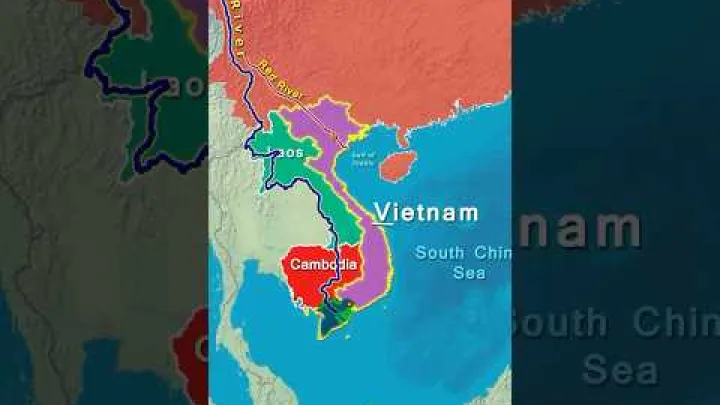
Vietnam is commonly divided into three main regions: the north, the central region, and the south. In the north, the Red River Delta surrounds the capital Hanoi and is framed by highlands and mountains such as those near Sa Pa and Ha Giang. The central region includes the Central Highlands and a series of coastal plains where cities like Hue and Da Nang are located, squeezed between the sea and the Truong Son (Annamite) mountain range. The south is dominated by the Mekong Delta, a wide, flat area of rivers and canals with cities like Can Tho and Ho Chi Minh City nearby. This geography strongly influences where people live, what they grow, and how they move: dense populations cluster in the deltas and coastal cities, rice and other crops spread across lowlands, and major highways and rail lines follow the narrow coastal corridor that links the north and south.
Climate and seasonal weather patterns across Vietnam
Vietnam’s climate is shaped by monsoon winds and varies significantly between the north, center, and south. In the north, including Hanoi and the Red River Delta, the climate is subtropical with four recognizable seasons. Winters from roughly December to February can be cool and damp, while summers from May to August are hot, humid, and often rainy. Spring and autumn bring milder temperatures but can still include periods of heavy rain. Visitors to northern Vietnam in winter should be prepared for grey skies and cooler conditions, even though temperatures are rarely extremely low.

The central region and the south are more clearly tropical and follow a pattern of dry and rainy seasons. In central coastal areas like Hue, Da Nang, and Hoi An, the dry period usually runs from around February to August, with hot temperatures in mid-year, while the later months from September to December can bring heavy rains and typhoons from the sea. In the south, including Ho Chi Minh City and much of the Mekong Delta, the climate has a pronounced rainy season from roughly May to October and a drier season from November to April. Weather-related risks include strong storms, flooding, and landslides in some mountainous zones. Travelers planning beach trips or outdoor activities should check typical seasonal patterns for their specific region, as conditions can differ greatly between the far north, central coast, and southern lowlands at the same time of year.
Natural resources, agriculture, and environmental challenges
Vietnam’s geography provides important natural resources, especially fertile land in the Red River and Mekong deltas and in various coastal plains. These areas support intensive agriculture, with rice as the dominant crop. Vietnam is one of the world’s leading rice exporters, and rice paddies are a common sight in both the north and south. The country is also a major producer of coffee, particularly from the Central Highlands, as well as tea, pepper, rubber, and a variety of fruits. Extensive coastlines and river systems support marine and freshwater fisheries, making seafood another key export and part of daily diets.

Alongside these benefits, Vietnam faces significant environmental challenges. Rapid economic growth and urbanization have contributed to deforestation in upland areas, air pollution in big cities, and water pollution in rivers and canals. Climate change adds further pressure, especially through sea level rise and more intense storms that threaten low-lying regions like the Mekong Delta. Saltwater intrusion already affects some farmland, reducing crop yields, and flooding can disrupt infrastructure and housing. The government, local communities, and international partners are working on measures such as reforestation, cleaner energy development, and flood management, but balancing continued growth with environmental protection remains a major long-term task for Vietnam country.
History of Vietnam: From Early Kingdoms to the Modern Era

Early history, indigenous cultures, and periods of Chinese rule
The history of Vietnam country begins with early cultures that developed in the Red River Delta and surrounding regions thousands of years ago. Archaeological evidence points to communities that practiced wet-rice agriculture, bronze casting, and complex social organization. Legends about the Hùng kings reflect local memories of these early states, even though the exact details are difficult to separate from myth. What is clear is that a distinct cultural and political identity gradually formed in the north, based on rice cultivation, village life, and shared rituals.

For many centuries, large parts of what is now northern Vietnam came under the control of Chinese empires. This long period of Chinese rule, starting from around the first century BCE in different forms, had a deep influence on language, institutions, and culture. Confucian ideas about government and family relations, Chinese characters for writing, and administrative practices all entered local society. At the same time, there were repeated uprisings and resistance movements, such as the famous revolt led by the Trưng sisters in the first century CE. These episodes helped shape a lasting sense of difference and a desire for autonomy that would later support independent Vietnamese dynasties.
Independent dynasties and southward expansion
By around the 10th century, local leaders succeeded in establishing lasting independence from Chinese rule, and a series of Vietnamese dynasties began to govern an increasingly unified territory. Important royal families moved the political center to different capitals, including Hoa Lư, Thăng Long (the old name for Hanoi), and later Huế. These dynasties built citadels and palaces, maintained examination systems based on Confucian learning, and organized large-scale irrigation projects to support rice agriculture.
Over several centuries, Vietnamese rulers and settlers expanded their control southward along the coast and into highland areas, a process sometimes called “Nam tiến” (southward advance). They absorbed lands that had previously belonged to the Champa kingdoms along the central coast and to Khmer polities in the Mekong region. This expansion brought new resources and trade opportunities but also created lasting cultural diversity, since many Cham and Khmer communities remained. By the early modern period, most of the land that makes up present-day Vietnam country, from the Red River Delta to the Mekong Delta, was under the authority of Vietnamese courts, although exact borders and local autonomy varied.
French colonization, nationalism, and independence wars
In the 19th and early 20th centuries, Vietnam became part of the French colonial empire in Southeast Asia, known as French Indochina. Colonial rule introduced new infrastructure such as railways, ports, and administrative buildings, and it reorganized the economy to serve French interests through the export of rice, rubber, and other products. French cultural and legal ideas influenced education and urban life, especially in cities like Hanoi and Saigon (now Ho Chi Minh City), while traditional village structures continued in many rural areas.

Colonial policies also generated opposition and inspired nationalist and revolutionary movements that sought independence. Different groups proposed various visions for an independent Vietnam, ranging from constitutional monarchy to republican and socialist models. Over time, conflict escalated, especially after World War II, when Vietnamese revolutionary forces declared independence. The struggle against French colonial control led to prolonged warfare, including the First Indochina War, which ended in the mid-1950s. The result was the end of direct French rule and the division of the country into a northern zone and a southern zone along a temporary military line, setting the stage for later conflict.
Division, the Vietnam War, and reunification of the country
After the end of French colonial rule, Vietnam was effectively divided into two entities: the Democratic Republic of Vietnam in the north, led by a communist government, and the Republic of Vietnam in the south, supported by different political and foreign backers. The separation was meant to be temporary, but deep political differences and Cold War tensions turned it into a lasting division. The conflict that followed is commonly known outside the country as the Vietnam War and within Vietnam as the American War.

The war involved large-scale military operations, extensive bombing, and significant foreign involvement, especially by the United States and its allies on the side of South Vietnam, and by the Soviet Union and China providing support to North Vietnam. The fighting caused heavy casualties, widespread destruction of infrastructure, and major displacement of civilians across the country and region. The conflict ended in 1975 when northern forces captured Saigon, leading to the reunification of the country as the Socialist Republic of Vietnam. Reunification brought new challenges, including rebuilding damaged areas, re-integrating different regions and groups, and managing economic difficulties under a centrally planned system in a changing global environment.
Đổi Mới reforms and the emergence of modern Vietnam
By the 1980s, Vietnam country faced serious economic problems, including shortages, low productivity, and isolation from some international markets. In response, the Communist Party launched a long-term process of economic reform known as Đổi Mới, which means “renovation”. Rather than a single event, Đổi Mới was a broad and gradual shift in policy that aimed to move from a strictly planned economy toward a “socialist-oriented market economy” while keeping one-party political control.

Under Đổi Mới, farmers gained more autonomy to decide what to grow and to sell their products, which helped increase agricultural output and turned Vietnam into a major food exporter. Private businesses and foreign-invested companies were allowed and later encouraged, leading to growth in manufacturing, especially in textiles, footwear, and electronics. International trade and investment expanded as Vietnam joined regional and global organizations. Over time, these changes produced rapid economic growth and visible improvements in living standards, such as better housing, consumer goods, and access to education. At the same time, the core political structure led by the Communist Party remained in place, and debates continue about how to balance economic openness with social equity and political stability.
Economy and Development in Vietnam

From low-income to lower-middle-income country
In the years immediately following reunification, Vietnam was one of the poorer countries in the world, with a largely rural population and a centrally planned economy that struggled to meet basic needs. The Đổi Mới reforms changed this trajectory. Since the late 1980s, Vietnam has experienced sustained economic growth, with average annual GDP growth often in the range of 5–7 percent for long periods. As a result, it has moved from low-income status to being recognized as a lower-middle-income country.

Income growth has brought clear changes to daily life. Many urban areas now feature new apartment buildings, shopping centers, and improved roads. Motorbikes and, increasingly, cars fill the streets of major cities, and mobile phones and internet connections are common. At the same time, the transformation has not been uniform. Some rural regions and ethnic minority communities still have lower incomes and less access to services, and many workers are employed in low-wage manufacturing or informal activities. The overall story, however, is one of rapid transition from a subsistence-based economy toward a more diverse and connected system where industry and services play a much larger role than before.
Key industries, exports, and economic sectors
Vietnam’s economy today is built on a mix of manufacturing, agriculture, services, and resource-based activities. In manufacturing, the country has become an important base for export-oriented industries such as electronics assembly, textiles, garments, and footwear. Large industrial parks and manufacturing zones, often located near major ports or along key highways, host factories that produce goods for global brands. These zones offer infrastructure and incentives designed to attract both domestic and foreign investors.

Agriculture remains important, especially for rural livelihoods and for exports. Vietnam is a leading exporter of rice, coffee, pepper, cashew nuts, and seafood, with different regions specializing in different products: coffee from the Central Highlands, rice from the Mekong and Red River deltas, and aquaculture along coastal and delta areas. The services sector is also growing, covering fields such as tourism, logistics, retail, and finance. Tourism, in particular, brings income to cities, beach resorts, and heritage sites across the country. This combination of manufacturing, agriculture, and services gives Vietnam country a relatively diverse economic base, though it still relies heavily on external demand and global supply chains.
Trade, foreign investment, and Vietnam’s global role
Vietnam’s development strategy has relied strongly on trade and foreign direct investment (FDI). The country has signed multiple bilateral and multilateral trade agreements that lower tariffs and open markets for its exports. By joining regional frameworks and global organizations, Vietnam has positioned itself as a reliable manufacturing partner and a link in global production networks. As wages rise in other parts of East Asia, some companies have shifted or expanded production to Vietnam to take advantage of its labor force and improving infrastructure.

FDI has flowed into sectors such as electronics, automotive parts, textiles, real estate, and services. Investors from countries like South Korea, Japan, Singapore, and members of the European Union have become important partners. This integration brings benefits in the form of jobs, technology transfer, and tax revenue, but it also creates competition with neighboring economies that pursue similar export-led models. For Vietnam country, managing this integration means continuing to upgrade skills, infrastructure, and institutions so that it can move from simple assembly tasks to higher-value activities and maintain its position in a changing global environment.
Inequality, poverty reduction, and social development challenges
One of Vietnam’s notable achievements since the reform era has been a large reduction in extreme poverty. Many households have moved from subsistence agriculture to more diversified sources of income, and access to basic services such as primary education and essential healthcare has improved. International organizations often highlight Vietnam as a case where economic growth has been relatively inclusive compared to some other countries at similar income levels.
Despite this progress, important challenges remain. Income and opportunity gaps between urban and rural areas, and between regions, are still significant. Ethnic minority communities in remote or mountainous areas often face higher poverty rates and limited access to high-quality services and markets. Rapid urbanization can lead to overcrowded housing, pressure on transport systems, and environmental stress in large cities. Social protection systems are expanding but still have gaps, and the country must address questions about pensions, healthcare for an aging population, and support for vulnerable groups. Achieving sustainable, inclusive growth will require ongoing efforts to improve public services, strengthen labor protections, and ensure that gains from development are more evenly shared across Vietnam country.
People of Vietnam: Population, Ethnic Groups, and Culture

Population size, growth, and urbanization trends
Vietnam’s population is now just over 100 million people, placing it among the 15 most populous countries in the world. In earlier decades, population growth was rapid, but it has slowed in recent years as fertility rates have fallen and family sizes have become smaller, especially in urban areas. This shift means that Vietnam is moving gradually toward an older age structure, with a growing share of middle-aged and elderly people and a relatively smaller group of young children compared to the past.
Urbanization is another important trend shaping Vietnam country. Cities such as Hanoi, Ho Chi Minh City, Da Nang, and Can Tho have expanded quickly as people move from rural areas in search of jobs, education, and services. This rural-to-urban migration has created new economic opportunities but also strains housing, transport, and public facilities. Large industrial zones attract workers from many provinces, leading to new patterns of internal migration and multi-regional communities. For students and professionals, these demographic changes indicate a labor market that is still young and dynamic today but will need to adapt to aging and urban challenges in the coming decades.
Ethnic composition, languages, and regional diversity
Vietnam officially recognizes dozens of ethnic groups, reflecting a high level of cultural and linguistic diversity. The largest group is the Kinh (or Viet) people, who make up the majority of the population and are concentrated in lowland, urban, and coastal areas. Alongside the Kinh, there are many minority communities living in both mountainous and lowland regions, each with distinct languages, customs, and traditional dress. This diversity gives Vietnam country a complex social fabric that varies from province to province.
Vietnamese is the national and official language, used in government, education, media, and most business. It is written with a Latin-based script that includes diacritics for tones and vowel sounds, making it different from many neighboring languages. Minority languages such as Tay, Thai, Hmong, Khmer, Cham, and others are spoken in particular regions, and in some areas bilingual or multilingual communication is common. The table below lists a few major groups and where their presence is especially visible, without attempting to cover all communities.
| Ethnic group | Approximate status | Regions where visible |
|---|---|---|
| Kinh (Viet) | Majority population | Nationwide, especially deltas and cities |
| Tay | Large minority group | Northern mountainous provinces |
| Thai | Large minority group | Northwest highlands |
| Hmong | Minority group | Northern highlands (e.g., Ha Giang, Lao Cai) |
| Khmer | Minority group | Mekong Delta and southern border areas |
| Cham | Minority group | Central coastal and south-central regions |
Descriptions of any ethnic group should avoid stereotypes and recognize internal diversity. Cultural practices, economic activities, and degrees of urbanization vary not only between groups but also within them. Vietnamese society as a whole benefits from this range of languages, crafts, and traditions, which contribute to tourism, arts, and local knowledge about agriculture and the environment.
Religion, belief systems, and major festivals
Religious and spiritual life in Vietnam country is complex and often involves a blend of traditions rather than strict separation. Buddhism has a long history and many temples across the country, particularly in the north and center. Elements of Confucian and Taoist thought have influenced ideas about ethics, family, and harmony. Christianity, mainly Roman Catholicism, has been present since the colonial period and has significant communities in some regions. There are also homegrown religious movements such as Cao Dai and Hòa Hảo, particularly in the south.

Many people in Vietnam practice ancestor worship and local folk religions, which involve maintaining family altars, visiting graves, and making offerings on special days. It is common for individuals and families to combine aspects of Buddhism, folk beliefs, and other influences without seeing them as contradictory. Major public holidays and festivals reflect this mix. The most important celebration is Tết Nguyên Đán, or Lunar New Year, which usually falls between late January and mid-February. During Tết, families gather, clean and decorate their homes, visit ancestors’ graves, and share special foods. Other festivals mark mid-autumn, harvest times, historical events, and local patron spirits. For visitors, understanding that belief in Vietnam often overlaps and blends traditions helps explain the variety of temples, churches, and shrines seen in daily life.
Food, daily life, and cultural values of Vietnam country people
Vietnamese cuisine is one of the most visible aspects of culture for outsiders, and it reflects regional diversity, climate, and history. Rice is a staple food nationwide, served as steamed rice in family meals and as rice noodles in popular dishes such as phở (noodle soup) and bún (vermicelli dishes). Fresh herbs, vegetables, and light broths are common, creating flavors that are often described as balanced and clean. In the north, dishes may be more subtle and less spicy, while in the center many recipes use chili and complex seasonings, and the south often favors sweeter flavors and a wide variety of fruits due to its tropical climate.

Daily life in Vietnam country often centers on family and community. Many households include multiple generations, and respect for elders is a widely shared value. People commonly show politeness through language levels, gestures, and attention to social roles. At the same time, fast urbanization has brought lifestyle changes, with young people spending more time in schools, offices, cafes, and online spaces. Visitors and foreign residents often notice cultural traits such as hard work, adaptability, and hospitality, but it is important not to romanticize or assume uniformity. Urban and rural experiences differ, and individuals vary widely in their beliefs and habits. Understanding basic customs, such as removing shoes before entering many homes, dressing modestly at religious sites, and greeting politely, helps build respectful interactions with Vietnam country people.
Technology, Education, and Future Prospects

Digital landscape, connectivity, and the tech industry
Vietnam has undergone a rapid digital transformation over the last two decades. Mobile phone usage is widespread, and a large share of the population has access to the internet, especially in cities and densely populated lowland areas. Social media platforms and messaging apps play a central role in communication, business promotion, and news sharing. For travelers and professionals, this means that online services such as ride-hailing, food delivery, and digital payments are increasingly available in major urban centers.

The technology sector in Vietnam country includes both hardware manufacturing and software-related services. International companies operate factories that assemble electronics and components, while local and foreign firms develop software, outsourcing services, and digital platforms. Startups have appeared in fields such as e-commerce, fintech, education technology, and logistics. The government has introduced strategies to support a more digital economy, promoting initiatives in smart cities, e-government services, and technology parks. However, differences remain between urban areas with strong connectivity and rural regions where internet access and digital skills can be more limited.
Education achievements, skills, and human capital
Education is highly valued in Vietnamese society, and this emphasis has produced strong results in basic schooling. Literacy rates are high, and enrollment in primary and lower secondary education is widespread. In international comparisons of student performance in key subjects such as mathematics and science, students from Vietnam have often scored above what might be expected for a country at its income level. This reflects both family commitment to education and public investment in schools and teacher training.

At the same time, the education system faces important challenges. There are quality gaps between urban and rural schools, and between well-resourced and less-resourced areas. Many students and families experience high pressure around exams and entrance tests for selective high schools and universities. As the economy develops, there is an increasing need for advanced skills in areas such as engineering, information technology, foreign languages, and critical thinking. Universities, vocational colleges, and training centers are working to meet these needs, but aligning education outcomes with labor market demands remains an ongoing task for Vietnam country.
Key challenges and opportunities for Vietnam’s future
Looking ahead, Vietnam faces several long-term challenges that will shape its development path. Environmental pressures, including air pollution, water quality issues, and climate change impacts such as sea level rise, must be addressed to protect health, agriculture, and infrastructure. Demographic change toward an older population will require stronger pension and healthcare systems. Economists also warn about the risk of the “middle-income trap”, in which a country’s growth slows if it cannot move from low-cost production to higher-value innovation and productivity improvements.
At the same time, Vietnam country has significant opportunities. Its location in Southeast Asia, young workforce (at least for now), and experience in manufacturing make it attractive for high-value production and regional logistics. There is growing interest in renewable energy, including wind and solar power, which could reduce dependence on fossil fuels and support more sustainable growth. Digital services, creative industries, and higher-tech manufacturing offer paths to move up global value chains. The way Vietnam invests in education, research, infrastructure, and governance reforms will influence how it manages these risks and uses these opportunities over the coming decades.
Visiting Vietnam: Major Cities, Attractions, and Practical Tips

Main cities: Hanoi, Ho Chi Minh City, and other urban centers
For many visitors, the first direct experience of Vietnam country comes through its major cities. Hanoi, the capital, is located in the north along the Red River and serves as the political and administrative center. It is known for its historic Old Quarter, tree-lined boulevards from the French colonial era, and lakes that break up the urban landscape. The atmosphere often feels more traditional and quiet compared to the country’s southern metropolis, with many cultural institutions, government offices, and universities concentrated there.

Ho Chi Minh City, in the south, is the largest city and economic engine. Formerly called Saigon, it has a dense core of high-rise buildings, busy markets, and traffic filled with motorbikes. The city is a hub for finance, trade, technology, and manufacturing management. Other important urban centers include Da Nang, a coastal city in central Vietnam with fast development and proximity to beaches and heritage sites; Hue, the former imperial capital with historic citadels and tombs; and Can Tho, a major center in the Mekong Delta with famous floating markets. Each city offers different opportunities for travelers, students, and remote workers in terms of lifestyle, cost of living, and access to nature or cultural sites.
Natural landscapes, adventure destinations, and cultural heritage sites
Vietnam is well known for its varied natural landscapes, which attract visitors interested in scenery and outdoor activities. In the north, Ha Long Bay features thousands of limestone islands rising from the sea, often seen by boat tours. Inland areas such as Ninh Binh and Ha Giang offer karst mountains, rice terraces, and winding roads suitable for trekking, cycling, or motorbike trips. The Central Highlands, around cities like Da Lat and Buon Ma Thuot, provide cooler temperatures, pine forests, and coffee plantations, appealing to those who want to escape the heat of the lowlands.

Cultural heritage sites complement these natural attractions. The ancient town of Hoi An, with its preserved houses and lantern-lit streets, reflects centuries of trading connections. Hue’s imperial citadel and royal tombs present the architectural legacy of the Nguyen dynasty. In the south, the Mekong Delta reveals a river-based way of life, with boat markets and canals. Many of these locations are recognized as national or international heritage sites and are supported by conservation efforts. Visitors planning routes can roughly organize their trips by region: northern mountains and bays, central coasts and highlands, and southern rivers and delta, linking natural landscapes with historical and cultural experiences.
Coastal areas, islands, and beaches in Vietnam country
With a coastline stretching more than 3,000 kilometers, Vietnam offers many coastal and island destinations. In the north, areas like Cat Ba Island combine beaches with access to bays and cliffs for hiking and kayaking. Moving south along the central coast, Da Nang has long, sandy beaches close to the city, while nearby areas such as Lang Co and the shores near Hoi An provide quieter stretches of sand. Further south, Nha Trang and its surrounding islands are known for clear waters and water sports, and Phan Thiet–Mui Ne is popular for wind-based activities like kitesurfing.

In the far south, Phu Quoc Island has become a major beach destination, with many resorts and an expanding tourism infrastructure. At the same time, there are still less-developed coastal sections where fishing communities remain the main inhabitants and facilities are basic. Seasonal weather patterns strongly affect beach travel: the central coast can face storms and rough seas from around September to December, while southern islands are generally more pleasant from roughly November to April. Understanding these monsoon influences, as discussed earlier, helps travelers choose the best times and locations for coastal trips in Vietnam country.
Vietnam’s national flag and other national symbols
Many people searching “Vietnam country flag” want a simple description of its design and meaning. The national flag of Vietnam is red with a large yellow five-pointed star in the center. The red background is commonly understood to symbolize revolution and the sacrifices made in struggles for independence, while the yellow star represents the unity of different social groups under the leadership of the Communist Party.
The flag appears widely in public life, especially on national holidays and important anniversaries. During events such as National Day, major streets and buildings are decorated with flags, and they are also displayed near schools, government offices, and many private homes. Other national symbols include the national emblem, which features a circular design with a yellow star, rice ears, and a cogwheel on a red background, reflecting agriculture and industry. Visitors will also see common patriotic motifs such as images of the lotus (a national flower), Uncle Ho (Ho Chi Minh), and stylized maps of Vietnam country used in public art, education, and souvenirs.
Frequently Asked Questions
Where is Vietnam located in the world?
Vietnam is located in Southeast Asia on the eastern edge of the Indochinese Peninsula. It lies along the South China Sea, bordering China to the north and Laos and Cambodia to the west. The country faces important maritime trade routes and has a coastline of more than 3,200 kilometers.
What is the capital city of Vietnam?
The capital city of Vietnam is Hanoi. It is located in the north of the country, mainly on the western bank of the Red River. Hanoi serves as the political center of Vietnam and is known for its historic Old Quarter and French colonial architecture.
What is the population of Vietnam as a country?
Vietnam’s population is just over 100 million people. This makes it one of the 15 most populous countries in the world. Population growth has slowed in recent years, and the country is gradually moving toward an older age structure.
What currency does Vietnam use?
Vietnam uses the Vietnamese đồng as its official currency. The currency code is VND, and prices are usually written with large numbers due to low denomination values. Cash is common, but card payments and digital wallets are growing in major cities.
Is Vietnam still a communist country today?
Vietnam is still officially a socialist republic governed by the Communist Party of Vietnam. The political system is a one-party state with no legal opposition parties. However, the economy operates as a socialist-oriented market economy with significant private and foreign investment.
What kind of climate does Vietnam have?
Vietnam has a monsoon-influenced tropical and subtropical climate with strong regional differences. The north has four seasons with a cooler winter, while the center and south have two main seasons, rainy and dry. Typhoons and heavy rains can affect central and coastal regions, especially from late summer to autumn.
What are the main religions and belief systems in Vietnam?
Vietnam has a mix of Buddhism, folk religions, Confucian and Taoist traditions, and Christianity, mainly Catholicism. Many people practice ancestor worship and combine elements of different belief systems. New religious movements such as Cao Dai and Hòa Hảo also have notable communities in some regions.
What are some famous places to visit in Vietnam?
Popular places to visit in Vietnam include Hanoi and Ho Chi Minh City, Ha Long Bay, the ancient town of Hoi An, and the imperial city of Huế. Many travelers also explore the Mekong Delta, mountainous regions such as Ha Giang and Ninh Bình, and coastal destinations like Da Nang, Nha Trang, and Phú Quốc Island.
Conclusion and Key Takeaways About Vietnam Country
Summary of Vietnam’s location, people, and development path
Vietnam country stands on the eastern edge of mainland Southeast Asia, with a long coastline facing the South China Sea and main regions that include the Red River Delta, central coastal areas and highlands, and the Mekong Delta. Its strategic position connects it to East Asia, South Asia, and maritime routes in the wider Pacific. The population of more than 100 million people is diverse in ethnicity, language, and beliefs, united by the use of the Vietnamese language and shaped by shared cultural values such as respect for family and education.
Historically, Vietnam’s journey runs from early delta kingdoms through periods of Chinese rule, independent dynasties and southward expansion, French colonization, conflict and division in the 20th century, and eventual reunification. Since the Đổi Mới reforms, the country has experienced rapid economic growth and deeper integration into the global system while maintaining a one-party socialist political structure. These combined legacies explain much of what visitors and observers see today: a society balancing tradition and change, rural roots and urban aspirations, and national identity and international engagement.
How to use this Vietnam country guide for study, work, and travel
The information in this guide can support a wide range of purposes. Students and teachers can use the sections on geography, history, politics, and society as a foundation for more detailed research on topics such as regional development, historical conflicts, or cultural change. Professionals and remote workers can draw on the parts about the economy, digital landscape, and major cities to understand working conditions, potential investment sectors, and lifestyle options in different urban centers.
Travelers can use the discussions of climate, regions, festivals, and attractions to plan itineraries that match their interests and seasonal conditions. Those considering longer stays or relocation may wish to explore more specialized sources on visas, university programs, business regulations, or language learning. In all cases, understanding Vietnam the country involves both factual knowledge—such as population figures or trade partners—and attention to lived culture, from everyday food and family life to the ways people adapt to rapid change. Keeping both dimensions in mind helps build a more complete and respectful picture of Vietnam country in the contemporary world.
Select area
Create a post
Posting is free and no registration is required.