Mongolia Official Languages: Mongolian, Scripts & More
The official language of Mongolia is Mongolian. This legal designation does not mean that Mongolian is the only language used in homes, schools, workplaces, or local communities. Modern Mongolian is commonly written in Cyrillic, while the traditional vertical Mongolian script has gained a renewed role in language policy. This guide explains Mongolia's official language, national and minority-language roles, the position of Kazakh in Bayan-Ölgii, foreign languages, and the careful interpretation of language statistics.
What Is the Official Language of Mongolia?
Mongolia has one constitutionally named official language of the State: Mongolian. The country also has a multilingual society, so official status should not be confused with the number of languages spoken in Mongolia or with the languages that may be used in a particular province, school, or community.
Mongolian Is the Official Language of the State
Mongolian is the official language of Mongolia. Article 8 of the Constitution states that “The Mongolian language is the official language of the State.” This wording is reproduced in the English version of the Constitution of Mongolia.
In linguistic and everyday descriptions, the modern standard or literary form of Mongolian is commonly associated with Khalkha, the dominant Mongolic variety in Mongolia. That relationship does not make Khalkha and Mongolian two separate official languages. Khalkha is better understood as the main variety underlying the national standard, while Mongolian is the language named in the Constitution.
This distinction matters when reading information in English. The phrase “Mongolia's national language” is often used to describe Mongolian's national identity and broad social role. However, the constitutional wording is “official language of the State.” Unless a current legal source gives another language a separate designation, national language is a linguistic or social description rather than proof of a second legally co-official language.
Language status can be important for government forms, court matters, education, and public contracts. Anyone relying on the legal status of a language should consult the current text of Mongolia's Constitution and language legislation. An older translation or a secondary summary should not be used by itself to establish that Kazakh, English, Russian, or another language has become nationally co-official.
Official Language Is Not the Same as Every Language Spoken
A state can have one official language while its residents use several languages. Mongolian is the language of national state authority, but people may use a minority language with family, neighbors, cultural organizations, or local schools. Foreign languages may also be used for study, business, tourism, research, or communication across borders.
The following comparison uses common language-policy terms. These categories help explain Mongolia's language landscape, but not every term is a separate legal category in Mongolian law.
| Role | Meaning | Mongolia example |
|---|---|---|
| Official language | Language named for state authority | Mongolian |
| National language | Broad social or national-identity label | Mongolian is commonly described this way |
| Working language | Language used in a particular institution or activity | Depends on the institution and context |
| Regional or minority language | Language used by a community or concentrated region | Kazakh in Bayan-Ölgii |
| Foreign language | Language learned or used for international purposes | English, Russian, Chinese, and others |
For this reason, the question “What language is spoken in Mongolia?” has a different answer from “What is the official language of Mongolia?” The first question concerns real language use and may have several answers. The second asks about the language assigned the state's official role, which is Mongolian.
Where the Official Language Is Used: Government, Courts, and Education
Mongolian's official status is most visible in state institutions. It provides the main national framework for administration, public records, legal communication, and education, while minority-language rights and local practice add important regional variation.
Government, Courts, and Public Records
In general, Mongolian is the principal language of Mongolia's state administration and official records. Government notices, national administrative communication, and documents produced for state purposes normally operate within the Mongolian-language system. This is the practical meaning of having Mongolian as the official language of the State.
Mongolian also has the central role in the national court system. A court filing, hearing, judgment, or official procedural document may involve specific rules about language and translation. The constitutional designation establishes the general position of Mongolian, but later legislation, court rules, and agency procedures determine the details for a particular case.
A person who does not know Mongolian should ask the relevant court, government office, or legal adviser what interpretation or translation arrangements apply to that matter. It is safer to confirm the arrangement for the specific proceeding than to assume that every institution provides the same service or that an informal translation will be accepted for an official document.
Foreign languages can still have a working role in international organizations, universities, companies, hotels, research projects, and cross-border commerce. That practical use does not change the national legal status of Mongolian. A private organization may choose a working language for its own operations, but this is different from naming that language as a state language.
Education and Minority-Language Rights
Mongolian has the main nationwide instructional role in the education system. It is therefore the language an international student or family is most likely to encounter in national education policy, public institutions, and communication across regions. The language used in an individual classroom can nevertheless depend on the school, grade, program, and local community.
The Constitution also protects the right of national minorities to use their native languages in education, communication, and cultural activity. This principle recognizes that a national official language and minority-language rights can exist at the same time. A right to use or study a native language does not automatically make that language a second official language throughout Mongolia.
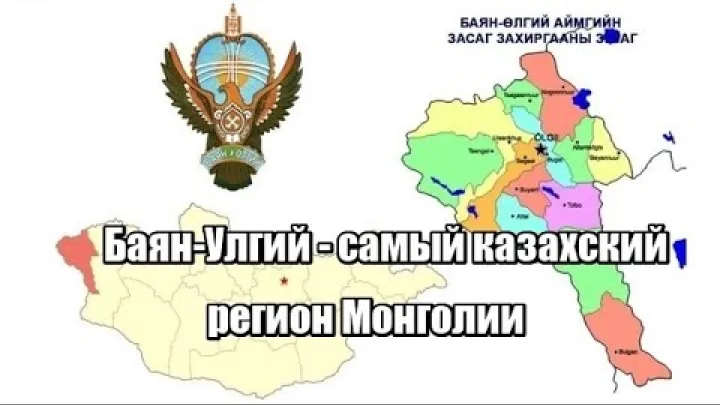
Bayan-Ölgii provides the clearest regional example of why this distinction matters. Kazakh has a strong community role there, including in and around Ölgii, and Kazakh-medium or bilingual education is part of the regional language discussion. The existence of such an arrangement, where available, is a local education matter rather than evidence that Kazakh is nationally co-official.
Students and families considering education in Bayan-Ölgii should ask the particular school or local education authority:
- Whether instruction is in Kazakh, Mongolian, or both.
- Which language is used in each grade and subject.
- Whether textbooks, examinations, and administrative communication are available in the expected language.
- How much Mongolian is required for progression or wider access to education.
These details should not be generalized from one school to every school in the province. A regional language may be strong in family and community life while Mongolian remains necessary for national institutions and communication outside the region.
Mongolia's Writing Systems: Cyrillic and Traditional Mongolian Script
Mongolia's language question also involves a script question. Mongolian is a language; Cyrillic and traditional Mongolian are writing systems used to represent it. The existence of two scripts does not mean that Mongolia has two official languages.
Cyrillic Mongolian and the Modern Written Standard
Cyrillic is the dominant modern script encountered when Mongolian is written today. It is widely associated with contemporary everyday text, education, news and media, administration, signs, and digital communication. A visitor, student, or researcher will usually meet written Mongolian in Cyrillic unless a particular cultural, historical, educational, or official context calls for the traditional script.
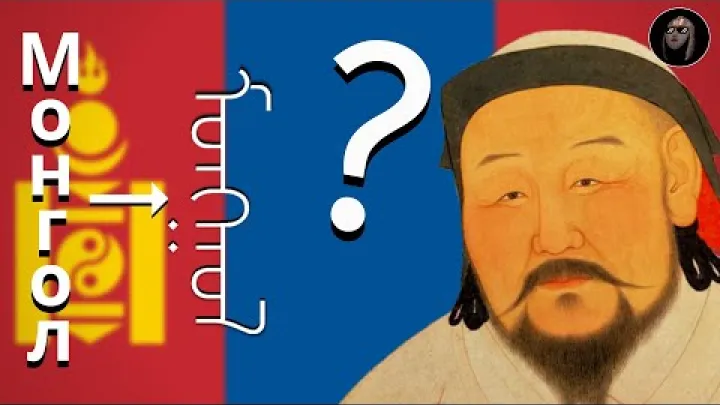
The Cyrillic writing system became established for Mongolian during the twentieth century and remains central to modern literacy. Its history is connected with Mongolia's twentieth-century political and educational development, but that historical background should not obscure the simple language point: Cyrillic is a script, not a separate language.
A document written in Cyrillic is not automatically written in Russian. Mongolian can be written in Cyrillic, just as Russian can be written in Cyrillic. The words, grammar, and language of the document determine whether it is Mongolian or Russian. This distinction is especially useful for travelers and international readers who recognize the Cyrillic alphabet but cannot yet identify the language.
Traditional Mongolian Script and the Dual-Script Policy
The traditional Mongolian script is a vertical writing system with deep historical and cultural importance. Mongolia recognizes it as the national script associated with the Mongolian language. It is therefore a script used for Mongolian, not a second official language alongside Mongolian.
The modern policy discussion concerns how the traditional script and Cyrillic should be used together. A report titled The Reintroduction of the Traditional Script in Mongolia reported that Mongolia planned to begin formal use of both scripts in state official documents on January 2, 2025.
That date should be understood as a policy implementation milestone, not as proof that every document, office, database, sign, school, or digital service uses both scripts in the same way. Policy timetables and actual implementation can differ by institution. A person completing a government form, signing a contract, applying to a school, or submitting a legal document should follow the latest format and instructions issued by the responsible institution.
The traditional script has cultural value beyond administration. It connects modern Mongolian writing with older literary traditions and with Mongolian-language communities beyond Mongolia's borders. At the same time, the renewed policy does not mean that Cyrillic has been fully replaced. For practical reading and communication in present-day Mongolia, knowledge of Cyrillic remains important, while knowledge of the traditional script can provide access to heritage, cultural materials, and emerging official uses.
What Languages Are Spoken in Mongolia?
Mongolia's language landscape is broader than the single constitutional answer. Mongolian is dominant nationally, but the country also includes related Mongolic varieties, Kazakh in the west, and smaller community languages. The size and vitality of each language cannot be described accurately without knowing whether a source measures ethnicity, home use, mother tongue, or actual speaking ability.
Khalkha and Other Mongolic Varieties
Khalkha is the dominant Mongolic variety associated with Mongolia's modern standard Mongolian. It is strongly connected with formal communication, national media, education, administration, and communication between people from different language communities. This is why many general descriptions of the Mongolian language use Khalkha as the main reference point.
Mongolic diversity exists within and around Mongolia. Buryat and other related Mongolic forms may be used by particular communities, and different linguistic classification systems may group varieties differently. Some systems use broad labels such as a Mongolian macrolanguage rather than treating every named variety as a separate language for all purposes.
This classification issue is important for searches such as “how many languages are spoken in Mongolia.” A list of named languages, a list of dialects, and a list of language varieties will produce different totals. A source may also include or exclude languages used by cross-border communities. The most useful description for general readers is therefore that Mongolian, with Khalkha as its dominant standard variety, is the main national language system, alongside minority and community languages.
Ethnicity should not be used as a shortcut for language. A person may identify with one ethnic group, speak a different language at home, use Mongolian in formal settings, and study a foreign language. These combinations are part of normal multilingual life and cannot be captured by a single ethnic percentage.
Kazakh in Bayan-Ölgii
Kazakh is a major minority language in Mongolia, with Bayan-Ölgii Province serving as the country's main local anchor for Kazakh language use. Ölgii is an important reference point when discussing the region because Kazakh can be visible in community life, family communication, cultural activity, and local language practices there.

Kazakh's regional importance does not make it a nationally co-official language. The relationship is better described as follows: Mongolian is the official language of the State, while Kazakh has a strong minority and regional role in Bayan-Ölgii. A person in the province may use Kazakh in family or community settings and Mongolian in national administration, wider education, or communication outside the region. Individual language profiles vary.
Regional variation also means that Kazakh spoken in Mongolia should not be treated as identical to every form of Kazakh spoken elsewhere. A Kazakh Language Study examines lexical and regional characteristics of Kazakh in Bayan-Ölgii. Such research helps explain why local language use may have features that reflect the province's history and contact with Mongolian and other languages.
Education is one of the most practical areas where the relationship between Kazakh and Mongolian becomes visible. Some local arrangements may use Kazakh as a medium of instruction, Mongolian as a medium, or both languages in different subjects and grades. The precise arrangement should be confirmed with the relevant school or local authority in Bayan-Ölgii. Do not assume that every school in the province has the same language policy or that one school's practice represents all residents of Ölgii or the wider province.
Other Minority and Indigenous Languages
Other languages and varieties associated with communities in Mongolia include Tuvan, Buryat, Evenk, Uyghur, and Uzbek. This is a non-exhaustive set of examples, not a complete national inventory. Sources may differ in whether they count a community variety as a separate language, a dialect, or part of a broader language group.
The Constitution's protection of minority-language use provides an important general principle, but practical support can differ between communities. One language may have access to local cultural activity or education, while another may be used mainly in homes and community networks. Availability of books, teachers, media, interpretation, and formal instruction is not necessarily equal for every minority language.
The terms Indigenous language, national minority language, ethnic-community language, and regional language are also not interchangeable in every legal or linguistic source. It is better to identify the community and location clearly than to assign a broad label without a definition. None of these smaller-language roles changes Mongolian's constitutional position as the official language of the State.
Foreign Languages in Mongolia: English, Russian, Chinese, and More
Foreign languages occupy a different category from both Mongolian and minority languages. They may be important in education, employment, tourism, research, diplomacy, or cross-border communication without being official or regionally co-official languages. Their visibility also varies by age, city, school, profession, and access to language education.
English as a Growing Foreign Language
English is a foreign language in Mongolia, not the official language of the State. It has a growing role in education and international communication, but a policy emphasis on English should not be confused with nationwide fluency.
In 2024 reporting, Mongolia's Education Minister P. Naranbayar was quoted as saying that students in the country's schools would learn English as the main foreign language. The report, Mongolian Schools Embrace English as Main Foreign Language, is useful for identifying the policy direction reported at that time.
A school-policy announcement does not show how well every student or adult can speak English. It also does not prove that English instruction is equally available in every province, school, grade, or rural area. Teacher supply, materials, class time, previous education, and the learner's own opportunity to use English can all affect results.
International students, workers, and visitors should therefore treat English availability as institution-specific. A university, hotel, employer, or government office may offer English support, while another may operate mainly in Mongolian. Asking the organization directly is more reliable than assuming that a national foreign-language policy guarantees English service in every setting.
Russian's Historical and Continuing Role
Russian has a historically important foreign-language role in Mongolia, shaped in part by the country's Soviet-era political, educational, and cultural ties. Russian has been encountered in areas such as older educational materials, science, culture, and communication connected with neighboring countries and regional institutions.
That history does not make Russian a current official language of Mongolia. The official state language remains Mongolian. Russian may still be useful to particular generations, professions, schools, families, or cross-border networks, but its reach should not be represented by a national proficiency rate unless a dated survey clearly defines what was measured.
The Cyrillic script can create an additional misunderstanding. Mongolian Cyrillic and Russian Cyrillic share an alphabetic tradition, but a Mongolian document written in Cyrillic is still Mongolian. Script choice and language choice are related, but they are not the same fact.
Chinese and Other Foreign Languages
Mandarin Chinese, Japanese, Korean, and German are among the other foreign languages that may be offered, studied, or discussed in Mongolia. Their presence can reflect educational choices, employment, cultural exchange, geographic relationships, or commercial links. The relevance of one language may be strong in a particular school or profession without being widespread in everyday life across the country.
It is safer to describe these languages as additional foreign-language options than to give an unsupported national popularity ranking. Demand for Mandarin Chinese, for example, does not by itself show that most people near the southern border speak it. Interest in Japanese, Korean, or German does not establish broad proficiency either.
Foreign-language learning should also be kept separate from minority-language rights. A foreign language may be studied at school without being used as a community home language, while a minority language may be central to family life without being widely taught nationwide. These are different forms of language presence.
How to Interpret Language Statistics in Mongolia
Language statistics can appear precise while answering different questions. A figure about ethnic identity is not automatically a figure about mother tongue, home use, or speaking ability. For Mongolia, the safest approach is to identify the source year, the population covered, the exact question asked, and the definition used before comparing percentages.
Ethnicity, Mother Tongue, and Proficiency Are Different Measures
The 2020 Population and Housing Census of Mongolia, produced by Mongolia's National Statistics Office, is an important dated demographic reference. It should be used according to the definitions and tables provided in the report. A census is not automatically a complete language-proficiency survey, so readers should not assume that every population table gives a directly comparable number of speakers for every language.
These measures answer different questions:
| Measure | Question it can answer | What it cannot prove by itself |
|---|---|---|
| Ethnic identity | Which ethnic group is recorded for a person? | The exact number who speak that group's language |
| Mother tongue or first language | Which language a respondent identifies as native or first, if defined that way | How often the language is used today |
| Home language | Which language is used in household communication | Whether every household member can read or write it |
| Language proficiency | Whether a person can speak, read, or write a language | The person's ethnicity or home-language identity |
| Legal status | What role a language has in state institutions | How many people speak the language |
These categories can overlap, but they are not interchangeable. A bilingual person may report one language as a mother tongue, use another at home, and use Mongolian in a government office. A person may also understand a language without speaking it confidently or reading its written form.
How to State Speaker Shares Responsibly
Any language share should include at least four pieces of information:
- Source year: State whether the figure comes from the 2020 census, a later survey, or another year.
- Population and geography: Identify whether it covers all residents, citizens, respondents in a certain age group, a province, or a city such as Ölgii.
- Definition: Say whether the figure measures ethnicity, mother tongue, home use, ability to speak, literacy, or another variable.
- Denominator and response rules: Explain whether people could select more than one language and whether the percentage refers to all residents or only people who answered the question.
For example, a table showing the share of people recorded as Kazakh by ethnicity should be described as an ethnic-population figure. It should not be rewritten as the exact share of Mongolian residents who speak Kazakh. The two figures may be related, but they answer different questions and may include different people.
When available sources do not provide comparable language data, qualitative terms are more honest than false precision. Words such as dominant, major minority language, locally concentrated, or historically important can be useful when their geographic and social meaning is explained. They should not be turned into exact speaker percentages without a defined source.
The question “How many languages are spoken in Mongolia?” also requires a counting rule. A total can change depending on whether it includes dialects, closely related varieties, immigrant languages, cross-border languages, or only languages recorded in a particular census. Readers comparing figures should use the tables and definitions in the 2020 census or a current language database, rather than combining unrelated totals from different sources.
Key Takeaways About Mongolia's Language Landscape
- Mongolian is the official language of the State. It is the main language of national public institutions and has the central role in education and administration.
- Khalkha is the dominant standard variety associated with modern Mongolian. It is not a separate official language from Mongolian.
- Cyrillic and traditional Mongolian are scripts, not languages. Cyrillic remains central to contemporary use, while the traditional vertical script has a renewed policy and cultural role.
- Kazakh is a major regional and minority language in Bayan-Ölgii, including around Ölgii. Its regional importance does not make it nationally co-official.
- English and Russian are foreign languages. English has a reported policy emphasis in schools, while Russian has historical and continuing relevance in particular settings; neither is the official state language.
- Language statistics need definitions. Ethnicity, mother tongue, home use, and proficiency should never be treated as identical measures.
Mongolia's language landscape is therefore best understood as a national Mongolian-language framework combined with regional multilingualism, minority-language rights, two important writing systems, and changing foreign-language education. That approach gives a more accurate answer than simply listing languages or assuming that official status reflects every language used in daily life.
Select area
Create a post
Posting is free and no registration is required.