Karakorum Getting There: Bus, Car or Tour to Kharkhorin
Getting to Karakorum is mainly a matter of reaching Kharkhorin, the modern Mongolian town associated with the historic capital, after first arriving in Ulaanbaatar. For most international visitors, the practical route starts at Chinggis Khaan International Airport and continues west by road. This guide compares the public bus, a private or shared vehicle, and an organized tour, then explains how to continue from Kharkhorin into the Orkhon Valley. Departure points, schedules, fares, and road conditions can change, so use the current ticket or operator information for final decisions.
Plan Your Route to Karakorum
The names Karakorum and Kharkhorin refer to connected but different travel ideas. Karakorum is the historical destination that appears in history and tourism descriptions, while Kharkhorin is the modern town you should usually search for when booking transport. The town is also the practical base for reaching nearby cultural and rural sites, but it is not the final transport point for every part of Central Mongolia.
The Main Access Pattern
The simplest route plan is:
- Arrive in Ulaanbaatar through Chinggis Khaan International Airport or another gateway into the capital.
- Reach the current Ulaanbaatar departure point for an intercity coach, or meet a driver or tour group.
- Travel west by road to Kharkhorin.
- Arrange a separate local journey if you want to continue into remote parts of the Orkhon Valley.
There is no reason to plan Karakorum as if it were served by a major airport or a direct international rail connection. The final practical connection is road-based. That makes Ulaanbaatar the main gateway for most independent travelers, even when the ultimate goal is a historical site, a valley camp, a waterfall, or a herder area outside Kharkhorin.
Kharkhorin and the wider Orkhon Valley should therefore be treated as two transport stages. A bus can take you to the town, but it does not automatically solve the last part of a valley itinerary. Remote roads, accommodation locations, river crossings, and vehicle requirements vary by destination. Booking a point-to-point bus and booking a multi-day Central Mongolia circuit are different tasks.
Choose the Right Transport Mode
The public bus is generally the most structured independent option. It offers a defined departure and destination and is normally the lower-cost choice for one traveler who does not need sightseeing stops. A private car or hired driver costs more, especially when one person pays for the whole vehicle, but it can save time and include stops along the route. An organized tour is usually the easiest option for visitors who want transport, accommodation, activities, and communication support arranged together.
The following comparison is a planning guide rather than a fixed timetable or tariff:
| Option | Indicative timing | Cost structure | Best for | Booking pattern |
|---|---|---|---|---|
| Public bus | About 6–8 hours to Kharkhorin | One current fare per passenger | Lower-cost independent travel | Eticket and terminal confirmation |
| Private car or driver | About 5 hours in an aggregator benchmark | Quote per vehicle | Speed, stops, and flexibility | Driver, accommodation, or operator arrangement |
| Organized tour | Often a multi-day itinerary | Package price per traveler | Combined transport and sightseeing | Tour listing or established operator |
| Shared car | Depends on the arrangement | Arrangement-specific fare or seat price | Travelers seeking a flexible compromise | Trusted local contact and direct agreement |
Price comparisons need care. A bus fare is normally a price per seat, while a private-car quote is usually for the vehicle and may change according to the number of passengers, route, fuel, waiting time, return arrangements, and side trips. Tour prices may include several nights and activities, so comparing them with a single bus ticket can give a misleading result. Decide first whether you need only to reach Kharkhorin or want a wider Central Mongolia experience.
Reach Ulaanbaatar Before the Overland Journey
Ulaanbaatar is the useful base for arranging the road journey to Karakorum. Give yourself enough time to move from your arrival gateway to your accommodation or departure point, understand the ticket instructions, and prepare for a long trip outside the capital.
Use Chinggis Khaan International Airport as Your Starting Gateway
For most international itineraries, Chinggis Khaan International Airport in Ulaanbaatar is the practical starting gateway for reaching Kharkhorin. The airport is not a direct arrival point for Karakorum. After landing, you still need to reach a Ulaanbaatar bus terminal, meet a private driver, or join a tour before beginning the westbound road journey.

Keep the airport-to-city part of the plan simple. Arrange where you will stay in Ulaanbaatar and how you will reach that accommodation or your confirmed departure point. Detailed urban transfer choices are less important here than knowing the exact meeting location for the next stage. A pre-arranged pickup or a transport plan supplied by your accommodation can reduce confusion after an international flight, particularly if you arrive with large luggage.
A flight that lands close to a reported coach departure is a fragile connection. Immigration, baggage collection, airport traffic, or a change in the bus departure point can remove the time you expected to have. Treat the international arrival and the overland journey as separate parts of the itinerary unless a tour operator has explicitly arranged the connection.
Current airline routes and flight frequencies are not included here because they change and should be checked with the airport or airline serving your travel date. The important route-planning fact is stable: the airport gets you to Ulaanbaatar, and the final approach to Kharkhorin is normally by road.
Treat Rail and Regional Flights as Options to Verify
Rail is not a dependable direct way to reach Kharkhorin based on the available transport information. Do not assume that a train reaches Karakorum itself. Historic international rail timetables and cross-border services can change, and an old timetable should not be used as proof of a current connection.
A domestic flight to a regional Mongolian airport could be considered only if a current operator offers a useful service for your dates. Even then, the trip would still need a road transfer to Kharkhorin and might not be simpler than traveling from Ulaanbaatar. The available evidence does not establish a dependable direct flight or rail service to the town, so these should remain conditional alternatives rather than the main route.
Ferries do not belong in this route comparison. Karakorum is an inland destination, and there is no relevant ferry access to plan around. For a practical Mongolia transport route, focus on the Ulaanbaatar road connection and arrange any regional flight only after confirming the complete onward journey.
Take the Public Bus from Ulaanbaatar to Kharkhorin
The public bus is the clearest independent option when you want a defined route and do not need private stops. The main tasks are identifying the correct terminal, finding the live Kharkhorin listing, and allowing enough time for a long coach journey.

Find the Current Departure Terminal
Dragon Center bus terminal, also called Dragon Bus Terminal in some travel references, is the primary named departure point in the available local bus information for the Ulaanbaatar–Kharkhorin route. A recent report from Mongolia Backpacker Traveler describes the terminal as the place for a reported daily service to Karakorum.
Some secondary travel references also mention Nomin Bus Terminal for the route. That means you should not rely on an old map pin, a blog written for a previous season, or an informal instruction that does not match the current ticket. Dragon Center and Nomin Bus Terminal are not interchangeable assumptions when you are carrying luggage and trying to catch a long-distance coach.
Use the current booking information to resolve the difference:
- Search for Kharkhorin in the live intercity ticket system and read the listed departure point carefully.
- Compare the terminal name in the ticket with a current map before leaving your accommodation.
- Ask terminal staff to confirm the Kharkhorin coach if the ticket, map, and online references do not match.
- Leave enough time to find the correct platform rather than arriving just before departure.
Keep the terminal separate from Ulaanbaatar's railway station and from other bus departure points serving different provinces. Transport systems may use Kharkhorin, a Mongolian spelling, or a different transliteration. If a search for Karakorum produces no result, try Kharkhorin and then compare the destination details shown by the system.
Book and Confirm the Bus Ticket
The first place to check the intercity Ulaanbaatar–Kharkhorin route is the official Eticket platform. It is designed for intercity passenger ticket reservations and supports online booking and seat selection. The exact interface or language options may vary, but the booking logic is straightforward.

- Search for the correct destination, using Kharkhorin if Karakorum is not listed.
- Select the travel date and review the available departures.
- Confirm the departure terminal, not only the city of Ulaanbaatar.
- Review the fare, seat, passenger details, and any displayed conditions.
- Complete the purchase and save the confirmation on your phone.
Before paying, match the live Eticket entry with the route you intend to take. Check the current departure time, terminal, fare, seat, and any refund or arrival instructions shown for that service. Save a digital copy that is available offline and keep a printed copy when practical. A screenshot can be useful if mobile data is unreliable at the terminal, but it should show the important booking details clearly.
A recent traveler report describes a late-morning departure at about 11:00 from Dragon Center. Use that only as a planning baseline, not as a guaranteed daily schedule. Departure times, frequency, fares, and seat availability can change. Likewise, do not treat an older fare mentioned in a travel blog or recollection as the current price. The live ticket entry should control your budget and departure plan.
If the booking screen displays a no-refund policy, a minimum arrival time, or another special rule, read it before completing the purchase. Do not apply a rule from an older notice to a new ticket. When a route listing is unclear, ask the ticketing service or terminal staff before paying rather than assuming that the ticket can be changed later.
Prepare for the Long Coach Journey
Allow roughly six to eight hours for the Ulaanbaatar–Kharkhorin bus journey. Some references describe a shorter estimate, but the actual arrival time depends on traffic leaving the capital, roadside stops, the service used, road conditions, and the time of day. A single number is therefore less useful than a range with extra time after arrival.
Coach comfort can be basic and may differ between services. Heating, seat space, roadside toilets, food stops, and luggage arrangements are not necessarily identical on every departure. You may spend much of the day seated, so wear or carry a warm layer even if Ulaanbaatar feels comfortable when you leave.
Pack for a rural road journey rather than a short city transfer:
- Water and food that can remain with you during the trip.
- A warm layer that is easy to reach from your seat.
- Small cash for personal purchases or unexpected needs.
- A charged phone, power bank if available, and offline maps.
- Your Kharkhorin accommodation name, address, and contact details offline.
Keep important medication and valuables in your hand luggage. Plan your arrival in Kharkhorin as the end of the bus stage, not as proof that transport to every Orkhon Valley location is already arranged.
Compare Private Cars, Drivers, Tours, and Shared Transport
Private and organized options become more attractive when you want to stop on the way, travel with several people, avoid terminal logistics, or continue beyond Kharkhorin. They can also cost substantially more than a bus, so compare the complete arrangement rather than only the advertised starting price.
Use a Private, Hired, or Shared Car
A private car or hired driver offers the greatest control over the road itinerary. You can leave at a mutually agreed time, stop at places such as Elsen Tasarkhai, and continue toward parts of the Orkhon Valley that are not served by a simple point-to-point coach. A private taxi, a hired driver, a self-drive vehicle, and an informal shared car are different arrangements, even though travelers sometimes use the word taxi for all of them.
Self-driving gives you control over stops and timing, but it also leaves you responsible for navigation, fuel planning, vehicle suitability, delays, and problems on the road. A hired driver can provide local route knowledge and reduce the burden of navigation, but the agreement must be clear about whether the driver waits, returns, or continues into the valley. A shared car may reduce the individual cost, but you may have less control over departure time, stops, luggage space, and the final destination.
For the main journey, an aggregator such as Rome2Rio gives an indicative driving benchmark of about five hours and a listed cost of approximately $45–$70 between Kharkhorin and Ulaanbaatar. This is not an official taxi tariff or a guaranteed local quote. The amount can differ with the vehicle, season, passenger count, fuel, waiting time, return travel, and added stops.
| Arrangement | Pricing basis | Confirm before departure | Main advantage |
|---|---|---|---|
| Public bus | One fare per passenger | Current fare, seat, terminal, and ticket rules | Defined route and lower independent cost |
| Hired driver | Quote per vehicle | Fuel, waiting, return travel, luggage, and side trips | Flexible timing and local driving support |
| Self-drive | Your own vehicle-trip costs | Vehicle suitability, route, fuel plan, and responsibility for delays | Maximum control over the itinerary |
| Shared car | Arrangement-specific or per-seat price | Passenger list, destination, luggage, departure time, and total payment | Possible cost compromise for flexible travelers |
The paved or main road approach to Kharkhorin should not be confused with rougher tracks deeper in the Orkhon Valley. A suitable high-clearance vehicle, and sometimes four-wheel drive, may be more appropriate for remote side routes. The right vehicle depends on the exact destination and current road conditions, not simply on the fact that a car can reach Kharkhorin.
Use extra care with unsolicited drivers or offers found through social media. This does not mean that every informal driver is unsafe or unreliable, but an unclear agreement can create disputes about the destination or price. Before boarding or paying, confirm the driver's identity, the vehicle, the exact destination, the total fare and currency, the waiting time, the luggage arrangement, and whether fuel, return travel, or detours are included. When possible, arrange the vehicle through a trusted accommodation, local guide, or established operator.
Join an Organized Central Mongolia Tour
An organized tour is often the simplest way to combine Karakorum with other Central Mongolia destinations. Current tour listings commonly collect travelers in Ulaanbaatar and include travel to Kharkhorin as part of a wider itinerary. For example, a GetYourGuide listing describes a Central Mongolia guided three-day tour with pickup in Ulaanbaatar around 08:30–09:00 and travel to Kharkhorin on the first day.
The main benefit is coordination. You may not need to find Dragon Center, interpret a bus ticket, negotiate separate rides, or solve accommodation and meals in several locations. A guide or tour coordinator can also make communication easier when the itinerary leaves the main road and enters rural areas. Tours may combine Kharkhorin with Erdene Zuu, the Orkhon Valley, Elsen Tasarkhai, and other Central Mongolia stops, depending on the package.
The trade-off is reduced independence. Group departures have fixed times, and the group schedule determines how long you stay in Kharkhorin or at each attraction. A package can also cost more in total than a bus ticket, although it may include nights, meals, activities, and several transport legs that you would otherwise arrange separately.
Read the complete itinerary before booking. Check whether Kharkhorin is actually included, how much time is spent there, and whether Erdene Zuu or the Orkhon Valley is part of the same trip. Also confirm:
- Pickup point and pickup time in Ulaanbaatar.
- Vehicle type and expected group size.
- Accommodation standard and room arrangement.
- Meals, entrance fees, activities, and guide services included in the price.
- Cancellation terms and what happens if the itinerary changes.
Marketplace prices are examples that can change with season, availability, group size, and inclusions. Compare the total package with the separate cost of transport, accommodation, and local excursions rather than choosing only by the headline price.
Continue from Kharkhorin into the Orkhon Valley
Kharkhorin is a useful gateway for the Orkhon Valley, but reaching the town is not the same as reaching a remote camp or attraction. Plan the onward stage with the exact location in mind.
Use Kharkhorin as the Valley Gateway
Arrival in Kharkhorin does not automatically place you at the remote parts of the Orkhon Valley. Camps, waterfalls, archaeological areas, and herder locations can be spread across different roads and tracks. Their access may depend on where you are staying, the condition of the road, and the vehicle available for that particular route.
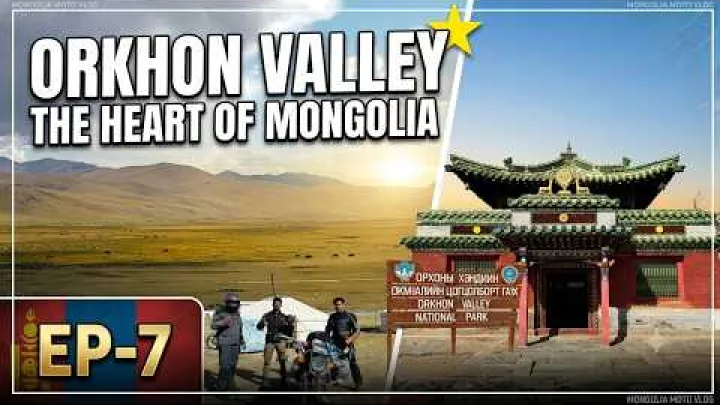
For most onward trips, arrange a local driver, a suitable four-wheel-drive vehicle, an organized excursion, or another destination-specific transfer. There is not enough dependable information to give one fixed public timetable or fare for all valley routes. A bus that reaches Kharkhorin should not be treated as a valley shuttle.
Arrange the onward vehicle before leaving Kharkhorin when possible. Give the driver or accommodation the exact destination, not only the words Orkhon Valley. Confirm the accommodation location, pickup point, expected road time, vehicle type, luggage space, and whether the driver will wait or return. Ask specifically about river crossings or rough sections if they form part of the route. This prevents a town transfer from being mistaken for a complete excursion plan.
Each valley destination should be planned separately. A route to one camp may not provide useful access to another, and a vehicle suitable for the main road may not be the right choice for a rougher track. If your accommodation is outside Kharkhorin, ask how guests normally arrive and whether the property can help arrange the final local leg.
Plan Roadside and Cultural Stops
Elsen Tasarkhai, also called Mini Gobi, is commonly combined with Kharkhorin in private-car and tour itineraries. It is an optional route stop, not a transport hub that should be assumed to appear on the public bus schedule. A bus ticket to Kharkhorin therefore does not by itself guarantee access to Elsen Tasarkhai.
Private vehicles and tours may also include cultural or landscape stops along a wider Central Mongolia circuit. Each additional stop can increase travel time, fuel use, waiting time, and the total price. A stop that appears on a promotional itinerary may be a short visit, a detour, or an activity requiring a separate local vehicle.
Before booking a multi-stop route, ask whether each stop is included in the quoted price, whether it is on the direct road, how long the vehicle will wait, and whether entrance fees or activities are separate. Keep a direct Ulaanbaatar–Kharkhorin bus journey distinct from a multi-day sightseeing circuit. The latter may be a better experience for several attractions, but it is not the same transport product.
Handle Weather, Reliability, and Connections
Transport reliability in Central Mongolia depends on more than the timetable. Separate the relatively straightforward question of reaching Kharkhorin from the more changeable question of traveling on remote valley tracks.
Allow for Seasonal Road Conditions
The main Ulaanbaatar–Kharkhorin road and the unsealed tracks deeper in the Orkhon Valley present different planning problems. The main journey is long, but a scheduled coach or normal car route may be more predictable than a remote side road. Beyond Kharkhorin, rain, snow, ice, mud, livestock, and other rural-road conditions may extend travel time or make a particular track difficult.
Avoid unsupported month-by-month promises about access. Conditions can change within a travel period, and a season that is comfortable in Ulaanbaatar may not produce the same road conditions in the valley. The practical question is whether the road is suitable on your intended departure date and whether your vehicle and driver are prepared for it.
Ask the bus operator, private driver, tour company, or accommodation about current road conditions before departure. Carry a warm layer, water, a charged phone, and offline navigation. Keep a time buffer for a delayed arrival, especially if you have a same-day local connection or a fixed activity in Kharkhorin. The main road and remote valley access should be checked as separate reliability questions.
Build a Realistic Arrival and Departure Buffer
Do not build the entire itinerary around a single reported bus departure immediately after an international flight. A late arrival at Chinggis Khaan International Airport can affect baggage collection, the transfer into Ulaanbaatar, and the time available to locate the correct terminal. An overnight stay in Ulaanbaatar or a generous connection buffer is the safer structure, particularly when missing the coach would disrupt accommodation and onward plans.
Similarly, separate your arrival day in Kharkhorin from travel into the Orkhon Valley unless a current driver or tour arrangement is already confirmed. Reaching town, finding accommodation, and meeting a local driver can take time even when the bus arrives as expected. A separate day gives you more practical options if the overland journey is late.
Use this final preparation checklist:
- Save the Eticket confirmation and the current departure terminal offline.
- Keep the name, location, and contact details of your Kharkhorin accommodation available without mobile data.
- Download an offline map covering Ulaanbaatar, Kharkhorin, and your planned local destination.
- Save the phone number or contact method for your driver, tour company, or accommodation.
- Keep a flexible fallback plan, such as an extra night or a later valley departure, instead of scheduling every stage back-to-back.
Final Takeaway for Getting to Karakorum
For most travelers, the practical way to get to Karakorum is to reach Ulaanbaatar, search for Kharkhorin, and continue west by road. The public bus is the structured and usually lower-cost independent choice; a private driver provides better timing and sightseeing access; and an organized tour combines transport with a broader Central Mongolia itinerary.
Use Kharkhorin as the transport destination, confirm whether the departure is at Dragon Center or another current terminal, and rely on the live Eticket information rather than an old schedule or fare. Treat the Orkhon Valley as a separate local transport stage, and leave enough time between international arrival, the bus journey, and any remote excursion.
Select area
Create a post
Posting is free and no registration is required.