Choibalsan Getting There: Flights, Buses, and Road Routes
Getting to Choibalsan requires more planning than reaching Mongolia’s major tourist centers, but the route is manageable once you understand the transport geography. Most international travelers first reach Ulaanbaatar and then continue east by domestic flight, long-distance bus, shared van, or private vehicle. This guide compares those options by travel time, cost, comfort, flexibility, and booking difficulty. It also explains where to depart in Ulaanbaatar, how to manage a late arrival in Choibalsan, and what to consider before continuing into rural Dornod Province.
Understand Choibalsan's Transport Geography Before Booking
Choibalsan is a regional city rather than a minor stop on a heavily used tourist route. Your best transport choice depends on whether you are only visiting the city, continuing through Eastern Mongolia, or traveling onward to a rural sum or steppe destination.
Use Ulaanbaatar as the Main Gateway
Choibalsan is the capital of Dornod Province and one of the main access points for Eastern Mongolia. For most international visitors, Ulaanbaatar is the practical starting point because it is Mongolia’s principal national gateway and the place where international arrivals connect with domestic transport.
From Ulaanbaatar, you can continue to Choibalsan by air, scheduled bus, shared van, or private car. The correct choice depends mainly on your available time. A flight is the fastest when a suitable service is operating. A scheduled bus is usually the most budget-friendly formal option. A shared van may suit a flexible traveler, while a private driver is more useful for groups, equipment, or a longer eastern Mongolia itinerary.
The city’s air gateway is Choibalsan International Airport, identified by the codes COQ and ZMCD. Eastbound bus information is commonly associated with the Eastern Bus Terminal, which is also reported in travel material as Tenger Plaza. Terminal names, platforms, and departure arrangements can change, so confirm the current name and location through your accommodation, the current ticketing platform, or terminal staff before traveling across Ulaanbaatar.
Choibalsan is approximately 660 to 670 kilometers from Ulaanbaatar by road. Use that figure to understand the scale of the journey, not as a promise of a particular bus arrival time or driving duration. Road conditions, stops, vehicle type, and weather can make the actual trip longer.
Choose the Right Mode for Your Trip
The following comparison is a planning guide only. Time, price, availability, and comfort can change by season and by operator. A flight time refers to the journey in the air, while a road estimate does not include every stop or delay.
| Option | Typical planning scale | Cost level | Booking and comfort |
|---|---|---|---|
| Flight | About 1.5 hours in the air when operating | Higher | Date-specific booking; fastest and usually most comfortable |
| Scheduled bus | Most of a day, sometimes into the evening | Lower | Formal reservation; basic comfort and less flexibility |
| Shared van | Variable; may be faster than a bus | Variable | Informal arrangements; departure depends on passengers and conditions |
| Private car or driver | About 9 to 10 hours as a direct-drive baseline | Higher, but shareable in a group | Flexible; comfort and safety depend on the vehicle and driver |
Air service is less frequent than a major domestic route and may cost more than an overland trip. Buses provide a more established budget connection but take much longer. Shared vans can work when your schedule is open, but they are not suitable for a tight international connection. A private vehicle is the most adaptable choice for regional travel, although its total price must be agreed carefully.
The available route information does not establish a current passenger-rail service to Choibalsan. Proposed or future railway projects should not be treated as an available way to travel unless a current official announcement confirms passenger operations and booking details.
Fly to Choibalsan
Flying is normally the best choice when your priority is to reach Choibalsan quickly. It is also the option most affected by changing schedules, limited frequency, and seat availability, so it needs more careful date-specific planning than a simple search result suggests.
Arrive at Choibalsan International Airport
Choibalsan International Airport, or COQ/ZMCD, is the main air gateway for Dornod Province. When a suitable service is operating, flying avoids the long overland journey and can leave more time for the city or for an onward trip into Eastern Mongolia.
Reported journey information places the flight from Ulaanbaatar at roughly 1.5 hours, but that figure describes the flight itself. Add time for check-in, security, baggage, possible schedule changes, and the transfer from your international arrival to the domestic departure area in Ulaanbaatar.
International travelers will usually need to connect through Ulaanbaatar unless a current, date-specific booking confirms another route. Regional or cross-border connections may appear in older listings or seasonal information, but they should be treated as conditional rather than dependable. Do not build an itinerary around a route simply because it appears in a general destination description.
For recent airport activity, arrival information, departure information, delays, cancellations, and weather context, consult the Flightradar24 page for COQ. Airport activity can help you understand recent operations, but it does not replace a confirmed ticket or the airline’s own instructions.
Check the Current Flight Schedule and Book Carefully
Travel listings have associated Choibalsan with Hunnu Air and, in some cases, Aero Mongolia. However, the available references do not establish one stable, year-round timetable. Published flight days can conflict, and domestic services may be seasonal or subject to operational changes. Treat a static guide or search-engine result as a starting point, not as proof that a flight operates on your date.
Use this booking workflow:
- Search the exact travel date in the airline’s current booking system. Check both the outbound and return dates if you have a fixed itinerary.
- Confirm that the destination is COQ and that the departure airport in Ulaanbaatar is the one shown on your ticket. Leave enough time to move between an international arrival and the domestic departure process.
- Read the baggage conditions and connection rules. A domestic ticket may have different baggage allowances, check-in deadlines, or rebooking terms from your international ticket.
- Compare the displayed fare and seat availability with the airline’s own conditions. Do not rely on an old fare quoted in a travel blog or on a generic flight-comparison page.
- Save the confirmation, payment record, airline contact details, and flight number offline. Recheck the operator’s information and recent airport status shortly before departure.
The official Hunnu Air website is the appropriate place to begin if its service appears for your date. If a booking platform shows a flight but the airline does not confirm it, resolve that difference before paying.
Because the flight saves a large amount of time but may have limited seats, avoid arranging a tight same-day connection to an international departure. A missed domestic flight could affect accommodation, tours, and onward transport. A buffer in Ulaanbaatar is especially sensible when your international and domestic tickets are separate.
Travel by Long-Distance Bus
The long-distance bus is the main budget-oriented overland choice for reaching Choibalsan from Ulaanbaatar. It is slower and less comfortable than flying, but it can be easier to use when no convenient flight is available.
Find the Eastern Bus Terminal in Ulaanbaatar
Travel information commonly identifies the Eastern Bus Terminal as the departure point for routes toward Dornod and Choibalsan. The same location is also reported as Tenger Plaza in some material. Use both names when asking for directions, but do not assume that an older map pin or English-language listing is still current.
This is different from Dragon Terminal, which is associated with routes in other directions. Before leaving your accommodation, ask for the current eastbound bus terminal, the departure platform, and the recommended arrival time. A local hotel, guesthouse, guide, or terminal employee may be able to confirm the details more reliably than a map result alone.
Depending on the current route and ticketing system, you may be able to reserve online or buy a ticket at the terminal. Online booking can save time and may provide a seat number, but payment or route information may not work smoothly for every traveler. Buying at the terminal gives you a chance to confirm the destination in person, although popular dates may have less availability.
Keep the destination written as Choibalsan and save the ticket details on your phone and on paper. If the platform uses Mongolian or Cyrillic signage, ask your accommodation to provide the local spelling shown by the current ticketing system rather than guessing how the name is written. General booking and boarding advice is also covered by Gertoger.
Book and Prepare for the Full-Day Bus Journey
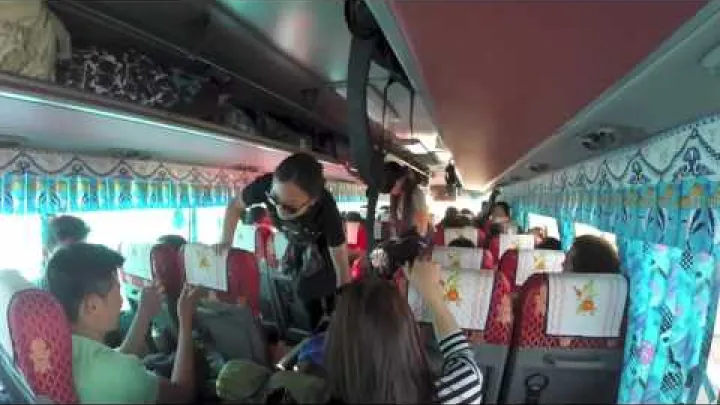
Reports about the Ulaanbaatar–Choibalsan bus commonly describe a morning departure and an arrival late in the evening. These are useful planning patterns, not guaranteed daily times. The current ticket should control your departure plan, and road conditions can change the arrival time.
At booking and boarding, check the following details:
- Your seat number and the exact departure time.
- Where larger luggage is stored and whether any baggage rule or payment applies.
- Whether you need to show a passport, ticket confirmation, or payment record.
- Whether the journey includes meal, restroom, or roadside stops and how long they are expected to last.
- The expected arrival point in Choibalsan, especially if your accommodation is outside the central area.
Fare figures in older and newer travel references can differ, so confirm the current price at the time of purchase. Build your budget around the ticket actually offered by the operator rather than an old online estimate. Carry a small amount of cash for food, drinks, or an unexpected short transfer, but keep valuables and travel documents with you.
Pack for a long, basic journey rather than assuming that every stop will have the supplies you need. Bring drinking water, food that travels well, warm layers, required medication, tissues, and a charged phone or power bank. A neck pillow or small blanket may improve comfort. Keep your most important items in a day bag that stays with you instead of placing them in the luggage hold.
The bus is a sensible choice for a traveler whose main concern is cost and who can accept a full day on the road. It is less suitable when you have a fixed evening event, a short connection, or a strong need for predictable arrival time.
Use Shared Vans or a Private Car
Overland alternatives can be useful when the scheduled bus or flight does not match your plans. They also require more judgment because the service, vehicle, price, and departure conditions may not be published in one reliable system.
Assess Shared Vans Before You Board
Shared vans may leave when enough passengers have gathered rather than at a fixed published time. They can sometimes travel more directly or arrive sooner than a large bus, but that possible time saving comes with less certainty about departure, seating, luggage, payment, and roadside stops.
A shared van is best considered a flexible alternative, not the default choice for a traveler with a flight, hotel check-in deadline, or other fixed appointment. Do not assume that every vehicle has the same maintenance, seatbelt availability, luggage space, or driver experience.
Before paying or placing your luggage in the vehicle, confirm the destination, fare per person, number of passengers, expected departure time, and likely arrival point. Check that you have a seat and ask whether a seatbelt is available. If the arrangement is unclear, the price changes without explanation, or the driver cannot clearly confirm Choibalsan as the destination, use the formal bus or a pre-arranged driver instead.
Keep communication simple. Show the destination in writing, repeat the agreed amount, and clarify whether the fare includes luggage. Avoid handing over your passport or valuable documents. These steps do not make an informal service fully predictable, but they reduce the chance of a misunderstanding.
Hire a Driver or Self-Drive Overland
A private car is useful for groups, travelers carrying photography or camping equipment, and people who want to continue beyond Choibalsan. It can also make sense when several people share the cost. The direct road distance is roughly 670 kilometers, and one local Eastern Mongolia guide gives a direct-driving estimate of about 9 to 10 hours. That is only a baseline: stops, road surfaces, weather, traffic, and driving decisions can extend the trip. The guide’s wider regional advice is available from Meanwhile in Mongolia.
Conditions may vary between paved sections, gravel, and dirt surfaces. A vehicle that is adequate for the main road may not be suitable for remote tracks after Choibalsan. Self-driving gives you control over stops, but it also places route finding, fuel planning, vehicle recovery, and emergency decisions on your group. An experienced local driver can be more practical when you do not know the road or plan to leave the main corridor.
Some local guidance gives a rough budget of about US$80 to US$120 per day for a driver and four-wheel-drive arrangement. Treat this as an indicative starting point, not a guaranteed transfer price. Ask whether the quotation includes fuel, food, accommodation for the driver, mileage, waiting time, border or permit costs if relevant, and the return journey.
Before accepting a driver, ask for:
- The vehicle model, condition, tire suitability, and available seatbelts.
- The driver’s experience on the Ulaanbaatar–Choibalsan route and on any rural roads you plan to use.
- Insurance or vehicle documentation appropriate to the trip.
- The fuel plan, planned stops, and arrangements if the vehicle breaks down.
- A clear total price, payment schedule, cancellation terms, and responsibility for extra waiting days.
- A reliable way to communicate with the driver or another local contact during the journey.
Distinguish a direct transfer from a multi-day Eastern Mongolia road trip. A quote for a driver who remains with you for several days will not be comparable with a one-way ride to the city.
Plan Your Arrival in Choibalsan
Your journey is not complete when the aircraft lands or the bus reaches the city. Confirming the final transfer and accommodation access before departure is particularly important when arrival is late or your phone connection is limited.
Transfer from the Airport to the City Center
Detailed, current information about airport taxi fares, the exact distance to central Choibalsan, and the availability of vehicles at every arrival is limited. Do not assume that a fixed city-airport taxi system will operate exactly as it does in Ulaanbaatar.
Ask your accommodation to confirm the airport transfer process before you leave for Choibalsan. Request the meeting point, the name or phone number of the driver, the expected price or pricing method, the approximate travel time, and whether someone can receive you if the flight arrives late. Save those details offline.
A pre-arranged pickup is usually easier for a first arrival because the driver should know your accommodation and can help avoid a destination misunderstanding. A locally available taxi may also be possible, but ask the fare before loading your bags and make sure the driver understands the exact hotel or address. Do not accept an unsolicited ride simply because someone approaches you inside or outside the airport.
If the price, destination, or meeting point is unclear, call the accommodation or ask airport staff for help before leaving. Keep your luggage with you until the vehicle and destination are confirmed.
Handle a Late Bus Arrival
Some reported bus patterns place travelers in Choibalsan late in the evening, sometimes around 11 pm. This is not a guaranteed timetable. The actual arrival depends on the current departure time, road conditions, stops, and delays.
Use this short sequence before boarding in Ulaanbaatar:
- Send your bus details and expected arrival window to the accommodation.
- Confirm the arrival point with the operator and ask whether it is a terminal, roadside stop, or another location.
- Arrange late check-in and, if needed, a confirmed pickup or known local driver.
- Save the accommodation address, driver contact, ticket, and a backup phone number offline.
- Carry enough cash for a short unexpected transfer and keep your phone charged.
Do not assume that public transport or taxis will be readily available late at night. Solo travelers should take extra care with heavy luggage and unfamiliar streets. Winter arrivals require additional warm clothing because waiting outside for a vehicle can be uncomfortable or unsafe. If phone service is limited, remain at the confirmed arrival point and use the information given by your accommodation rather than following an unverified offer.
Continue Beyond Choibalsan in Eastern Mongolia
Choibalsan may be your destination, but it can also be the practical staging point for a wider trip through the eastern provinces. Onward travel is more locally organized than the main Ulaanbaatar connection.
Connect Choibalsan with Other Eastern Provincial Capitals
Choibalsan functions as a regional road hub for travel toward places such as Öndörkhaan in Khentii Province and Baruun-Urt in Sukhbaatar Province. These connections can help you travel across Eastern Mongolia without returning to Ulaanbaatar, but they require more coordination than a major intercity route.
Shared vehicles and road travel are the main practical options described in the available regional information. Do not assume a fixed daily frequency, a permanent departure point, or a guaranteed English-language booking system. Ask locally about the next departure, the vehicle type, the number of seats, the fare, and the expected road conditions.
Use a shared vehicle when you are flexible and the departure details are clear. Choose a local driver when you have a fixed onward date, substantial luggage, several travelers, or a route that involves multiple changes. Allow time in Choibalsan to arrange the next leg rather than assuming that you can step directly from one arrival into an onward departure.
Reach Rural Dornod with Local Transport
Reaching Choibalsan is only the first leg if you are heading to a rural sum, steppe site, protected area, or nomadic community in Dornod Province. Transport that is adequate between cities may not be suitable for unsealed tracks or sparsely serviced areas.
A locally experienced driver or a suitable shared vehicle may be necessary for rural travel. Before leaving the city, plan fuel, food, drinking water, communications, and return transport. Do not assume that a vehicle will be available for the trip back or that a mobile connection will work throughout the route.
Ask before leaving Choibalsan:
- What is the exact destination and which road or track will be used?
- Is the vehicle suitable for the current surface and weather?
- Where can you obtain fuel, food, and water, and what reserve is required?
- What happens if the vehicle becomes stuck or breaks down?
- Who knows your route, expected return time, and emergency contact details?
- Is the price for one way, return travel, or a driver waiting for you?
Cross-border extensions and proposed rail connections should remain separate from your core plan unless current official information confirms that the relevant passenger service, border process, and booking arrangements are available.
Manage Weather, Booking, and Language Uncertainty
Distance is only one part of getting to Choibalsan. Seasonal conditions, payment systems, and language barriers can affect an otherwise simple booking.
Build Weather and Seasonal Flexibility into the Route
Summer rain can slow overland travel or affect road conditions. Winter cold, snow, strong wind, and low visibility can affect roads as well as flights. Spring and autumn can also be changeable, so there is no single season in which every route is guaranteed to operate predictably.
Match your plan to the risk:
- For a long bus journey, avoid scheduling an important flight or event immediately after the expected arrival.
- For winter travel, carry warm layers, gloves, and enough battery power to manage a delay or wait.
- For private road travel, ask about the current road surface, vehicle suitability, fuel reserve, and alternate route before departure.
- For flights, leave room for a change of schedule and avoid a tight international connection when the tickets are separate.
Check a current local forecast and the latest road, airport, and operator status shortly before leaving. If conditions are deteriorating, a buffer day or a revised departure date may be safer than trying to preserve an exact itinerary.
Solve Language and Payment Barriers
Some Mongolian bus platforms may offer English menus, but route names, payment steps, terminal instructions, and customer support may still depend on Mongolian-language systems or local payment methods. An English interface does not always mean that every part of the booking process will be easy for an international cardholder.
Use this workflow for online or in-person purchases:
- Save the destination in English and obtain the verified local spelling from the ticket, accommodation, or a trusted local contact.
- Keep a translation of the departure terminal, departure time, seat number, and operator name on your phone.
- If payment fails, ask accommodation staff or a local agency to explain whether the problem is the card, account type, currency, or booking platform.
- Do not consider the reservation complete until you have a confirmed ticket, payment record, and departure details.
- Print or save screenshots of the confirmation because mobile data and battery power may not be available at the terminal.
At the terminal, show the destination and departure details rather than relying only on pronunciation. Keep your passport, ticket, and luggage together, and arrive early enough to locate the correct platform without depending on English assistance.
Final Checklist for Getting to Choibalsan
Choose your route according to the part of the journey that matters most. Fly from Ulaanbaatar when time is the priority and a confirmed date-specific service is available. Take the scheduled bus when lower cost matters more than speed. Consider a shared van only when you can accept an informal and changeable departure. Hire a driver for groups, equipment, rural access, or a wider Eastern Mongolia road trip.
- Confirm the current flight, bus, or driver arrangement for your exact date.
- For a flight, check COQ/ZMCD, baggage rules, connection time, and the operator’s contact details.
- For a bus, confirm whether the departure is from the Eastern Bus Terminal or the location currently identified as Tenger Plaza.
- Keep your ticket, payment record, seat number, destination, and accommodation address offline.
- Pack water, food, warm clothing, medication, cash, and a charged phone or power bank for the overland journey.
- Arrange airport pickup or late hotel check-in before a late arrival.
- If continuing into Dornod or neighboring eastern provinces, organize the next vehicle and return plan in Choibalsan.
- Leave a time buffer for weather, road conditions, and schedule changes.
With those preparations, Choibalsan is accessible from Mongolia’s main gateway by air or road, and the city can serve as both a destination and a base for exploring Eastern Mongolia.
Select area
Create a post
Posting is free and no registration is required.