Mongolia Country Facts: Quick Profile, History & Culture
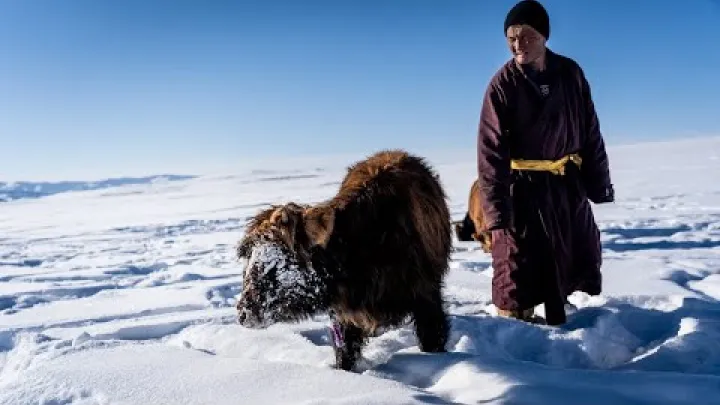
Mongolia country facts are easiest to understand when basic identifiers are read alongside geography, history, culture and economic context. This landlocked East Asian country has a small population spread across a very large territory, with modern urban life centered strongly on Ulaanbaatar and rural livelihoods still connected to herding. The profile below begins with dated quick facts and then explains Mongolia’s landscape, people, political system, economy and infrastructure.
Mongolia Quick Facts
Mongolia is a sovereign state between Russia and China. Its national profile combines a historic Mongol identity, a democratic constitutional system, extensive grasslands and deserts, and an economy strongly influenced by mineral resources.
Essential Country Identifiers and Quick Facts
| Field | Fact | Status or reference |
|---|---|---|
| Official name | Mongolia, or Mongol Uls | Constitutional and current |
| Common English name | Mongolia | Current |
| Capital | Ulaanbaatar | Current capital |
| Largest city | Ulaanbaatar | Current urban center |
| Region or continent | Eastern Asia, Asia | UNdata regional classification, 2015 |
| Landlocked status | Landlocked | Stable geographic fact |
| Neighboring countries | Russia and China | Stable geographic fact |
| Population | 3,568,978 | World Bank estimate, 2025 |
| Area | 1,564,116 square kilometres | Total surface area, UNdata reference, 2014 |
| Currency | Mongolian tugrik, MNT | Current currency and ISO 4217 code |
| Official language | Mongolian, with the Khalkha variety as the standard basis | Constitutional and current language designation |
| Calling code | +976 | Current international telephone code |
| ISO alpha-2 code | MN | Current country identifier |
| ISO alpha-3 code | MNG | Current country identifier |
| Country-code top-level domain | .mn | Current internet country code |
| Time zones | UTC+7 in the western zone and UTC+8 in Ulaanbaatar and most areas | Current standard offsets |
| Form of government | Unitary democratic multiparty republic with a semi-presidential system | Constitutional and current |
The capital and largest city are both Ulaanbaatar, but they describe different facts: one is a constitutional and administrative role, while the other is a population and urban role. The official name is commonly rendered in English as Mongolia, while Mongol Uls is used in Mongolian constitutional terminology. The country’s international identifiers include the tugrik code MNT, the telephone code +976, the ISO codes MN and MNG, and the .mn domain.
Mongolia uses more than one standard time zone because its territory stretches widely from west to east. The western zone is one hour behind Ulaanbaatar and much of the country. Anyone coordinating across provinces should confirm the local time used by the relevant organization rather than assuming that the capital’s time applies everywhere.
Population, Area, and Reference Years
The World Bank reports a Mongolian population of 3,568,978 for 2025, or about 3.57 million people. This is a dated estimate, not a timeless national total. Mongolia’s National Statistics Office may publish counts or projections based on a different reference date, census method or administrative definition. The World Bank Open Data series is useful for comparing Mongolia with other countries because its indicators identify the relevant year and methodology.
UNdata lists Mongolia’s surface area as 1,564,116 square kilometres with a 2014 reference year. The figure should be read as total surface area in this profile, not automatically as land area. Dividing the approximate population by that area produces only around 2.3 people per square kilometre, which helps explain Mongolia’s unusually low population density. The UNdata country profile preserves the area’s reference year and classification.
When comparing Mongolia with another country, check the reference year and definition for every population, area, economic and social indicator. Population projections, census results, urbanization rates, current-dollar GDP and purchasing-power measures are not interchangeable simply because they appear in the same country profile.
Geography, Climate, and Environment
Mongolia’s physical setting explains much of its settlement pattern, economic structure and international dependence. A high continental interior, limited rainfall and long distances separate the country’s major cities, pastoral areas, mines and border crossings.
Location, Borders, and Physical Geography
Mongolia lies in north-central Asia, commonly classified within Eastern Asia. It has no coastline and shares its northern border with Russia and its southern, eastern and western borders with China. These two neighbors provide the principal geographic routes toward global markets, while Mongolia’s own territory forms a broad transition between Siberian environments and the dry interior of Central Asia.

The landscape is more varied than the image of an endless desert suggests. Mongolia includes elevated steppe, mountain systems, northern forest and forest-steppe zones, open grasslands and the Gobi Desert in the south. The Altai and other mountain regions influence water flow, grazing conditions and local climate, while the central and eastern steppes support large areas of seasonal pastoral use. Elevation and distance can create significant differences in temperature, rainfall and access even between communities in the same broad region.
Physical geography affects where people live and how economic activity is organized. Ulaanbaatar concentrates administration, education, health care, finance and many services. Mining is located where mineral deposits occur, and herding communities are distributed across pasture rather than around dense road networks. Water availability, winter heating and long travel distances raise the cost of public services and infrastructure outside the main urban centers.
The Gobi is therefore one part of a larger ecological system rather than a complete description of Mongolia. Steppe, desert, mountain and forest environments support different forms of livestock production, conservation, settlement and transport. This diversity also means that national averages can conceal strong regional differences.
Continental Climate and Environmental Pressures
Mongolia has a strongly continental climate. Winters are long and very cold, summers are short, precipitation is generally limited and much of the annual rainfall arrives during the warmer months. Seasonal and daily temperature changes can be large, especially in exposed areas away from the moderating influence of a large body of water.
A dzud is a severe winter event or combination of conditions that prevents livestock from reaching adequate pasture. Heavy snow, ice, extreme cold, drought in the preceding season and depleted grazing conditions can combine to produce serious losses. Because herding households depend on animals for food, income, transport and assets, a dzud can become both an environmental emergency and a social and economic shock.
Environmental pressures also include drought, wind and dust events, pasture degradation, mining-related land and water concerns, urban expansion and winter air pollution in Ulaanbaatar. These issues are connected to heating demand, settlement growth, water management and infrastructure decisions. A general climate description cannot predict conditions in a particular year. For current information about dzud, drought, pollution or unusual weather, consult recent Mongolian official weather and disaster notices or a current international climate source.
Administrative Divisions and Settlement Patterns
Mongolia is organized into 21 aimags, or provinces, while Ulaanbaatar is administered as a separate capital municipality. Aimags are divided into soums, and soums contain baghs as lower-level administrative units. This structure provides the framework for local government, elections, public records and the delivery of services across a territory where communities may be separated by substantial distances.
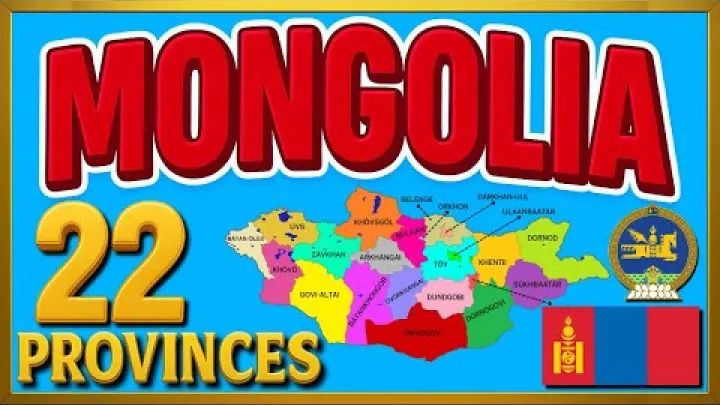
Ulaanbaatar is the dominant urban center, while Erdenet and Darkhan are important examples of major regional cities. Other settlements are connected to agriculture, mining, border activity or local administration. Outside these centers, many people live in small communities or move seasonally with livestock, so settlement density is often very different from the administrative map.
Administrative divisions matter for more than geography. Population counts, schools, clinics, roads, social protection, elections and local budgets are commonly organized through these units. A national statistic may therefore be assembled from areas with very different service conditions, livelihoods and exposure to climate events.
History and National Identity
Mongolia’s modern identity draws on both the legacy of the Mongol Empire and the political transformation of the late twentieth century. Historical memory remains important, but present-day Mongolia is a modern state with borders, institutions and social experiences that should not be confused with the territories ruled by earlier empires.
Historical Foundations and the Mongol Empire
In the early thirteenth century, Temüjin, known as Chinggis Khaan, united Mongol groups and established the foundation of the Mongol Empire. The empire expanded across a vast part of Eurasia and became one of the most influential political formations in world history. Its legacy is reflected in Mongolia’s national name, public symbols, historical education and cultural representation.
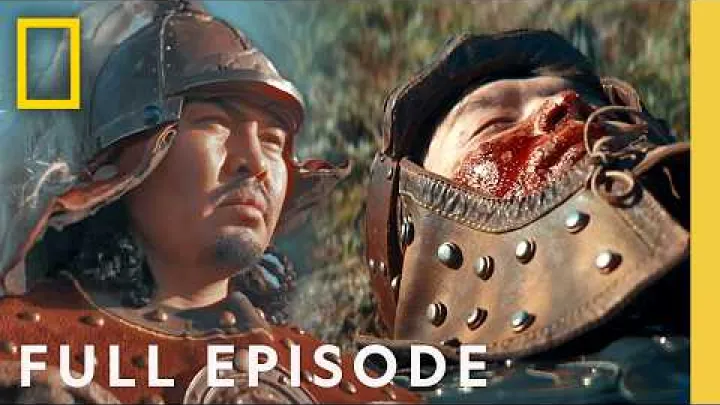
Chinggis Khaan is an important national symbol, but contemporary Mongolian identity is broader than one historical figure. It includes language, family and community life, religious traditions, modern statehood, urban experience, regional diversity and the memory of more recent political changes. Historical heritage can be central to national identity without defining every citizen’s occupation, lifestyle or political view.
Modern Mongolia should also be distinguished from the historic Mongol Empire and from Inner Mongolia, an autonomous region of China. Shared history and cultural connections do not mean that these places have the same government, legal system, demographic profile or contemporary national status.
Socialist Rule and the Democratic Transition
For much of the twentieth century, Mongolia was governed through a socialist one-party system closely connected to the Soviet sphere. That period shaped the country’s institutions, education, urban development, industrialization and external relationships. It also left a historical legacy that remains part of public discussion, alongside older traditions and post-socialist change.
Political change in 1990 opened a transition toward multiparty democracy and a different economic system. The adoption of the 1992 Constitution established a new constitutional framework with political pluralism, constitutional rights and elected institutions. The two dates describe related but distinct stages: 1990 refers to the political transition, while 1992 refers to the adoption of the Constitution.
This transition provides essential context for understanding modern Mongolia’s parliament, presidency, parties, market economy and civil society. It should not be reduced to a single event or treated as a complete explanation of current political practice, which continues to change through elections, constitutional amendments and institutional debate.
People, Language, and Culture
Mongolia contains both strong national cultural symbols and substantial regional, linguistic and urban-rural diversity. Nomadic heritage is highly visible, but it exists alongside city life, modern education, professional employment and minority cultural traditions.
Ethnic, Language, and Writing-System Diversity
Khalkh Mongols form the majority of the population, while Kazakh, Oirat and other communities contribute to the country’s cultural and linguistic diversity. Bayan-Ölgii in western Mongolia is especially associated with Kazakh communities, although regional identity and language use are not confined to a single simple pattern.
Mongolian is the official language, with Khalkha Mongolian providing the standard basis used in government, education and national media. Kazakh is important in relevant local communities, and Russian and English may be encountered as additional languages in particular educational, professional or cross-border settings. Language use can vary by age, region, schooling, occupation and urbanization.
Cyrillic has played a central role in modern Mongolian public writing, while the traditional Mongolian vertical script remains a major cultural symbol. Its continued teaching, display and revival connect contemporary citizens with earlier literary and historical traditions. The coexistence of modern and traditional writing practices should be understood as part of an evolving language environment rather than as a fixed division between old and new.
Nomadic Heritage, Religion, and Cultural Practices
Herding, seasonal movement and the ger are important parts of Mongolia’s cultural heritage. A ger is a portable round dwelling suited to mobile pastoral life, and it remains a meaningful cultural form even when people live in settled areas. Contemporary Mongolia also includes apartment residents, office workers, students, industrial employees and families who combine urban and rural activities.
Naadam is the country’s best-known national cultural festival. Its central competitions are Mongolian wrestling, horse racing and archery. These events connect sport, history, community celebration and the pastoral landscape, but cultural participation does not require a person to be a full-time herder or to live outside a city.
Tibetan Buddhism has deep historical and cultural importance in Mongolia. The state has a secular constitutional framework, which means that government is not based on one official religion. Buddhist practice exists alongside other religious communities, personal beliefs and nonreligious identities, so no single religious description represents every Mongolian citizen.
Population, Urbanization, and Human Development
Recent population indicators show that Mongolia is increasingly urban. Estimates place the urban population share at approximately 69 to 70 percent in 2023 to 2024, depending on the source and definition. Ulaanbaatar accounts for a very large part of the country’s population and concentrates higher education, specialist health services, government offices and many formal employment opportunities.
Life expectancy was about 72 years in 2024 in the reported national indicator. A national average is useful for broad comparison, but it does not describe the same experience in a remote aimag, a rural herding household, an industrial town and a rapidly growing capital district. Sex-specific life expectancy figures should remain clearly labeled because they are not interchangeable with the overall estimate.
Rural-to-urban migration is influenced by education, employment, health care, climate events and household decisions. In Ulaanbaatar, expansion has included ger districts as well as apartment neighborhoods. Erdenet and Darkhan provide other important urban centers, but their economic roles and population pressures are not identical to those of the capital.
Urbanization brings access to services and labor markets, but it can also create pressure on housing, transport, heating, schools, clinics, water and sanitation. Rural mobility can support pastoral livelihoods while making consistent service delivery more difficult. Population density, climate exposure and infrastructure should therefore be considered together rather than treating urbanization as a simple measure of progress.
Education, Health, Poverty, and Social Infrastructure
Mongolia has high reported adult literacy. A 2023 indicator gives literacy rates of 98.3 percent for males and 98.9 percent for females aged 15 and over. Literacy, however, does not by itself measure the quality of education, learning outcomes, access to higher education or the suitability of services for remote and minority-language communities.
Education and health services are available through national and local systems, but distance can affect staffing, equipment, continuity and affordability. Nomadic households may face different access barriers from urban residents, while rapidly expanding parts of Ulaanbaatar may experience pressure on schools, clinics, housing and public utilities. Regional differences also matter for older people, children, people with disabilities and households affected by severe weather.
Poverty statistics must be read according to their method. An international poverty threshold is designed for comparisons using a specified purchasing-power basis, while a national poverty measure reflects a country’s own basket, prices and policy framework. A low rate under one extreme-poverty threshold does not mean that broader poverty, insecurity or inequality has disappeared.
Social infrastructure includes housing, safe water, sanitation, heating, medical care, schools and social protection. These needs are especially visible in Ulaanbaatar’s ger districts and in remote rural areas, but the specific problem differs by location. Air pollution and health should also be discussed with current evidence and careful wording rather than assumed from a general description of winter conditions.
Government and Political System
Mongolia’s political system combines a directly elected head of state with a parliament and a government led by a prime minister. The balance between these institutions is defined formally by the Constitution but also influenced by elections, party alignments and constitutional amendments.
Constitutional Order and Executive Government
The 1992 Constitution established Mongolia as a unitary, democratic and multiparty republic. Country profiles commonly describe its institutional structure as semi-presidential because it includes a popularly elected president, a parliament and a prime minister. This label is useful only when the different responsibilities of the offices are explained.
The president is the head of state and has formal constitutional responsibilities that extend beyond ceremonial representation. The prime minister is the head of government and leads the cabinet and the day-to-day executive administration. The State Great Khural, Mongolia’s parliament, makes laws, approves the budget and exercises oversight, creating an institutional relationship between parliamentary support and executive government.
Formal constitutional powers and political practice are not always identical. The influence of the president, prime minister and governing parties can vary according to election results, coalition arrangements and amendments. The Congressional Research Service summarizes the system as semi-presidential while emphasizing the role of both parliament and prime minister.
Parliament, Elections, and Representation
The State Great Khural is a unicameral parliament. Its responsibilities include law-making, approval of public finances and oversight of the government. Parliamentary representation is intended to connect national decision-making with geographic constituencies while also allowing parties to gain seats through proportional support.
A 2023 constitutional amendment expanded the parliament to 126 seats, and the 2024 parliamentary election used a mixed arrangement of constituency and proportional seats. These are important dated facts, not a guarantee that the electoral formula or seat allocation will remain unchanged. The purpose of a mixed system is to combine local representation with a broader reflection of party votes, although the practical results depend on thresholds, district design, party lists and voter behavior.
Parliamentary elections operate on a four-year cycle, while the presidency follows a separate constitutional timetable with a six-year presidential term under the post-2019 framework. Citizens aged 18 and over have voting rights. The Mongolian People’s Party and the Democratic Party are major competitors in modern national politics, but their strength, alliances and parliamentary representation can change from one election to the next.
For a current political profile, check the latest official constitutional and election information for the seat formula, thresholds, parliamentary composition and officeholders. Do not treat the 2024 arrangement as permanent or infer current party control from an older election summary.
Courts, Rights, and Rule of Law
Mongolia’s formal judicial structure includes the Supreme Court and lower courts, together with the Constitutional Court. Ordinary courts handle judicial proceedings and appeals within the court system. The Constitutional Court addresses constitutional questions and is distinct from a normal appellate court reviewing the facts of an ordinary case.
The constitutional framework recognizes rights and freedoms associated with democratic government, including political participation and legal protections. Judicial appointments, court administration and the formal aim of judicial independence are part of the institutional design. These descriptions explain the written system, not the outcome of every case or the experience of every person using it.
Assessments of corruption, enforcement, institutional capacity and public trust require separate, current evidence. The existence of a court or a constitutional guarantee does not by itself prove that access is equal, decisions are consistently enforced or public confidence is strong.
Foreign Relations and External Partnerships
Mongolia’s location between Russia and China shapes its security concerns, trade routes, energy relationships and diplomatic choices. The country must maintain workable relations with both immediate neighbors while seeking room for independent decision-making and broader international engagement.
The third-neighbor policy describes Mongolia’s effort to develop relationships beyond Russia and China. The United States, Japan and European partners are examples of relationships that can support diplomacy, development, education, investment and security cooperation. These partnerships do not remove the practical importance of the two neighboring powers, which remain central to geography and commerce.
External relationships are also connected to Mongolia’s democratic identity, landlocked status, infrastructure needs and resource economy. The Australian DFAT country brief presents Mongolia as resource-rich, democratic and outward-looking. The relative importance of different partners and the results of particular projects can change, so stated foreign-policy strategy should be distinguished from measurable outcomes.
Economy and Natural Resources
Mongolia’s economy combines large mineral resources with livestock production, public services, urban construction and a developing private sector. Mining creates export earnings and investment opportunities, while dependence on a limited group of commodities exposes public finances and households to external shocks.
Mining, Exports, and Macroeconomic Indicators
Mining, especially copper, gold and coal, is central to Mongolia’s exports and a major source of economic and fiscal opportunity. Oyu Tolgoi is a major copper and gold project and an important example of the scale of the resource sector. Mineral production can support infrastructure and public revenue, but concentration also increases exposure to commodity prices, foreign demand, production changes and cross-border logistics.
Reported World Bank indicators put Mongolia’s 2025 GDP at approximately 25.37 billion US dollars and GDP per capita at about 7,108.2 US dollars. These are current-dollar measures for a specified year. GDP measures the value of production, while GDP per capita divides that total by population; neither is the same as household income, wealth, GNI or a direct measure of living standards.
Growth, inflation, unemployment, exports, government revenue and exchange-rate movements describe different parts of the economy. A period of strong mining growth may increase national GDP without benefiting every household equally. Conversely, a fall in commodity prices can affect public revenue, investment and employment even when other sectors continue to operate.
Livestock, Agriculture, Services, and Diversification
Livestock herding is both an important rural livelihood and a central part of Mongolian cultural identity. Animals provide food, materials, income and household assets. Herding should not be measured only by its cultural visibility: its importance also differs by household, region, herd size, market access and exposure to drought or dzud.
Agriculture is more feasible in suitable northern areas, where conditions support crop production better than the arid south. Services, construction, manufacturing, tourism and information technology provide additional economic activity, especially in urban areas. These sectors are important for employment and diversification, but they do not yet have the same export weight or macroeconomic influence as mining.
Diversification is therefore a development and policy objective rather than proof that all sectors already have equal economic importance. Rural incomes can be affected by livestock losses, market access and transport costs, while urban businesses may be affected by construction cycles, consumer demand and commodity-linked investment. A resilient economy needs to connect rural livelihoods, services and value-added production with reliable infrastructure.
Poverty, Labor, and Distributional Challenges
Different poverty measures can present very different pictures of living conditions. International thresholds use a defined purchasing-power basis and support cross-country comparisons, while national measures reflect domestic prices, household needs and policy choices. The threshold, year, population covered and survey method should always be stated before two poverty figures are compared.
Distributional challenges include differences between Ulaanbaatar and rural aimags, uneven conditions in mining areas, informal employment, underemployment and unequal access to services. Mining can create high-income jobs and local investment in some places, while other households may remain dependent on herding, low-paid services or social protection. These patterns mean that national GDP growth does not describe the experience of every region.
A reported 2025 unemployment estimate of about 5.2 percent is a modeled indicator and should not be read as a complete measure of labor-market insecurity. Headline unemployment may not capture informal work, discouraged workers, seasonal activity or people working fewer hours than they need. Labor conditions are better understood by considering employment quality, earnings, participation and household vulnerability together.
Infrastructure, Connectivity, and International Standards
Distance is a central infrastructure issue in Mongolia. The country’s population, mines, cities and pastoral settlements are spread across a large area, while international commerce must pass through neighboring countries to reach seaports and wider markets.
Landlocked Connectivity and Cross-Border Trade
Without a sea coast, Mongolia depends on transit through Russia and China for much of its international trade. This affects mineral exports as well as imports such as fuel, machinery, industrial inputs and consumer goods. Border capacity, railway and road connections, customs arrangements and the policies of neighboring countries can therefore influence costs and delivery times.
Transport geography also shapes the value of mining projects. Bulk commodities require reliable corridors, while remote mines need links to processing facilities, power systems and border gateways. Ulaanbaatar, Darkhan and Erdenet are useful urban reference points, but their roles are different from those of major mining areas or border settlements. A proposed corridor or infrastructure project should not be treated as proof that trade outcomes have already changed.
Mongolia’s third-neighbor strategy is partly connected to this need for wider infrastructure, investment and diplomatic options. Landlocked status creates structural constraints, but it does not make the country isolated. For current cross-border movement, use official border, customs, railway, road and carrier information. Border hours, transit rules, routes and operating conditions can change, so a map or older route description is not enough for practical planning.
Energy, Communications, and Urban Infrastructure
Reported electricity access was about 99.1 percent in 2024. This figure indicates broad access under the source’s definition, but access does not necessarily mean equal reliability, capacity, affordability or service quality. National coverage can therefore coexist with local interruptions and major differences between urban, remote and mobile communities.
Ulaanbaatar relies on large-scale urban power and heating systems, while remote settlements and rural households may use different local energy arrangements. Heating is especially important because of the long winter and the concentration of households in ger districts. Water delivery, sanitation, housing quality and heating choices are closely related to living conditions and winter air pollution in the capital.
Communications and digital services add another layer of connectivity to the country profile. Mobile and internet access can help link remote communities with education, commerce, government and family networks, but geographic coverage and service quality may vary. Technical identifiers such as the .mn domain and +976 calling code belong in the quick facts table; the broader infrastructure question is whether people can use those systems reliably and affordably.
Conclusion: Mongolia in Context
Mongolia is a large, sparsely settled and landlocked country with a distinctive combination of steppe and desert geography, Mongol historical identity, democratic institutions, urban concentration and resource-based exports. Its population and area figures are most useful when dated, and its social and economic averages should always be read alongside strong differences between Ulaanbaatar, regional cities, rural households and remote aimags.
The main themes fit together: climate and distance shape herding and infrastructure; mining connects the economy to global markets; Russia and China influence external options; and historical and cultural traditions continue within a modern, diverse society. That combination provides the essential context for understanding Mongolia as a country rather than as only a destination, a historical empire or a mining economy.
Select area
Create a post
Posting is free and no registration is required.