Hovd Getting There: Flights, Buses & Road Routes
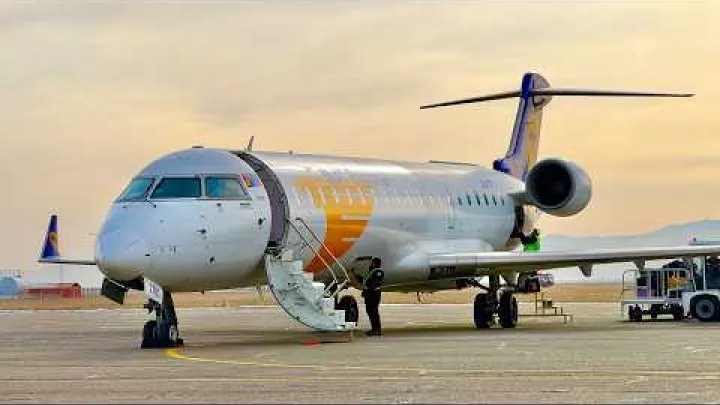
Getting to Hovd in Western Mongolia is mainly a choice between speed, cost and flexibility. Most international journeys use Ulaanbaatar as the first Mongolian gateway, then continue from Chinggis Khaan International Airport or Dragon Bus Terminal. A domestic flight to Khovd Airport is the fastest option, while a long-distance bus usually costs less and a private vehicle offers more freedom at the cost of greater planning. This guide explains the main routes, booking process, journey times, seasonal uncertainty, western connections and practical arrival steps.
The Main Ways to Get to Hovd
Hovd is in western Mongolia, far from the country's main international arrival point. For most visitors, the journey has two parts: reaching Ulaanbaatar and then crossing west by air or road. Travelers already in Western Mongolia may be able to approach Hovd from Ölgii or Ulaangom instead.
Use Ulaanbaatar as the Main Gateway
Most international visitors first reach Ulaanbaatar before traveling to Hovd. The two important Ulaanbaatar gateways are Chinggis Khaan International Airport, usually shown as UBN, and Dragon Bus Terminal, which serves long-distance road routes toward western Mongolia.
From UBN, the onward journey is usually a domestic flight to Hovd. From Dragon Bus Terminal, the alternative is a scheduled long-distance bus or another form of road transport. These options have very different levels of comfort, booking certainty and travel time, so choosing the right one depends on how much time and flexibility you have.
Using Ulaanbaatar as a gateway does not mean that every traveler must stay there for a fixed number of nights. If your international arrival connects well with a domestic flight or bus, you may continue promptly. However, limited provincial departures and possible delays make it sensible to avoid building an itinerary around a connection with no spare time.
This guide focuses on long-distance access to Hovd. It does not provide a detailed transfer guide between UBN and central Ulaanbaatar or between the airport and Dragon Bus Terminal. Check your domestic departure point carefully when arranging the onward leg.
Choose Between Air, Bus, and Road Travel
The table below is a planning comparison rather than a fare or timetable. Flight frequency, bus listings, road conditions and vehicle availability can change. The time shown for a flight refers to the air journey, while road and bus times are much more dependent on stops, weather, traffic, vehicle condition and the exact route.
| Option | Planning time | Cost level | Booking difficulty | Best for |
|---|---|---|---|---|
| Domestic flight | About 2 hours in a recent planning reference | Higher | Moderate; schedule-dependent | Travelers with limited time |
| Scheduled bus | About a full day to more than a day | Lower | Check online or at the terminal | Budget-focused overland travel |
| Self-drive or hired car | About 1,500 km by road; plan multiple days | Higher and variable | Advance arrangement | Multi-city flexibility |
| Shared van | Variable and departure-dependent | Variable | Usually arranged locally | Flexible regional travel |
Choose a flight when reaching Hovd quickly matters more than cost or when you have a fixed onward plan. Choose a scheduled bus when the lower cost and overland experience are more important than comfort and speed. A hired driver or suitable rental car can make sense for a wider Western Mongolia itinerary, but remote-road experience and vehicle support matter. Shared vans can be useful for regional links, although their departure times are usually less predictable.
Flying to Hovd
Flying is normally the simplest long-distance option for a visitor who has limited time. The key points are identifying the correct airports, checking whether the flight is operating on your date and leaving enough time for changes in a limited domestic schedule.
Khovd Airport and the UBN–HVD Route
Khovd Airport is the domestic airport serving Hovd city. It uses the IATA code HVD and the ICAO code ZMKD. The airport is identified as being in Hovd city in the Khovd Airport reference, which can help when checking maps, tickets and travel documents.
The usual air route for an international visitor is from Chinggis Khaan International Airport in Ulaanbaatar, shown as UBN, to HVD. Search using the airport codes as well as the city names. This reduces the risk of confusing Hovd with another western Mongolian destination or selecting an airport in Ulaanbaatar that is not the departure point shown on your ticket.
Confirm whether the current UBN–HVD service is nonstop and which airline operates it. A flight-search page, an old itinerary or a travel agency listing may not reflect the schedule for your exact date. Do not assume that an airline previously associated with the route still operates it, or that a service shown in one season continues throughout the year.
Recent planning references put the flight at approximately two hours, but published journey times can differ. Treat this as an approximate air time, not a guaranteed door-to-door journey. Check-in, security, waiting, baggage collection, airport access and possible operational changes all add to the total travel time.
Check Seasonal Flight Schedules and Book Carefully
Flights to Western Mongolia may be seasonal or limited rather than operating with the same frequency all year. For example, a dated 2026 summer planning reference lists the Ulaanbaatar–Hovd flight at roughly two hours and describes a three-times-weekly pattern that includes Monday, Wednesday and Saturday. The Kazakh Tour page is useful as planning context, but it is not a substitute for the current operator schedule.
Use the dated schedule only to understand how a provincial route may be arranged. Before paying, check the exact travel date through the airline or an authoritative booking channel. Confirm the departure airport, operating days, nonstop or connecting status, baggage rules, passenger name, ticket conditions and any required reporting time.
Reconfirm the current Hovd flight schedule and operating status shortly before departure, especially if you are traveling outside the main summer period. Check again before leaving for the airport rather than relying only on the original booking confirmation. A route can be affected by seasonal planning, aircraft availability or operational changes.
Do not place a tightly timed international connection immediately after the provincial flight. If a flight is delayed, moved or cancelled, the next available service may not be on the same day. Leave a buffer in Ulaanbaatar or arrange an itinerary that can absorb a change without losing an international departure, a prepaid tour or a nonrefundable hotel night.
Taking the Long-Distance Bus to Hovd
The bus is the main budget-oriented alternative to flying from Ulaanbaatar. It is also the option that requires the most patience. A scheduled service is preferable to an unplanned minibus when you need a reserved seat and a clearer departure arrangement.
Book the Ulaanbaatar–Hovd Bus at Dragon Bus Terminal
Dragon Bus Terminal is the main Ulaanbaatar departure point used for westbound long-distance routes, including the route toward Hovd according to the available travel planning information. Before going to the terminal, look for a current Ulaanbaatar–Hovd listing and check whether the service is shown for your date.

The intercity e-ticket system at intercity e-ticket system can be used to search and reserve intercity passenger tickets when the route is available online. The interface may not provide the same level of English guidance as an international booking site, so keep the destination, travel date and passenger details clear while searching.
A simple booking sequence is:
- Search the current date and select Hovd as the destination from Ulaanbaatar.
- Check the route name, departure time, seat information and displayed price.
- Confirm that the departure point is Dragon Bus Terminal and read any reporting instructions.
- Complete the reservation and save the ticket or booking record where it can be opened without an internet connection.
- Before departure, confirm the terminal, boarding area and reporting time through the ticket system or the terminal.
If no online service appears, ask at the Dragon ticket office or information point about the current Hovd route. Historic travel blogs and old departure tables may show services that no longer operate at the same time. Do not treat informal vans waiting near a bus terminal as equivalent to a scheduled bus with a reserved ticket.
Plan for a Very Long Road Journey
Reported planning figures for a bus journey to Hovd range from roughly a full day to more than a day. That wide range is important: the distance is large, and an advertised bus duration is not the same as the continuous driving time shown by a route calculator. Stops, passenger boarding, rest periods, road conditions, weather and mechanical issues can all affect the actual arrival.
Expect a basic long-distance travel experience rather than the facilities of a premium tourist coach. Seating, legroom, heating, toilet access, charging points and the length of rest stops can vary between vehicles and services. Overnight travel may be possible, but the schedule should be treated as a demanding journey that requires preparation.
Pack for limited access to shops and services during the road leg. Useful items include:
- Water and food that can be eaten without preparation.
- Essential medication in your hand luggage, together with any required travel documents.
- A warm layer because temperatures inside or outside the vehicle may vary.
- Charging equipment or a power bank for a phone used for tickets, maps or accommodation contact.
- Basic personal items that you may need during a long stop or overnight section.
Keep your accommodation plan flexible if the bus is arriving after the original estimate. A late arrival can make a planned walk or local transfer impractical, so contact the accommodation in advance when you know the bus is running late. Current bus fares should come from the ticket system or the local ticket office; older indicative prices are not reliable enough for a current budget.
Driving and Using Shared Road Transport
Road travel gives access to places that are not served by a convenient flight, but it also exposes the traveler to the full scale and uncertainty of Western Mongolia. Private transport is most useful when the journey itself is part of the itinerary rather than simply a way to reach Hovd as quickly as possible.
Drive the Ulaanbaatar–Hovd Route
One published route estimate puts the road distance from Ulaanbaatar to Hovd at about 1,500 kilometres and gives a continuous driving calculation of roughly 20 hours. Use those figures only to understand the scale of the journey. A nonstop calculation assumes conditions that are not suitable for a normal visitor itinerary, and it does not include sleep, fuel, meals, navigation decisions or delays.
Plan the drive over multiple days rather than as one continuous run. The exact number of days depends on the vehicle, driver, route, season, road surface and planned stops. A road map may show a route, but it does not guarantee that every section is fast, paved, clearly marked or usable in current conditions. Do not describe the entire route as fully paved or fully unpaved without current information about each section.
Before leaving, consider the practical demands of remote-road travel:
- Road surfaces can change between major settlements, steppe sections and mountain areas.
- Fuel stations and repair services may be widely separated, so fuel planning and vehicle range matter.
- Navigation may require offline maps, more than one route reference and a driver familiar with the area.
- Daylight, water, food, warm clothing and a reliable communication plan are important on a long remote journey.
- The vehicle should be checked for tires, spare equipment, fluids, tools and recovery needs before departure.
Check current road and weather conditions with a local accommodation, tour operator or experienced driver, and allow extra days for disruption. Do not plan a single continuous drive based only on a map estimate. Travelers without remote-road experience should consider an experienced local driver rather than treating a long self-drive journey as an ordinary highway trip.
Consider One-Way Rentals or a Hired Driver
A one-way vehicle can be useful if Hovd is one stop in a wider Western Mongolia route. A reported network arrangement from Altai.Rent describes vehicle pickup in Hovd, Ölgii or Ulaangom with drop-off at MonCar partner stations, including Ulaanbaatar. Treat this as a description of a reported network model, not proof that a suitable vehicle is available for every date or journey.
One-way travel can prevent you from repeating the same long road journey in reverse. For example, a traveler could arrange a vehicle in Hovd, continue to another western city and return it at an approved partner location, if the current agreement permits that route. The arrangement may also work in the opposite direction. Confirm the complete itinerary before making a payment.
Ask the rental company or driver about:
- The vehicle type, ground clearance, luggage capacity and whether four-wheel drive is required.
- Insurance, damage excess, deposit, payment method and the documents needed to drive.
- The one-way fee and the exact approved pickup and drop-off locations.
- Breakdown support, replacement arrangements and who pays for recovery or repairs.
- Permitted roads, border or provincial restrictions and whether remote tracks are allowed.
- Navigation equipment, communication options and fuel expectations.
- Whether the company requires a local driver for the proposed route or season.
Self-drive is not automatically the best flexible option. A vehicle that is suitable for city roads may not be appropriate for a long remote route, and a low rental price may not include the support needed when something goes wrong. If you are inexperienced with remote-road driving, a suitable vehicle with an experienced local driver may offer better practical value than driving alone.
Understand the Limits of Shared Vans
Shared vans and minibuses may fill gaps between provincial centers and can be useful when a scheduled bus or flight does not match your plan. Their departure practices can be informal. In some settings, a vehicle may wait until enough passengers have arrived, which makes the departure time less predictable than a reserved bus or flight.
Use a shared van mainly when you have flexibility and can adapt to waiting or a changed departure time. It is a poor match for a fixed international connection, a same-day tour start or another booking that cannot move. The vehicle, route and passenger arrangements may not be as standardized as those of a ticketed intercity service.
Before committing, establish the destination, fare, departure point, expected waiting time, luggage arrangement and available seat. Ask whether the vehicle is leaving immediately or waiting for more passengers. If the answer is unclear, take time to compare the option with a scheduled bus or ask your accommodation for a more reliable local arrangement. Do not assume that a shared van has a standard fare, fixed daily frequency or the same safety and comfort conditions as every other vehicle.
Connecting Through Western Mongolia
Hovd can be part of a wider Western Mongolia route rather than only an endpoint reached from Ulaanbaatar. The most useful regional planning principle is to treat road connections as locally arranged services whose availability must be checked close to the travel date.
Travel Between Hovd, Ölgii, and Ulaangom
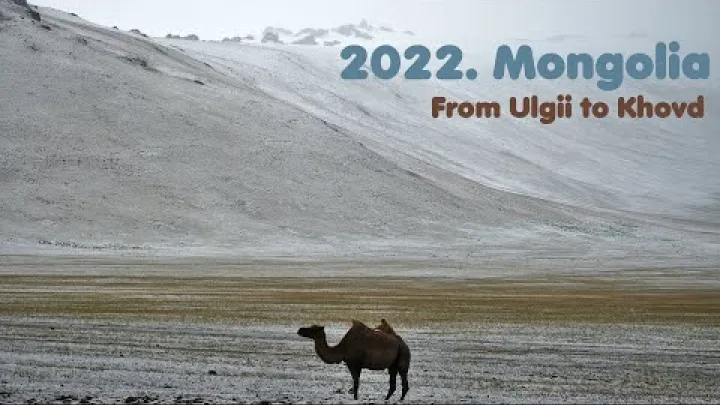
Hovd has road connections with other western provincial centers, including Ölgii and Ulaangom. Depending on the current local transport situation, travelers may use a scheduled bus, a shared van or a private vehicle. These links can make it possible to travel across Western Mongolia without returning to Ulaanbaatar.
Map distances and published journey estimates are useful for understanding scale, but they are not guarantees of a same-day trip or a daily departure. Actual travel depends on the road, weather, vehicle, driver, passenger demand and the service operating at that time. A nominal distance between Hovd and Ölgii or Ulaangom should therefore be treated as an indicative planning figure.
Ask locally about the departure point, current frequency, seat availability and expected arrival. Your accommodation may know which ticket office, station or driver is currently handling the route, but confirm the destination and price before boarding. If the service is not listed online, allow time to make the inquiry in person rather than assuming that a route shown in an old travel account still operates in the same way.
Build a Western Mongolia Route Around the Transport Schedule
Several route patterns are possible. They are examples for planning, not fixed itineraries:
- Fly from Ulaanbaatar to Hovd: This is the most time-efficient pattern when the current UBN–HVD service matches your dates. You can then continue overland from Hovd to another western center if a suitable local departure is available.
- Approach through another western gateway: Reach Ölgii or Ulaangom using the current transport available for your itinerary, then travel by road to Hovd. This can suit travelers who want to visit more than one western province or who are already in the region.
- Travel overland from Ulaanbaatar: Take the full road journey by scheduled bus, hired driver or suitable rental vehicle. This can be the lower-cost or more flexible choice, but it requires considerably more time and preparation.
The best order depends on the flight days, bus availability, luggage, season and transport type. Public transport may require waiting for a listed departure, while a hired driver or rental vehicle can support a more controlled route. Limited western departures also mean that a missed connection may be difficult to replace, so leave spare time between Hovd, Ölgii and Ulaangom rather than planning each transfer with only a few hours to spare.
Why Rail and Ferries Are Not Practical
Rail and water transport are not realistic direct alternatives for reaching Hovd. The practical choices for a long-distance journey are air and road transport.
Understand the Rail and Water Transport Limitations
For current travel planning, there is no direct railway connection to Hovd shown by the available transport information. Mongolia's main rail corridor is elsewhere, so a train journey would still require a separate transfer to road or air transport before reaching Hovd. That combination is usually more complicated than starting with a domestic flight or a direct long-distance road option from Ulaanbaatar.
Hovd is not served by a scheduled ferry or maritime passenger route. Local rivers and lakes should not be treated as long-distance access options. Water may be relevant to a local activity in a particular area, but it does not replace the road or air journey to Hovd city.
Arriving in Hovd
Once you reach Hovd, the last part of the journey is generally shorter and simpler than the trip across Mongolia. The main task is confirming exactly where you will be dropped off and arranging a clear transfer if you arrive late or have heavy luggage.
Reach Hovd City Center from the Airport or Bus Arrival Point
Khovd Airport is in or close to Hovd city, so the airport-to-center journey is relatively simple in geographic terms. A local taxi or a vehicle arranged through your accommodation is usually the practical choice. Do not rely on a fixed fare or transfer time unless it has been confirmed locally for your arrival.
A pre-arranged accommodation vehicle can make the arrival easier to coordinate, particularly when the flight arrives late, you have large luggage or you do not speak Mongolian. A taxi may be more direct when one is clearly available, but agree the destination and fare before leaving. The quickest option depends on which vehicle is available and how clearly the destination can be communicated.
Bus passengers should check the actual Hovd drop-off point on the ticket or with the local station. Do not assume that a long-distance bus stops at Khovd Airport or at the same place used by another service. Send the accommodation the expected arrival point and ask whether it can provide directions or arrange a pickup.
Keep the accommodation name, address, phone number and map location accessible offline. If you expect to arrive after dark, arrange the pickup before departure rather than depending on an unknown transfer at the end of a very long journey.
Avoid Arrival Confusion and Transport Pressure
Travelers can encounter unclear fares, uncertain drop-off locations or unsolicited drivers at an unfamiliar arrival point. These situations do not mean that every local driver is unsafe, but they are a reason to slow down and confirm the arrangement before accepting a ride.
Use a clearly identified taxi or a driver arranged by your accommodation when possible. Before the vehicle moves, confirm that it is going to your accommodation or intended destination and agree the fare in advance when the taxi is unmetered. Keep your flight confirmation, bus ticket and accommodation details available so that you can compare what the driver says with your own booking.
Do not allow a late arrival, language difficulty or pressure from an unsolicited transport provider to force an unverified choice. If the destination or price is unclear, contact the accommodation, ask for the arrangement to be written down or wait until you can identify a suitable driver. A short pause to confirm the plan is better than discovering the mistake after leaving the airport or bus arrival point.
Compare Options and Finalize Your Plan
After comparing the routes, match the transport mode to the way you want to travel rather than choosing only by the advertised journey time.
Match the Transport Mode to Your Priorities
- Choose a domestic flight if you have limited time, a fixed activity in Hovd or a long international journey that makes a multi-day bus impractical. Confirm that the current UBN–HVD service operates on your date and leave a buffer for changes.
- Choose a scheduled bus if lower cost and an overland experience are more important than speed. Reserve through the current intercity ticket listing or check at Dragon Bus Terminal, and prepare for a long journey with variable arrival time.
- Choose a hired driver or suitable rental car if you are building a multi-city Western Mongolia itinerary and need control over stops and route order. Confirm the vehicle, insurance, one-way terms, support and driver requirements before payment.
- Choose a shared van when you are already in the region and can adapt to waiting, local departure practices and changing availability. It can fill a regional gap, but it is not a dependable choice for a tightly timed connection.
At the final booking stage, compare the exact date, destination, departure point, luggage arrangement and arrival plan. Make sure the person or company selling the transport can explain what happens if the departure changes. For a regional road leg, keep enough time to replace a missed service, especially when there may be only limited departures.
Final Planning Advice
The most straightforward way to get to Hovd is usually to fly from Ulaanbaatar to HVD when the current schedule fits your dates. The long-distance bus is the main lower-cost alternative, but it requires preparation for a very long road journey. A hired driver, one-way rental or shared van can support a broader Western Mongolia route when you have the experience and flexibility to manage changing road transport.
Before departure, save your flight or bus booking, confirm the current operating information, identify the exact Ulaanbaatar departure point and arrange your Hovd arrival transfer. Keep extra time in the itinerary for limited regional services, road conditions and seasonal changes. With those checks in place, Hovd getting there becomes a manageable part of a wider Mongolia journey rather than an uncertain last-minute transfer.
Select area
Create a post
Posting is free and no registration is required.