Mongolia National Anthem: Name, History, Meaning & Use
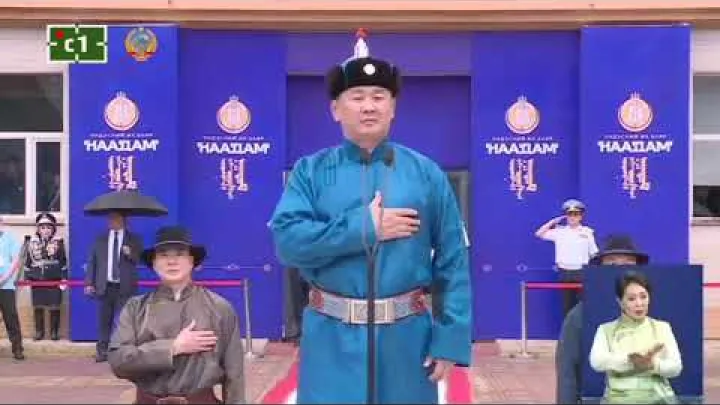
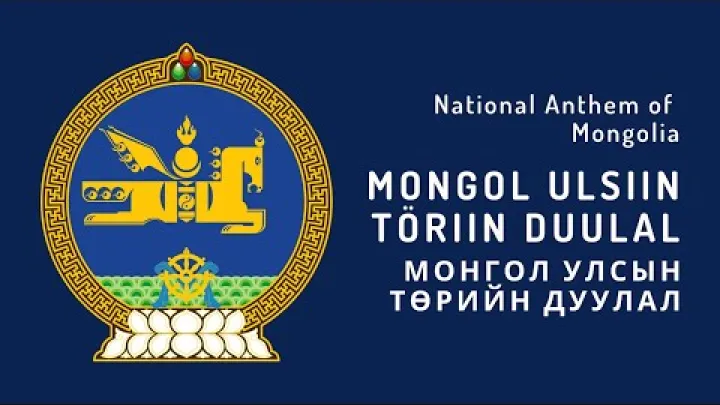
To answer the name question directly, Mongolia's national anthem is officially called Монгол Улсын Төрийн дуулал. It is commonly transliterated as Mongol Ulsyn Töriin Duulal and rendered in English as National Anthem of Mongolia. The anthem was created and adopted in 1950, but its lyrics were revised during later political periods. This guide explains its official title, authors, history, meaning, ceremonial use, and the safest way to approach English translations, lyrics, and recordings.
What Is Mongolia's National Anthem Called?
Mongolia's current anthem has a formal title, a common English rendering, and several spelling variations in Latin script. Knowing the distinction helps travelers, students, researchers, and anyone searching for an audio or lyric reference find the current state anthem rather than a historical patriotic song.
Official Mongolian and English Titles
The official Mongolian title is Монгол Улсын Төрийн дуулал. A common Latin transliteration is Mongol Ulsyn Töriin Duulal. In English, it is usually called National Anthem of Mongolia. A more literal translation could be expressed as Mongolia's state anthem or the state hymn of Mongolia, but these are translation choices rather than separate official names.
The title combines the name of the country with the Mongolian words for state and anthem or hymn. The English word national is therefore a natural way to describe its public role, even though the Mongolian title emphasizes the state. English-language references may use slightly different transliterations, such as variations in vowel marks or the spelling of ulsyn. These differences usually refer to the same anthem.
Searches such as national anthem of Mongolia, Mongolia anthem name, and what is the national anthem of Mongolia normally point to this song. The phrase Mongolia national song may also be used informally, but it can be broader than the legal title because it may include patriotic or traditional songs. The formal Mongolian title is the most reliable way to identify the current anthem. The title and official record can be checked through LegalInfo.mn.
Legal Status as a State Symbol
The anthem is a formal symbol of Mongolia's statehood and national identity. Mongolia's state-symbol framework addresses the state anthem together with the rules for recognizing and using important national symbols. This legal status separates the anthem from music that may be popular, patriotic, historically important, or often heard at public celebrations.
That distinction is useful because Mongolia has a long musical and political history. A traditional long song, a royal-era ceremonial piece, a revolutionary hymn, and the current national anthem can all be connected with ideas of national identity, but they do not have the same official status. When a ceremony requires the state anthem, the formal title identifies the legally recognized work.
Legal recognition also does not mean that every performance must use the same arrangement or that every public event follows an identical program. Vocal, orchestral, and band versions may sound different while representing the same anthem. The exact order of music at an official event depends on the relevant protocol and the organizers.
Who Wrote and Composed the Anthem?
The anthem is a collaborative work. Its authorship is usually described by naming one lyricist and two composers, while later revisions involved changes to the words rather than a new group of original creators.
The Lyricist and Composers
Tsendiin Damdinsüren wrote the lyrics. The music was composed by Bilegiin Damdinsüren and Luvsanjambyn Mördorj. The repeated surname of the lyricist and one composer can be confusing in English, so it is useful to preserve their full names when identifying the creators. Mongolia's state-symbol record is the preferred legal reference for the credited work; a related legal framework is available through LegalInfo.mn.
The anthem was created and adopted in 1950. These two ideas are related but not identical: a composition can be written before a government formally approves it for state use. For a simple historical answer, 1950 is the adoption year normally given for Mongolia's current anthem. Later lyric revisions should not be mistaken for a new composition or for a change in the original composers.
The Anthem's Ceremonial Musical Character
Mongolia's anthem is designed for formal public performance. Its function is not only to present a melody but also to mark the presence of the Mongolian state in a shared ceremony. A sung performance can involve a group or audience, while an instrumental performance can allow the anthem to be presented when singing is not part of the program.
The same underlying anthem may be arranged for orchestra, concert band, smaller ensemble, piano, or other instruments. An arrangement can change the sound, length, or balance of the performance without creating a different national anthem. For that reason, an instrumental recording should be identified as an arrangement or recording of the anthem rather than as a separate official song.
It is safer to avoid claims about one universally official tempo, key, recording, or emotional effect unless a specific score or official performance record establishes those details. For most readers, the important point is that the anthem has a formal, ceremonial character and can be heard in both vocal and instrumental forms.
How Has Mongolia's Anthem Changed Through History?
The current anthem belongs to a longer sequence of Mongolian royal, traditional, revolutionary, and state music. Historical names are sometimes used loosely, so the chronology should distinguish cultural associations from formal legal adoption.
Earlier Hymns and the Bogd Khanate Period
Before the modern state anthem was adopted, Mongolian rulers and governments used ceremonial music connected with court life, religious authority, political legitimacy, and patriotic expression. These earlier practices do not fit perfectly into the modern category of a national anthem. The meaning of an official anthem depends on the institution that adopted it and the legal or ceremonial system in which it was used.
The title Zuun Langiin Joroo Luus is associated in some historical accounts with the Bogd Khanate period. Descriptions of its exact dates, function, and formal status are not uniform, so it is best presented as a historical state or court-related tradition unless a specific historical record establishes a more precise designation. It should not be presented as the current national anthem.
Ertnii Saikhan is also encountered in discussions of older Mongolian traditional or patriotic repertoire. Its cultural importance should not automatically be turned into a claim that it was a continuously codified national anthem of the Mongol Empire or a modern legal predecessor. Historical songs can remain important in performance and memory without having the same constitutional status as Монгол Улсын Төрийн дуулал.
This distinction prevents a common misunderstanding. A song may represent Mongolian heritage, appear in a ceremony, or be described as an old anthem in a cultural source, while the current official state anthem is a separate work with a documented twentieth-century adoption history.
The Mongol Internationale and the 1950 Replacement
During the period of the Mongolian People's Republic, Mongol Internationale is commonly identified as a predecessor to the anthem adopted in 1950. It belonged to the revolutionary and socialist state context that shaped Mongolia's official public culture before the current anthem was selected.
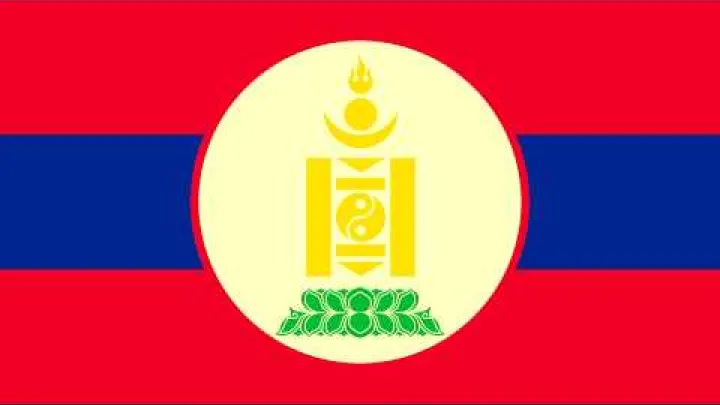
The name Mongol Internationale should not automatically be treated as proof that the song was a direct translation of the better-known international workers' song. A similar political association or title does not establish an identical melody, a complete translation, or the exact relationship between two compositions. The safest description is that it was a Mongolian revolutionary-era predecessor.
The 1950 replacement established the anthem associated with the modern state-symbol record. It also brought together the credited lyricist and composers identified above. In broad terms, the change shows that official music changed as Mongolia's political institutions and public representation changed, but the available evidence does not require one single explanation for the government's decision.
A simple chronology is therefore more useful than treating every historical song as interchangeable: earlier royal or traditional material provided cultural context, the Mongol Internationale represented a revolutionary state period, and the 1950 anthem became the foundation of the current state anthem tradition.
The 1961, 1991, and 2006 Revisions
Reference histories commonly describe lyric revisions in 1961, 1991, and 2006. These dates refer to changes in the words associated with the anthem. They should be kept separate from the 1950 creation and adoption date. The historical record supports a lyric timeline more clearly than a claim that the core melody was replaced each time.

The 1961 change occurred within the socialist period. The 1991 revision came during the transition away from that political system. Mongolia's democratic Constitution took effect in 1992, but the constitutional transition and the 1991 lyric revision are distinct developments. A search result describing the Mongolia national anthem 1992 does not, by itself, prove that a completely new anthem was adopted in 1992.
The 2006 revision is commonly identified in secondary references as the version used today. It is often discussed in connection with a stronger emphasis on national history and heritage, but that is an interpretation of the wording and its political context. The exact current text should be taken from the latest official Mongolian legal record, not from an old lyric page or a translation that may preserve an earlier version.
These revisions explain why English lyric pages may disagree. A page can reproduce the 1950, 1961, 1991, or 2006 wording while using the same English title. Readers comparing versions should check the date, the Mongolian original, and the legal status of the text instead of assuming that every online version is current.
What Does Mongolia's National Anthem Mean?
The anthem's meaning is best understood as a civic expression of Mongolia's independence, homeland, people, heritage, and hopes for the future. An English translation can communicate these themes, but no short translation captures every poetic and cultural nuance of the Mongolian original.
Independence, Homeland, and Ancestral Memory
The current text presents Mongolia as a free and independent homeland. It treats national sovereignty as something worthy of honor and continued protection. This helps explain why the anthem is used in state ceremonies: it speaks about the country as a political community, not only as a geographical place.
References to earlier achievements and ancestors connect the present state with Mongolian historical memory. The message is not that the modern government is identical to every earlier Mongolian polity. Instead, the anthem presents national history as a source of continuity and dignity. Discussions of the 2006 wording often emphasize this heritage connection, although readers should distinguish an interpretive summary from a literal translation.
In plain English, the historical meaning can be summarized as a wish that an independent Mongolia remember its past while continuing to exist and prosper. That summary conveys the central idea without reproducing a long passage from the lyrics.
Unity, Freedom, and National Development
The anthem also expresses unity and collective purpose. Its language refers to the Mongolian people as a shared national community and presents freedom, happiness, prosperity, and the country's future as common hopes. These ideas make the anthem suitable for a public ceremony in which individuals are asked to recognize a shared state identity.
The civic message should not be treated as a definitive statement of every Mongolian citizen's political views. National anthems use formal and idealized language. They express values that a state chooses to present publicly, while people may interpret those values in different ways.
The movement from socialist-era wording toward later national and civic framing is an important part of the anthem's history. It should be described as a change in official language across political periods, not as proof that every listener understands the anthem in one identical way.
Language, Culture, and Continuity
The Mongolian original carries meanings that can shift in English. Words related to the state, the people, the homeland, prosperity, and historical continuity may be translated in more than one reasonable way. This is why a literal translation, a poetic translation, and a thematic paraphrase can sound different while referring to the same current anthem.
The original title is especially useful for international readers because it shows the difference between the formal phrase Mongolia's state anthem and the common English phrase National Anthem of Mongolia. The text's references to national history and collective identity also show how a modern state can present continuity with older Mongolian heritage without turning every traditional symbol into part of the lyrics.
Readers should not assume that a symbol or historical name mentioned in a video description or unofficial translation appears in the official text. For example, references to symbols such as the Soyombo should be checked against the Mongolian lyrics before being described as lyric content. A careful explanation identifies what the anthem says and then separately explains its wider cultural associations.
When Is the National Anthem Performed?
The anthem is used when Mongolia's state identity needs to be represented in a formal setting. The legal framework provides the foundation, while event organizers and protocol determine the exact program for each occasion.
State Ceremonies and Official Occasions
Readers may encounter the anthem at official state ceremonies and at formal events connected with Mongolia's Parliament, presidency, or diplomatic activity. It can also form part of a diplomatic welcoming ceremony when national symbols are presented. In each case, the anthem represents Mongolia's sovereign presence and is more than background entertainment.
These examples should not be understood as a rule that the anthem is performed at every parliamentary meeting, presidential appearance, or diplomatic event. Some ceremonies may use only selected symbols, while others may include the anthems of two countries or follow a special order. The host institution's published program or on-site instructions are the best guide for a specific occasion.
For visitors, the practical approach is simple: observe the ceremony's instructions and treat the performance as a formal national-symbol moment. Do not assume that a recording heard at one event is the required version or that the same sequence applies to every official gathering.
Naadam, Sport, and International Representation
Naadam provides a useful local setting for understanding the anthem's public role. The festival is associated with Mongolia's traditional three games and includes a major opening ceremony in Ulaanbaatar, including events held at the National Sports Stadium. The anthem is associated with the formal opening of major state-linked celebrations, but the exact program can differ by year and event. A general overview of the festival and its stadium-based opening ceremonies is available from Naadam.
Sport also provides an international context. When Mongolian athletes or teams are formally represented, the national anthem may be included with other national symbols. It is not safe to claim that it is played at every competition, every medal ceremony, or every local sporting event. The host organization, competition rules, and ceremony program control those details.
In both Naadam and international sport, the anthem links cultural celebration with public representation. A sung version may suit a large gathering, while an instrumental or band arrangement may be more practical in a stadium. The arrangement can vary, but its symbolic function remains connected to Mongolia as a country.
How Should Readers Approach the Lyrics and Recordings?
People searching for Mongolia national anthem lyrics, Mongolia national anthem in English, or Mongolia national anthem words often want a quick translation. The most reliable approach is to identify the official Mongolian title first, confirm the version date, and then use an English translation or paraphrase that is clearly labeled.
Original Text, English Translation, and Lyrics Searches
The current Mongolian wording should be treated as the reference point. The official legal record is more useful than an undated lyric page because online copies can preserve earlier revisions or contain transcription errors. Readers looking for the original text can begin with the Mongolian title, Монгол Улсын Төрийн дуулал, in the LegalInfo.mn record.
A concise English paraphrase is that the anthem celebrates an independent Mongolia, honors the homeland and the achievements of ancestors, calls for unity and freedom, and expresses hopes for the happiness and prosperity of the nation and its people. This is a thematic explanation, not a line-by-line official translation.
English versions can differ because translators make different choices about poetic rhythm, national terms, and words such as state, country, people, prosperity, and blessing. Unless an institution identifies a translation as official, it should be labeled unofficial, translated, or paraphrased. This distinction is important for students, publishers, performers, and anyone preparing a formal program.
There is also a rights question. A state anthem's official status does not automatically settle the copyright status of every lyric reproduction, translation, score, or recording in every country. Use a paraphrase or a brief excerpt when that meets the purpose, and check applicable copyright rules and permissions before reproducing the complete lyrics or publishing an audio recording.
Instrumental Versions and Respectful Use
An instrumental version is still a performance or arrangement of the same national anthem. It may be used when a ceremony needs a band or orchestral presentation, when an audience is not singing, or when a recording is prepared for educational reference. The presence or absence of vocals does not change the anthem's official identity.
However, the underlying anthem and a particular recording are separate matters. A recording may belong to an orchestra, broadcaster, producer, or performer, and a score or arrangement may have its own permissions. Before embedding music on a website, sharing it publicly, or using it commercially, check the source, license, and applicable local rules.
Respectful use is also appropriate because the anthem is a state symbol. Follow the protocol of the event, avoid presenting an unofficial arrangement as the only official version, and do not assume that public availability gives permission for every reuse. Specific penalties or restrictions should not be inferred without checking the relevant Mongolian rules.
Conclusion
Mongolia's national anthem is officially Монгол Улсын Төрийн дуулал, commonly rendered in English as National Anthem of Mongolia. Written by Tsendiin Damdinsüren and composed by Bilegiin Damdinsüren and Luvsanjambyn Mördorj, it was adopted in 1950 and later received lyric revisions, including changes in 1961, 1991, and 2006. Its themes center on independence, homeland, unity, heritage, and national prosperity. For accurate lyrics, translation, or audio use, start with the current Mongolian legal text and distinguish the anthem itself from a particular translation, arrangement, or recording.
Select area
Create a post
Posting is free and no registration is required.