Mongolia Flag: Design, Colors, Meaning, and History
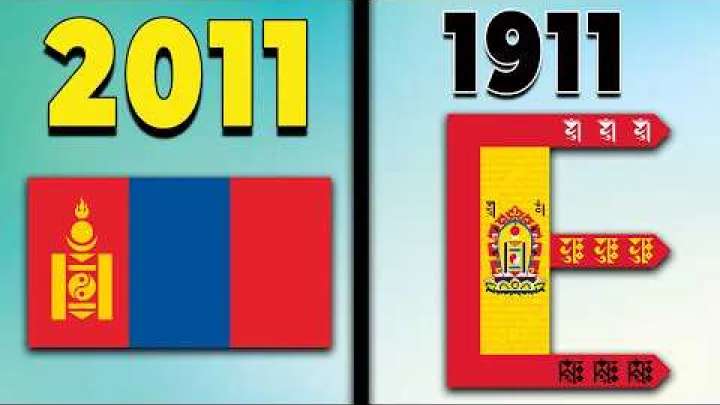
The Mongolia flag is easy to identify once its layout is clear: three equal vertical bands, red-blue-red, with a gold Soyombo on the red band beside the flagpole. The center blue band refers officially to the eternal blue sky, while the red bands represent progress and prosperity. This guide explains what each visible part means, how the flag changed from early independence through socialism to democracy, and how to distinguish Mongolia's national flag from related Mongol symbols. It also gives the practical details, including the 1:2 ratio, hoist-side emblem, and starless modern design, that help when viewing the flag in a photograph or public setting.
Mongolia Flag Design at a Glance
The fastest way to recognize the Mongolia flag is to check the direction of its bands and the position of its emblem. The design is simple at a distance, but the Soyombo's placement is important when distinguishing it from other red, blue, and yellow flags.
The Vertical Red-Blue-Red Layout
Viewed with the flagpole on the left, the flag reads red, blue, red from left to right. These are three equal vertical bands, not horizontal stripes. The blue band is in the center; one red band is at the hoist and the other is at the fly. The hoist is the edge attached to the pole, while the fly is the free outer edge.
The constitutional description specifies that the flag has a 1:2 width-to-length ratio. In practical terms, a flag that is one unit high should be two units long from the pole edge to the outer edge. The same description places the central blue section at one-third of the flag's length and places the Soyombo on the hoist-side red section. The Constitute Project reproduces this constitutional description.
This gives a useful image-independent identification rule. If the stripes run from top to bottom, the middle stripe is blue, and the two outer stripes are red, the basic layout matches the Mongolia national flag. The emblem should not be centered on the entire flag. It sits toward the flagpole, on the red band nearest the hoist.
The Golden Soyombo on the Hoist Side
The most distinctive feature of the flag is the golden or yellow Soyombo. It is positioned vertically on the hoist-side red band, leaving the blue center open. When the flag is shown with the pole on the left, the Soyombo therefore appears on the left red stripe. If the image is reversed, the emblem may appear on the right, but its relationship to the hoist remains the same.
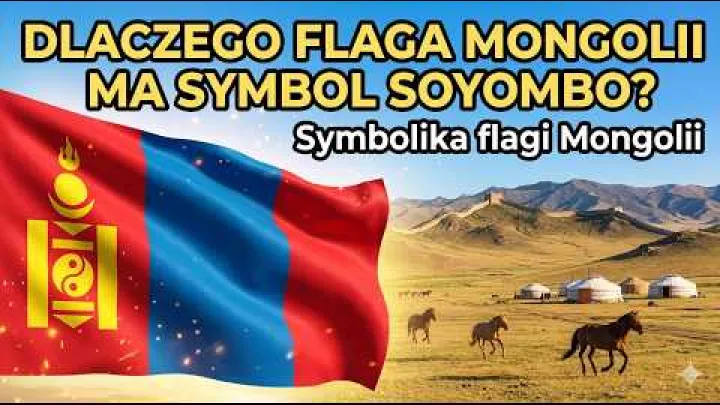
The Soyombo is a compact arrangement of recognizable forms. At the top is a flame with three tongues. Below it are a sun and crescent moon, followed by triangles, horizontal rectangular shapes, a central round or fish-like motif, and vertical rectangular forms at the sides. The emblem is intentionally geometric, so small versions on flags may appear dense or difficult to read.
The modern flag has no five-pointed communist star above the Soyombo. A star is a key sign that an image may show an earlier Mongolian state flag rather than the current national design. The yellow or gold emblem is visually important, but its color should not automatically be assigned a separate official meaning beyond the meanings stated for the flag's red and blue fields.
Mongolia Flag Colors and Official Meaning
The current Mongolia flag uses red, blue, and yellow or gold. The clearest distinction is between the official constitutional meaning of the red and blue fields and broader cultural interpretations of the emblem's color.
Blue and the Eternal Blue Sky
Mongolia's Constitution identifies the central blue band with the eternal blue sky. This is the official explanation for the blue color on the national flag. The blue field is therefore more than a background for the Soyombo: it is the central color of the design and a direct statement about an enduring national image.
The sky reference fits the importance of the open sky in Mongolia's landscape and cultural imagination, but it is best to keep the wording precise. The constitutional phrase is eternal blue sky. Wider explanations may connect the sky with spirituality, nature, history, or traditional beliefs, yet those broader discussions should not be presented as if they were all legal definitions of the flag's color.
The central position also strengthens the visual message. Blue separates the two red bands and gives the flag a balanced appearance when it is flying or displayed indoors. When identifying a flag at a distance, the blue center is usually the first feature to check after confirming that the stripes are vertical.
Red, Progress, and Prosperity
The Constitution defines the two red bands as symbols of progress and prosperity. Because the red appears on both sides, it frames the blue center and gives the flag a strong outer border. This is the official meaning of red in the current national flag.
Red also has an important historical association with Mongolia's socialist period. Earlier state symbolism used red in a political setting, and the former flag included a communist star. That history can affect how people interpret the color, especially in older photographs, but the historical association should be kept separate from the current constitutional meaning. Red on today's flag officially refers to progress and prosperity, not automatically to socialism, revolution, blood, courage, or another popular interpretation.
The Meaning of Gold and Yellow
Yellow or gold is used for the Soyombo, making the emblem stand out against the hoist-side red field. Sources may call this color yellow, golden yellow, or gold because printed cloth, digital images, and descriptions do not always use the same term. For ordinary identification, these labels refer to the same visible emblem color.
An association between yellow or gold and Mongolia's Buddhist heritage is a common historical or cultural interpretation. It can help explain why the emblem is often shown in a warm yellow tone, but it should not be treated as an official definition of a separate flag color unless an authoritative Mongolian specification says so.
Appearance can also vary with fabric, lighting, age, and reproduction quality. A photograph with a pale emblem or a deeper gold tone can still show the correct flag. Exact RGB, CMYK, HEX, or Pantone values are not necessary for identifying the flag and should not be assumed from an unverified color chart.
What the Soyombo Symbol Means
The Soyombo is not merely a decoration added to the flag. It is one of Mongolia's major national symbols and also appears in historical, religious, civic, and cultural contexts outside the flag. Its overall presence is easier to explain with confidence than the precise meaning assigned to every small geometric part.
Fire, Sun, and Moon
The Soyombo is traditionally associated with Zanabazar and with a wider Mongolian historical and religious tradition. Its upper section begins with a flame. The three tongues of the flame are commonly interpreted as continuity across past, present, and future, or as growth, wealth, and prosperity that continue through time. These interpretations explain why the flame is often read as a positive sign of endurance and renewal.
Below the flame are the sun and crescent moon. They are commonly connected with light, life, eternity, and Mongolia's existence beneath the eternal blue sky. Their placement beneath the flame gives the upper part of the emblem a celestial character, while the flame above them suggests energy and continuing growth.
Detailed explanations vary between popular descriptions, historical accounts, and symbolic studies. A useful overview of these traditional readings is provided by the Soyombo symbol reference. It is helpful to treat these readings as interpretations of a complex historical symbol rather than as a single complete legal definition.
Triangles, Rectangles, and the Central Motif
The lower parts of the Soyombo contain several geometric forms that are usually explained together. The downward-pointing triangles are traditionally read as defensive or martial signs. They may suggest vigilance, strength, or the defeat of threats. Their pointed shape gives the emblem a guarded and protective appearance.
The horizontal rectangles are commonly associated with honesty, justice, openness, and moral order. They form stable bars around the central design and are often explained as reminders that authority should be balanced by fair conduct. These meanings are widely repeated, but the exact wording can differ between sources.
At the center is a circular motif that some descriptions identify with yin-yang, while others describe paired fish-like forms. Both readings emphasize balance and watchfulness. The paired shapes are also commonly linked with the idea that two eyes remain alert in every direction. Rather than choosing one reading as universally official, it is more accurate to explain that the central motif has overlapping traditional interpretations.
The vertical rectangles at the sides are often described as fortress walls. In that reading, they represent strength, unity, stability, or the protection of the community. Taken together, the lower geometric elements give the Soyombo a civic and defensive character, complementing the celestial forms above it.
Official Meaning Versus Common Interpretations
There are two different levels of meaning to keep separate. Officially, Mongolia's constitutional framework describes the flag's red-blue-red layout, its equal vertical bands, its proportions, and the meanings of blue and red. The Soyombo's broader role as a Mongolian national symbol supports ideas of national identity, independence, and sovereignty.
By contrast, the detailed meanings assigned to the flame, sun, moon, triangles, rectangles, and central motif mainly come from traditional, scholarly, religious, or popular interpretations. They are valuable for understanding how Mongolians and researchers discuss the symbol, but they should be introduced with phrases such as commonly interpreted, traditionally explained, or often associated with.
This distinction matters because simplified internet explanations can combine many readings into one statement of supposed legal fact. The central motif is a good example: yin-yang and paired-fish descriptions may both be encountered. A careful explanation acknowledges the alternatives while retaining the clear visual fact that the motif is part of the Soyombo.
History of the Flag of Mongolia
The flag of Mongolia changed as the country's political system changed. The Soyombo provided an important thread of recognition, but the field colors, additional symbols, and political messages were not identical in every period.
From the Bogd Khanate to Socialist Rule
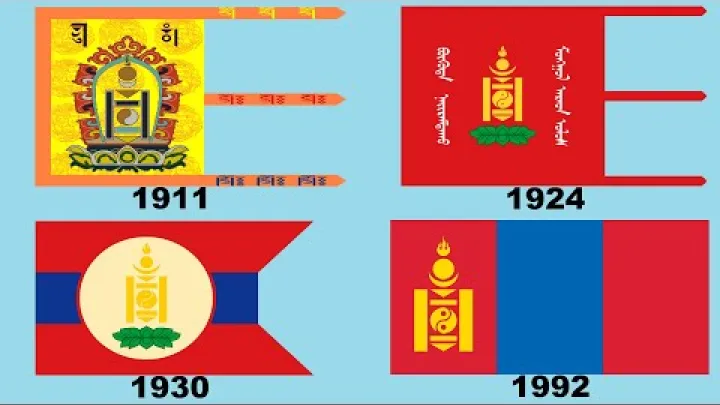
A flag associated with Mongolia's 1911 independence period and the Bogd Khanate used a yellow field with a blue Soyombo and a lotus. Its appearance reflected the Buddhist and state-building context of the early independent period. This was not the same design as the modern red-blue-red flag, even though the Soyombo created a visible connection with later national symbolism.
- Early independence period: A yellow field, blue Soyombo, and lotus are associated with the flag used around the Bogd Khanate.
- Political transitions: As Mongolia moved through different state arrangements, colors and additional symbols changed while the Soyombo remained an important reference point.
- Later socialist period: The flag developed into the recognizable red-blue-red arrangement, with an additional communist star in the later version.
This short timeline is more useful than treating all early flags as one continuous design. Historical flags can differ in their emblem, field color, arrangement, and dates of use. For a concise account of the major design changes, see Britannica.
The 1945 Flag and the Communist Star
The Mongolian People's Republic used a red-blue-red arrangement during the later socialist period. The Soyombo appeared on the hoist-side red band, and a five-pointed communist star was placed above it. This gave the flag a layout that can look almost identical to the current flag in a small or low-resolution image.
The star is therefore the most useful visual distinction between the historical 1945-1992 version and the current flag. A historical photograph or illustration showing a star is not necessarily mislabeled. It may be showing the former state flag used before the democratic transition. The dated historical design is documented in the Wikimedia Commons historical flag reference.
When using an image for a classroom project, museum caption, or historical article, check the date and political period. The presence of the Soyombo alone does not prove that the image shows the current national flag; the star and the date are decisive clues.
The Democratic Flag Since 1992
The current starless flag was adopted in early 1992 during Mongolia's democratic transition. It retained the red-blue-red vertical layout and the Soyombo but removed the communist star. The visible change preserved a familiar national emblem while eliminating an unmistakable socialist-era element.
The removal of the star can be understood as a political and historical change in the appearance of the flag, but that interpretation should not be confused with a separate constitutional statement about every reason for the change. The design fact is clear: the modern Mongolia flag has the Soyombo without the five-pointed star.
Early 1992 is the safest concise date when an exact adoption day has not been confirmed. If an exact legal date is important for a ceremony, publication, or historical study, consult the current Mongolian legal text rather than relying on an undated image caption or a secondary summary. The same care applies to technical production details, which should come from a current official specification if they are needed.
The Mongolia Flag in National Identity and Public Life
The Mongolia flag functions as a state symbol as well as a visual sign of Mongolian culture. Its meaning becomes especially clear when it is viewed in public institutions, official settings, and national ceremonies.
A Symbol of Sovereignty and Independence
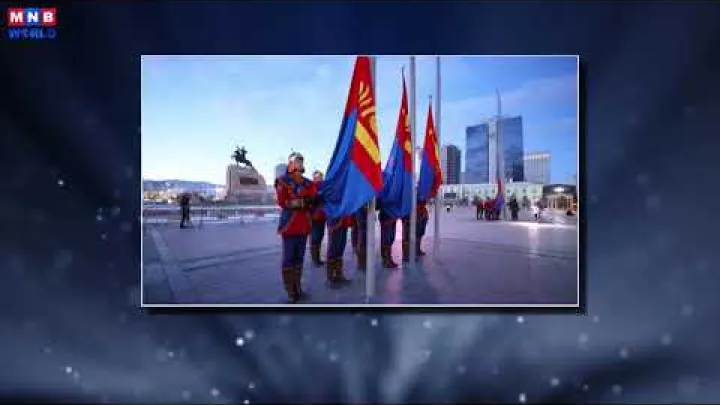
Mongolia's constitutional framework places the State Flag within the country's system of state symbols. In that setting, the flag represents the independent state and its sovereignty. It is not only a decorative image associated with the steppe or nomadic culture; it is an official sign of national authority and civic belonging.
This role explains why the flag appears at government buildings, public events, international meetings, and other institutional settings. In Ulaanbaatar, the Government Palace, where the State Great Khural is located, is a useful local reference for understanding this civic role. A flag displayed in such a setting should be read as part of public state identity, even when the surrounding event is not specifically about the flag.
For visitors, students, and international professionals, recognizing the flag can make public spaces easier to understand. It can identify Mongolia's institutions, delegations, and national representation without requiring knowledge of every government emblem or ceremonial detail.
How the Soyombo Appears Beyond the Flag
The Soyombo functions as a broader Mongolian national symbol and can appear in state emblems, official contexts, public representations, and cultural designs beyond the national flag. It may be seen by itself or combined with other Mongolian imagery. This wider use is one reason the symbol remains recognizable even when the red-blue-red flag is not present.
Recognizing the Soyombo helps explain Mongolian identity in settings such as official signage, civic imagery, historical displays, and cultural representations. At the same time, a product, emblem, monument, or logo that uses the Soyombo is not automatically the national flag of Mongolia.
The full flag is identified by the combination of features: equal vertical red-blue-red bands, the gold Soyombo on the hoist-side red band, and the modern starless design. The Soyombo alone identifies a strong Mongolian symbolic connection, but not necessarily a national flag or a particular government institution.
Mongolia Flag and Related Mongol Symbols
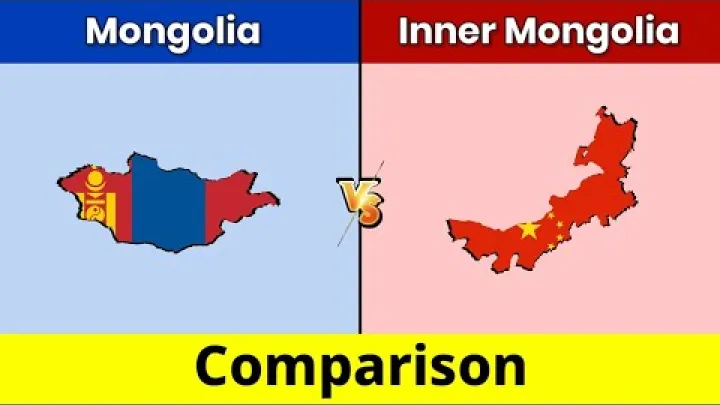
Images connected with Mongolia, Inner Mongolia, Buryatia, and Kalmykia can share historical or cultural motifs. The safest way to identify the sovereign national flag is to compare the entire layout and jurisdiction, not just one familiar emblem.
How to Distinguish Mongolia from Inner Mongolia and Related Designs
Use this practical rule when checking an image:
- Band direction: Mongolia's current flag has three equal vertical bands.
- Color order: The order is red at the hoist, blue in the center, and red at the fly.
- Emblem position: A gold Soyombo appears on the red band nearest the flagpole.
- Modern version: The current flag has no five-pointed communist star.
- Proportion: The flag has a 1:2 width-to-length ratio.
The phrase Inner Mongolia flag can create confusion in image searches. Inner Mongolia is an autonomous region of China, and search results using that phrase may refer to regional, cultural, organizational, or political designs rather than the sovereign national flag of Mongolia. A design associated with Inner Mongolia should not be identified as Mongolia's national flag unless its jurisdiction and documented status support that conclusion.
Soyombo-derived motifs also appear in related Mongol cultural contexts, including Buryatia and Kalmykia. Shared historical symbolism does not mean that every design using a similar form belongs to Mongolia. Compare the stripe orientation, color arrangement, emblem placement, date, and jurisdiction. If an image label is unclear, establish those details before calling it the Mongolia flag.
Conclusion: Reading the Mongolia Flag Correctly
The current Mongolia flag is a vertical red-blue-red triband with a gold Soyombo on the hoist-side red band and a 1:2 width-to-length ratio. Its official color meanings are equally clear: blue represents the eternal blue sky, while red represents progress and prosperity. The Soyombo adds a deeper layer of national symbolism, although detailed explanations of its individual elements are generally traditional or interpretive rather than a single constitutional definition. To identify the flag accurately, check the full layout, the emblem's position, the absence of the communist star, and the jurisdiction connected with the image.
Select area
Create a post
Posting is free and no registration is required.