Laos Capital: Vientiane, Location, Role and History
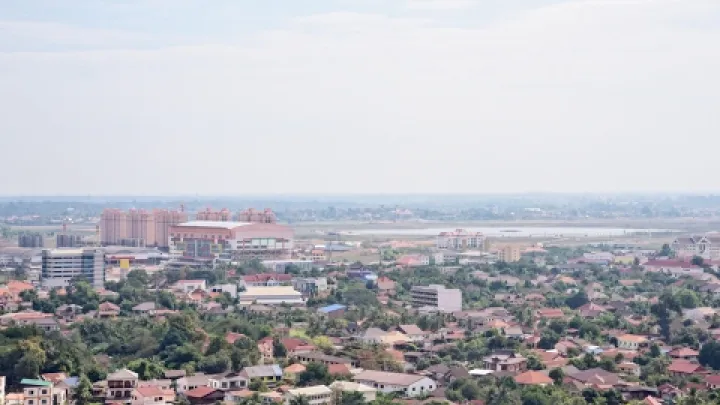
Vientiane is the capital of Laos, officially the Lao People's Democratic Republic. It is the country's current legal and practical capital, as well as its main national administrative center. For many readers, the quick answer is enough, but the city also matters because of its location on the Mekong River, its role in government, and its place in Lao history. This guide explains where Vientiane is, how it functions, how population figures should be read, and how it differs from other important Lao cities.
Quick Answer: The Capital of Laos Is Vientiane
The short answer readers need first
The capital of Laos is Vientiane. The city is the seat of national government for the Lao People's Democratic Republic and is the main place associated with the country's legal, administrative, and diplomatic functions. UN Data identifies Vientiane as the capital city of Laos.
This means that if you are answering a school question, completing a country-capital list, or checking a reference map, the answer is simply Vientiane. Laos does not have a separate official capital for government functions in another city.
Capital city and largest city in one place
Vientiane is commonly described as both the capital and the largest city of Laos. In some countries, the political capital is different from the largest economic or population center. Laos is not usually described that way: Vientiane is both the national capital and the country's leading urban center.
Population comparisons need careful wording because sources may use different boundaries. Some figures refer to the city or urban area. Others refer to Vientiane Capital, the administrative territory. This is why readers may see different numbers while still seeing the same basic answer: Vientiane is the Laos capital and largest city in the Lao national context.
Where Vientiane Is Located
Vientiane's location helps explain why it became important. It sits in the central-western part of Laos, close to the Mekong River and near the border with Thailand.

Mekong River setting near Thailand
Vientiane lies along the Mekong River, one of mainland Southeast Asia's most important waterways. The river forms a natural geographic anchor for the city and helps connect it with trade, travel, and settlement patterns. Thailand is across the river or nearby along this border area, making Vientiane a practical gateway between Laos and its western neighbor.
The city's river setting is not only scenic. It has shaped movement, commerce, and urban life over time. For a reader looking at a map, the simplest way to find the Laos capital is to look west of the country's interior highlands and toward the Mekong River corridor near Thailand. A Vientiane City Profile describes the city as the capital and as a political, economic, and transportation center of Laos.
Capital territory and nearby Vientiane Province
The name Vientiane can refer to more than one thing. In everyday use, people often mean the city itself. In administration, Vientiane Capital is a special capital administrative area. It should not be confused with Vientiane Province, which is a separate administrative unit nearby.
This distinction matters when reading maps, addresses, and population figures. The compact urban core that many visitors picture is not always the same as the wider capital territory used in official or administrative data. Lao source material from KPL describes Vientiane Capital as consisting of nine districts, a wider scope than the central city alone.
Political and Administrative Role of the Laos Capital
Vientiane is more than a geographic label. It is where national capital functions are concentrated for Laos.

Seat of national government
Vientiane functions as the seat of national government for the Lao People's Democratic Republic. National ministries, central administrative offices, and major public institutions are associated with the capital. The legislative and executive functions of the country are not split between separate capital cities in the way seen in some countries.
For practical purposes, Vientiane is the place to identify when discussing Laos's government center. Legal, administrative, diplomatic, and day-to-day capital functions are concentrated there. Other Lao cities may have regional importance, but they do not share the national capital role.
Economic, financial, and transport center
Vientiane's capital role also connects with its economic and transport importance. As the largest urban center in Laos, it is a focus for administration, finance, public services, education, and national-level development activity. Its position near the Mekong River and the Thailand border also supports its role as a national gateway.
This does not mean that all economic activity in Laos happens in Vientiane. Cities such as Savannakhet and Pakse are important in their own regions. However, Vientiane has a special concentration of national institutions, transport links, and decision-making functions that make it central to the country as a whole.
Population of Vientiane: City, Capital Territory, and Urban Area
Population figures for Vientiane can look inconsistent unless the boundary is clear. The most useful question is not only “How many people live in Vientiane?” but also “Which Vientiane is being counted?”
Why population numbers vary by definition
Different sources may count different areas. A city proper figure may describe the main urban settlement. An urban area figure may include built-up neighborhoods that spread beyond the historic or administrative core. An administrative capital territory figure may include a larger area governed as Vientiane Capital, including districts that are not all dense city neighborhoods.
This is the main reason readers see different population numbers for the Laos capital. A figure can be accurate for its source and year but still not match another figure that uses a different boundary. For clarity, every population number should be read together with its year and geographic scope.
| Population scope | What it means | How to read it |
|---|---|---|
| Capital city | The city as identified in international country data | Useful for country-capital reference |
| Urban area | The built-up city and nearby urban growth | Useful for city size and development |
| Vientiane Capital | The wider capital administrative territory | Useful for official administration and planning |
How to present current figures cautiously
UN Data lists a capital city population figure of about 673,100 for 2025. That figure is useful as an international capital-city reference, but it should not automatically be treated as the same as the wider administrative territory.
The Lao Statistics Bureau provides population data by province-level areas, including Vientiane Capital. Such figures can be higher than a compact city count because they use the administrative capital territory. The safest wording is that Vientiane is a large city in the Lao context and the country's main urban center, while noting the source, year, and boundary for any exact number.
How Vientiane Became the Capital
Vientiane's capital status has deep historical roots. The city did not become important only in the modern period; it has long been part of the political geography of Laos.
The shift from Luang Prabang to Vientiane
Vientiane became the capital city of Laos around the mid-sixteenth century according to Lao source material. Before that historical shift, Luang Prabang was a major royal and political center. This is why some readers associate Luang Prabang with the capital of Laos when thinking about history.
Today, however, Luang Prabang is not the national capital. It remains one of the country's most important historic and cultural cities, but the present capital is Vientiane. The distinction is simple: Luang Prabang is important as a former royal capital and heritage center, while Vientiane is the current capital of Laos.
Colonial and modern continuity
Vientiane's administrative importance continued through later historical periods and into the modern Lao state. When the Lao People's Democratic Republic was established, Vientiane remained the capital. This continuity helps explain why the city combines historic identity with modern administrative functions.
For a general country-capital reference, the long history can be summarized clearly: Vientiane rose as the capital around the mid-sixteenth century, continued as an administrative center, and remains the current capital today.
Vientiane Compared with Other Lao Cities
Laos has several important cities, but only one national capital. Comparing Vientiane with other well-known places helps avoid common confusion.
Luang Prabang as a former royal capital and heritage city
Luang Prabang is one of the best-known cities in Laos because of its royal history, temples, and heritage identity. It is often associated with the older political and cultural history of the country. That history can make it appear in searches about former capitals or historic capitals.
Even so, Luang Prabang should not be described as a second current capital. It has provincial and cultural importance, while Vientiane holds the national capital role. If the question is “What is the capital of Laos today?” the answer remains Vientiane.
Pakse, Savannakhet, and other regional centers
Pakse, Savannakhet, and other Lao cities are important regional centers. They may be relevant for trade, transport, education, tourism, or provincial administration. Their importance does not make them national capitals.
Vientiane stands above these cities in the national urban hierarchy because it combines the roles of capital, largest city, administrative center, and major transport hub. Other cities help connect different regions of Laos, but Vientiane is the main national center.
What Vientiane Is Like Today
Modern Vientiane is a capital city with government institutions, residential neighborhoods, cultural sites, markets, transport links, and riverfront public life. It is not a megacity by regional standards, but it is highly significant within Laos.
Cultural landmarks and riverfront identity
Vientiane's identity includes temples, monuments, museums, and public spaces along the Mekong River. Pha That Luang is one of the most important landmarks associated with the city and with Lao national identity. The riverfront also gives the capital a recognizable setting and a strong connection to everyday public life.

These cultural features help show that Vientiane is not only an administrative center. It is also a place where national history, religion, public ceremonies, and urban life meet. This makes it useful to understand the city from both a government and cultural perspective.
Urban growth and green city planning
Vientiane is growing, and planning documents discuss the expansion of the urban area toward suburban zones. A JICA urban development master plan describes Vientiane Capital as having strong economic and demographic growth potential and discusses planning toward 2030.
Urban growth raises practical questions about transport, land use, services, and livability. These are development issues, not evidence of a capital relocation. Based on the available public sources used here, there is no reliable indication of a current plan to move the capital away from Vientiane.
Frequently Asked Questions
What is the capital of Laos?
The capital of Laos is Vientiane. It is the current legal and practical capital of the Lao People's Democratic Republic.
Is Vientiane the largest city in Laos?
Yes. Vientiane is commonly described as the largest city in Laos as well as the national capital. Population figures vary depending on whether the source counts the city, the urban area, or the wider Vientiane Capital territory.
What was the former capital of Laos?
Luang Prabang is commonly identified as an important former royal capital and historic center. Vientiane became the capital around the mid-sixteenth century and remains the capital today.
Where is Vientiane located?
Vientiane is in the central-western part of Laos, along the Mekong River and near the border with Thailand.
How is Vientiane pronounced?
In English, Vientiane is often pronounced approximately as “vee-en-tee-AHN” or “vee-EN-tee-ahn.” Local pronunciation may sound different because the Lao name is not pronounced exactly like English spelling.
Is Laos planning to move its capital?
No reliable public evidence in the sources used here indicates that Laos is currently moving its capital. Vientiane remains the current legal and practical capital.
Conclusion: What to Remember About the Laos Capital
The capital of Laos is Vientiane. It is also the country's largest and most important urban center, located by the Mekong River near Thailand. Vientiane serves as the seat of national government and as a major economic, transport, and cultural center.
Luang Prabang is important as a former royal capital and heritage city, but it is not the present national capital. When reading population figures, remember to check whether the number refers to the city, the urban area, or the wider Vientiane Capital administrative territory.
Select area
Create a post
Posting is free and no registration is required.