Savannakhet Getting There: Flights, Buses, Border Routes
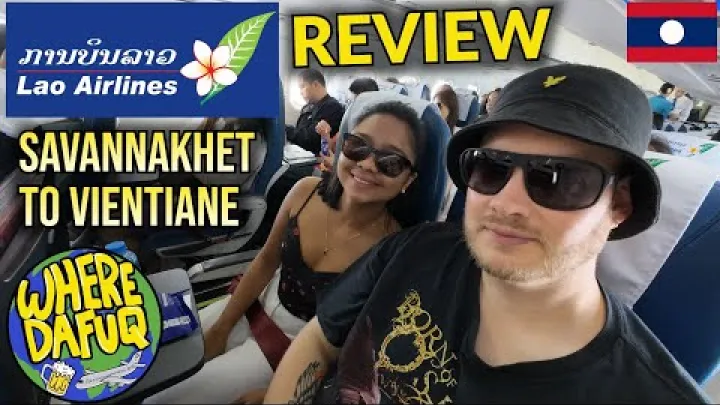
Getting to Savannakhet is usually an overland journey. The city is well placed on the route between Vientiane and southern Laos, and it is directly opposite Mukdahan in northeastern Thailand. This guide compares flights, domestic buses, and border routes so you can choose a practical option for your starting point, budget, and available time. It also explains where long-distance transport normally arrives and how to plan around services that may not be fully visible online.
The Best Way to Get to Savannakhet
The best route depends less on distance alone than on where you begin. Travelers already in Laos will normally use a bus from Vientiane, Pakse, or Thakhek. Travelers in Thailand usually make the short international crossing from Mukdahan. Flying can be useful when a suitable domestic service is operating and the time saved matters more than the cost.
Choose Between Air, Domestic Bus, and International Road Routes
For most visitors, bus travel is the normal way to get to Savannakhet. It reaches the city from the main Lao transport hubs, costs less than flying, and does not require building an itinerary around a limited flight schedule. The trade-off is a longer journey, variable vehicle standards, and less certainty about online booking.
A flight to Savannakhet Airport, known by the code ZVK, is the faster choice from Vientiane when it is available on the date you need. It can suit travelers with limited time, people who prefer to avoid a long road journey, or those connecting from a flight arriving in Vientiane. It is usually the more expensive option and can be less flexible if a service is changed or does not operate every day.
The main international road gateway is Mukdahan, Thailand. The Second Thai–Lao Friendship Bridge links Mukdahan with Savannakhet across the Mekong, making this a straightforward route for travelers coming from Bangkok, Udon Thani, Khon Kaen, or other parts of northeastern Thailand. Border formalities add time, but the journey after reaching Mukdahan is short.
As a simple rule, choose a domestic bus for lower cost and wider route coverage, choose a flight when speed is the priority, and choose Mukdahan when arriving from Thailand. Private transport can be useful for a poorly documented segment, especially from a border area, but it should be arranged carefully and with the total price understood in advance.
Main Gateways and Typical Route Patterns
Vientiane is the main domestic gateway because it connects northern and central Laos with the south by road and air. Pakse is the key southern interchange: travelers from Champasak, the 4000 Islands, and Cambodia commonly pass through Pakse before continuing north. Thakhek is a useful intermediate stop for people traveling along the central Lao corridor. From Vietnam, Lao Bao is geographically relevant, but onward passenger transport to Savannakhet is less clearly documented.
| Starting area | Usual connection | Likely mode | Planning difficulty |
|---|---|---|---|
| Vientiane | Direct southbound route | Flight or bus | Moderate |
| Pakse and southern Laos | Pakse bus station area | Bus or minivan | Moderate |
| Thakhek | Southbound local service | Bus or minivan | Moderate |
| Mukdahan, Thailand | Second Thai–Lao Friendship Bridge | Cross-border bus | Relatively straightforward |
| Central Vietnam | Lao Bao border | Local transport or private ride | Higher |
Savannakhet has two separate long-distance arrival points. Savannakhet Airport is the air gateway. Most road travelers arrive at Savannakhet Provincial Bus Station, reported on Makhasvanh Road in Kaisone Phomvihanh. Do not assume that a flight arrival point and a bus arrival point are interchangeable when arranging a pickup or telling a driver where to meet you.
Flying to Savannakhet
Air service offers the quickest way to reach Savannakhet from within Laos, but it is not the broad international network that travelers may find in larger regional cities. Treat ZVK as a domestic connection point and build enough time into any itinerary that depends on it.
Flights from Vientiane to Savannakhet
Vientiane is the principal documented air connection for Savannakhet. Flying replaces a full day or overnight road journey with a much shorter trip, although the total door-to-door time also includes travel to the airport, check-in, baggage collection, and a local ride after landing. For travelers who value time and a more predictable level of comfort, this can be a worthwhile trade.
Lao Airlines lists Savannakhet as ZVK and provides schedule and booking information through its Lao Airlines website. Other booking sites may display information associated with Lao Skyway, but a search result or third-party listing is not the same as confirmation that a particular flight will operate. Flight inventory may be easier to find online than local bus tickets, yet limited service means that a change can have a larger effect on your plans.
Check the airline booking system or contact the operator shortly before travel, particularly if you are connecting onward on the same day. Confirm the flight date, baggage conditions, departure airport, and whether the displayed service can actually be booked. If a flight is essential to your itinerary, consider arriving in Vientiane with sufficient time to use a road alternative if needed.
Savannakhet Airport and the Final City Transfer
Savannakhet Airport uses the code ZVK. Mapping information places the airport close to the built-up area and the Mekong-side center, so the final journey is generally a short local transfer rather than a long trip into a distant city center. There is no need to expect the type of large airport transport network found at major international airports.
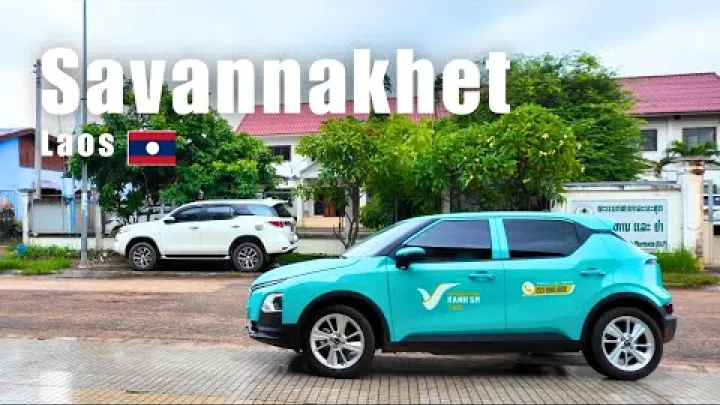
Plan for a local vehicle, a hotel-arranged driver, or a pickup from someone you know. A dedicated public airport shuttle should not be assumed. Give your accommodation address in writing where possible, and ask the property whether it can arrange transport if your arrival time is outside the usual daytime period. Confirm the meeting point and whether payment is expected in kip or another currency before you leave the terminal area.
Reaching Savannakhet by Bus from Laos
Road transport is the practical backbone of travel to Savannakhet. Buses and minibuses connect the city with the capital, central Laos, and the southern region, although the exact vehicle, departure point, and timetable can differ from what an online search suggests.
Buses from Vientiane
Vientiane to Savannakhet is the main domestic overland route. Travel accounts commonly describe daytime and overnight options, with around eight hours as a useful road-time estimate. That estimate is for planning rather than a promise: departure delays, stops, road conditions, loading time, and the specific operator can all change the actual journey.
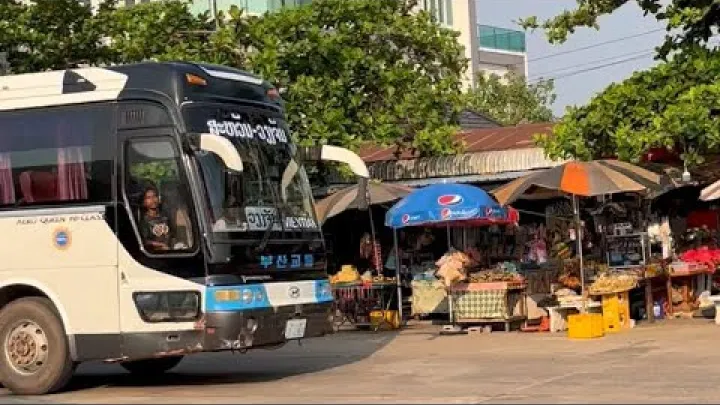
Service may be provided by a full-size coach, a more basic public bus, a minibus, or an overnight vehicle. Comfort varies. Reclining seats and air conditioning may be available on some services, but travelers should not assume an onboard toilet, assigned seating, English-speaking staff, or the same luggage rules used by large international coach companies. Roadside meal and toilet stops are common on longer trips, but their timing is controlled by the driver.
Flying is quicker and normally easier to reserve online, while a bus is usually more economical and offers more ways to travel on short notice. Tickets may be sold at the departure station, through a local travel agent, or with help from a guesthouse. A local guide notes bus connections from Vientiane, Pakse, and Thakhek, while also reflecting the reality that road travel is the usual budget option in this part of Laos; see Adventures of Jellie.
For an overnight departure, bring a light layer for air conditioning, keep valuables with you, and have the address of your Savannakhet accommodation saved offline. A day bus can be better for travelers who prefer to see the route and arrive while local transport is easier to arrange.
Buses from Pakse and Southern Laos
Pakse is the main southern Laos transport hub for reaching Savannakhet. It is the logical connection for people coming from Champasak, Don Det, Don Khon, or other 4000 Islands destinations, as well as travelers who have entered Laos from Cambodia. The normal route pattern is southern destination to Pakse, then Pakse to Savannakhet.
The road journey between Pakse and Savannakhet is often described as taking about five hours, but this should be treated as an approximate guide rather than a timetable. Travelers may find a bus, minivan, or a service that requires asking at a station counter rather than booking through a major international platform. Reported fares, including examples around 130,000 kip, are only indicators; the current amount can vary by vehicle and season.
When leaving the 4000 Islands, do not plan the entire journey as one guaranteed through-ticket unless a current seller clearly confirms every segment. Island boat travel, the road transfer toward Pakse, and the onward Savannakhet service may be separate tickets with separate departure times. Pakse is the sensible place to pause if the connections do not align, rather than trying to force an uncertain same-day transfer.
Buses from Thakhek and Northern Laos
Thakhek can be a convenient intermediate origin for travelers already moving south through central Laos. Local buses or minibuses toward Savannakhet are often reported, but the type of vehicle and the departure time may change. Ask locally whether the service goes directly to Savannakhet Provincial Bus Station or only to another town where a further transfer is needed.

From Luang Prabang, Vang Vieng, and northern Laos, the usual strategy is to reach Vientiane first and continue south. The Laos–China Railway does not extend to Savannakhet, so rail travel can help only for the northern part of a longer journey. From Vientiane, a flight or southbound bus provides the next step.
Maps can make smaller towns look closely connected, but that does not prove a convenient direct public service exists. If a direct bus from your current town cannot be confirmed, use Vientiane as the fallback hub. This may add distance, but it gives you access to the best-established domestic route pattern and more accommodation options if you need to wait.
Entering Savannakhet from Thailand
Thailand provides one of the most practical international approaches to Savannakhet. Mukdahan is directly across the Mekong, and the international crossing is far simpler than trying to arrange an obscure road route from a more distant border point.
Mukdahan and the Second Thai–Lao Friendship Bridge
Mukdahan lies opposite Savannakhet and is connected to Laos by the Second Thai–Lao Friendship Bridge. The usual sequence is to reach Mukdahan, take the designated cross-border transport, complete Thai exit and Lao entry procedures, and continue to Savannakhet. The vehicle journey itself may be around an hour in favorable conditions, but that is not the same as the total crossing time.
Waiting for the vehicle, immigration queues, document checks, and luggage handling can add substantially to the trip. Indicative fares and crossing times can change with the operator and border conditions, so use any figure you see as a rough budget guide rather than a guaranteed current price. This route remains especially useful for travelers who are already in northeastern Thailand because it avoids a long detour through Vientiane.
Before committing to a tightly timed onward connection, verify current border opening conditions and your entry requirements. Check passport validity, whether you are eligible for the visa or entry arrangement you intend to use, the hours that passenger processing is available, and whether you need cash for transport or fees. Allow extra time for immigration rather than booking an immediate bus, flight, or important appointment after the crossing.
Continuing to Savannakhet from Bangkok and Other Thai Cities
From Bangkok, the practical sequence is usually a long-distance Thai bus to Mukdahan followed by the separate cross-border journey to Savannakhet. Some travelers choose an overnight Thai coach so they can reach Mukdahan in the morning, but this does not turn the border crossing into a single through-service. You still need time to disembark, find the appropriate crossing transport, and complete immigration.
The same pattern applies from other Thai cities: first reach Mukdahan, then cross to Laos. Thai intercity schedules are often easier to view and reserve digitally than the final local Lao transport, but a visible Thai booking does not guarantee a seamless connection across the border. Keep your Savannakhet hotel informed if you expect to arrive later than planned.
A sample plan is Bangkok to Mukdahan by coach, Mukdahan to the bridge crossing, immigration, then Savannakhet and a local ride to your accommodation. This is more realistic than treating Bangkok to Savannakhet as one fixed bus journey. Travelers with a visa deadline, a flight, or a fixed check-in should leave a substantial buffer after their Thai bus arrives.
Reaching Savannakhet from Vietnam and Cambodia
Vietnam and Cambodia can both be part of a route to Savannakhet, but they require more careful planning than the Mukdahan crossing. Cambodia is normally approached through Pakse. Central Vietnam has a geographically direct corridor, but publicly documented passenger transport can be limited.
The Lao Bao Route from Vietnam
Lao Bao is on the East–West corridor linking central Vietnam and Laos, making it a natural border point to consider when traveling toward Savannakhet. However, the existence of this road corridor does not by itself confirm a direct, fixed-schedule tourist bus from Lao Bao to Savannakhet. Available traveler discussions show that people are still seeking current information about this connection.
At the border, possible onward options may include a local bus, minibus, a shared vehicle, or a private driver. These arrangements may not be visible on large booking websites and may depend on the day, passenger demand, and local contacts. Do not publish your itinerary around a quoted fare or departure time unless it comes from a current operator or a reliable local transport contact.
Treat a direct Lao Bao–Savannakhet service as unconfirmed until it has been checked locally. If it cannot be confirmed, use a fallback through a recognized Lao transport hub and be prepared to stay overnight rather than accepting an unsafe or overpriced last-minute arrangement. This approach is slower, but it gives you more control over where you wait and how you continue.
From Cambodia and the 4000 Islands via Pakse
For travelers coming from Cambodia or the 4000 Islands, Pakse is normally the useful stepping stone to Savannakhet. A direct Cambodia-to-Savannakhet bus should not be assumed. The route works best when treated as a series of local connections rather than one seamless international journey.
- Travel from your Cambodian destination or island area toward the Laos border or onward transport point.
- Complete the border crossing and continue to Pakse.
- Use Pakse as the place to buy or confirm the northbound bus or minivan to Savannakhet.
- Arrange the final local transfer after arrival in Savannakhet.
Each part can have its own ticket, luggage process, and waiting time. Boat and road transfers from island areas may be especially sensitive to weather, passenger numbers, and local operating arrangements. Pakse is therefore not merely a stop on a map; it is the practical place to reset the journey, find accommodation if needed, and continue with a clearer transport option.
Compare Transport Options and Book with Confidence
Choosing transport to Savannakhet is mainly a decision about speed, cost, and how much uncertainty you can accept. A practical plan identifies the most dependable segment first, then leaves time around the less documented parts of the journey.
Time, Cost, Comfort, and Flexibility
| Option | Travel time | Relative cost | Comfort | Booking approach |
|---|---|---|---|---|
| Vientiane flight | Shortest travel segment | Higher | Usually higher | Airline website or agent |
| Vientiane bus | About a day or overnight | Lower | Variable | Station, agent, or local contact |
| Pakse bus or minivan | Several hours | Lower to moderate | Variable | Often local confirmation |
| Mukdahan crossing | Short road segment plus border time | Lower to moderate | Basic but practical | Buy stages separately |
| Private cross-border ride | Depends on route | Higher | Can be flexible | Confirm operator and full price |
Budget travelers will usually find buses the best balance of price and network coverage. Time-sensitive travelers should consider a Vientiane flight when it is operating and suitable for their schedule. Travelers arriving from Thailand will often find Mukdahan the clearest international road approach. Private transport may be useful where local public transport is not well documented, but it should not be chosen simply because it is offered by the first person at a border or station.
When comparing options, include the practical details that are easy to overlook: overnight buses may be cold, rest stops may be limited, large luggage may need to go below the coach, and border journeys require document checks as well as driving time. Prices and durations are date-sensitive, so categories are more useful than a false promise of a fixed fare.
Why Online Bus Bookings May Not Show Every Route
Online booking platforms are useful for discovering routes, but they do not list every service in Laos. Some local buses rely on station kiosks, handwritten departure boards, direct ticket sales, or contacts held by guesthouses and small travel agents. A route can be used by local travelers without appearing on an international aggregator.
The Savannakhet–Pakse route is a good example of this gap. Traveler discussions have noted difficulty finding it on major platforms even while local connections are reported. The Laos Backpacking discussion is useful as a lead, not as a current timetable. An empty search result should therefore mean “ask locally,” not “the route does not exist.”
Use a simple verification sequence. The day before travel, ask your accommodation or a local agent which station to use, whether the service is direct, and what time passengers should arrive. On the morning of departure, confirm the departure time and ticket availability at the bus station or through accommodation staff before relying on an online timetable. Before paying, confirm the vehicle destination, price, luggage arrangement, and whether the ticket is for the full journey or only one segment.
Build a Reliable Itinerary Around Uncertain Connections
Build your itinerary around the connection that is hardest to replace. From Vientiane, that may be a limited flight. From Mukdahan, it may be the border crossing and the time needed to reach your Savannakhet accommodation. From Pakse, it may be the northbound local service after arriving from the islands or Cambodia. From Lao Bao, the uncertain part is usually the onward transport after immigration.
A practical Vientiane plan is to arrive the day before a southbound flight or bus if the next stop is important. A Mukdahan plan should include time for immigration and a possible wait after the Thai coach arrives. A Pakse plan works best when the arrival from the south is not scheduled too tightly against the onward bus. A Lao Bao plan should include a backup overnight stop or route change if local onward transport is not available.
Overnight buses can reduce accommodation costs, but they may arrive at an inconvenient hour and leave you tired before you reach your hotel. Avoid using a poorly documented local service immediately before an international flight or another non-flexible commitment. Keep cash, offline maps, your accommodation name and phone number, and a fallback town or hotel option available even if you expect the connection to work.
Arriving in Savannakhet and Reaching the City Center
The final transfer is usually short, but it is still worth planning. Long-distance buses and flights may arrive at different points, and local transport availability can be less predictable after dark.
Savannakhet Bus Station and Airport Transfers
Savannakhet Provincial Bus Station is reported on Makhasvanh Road in Kaisone Phomvihanh and is the main land arrival point for routes from Vientiane, Pakse, Thakhek, and the Mukdahan direction. The listing for Savannakhet Bus Station identifies this location and distinguishes it from Savannakhet Airport.
From the station, possible final-mile choices include a tuk-tuk, songthaew, taxi, or a ride arranged by your accommodation. Availability and prices are not fixed enough to promise a standard tariff. ZVK is closer to the urban area than many regional airports, but arriving by air still requires a plan for the last short ride.
Before leaving the bus or terminal area, have your hotel or guesthouse address ready, preferably in a form a driver can read. Carry small amounts of local currency, keep valuables and luggage with you, and agree the fare before the vehicle starts. If you are sharing a ride, make sure everyone understands whether the price is per vehicle or per passenger.
Late Arrivals, Touts, and Safer Local Transport Choices
An overnight bus or a delayed flight can make the final city transfer feel less predictable than the long-distance journey. This is especially true when you arrive with heavy luggage, limited local currency, or no working data connection. The easiest option for a late arrival is usually a pickup arranged with your accommodation in advance.
Agree on the fare before boarding an unmetered vehicle. Prefer a known operator, an accommodation-arranged ride, or a functioning ride-hailing service if one is genuinely available at the time. Do not rely on assumptions about app coverage in Savannakhet, as current availability can be limited or inconsistent.
Be polite but firm with unmarked offers that pressure you to leave immediately or discourage you from checking the price. Ask the driver to repeat the destination and price, and avoid handing over a passport as security for a local ride. These are practical precautions, not a reason to expect trouble: most arrivals are routine when you keep the arrangement clear.
A Final Pre-Departure and Arrival Checklist
- Check the latest operator schedule, departure terminal, and ticket availability for your chosen route.
- Save the names of Savannakhet, Mukdahan, Pakse, Thakhek, Savannakhet Provincial Bus Station, and Savannakhet Airport ZVK offline.
- Keep your accommodation address, contact number, and expected arrival time accessible without mobile data.
- Carry suitable cash for local tickets, meals, and the final transfer.
- Allow time for luggage handling, station changes, roadside stops, and immigration where relevant.
- Choose a bus for lower-cost overland access, a flight for speed when operating, and Mukdahan for the most established international road approach.
Savannakhet is reachable from several directions, but the smoothest trip comes from choosing the route that fits your starting point and leaving room for the local realities of road travel. With a clear gateway, a sensible buffer, and an arrival plan, you can reach the city without needing every part of the journey to appear in a single online search.
Select area
Create a post
Posting is free and no registration is required.