Thakhek Budget: Daily Costs and Loop Prices in Central Laos

A Thakhek budget can be very modest, but costs change quickly once a trip includes the Thakhek Loop, a motorbike, rural overnight stops, and paid caves. Thakhek town is generally the easiest place to find low-cost rooms, local food, cash access, and rental choices, while places such as Tha Lang, Na Hin, Ban Nahin, and Kong Lor have different availability and comfort levels. This guide separates everyday town spending from the larger costs of a Loop itinerary. All figures are planning ranges, not guaranteed current prices, so confirm important quotes in Lao kip when you arrive.
International flights, visas, travel insurance, and travel elsewhere in Laos are not included in the daily estimates below. Arrival buses, border transfers, and special private trips should be added separately to avoid understating the full cost of a visit.
Thakhek Daily Budget at a Glance
For most independent travelers, accommodation and transport choices have the largest effect on a Thakhek travel budget. Food can remain inexpensive when meals are mostly local, while a motorbike, rural bungalow, private driver, or frequent café visits can move the total upward.
Budget, Mid-Range, and Comfortable Daily Spending
For planning purposes, allow about US$25–35 per person per day for budget travel in and around Thakhek. This normally means a dorm bed or simple shared room, local meals, modest drinks, low-cost activities, and either limited local transport or a basic Loop bike shared where possible. A mid-range style is roughly US$45–70 per person per day, usually allowing a private room, a more varied food budget, and a more comfortable approach to Loop transport and activities.
A comfortable style starts at about US$80 per person per day and can rise substantially. It may include better rooms or resorts, restaurant meals, a premium motorbike, a private car or driver, and several paid attractions. These local ranges sit broadly alongside Laos-wide budget comparisons published by Custom Asia Travel, but Thakhek should be budgeted as its own destination rather than treated as a fixed national average.
| Travel style | Daily estimate | Typical inclusions | Main cost drivers |
|---|---|---|---|
| Budget | US$25–35 | Dorm or basic stay, local food, simple transport, selected fees | Motorbike days, private rooms, café meals |
| Mid-range | US$45–70 | Private room, mixed food, Loop costs, activities | Better lodging, longer Loop, more paid sites |
| Comfortable | US$80+ | Higher-comfort stays, restaurants, private options | Driver, premium bike, resorts, alcohol |
How the Daily Total Breaks Down
Think of a day as five categories: accommodation, food and drinks, transport, activities, and miscellaneous purchases. Accommodation and a rented bike are relatively fixed once selected. Food, drinks, optional stops, laundry, snacks, and short rides are flexible and are usually the easiest categories to reduce without changing the whole itinerary.
A low-cost town day might combine a dorm, noodle soup or rice dishes, market snacks, drinking water, and a short tuk-tuk ride or walk. A more expensive day might include a private air-conditioned room, specialty coffee, Western food, a full-day driver, and cave or boat charges. On the Loop, fuel and one-night rural accommodation should be added rather than hidden inside a town-style daily total.
A Simple Way to Estimate a Loop Trip Total
Calculate a Loop separately: town nights + Loop nights + bike or driver + fuel + food + attraction costs + a small contingency. This is more reliable than multiplying one daily figure by the number of days, because the first and last town days may have different costs from riding days.

As a reality check, one traveler account reported about US$42 per day for two people, excluding a US$9 daily motorbike rental, for a combined US$51 daily total. That is a useful historical reference from Beyond the Bucket List, not a current universal price. Route length, bike type, room choice, group size, and the number of caves all change the result.
For example, one solo traveler on a three-day basic Loop could estimate three bike days, three fuel allowances, two rural rooms, three days of food, and a chosen cave budget, then add town nights and arrival transport. Two travelers sharing one suitable motorbike and one room can divide those shared costs per person, but should still budget food, individual admission, and personal purchases separately.
Accommodation Costs in Thakhek and Around the Loop
Thakhek town has the broadest concentration of simple stays and is a practical place to spend the night before or after riding. Rural accommodation is part of the experience for many Loop travelers, but it can have fewer choices and less predictable availability.
Dorms and Basic Private Rooms in Thakhek
Dorm beds can start around US$4 according to current hostel aggregation listings, while basic private rooms may begin around US$9 on selected dates. For example, an Agoda listing for Song Lao Guesthouse has shown an average room price around US$9 through Agoda. Treat this as a listing-based anchor, not a promised walk-in price.
Before comparing rooms, establish whether the quote is per bed, per room, or per person. Also check air conditioning or fan, private bathroom, breakfast, taxes, and whether the advertised price applies to the dates you need. A dorm is usually the lowest-cost choice; a simple private room can offer better rest before riding without necessarily changing the overall budget dramatically.
Staying in Thakhek town before the Loop has practical value beyond the room rate. It gives you time to compare rental operators, withdraw kip, buy water and snacks, and decide whether a basic room or a higher-comfort stay is worthwhile for your first night.
Accommodation in Tha Lang, Na Hin, and Kong Lor
Tha Lang, Na Hin and Ban Nahin, and the Kong Lor area should not be priced as if they were central Thakhek. These rural stops can offer simple guesthouses and homestays, riverside bungalows, and small resorts. The nightly difference usually reflects privacy, air conditioning, scenery, bathroom quality, and the convenience of the location rather than a standard town-wide rate.
Choose the base according to the priority for that night. A simple guesthouse may suit the lowest budget, Na Hin or Ban Nahin can be convenient for a Loop stop, and a Kong Lor-area stay can make sense for travelers who want to spend more time near the cave. Rural supply can be thin, so the cheapest category is not always available on the exact night you arrive. Check a current listing or contact the property directly for the current rate and room type.
When Accommodation Prices Change
Prices and availability can shift with weekends, public holidays, local events, seasonal demand, and the limited number of rooms at rural stops. Hotel search data also illustrates how much variation can exist: a Kayak snapshot showed markedly different average Thakhek nightly prices by day of the week. That does not establish a standard rate for every hotel, but it is a reason to compare actual dates rather than rely on an old travel report.
Flexible travelers can compare several town properties, ask whether a direct rate differs from an online rate, and keep non-essential nights open. If a particular rural stop is essential, reserve it rather than assuming a room will be available. Lower prices during wetter periods may be attractive, but lower room rates and suitable outdoor conditions are separate decisions.
Food, Drinks, and Everyday Spending
Food is one of the more controllable parts of a Thakhek budget. A mostly local-food plan can keep daily spending low, while imported items, alcohol, desserts, and frequent café stops can become a meaningful part of the trip total.
Local Meals and the Thakhek Night Food Market
Simple Lao meals, noodle soups, rice dishes, grilled foods, snacks, and market drinks are generally the lowest-cost way to eat. The Thakhek night food market and uncomplicated local eateries are useful places to compare portions and prices before settling on a routine. A local-food day may cost only a modest share of the overall daily budget, but there is no single price for every stall or dish.
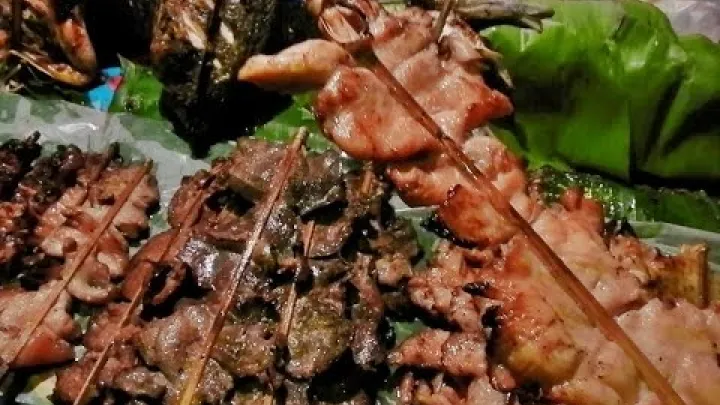
Pay in kip and look at the actual displayed or written amount before ordering, especially where menus are limited or a price is discussed verbally. It is better to convert from the current kip price using your own current exchange rate than to rely on a fixed US-dollar conversion from an older guide. If one meal is more expensive, balance it with market food or a simple breakfast rather than assuming every meal must follow the same spending pattern.
Cafés, Western Food, and Drinks
Cafés, specialty coffee, imported products, Western dishes, desserts, and alcohol can raise food spending faster than local staples. A mixed day with one café visit or restaurant meal can still fit a mid-range budget. Several restaurant-style meals, imported drinks, and evening alcohol are more likely to push a traveler toward the comfortable range.
The useful approach is not to avoid cafés completely, but to choose deliberately. Eat mainly at local markets and simple restaurants when savings matter, then reserve café or Western meals for the occasions that add value to the trip. One menu or online review should not be treated as a price guide for every business in Thakhek.
Laundry, Connectivity, and Small Daily Extras
Laundry, bottled water, SIM or data top-ups, pharmacy items, snacks, public toilets, and short local rides are usually small expenses individually. Over a longer stay, they can become noticeable. Set aside a modest miscellaneous allowance instead of assuming food and accommodation cover everything.
Separate one-off purchases, such as a local SIM or rain cover, from recurring costs such as water and snacks. Recording these small purchases on the first day gives a better basis for adjusting the rest of the trip budget.
Transport Costs for Reaching Thakhek and Riding the Loop
Arrival and departure transport should be listed separately from daily spending. The Loop is also transport-intensive: the rental choice, fuel use, and whether costs are shared will often matter more than minor differences in meal prices.
Getting to Thakhek from Vientiane or Nakhon Phanom
For Vientiane–Thakhek, a broad planning range of roughly US$10–20 per person is reasonable for bus or van travel, but the actual fare depends on service type, operator, booking channel, and departure point. Treat sleeper services, vans, local buses, and border-related transfers as distinct products rather than assuming they carry the same price.
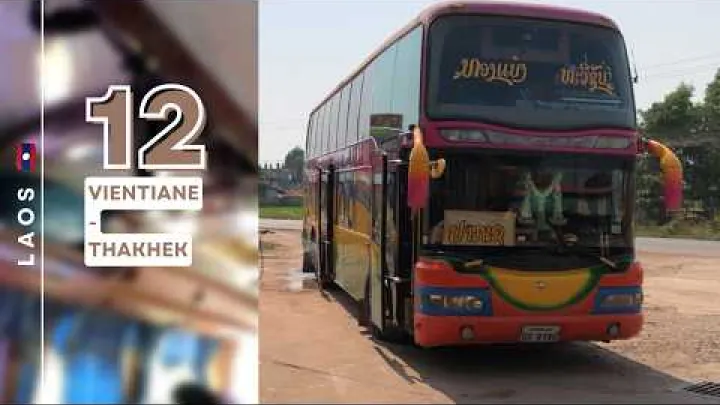
The Thakhek–Nakhon Phanom crossing is a useful reminder that booking channel matters. A traveler report noted a 70,000 kip bus-station ticket beside a much higher 500-baht online quote, as described in a traveler fare report. This is not a permanent tariff. Confirm the current fare, departure point, luggage rules, and payment method directly with the bus station or operator before committing to the journey.
Motorbike Rental and Fuel for the Thakhek Loop
A standard scooter or semi-automatic bike is commonly the largest single Loop cost. A cautious planning range for a basic Loop-appropriate bike is about US$4–10 per day, but rates vary with the model, condition, rental length, season, and operator. Higher-spec bikes and premium operators can cost much more; one local operator discussion referenced US$20 per day, showing why a low basic rate should not be assumed for every option.
Fuel is a separate, usually smaller cost, but it depends on route length, bike efficiency, passenger weight, luggage, and riding conditions. Compare rental quotes as a package: daily rate, deposit, fuel arrangement, damage policy, included helmets or other equipment, and return time. A cheaper bike is not automatically a suitable bike. Inspect brakes, tires, lights, starting, and documents, and confirm the rental rate, deposit, fuel arrangement, damage policy, and return time in writing or in a clearly documented message.
Tuk-Tuks, Drivers, and Non-Riding Alternatives
Short tuk-tuk rides in town are normally minor costs, while a day vehicle changes the budget substantially. A reported 500,000 kip price for a day trip is best used only as a negotiation reference, not as a fixed tariff. Quotes can differ according to distance, vehicle size, waiting time, and whether the driver returns the same day.
Self-riding may cost less for one or two confident travelers, but a shared car, driver, or organized arrangement can be better value for people who do not wish to ride. Before agreeing, ask whether the quote covers the full vehicle or each person, plus driver, fuel, waiting time, meals, and entrance fees. Splitting a vehicle can reduce the per-person cost, but only after all inclusions are clear.
Caves, Attractions, and Activity Fees
Individual attraction fees around the Loop can appear small, yet several stops, fuel for detours, and boat arrangements can materially change a day’s spending. Select priorities before leaving town rather than treating every optional stop as automatically included in the budget.
Kong Lor Cave and Other Paid Caves
Kong Lor Cave can involve more than one payment component: entrance or reserve access, boat transport, equipment such as a headlamp, and an optional tip. A total of roughly US$4–8 per person is a useful planning anchor for the experience, but it may not reflect the current structure, group rules, or what is included on your visit.
Other caves and viewpoints can add smaller cumulative charges. Do not assume every site is free or has the same price. Before making a long detour, check the current cave fee, boat arrangement, opening status, and required extras locally. Ask whether the amount is per person, per boat, or per group, and whether equipment is included.
How to Budget for Activities Without Overpaying
Set a daily activities allowance with separate lines for entrance fees, boat or guide charges, equipment, access transport, and optional tips. This prevents an apparently cheap attraction from becoming an unexpected total once transport and extras are included.
| Activity check | Question to ask | Budget effect |
|---|---|---|
| Entrance | Per person or per group? | Base activity cost |
| Boat or guide | Required or optional? | May be shared |
| Equipment | Included in the fee? | Small extra charge |
| Access | Extra fuel or vehicle needed? | Can add a larger cost |
Choose a small number of priority experiences first. Add optional sites only after checking the remaining money and time. The lowest entrance-fee itinerary is not always the cheapest overall if it requires a long detour, a private transfer, or another overnight stay.
Currency, Cash, and Payment Planning
Most local prices will be quoted in Lao kip. Planning in US dollars or another home currency is useful, but the kip amount and the terms of the quote are what determine what you actually pay.
Budget in Your Home Currency but Pay Attention to Lao Kip
Use your home currency to set a total trip limit, then assess rooms, meals, fuel, rentals, and attraction fees in kip. Exchange rates move, and kip prices can change, so old reports are not dependable as exact quotations. Check a current rate shortly before departure and use a simple rounded mental conversion only to compare options.
For example, convert a quoted kip amount using the rate available to you that day, then compare it with the value of the room, ride, or activity. Do not assume that businesses accept US dollars or other foreign cash simply because a travel budget is expressed in dollars.
Cash, ATMs, Cards, and Rural Payment Limits
Thakhek town generally offers more financial access than rural Loop stops, but small businesses may still prefer cash. Cards and mobile payment tools can be useful backups, not universal replacements for kip. ATM charges, withdrawal limits, and your own bank’s foreign transaction fees can make several small withdrawals more expensive than one planned withdrawal.
Estimate accommodation, food, fuel, rentals, and cave costs before leaving town, while keeping money in more than one secure place rather than carrying everything together. Withdraw enough Lao kip in Thakhek for the Loop and rural stops instead of assuming that cards or ATMs will be available after leaving town.
Confirming Prices, Inclusions, and Negotiated Services
A consistent question set prevents many budget surprises: Is this per person, per room, per vehicle, per boat, or per day? What is included? What must be paid separately? For rentals, transfers, rooms, and private vehicles, note the agreed kip amount before payment.
Common omissions include fuel, deposits, equipment, entrance fees, waiting time, breakfast, taxes, and return conditions. This is a practical confirmation method, not a reason to assume poor intent. Posted prices may need no negotiation, while a private vehicle or other tailored service may require a clear agreement.
What Raises the Cost and How to Save
Saving money in Thakhek is usually about selecting the right base, transport model, and food pattern rather than trying to reduce every small purchase. The best choice also depends on whether the priority is low cost, simple logistics, or a more scenic and comfortable Loop stay.
Peak Periods, Weekends, Events, and Conditions
Weekends, public holidays, local events, higher demand, limited rural room supply, and last-minute bookings can raise accommodation and transport costs. Aggregated hotel prices indicate that rates can vary by date, but no single seasonal price applies to all Thakhek properties. A flexible itinerary gives you more room to compare options when a preferred stay is costly or full.
Lower-demand periods may bring cheaper rooms, but they can also bring less predictable outdoor conditions and fewer available services. Check the short-term forecast and local road and cave conditions immediately before starting an outdoor Loop itinerary. This helps separate a genuine accommodation saving from a plan that may be inconvenient or unsuitable for the conditions.
Practical Ways to Reduce a Thakhek Budget
Start with the highest-impact choices. Compare motorbike operators and select a basic model that is suitable for the intended trip. Share a room, vehicle, or boat where practical and where the service allows it. Choose lower-cost accommodation for transit nights in Thakhek, then spend more only on rural stays that improve the itinerary.
For day-to-day savings, eat mainly at markets and simple local restaurants, limit imported food and repeated café visits, and group attractions by area to avoid extra fuel, tuk-tuk costs, and unnecessary overnight stays. Confirm locally priced transport and attraction options when practical, but weigh the cheaper option against timing, terms, and convenience. Negotiate only where a service is normally quoted rather than posted, and respect agreed local terms.
Choose a Base That Matches Your Spending Style
Thakhek town is usually the strongest choice for the lowest-cost start or finish because it offers budget rooms, supplies, rental comparisons, and cash access. Tha Lang, Na Hin, Ban Nahin, and Kong Lor can be more convenient or scenic during the Loop, but the room choice may be narrower and a riverside bungalow or resort may cost more.
A mixed plan often provides the best balance: use a simple town room for logistics, then choose one or two rural nights for comfort, scenery, or easier access to a priority attraction. Decide whether each night is serving lowest cost, easiest logistics, or scenic comfort. This makes a higher rural room rate easier to judge against the backtracking it might avoid.
How to Turn the Ranges Into a Realistic Trip Budget
A useful budget is built from your actual travel segments, not from a single headline daily rate. Put fixed and shared costs on their own lines, then add personal spending and a modest buffer.
Build the Estimate by Travel Segment
Make a simple worksheet for the complete trip. List arrival transport, departure transport, Thakhek town nights, Loop nights, food, vehicle rental, fuel, activities, and miscellaneous spending. Then mark each item as per traveler, per room, per vehicle, per boat, or per group.
| Cost category | Your estimate | Shared or personal? |
|---|---|---|
| Arrival and departure | ________ | Usually personal |
| Town and Loop rooms | ________ | Often shared by room |
| Bike, driver, and fuel | ________ | May be shared |
| Food and drinks | ________ | Usually personal |
| Caves and activities | ________ | Mixed pricing |
| Miscellaneous and buffer | ________ | Personal |
Create a budget, mid-range, and comfortable version of the same itinerary rather than changing every part at once. For instance, the route can remain the same while the three versions use a dorm, a simple private room, or a more scenic bungalow; local meals, mixed meals, or restaurant meals; and a basic bike, upgraded bike, or private vehicle.
Add a Buffer and Recheck Before Departure
Add a modest contingency for exchange-rate movement, extra fuel, a changed plan, unplanned transport, weather-related adjustments, or an additional night. A buffer is a planning tool, not a prediction that a specific price increase will happen.
Close to departure, recheck room availability, current rental terms, arrival transport, access fees for priority attractions, and the amount of cash needed outside town. Keep enough flexibility to reduce optional paid activities or choose a simpler room if costs are higher than expected. This preserves the trip without requiring every estimate to be exact.
Thakhek Budget: Final Takeaways
A realistic Thakhek budget starts around US$25–35 per person per day for a careful independent style, rises to about US$45–70 for more private comfort, and can exceed US$80 when better lodging, private transport, or premium Loop choices are included. Budget town days and Loop days separately, because the bike, fuel, rural stays, and cave costs change the calculation. Carry a workable amount of kip, confirm what each important quote includes, and use Thakhek town to organize cash, accommodation, and transport before heading into rural Central Laos.
Select area
Create a post
Posting is free and no registration is required.