Huay Xai Getting There, Laos: Routes from Thailand and Beyond

Getting to Huay Xai, Laos is usually straightforward from northern Thailand, but it can involve several separate transport steps from elsewhere in Laos or the region. The Fourth Thai–Lao Friendship Bridge near Chiang Khong is the main international road gateway. Other practical approaches combine the Lao–China Railway with a road transfer from Nateuy, use the Mekong slow boat, or travel through northern Laos by bus and minivan. This guide explains the route sequence, likely transfer points, and the decisions that matter most when planning an arrival in Huay Xai.
Choose the Best Way to Get to Huay Xai
There is no single best route for every traveler. The best choice depends on where you start, whether you have a fixed onward booking, and whether you value scenery, speed, lower cost, or fewer transfers. Huay Xai is a border town in Bokeo Province, so its strongest transport link is across the Mekong from Chiang Khong, Thailand.
Compare the Main Route Types
The Thailand crossing is usually the most direct choice for travelers already in Chiang Rai or Chiang Mai. It is a road journey to Chiang Khong, followed by Thai exit formalities, the bridge crossing, Lao entry procedures, and a short local transfer to Huay Xai. It is flexible because each stage can normally be arranged independently, although it is not a single through-ticket journey.
| Route type | Journey shape | Best for | Main limitation |
|---|---|---|---|
| Thailand bridge crossing | Road travel via Chiang Khong and immigration | Direct access and flexibility | Several separate steps |
| Rail plus road via Nateuy | Train, then minivan or bus | Travel from central Laos | Connection timing |
| Mekong slow boat | Two-day river journey via Pak Beng | Scenery and a slower itinerary | Not time-efficient |
| Long-distance road transport | Bus, minivan, or possible sleeper service | Budget-minded travelers | Availability can be unclear |
| Indirect flight plus ground travel | Flight to a regional gateway, then road travel | Itinerary convenience | Extra cost and transfers |
The Lao–China Railway can make the northbound part of a journey from Vientiane or Luang Prabang more comfortable than an all-road trip. However, Huay Xai has no railway station. Nateuy is the important rail-to-road interchange, and the final segment still depends on a local vehicle.
The Mekong slow boat is a classic route between Huay Xai and Luang Prabang. It is best treated as part of the travel experience, not as a quick connection. Direct buses and sleeper services may also be offered at times, but their operating pattern is less consistently documented than the bridge route or the railway itself. Exact fares, timetables, and journey durations should be treated as indicative until confirmed for the date of travel.
Match the Route to Your Starting Point
From Chiang Rai, travel toward Chiang Khong and use the bridge crossing. From Chiang Mai, add a bus or other road connection to Chiang Rai or Chiang Khong before following the same border sequence. Chiang Rai is generally the simpler Thai staging point because it removes the longer first leg from Chiang Mai.
From Vientiane, Luang Prabang, or another central Lao destination, the practical structure is usually a northbound train toward Nateuy followed by road transport to Huay Xai. From Luang Namtha, a road journey toward Huay Xai may be more direct, or Luang Namtha can work as an intermediate stop before connecting with the railway network through Nateuy.
Travelers starting in Pakse, Savannakhet, southern Laos, Vietnam, or other neighboring countries should expect a multi-leg itinerary. A common planning choice is to reach Vientiane or Luang Prabang first, then continue north. Another option is to fly into Chiang Rai, enter Thailand if eligible, and cross into Laos at Chiang Khong when that combination is more practical than a long sequence of Lao buses.
Plan Around Connection Uncertainty
Huay Xai routes often join formal transport with small local transfers. Immigration queues, bridge shuttles, station-to-road transfers, river departures, and minivans do not necessarily operate as one coordinated system. A route that looks simple on a map can therefore require more time than the main vehicle journey alone.
Before committing to a tightly timed itinerary, check the current operating day, departure point, fare, and final drop-off point for each bus, train, boat, and border connection. Ask whether a ticket is for the vehicle only or includes a transfer to the station, town, pier, or immigration area. This matters especially when arriving late in the day or when joining a tour, boat, or accommodation booking with a fixed meeting time.
- Build in time for the border rather than treating it as a short roadside stop.
- Confirm whether a vehicle goes to Huay Xai town, the international bus terminal, or only the border area.
- Keep enough daylight and schedule margin for the final local transfer.
- For a same-day connection, have a backup overnight plan in Chiang Khong, Huay Xai, Luang Namtha, or another relevant hub.
Crossing from Thailand via Chiang Khong
For many international visitors, Chiang Khong in Chiang Rai Province is the most useful gateway to Huay Xai. The towns face each other across the Mekong, but the modern road crossing is not in the center of either town. Plan for travel between town areas, immigration facilities, and your final destination in Laos.
Travel from Chiang Mai to Huay Xai
From Chiang Mai, the usual independent route has several stages rather than one continuous international bus. Start at the appropriate Chiang Mai bus station and travel toward Chiang Rai. From Chiang Rai, continue by bus, minivan, or other road transport toward Chiang Khong. The exact departure locations and operators can vary, so confirm the destination rather than assuming that every Chiang Rai service continues to the border.
- Travel from Chiang Mai to Chiang Rai.
- Continue from Chiang Rai toward Chiang Khong.
- Use local transport to reach the Thai immigration area if your vehicle ends in town.
- Complete departure formalities from Thailand.
- Cross by the required bridge transport and complete Lao entry procedures.
- Arrange a final ride to Huay Xai town, the bus terminal, or the river pier.
This route can work well when you begin early and are comfortable buying separate tickets. Some travelers use a combined transfer or border-and-boat package instead. A package can simplify handoffs, but compare the stated inclusions, meeting point, and final drop-off with an independent journey. It is not automatically cheaper, faster, or more dependable.
If you intend to take a Mekong slow boat after crossing, do not assume that reaching the border on a given day guarantees a boat departure that day. The boat pier, ticket arrangement, and departure practice may be separate from the border transfer. A recent traveler route report can be useful for understanding the common Chiang Mai–Chiang Khong journey shape, but it should not replace same-day local confirmation of transport.
Travel from Chiang Rai to Huay Xai
Chiang Rai is the most convenient large Thai gateway for many people heading to Huay Xai. It has a shorter road approach to Chiang Khong than Chiang Mai and offers more options for an overnight stop before an early border crossing. From Chiang Rai, take transport toward Chiang Khong, then continue to the Thai immigration area if the vehicle stops in town rather than at the crossing.
After leaving Thailand and entering Laos, you are not necessarily in central Huay Xai. The Lao immigration point, Huay Xai town, the Huay Xai international bus terminal, and the Mekong river pier are distinct locations. Before boarding any shared vehicle or tuk-tuk, state the exact destination. This is particularly important for travelers heading to a guesthouse, a boat departure, or a pre-arranged activity.
Independent travel gives you control over timing and stops. A combined border transfer may be useful if you prefer a guided sequence or are traveling with luggage, but check whether it includes cross-border transport, immigration waiting time, and delivery to town. Do not judge an offer only by the headline fare.
Cross the Fourth Thai–Lao Friendship Bridge
The Fourth Thai–Lao Friendship Bridge is the main highway crossing linking Chiang Khong District in Thailand with the Huay Xai side of Laos. In practical terms, the crossing is a sequence: reach Thai immigration, complete exit procedures, use the required cross-bridge shuttle or transport, complete Lao arrival procedures, and then arrange onward travel.
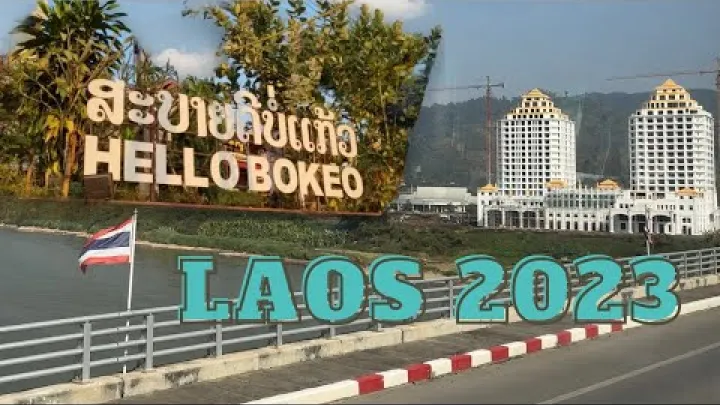
Expect separate queues, tickets, and small payments at different points. The bridge crossing is not a walk across the town riverfront, and local transport may be needed on both sides. Opening hours, shuttle arrangements, fees, and the precise immigration process can change, so use current information at the crossing rather than relying on an old timetable.
Before leaving Thailand, confirm your nationality's current Lao entry option and the procedures accepted at Friendship Bridge IV. Depending on nationality and current policy, this may mean visa-free entry, visa on arrival, or an eVisa that is valid for the selected crossing. Keep your passport and arrival documents accessible rather than packed in checked or hard-to-reach luggage.
Reach Huay Xai from Laos by Rail and Road
Rail travel can reduce the length of the road journey across Laos, but it does not reach Huay Xai directly. The key is to treat the train and road legs as separate services with a realistic transfer plan.
Use Nateuy Railway Station as the Rail Connection
Nateuy railway station, also written as Na Toey in some searches and local conversations, is the relevant rail-road interchange for Huay Xai. Travelers can take a Lao–China Railway train to or from Nateuy, then continue by bus or minivan on the road leg to Huay Xai. It is useful for journeys between Huay Xai and Luang Prabang, Vientiane, and other stations on the railway line.
The train segment is normally easier to identify and book than the local road connection. Current schedules and ticket availability can be checked through Laos China Railways booking channels and services such as Laos China Railways. That information does not, however, prove that a Nateuy-bound or Huay Xai-bound van will be operating at a convenient time.
Ask at the Huay Xai international bus terminal whether a Nateuy-bound van is running, where it departs, and which departure leaves enough time for your intended train. Do the same in Nateuy before relying on a late train arrival for a same-day road transfer. The critical risk is not the rail line itself but the gap between the train arrival and the locally arranged vehicle.
Travel from Vientiane via the Railway
From Vientiane, a practical northbound plan is to take a train toward Nateuy and then continue by road to Huay Xai. This can be more appealing than a very long all-road journey, especially for travelers who prefer a reserved rail seat and a clearer main transport segment. It may still require an early start and can become a long travel day once the road connection is included.
Book the train with enough flexibility to allow for reaching the station, boarding procedures, and the onward road transfer. Seat classes and availability differ by service, and popular dates can sell out. Choose a train time that leaves room for the second leg instead of selecting only the fastest-looking rail option.
A same-day arrival in Huay Xai depends on the selected train and the road vehicle operating as expected. If you have a fixed border plan, boat ticket, or activity booking, an overnight stop near a major hub can be safer than building the whole day around a narrow connection.
Travel from Luang Prabang or Luang Namtha
From Luang Prabang, there are three broad choices: travel by train toward Nateuy and then by road to Huay Xai, take a slower Mekong route, or seek a long road bus or minivan service. The train-and-road option can be a useful balance between comfort and travel time, but it requires the Nateuy transfer to line up well.
Luang Namtha is an important northern Laos road hub and can be a sensible intermediate stop. Travelers may use a local bus or minivan between Huay Xai and Luang Namtha, then continue toward Nateuy or another destination. This staged approach can be easier to manage than trying to join several local services in one day.
Reports about direct buses between Huay Xai and Luang Prabang are inconsistent. A direct vehicle may operate at certain times, but do not assume that an online listing represents a dependable daily service. Ask at the bus terminal about the current route, departure time, ticket type, and arrival location. If the answer is uncertain, an overnight in Luang Namtha or Luang Prabang can remove pressure from the itinerary.
Travel by Mekong Slow Boat or Direct Bus
Road and rail routes are practical transport choices. The Mekong route is different: it is a journey in its own right. Buses may be quicker when available, but they require a tolerance for long and sometimes winding road travel.
Take the Mekong Slow Boat from Luang Prabang
The classic Mekong slow boat route links Huay Xai and Luang Prabang over two travel days, normally with an overnight stop at Pak Beng. Travelers arriving from Luang Prabang can take the reverse direction to reach Huay Xai. It is a scenic way to travel through northern Laos and can fit well into a flexible itinerary, but it is not the right choice if you need a predictable, fast arrival.

Boat tickets, pier transfers, food, and the Pak Beng overnight stay may be arranged separately. Seating comfort and onboard facilities vary by boat, so carry water, snacks, sun protection, warm layers for wind or rain, and any medication needed for a full day on the river. Choose accommodation in Pak Beng after understanding where the boat arrives and departs rather than assuming every property is beside the correct pier.
Before purchasing, confirm the slow-boat departure, river conditions, ticket terms, and Pak Beng overnight arrangements at the pier. Season, water levels, operator practices, and local logistics can affect both the departure point and journey pattern. A recent traveler route report may help illustrate common approaches from northern Thailand, but the pier is the place to confirm the current boat plan.
Consider Direct Buses and Sleeper Services Carefully
Direct day buses, minivans, and overnight sleeper services between Huay Xai and Luang Prabang are sometimes reported. They can be attractive on paper because they avoid the Pak Beng overnight and the Nateuy transfer. In practice, the route, vehicle type, operating day, and actual duration can be difficult to confirm in advance.
A long road journey may include winding mountain roads, roadside breaks, limited luggage space, and variable comfort. On sleeper services, sleeping space may be shared or more compact than travelers expect. A day minivan can be more direct but may feel crowded, while a larger bus may have fewer departures. These are trade-offs rather than universal rules.
Check directly at the Huay Xai international bus terminal before building an itinerary around a direct bus. Ask whether the ticket is for a direct vehicle or a service with changes, whether the stated endpoint is central Luang Prabang, and whether the service operates on your date. If a direct departure is unavailable, the Nateuy rail-road route or a staged trip through Luang Namtha may be more realistic.
Consider Air Access and Nearby Airports
Air travel can be useful for reaching northern Laos, but it needs more careful confirmation than the road border route. Do not plan an entire Huay Xai itinerary around a flight listing without confirming that the airport and service are operating for your date.
Check Ban Huoeisay Airport Before Booking Flights
Ban Huoeisay Airport is the airport associated with Huay Xai and uses the code HOE. The available information identifies the airport but does not establish dependable current scheduled passenger service. Airline schedules, aircraft availability, and airport operations can change, so an airport listing alone should not be treated as proof of a bookable route.
Before planning around HOE, check the airline or airport directly for current flights and conditions. The airport is identified as Ban Huoeisay Airport, but travelers should confirm whether a flight is actually scheduled, bookable, and suitable for their connection before purchasing other non-refundable transport.
Fly to a Nearby Lao Gateway and Continue Overland
A more practical air strategy may be to fly to a larger Lao gateway, such as Luang Prabang, and continue by rail and road via Nateuy or by a long road route. Luang Namtha may also be relevant when available flights align with an existing itinerary, followed by a road connection toward Huay Xai.
This approach usually costs more than traveling entirely overland and adds another transfer. It is most useful when it saves a large amount of road time, fits an international arrival, or allows you to begin in a city you already intend to visit. Compare the total journey, including station or bus transfers and an overnight if needed, rather than comparing flight time alone.
Reach Huay Xai from Other Regional Gateways
From places farther away in Laos and neighboring countries, Huay Xai is usually reached through a major transport hub rather than by one direct service. Breaking the trip into clear stages makes it easier to recover if a local connection changes.
Travel from Southern Laos via Vientiane
From Pakse, Savannakhet, and other southern Lao destinations, travel generally involves reaching Vientiane or another central hub first. From Vientiane, the railway and Nateuy road connection provides a clear structure for continuing north to Huay Xai. This avoids relying entirely on a sequence of very long road legs.
Direct southern routes may be limited or difficult to verify, rather than impossible in every season. A staged itinerary gives you more reliable places to rest, buy tickets, and adjust plans. For most travelers, an overnight in Vientiane or another major stop is more manageable than trying to make every connection in one continuous journey.
Travel from Vietnam or Other Neighboring Countries
Overland travel from Vietnam to Huay Xai usually requires multiple border crossings and bus connections. A practical route may pass through Luang Prabang, Vientiane, or another Lao gateway before continuing north. It can suit travelers with time and flexible plans, but it is not a simple direct connection.
Another approach is to fly to Chiang Rai in Thailand, travel to Chiang Khong, and cross the Friendship Bridge into Huay Xai. This can be faster but is often more expensive and requires valid entry arrangements for both Thailand and Laos. Compare the number of border procedures, baggage transfers, and accommodation nights, not only the advertised journey time.
Prepare for Border Entry and Arrival in Huay Xai
A smooth arrival depends on documents and the final local transfer as much as the main journey. Prepare for the formal border process, then leave time and cash for getting from the arrival point to the part of Huay Xai you actually need.
Prepare Documents, Visa Information, and Cash
Check whether your nationality is eligible for visa-free entry, visa on arrival, or an eVisa for Laos at the crossing you plan to use. If using an eVisa, confirm that Friendship Bridge IV is an approved entry point for your document. Immigration rules, passport-validity requirements, accepted payment methods, and fees can change, so use current official Lao immigration or eVisa information for nationality-specific requirements.
Keep mandatory items separate from convenience items. Essential items normally include a valid passport and the documents required for your entry type. Useful extras can include passport photographs if applicable, a pen for forms, a copy of accommodation details, and accessible funds for official fees and transport. Carry usable cash in small denominations as well as a backup payment method where possible.
Do not rely on anecdotal border advice for a rule that could affect entry. A traveler who qualifies for one entry process may not qualify for another, and a fee or form mentioned in an older account may no longer apply. Check the rules before departing Thailand or before boarding a flight toward the region.
Continue from the Border, Bus Terminal, or River Pier
After entering Laos, identify your actual destination: Huay Xai town, the international bus terminal, the Mekong river pier, a hotel, or an activity meeting point. These places may require a short local ride from one another. Travelers continuing to a slow boat or a Gibbon Experience meeting point should allow time for this final transfer rather than treating immigration as the end of the journey.

Local tuk-tuks, shared vehicles, and informal transfers may use negotiated prices. Before boarding, agree whether the quoted price is per person or for the whole vehicle, confirm the destination, and confirm the currency. Carry small amounts of usable cash so that a simple short ride does not depend on finding change or an ATM.
Most local drivers are providing an ordinary transport service, but unclear arrangements can create avoidable disputes. Decline pressure to leave immediately if the price, destination, or sharing arrangement is not clear. A calm, specific question before departure is usually the best way to arrive in Huay Xai with the final part of the trip under control.
Select area
Create a post
Posting is free and no registration is required.