Luang Prabang Travel Guide: First-Time Visitor Tips
Luang Prabang is a compact riverside city in Northern Laos where temple roofs, former royal buildings, quiet lanes, and everyday Buddhist life sit close to the Mekong River and the Nam Khan River. This Luang Prabang travel guide is designed for first-time visitors who want to make sound decisions before arriving, rather than rushing through a list of sights. It explains the city’s layout, the best bases for different travel styles, seasonal planning, arrival options, day trips, costs, and responsible travel. The city is easy to enjoy at a slow pace, but a little advance planning makes station transfers, weather-sensitive excursions, and cultural visits much smoother.
Luang Prabang at a Glance
Luang Prabang works best as both a destination and a base. Its historic core is walkable, while waterfalls, caves, river journeys, and other Northern Laos experiences are reached on day trips or onward travel. Use the city itself for heritage and food, then add nature or river activities according to your available time.
What Makes Luang Prabang Different
Luang Prabang lies at the meeting point of the Mekong and Nam Khan rivers. Its narrow historic peninsula brings together Buddhist monasteries, traditional Lao buildings, colonial-era architecture, riverfront views, and the former royal heritage of Laos. The result is a city that rewards unhurried walking: a temple may be a few minutes from a quiet lane, a café, a market, or a riverbank.
For visitors, the practical advantage is concentration. You can spend much of a day on foot in the Old Town, then use the same accommodation base for a nature excursion such as Kuang Si Falls or for a Mekong trip toward Pak Ou Caves. The official Tourism Luang Prabang website is a useful starting point for locally focused visitor information and attractions.
It is not a large modern city with an intensive nightlife or a fast transport network. Choose Luang Prabang for heritage, food, riverside atmosphere, crafts, and slower travel. Travelers who arrive expecting a dense city schedule may enjoy it more by leaving empty time for side streets, sunsets, and rest between activities.
How Long to Stay and What to Prioritize
For most first visits, three to four nights is a practical starting range. That gives you time for an Old Town walking day, a cultural morning and evening, and at least one excursion outside town. Two nights can work if your schedule is limited, but it usually requires choosing between a deeper city visit and a full day at Kuang Si Falls. Five nights or more suits travelers who want a relaxed rhythm, a river activity, cooking or craft experiences, and a second day trip.
| Available time | Best focus | Practical approach |
|---|---|---|
| Two nights | Old Town and one major priority | Stay central and avoid a packed arrival day |
| Three to four nights | Heritage plus one excursion | Add Kuang Si Falls or a river-based activity |
| Five nights or more | Slow travel and varied interests | Include crafts, food, caves, or onward Northern Laos travel |
Set priorities before booking tours. Temple and museum travelers benefit from time on the peninsula. Nature-focused visitors should protect a full day for a waterfall trip. Food and craft travelers can add a market visit, a cooking class, or a workshop without changing hotels. Final sequencing should follow actual arrival times and excursion access, not an overly rigid itinerary.
Understand the Layout and Choose Where to Stay
Where you sleep affects nearly every part of a Luang Prabang trip. The main decision is whether to stay on or near the Old Town peninsula for walkability, choose a riverfront lane for atmosphere, or stay farther out for space and potentially lower accommodation costs.
The Old Town Peninsula and Its Main Walking Axis
The Old Town peninsula sits between the Mekong River and the Nam Khan River. It is the simplest base for a first visit because many major sights, restaurants, cafés, temples, and evening activity are within the same compact area. Sisavangvong Road is the main orientation line: it passes the National Museum and former Royal Palace area, sits near Mount Phousi, and connects with streets leading toward both rivers.

The Luang Prabang Night Market is another useful landmark. It runs along Sisavangvong Road from the tourism office toward the Royal Palace Museum and is generally described by the local tourism office as operating daily from late afternoon to about 10 p.m. See the Tourism Luang Prabang Night Market page for its stated pattern, but ask locally if your visit depends on a particular evening.
Choose this area if you want to walk back to your hotel after dinner, visit Mount Phousi around sunrise or sunset, and avoid arranging frequent short rides. It can also be busier, particularly around the market corridor. When comparing properties, look beyond the phrase “Old Town”: check the map, the nearest road, vehicle access, stairs, and whether the room faces a lively street.
Riverside Bases for Views and a Quieter Atmosphere
Mekong-side and Nam Khan-side accommodation can offer a calmer feel and a stronger sense of the rivers. A Mekong-facing stay may suit travelers who value broad water views and evening light. The Nam Khan side can feel more tucked away, depending on the lane and bridge access. Neither riverfront choice is automatically better; the right one depends on how much you value a view against the convenience of being close to the central walking axis.
Before booking, inspect the exact property location. Riverfront rooms may involve steps, narrow lanes, or a longer walk to the market and central restaurants. Some are still very central, while others are sufficiently removed that a tuk-tuk is useful at night or when carrying bags. Ask about road access for airport or railway-station transfers, room access, and likely noise from nearby public areas.
Staying Beyond the Peninsula
Accommodation outside the peninsula can suit travelers looking for more space, a residential setting, or a different price point. It may also suit repeat visitors who do not need to be beside every main sight. The trade-off is straightforward: longer walks and greater dependence on tuk-tuks, arranged drivers, or accommodation transport.
For a first trip, a peripheral base is most comfortable when the property can clearly explain its position relative to the Old Town and can help with arrival transport. Confirm the check-in process if you land late, whether drivers can reach the entrance, and how you will return after an evening in the center. A lower room rate is less valuable if every outing requires an uncertain or expensive ride.
Choose the Best Time to Visit Luang Prabang
There is no single best month for every traveler. Weather comfort, greenery, visitor demand, and the kind of day trips you want all matter. Plan the timing around your tolerance for heat and rain, then leave margin for changing conditions.
The Cooler, Drier Travel Window
The generally drier part of the year is often the most comfortable period for walking, temple visits, viewpoints, and outdoor excursions. Climate summaries indicate that December and January are among the cooler months in Luang Prabang, while annual rainfall is substantial overall. The available Climate-Data profile offers broad monthly context, not a guarantee for a particular travel week.
Comfortable conditions can bring stronger demand for central rooms, popular transport connections, and well-known excursions. If you are traveling during a busy holiday period or have a fixed arrival date, reserve the parts of the trip that cannot easily be replaced, such as accommodation and key intercity transport. Keep museum visits, temple walks, and food plans more flexible.
Managing Heat in March and April
March and April can feel demanding for midday sightseeing, especially on exposed streets and during stair climbs. This does not prevent a good visit, but it changes the best daily rhythm. Start early for temple lanes, almsgiving observation, or Mount Phousi; use the middle of the day for the National Museum, a meal, a café, or a rest; then return outside in the later afternoon.
Heat should shape activity choices. A compact heritage circuit is easier when divided into short loops rather than one long walk. Cycling and rural tours are more pleasant when scheduled early. Carry water, use sun protection, and be realistic about how much time you want to spend outdoors before an evening market visit.
Using the Rainy Season with Flexibility
The rainy season can appeal to travelers who prefer greener landscapes, a slower pace, and possibly lighter visitor demand. It also requires a different kind of itinerary. Rain may make paths slippery, affect river conditions, and complicate rural road travel, while waterfalls and caves can require changes to access or activity plans.
Build the trip around flexible sequences rather than assuming every outdoor plan will run as expected. Keep urban heritage activities, such as the National Museum, temple visits, and food experiences, available as weather backups. Before scheduling Kuang Si Falls, Pak Ou Caves, or a rural excursion, check the current forecast and local access conditions. Use signed paths and follow instructions at the site rather than treating a planned excursion as a fixed commitment.
Get to Luang Prabang and Move Around
Luang Prabang can be reached by air, rail, road, and selected river routes. The best option depends on whether speed, scenery, cost, or the wider route through Laos matters most. Arrival and departure logistics deserve extra attention because the airport and railway station are outside the pedestrian heritage core.
Reach Luang Prabang by Air and Prepare for Entry
Flights into Luang Prabang Airport are useful when you are prioritizing speed or connecting through a regional or Lao hub. On arrival, allow time for the practical sequence: entry procedures, baggage, a local payment plan, and a transfer to your accommodation. It is sensible to arrange the first transfer with your hotel or a reputable provider when arriving late or carrying substantial luggage.
Passport, visa, entry, and fee requirements depend on nationality, passport validity, travel purpose, and current Lao policy. Do not rely on another traveler’s experience or a generic list. Before departure, verify your nationality-specific requirements with an official Lao government or embassy source and make sure you have the documents and payment method required for your route.
Use the Laos-China Railway
The Laos-China Railway is an important overland option for travelers moving between Luang Prabang and other parts of Laos. It can be attractive for comfort and efficiency compared with some road journeys, but it is not a door-to-door service. The Luang Prabang railway station is outside the central heritage area, so the station transfer is part of the journey, not an afterthought.

Rail is often best for travelers who can work with a fixed departure and arrival time. Air travel may be simpler for tight international connections, while roads or river routes can better fit travelers who want a slower, scenic journey. Compare the whole trip: ticket availability, baggage rules, station location, hotel transfer, and the consequences if an earlier connection runs late.
Confirm the current timetable, ticket rules, and station transfer with the railway, a reputable booking channel, or your accommodation before travel. Arrange how you will reach the station, allow a substantial buffer, keep your ticket and passport accessible, and confirm the transfer from the station at your destination before boarding.
Choose Road and Mekong Routes
Buses and shared road transport connect Luang Prabang with other Lao destinations, but comfort, road conditions, and timings can vary. They may be the logical choice when your route does not align with rail or flight options. Treat quoted journey lengths as estimates, especially if your plans involve mountain roads, weather, or connections.
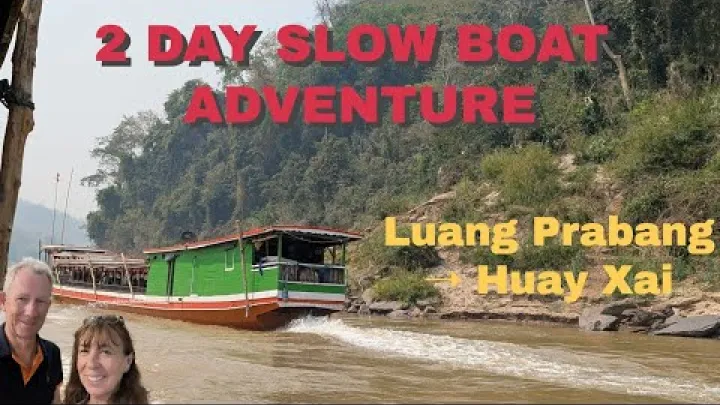
The Mekong slow-boat route from the Thailand border area through Huay Xai and Pak Beng is a different proposition: it is slower and more experience-focused than an efficient transfer. It suits travelers with time for a multi-stage route and an interest in river scenery. It is less suitable when you have a same-day flight, an inflexible connection, or limited tolerance for changing schedules.
For either road or river travel, confirm current departure arrangements, border procedures if relevant, weather, and accommodation at intermediate stops before committing to the full route. Keep essential medication, water, valuables, and a change of clothes accessible rather than packed deep in stored luggage.
Get Around the City and to Day Trips
Walking is the most rewarding way to move around the Old Town. It lets you notice temples, wooden houses, small shops, and river lanes that disappear when traveling only by vehicle. Tuk-tuks, arranged drivers, shared vehicles, and some accommodation shuttles become more useful for arrivals, the railway station, Kuang Si Falls, Pak Ou Caves, and locations beyond the heritage core. Laos has a mix of transport choices, as outlined in this broad Agoda transportation guide, but local availability can differ from general country guidance.

For negotiated transport, agree on the route, departure time, return arrangement, waiting time, and whether parking or entrance costs are included before leaving. For a day trip, clarify whether the driver stays with you, where you will meet after the visit, and what happens if weather changes the plan. Organized trips can simplify these details, while a private driver may be better for travelers who want control over pace.
Plan What to Do in Luang Prabang
A strong Luang Prabang itinerary balances the historic core with one or two carefully chosen additions. Do not try to turn every temple, market, cave, and waterfall into a single-day checklist. The city is most memorable when you leave time to observe and return to places that interest you.
Build a Heritage Walking Circuit
A simple circuit begins near the National Museum and former Royal Palace, follows the central streets and nearby temple grounds, includes a climb of Mount Phousi when conditions suit you, and finishes around the riverfront or Night Market. The National Museum is a useful anchor for understanding the former royal setting; the official tourism description identifies it as the former Royal Palace and gives its early twentieth-century construction history.
Walk this circuit in sections. Use the morning for temples and quieter lanes, pause during the warmest part of the day, then choose Mount Phousi and the Night Market for later. This approach avoids constant vehicle use and leaves time for the unplanned parts of the city: a riverside bench, a shaded street, a local meal, or a small craft shop.
Opening hours, ticket procedures, and access rules for museums and religious sites can change. Confirm those details on arrival, especially if you have only one day. Keep clothing suitable for temple grounds in your day bag so you do not need to return to your hotel between stops.
Experience Temples and Morning Almsgiving Respectfully
Luang Prabang’s temples and morning almsgiving are living religious practices, not performances arranged for visitors. The best approach is quiet observation. Wear modest clothing, move calmly, keep an appropriate distance from monks and residents, and do not block paths or participants for photographs.
If you observe almsgiving, choose a less crowded position and follow local instructions. Do not assume that participation is necessary to have a meaningful experience. Temple-specific rules may differ, so respect signs, remove footwear where requested, and ask before photographing people closely. A respectful visit usually has less to do with taking perfect images and more to do with allowing the ceremony to proceed without disruption.
Visit Kuang Si Falls with a Practical Plan
Kuang Si Falls is a major nature excursion from Luang Prabang, not a quick walk from the Old Town. Most visitors go by organized trip, hired driver, or another locally arranged transfer. Decide whether you want a structured group schedule or more time to walk, rest, and explore at your own pace. The choice affects both the cost and how much of the day you will spend in transit.
At the site, follow marked routes and site instructions. Swimming access, trail conditions, park services, and practical restrictions can differ with weather and management decisions. A published guide has listed daily opening hours and an entrance price, but these are not permanent commitments; use the Kuang Si Falls guide only as background and confirm current details locally.
Use signed paths and confirm current park, road, and shuttle conditions before visiting. Wear footwear with grip, carry water, and do not treat wet rocks or unofficial shortcuts as safe routes. If the excursion is disrupted, return to the city’s heritage activities rather than trying to force a risky substitute trip.
Add Caves, Crafts, Food, and River Experiences
Pak Ou Caves and Mekong cruises suit travelers who want a river-oriented day and have enough time beyond the Old Town. Cooking classes suit visitors who want an activity that connects food with local ingredients and offers a practical indoor or mixed-weather option. Craft centers and workshops are a good choice for travelers who prefer to learn about textiles, paper, ceramics, or other local skills rather than simply shop.
Choose optional experiences by interest. River scenery and caves suit travelers willing to give up much of a day to transport and water travel. Cooking and craft activities suit those who want a more focused experience close to the city. A village visit or wildlife-related activity needs extra care: ask how local communities are involved, whether photography is appropriate, and how animals are treated.
Read the inclusions before paying. Check whether transport, entrance fees, meals, guides, equipment, and return transfers are part of the price. Do not assume that two tours with the same destination offer the same route, group size, or amount of time on site.
Budget and Booking Logistics
Luang Prabang can be planned across a range of budgets, but spending depends more on travel style than on a single daily average. A central boutique room, private transfers, and several guided excursions create a different trip from simple lodging, local meals, and self-paced walking.
Build a Budget from Fixed and Variable Costs
Start with fixed costs: international or regional transport, accommodation, travel insurance, and any pre-booked rail or flight segments. Then estimate variable costs for food, local transport, attraction tickets, day trips, shopping, and optional activities. This method is more useful than copying another traveler’s daily budget because it shows where you can adjust.
Central heritage accommodation may cost more but can reduce short transport rides and make evenings easier. A private airport or station transfer costs more than sharing transport but can simplify a late arrival. Organized waterfall and river excursions add convenience, while independent arrangements can provide flexibility if you are comfortable coordinating the details.
Create a low and high estimate for each category. Ask yourself how often you want restaurant meals, whether you prefer private rooms, how many full-day trips you will take, and whether you need flexible tickets. Leave a margin for small expenses, changes in plans, and purchases at markets or workshops.
Use Current Price Anchors Carefully
Attraction fees and local transfer prices are useful planning anchors, but they are among the details most likely to change. The National Museum and Kuang Si Falls are good examples: fees may differ by visitor category, ticket type, included services, or current site policy. Negotiated tuk-tuk prices also depend on route, time, vehicle, waiting arrangements, and group size.
Do not build the entire budget around an old price quoted online. Recheck current attraction fees and transport prices and keep an appropriate payment method available. For a ride or excursion, ask for the total amount and inclusions before departure. For an attraction, confirm the payment method and any separate costs for lockers, guides, or transport where applicable.
Book Accommodation, Transport, and Day Trips
When booking accommodation, confirm the exact location, check-in hours, cancellation terms, room access, and whether the property can arrange a transfer from Luang Prabang Airport or the railway station. If your arrival is late, ask what happens if your flight or train is delayed. A direct message to the accommodation can resolve details that a booking listing does not show.
Give extra planning time to railway journeys, peak-date stays, and multi-stage routes. Compare direct accommodation communication, reputable booking platforms, and established local operators based on the terms that matter for your trip, not on the assumption that one channel is always superior. For any day trip, save the operator contact, pickup point, return plan, and cancellation conditions.
- Save offline copies of booking confirmations, tickets, and accommodation contact details.
- Confirm your arrival transfer and the final distance from the drop-off point to the property.
- Check what each tour includes before payment.
- Keep one flexible period in the itinerary for a delayed connection or changed excursion plan.
- Carry more than one practical way to pay where possible.
Stay Safe and Travel Responsibly
Luang Prabang’s compact center is approachable for visitors, but safe travel still depends on sound everyday choices, attention to local guidance, and respect for religious and community life. Separate ordinary city precautions from the different considerations involved in rural travel.
Understand Official Advisory and UXO Guidance
Read current official travel advice for Laos before departure and again if your itinerary changes. The U.S. Department of State advises travelers to exercise increased caution in Laos due to crime, unrest, and unexploded ordnance, while noting that some areas carry greater risk. Consult the current Laos Travel Advisory for its full, current guidance.
The established visitor areas of Luang Prabang are different from remote provincial routes, where infrastructure and conditions may be less predictable. Outside the urban core, stay on established roads, tracks, and paths. Never touch unknown metal objects or items that could be unexploded ordnance. If you are planning remote travel, use local expertise and avoid improvising routes across open land.
Manage Everyday City and Road Risks
Everyday risks are usually practical rather than dramatic: uneven pavements, stairs, heat, wet surfaces, river edges, and belongings left unattended in busy places. Use footwear with grip, especially during wet weather or on viewpoint stairs. Carry water on longer walks, take breaks in the heat, and keep valuables secure but discreet.
Think carefully before renting or riding a scooter if you lack experience. Traffic, changing road surfaces, rural routes, fatigue, and night travel can turn a short journey into a difficult one. A tuk-tuk, driver, or organized outing is often the simpler choice for day trips. Travelers with mobility needs should ask accommodation providers directly about steps, bathroom access, road approach, and transport arrangements rather than relying only on photographs.
Respect Heritage, Religion, and Local Communities
Respectful behavior protects both the experience of visitors and the living character of Luang Prabang. Dress appropriately at temples, follow requests about footwear and photography, avoid interrupting ceremonies, and ask permission before taking close images of people. Give monks, residents, and worshippers room to move through their daily routines.
Shop thoughtfully by asking about locally made goods and paying attention to quality rather than treating bargaining as a contest. When choosing village visits, wildlife activities, or river trips, consider whether the experience treats people, animals, and the environment with care. Use refillable water where practical, keep litter with you, and leave religious and natural sites as you found them.
A Simple Checklist for Planning Your Luang Prabang Trip
Plan Luang Prabang around a central base, a realistic pace, and one or two experiences beyond the Old Town. Reserve the elements that are difficult to replace, but leave room for weather, transport changes, and the slower rhythm that makes the city distinctive.
- Choose a stay length that allows both heritage time and at least one priority excursion.
- Select accommodation by exact location, access, and transfer practicality, not photographs alone.
- Match the season to your tolerance for heat, rain, and changing outdoor access.
- Confirm entry requirements, airport or station transfers, and intercity tickets before departure.
- Use walking for the Old Town and arrange day-trip transport with clear return details.
- Check current conditions and fees for weather-sensitive or managed sites.
- Observe temples and almsgiving quietly and respectfully.
- Read current official travel advice and stay on established routes outside town.
With these basics in place, Luang Prabang is easy to approach: walk the peninsula, spend time beside the rivers, choose activities that fit your interests, and allow the city enough time to reveal itself.
Select area
Create a post
Posting is free and no registration is required.