Pakse Where to Stay: Best Areas and Accommodation

Choosing where to stay in Pakse is mainly a question of convenience. The city is a useful base for Southern Laos, whether you are arriving by air, continuing by bus, riding toward the Bolaven Plateau, or visiting Wat Phou and the 4,000 Islands. For most visitors, a central property near Wat Luang and Pakse Hotel is the simplest choice. This guide compares Pakse accommodation areas, lodging types, transport priorities, and the practical details that can make a short stay easier.
The Short Answer: Where Most Visitors Should Stay in Pakse
The Central Wat Luang–Pakse Hotel Area Is the Default Base
Stay in central Pakse if this is your first visit, if you have only one or two nights, or if you want to arrange onward travel without relying on frequent local transport. The most practical cluster is broadly around Wat Luang, Pakse Hotel, Champasak Shopping Centre, the Champasak Night Market, and nearby streets leading toward the riverfront.
This is not a formal district with identical conditions on every block. It is a useful central base because food stalls, restaurants, temples, small shops, travel services, hostels, guesthouses, and conventional hotels are generally concentrated nearby. You can also keep evening errands simple and remain reasonably close to major city transport connections.
Use a simple rule when deciding: choose central Pakse unless your trip is primarily about a quiet outer setting, immediate access to a departure road, or an overnight stop outside the city. Individual rooms and properties can differ greatly in comfort, service, and noise, so choose the location first and then compare live listings.
When Another Pakse Area May Suit You Better
A different base may be better when one priority matters more than central convenience. Riverside accommodation can suit travellers who value a view or a more relaxed setting near the Mekong or Xe Don. A property on Route 13 or No. 1 Road can work for a short transit stay, especially when an early road departure matters more than sightseeing.
Lak 3, Road 38, and other outer locations can appeal to visitors with a motorbike, a private driver, or a preference for a less busy setting. The trade-off is reduced walkability: dinner, markets, rental shops, and bus-related errands may require a tuk-tuk or your own transport. Lowest room price is also not always the lowest overall cost if several transfers are needed each day.
| Priority | Best base | Main trade-off |
|---|---|---|
| First visit | Central Pakse | More city activity |
| River view | Riverside | Map location varies |
| Early road departure | Route 13 or No. 1 Road | Traffic and road noise |
| Quiet outer stay | Lak 3 or outer areas | More transport dependence |
As a quick decision test, start with the next morning rather than the room itself. If you need a bus, rental bike, or airport transfer, a central address may save time even when an outer room is cheaper. If you will spend most of the day on a guided tour or private vehicle, a view, parking, or quieter setting may matter more than being able to walk to dinner.
The Main Areas Where You Can Stay in Pakse
Pakse is compact in comparison with a large capital city, but the right side of town still affects how easily you can eat, walk, sleep, and leave the next morning. Treat the following areas as practical location patterns rather than strict neighborhood boundaries.
Central Pakse Around Wat Luang and Pakse Hotel
Central Pakse is the baseline for most accommodation decisions. The area around Wat Luang and Pakse Hotel places visitors near city landmarks, commercial streets, the shopping centre, the night market, and riverfront-facing streets. It has the broadest apparent mix of budget dorms, simple guesthouses, and city hotels.
This is normally the easiest area for visitors who want to walk to evening food, buy basic supplies, speak with tour or transport providers, and return to their room without planning a long trip across town. It is also useful when different people in a group have different budgets, because alternatives are usually closer together.
Walking comfort still depends on the exact street. Pavements, lighting, traffic, rain, and crossings can change a short route substantially. Read a map as well as the listing description, particularly if a property calls itself “central” but is positioned beyond the main evening area.
Riverside and Lao-Japan Bridge Area
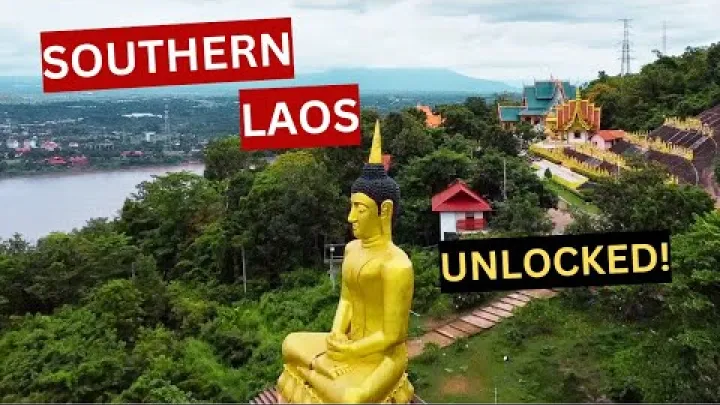
Accommodation near the Mekong, the Xe Don, or the Lao-Japan Bridge can give a stay a more scenic feel while remaining within reach of central Pakse. It can be a good fit for couples, travellers who enjoy a river-facing restaurant area, and visitors prepared to pay more when a property offers stronger amenities or a desirable view.
The waterfront is not one uniform hotel zone. A listing described as riverside may be directly on the water, across a road, or simply within the wider river area. A good view does not automatically mean an easy walk to the bus station, rental shop, market, or preferred restaurant. Inspect the map pin and recent guest comments before treating “riverside” as a location guarantee.
Some riverfront and market-facing streets can be livelier in the evening. Travellers who want the atmosphere but lighter sleep should compare room orientation, look for rooms set back from the road, and consider whether the property has a quieter side of the building.
Route 13 and No. 1 Road Corridor
Route 13 and No. 1 Road are practical corridors rather than the default place to stay for sightseeing. They can suit travellers arriving late, departing early, travelling by private vehicle, or using Pakse as a brief stop between destinations. Some hostels and hotels use these road addresses because they are easy to find and useful for onward travel.
The cost of that convenience can be heavier traffic, less pleasant road crossings, and rooms affected by vehicles or nearby evening activity. A road-facing room may be useful for a quick departure but less appealing for a long, quiet stay. Ask whether the room faces the main road and whether reception can help arrange a departure transfer if needed.
Choose this corridor when access to your next route is more important than being near the city’s main food and market cluster. Otherwise, a central property a little farther from the road is usually a more balanced Pakse base.
Lak 3, Road 38, and Other Outer Areas
Lak 3, Road 38, and more dispersed locations outside the central cluster may suit riders, visitors with a car, or travellers who prefer less urban surroundings. These options can feel less busy and may have parking or a more spacious setting, but they are not the easiest choice for a visitor who expects to walk everywhere.
The main question is not whether an outer property is good; it is whether its location matches your transport. A listing described as “near the centre” can still be several kilometres from the market, central restaurants, or the practical starting point for an early bus. Without your own vehicle, short evening trips can become repeated transport arrangements.
Before booking, estimate the route from the property to the night market, the bus station named on your ticket, and the road you plan to use the next day. This quick comparison is more useful than relying on a broad neighborhood label.
Choose Your Pakse Base by Transport and Itinerary
Pakse is often a staging point rather than the final destination. Matching your room location to your arrival and departure plan can save time, especially during a one-night stay.
Airport Arrivals, Bus Stations, and Early Departures
Pakse International Airport is close to the urban centre. Transfer information from Viatovia places the airport at roughly 3 kilometres from downtown and suggests a journey of around 15 minutes, though traffic, weather, luggage collection, and pickup arrangements affect the actual time.
A central hotel or guesthouse is a sensible choice after a flight because it provides a short onward transfer and access to food if you arrive without a detailed plan. It can also simplify departures, but do not assume that all listings use the same bus-station reference. Tickets and accommodation descriptions may mention KM2 bus station or Pakse Bus station, and these names should be matched to your actual operator and departure point.
Before travel, confirm the airport pickup point, driver contact method, luggage capacity, reception hours, and the station shown on your ticket. For a late arrival, make sure the property can receive you at the expected time rather than assuming that a staffed desk operates all night.
For an early departure, ask the accommodation where the vehicle will meet you and how long it normally takes to reach the relevant terminal. Keep the operator name, departure time, pickup point, and a contact number together with your booking details. If you are carrying large luggage or travelling as a group, confirm that the planned vehicle can accommodate everyone instead of arranging the transfer at the last minute.
Using Pakse for the Bolaven Plateau, Wat Phou, and the 4,000 Islands
Pakse works well as a city base for Southern Laos routes. Travellers use it to organize trips toward the Bolaven Plateau, Wat Phou Champasak, and the 4,000 Islands, and to arrange motorbike rental, tours, or onward transport. A central stay can reduce the effort of collecting a rental, speaking with operators, and finding food before an early start.
Choose your number of nights according to the itinerary. One night in Pakse may be enough for a transit stop or an early departure. A second night can help if you arrive late, want to prepare for a riding route, or need time after returning. By contrast, an overnight stay on the plateau, in Champasak, or on an island is a separate accommodation decision: it may offer more immersion but does not replace Pakse’s city services.
For the Bolaven Plateau, prioritize a property with practical access to your rental provider and departure route. Roads leaving town can be busy, and motorbike riders should obtain current local route guidance and road-condition information before setting out. Do not rely on an old route description or assume that every tour uses the same pickup practice.
Match the base to the destination and transport method. A city night before Wat Phou or the 4,000 Islands is useful when you need to organize tickets or leave early, while a plateau stay makes more sense when waterfalls, villages, and slower rural travel are the main purpose. Ask the rental company or tour operator about the current route, fuel stops, return time, and pickup location; these details can affect whether a central room or a road-accessible property is more convenient.
Choose the Right Accommodation Type and Budget
Pakse has a broad practical range of places to sleep, from dorm beds to private hotel rooms. The most useful comparison is not a static “best hotel” list, but how much privacy, service, location, and flexibility you need.
Hostels and Capsule Rooms for Budget and Social Travel
Central hostels are often the most convenient choice for solo travellers, backpackers, and people arranging buses or motorbike routes. Dorm beds reduce costs and can make it easier to meet other travellers, while private hostel rooms offer a middle ground between a dorm and a conventional guesthouse.
Current Hostelworld listings show that Pakse has both dorms and private rooms at budget-oriented prices. Displayed rates are date-specific and may change with room type, taxes, demand, and availability, so use them as an indication of category rather than a permanent price promise.
Hostel style matters as much as price. A social property with a rooftop, bar, or active common area may be ideal before a loop or bus journey, but not for someone with an early flight. Check reception hours, lockers, air conditioning, bathroom arrangements, luggage storage, and recent comments about noise before choosing a dorm or capsule-style room.
Hotels and Guesthouses for Comfort and Convenience
Guesthouses and hotels are usually the better fit for couples, families, travellers with larger luggage, and visitors who want a private bathroom, more predictable room setup, or assistance with transport. Pakse’s current online inventory includes simple guesthouses, practical city hotels, and more amenity-focused properties; some listings may offer Wi-Fi, parking, pools, breakfast, or river-oriented rooms.
The current Booking.com inventory is useful for comparing available categories and map positions. It should not be treated as a permanent ranking, because room conditions, ownership, staff, prices, and availability can change. A property with a higher label is not automatically more convenient than a well-located guesthouse.
Compare the exact room, not only the property name. Check whether breakfast is included, whether parking suits your vehicle, whether the advertised Wi-Fi reaches the room, and whether staff can help with an airport transfer or onward departure. Cancellation terms are particularly important when transport schedules are uncertain.
Match the Stay to Purpose, Budget, and Length of Visit
For the lowest-cost social stay, start with a central hostel. For a simple private room, a central guesthouse can offer a practical balance of price and location. For stronger comfort expectations, more luggage, or a need for staff assistance, compare hotels in central or riverside locations.
Resort-style facilities, apartment-like rooms, kitchens, and long-stay services should be considered property-specific rather than assumed to be widely available across Pakse. For a stay longer than a few nights, reliable Wi-Fi, a workable desk, laundry access, food storage where offered, and proximity to daily meals can matter more than a scenic address.
For a short transit stop, spend on location rather than unused facilities. A slightly higher room rate close to your airport transfer, bus departure, rental shop, or intended road can cost less overall than a cheap room that requires multiple rides.
A useful budget comparison includes both the nightly rate and the cost of getting around. A dorm or outer guesthouse may have the lowest listed price, while a central private room may provide better value if it reduces tuk-tuk fares, waiting time, and the need to arrange separate rides for meals or tickets. For longer stays, also compare laundry, breakfast, workspace, and cancellation terms because small daily costs can outweigh a modest difference in the room rate.
Safety, Walkability, and Noise When Choosing Where to Stay
Night Walkability and Road Exposure
Available traveller discussion supports ordinary precautions in Pakse, including watching belongings, avoiding poorly lit or isolated places at night, and using reputable transport. The Laos Tourism discussion is not a systematic crime assessment, so it cannot establish that any whole neighborhood is completely safe or unsafe.
For practical evening movement, central streets with businesses, landmarks, and lighting may feel easier to navigate than isolated side streets. This is separate from road safety: Route 13 and No. 1 Road can expose pedestrians, cyclists, and motorbike riders to faster and heavier traffic. A short distance on a map may still involve an uncomfortable crossing or a dark stretch.
Plan your return route before going out, especially when travelling alone or arriving late. Follow well-lit main streets where possible, and arrange a tuk-tuk or another reputable transfer for late returns instead of walking through dark side streets.
Noise, Nightlife, and Sleep Quality
In Pakse, noise is usually a property and room issue rather than a simple area label. Rooms near food streets, markets, bars, common areas, and main roads can offer useful evening convenience, but they may also receive music, traffic, conversations, or early-morning activity.
A nightlife-adjacent hostel may suit a social traveller, while a conventional hotel or guesthouse with rooms away from the street can be better for families, light sleepers, and people leaving early. Recent reviews are more useful than a general claim that a location is “quiet.” Look for comments about thin walls, construction, road traffic, music, and room placement.
If sleep is important, request a room away from bars, night streets, major roads, and active common areas. Make the request before arrival where possible, as the quietest rooms may be limited.
A Practical Booking Checklist for Pakse
Verify the Listing Before You Commit
Use the listing map to check the property against Wat Luang, the riverfront, the station you will actually use, Pakse International Airport, and your planned route out of the city. This prevents a booking that is technically in Pakse but inconvenient for your plans.
- Confirm the total price, taxes, cancellation terms, and exact room type.
- Check air conditioning, private bathroom, Wi-Fi, breakfast, parking, and laundry if those features matter to you.
- Read recent reviews for cleanliness, noise, staff communication, road access, and whether advertised amenities were available.
- Confirm reception hours, late check-in, airport transfer, and bus or tour pickup arrangements when relevant.
- Use a flexible booking or obtain direct confirmation if your arrival time or onward transport is uncertain.
When a listing is unclear, ask one focused message before paying: confirm the exact map location, the room’s included facilities, late-arrival procedure, and the transfer or pickup point you need. Save the reply with your booking. This is especially useful when a property uses a broad location label or when the booking platform shows several similarly named bus stations.
Recheck the live listing for recent reviews, exact map location, amenities, and cancellation terms before paying. Treat the current property details as more reliable than an old article, an undated photo, or a broad neighborhood description.
Best Base by Traveller Profile
| Traveller | Recommended base | Accommodation focus |
|---|---|---|
| First-time visitor | Central Pakse | Well-reviewed guesthouse or hotel |
| Budget solo traveller | Central Pakse | Hostel with clear locker and noise details |
| Couple or family | Central or riverside | Private room and transport support |
| Bolaven rider | Central or route-accessible base | Rental and departure convenience |
| Rural immersion | Plateau, island, or village stay | Separate regional base choice |
First-time visitors and people staying one or two nights should generally choose central Pakse around Wat Luang and Pakse Hotel. Budget travellers should favor a central hostel with clear information on reception, lockers, and sound levels. Couples, families, and comfort-focused visitors can compare central and riverside hotels based on room quality, transport help, and likely sleep conditions.
Bolaven Loop riders should prioritize access to rental operators and the route out of town rather than choosing a distant scenic property. Travellers seeking a rural experience may prefer the plateau, an island, or a village homestay, but should view that as a separate base from a convenient Pakse city stay.
Final Recommendation for Where to Stay in Pakse
For most travellers, the best answer to where to stay in Pakse is central Pakse near Wat Luang, Pakse Hotel, the shopping centre, and the evening food area. It gives the most balanced access to accommodation choices, daily services, transport planning, and short walks around town.
Choose riverside lodging when the setting matters more than maximum transport convenience, road-corridor lodging for a brief early departure, and outer areas only when you have suitable transport or a specific reason to be there. If you remain undecided, book a well-reviewed central property and choose the room based on your next morning’s transport needs.
Select area
Create a post
Posting is free and no registration is required.