Champasak Travel Guide: Areas, Bases, Routes and Best Time
Champasak is one of the most varied parts of Southern Laos: a single province that includes Pakse, Mekong-side heritage, highland coffee country, dramatic waterfalls, and the islands of Si Phan Don. It rewards a journey planned around a few well-chosen bases rather than a rushed checklist. This Champasak travel guide explains where to stay, how the main areas differ, how to move between them, and what to consider before arrival. It is designed for first-time visitors who want a practical route while leaving room for a slower pace.
Why Champasak Belongs on a Southern Laos Itinerary
Champasak works best as a connected Southern Laos circuit. Its main attractions are spread between rivers, lowland towns, upland roads, and islands, so the experience changes noticeably from one base to the next.
What Champasak Offers First-Time Visitors
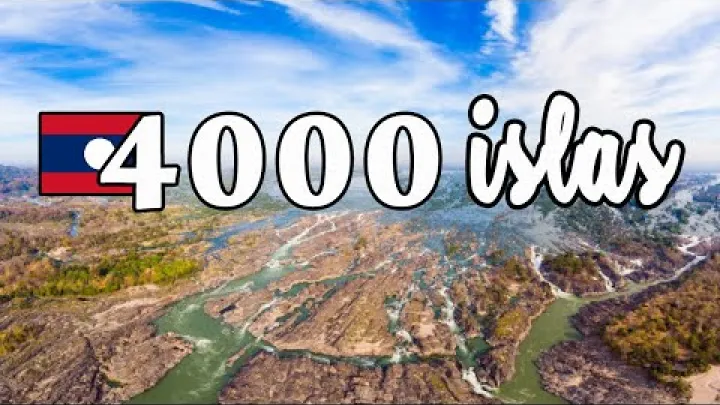
Champasak is a province, not only the small town of the same name. Its landscape ranges from the Mekong and Sedone Rivers around Pakse to the Khmer heritage of Vat Phou, the waterfalls and coffee-growing areas of the Bolaven Plateau, and the broad river channels of Si Phan Don, also called the Four Thousand Islands.
Pakse is the practical gateway, with the broadest concentration of transport booking, banks, markets, restaurants, and accommodation. Champasak town offers a much quieter Mekong setting near Vat Phou, while the islands around Don Det and Don Khon are suited to travelers looking for cycling, river views, and unstructured days. This is a strong region for visitors who prefer several distinct places over a single city break.
How Long to Stay and Who the Region Suits
With two or three days, focus on Pakse and Vat Phou, then add either a short Bolaven Plateau outing or a night in Champasak town. Four to five days can include the plateau and a slower heritage stop. A week allows time for several nights in Si Phan Don without turning every move into a transfer day.
Distances can appear short on a map, but a route combining the plateau, Mekong towns, and islands involves separate transport arrangements. Champasak is especially rewarding for independent travelers, heritage visitors, coffee enthusiasts, cyclists, and outdoor-minded travelers who are comfortable with a relaxed rhythm. Choose fewer bases if simple logistics matter most; add nights in the places that match your main interests if depth matters more.
Understand the Main Areas of Champasak
The best route begins with understanding what each area is for. Pakse is the service hub, Champasak town is the heritage base, the Bolaven Plateau is the nature and coffee area, and Si Phan Don is the river escape.
Pakse and the Mekong-Sedone Confluence
Pakse is the province’s main urban center, positioned near the meeting of the Mekong and Sedone Rivers. It is the most useful place to arrive, withdraw cash, obtain supplies, compare transport options, and arrange onward travel. The riverfront, central streets, local markets, and tuk-tuk stands are practical orientation points rather than a reason to expect a large sightseeing city.
Use Pakse as a staging point for the Bolaven Plateau, Vat Phou, and the southern road toward the islands. It generally has more accommodation and dining choice than smaller bases, although individual businesses and transport desks can change. Travelers with an early departure or a late arrival often find it sensible to spend at least their first or last night here.
Champasak Town and the Vat Phou Landscape
Champasak town is a compact settlement on the Mekong with a slower rhythm than Pakse. It is a good base for Vat Phou, riverside walks, cycling, older architectural details, and quiet evenings. The town is not simply an overnight stop beside a temple; it sits within a wider historic landscape shaped by the river, settlement patterns, and the old Khmer site.
Walking and bicycles suit the town itself, while tuk-tuks, hired drivers, or arranged local transfers are useful for Vat Phou and more distant sights. Do not assume that every nearby attraction has frequent public transport. If a particular site matters to your plan, arrange the return journey before setting out.
The Bolaven Plateau and Paksong Area
The Bolaven Plateau rises east of Pakse and has a cooler highland feel than the Mekong lowlands. It combines coffee cultivation, forested scenery, rural roads, and waterfalls. Paksong is an important local anchor, but it is smaller and less service-oriented than Pakse, so it should not be treated as an equivalent transport hub.
A day trip from Pakse is suitable for a first impression or a limited itinerary. An overnight stay makes more sense if you want early waterfall visits, time at coffee farms, or a less hurried route. Farm visits, tasting sessions, and seasonal work vary by operator and time of year, so treat them as opportunities to arrange locally rather than guaranteed inclusions.
Si Phan Don and the Four Thousand Islands
Si Phan Don is a dispersed river region at the southern end of Champasak, where the Mekong divides around islands, channels, and rapids. Don Det, Don Khon, and Don Khong are not interchangeable. Don Det is generally the most informal and backpacker-oriented option; Don Khon is quieter and popular for cycling and nearby natural sights; Don Khong is larger, with a more small-town and local character.
Visitors come for bicycle rides, village lanes, boat outings, waterfalls, and the feeling of living beside the river. Smaller-island access and some viewpoints can be affected by water level and local boat arrangements. Pick an island for its atmosphere and mobility rather than trying to see every island in a short stay.
Choose the Best Base for Your Trip
Where you sleep shapes the whole trip. The right base is usually the one that reduces the transfers you do not enjoy and puts you close to the experience you value most.
Pakse: The Practical Gateway
Pakse is the safest default for first arrivals, travelers who want reliable everyday services, and visitors planning several day trips. It offers the widest general choice of lodging, food, markets, ATMs, and onward transport arrangements in the province. It is also the easiest place to organize a vehicle, driver, or plateau excursion.
The trade-off is character. Pakse is convenient and functional, but visitors seeking Mekong heritage or island relaxation may prefer to continue after getting oriented. Use it as a base for a short, logistics-focused stay, or as a starting and finishing point for a wider Southern Laos route.
Champasak Town: Heritage and Mekong Evenings
Choose Champasak town when Vat Phou, the Mekong, cycling, and a quiet evening atmosphere are priorities. Accommodation tends to range from simple central guesthouses to riverside stays and more secluded properties. The main decision is less about luxury than about proximity to the river, town services, and your planned local transport.
When time allows, spend at least one night rather than visiting Vat Phou as a hurried excursion from elsewhere. The compromise is a smaller service network and fewer transport choices than Pakse. This base is best for travelers willing to trade convenience for a more settled experience of the river landscape.
Don Det, Don Khon, or Don Khong
Don Det suits travelers who want a social, informal island stay, simple cycling, and easy access to river-oriented activities. Don Khon is better for a quieter pace, cycling routes, historic infrastructure, and access to places such as Li Phi waterfall. Don Khong can suit visitors looking for a larger island and a less concentrated visitor scene.
Your choice should reflect the type of lodging, walking or cycling you expect to do, and the degree of quiet you want. Ask locally about boat transfers and path conditions once you arrive, particularly outside the busiest travel period, because these connections are not one standardized system.
The Bolaven Plateau: When an Overnight Stay Makes Sense
Stay on the Bolaven Plateau if coffee, waterfalls, cooler evenings, rural scenery, and early starts are central to your trip. An overnight can make it easier to spread stops across two days and avoid treating each waterfall as a brief roadside pause. It is also useful for travelers who prefer to begin outdoor activities before the day becomes hot or wet.
Choose a Pakse day trip when time is limited or you prefer a simpler arrangement. The plateau’s sights are dispersed, services are smaller, and access varies between routes. A motorbike, private vehicle, or organized tour is often more practical than trying to link several locations by public transport.
Plan the Best Things to Do in Champasak
The strongest activities in Champasak are place-based: heritage in its landscape, waterfalls in their highland setting, and island time shaped by the river. Build a manageable day around one area instead of trying to combine distant highlights.
Visit Vat Phou and Explore the Historic Landscape
Vat Phou is Champasak’s principal heritage site, a Khmer temple complex set against a distinctive mountain backdrop and connected to a wider cultural landscape. Its value is not only architectural. The approach, reservoirs, terraces, and relationship to the surrounding plain help explain why the site feels different from an isolated monument.
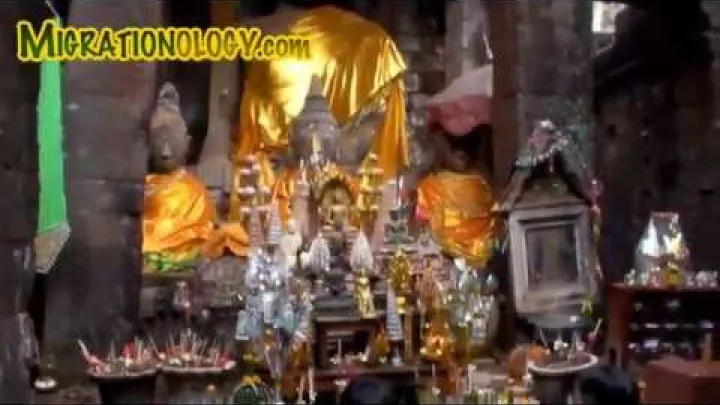
Allow time to walk the complex at a comfortable pace and to take in the wider setting. From Champasak town, a local transfer, bicycle, or arranged vehicle can work depending on your confidence and the weather; from Pakse, plan it as a dedicated outing. Bring water, use footwear suitable for uneven surfaces, and confirm current opening arrangements and access details before visiting.
Explore Bolaven Plateau Waterfalls and Coffee
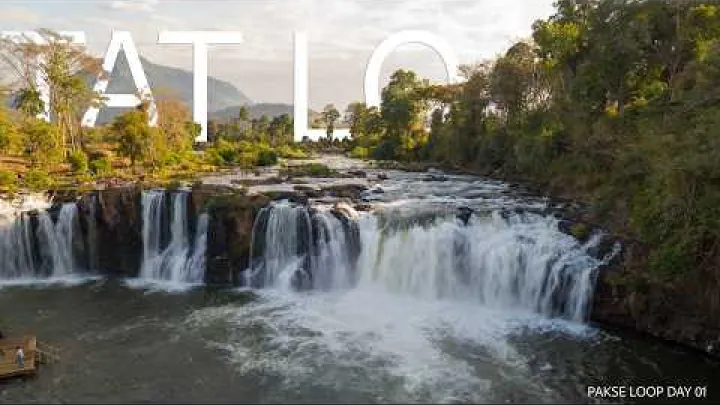
The Bolaven Plateau is best approached as a combined nature and agricultural area. Waterfalls such as Tad Fane, Tad Yuang, and Tad Champee are often included in local routes, while Paksong is associated with the region’s coffee landscape. Conditions differ between sites: some have developed viewpoints, while others involve more walking or are more dependent on road and weather conditions.
Choose a manageable route rather than promising yourself every waterfall in one day. The wet months can bring stronger water flow and greener scenery, while road surfaces and paths may be more difficult. Coffee-farm access and activities depend on each farm’s schedule, so ask what is actually available on the day you visit.
Slow Down in Si Phan Don
On Si Phan Don, cycling, river watching, village walks, and simple boat trips are often the main activities. Don Khon provides access to Li Phi waterfall, while Khone Phapheng waterfall on the mainland is a major Mekong landmark and should not be confused with the smaller island waterfall. The appeal is the riverine setting and the slower daily pace, not a packed schedule of formal attractions.
Leave room for stops that are not on a map: a riverside meal, sunset, or a quiet ride between villages. Paths can be rustic, services can be informal, and travel can take longer than expected. Treat communities and river environments respectfully, and avoid expecting guaranteed wildlife encounters.
Getting to Champasak and Getting Around
Most visitors use Pakse as their entry and planning point. Transport in Southern Laos can be straightforward when approached one leg at a time, but schedules, border procedures, road conditions, and river connections require current local confirmation.
Reach Pakse by Air or Overland Route
Pakse is the main arrival gateway for Champasak, reached through flights, domestic connections, or overland travel. A common Thailand example is travel via Ubon Ratchathani and the Chong Mek–Vangtao border crossing before continuing into Laos. This can be a useful route concept, but it is not a fixed timetable or a promise of same-day connections.
Overland travelers should confirm current departure times, border hours, visa arrangements at the intended crossing, road conditions, and the onward connection with their transport provider or a local booking point shortly before travel. A route example published by Asocial Nomad illustrates the Bangkok-to-Pakse overland approach, but its specific schedule should be treated as changeable.
Move Between Pakse, Champasak Town, and the Plateau
For inland connections, the usual choices are shared buses or minivans where available, tuk-tuks for shorter links, private transfers, organized tours, and motorbikes. Pakse is normally the easiest place to compare these options and arrange rentals or drivers. A private vehicle gives the most control over stops on the plateau; shared transport can be cheaper but may not match your sightseeing plans.
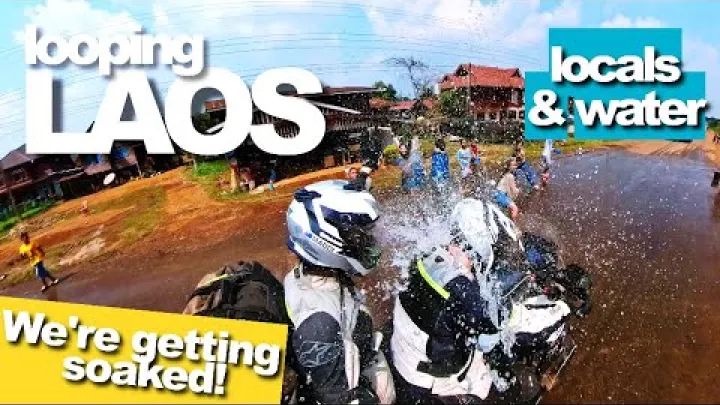
Independent riding offers flexibility but also means taking responsibility for navigation, weather, road surfaces, and the condition of the vehicle. Before choosing a route, ask locally about road works, current weather effects, and whether a vehicle is available for the full trip you have in mind.
Travel to the Four Thousand Islands by Road and Boat
The usual approach to the islands is to travel south from Pakse toward Ban Nakasang, then continue by boat to the appropriate island. Reaching the mainland transfer point is only one part of the journey. The final boat, arrival point, and onward walk or ride to accommodation can all be separate practical steps.
Build buffer time into the day for ticketing, loading, river conditions, and finding your accommodation after landing. Longer transport to the south may be worth arranging ahead during busy periods, while the final island boat is often organized locally. Ask the booking point exactly where the service ends and what is included, rather than assuming every ticket covers the same route.
Choose Between Motorbike, Tour, Tuk-Tuk, and Bicycle
Motorbikes and arranged vehicles are useful for dispersed Bolaven Plateau attractions, but riding is best reserved for travelers who are legally licensed, comfortable with local roads, and able to assess the vehicle. Inspect brakes, tires, lights, and fuel before leaving. Wear a suitable helmet, do not ride after drinking alcohol, and plan to arrive before dark.
Tuk-tuks and private transfers are practical for short connections and for visitors who do not want to drive. Organized tours can simplify a limited-time plateau day. Bicycles are particularly useful on Don Det and Don Khon, where they match the pace of the islands, but expect uneven or unpaved sections and avoid treating longer rides as effortless.
Choose the Best Time to Visit Champasak
Season affects comfort, waterfall flow, road conditions, and the ease of moving between river and plateau areas. There is no perfect month for every activity, but the following pattern helps with a first decision.
November to February: The Easiest Conditions
November to February is often the easiest general period for first-time visitors because outdoor conditions are usually more comfortable and predictable than later in the dry season or during the rains. It suits Vat Phou, plateau routes, cycling, and Mekong-based stays. A broad Laos seasonal guide from Adventure Life identifies November through January as a particularly favorable part of the dry season.
More favorable conditions can also bring stronger demand for rooms and popular transfers. Book the key nights and long transport legs earlier if your dates are fixed, especially when combining Pakse with small island accommodation.
March to April: Plan Around the Heat
March and April can feel very hot in Pakse, Champasak town, and the islands. Build outdoor sightseeing around early mornings, take a longer midday break, carry water, and avoid planning several exposed sites in the same afternoon. The higher Bolaven Plateau can provide a useful contrast in an itinerary during this period.
Heat changes what is realistic, not only what is pleasant. A temple visit, waterfall stop, and long road journey may be possible on paper but tiring in practice. Reduce the number of stops, prioritize shade, and choose accommodation where you can rest during the hottest part of the day.
May to October: Green Landscapes and Flexible Travel
The wet season brings greener landscapes and can make plateau waterfalls more dramatic. It may also offer a quieter feel in some places. The trade-off is rain interruption, muddy or slippery rural surfaces, changing river levels, and less predictable movement by road or boat.
Check local rain, road, and river conditions shortly before leaving for an outing, and keep extra time between bases during the wet season. Waterproof protection, footwear with grip, and a plan that can be shortened without disappointment are more valuable than trying to follow a rigid route.
Budget, Booking, and Sample Itineraries
Champasak can suit a range of budgets, but transport choices and the number of base changes often matter more than everyday food costs. Plan in categories and leave room for practical changes.
Choose Accommodation by Base and Travel Style
Pakse generally has the widest practical choice, from simple guesthouses to more comfortable city stays. Champasak town emphasizes riverside atmosphere and heritage access. On Si Phan Don, simple bungalows and guesthouses can place you close to the river, while the plateau is best chosen for location and route convenience rather than a large range of services.
Before booking, read recent guest feedback and check arrival instructions, payment methods, connectivity expectations, cancellation terms, and how you will reach the property from the boat or road. Smaller bases may have more limited seasonal availability, so a confirmed arrival plan can be more important than choosing the lowest listed rate.
Build a Realistic Champasak Budget
Divide your budget into accommodation, intercity transport, local transfers, boats, food, activities, and a contingency fund. A simple guesthouse-and-shared-transport route will usually cost less than an itinerary with several private drivers, but changing bases frequently can add more expense than meals or local snacks.
Use relative tiers rather than relying on old published prices. Budget travelers can focus on simple rooms, shared rides, and local food; mid-range travelers may choose private transfers for one or two complex days; higher-spend trips may prioritize riverside stays and dedicated drivers. Reconfirm boat fares, private-vehicle quotes, attraction charges, and seasonal room rates when you are in Pakse or at the relevant departure point.
Prepare Cash, Connectivity, and Daily Essentials
Organize cash and essential supplies in Pakse before heading to smaller towns, the plateau, or the islands. Do not assume the same ATM coverage, card acceptance, mobile signal, or shop hours outside the main urban hub. Keep enough cash for local transport, food, and an unplanned overnight if a connection changes.
Useful everyday items include sun protection, insect protection, comfortable walking shoes, a light layer for cooler plateau evenings, and rain protection in wetter months. Save offline copies of booking details, maps, accommodation addresses, passport information, and key contacts so that a weak signal does not interrupt your plans.
Choose a Three-to-Seven-Day Champasak Route
For three days, use Pakse as the main base, visit Vat Phou, and choose either a focused Bolaven Plateau day or a night in Champasak town. This keeps the route realistic and avoids a long island transfer for a very short stay.
For five days, consider Pakse, one plateau day or overnight, Champasak town, and then choose whether the islands are worth the additional southbound movement. For six or seven days, a fuller route can link Pakse, the Bolaven Plateau, Champasak town, and several nights in Si Phan Don. Reduce transfers by keeping one primary base, or add depth by sleeping in the landscapes that matter most to you. Leave a buffer before any flight or international crossing rather than relying on a tightly connected final day.
Safety, Entry Rules, and Health Preparation
Champasak is best approached with ordinary travel awareness and specific preparation for rural roads, river environments, and entry rules. These are manageable concerns when addressed before and during the trip.
UXO, Road, and Outdoor Safety
Unexploded ordnance remains a concern in parts of Laos, including areas of Champasak. Stay on established roads, known tracks, and marked paths in rural areas. Never touch, move, or investigate an unknown metal object, even if it appears old or harmless. The current Laos advisory published by Travel.State.gov is a useful starting point for travelers who need official safety guidance.
Separately, use conservative road habits: wear a helmet when riding, avoid night travel, and do not assume other road users will follow familiar traffic patterns. At waterfalls and rivers, take slippery rock, drop-offs, and currents seriously. Keep to designated viewing areas and do not enter water where conditions are unclear.
Visas, Passport Validity, and Exit Requirements
Laos entry rules depend on nationality, passport type, intended length of stay, and border used. Visa on arrival and eVisa options may be available in some circumstances, but eligibility and accepted entry points can change. Check passport validity, visa eligibility, the authorized length of stay, and the requirements for your intended land crossing before departure.
Keep your entry stamp and immigration records secure, and confirm that your planned overland exit is valid for your visa arrangement. For current official information on visas and entry requirements, consult Travel.State.gov alongside the guidance issued by the Lao authorities and your own government.
Health, River Safety, and Emergency Preparation
Prepare for heat, mosquitoes, minor injuries, and the fact that medical capacity is more limited outside Pakse. Carry personal medicines, basic first-aid items, drinking-water supplies appropriate to your plans, and insurance that includes medical treatment and evacuation if needed. Seek current travel-health advice for vaccinations and disease prevention that applies to your personal circumstances.
For boat trips and adventure activities, assess equipment in person and request a life jacket before joining a river excursion. Do not swim where currents, rocks, or access conditions are unclear. Serious medical or consular problems may require onward travel, so keep insurance details and essential contacts available offline.
Final Planning Takeaways for Champasak
For most first-time visitors, Pakse is the practical starting point, Champasak town is the best heritage-and-river pause, the Bolaven Plateau adds coffee and waterfalls, and Si Phan Don provides the slowest finish. A successful trip does not require seeing all four areas. Choose the bases that match your priorities, allow time for transfers, and leave room for the river, roads, and weather to set the pace.
Start with a clear arrival and departure plan, then build outward: one heritage day, one plateau day, or a few unhurried island nights. That approach makes Champasak feel like the varied Southern Laos region it is, rather than a list of distant stops to rush through.
Select area
Create a post
Posting is free and no registration is required.