Vang Vieng Getting There: Trains, Buses & Border Routes

Getting to Vang Vieng is usually straightforward once you choose the right gateway. Most visitors arrive from Vientiane or Luang Prabang, then continue by train, bus, or minivan. The fastest option is often the Laos–China Railway, but a rail ticket still requires transfers to and from stations outside the town center. This guide compares the main Vang Vieng transport routes, explains the final arrival steps, and helps you plan for changing schedules, border formalities, luggage, and late arrivals.
Choose the Best Gateway to Vang Vieng
Vientiane and Luang Prabang are the two practical starting points for most international travelers. Thailand and Vietnam can also work for overland itineraries, but they require more coordination. Choose a gateway based on where you land, whether you want to visit another Lao city first, and how much flexibility you need.
Why Vientiane Is the Main Starting Point
Vientiane is the simplest gateway for many travelers because it combines international air access, domestic connections, road transport, and the southern end of the main railway corridor through central and northern Laos. Travelers arriving at Wattay International Airport in Vientiane, often identified by the airport code VTE, can continue to Vang Vieng by train, bus, minivan, or a pre-arranged private vehicle.
For speed and a more predictable journey, a train is usually the strongest choice when a suitable ticket is available. It requires reaching the railway departure point in time and arranging transport from Vang Vieng Railway Station into town. A bus or minivan may be easier for travelers who prefer a town-to-town booking, need more departure choices, or cannot find a train seat. Road services generally leave from terminals or travel-agent pickup points rather than directly from the airport.
Vientiane Northern Bus Terminal, also called Sai Neua, is an important road hub for northbound transport. Its practical arrangements can differ between operators, so ask where your service actually departs rather than assuming every Vang Vieng minivan uses the same bay or terminal. Keep the airport transfer, long-distance journey, and final Vang Vieng transfer as three separate parts of the day.
When Luang Prabang Is the Better Gateway
Luang Prabang is the better gateway when it is already part of your Laos itinerary. It is a logical choice for travelers moving south after visiting the UNESCO-listed town, and it can also suit travelers who arrive by air and plan to stay there before going onward. From Luang Prabang, Vang Vieng is directly south on the railway corridor.
Rail avoids the much longer mountain-road alternative and is normally the comfortable choice for travelers with limited time, motion sensitivity, or significant luggage. The road option can offer more last-minute flexibility and may include accommodation-area pickup, but journey conditions depend on the vehicle, passenger loading, traffic, and the road itself. Do not treat a rail journey as a door-to-door transfer: you must first reach Luang Prabang Railway Station, then travel from Vang Vieng Railway Station to your accommodation.
This route works especially well for a Luang Prabang–Vang Vieng–Vientiane itinerary. If your flight lands in Luang Prabang, allow enough time for baggage collection, an airport transfer, and possible flight delays before booking an onward train.
When to Consider Thailand or Vietnam Overland Routes
Thailand is useful for travelers arriving in Udon Thani or Nong Khai, close to the Laos border corridor. Vietnam can suit travelers taking a longer northern Laos overland route. Neither is the default option for a first visit to Vang Vieng because both involve immigration formalities and several independent transport legs.
From Thailand, you may find an international bus or a sequence involving border crossing, transport into the Vientiane area, and then a train or bus north. A direct international service, if offered for your date, may reduce changes but should not be assumed to operate daily. From Vietnam, a route may involve an international or overnight bus into northern Laos, followed by travel through Muang Xay and a train or road connection south.
These routes can save backtracking when they fit a wider itinerary, but they need more time than a domestic Lao connection. Before paying, identify the border crossing, the immigration procedure, the transport company for every leg, the drop-off terminal, and whether a missed connection is your responsibility.
Travel by Train on the Laos–China Railway
The railway has changed how many visitors get to Vang Vieng. It can greatly reduce travel time between the main Lao tourist centers, but station access, ticket procedures, and last-mile transport remain important parts of the plan.
Vientiane to Vang Vieng by Train
The train from the Vientiane area to Vang Vieng is the main fast-access route from the capital. When available on your date, it is usually preferable to a road journey for travelers who value speed, more space than a minivan, and a lower exposure to road traffic. Train categories, stopping patterns, seating classes, and fares can differ, so compare the actual service offered rather than assuming every train has the same journey time or comfort level.

Build in time to travel from central Vientiane or Wattay International Airport to the departure station, locate the correct entrance, and complete the required boarding process. The journey does not end in central Vang Vieng: Vang Vieng Railway Station lies outside the main accommodation area. Include the station-to-town transfer when comparing a train with a minivan that drops passengers closer to town.
A train is especially useful when you arrive in Vientiane early enough to make a well-buffered connection. If your flight arrives late or the only suitable train has already departed, an overnight stay in Vientiane may be more practical than forcing a tight same-day transfer.
Luang Prabang to Vang Vieng by Train
For travelers heading south from Luang Prabang, rail is usually the most appealing way to reach Vang Vieng. It avoids a long journey on winding roads and makes a two-destination Laos itinerary much easier to manage. Current route listings from Baolau describe an indicative journey of about 50 minutes on high-speed services and about 1 hour 30 minutes on ordinary services. Treat those times as route guidance, not a permanent timetable.
Availability and departure times can change by date, and a faster train is not automatically the best choice if it leaves before you can comfortably reach Luang Prabang Railway Station. Plan to arrive at the station with time for ticket and boarding checks. Keep passports or the identity document used for the booking accessible.
On arrival, arrange the final journey from Vang Vieng Railway Station before you leave Luang Prabang, especially if you have a large suitcase, children, or a late arrival. A hotel transfer, shared shuttle, tuk-tuk, taxi, or other local vehicle may be available, but the exact arrangement is separate from the rail ticket.
Northern Laos Connections via Muang Xay
Muang Xay can be a useful rail access point for travelers already in northern Laos or arriving overland from the north. Muang Xay Railway Station connects the town to the same north-south rail corridor used for Luang Prabang and Vang Vieng. This can make a north-to-central Laos route possible without returning to Vientiane first.
In practice, the difficult part is often the connection into Muang Xay rather than the train itself. A bus arriving from another northern town or from a border route may not align neatly with a train departure. A combined booking offered by one seller should not be understood as a protected connection between separate bus and railway operators unless the terms explicitly say so.
Use this option only when the individual legs are available for your travel date. Leave a generous buffer in Muang Xay, and consider an overnight stay if the inbound bus is long, crosses a border, or is prone to arriving at uncertain times. For most visitors beginning in Vientiane or Luang Prabang, the direct rail corridors are simpler.
Train Types, Tickets, and Station Timing
Rail services may be described as high-speed or ordinary trains. High-speed services are generally the speed-focused choice, while ordinary services may take longer and have a different stopping pattern. The useful comparison is the date-specific departure time, total station-to-station duration, fare, baggage suitability, and whether the arrival time works with your final transfer.
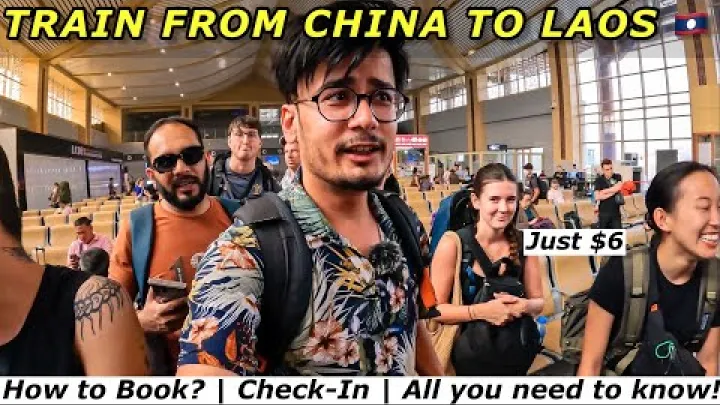
Tickets may be sold through railway channels, at stations, or by established intermediaries that can help international visitors who do not have local payment access or a local telephone number. Third-party listings are useful for searching availability, but their schedules and prices are indicative until the issuing channel confirms the booking. Enter passenger identity details carefully and retain the booking confirmation in an accessible form.
Before paying, verify the current train category, ticket release timing, boarding requirements, and ticket issuer. Reach the departure station early enough to handle access controls and unexpected queues. If the official channel is difficult to use, choose a reputable seller that clearly states the service date, passenger details, refund terms, and whether it issues the actual rail ticket or only a booking request.
Travel by Bus or Minivan
Road transport remains an important way to get to Vang Vieng. It can be the practical backup when trains sell out, and it may be more convenient when a service collects passengers from a hotel or drops them near the town center.
Vientiane to Vang Vieng by Bus or Minivan
From Vientiane, buses and minivans offer a road alternative to the train. Formal buses may have more conventional terminal procedures and sometimes more luggage space. Minivans can be faster in light traffic and may have travel-agent pickup options, but seating is usually tighter and luggage handling can vary. Ask whether your bag travels in a separate compartment, inside the cabin, or requires an additional charge.
Route listings from 12Go indicate that vans can take roughly 1 hour 30 minutes to 2 hours 30 minutes between Vientiane and Vang Vieng, while noting that traffic affects the result. That range should not be applied to every road service. Allow extra time for hotel pickups, loading passengers, stops, and the journey from the arrival point to your accommodation.
Road travel is useful when you need a later departure than the train provides, want a simpler town-to-town reservation, or have a rail itinerary that does not fit your arrival time. Compare the stated pickup point and destination carefully: a listing that says Vientiane or Vang Vieng may mean a terminal rather than your hotel.
Luang Prabang to Vang Vieng by Road
Bus and minivan services from Luang Prabang to Vang Vieng are a slower alternative to rail. They can help when train seats are unavailable, when you need a different departure day or time, or when a road booking includes a pickup that is easier than reaching the railway station. The trade-off is a much longer journey on mountain roads.
Do not rely on a single guaranteed duration for this route. Actual time can change with road conditions, weather, rest stops, traffic, the number of passengers collected, and the operator’s route. Travelers who are uncomfortable with winding roads may find rail a better choice when available. Those who choose a minivan should bring water, keep essential items in the cabin, and avoid scheduling an important activity immediately after the expected arrival time.
If you are arriving in Luang Prabang by flight or another long journey, a same-day road transfer to Vang Vieng may be tiring and difficult to time. A night in Luang Prabang, or a rail ticket on the following day, is often a more manageable plan than connecting under pressure.
Bus Terminals, Minivan Huts, and Departure Practices
Road transport does not always use one standardized system. In Vientiane, Sai Neua, also known as Vientiane Northern Bus Terminal, is a key place to ask about northbound services. In Vang Vieng, arrivals may use Vang Vieng North Bus Station, the old runway bus hut near Highway 13, or another town-side stop selected by a small operator.

Some minivans have approximate departure times and may leave after enough passengers have boarded. Recent local discussion linked to Facebook travel discussion points travelers toward Sai Neua for Vientiane minibuses, but it is not an official timetable. Use it as local context only, not as proof that a particular departure will operate.
When booking in person, confirm four details: the physical departure point, the exact Vang Vieng drop-off, the total luggage allowance, and whether hotel pickup is included. Ask the staff member to write down or show the location if there is any uncertainty. Arrive early because informal pickup arrangements can be harder to replace than a scheduled train seat.
Arrive by Air or Cross the Border
Vang Vieng has no major commercial airport serving it directly. Flying gets you to a Lao gateway or a nearby Thai city; the final long-distance route is still by rail or road.
From Wattay International Airport in Vientiane
Wattay International Airport in Vientiane is an air gateway, not an arrival point in Vang Vieng. Lao Airlines presents Vientiane among the Lao aviation gateways on its Lao Airlines booking channels. After landing, travelers must continue into the city or railway area, then take a train, bus, minivan, or confirmed private transfer north.
Same-day onward travel can work if your flight arrives well before the selected departure and you have allowed time for immigration, baggage, a city transfer, and possible flight delay. It is less suitable when the next available train or road departure leaves soon after landing. A night in Vientiane gives more flexibility and can reduce the cost of a missed ticket or an expensive late transfer.
Do not assume that a minivan will be waiting at the airport simply because a traveler has found one on another date. Decide first whether you are aiming for rail, terminal-based road transport, or a pre-booked private vehicle. Then arrange the airport-to-departure-point transfer around that choice.
From Luang Prabang International Airport
Luang Prabang International Airport is a good arrival gateway for travelers who want to spend time in Luang Prabang before continuing to Vang Vieng. It is less convenient for an immediate onward trip than it may appear, because the airport, accommodation area, and railway station are separate locations.
After landing, allow time for baggage collection, airport formalities, and a local transfer to Luang Prabang Railway Station or to the road operator’s pickup point. A train booked immediately after a flight creates little room for delays. It is usually better to choose an onward service only after you can reach its departure point comfortably.
When choosing between flights to Vientiane and Luang Prabang, consider the whole itinerary. Vientiane works well for a capital-to-Vang Vieng route. Luang Prabang is often the stronger choice when you plan to travel south through Laos and want to include both destinations without doubling back.
From Udon Thani or Nong Khai in Thailand
Udon Thani and Nong Khai offer a Thailand-based approach to Vang Vieng. Travelers may fly into Udon Thani, travel to the Nong Khai border corridor, complete Lao immigration, and continue toward Vientiane before taking a train or road service north. On some dates, a direct international bus may be advertised, but its operating status and endpoint need to be confirmed for the exact day.
Think of this as a sequence rather than one journey: reach the border, complete departure and arrival formalities, travel from the border area to the Vientiane transport point, then take the Vang Vieng service. Each stage can affect the next one. Limited departures make a missed connection more consequential than on a domestic route.
Allow extra time for immigration, terminal changes, and luggage. If an international service ends in the Vientiane area, check whether it arrives close enough to your onward station or terminal to make the next connection without rushing.
From Vietnam via Northern Laos
A route from Vietnam to Vang Vieng through northern Laos is possible in principle but is best suited to experienced overland travelers. It may involve a long-distance or overnight bus from Hanoi or another Vietnamese city, a northern Lao border crossing, travel toward Muang Xay, and then a train or road service to Vang Vieng.
The attraction is itinerary continuity for travelers crossing mainland Southeast Asia overland. The challenge is that the bus, border process, local transfer, and railway are often separate arrangements. An apparent combined itinerary does not necessarily provide protection if an earlier leg is delayed.
Check current Lao visa eligibility and the permitted border crossing with an official source before booking a Vietnam route. Also confirm whether the bus serves the crossing you intend to use, where it terminates in Laos, and whether an overnight stop is required before the onward train. This is not the simplest route for travelers whose main goal is to reach Vang Vieng quickly.
Reach Vang Vieng Center from the Transport Hubs
The final few kilometres matter because the railway station and some road arrival points are outside the main hotel and restaurant area. Know your accommodation location before you arrive.
From Vang Vieng Railway Station to Town
Vang Vieng Railway Station is outside the town center, so every rail arrival needs a final transfer. Depending on the time and local arrangements, options may include a shared shuttle, tuk-tuk, electric bus, taxi, hotel vehicle, or a vehicle arranged through your accommodation. Availability and prices can change, particularly around evening arrivals or busy travel periods.

Ask whether a quoted price is per person for a shared vehicle or for a private vehicle. State the name and location of your accommodation before agreeing, because hotels on the edge of town may require a longer ride than a central guesthouse. Travelers with bulky luggage may prefer a private or pre-arranged transfer rather than waiting for a shared vehicle.
If your accommodation offers pickup, ask for the meeting point and contact method before departure. This can be easier than trying to organize local transport after a train arrives, especially when several passengers are seeking rides at the same time.
From the Bus Stations and Highway 13 Stops
Bus and minivan arrivals can use Vang Vieng North Bus Station, the old runway bus hut near Highway 13, or another stop chosen by the operator. These locations are not interchangeable with Vang Vieng Railway Station. A booking marked simply as Vang Vieng does not guarantee a hotel drop-off or a stop within easy walking distance of your room.
Before leaving Vientiane or Luang Prabang, ask for the exact Vang Vieng stop and whether the driver will make additional town drops. If the stop is outside your preferred area, plan a short local transfer rather than assuming you can walk with luggage. This is particularly important after rain, in darkness, or when traveling with children.
When offered a tuk-tuk or shuttle on arrival, ask for the exact destination and total fare before departure. Confirm whether the amount is for one passenger, the whole vehicle, or a shared ride. This simple question avoids most misunderstandings without assuming that any driver or agent is acting improperly.
Plan Arrival Time, Accommodation, and Luggage
Late arrivals can make the final stage more difficult because transport choices and accommodation check-in arrangements may be limited. If your train or bus is due after dark, arrange the final transfer and accommodation before departure. Tell the property your expected arrival time and keep its contact details available offline.
Carry documents, medication, valuables, and one change of clothes with you rather than placing everything in a vehicle hold. Label larger luggage clearly and check that it is unloaded at the correct stop. A small day bag also makes an unplanned overnight stay easier to manage if a connection changes.
Build extra time into any journey involving a flight, border crossing, station transfer, or change from bus to train. The goal is not only to reach Vang Vieng, but to reach your accommodation without needing to solve several transport problems at once.
Compare Time, Cost, Comfort, and Booking Difficulty
Choose by Speed, Budget, Flexibility, or Simplicity
The best Vang Vieng route depends on the type of trip. Rail is usually the speed choice when a suitable seat is available. Road transport is the flexible backup. Air-and-land and cross-border routes are best judged by the reliability of all their separate legs, not by the advertised flight or bus time alone.
| Option | Best for | Time pattern | Booking difficulty | Main trade-off |
|---|---|---|---|---|
| Train from Vientiane | Speed and comfort | Fast rail plus station transfers | Moderate | Seat availability and out-of-town station |
| Train from Luang Prabang | Southbound itineraries | Fast rail plus local transfers | Moderate | Need to reach the rail station |
| Bus or minivan | Flexible timing | Road time varies | Low to moderate | Traffic, seating, and drop-off point |
| Flight via Vientiane or Luang Prabang | International access | Flight plus onward land journey | Moderate | Connection buffers are essential |
| Thailand or Vietnam overland | Multi-country trips | Several linked legs | High | Border timing and limited replacements |
The cheapest advertised ticket is not always the lowest total cost. Add airport or station transfers, luggage charges, possible border expenses, and accommodation if a late arrival makes an overnight stop sensible. For limited time, choose a verified train with a planned station transfer. For a low-budget but flexible itinerary, compare bus and minivan departures. For larger luggage, rail or a private final transfer may be more comfortable. For late flight arrivals, stay near the gateway and continue the following day.
Check Current Conditions and Travel Safely
Transport information in Laos can be spread across operators, stations, booking sites, and local agents. A practical plan includes a simple confirmation process and enough time to adjust if a service does not run as expected.
Verify Schedules, Operators, and Departure Points
Use online booking sites and traveler reports to find possible services, but distinguish them from the operator that will actually carry you. A railway notice, a ticket issued for your date, or a direct confirmation from the bus company is stronger than an old schedule screenshot or a general route listing.
Shortly before travel, reconfirm the route, departure point, and operating status with the railway, bus operator, station, or booking provider. First check the date-specific service, then confirm the physical terminal or pickup point, the required check-in time, and the Vang Vieng drop-off. Save the booking confirmation, contact number, and location details offline in case mobile data is unavailable.
If a booking provider cannot clearly identify the operating company or the pickup location, seek clarification before departure. This is particularly important for minivans, international buses, and any itinerary with a self-transfer between two transport companies.
Allow for Weather, Road Conditions, and Daylight
Heavy rain and other disruptions can affect both rail and road travel. Road journeys may slow because of traffic or changing conditions, while railway services can also be affected by operational notices. Neither mode should be assumed to operate normally in every type of weather.
Check current railway and road notices during periods of heavy rain and avoid basing a tight connection on an unverified schedule. If conditions are uncertain, daylight travel and an overnight stop can be safer and easier than trying to complete several transfers at night. After checking the operator, choose a clear fallback: delay the trip, stay overnight, or change mode if an alternative is genuinely available.
Avoid Unclear Fares, Touts, and Border Charges
Transport prices can become unclear at the final transfer or at a border. A quoted amount may be per passenger, per vehicle, or for a shared ride. Luggage, hotel pickup, and a longer drop-off can also affect the total. Border-related payments may vary by nationality, policy, location, and the services included.
Confirm whether a quoted transfer or border charge is per person or per vehicle and agree the total before boarding. Ask what is included, where the vehicle will stop, and whether luggage carries an extra charge. For ticket and immigration payments, use official counters or clearly identified booking channels when available, and keep receipts or confirmations until the journey is complete.
Be polite but do not feel pressured to make an immediate decision if the destination, service type, or price basis is unclear. Taking a moment to compare the stated details with your booking can prevent a costly misunderstanding.
Keep a Backup Plan for Missed or Changed Services
A useful backup plan depends on the route. From Vientiane, a sold-out train may leave you with a road option or an overnight stay. From Luang Prabang, an unavailable train may make a road journey possible but slower and less comfortable. On a Thailand or Vietnam route, the hardest leg to replace is often the cross-border segment or the onward service after immigration.
Avoid tight same-day links between flights, border buses, trains, and the final town transfer. Keep enough funds and time for a later train, a road alternative, a night near the gateway, or a confirmed private transfer if one is offered. Do not assume that another service will be available without checking the operator or station.
For every route, know the practical stopping point if the plan changes: Vientiane, Luang Prabang, Muang Xay, or Vang Vieng itself. An identified overnight location is more useful than trying to improvise after the last practical departure has gone.
Final Planning Checklist for Getting to Vang Vieng
What to Confirm Before You Leave
Before setting out, confirm your gateway, transport mode, travel date, passenger identity details, and the exact station, terminal, or pickup point. Check the final Vang Vieng arrival location, arrange the transfer to your accommodation, and keep a realistic backup option if the service changes.
- Choose Vientiane, Luang Prabang, Thailand, or northern Laos based on the wider itinerary.
- Use rail when you have a confirmed ticket and a workable transfer from Vang Vieng Railway Station.
- Use bus or minivan travel when flexibility matters more than fixed rail timing.
- Allow extra planning time for flights, border crossings, Muang Xay connections, and late arrivals.
- Confirm Vientiane Northern Bus Terminal or Sai Neua, Vang Vieng North Bus Station, the old runway bus hut, or any other named stop directly with the operator.
- Keep accommodation details, transport contacts, tickets, and enough local funds accessible during the journey.
The most reliable rule is simple: a current confirmation from the operating transport provider matters more than an old timetable or a general travel estimate. With the gateway, departure point, and final town transfer planned together, getting to Vang Vieng becomes much easier to manage.
Select area
Create a post
Posting is free and no registration is required.