Thakhek Getting There: Bus, Air and Border Routes
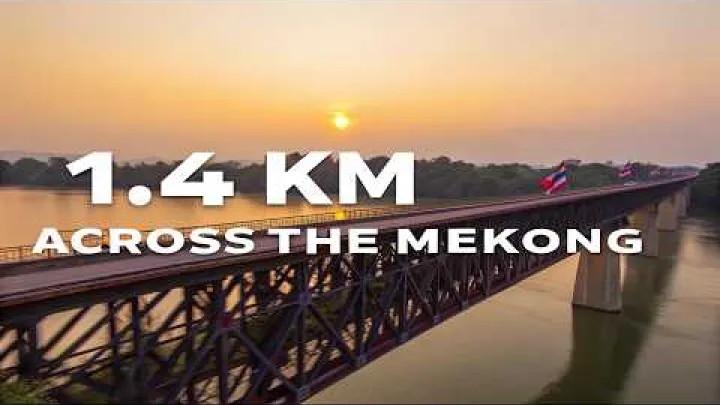
Getting to Thakhek is mainly a road journey. The town has no direct commercial air or rail arrival option in the route network described here, so most travellers approach by long-distance bus from within Laos or cross from Thailand through Nakhon Phanom. This guide compares the practical gateways, explains the border route, and shows how to plan the final arrival at Thakhek bus station. It also separates dependable route principles from schedules that should be confirmed for your travel date.
Understand Thakhek's Main Access Points
Thakhek is on the Lao side of the Mekong in central Laos. Its position makes it a useful stop between Vientiane and southern Laos, as well as an accessible destination for visitors arriving from northeastern Thailand.
Thakhek Is Primarily a Road Destination
For most visitors, getting to Thakhek means travelling by road. Long-distance buses and vans are the direct public-transport options, with Vientiane to the north and Savannakhet and Pakse to the south providing the main Lao road approaches. National Road 13 is the principal north-south corridor used for the Vientiane route.
Air travel and rail can still be useful, but only as parts of a combined journey. A flight can bring you to Vientiane or another Lao gateway, and the Laos–China Railway can bring you to Vientiane from northern Laos. From either gateway, the final intercity segment to Thakhek is by road. Do not assume that an airport or rail station offers a direct continuation simply because it is in Laos.
There are two distinct arrival tasks. First, choose and complete the long-distance journey to Thakhek bus station. Second, arrange the short local trip from the station to your accommodation or the central town area. Treating these as separate steps is especially useful for evening arrivals and for travellers carrying luggage.
Choose a Gateway by Simplicity, Speed or Cross-Border Convenience
Vientiane is usually the simplest Lao gateway because it combines international and domestic air access, rail access from the north, and a domestic road connection to Thakhek. It avoids an international border crossing on the day of travel, although it may be less convenient for travellers already in Thailand.
Nakhon Phanom is the logical alternative for travellers coming from Bangkok or elsewhere in Thailand. It is close to the Thailand–Laos crossing that serves Thakhek, but the route has more moving parts: arrival in Nakhon Phanom, travel to the bus station, border formalities, and the international bus or another permitted cross-border arrangement. It can be geographically efficient, but it is not as simple as a domestic bus.
The Laos–China Railway can reduce the northern part of an itinerary from places such as Luang Prabang, but it does not run to Thakhek. Savannakhet and Pakse are useful starting points when Thakhek is one stop on a longer south-to-north Laos itinerary. The best choice depends less on map distance alone than on your arrival time, the number of transfers, border requirements, and whether you can obtain a ticket with confidence.
| Gateway or route | Best for | Main advantage | Main planning issue |
|---|---|---|---|
| Vientiane | Most Laos arrivals | Domestic bus connection | Terminal and departure timing |
| Nakhon Phanom | Travellers in Thailand | Direct border approach | Immigration and final bus timing |
| Rail to Vientiane | Northern Laos itineraries | Useful first segment | Separate transfer to bus |
| Savannakhet or Pakse | Southern Laos itineraries | Fits a multi-stop route | Less consistent public schedules |
Online booking pages and traveller reports are useful for identifying possible services, but they are snapshots rather than complete local timetables. Use them to narrow your options, then confirm the service that matters to your plan.
Travel to Thakhek from Vientiane
Vientiane is the standard starting point for a domestic trip to Thakhek. It is the most straightforward choice for travellers who have already entered Laos, arrived at a Vientiane airport, or reached the capital by train.
Bus Services from Vientiane
The Vientiane–Thakhek journey follows the central Lao road network, generally using National Road 13 for much of the route. A road journey of roughly five to seven hours is a reasonable planning range, but it is not a promise of a fixed arrival time. Stops, road conditions, vehicle type, and the operator's own routing can change the actual duration.

Public online listings provide only a partial view of departures. For example, Busbud has shown afternoon and evening Vientiane–Thakhek departures, but a booking platform should not be treated as the complete station timetable. Local services may be sold only at the terminal, and listed times can change.
Both daytime seated buses and overnight sleeper-style services may be available. A daytime departure is usually easier if you want to reach Thakhek while local transport and accommodation reception are active. A later service can preserve a daytime in Vientiane, but it may create a late arrival and reduce your choices for the final transfer.
Check the vehicle category rather than relying on the word “bus.” A seated coach, minibus, and sleeper bus offer very different levels of space and comfort. Sleeper buses in Laos may use shared berths, so a sleeper ticket should not be understood as a private bed unless the operator clearly confirms that arrangement.
Book and Prepare for the Vientiane to Thakhek Journey
Advance booking can be helpful when your dates are fixed, especially during busy travel periods. It gives you a record of the intended service, but it does not remove the need to identify the actual departure point and arrive with time to board. Buying in person at the relevant Vientiane bus terminal can provide a clearer opportunity to inspect the vehicle and ask about the route, but availability may be more limited.
Before paying, say or show the destination name, Thakhek, and confirm the terminal where the bus boards. Ask whether the vehicle terminates in Thakhek or continues farther south, because through services can have different boarding procedures and arrival patterns. Keep the ticket until you have collected all luggage at the end of the journey.
- Confirm the departure point, not only the departure time.
- Ask whether the vehicle is seated or sleeper-style.
- Check how larger bags are stored and whether collection tags are used.
- Ask for the approximate arrival period and the planned Thakhek stop.
- Find out whether the service continues beyond Thakhek.
An online reservation is a booking convenience, not a universal measure of service quality or punctuality. If a departure is essential to a flight, hotel booking, or onward trip, choose an earlier option or allow a night in Thakhek rather than building the itinerary around a narrow connection.
Reach Thakhek from Thailand via Nakhon Phanom
The Nakhon Phanom route is the principal Thailand approach to Thakhek. It is particularly useful for travellers who can reach northeastern Thailand more easily than Vientiane, but it requires a clear understanding of the border process.
Cross Friendship Bridge 3
Friendship Bridge 3 is the formal international crossing between the Thakhek area and Nakhon Phanom. The Lao immigration authority identifies it as an international checkpoint opposite Nakhon Phanom Border Checkpoint; see Lao Immigration. The crossing is part of the journey, not merely a short bridge ride: travellers must complete Thai exit procedures and Lao entry procedures.
Before committing to this route, check passport validity, visa or entry eligibility, entry fees where applicable, and document requirements for your nationality. Rules for visa-on-arrival, visa exemption, electronic visas, and permitted entry points can differ by passport and can change. If you hold a visa issued in advance, verify that it can be used at this checkpoint.
Border processing time varies with queues, staffing, public holidays, bus arrivals, and individual documentation. Carry your passport, the required visa evidence or photographs if relevant, and sufficient funds in the accepted form for any official charges. Do not plan the route around an assumed processing duration.
Do not assume that pedestrians, bicycles, or privately arranged vehicles can use the bridge in the same way as an international bus. Rules for independent crossing arrangements can be restricted or operationally different. Confirm the current permitted method with the relevant transport provider and border authorities before arriving with a bicycle or expecting to walk across.
Use the Nakhon Phanom to Thakhek Bus
An international bus between Nakhon Phanom bus station and Thakhek bus station is the most structured public-transport option for crossing Friendship Bridge 3. It brings the journey together as one overland movement, but the real travel time includes waiting at the station, immigration and customs procedures, and the onward drive after the bridge.
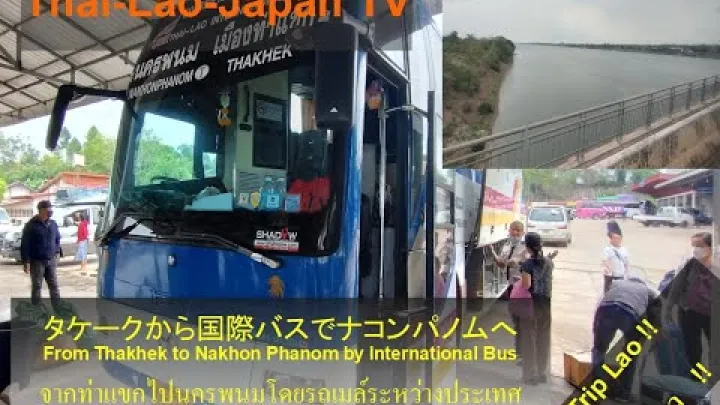
This route is generally most practical as a daytime journey. That matters if you are reaching Nakhon Phanom from Bangkok by air or bus: arriving in the city does not mean you will automatically reach Thakhek the same day. A late arrival can leave insufficient time to reach the station and complete the cross-border journey before the last service.
Compared with Vientiane, the Nakhon Phanom route reduces the amount of travel inside Laos and approaches Thakhek directly from Thailand. In return, it adds border complexity and can involve fragmented booking: one booking for travel to Nakhon Phanom and a separate arrangement for the international leg. It is a strong choice when you are already in Thailand, not necessarily when you are already in Vientiane.
Confirm the current cross-border operator, departure time, and final bus of the day directly at Nakhon Phanom bus station or Thakhek bus station before relying on this route. Exact frequency, fares, and last departures should not be assumed from older listings or traveller accounts.
Combine Nakhon Phanom Airport with the Border Bus
Nakhon Phanom Airport, using the code KOP, can work as an indirect air gateway to Thakhek. The sequence is simple in principle: fly into Nakhon Phanom, travel to the city bus station, take the cross-border bus, complete immigration, and arrive at Thakhek bus station. In practice, it only works smoothly when the flight lands early enough for every later step.
This approach can make sense for travellers starting in Bangkok or elsewhere in Thailand because it avoids flying onward to Vientiane and then taking a longer domestic road trip. Vientiane remains simpler for travellers who prefer to enter Laos first and use a single domestic bus connection. Compare the actual flight availability, baggage needs, hotel cost if an overnight is required, and the remaining bus departure window rather than choosing only by the apparent distance.
Leave a substantial daytime buffer between landing at Nakhon Phanom Airport and the border bus you intend to use. Flight delays, baggage collection, the transfer into town, ticket availability, and border queues can each affect the connection. If the timing is tight, plan an overnight in Nakhon Phanom rather than treating a same-day crossing as guaranteed.
Use Rail and Air Gateways Indirectly
Rail and flights can make the wider Laos journey easier, but neither removes the need for a road segment to Thakhek. Build the itinerary around the transfer point rather than treating Thakhek as a rail or airport destination.
Travel by Rail to Vientiane, Then Continue by Road
The Laos–China Railway is useful for travellers coming south from northern Lao destinations. A common itinerary is to reach Vientiane by train, transfer within the capital, and then continue by bus to Thakhek. This can be more comfortable than making a long all-road journey from the north, but it remains a multi-modal route.
Train arrival time is the key planning issue. The railway station, your Vientiane transfer, and the Thakhek bus departure may not line up conveniently, and a rail ticket does not protect a separate bus booking. Avoid a tight same-day rail-to-bus connection, particularly if missing the bus would mean arriving in Thakhek late at night.
Monitor current service information as part of the decision. Railway operations can be affected by delays, schedule adjustments, and weather-related disruption; traveller reports have highlighted the importance of watching Laos China Railway updates rather than assuming a published pattern will remain unchanged. Check current railway notices and ask the relevant bus station about weather-related delays before committing to a tight connection.
Choose a Lao Airport and Continue Overland
Vientiane is normally the clearest air-to-road combination for Thakhek because it has the broadest role as a national transport gateway and a direct domestic bus corridor. Check actual flight options first: airline schedules can be seasonal, limited by day of week, or changed with short notice. The Lao Airlines schedule is a useful official starting point for assessing current domestic flight possibilities.
Savannakhet and Pakse can be relevant if they fit an itinerary through southern Laos, but they are not automatically better airport choices. Each still requires an onward road connection, and public service information can be less predictable than the Vientiane route. Select them because they match your broader travel direction, not because they appear closer on a map.
When comparing flights with an all-road trip, include the time needed to reach the airport, wait for the flight, travel onward from the arrival city, and fit the next bus departure. A cheap flight can become a costly option if it creates an overnight stop or misses the only workable onward service.
Arrive from Savannakhet, Pakse and Rural Khammouane
Southern and interior routes can be rewarding for travellers already exploring Laos, but they need more flexibility than the primary Vientiane and Nakhon Phanom approaches. Station information is often more useful than a generic online timetable.
Travel North from Savannakhet or Pakse
Savannakhet and Pakse are southern starting points for reaching Thakhek along the north-south road network. They can work well when Thakhek is part of a route through several Lao towns, rather than a standalone destination reached from abroad. Depending on the day and local operating pattern, travellers may find buses, vans, or a journey involving an intermediate change.
Public schedule information for these routes is less consistent than for Vientiane. Do not assume that a service described online is daily, direct, or still operated by the same vehicle. At the bus station, ask specifically whether the journey goes to Thakhek, where it departs, whether it is direct, and where any change would take place.
Small vans and market-area departures can be useful in Laos, but they require extra care when identifying the destination. Confirm that your fare covers travel to Thakhek rather than only the next town, and make sure your larger luggage can be carried before boarding. These routes are best treated as flexible multi-stop travel rather than guaranteed point-to-point transport.
Connect from Kong Lor, Nahin or Lak Sao
Kong Lor and Nahin are interior Khammouane locations, not main long-distance transport hubs. Connections from these places often use smaller local buses, shared vehicles, or sawngthaews, and may require a change before reaching Thakhek. An early start is sensible because rural transport can be limited and later departures may not leave enough time to complete a chain of connections.
Kong Lor and Nahin are often visited as part of a cave and countryside itinerary, but access to these places should not be confused with a direct arrival route to Thakhek. If your accommodation mentions an early local departure toward Nahin, use it as a starting lead only and confirm the actual destination and onward options locally. A direct Kong Lor–Thakhek service should not be assumed.
Lak Sao is an eastern road connection that can matter for travellers moving between Khammouane and routes toward the Vietnamese border. It may fit a longer overland itinerary linking caves, the Thakhek area, and eastern Laos. It is more complex than travelling directly from Vientiane or Nakhon Phanom, so allow room for changes and overnight stops if needed.
Compare Routes by Time, Cost and Booking Difficulty
The lowest apparent fare is not always the simplest or best-value route. A route with a border crossing, a late arrival, or several separate tickets can cost more in food, local transfers, and accommodation if one connection fails.
| Route | Time pattern | Cost pattern | Booking difficulty |
|---|---|---|---|
| Vientiane to Thakhek | One long road segment | Usually straightforward | Moderate |
| Nakhon Phanom to Thakhek | Short approach plus border | Several separate costs | Higher |
| Rail to Vientiane, then bus | Two transport segments | Depends on train class and bus | Moderate to high |
| Savannakhet or Pakse | Road journey, possible change | Varies by local service | Higher |
Use the following decision order when several routes appear possible. If you are already in Vientiane, start with the domestic bus and compare departure times with your accommodation plans. If you are in Thailand, choose Nakhon Phanom only when you can reach the station in daylight and meet the entry requirements. From northern Laos, rail to Vientiane can reduce the long northern road section, but an overnight buffer may be more sensible than forcing a same-day bus. From Savannakhet, Pakse, Kong Lor, Nahin, or Lak Sao, ask locally about the next practical connection before assuming that an online route is direct.
For cost comparisons, count the whole sequence rather than the headline ticket: transport to the departure station, the long-distance fare, any border charges, meals, local transfers, and an overnight stay if a connection is missed. Booking difficulty also matters. One ticket is easier to manage than separate rail, airport, station, and border arrangements, even when the latter looks faster on a map.
Choose Vientiane if you want the clearest domestic route and can fit the bus timing. Choose Nakhon Phanom if you are already in Thailand and can make the daytime border sequence comfortably. Use rail or southern gateways when they improve the wider itinerary, not because they offer a direct arrival in Thakhek.
For all routes, keep essential documents, medication, water, a charged phone, and a small amount of local cash accessible rather than packed with hold luggage. This is particularly helpful when a trip includes terminal changes or border formalities.
Get from Thakhek Bus Station into Town
Arrival at Thakhek bus station completes the long-distance journey, but most visitors still need a short transfer to their accommodation. The available option can depend on the arrival time, vehicle demand, and whether your guesthouse offers pickups.
Plan the Short Final Transfer
The simplest option is often to ask your accommodation in advance whether it can arrange a pickup or recommend the current local choice. If you use a vehicle available at the station, agree on the destination and total price before leaving. Ask whether the ride is private or shared, especially if another passenger is already waiting.

Use the accommodation name and location in writing if possible, since similar-sounding names and language differences can create confusion. Keep your luggage with you until it is loaded, and check that all bags are present before the vehicle leaves the station.
Late-night arrivals may have fewer local vehicles available. In that case, arranging the final transfer in advance is more practical than expecting a regular queue of transport at the station.
Use a Final Checklist Before Travelling to Thakhek
A short final check can prevent most avoidable problems on a Thakhek arrival day. Confirm the route you are actually taking rather than relying on an itinerary created weeks earlier.
- Confirm the correct departure terminal or station and the destination shown on the ticket.
- Check whether your service is seated, sleeper-style, direct, or continuing beyond Thakhek.
- If travelling from Thailand, carry the documents required for Thai exit and Lao entry.
- For Nakhon Phanom, make sure your arrival leaves a realistic daytime window for the border bus.
- For southern routes, ask at the station whether the journey is direct or requires a change.
- For rail connections, review current railway notices and avoid a narrow bus connection.
- Arrange or identify the final transfer from Thakhek bus station, especially for a late arrival.
Thakhek is easiest to reach when the journey is planned as a sequence: choose the right gateway, secure the appropriate long-distance road connection, allow for any border or transfer step, and finish with a simple local ride into town. Vientiane is usually the straightforward domestic option, while Nakhon Phanom is the practical Thailand gateway for travellers who can manage the border timing.
Select area
Create a post
Posting is free and no registration is required.