Phonsavan Budget: Daily Travel Costs and Prices in Laos

A Phonsavan budget can be modest once you are in town, but the journey to Xieng Khouang and a visit to the Plain of Jars can make individual days much more expensive. For most visitors, a realistic plan separates the everyday cost of a room and meals from one-off transport, site-entry, and tour costs. This guide gives indicative Phonsavan prices for independent travelers, couples, and small groups, with practical ways to control the largest expenses. Prices and availability can change quickly, so use the ranges as a planning base rather than a guaranteed quote.
How Much Does a Phonsavan Trip Cost?
Phonsavan is usually manageable for travelers who choose a simple private room, eat mainly Lao food, and share transport. Its budget pattern is different from a larger tourist center: room and meal choices are relatively straightforward, while the cost of reaching town and touring the jar sites deserves separate attention.
Daily Budget Ranges for Budget, Mid-Range, and Comfortable Travel
For one solo traveler, an indicative everyday Phonsavan budget is about US$18–28 for a budget style, US$30–55 for a mid-range style, and US$60–100 or more for a comfortable style. These are planning ranges for accommodation, meals, ordinary town transport, and a modest allowance for activities. They do not include international flights, visas, travel insurance, significant shopping, or the main intercity journey into and out of Phonsavan.
| Travel style | Indicative daily cost | Typical pattern |
|---|---|---|
| Budget | US$18–28 | Simple private room, local meals, walking, limited paid activities |
| Mid-range | US$30–55 | Better room, mixed local and cafe meals, rental or shared transport |
| Comfortable | US$60–100+ | Higher-standard room, restaurant meals, private transport or tour |
The budget range is consistent with a reported US$18–28 daily estimate for travelers using simple guesthouses and inexpensive local food from Trip.com. A couple sharing one room can often reduce the accommodation cost per person substantially. In contrast, a solo traveler paying for a private car, guide, or room alone can move into the next tier without changing many other habits.
A Plain of Jars day can exceed the normal daily average because it may combine transport, entrance tickets, fuel, food away from town, and possibly a guide. Recheck the kip-to-dollar exchange rate shortly before travel and add a small buffer before turning these ranges into a final trip total.
Separate Daily Spending From One-Off Trip Costs
The most useful Phonsavan travel budget has three parts: recurring daily spending, arrival and departure transport, and activities. Daily spending covers nights, meals, drinking water, small purchases, and short local transfers. One-off costs include a long-distance bus or flight, a scooter rental, a private vehicle, or a Plain of Jars tour.
A simple calculation is: number of nights multiplied by daily base spending, plus every intercity transport leg, plus planned activities, plus a contingency amount. For example, a traveler may keep ordinary days near the budget range but spend much more on the day they arrive from Luang Prabang and again on the day they tour Sites 1, 2, and 3. That is normal; it does not mean the daily budget estimate was wrong.
Keep these estimates limited to spending in and around Phonsavan. They are not a complete door-to-door Laos itinerary budget. This distinction helps prevent a low room-and-food figure from creating an unrealistic total for a short visit.
Where Phonsavan Fits in a Laos Travel Budget
Phonsavan can suit a shoestring Laos itinerary, especially for travelers comfortable with basic private guesthouses and local meals. However, it has a smaller accommodation supply and fewer obvious dorm-style choices than major traveler centers. A low-cost private room may therefore be the practical budget option rather than a hostel bed.
Compared with Vientiane, Phonsavan generally offers fewer restaurant, hotel, and transport choices. Compared with Vang Vieng and Luang Prabang, it may feel less oriented toward a large backpacker market and less diverse in lodging supply. That does not automatically make it cheaper on every date. Availability, room standards, and access costs can reverse the apparent saving.
The largest difference is usually not a bowl of noodles or a coffee. It is whether you arrive by shared road transport or flight, and whether you explore the Plain of Jars independently, with a group, or in a private vehicle. Travelers building a low-cost itinerary should protect money for those decisions before comparing small daily price differences.
Accommodation Costs in Phonsavan
Accommodation is usually the biggest repeated cost in Phonsavan, particularly for solo travelers. Treat online starting prices as a sign of the market rather than an entitlement to a particular room, since the final rate depends on dates, occupancy, room type, and any taxes or booking fees.
Typical Guesthouse, Hotel, and B&B Price Bands
Basic private guesthouses can be the best value for a short stay, while small hotels and B&Bs may add more dependable facilities or a more convenient base in Phonsavan town. Recent booking results have shown Phonsavan hotel deals from around US$13, but that is a starting price rather than a typical rate available every night. A recent listing for Sipanya Guesthouse showed US$24 for one night for two adults, including taxes and fees, according to Expedia.
| Room type | Planning band | Best for |
|---|---|---|
| Basic private guesthouse | From roughly US$13–25 per room | Budget travelers and short stays |
| Small hotel or B&B | Roughly US$25–45 per room | More comfort or facilities |
| Comfort-focused room | US$45+ per room | Travelers prioritizing room standard |
These are per-room planning bands, not per-person prices. Check the individual listing for whether breakfast, air conditioning, a private bathroom, Wi-Fi, pickup, or taxes are included; do not assume an amenity from the price alone. For two people, a US$24 room is about US$12 each before any extra spending. For one person, it remains a US$24 accommodation cost.
How Room Choice, Timing, and Sharing Change the Lodging Budget
Room sharing is one of the strongest savings available in Phonsavan. Two friends or a couple who share a clean basic double or twin room may pay less per person than a solo traveler seeking the cheapest available private room. A higher headline rate can still be better value if it includes breakfast, has a private bathroom, reduces local transfer costs, or has the facilities you need.
Phonsavan town and the main roads are a practical base because many guesthouses, restaurants, and tour arrangements are concentrated there. Rather than trying to identify a single cheapest area, compare the final total for a room that gives you workable access to food and onward transport. This is especially useful when your stay is only two nights.
Demand can be firmer during the cooler, drier travel period and around busy weekends or local events. When inventory is limited, compare cancellation terms, total taxes and fees, breakfast value, and current availability directly. Booking early can be sensible when dates are fixed, but flexibility may matter more than chasing the lowest advertised rate.
Food and Drink Prices in Phonsavan
Food spending is usually easier to control than accommodation or touring. A traveler who eats mostly Lao dishes, drinks refillable water where appropriate, and buys a few snacks can keep the daily food total low. Restaurant-heavy days raise the total, but they do not need to dominate the trip budget.
Local Meals, Simple Restaurants, and Market Food
For a low-cost eating pattern, allow roughly US$6–12 per day for simple local meals, water, and a few snacks. This is an indicative daily allowance, not the price of one meal. Rice dishes, noodle soups, vegetarian options, and food bought from local markets can help keep costs below a routine of meals aimed at foreign visitors.
A realistic low-cost day might be a noodle or rice breakfast, a simple lunch, a Lao dinner, bottled or treated water, and fruit or snacks. Another traveler may spend more by adding a coffee, dessert, or a restaurant meal. Menu prices at individual places can change, so use venues sometimes mentioned by visitors, such as Bamboozle, Nisha's Indian, and Bombie's, as options to inspect locally rather than as fixed-price benchmarks.
Keep the distinction between meal price and daily spending clear. A seemingly inexpensive lunch does not include breakfast, dinner, drinks, snacks, or the extra food purchased while visiting the jar sites.
Cafes, Western Food, Drinks, and Groceries
A mixed eating style may need roughly US$12–22 per day, while a restaurant-heavy pattern can be higher. Imported ingredients, pizza, pasta, wine, Western breakfasts, and repeated cafe drinks are the usual reasons. Cranky-T Cafe and Bar and Lao-Falang are useful Phonsavan town reference points for travelers looking for cafe or Western-style choices, but check the current menu before using any individual dish price in your plan.
| Eating pattern | Daily planning allowance | What it includes |
|---|---|---|
| Mostly local | US$6–12 | Simple meals, water, basic snacks |
| Mixed | US$12–22 | Local meals plus coffee or one cafe meal |
| Restaurant-heavy | US$22+ | Western food, alcohol, imported items |
A balanced day could include one local meal, one cafe or Western meal, and an uncomplicated dinner. Small grocery purchases, beer, coffee, and water are easy to overlook, so include them in the allowance rather than treating them as exceptions. Breakfast included with a room can reduce the cash needed each morning, but compare it against the room's complete price before deciding it is a saving.
Transport Costs to and Around Phonsavan
Transport is the most variable part of a Phonsavan budget. The town is served by road connections and Xieng Khouang Airport, but fares, departure arrangements, and practical journey conditions can differ by operator and booking channel.
Buses, Minibuses, and Flights to Phonsavan
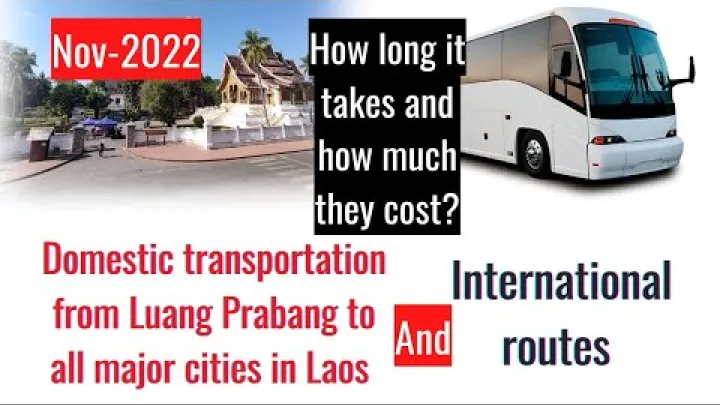
Shared buses and minibuses are normally the lower-cost way to reach Phonsavan from Laos travel hubs, while a flight from Vientiane to Xieng Khouang Airport can be a major time-saving choice at a higher one-off cost. A traveler report on the Luang Prabang–Phonsavan minibus route recorded a fare of 265,000 kip, described as about US$13, from Just Gone Wandering. Use this as a concrete past example, not a current guaranteed fare.
| Connection | Budget effect | Planning note |
|---|---|---|
| Luang Prabang by minibus | Reported example: 265,000 kip | Fare can change by operator and booking point |
| Vientiane by road | Variable shared-transport cost | Allow a separate intercity line item |
| Vang Vieng by road | Variable shared-transport cost | Confirm through a current seller |
| Vientiane by flight | Usually higher one-off cost | Add airport transfer and baggage terms |
Do not build a trip around the lowest theoretical fare or shortest journey time. Confirm the current fare, departure point, travel time, included transfers, baggage rules, payment method, and cancellation conditions with the bus company, guesthouse, or airline before booking. Those details affect both the final price and whether a low headline fare is actually useful.
Tuk-Tuks, Scooters, Bicycles, and Local Transfers
Local transport has three different budget roles: short rides inside town, transfers to or from a bus stop or airport, and full-day access to the Plain of Jars sites. Walking is the cheapest sensible option for a day spent near your accommodation in Phonsavan town. For a jar-site day, travelers usually compare a rental, a group tour, or a negotiated vehicle rather than relying on short town transport.
Ask rental shops or guesthouses for the current scooter and bicycle rate, deposit, fuel policy, and return condition before committing. A scooter can work out well for two confident travelers who split the rental and fuel, while a bicycle may be more suitable for local errands than for a multi-site sightseeing day. A tuk-tuk or private car may be simpler for people with limited time, but the cost should be agreed as a complete trip rather than as a vague hourly idea.
Do not assume a scooter is the right low-cost choice for every visitor. It depends on riding confidence, valid licensing, insurance coverage, road conditions, and the comfort level of everyone in the group. For solo travelers, joining a shared tour may cost less than paying alone for a vehicle and may remove the need to manage fuel and site access.
Plain of Jars and Other Activity Costs
The Plain of Jars is the central activity expense for many Phonsavan visitors. A useful budget does not stop at the entrance ticket: it accounts for how you will reach the sites, whether the vehicle is shared, and what the quoted tour price actually covers.
Site Fees and the Cost of an Independent Plain of Jars Visit
Sites 1, 2, and 3 are the principal jar-site stops for many first visits. One traveler report described a foreign visitor entrance fee of 15,000 kip per site, while also noting uncertainty and that the ticket was included in that visitor's tour price. The report from Just Gone Wandering is useful as an indicative example, not confirmation of today's fee or the rule at every site.
| DIY cost item | How to plan it | Why it matters |
|---|---|---|
| Site ticket | Confirm at the booth | Fees may differ or change |
| Rental or vehicle | Get the full-day amount | Usually the largest DIY cost |
| Fuel and parking | Add separately | Often omitted from a first estimate |
| Food and water | Carry a day allowance | Prevents an understated activity cost |
Visiting two sites in one transport day can lower the transport cost per site because the rental or vehicle is not paid twice. It does not mean all sites have identical facilities, ticket arrangements, or parking rules. Confirm the current fee at the ticket booth or through the operator arranging your visit, then keep entry separate from transport in your calculations.
Shared Group Tours Versus Private Tours
A shared group tour normally offers the lower per-person cost because the vehicle and guide are divided among several travelers. A private tour offers more control over timing and stops, but it can become the dominant expense of a short Phonsavan stay, especially for one person. Sharing a private vehicle with another couple or a small group can narrow the gap.
Quotes vary because a tour may cover one site or several, include a guide or driver only, provide lunch and water, or bundle entrance tickets and parking. Low group-tour figures and much higher private-tour figures should be understood as broad market patterns, not fixed prices. Avoid comparing a standard local day trip with a premium multi-day Laos package.
Before paying, request a written quote stating the group size and whether transport, guide, meals, water, parking, and site fees are included. Also ask which sites are planned and whether the quoted price is per person or for the entire vehicle. This makes it possible to compare a group option with a private vehicle fairly.
Free and Low-Cost Attractions in Phonsavan
Adding a low-cost activity can keep a sightseeing day balanced after a jar-site outing. The MAG UXO Visitor Information Centre on Road 7 is a meaningful local stop that has commonly been treated as free or donation-supported. A donation can be a thoughtful choice where accepted, but it should not be treated as a mandatory ticket unless current information says otherwise.
A local museum may also be a low-cost historical addition, depending on current access and admission arrangements. Before visiting either place, check current opening details locally through your accommodation or a current local contact. This is particularly useful if you are trying to fit the visit around bus arrival or departure times.
These activities do not eliminate the cost of the Plain of Jars, but they give travelers a way to learn more about Xieng Khouang without adding another private-transport day. Set aside a small discretionary amount for donations, refreshments, or local transfers rather than assuming every cultural visit is entirely cost-free.
Currency, Cash, and Payment Planning
Everyday purchases in Phonsavan are commonly priced in Lao kip. Some accommodation and tour listings may show US dollars, particularly online, so a budget needs a simple way to move between currencies without treating a conversion as a fixed local price.
Using Lao Kip and Converting the Budget
Use Lao kip for day-to-day planning and dollars only as a familiar comparison currency. The safest method is to check the current exchange rate close to departure, convert the dollar budget into rounded kip amounts, and then add a buffer for small changes. Avoid relying on an old conversion rate printed in a blog or booking result.
For example, the reported 265,000-kip Luang Prabang minibus fare and the reported 15,000-kip site-fee example are best kept in kip until you make your own current conversion. Your accommodation may instead be quoted in dollars or in kip. Record the currency beside each line item so that a dollar room rate and a kip meal allowance are not accidentally added together as if they were the same unit.
Separate cash needed for food, local transport, tickets, and incidental spending from accommodation and travel that have already been prepaid. This approach gives you a clear working amount for each day while avoiding the false precision of converting every small purchase at an outdated rate.
ATMs, Cards, Cash, and Tipping
Cash remains important for small restaurants, guesthouses, tuk-tuks, rentals, and attraction ticket booths. Card acceptance may be available at some hotels or larger operators, but it should not be assumed for ordinary purchases in Phonsavan. Keep a backup payment method separate from your main wallet where possible.
ATM fees and withdrawal limits can vary by bank, card issuer, and machine. Check the displayed fee and limit before confirming a withdrawal, and consider the cost of several small withdrawals versus one sensible withdrawal. Do not carry more cash than you can protect comfortably, but carry enough Lao kip for several days rather than relying on a card at every small business.
Tipping is discretionary rather than an essential budget item. Rounding up a bill or leaving a modest amount for helpful tour staff can be appropriate if you wish, but it should be separate from the agreed fare or tour price. Before payment, confirm whether a hotel or operator accepts kip, dollars, a card, or a bank transfer.
Build a Realistic Phonsavan Budget
A short stay is easier to budget when you work from a clear traveler count and keep per-room, per-person, and whole-vehicle costs separate. The examples below assume one solo traveler for the main totals and two nights in Phonsavan. They use ranges because actual room availability, food choices, and activity arrangements will differ.
Sample Two-Night and Three-Day Budget Scenarios
| Scenario | Two-night local stay | Arrival or departure transport | Likely total |
|---|---|---|---|
| Budget solo | US$55–85 | US$13+ by shared road example | US$68–110+ |
| Mid-range solo | US$95–155 | Variable road or flight cost | US$110–220+ |
| Comfortable solo | US$180–300+ | Variable, often higher with flight | US$200–400+ |
The budget example assumes a simple private room, local meals, modest town transport, and an independent or shared jar-site visit. The local-stay figure includes two nights of accommodation, three days of basic food, and a controlled activity allowance. The reported 265,000-kip minibus example is shown separately because it is an intercity transport cost, not a normal daily expense.
The mid-range example allows a better room, a mixture of local and cafe meals, and either a rental or a shared organized trip. The comfortable example allows a higher-standard room, more restaurant meals, and private transport or a private tour. A flight, premium hotel, or private vehicle can push the final total beyond the displayed range.
For two people sharing a room or a private vehicle, recalculate rather than simply doubling the solo figure. Divide the room and vehicle component between travelers, then add each person's food, entrance tickets, and personal spending. This is often the most accurate way for couples and friends to see the real saving.
What Raises the Cost and How to Save
The highest-impact cost drivers are long-distance access, private tours, solo room occupancy, Western food, imported drinks, and last-minute accommodation when choices are limited. Small differences in water or snack prices matter much less than the decision to fly, hire a private vehicle alone, or choose a comfort-focused room.
- Share accommodation and vehicles. Splitting a private room or car usually produces the largest direct saving per person.
- Join a shared jar-site tour. This can be better value for solo travelers than independently arranging a full vehicle.
- Combine sites in one transport day. It spreads the rental or vehicle cost across more than one stop.
- Choose mostly local meals. Keep cafe, alcohol, and imported-food purchases as deliberate treats rather than the default.
- Compare complete quotes. Include fuel, site tickets, parking, breakfast, transfers, taxes, and fees before deciding which option is cheaper.
Busy weekends, seasonal demand, and local events can affect availability and prices, although the scale will vary. The reliable savings are sharing, choosing a group arrangement, and understanding inclusions. Some other savings, such as choosing a basic room or skipping a private guide, may reduce comfort, convenience, or flexibility, so decide which trade-off fits your trip.
A Final Budget and Price Verification Checklist
Use this final checklist shortly before travel and again when arranging services in Phonsavan:
- Confirm the final room rate, occupancy, taxes, breakfast, and cancellation terms.
- Keep arrival and departure transport as separate line items from daily spending.
- Ask whether a tour price is per person or per vehicle and list every inclusion.
- Confirm current Plain of Jars site fees and whether tickets are included in a tour.
- Check rental deposits, fuel responsibility, and any pickup or return charges.
- Check the current exchange rate and keep food, local transport, and tickets in a kip cash plan.
- Identify an ATM option and retain a backup way to pay.
- Add a contingency amount for fare changes, extra transfers, meals, and transaction fees.
The simplest decision rule is to estimate your daily base first, then add access to Phonsavan and Plain of Jars costs as separate items. That structure makes the budget transparent, leaves room for changing prices, and helps you spend more deliberately on the parts of the visit that matter most.
Select area
Create a post
Posting is free and no registration is required.