Huay Xai Budget: Daily Costs, Prices & Saving Tips

A Huay Xai budget can be modest for a short stop, especially when you stay in a dorm or simple guesthouse, eat local meals, and walk around town. The total changes quickly when you choose a private room, use several tuk-tuks, book a premium Mekong cruise, or add the Gibbon Experience. This guide separates ordinary daily costs from one-off border, slow-boat, bus, and adventure expenses. It also shows how to compare USD, Thai baht, and Lao kip without relying on a fixed exchange rate.
Daily Huay Xai Travel Budget
For most travellers, the most useful figure is a daily baseline for lodging, food, drinks, short local transport, and simple sightseeing. Treat the ranges below as planning estimates, not guaranteed local prices. Long-distance travel and major packaged activities should be added separately.
Daily Budget Ranges by Travel Style
A practical Huay Xai travel budget is approximately 20–30 USD per person per day for budget travel, 30–55 USD for mid-range travel, and 55–85 USD for comfortable travel. The lower tier assumes a dorm bed or very basic room, simple meals, and mostly walking. The mid-range tier usually works for a standard private room shared by two people or a simple room for one person. The comfortable tier allows a better private room, more restaurant meals, drinks, and regular short rides.

| Travel style | Daily estimate | Accommodation assumption | Typical daily spending | Not included |
|---|---|---|---|---|
| Budget | 20–30 USD | Dorm bed or basic fan room | Local meals, limited drinks, walking, few short rides | Slow boat, visa or border charges, major packages |
| Mid-range | 30–55 USD | Simple private room, often shared | Mixed local and tourist-oriented meals, drinks, occasional tuk-tuk | Long-distance tickets and premium excursions |
| Comfortable | 55–85 USD | More comfortable private room | More restaurant meals, drinks, local rides, ordinary paid activities | Gibbon Experience and premium cruises |
Sharing matters most in the mid-range and comfortable categories. A couple can divide one private room, while a solo traveller pays the full room price. Food, local transport, and most adventure packages remain largely personal costs, so sharing does not reduce every part of the budget.
What the Daily Budget Includes and Excludes
The daily baseline is meant to cover a bed or room, ordinary meals, water and some drinks, walking or short local transfers, and low-cost exploration around Ban Houayxay. It does not automatically cover the cost of reaching Laos from Chiang Khong, immigration or visa charges, the Friendship Bridge shuttle, a bus to another northern Laos base, the Huay Xai–Luang Prabang slow boat, or a package such as the Gibbon Experience.
For a one-night stopover, use a simple formula: accommodation plus meals and drinks plus any short local rides. A dorm traveller who walks and eats locally may stay near the lower daily range. A solo visitor in a private room with restaurant meals can move toward or above the mid-range even without an expensive activity. Add border access or an onward ticket as a separate line rather than hiding it inside the daily total.
Local prices are often quoted in kip, while accommodation pages and international activity operators may quote in USD or EUR. Because the LAK equivalent changes with the exchange rate, keep the main plan in ranges and convert each important amount using the current rate when you book or withdraw cash.
Accommodation Costs in Huay Xai
Accommodation is usually the largest recurring part of a basic Huay Xai budget. The town has guesthouses and simple hostels, but the cheapest available room can disappear during busy travel periods or when several travellers arrive for the Mekong slow boat.
Dorms, Guesthouses, and Comfortable Rooms
Available listing snapshots give a useful direction without guaranteeing a price for your dates. A Booking page for Ban Houayxay has displayed Sabaydee Guesthouse from about 13.50 USD per night. The amount is a listing snapshot and can refer to a particular room, date, occupancy, or booking condition.
An accommodation page from Hostelz lists Huay Xai hostel prices from about 6 USD, but aggregate hostel pages can combine different room types and changing availability. Use the figure as a low-end search anchor, not as a guaranteed current dorm rate.
A cautious planning structure is about 6–12 USD per dorm bed or very basic room, 12–25 USD per standard private guesthouse room, and 25–40 USD per more comfortable private room. These are broad bands. A dorm figure is normally per bed, while a private-room figure is normally per room, so couples should divide the room cost between two people when calculating a per-person budget.
Search across the town centre, Ban Houayxay, and places near the Mekong riverside or slow-boat pier. Proximity can save a short ride, but a nearby property is not always the cheapest. Compare the total room price, not only the nightly headline, and check whether the room has a fan or air-conditioning, a private bathroom, breakfast, or a river view.
Seasonality, Location, and Booking Trade-Offs
Available accommodation data suggests a directional high-season pattern, with stronger demand around December to February and lower prices appearing in parts of June to August. This should not be treated as a fixed annual tariff. A small supply of rooms, a busy border period, slow-boat demand, weather, or last-minute availability can matter more than a general seasonal pattern.
Rooms near the Mekong or the slow-boat pier may save time and a local transfer, but views and convenient locations can carry a premium. Air-conditioning, larger rooms, private bathrooms, and flexible cancellation can also increase the nightly rate. In quieter periods, checking several guesthouses locally may create room for negotiation. In busy periods, booking ahead can protect a budget room before the cheapest options are gone.
Before using a listing price in your budget, compare the exact total for the intended dates. Check the room type, number of guests, taxes or other charges shown at checkout, cancellation terms, and whether the advertised amount is per room or per person. A low headline price is not useful if it applies only to a different occupancy or a non-refundable room you do not want.
Food, Drinks, and Everyday Prices
Food can stay inexpensive when local meals make up most of the day, but drinks, Western dishes, and scenic restaurant settings can change the total. Separate meals from beverages when building your Huay Xai daily costs.
Local Meals and Tourist-Oriented Restaurants
For a provisional Laos benchmark, allow about 25,000–35,000 kip for a simple local meal. This is not a current Huay Xai menu survey, so use it as a starting point rather than a promise. Three meals in that range would be about 75,000–105,000 kip before drinks, snacks, or service-related additions.
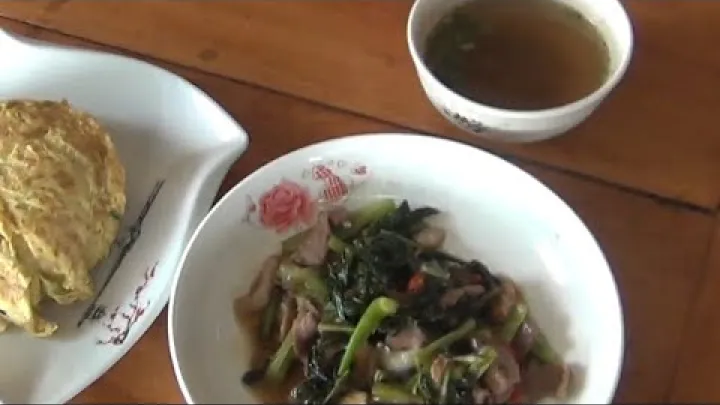
From that benchmark, a derived food estimate is about 5–8 USD per day for frugal eating and about 8–15 USD for a mix of local and tourist-oriented dining. The USD equivalent depends on the rate you receive. Local Lao or Thai-style meals, rice dishes, noodles, and simple breakfasts are more compatible with the lower range. Western food, imported ingredients, larger portions, and restaurants selected for a Mekong view can raise the total.
Terrasse Restaurant & Chill Place, YumYum Bamboo, and Bar How? are useful names to compare if they are open during your visit, but do not assume a current menu or operating schedule from an old recommendation. Look at the menu before ordering and compare one restaurant meal with a local eatery meal. A practical pattern is to eat most meals locally and choose one tourist-oriented meal when the setting or menu is worth the extra cost.
The meal estimate is not the same as a food-and-drinks estimate. Water, coffee, soft drinks, beer, and alcohol should be tracked on a separate line.
Water, Coffee, Alcohol, and Daily Add-Ons
There is not enough reliable, current local menu evidence here to give a dependable Huay Xai price list for bottled water, coffee, beer, or cocktails. Do not automatically transfer older prices from Luang Prabang or another Laos destination. Instead, record the first prices you see in kip and use them for the rest of your stay.
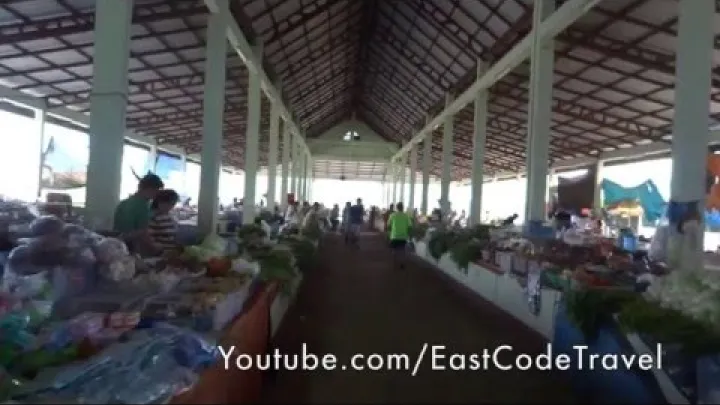
One or two drinks each day can move a traveller from the lower food range toward the mid-range total, especially when the drinks are imported, served in a scenic venue, or mixed as cocktails. Local cafés and bars may fit a modest budget, while imported alcohol deserves its own allowance. A traveller who wants a strict 20–30 USD day should decide in advance whether drinks are part of the food budget or a separate evening budget.
Water is a basic daily need, not an optional activity, so include it even if you plan to eat cheaply. Coffee before an early departure, snacks near the pier, and a beer after a long travel day are small individual purchases, but several of them can equal the cost of a local meal. Keeping a short note on your phone in kip is more reliable than estimating all beverages at the end of the trip.
Transport and Access Costs
Huay Xai is compact enough that walking can reduce daily spending, but arrival and departure costs need separate planning. The town, the border area, the bus station, and the slow-boat pier may not be equally convenient for every guesthouse.
Walking, Tuk-Tuks, and Short Local Transfers
Central Huay Xai can often be explored on foot, particularly when your guesthouse is close to the town centre or Mekong riverside. Check the actual distance from your accommodation to the border, bus station, or slow-boat pier rather than assuming that every central-looking listing is walkable with luggage.

Use approximately 20,000–70,000 kip for a short tuk-tuk journey as a cautious planning band. This is a variable estimate, not a fixed tariff. A driver may quote in Thai baht near the border, a shared ride may cost less per person, and a private ride or an inconvenient departure time may cost more. The first amount offered is not necessarily the best comparison.
Agree the fare and the payment currency before boarding. If the quote is in baht, compare it with the current kip equivalent before accepting it. One or two short rides usually affect the daily budget less than the room or an onward ticket, but several separate rides can make a supposedly cheap day noticeably more expensive.
Cross-Border Arrival Costs
Travellers approaching from Chiang Rai or Chiang Khong should divide the arrival budget into separate components. These can include the Thailand-side bus or tuk-tuk, the transfer associated with Friendship Bridge IV, and transport on the Lao side into Huay Xai. Visa or immigration charges are separate from transport and should not be folded into a single bridge-transfer estimate.
A February 2024 travel account reported a 50-baht transport charge on one Thailand-side component and 25 baht in cash for a border shuttle. This is a dated example, not a current tariff, but it shows why the approach may involve several small payments rather than one ticket. The actual amounts should be checked for the travel date.
Carry small cash in the currencies accepted for each part of the crossing. Check the current Thailand-side fare, bridge shuttle charge, and Lao-side transfer before departure, and keep the transport total separate from any visa or immigration payment. This makes it easier to see whether an agency bundle is genuinely cheaper than paying the individual components.
Slow Boat and Onward Transport as Separate Line Items
For planning, set aside approximately 400,000–500,000 kip for the regular Huay Xai–Luang Prabang slow boat. This is a broad one-off planning range based on the price range used for this guide, not a guaranteed current ticket. It should not be added to an ordinary daily baseline for a night spent in Huay Xai.

Separate the regular public boat from bundled, semi-luxury, and luxury cruises. A package may include transfers, meals, accommodation, or a different level of service, so a higher price is not automatically an inflated public-boat fare. Likewise, an agency quote for transport toward Luang Namtha may combine a bus ticket with a transfer or booking fee. Compare the underlying fare with the package inclusions before deciding.
Before paying, confirm the current slow-boat or bus fare, departure point, luggage rules, included transfers, and payment currency directly with the seller or operator. If the slow boat is essential to your itinerary, check current river and weather conditions and keep one flexible night available. River conditions and weather can affect timing and reduce the value of a tightly connected plan.
Activities That Can Change the Total
Huay Xai can be inexpensive when treated as a walking and gateway stop, but one major activity can cost more than several ordinary travel days. Put signature excursions in a separate activity budget.
The Gibbon Experience and Other High-Cost Excursions
The Gibbon Experience should be treated as a separate package expense rather than part of a comfortable Huay Xai daily budget. Published examples have shown about 215 EUR for a shorter package and about 340 EUR for a longer package. An Indie Traveller price snapshot also presents the shorter figure as an approximate amount that can vary with exchange rates and season.

Those figures can exceed several days of ordinary accommodation and food in Huay Xai. When comparing the package with independent travel, check whether the quoted price includes forest accommodation, meals, transfers, guides, park-related charges, equipment, and any pickup from town. The package length and currency of the quote also matter more than an old USD conversion.
Verify the current Gibbon Experience package, inclusions, pickup details, booking conditions, and cancellation terms with the operator before paying. The same principle applies to forest excursions associated with Nam Kan National Park and to premium Mekong cruises. A signature activity can be worthwhile, but it should be added after calculating the ordinary daily budget, not hidden inside it.
Low-Cost Days and Optional Paid Activities
A low-cost Huay Xai day can consist of walking around town, spending time near the Mekong waterfront, eating local food, and choosing only small incidental purchases. These options are useful for a stopover, but do not assume that every walk, viewpoint, temple, or local site is free. If an attraction has an entrance fee or access restriction, confirm it locally rather than relying on a general description.
Use a simple decision rule: if the Gibbon Experience, a cruise, or another fixed package is the main reason for visiting, keep ordinary days inexpensive and reserve the larger amount for that activity. If the activity is optional, compare its full price with the cost of another night, several local meals, or a different northern Laos stop. This keeps local exploration separate from adventure products that require advance booking.
Walking and local dining are not substitutes for every paid experience, but they give the budget flexibility. A traveller can spend one day near the Mekong and one day on a booked excursion without pretending that the two days have the same cost structure.
Currency, Cash, and Price Volatility
Currency decisions affect both the price you see and the price you actually pay. Use kip for everyday comparisons, and treat foreign-currency quotes as separate calculations.
Paying in Kip, Thai Baht, Dollars, and Cards
Lao kip is the main reference currency for everyday food, local transport, and basic guesthouse payments. Thai baht may appear around the Chiang Khong and Friendship Bridge approach, while USD or EUR may be used for international activity packages. A price in baht or euros is not directly comparable with a kip price until you convert it at the rate available to you.
A simple method is to multiply a USD price by the current LAK-per-USD rate, or first convert a baht price to USD and then to kip. Compare the result with the cash withdrawal fee, exchange commission, and any card surcharge. Do not use an informal rounded conversion if it makes a transport or room quote look cheaper than it really is.
Small local businesses may require cash. Card acceptance, ATM availability, withdrawal limits, and fees should be treated as details to verify rather than assumptions. Check the current exchange rate and all withdrawal or exchange costs, then carry enough kip for small cash-only purchases. Keep ordinary daily spending recorded in kip, while tracking a major pre-booked activity in the currency used by its operator.
Building a Buffer for Changing Prices
Kip inflation and currency depreciation can make an older kip figure look high while making an older dollar conversion misleading. This is why a range such as 20–30 USD is more useful than a single exact daily total. The percentage split between accommodation, food, transport, and activities is usually more stable for planning than a historic conversion.
Keep a flexible reserve for a higher room rate, an unexpected tuk-tuk, a changed boat or bus price, or one additional night. The reserve does not need to be a fixed percentage; its size should reflect how tightly you are connecting Huay Xai with Chiang Rai, Chiang Khong, Luang Prabang, or Luang Namtha. Update the exchange rate and major package prices shortly before travel, especially if you are budgeting in a currency other than kip.
How Huay Xai Fits a Northern Laos Trip
Huay Xai is often best understood as both a destination and a gateway. Its daily costs can be moderate, but border access and packaged activities can change the overall ranking of a northern Laos itinerary.
Huay Xai Compared with Luang Prabang and Rural Bases
Compared with tourist-dense Luang Prabang, Huay Xai can be a lower-to-mid-cost stop for basic accommodation, local meals, and short visits. This is a directional comparison rather than a complete like-for-like price survey. Luang Prabang may offer more accommodation choice and more tourist services, while demand for popular areas can push the cost of comparable rooms and meals higher.
Some rural northern Laos bases may offer cheaper basic accommodation, particularly when the choice is a simple room and local food. Huay Xai can justify a modest premium because it serves as a border and Mekong gateway, with costs attached to transfers, departure timing, and access to the slow boat. Compare the same categories in each place: one basic room, three simple meals, a local ride, and the main activity you actually plan to do.
The ranking can reverse when you add the Gibbon Experience, a premium Mekong cruise, or another fixed package. A cheap daily room does not make a package-led stay cheap. Calculate the ordinary base separately from the activity total before deciding whether Huay Xai, Luang Prabang, or a rural base best matches your trip.
One-Night Stopovers versus Activity-Led Stays
For a one-night stopover, use this formula: room or dorm bed plus meals and drinks plus zero or a few short local rides. A basic room may fall in the lower accommodation bands, while a private room and restaurant meals can place the same stopover near the mid-range. Add the border transfer, visa or immigration charge, and onward boat or bus as separate items.
For an activity-led stay, calculate two ordinary days at your chosen daily tier, then add the full activity package. For example, a traveller might use a 20–30 USD daily base for a simple night before an excursion, while the Gibbon Experience remains a separate several-hundred-euro decision. The total is driven by the package, not by the cost of breakfast or a short walk in town.
A longer stay can spread one-time arrival or departure costs across more nights, although a major activity may dominate the total regardless of stay length. Couples can reduce accommodation per person by sharing a private room, but activity and many transport package costs remain per person. Keep Huay Xai separate from the Chiang Rai, Chiang Khong, Luang Prabang, and Luang Namtha portions of the itinerary.
Cost Drivers and Practical Saving Tactics
The best way to save is to identify which costs repeat each day and which costs happen only once. Comfort choices can be adjusted gradually, while a package or border transfer may need to be paid in full.
What Makes a Huay Xai Trip More Expensive
Recurring drivers include a private room instead of a dorm, air-conditioning, a river view, tourist-oriented meals, imported drinks, and several daily tuk-tuk rides. Seasonal drivers include stronger demand around December to February, limited last-minute room choice, and periods when many travellers are moving through the border or preparing for the slow boat. These effects are not guaranteed, and the available evidence does not establish a fixed weekend or event surcharge.
Negotiable or choice-based drivers include accepting the first baht quote, choosing a private tuk-tuk rather than sharing, booking a room with more features than you need, and buying agency bundles without comparing inclusions. One-off drivers include bridge access, onward tickets, premium cruises, and the Gibbon Experience. Separating these categories helps you decide whether to lower the daily comfort level or simply plan for a larger single payment.
Ways to Lower the Daily Cost
- Compare live accommodation listings with direct property terms, and choose a dorm, fan room, or shared private room only when it matches your actual comfort needs.
- Eat local meals for most of the day, then choose selected tourist-oriented meals instead of making every meal a scenic restaurant meal.
- Track water, coffee, beer, and imported drinks separately so a low meal budget is not silently consumed by beverages.
- Walk where practical, especially for short town visits, and check the real distance before deciding whether a cheaper room will create extra tuk-tuk costs.
- Share a private room or tuk-tuk when suitable, agree the fare and currency before boarding, and compare baht quotes with their kip equivalent.
- Choose the regular public slow boat or a low-cost local day when that fits your plans, but compare package inclusions before assuming a bundle is cheaper.
- Consider quieter travel periods only after checking weather, transport flexibility, and current room availability. A lower room price is not useful if it causes an expensive change to the itinerary.
Each tactic has a trade-off. The cheapest room may be farther from the pier, walking may be less convenient with luggage, and a public ticket may include fewer services than a packaged transfer. Make the saving decision by comparing the full cost and the flexibility you receive, not only the first price shown.
A Final Budget Checklist
- Confirm your dates, likely season, room occupancy, room type, and the complete accommodation total.
- Set separate allowances for meals, drinks, short local transfers, border access, onward tickets, and any major activity.
- Record everyday prices in kip and note the currencies accepted for rooms, tuk-tuks, buses, boats, and activity operators.
- Check the current kip exchange rate, cash requirements, ATM or card fees, and whether small businesses accept cards.
- Before buying a slow-boat or bus ticket, confirm the fare, departure point, luggage rules, included transfers, and payment currency.
- If booking an activity, confirm the current package, pickup, inclusions, cancellation terms, and operator contact details.
- Check current weather or river conditions when your plan depends on the slow boat, and keep one flexible reserve for a changed ticket, room, ride, or extra night.
Use the checklist once when booking and again shortly before arrival. Then return to the three baseline tiers: about 20–30 USD for budget travel, 30–55 USD for mid-range travel, and 55–85 USD for comfortable travel, with major transport and activity costs added separately.
Bottom Line for Planning a Huay Xai Budget
Huay Xai can work well as a low-cost stop when you use simple accommodation, local meals, walking, and limited drinks. A realistic daily estimate is about 20–30 USD for budget travel, 30–55 USD for mid-range travel, or 55–85 USD for a more comfortable day. Convert the local kip prices at the rate available during your trip rather than treating an old exchange rate as permanent.
The largest mistake is mixing a normal day with a one-off journey. Keep the Friendship Bridge approach, immigration or visa charges, slow boat or bus, and Gibbon Experience outside the daily baseline. Once those costs are listed separately, you can decide whether Huay Xai is best for a one-night gateway stop, a slower Mekong stay, or an activity-led northern Laos visit.
Select area
Create a post
Posting is free and no registration is required.