Luang Prabang Where to Stay: Best Areas and Lodging

Choosing where to stay in Luang Prabang shapes the whole visit. The town is compact around its UNESCO heritage center, but a room on the Old Town peninsula, beside the Nam Khan River, or at a retreat beyond the center creates a very different daily routine. For most first-time visitors, a central base near the peninsula is the simplest choice for temples, the Night Market, restaurants, and evening walks. This guide compares the main areas, lodging types, arrival logistics, night walkability, and the details worth checking before you book.
The Best Place to Stay in Luang Prabang for Most Visitors
Stay on or immediately beside the Luang Prabang Old Town peninsula if this is your first visit and sightseeing is the priority. The peninsula sits between the Mekong River and the Nam Khan River and places you close to the places many visitors want to experience: Mount Phousi, the Royal Palace Museum, the Night Market, temples, morning-market streets, cafés, and restaurants.
This is not a recommendation to choose any listing described as “central” without looking at a map. The most useful base is one with a practical route to the heritage center and the streets where you expect to spend time. A property near the Joma Bakery area, the Night Market, or the Royal Palace Museum can make it easy to return for a rest, change before dinner, or take an unplanned evening walk. A listing on a mainland road or across a river may still be convenient, but it is a different experience from staying within the historic core.
The central position reduces dependence on tuk-tuks and scheduled shuttles. It also offers the widest choice of guesthouses, boutique hotels, restaurants, and small shops within a compact area. In exchange, the most central streets can have more pedestrian activity, market-related noise, and a higher relative cost than a basic room farther out.
Choose a quieter lane or a calmer end of the peninsula if rest matters more than being directly beside the evening activity. Choose the Mekong frontage if river scenery is important, the Nam Khan side if you want a quieter and often more varied accommodation mix, or an outer retreat if the property itself is the main reason for the trip.
Luang Prabang Areas Compared by Access, Atmosphere, and Cost
Luang Prabang is better understood as a group of small, connected lodging zones than as a city of sharply separate districts. The exact street, bridge, room position, and transport arrangement can matter as much as the area name on a booking page. The comparison below focuses on the practical trade-offs rather than claiming that one hotel is best for every traveler.
| Area | Best for | Main advantage | Main trade-off |
|---|---|---|---|
| Old Town peninsula | First visits and sightseeing | Strongest walkability | Central streets may cost more or feel busier |
| Mekong riverfront | Views and heritage atmosphere | River scenery near the center | Room views and noise vary greatly |
| Nam Khan riverfront | Scenery and mixed budgets | Calmer stretches and varied stays | Access depends on the exact route |
| Outside the center | Resort time and seclusion | Space, gardens, pools, amenities | Daily transport dependence |
Why the Old Town Peninsula Is the Default Base
The Old Town peninsula is the clearest answer to where to stay in Luang Prabang for visitors who want to see the heritage center without organizing transport for every short outing. It is the narrow historic area between the Mekong and Nam Khan Rivers. From here, the Royal Palace Museum, Mount Phousi, the Night Market, many temples, and the principal restaurant streets are part of the same central exploration area.
Its greatest advantage is flexibility. You can begin sightseeing early, return to the hotel during the hottest or wettest part of the day, then head out again for dinner or the evening market. The official tourist information center is located by the Night Market, which is a useful orientation point when comparing maps and accommodation descriptions. An Agoda area map can also help distinguish properties genuinely within Old Town from those using the name more loosely.
Heritage atmosphere is another reason to stay here. The appeal is not only a checklist of sights; it is being able to walk past temple compounds, traditional buildings, small lanes, and the two river edges as part of the day. Couples, short-stay travelers, and visitors without a tightly planned itinerary often benefit most from that convenience.
Still, “Old Town” is not one uniform lodging experience. A room near the Night Market or a busy road may be more lively than a room on a small side lane. A river-facing property may have a more open setting but may not be closest to every attraction. Look at the property pin, its entrance street, and recent guest comments rather than relying only on the neighborhood label.
Mekong Riverfront: Views and Central Heritage Access
The Mekong River frontage is a strong option for travelers who want views and a sense of space while remaining close to the historic center. On the peninsula side, many river-oriented stays can still provide convenient access to Old Town temples, the Night Market, and Mount Phousi. The river setting may bring breezes, sunset views, and a calmer visual contrast to the denser central streets.
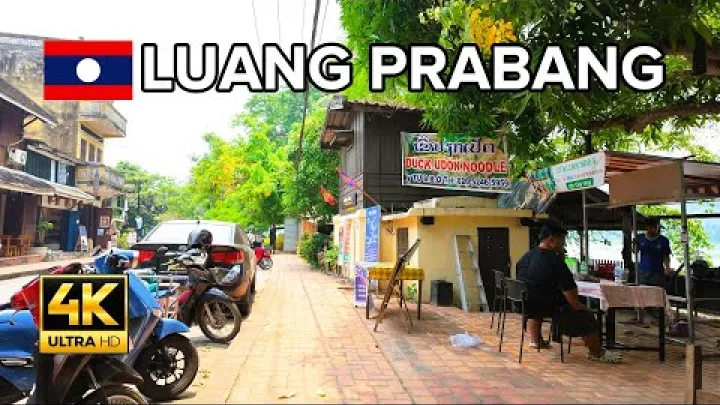
It is often a character-driven choice rather than a purely practical one. A room with a genuine Mekong view, balcony, or outdoor sitting area can add value for a couple or a traveler planning quiet time at the property. That value may be reflected in a higher relative price than a room on an interior lane. Conversely, a “riverside” hotel may be near the river without offering a river-view room, direct access to the bank, or an unobstructed outlook.
Noise and convenience vary by position. Accommodation near the Night Market and central restaurant streets can be useful for evenings but may have more activity. A quieter end of the riverfront may offer more peace but may feel less immediate for those who want to step outside into the busiest part of town. Read the room description carefully and, when a view matters, select the view category rather than assuming every room in the building faces the water.
Nam Khan Riverfront: Quieter Stretches and Varied Budgets
The Nam Khan River side offers a different pace. It includes riverside boutique properties, garden guesthouses, hostels, and small hotels, with a mix of quiet residential-feeling stretches and places closer to social venues. It can suit travelers who want scenery and a slightly less concentrated atmosphere than the main central streets without moving fully outside town.

The important point is that the Nam Khan is not a single neighborhood. A property close to a bridge or the Old Town edge may be highly convenient; one farther along the river can feel more secluded and may make transport more useful. Before deciding, trace the route from the actual entrance to the Night Market, Mount Phousi, and the restaurants you expect to use. Do not judge access solely by a straight-line map distance across water.
This area can work especially well for backpackers, solo travelers, and visitors who want a mix of value, scenery, and access. It also includes places with more evening social activity, so a quiet stay requires the same careful room and review checks as the center. Current accommodation listings show that the Nam Khan area serves different lodging styles and budgets; use an Agoda map to compare the exact location and recent guest feedback for your dates.
Relative cost can be attractive compared with the most sought-after heritage streets, but there is no reliable fixed rule. Demand, room type, season, and whether a property has river views or a pool can change the comparison quickly. Treat the Nam Khan as a flexible alternative, not automatically as the cheapest part of town.
Outside the Center: Hillside, Farm, and Nature Retreats
Properties outside the center offer a separate type of Luang Prabang stay. They may emphasize gardens, pools, spa facilities, farmland, jungle surroundings, privacy, or on-site dining. For a honeymoon, wellness-focused break, or longer stay with planned excursions, this can be more appealing than a compact Old Town room.
The main trade-off is transport dependence. A retreat can be close enough on a map to sound practical yet still be inconvenient for spontaneous dinners, a quick visit to the Night Market, or an early independent start. This is less important for travelers happy to spend much of the day at the property and more important for a short first visit centered on the heritage area.
Confirm the property’s exact distance from Old Town, whether its transfer service is included, its schedule, and the options for returning after the last shuttle. A pool, scenic setting, or complimentary shuttle does not create the same freedom as walking from a central hotel. These stays are best chosen for the retreat experience itself rather than as a simple substitute for a central base.
Choose a Place to Stay by Lodging Type
Once you have chosen an area, select a lodging type based on the way you plan to use the room and property. In Luang Prabang, a well-located guesthouse can be more useful than a larger hotel far away, while a resort can be better value if downtime and amenities are central to the trip.
Hostels and Guesthouses for Budget and Social Travel
Hostels and small guesthouses are practical choices for backpackers, solo travelers, and visitors who prioritize location over extensive facilities. Dorm beds can provide a social setting and a lower-cost way to stay near the center. Private rooms in family-run guesthouses may be a better fit for couples or friends who want privacy while keeping costs below many boutique hotels.
Look for these options in central lanes and around the Nam Khan side. The most useful budget stay is often not the one with the lowest advertised rate, but the one that reduces daily transport needs and has room conditions you can accept. A basic room close to the Night Market or established central streets can make a short visit feel much easier than a cheaper room requiring rides in both directions.
Quality can vary considerably within this category. Check recent reviews for the practical basics: whether lockers or room locks are usable, reception hours, bathroom arrangement and cleanliness, air conditioning where needed, luggage storage, and noise from streets or common areas. For dormitories, distinguish a social hostel from a quiet guesthouse with dorm beds; they serve different travel styles. For a private room, confirm whether the bathroom is private and whether the room has a window if that matters to you.
Boutique and Heritage Hotels for Character and Comfort
Boutique and heritage hotels are a natural fit for Luang Prabang’s historic setting. Many aim to combine Lao design or colonial-era character with modern hotel services, gardens, breakfast, and attentive staff. They suit first-time visitors who want comfort close to the main sights, couples looking for atmosphere, and families who value a dependable base.
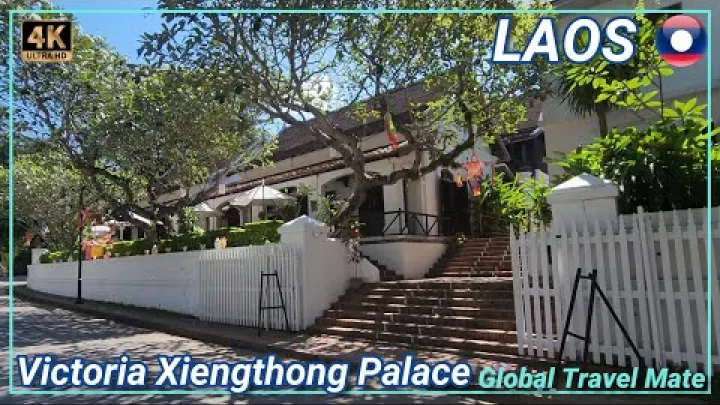
These properties are often most compelling on the Old Town peninsula or near its river edges. A well-positioned hotel can make an early temple visit, an afternoon rest, and dinner in town easy to combine. The trade-off is generally a higher relative cost than a basic guesthouse, especially for a room with a river view, balcony, larger footprint, or premium heritage setting.
Character does not guarantee that every room has the same level of convenience. Older-style buildings may have stairs, smaller rooms, uneven layouts, or bathrooms designed differently from a modern international hotel. Check room-specific photographs and details for air conditioning, bathroom layout, bed configuration, accessibility needs, and the route from reception to the room. A hotel may be centrally located while a particular room faces a busy street or has no view.
Resorts and Eco-Retreats for Seclusion and Amenities
Resorts and eco-retreats are for travelers who see the accommodation as part of the itinerary. Pools, spas, gardens, farm or nature settings, activity programs, and on-site restaurants can justify staying beyond the heritage center. This category can be particularly suitable for relaxation-focused couples, honeymooners, and visitors staying long enough to balance town exploration with unstructured rest.
The benefit is the property experience, not walkability. On-site meals and planned outings can make a secluded stay comfortable, while the distance from town may limit casual restaurant exploration and evening browsing. Compare what the rate actually includes: breakfast, activities, pool access, spa access, and transfers can change the effective value significantly.
Do not assume that an eco-focused label confirms a particular level of sustainability, service, or comfort. Read the property’s own description and recent reviews for the facilities that matter to you. A remote stay is most satisfying when its setting and amenities are the reason for booking, rather than a compromise made without considering how often you want to be in town.
Families and Longer Stays: Prioritize the Room Setup
For families, the best area depends on the balance between easy outings and room space. A quiet central guesthouse or boutique hotel can make meals, short walks, and sightseeing much simpler. A resort may provide gardens, pools, and more space, but parents should consider the additional transport planning required for each town visit.
Check the room setup before looking at star ratings. Useful questions include whether the property has family rooms, connecting rooms, extra beds, suitable cot arrangements, quiet sleeping areas, breakfast options for children, and safe access to any pool or garden. A large room is not automatically configured for a family, and a hotel’s standard room category may not accommodate the group comfortably.
For a stay longer than a few nights, ask directly about kitchen or kitchenette facilities, laundry, Wi-Fi reliability, housekeeping frequency, workspace, utility charges, and longer-stay terms. Serviced-apartment and monthly-rental inventory is less clearly standardized than hotel inventory, so it is better to use a direct checklist than to rely on a broad ranking. Confirm what is included in the quoted total and whether the property can support your practical routine.
Getting to Your Base and Moving Around Town
Arrival logistics are a useful way to test whether an accommodation choice is truly convenient. Central properties generally simplify the final part of the trip, while riverside and outer stays may require clearer driver instructions and a more deliberate transfer plan.
Arriving by Air at Luang Prabang International Airport
Arrivals at Luang Prabang International Airport require a ground transfer to the accommodation. The suitable option depends on arrival time, luggage, group size, budget, and how easy the property is to find. A hotel-arranged pickup can be especially useful for late arrivals, families, and small-lane addresses, while taxi, shared-transfer, or tuk-tuk options may suit travelers who prefer to arrange transport on arrival.
Traveler discussions can be helpful for understanding the kinds of transfer questions visitors face, but fares and availability are variable and should not be treated as fixed. A Luang Prabang travel forum illustrates the continuing need to clarify airport-to-town transport rather than relying on an old quoted price.
Ask the accommodation to confirm the airport pickup meeting point, total price, payment method, vehicle type, waiting policy, and late-arrival procedure before travel. For an outer property, establish whether the transfer is included, optional, or charged separately. This small step prevents confusion when flights are delayed or when the accommodation is not on an obvious main road.
Arriving by the Laos-China Railway
Luang Prabang Railway Station is outside the tourist center, so rail passengers need onward transport regardless of where they stay. The Laos-China Railway has made rail arrival possible from other major points in Laos and beyond, but it does not make Old Town or a resort walkable from the station.
Shared station transport may suit travelers with a central address and flexible timing. A pre-arranged hotel or private transfer can be easier for families, travelers with substantial luggage, late arrivals, or guests staying at a remote property. The important detail is the final drop-off: small lanes, similarly named properties, and outer access roads make an exact address and clear instructions useful. An overview from Fahey James Travel also notes the station’s role as an arrival point rather than a central lodging hub.
Arrange or confirm onward transport from Luang Prabang Railway Station and make sure the driver can identify the property’s exact location. For a non-central resort, confirm station pickup availability, luggage handling, and arrival-time coordination before committing to the booking.
Walking, Cycling, Tuk-Tuks, and Hotel Shuttles
The Old Town peninsula is the strongest choice for travelers who want to walk between the Night Market, Mount Phousi, the Royal Palace Museum, temples, riverfronts, and restaurants. Its compact heritage area supports a flexible day without making every movement a transport decision. This is why a central base is usually more valuable for a short sightseeing trip than a larger room farther out.
Cycling can extend the practical range of a near-center stay for visitors comfortable navigating local streets. Tuk-tuks become more relevant for outer areas, hillsides, and properties beyond the easiest walking routes. A hotel shuttle can lower the effort of reaching a remote resort, but it follows the hotel’s schedule and may not suit an unplanned dinner, a late evening, or a separate early departure.
A simple rule works well: choose central lodging if you expect spontaneous walking every day. Choose an outer base only if you are comfortable structuring outings around arranged transport and spending meaningful time at the property itself.
Safety and Night Walkability When Choosing a Base
Accommodation safety is not only about a neighborhood name. It includes the route between the property and active streets, the quality of the entrance, lighting, reception arrangements, and whether you will be returning on foot after dark. Use official travel guidance for country-level risks and property-specific review patterns for practical night access.
What Official Travel Guidance Means for Luang Prabang
Official advice for Laos should inform travel planning without making the central visitor area seem like an active danger zone. The U.S. Department of State advises increased caution in Laos because of crime, unrest, and unexploded ordnance, and identifies Luang Prabang Province among areas relevant to its guidance. Read the current U.S. Department of State advisory alongside guidance from your own government before travel.
For choosing a base, the practical distinction is between established town roads and visitor areas versus remote rural tracks, undeveloped land, or less-used trekking routes. Central accommodation can reduce logistical complexity, but it does not replace normal situational awareness or current advice. The issue of unexploded ordnance is particularly relevant when leaving established areas for remote excursions, not as a reason to avoid ordinary central hotels.
Check the current official Laos travel advisory and stay on established roads and paths without touching unknown metal objects. Use qualified local guidance for remote activities rather than exploring unmarked terrain independently.
How to Assess Nighttime Routes and Property Security
A practical base for evenings has a clear route to restaurants or transport, useful lighting, an identifiable entrance, and a reception or access arrangement that suits your arrival pattern. Central streets are often convenient because more services and other people are nearby. However, a quiet riverfront lane can be pleasant without being equally easy to navigate late at night, and a quiet hillside or rural setting can become isolated after dark.
Before booking, inspect the route from the property to a main street on a map and read recent reviews for comments about nighttime access, noise, locked entrances, staff availability, and the actual walk from drop-off point to room. For solo travelers and families, it is sensible to favor a route that is straightforward and populated over one that is merely scenic.
Inspect the nighttime route on a map, favor populated main roads, and ask for a room or property entrance with practical lighting and secure access. A quiet property can be a benefit; an isolated approach that does not fit your comfort level is a different consideration.
How to Book and Verify Accommodation
The final booking decision should combine area, room type, current total cost, and practical details that a neighborhood description cannot answer. Availability changes rapidly, especially around popular dates, so compare live listing information rather than relying on a generic hotel ranking or an old price.
Compare Current Rates, Reviews, and Availability
Accommodation prices in Luang Prabang change with travel dates, room category, demand, taxes, cancellation terms, and whether breakfast or transfers are included. A search result that looks inexpensive may refer to a limited room type, a non-refundable rate, or a date that does not match your trip. Compare the total at the final booking step, not only the first displayed nightly figure.
For a useful comparison, open one central Old Town option, one Nam Khan or near-center option, and one outer resort if you are considering different styles of stay. Compare map position, review recency, room size, breakfast, transfer fees, and cancellation terms. Current inventory tools such as Expedia can help compare availability and recent review information across different types of lodging.
Compare the current total price, taxes, cancellation terms, room configuration, and recent review date before paying. Prioritize the location and room you will actually use over a broad star rating or a promotional label.
Check Noise, Maintenance, and Room-Specific Details
Every major area contains both calmer and busier rooms. The same hotel may have a quiet garden-facing room, a road-facing room affected by traffic, and a riverside room with a different mix of sound and exposure. A central label does not guarantee silence, and a riverfront label does not guarantee a balcony, a clear view, or direct access to the water.
Read recent review patterns rather than reacting to one isolated complaint. Look for repeated mentions of nighttime noise, maintenance, water pressure, air conditioning, cleanliness, insects, stairs, and bathroom condition. These details matter more in smaller properties, heritage buildings, and budget stays where room layouts and upkeep may vary.
If quiet is important, request a room away from the busiest road, bar area, market-facing side, or common space. If a facility is essential, such as air conditioning or a private bathroom, confirm that it applies to your booked room category rather than only to some rooms shown in photographs.
Verify Shuttle and Remote-Property Terms Before Booking
For an outer resort or eco-retreat, transport terms are part of the accommodation value. A shuttle described as “available” may run only at scheduled times, require advance reservation, have limited seats, or stop early in the evening. Airport and station transfers may also be included in one rate and charged separately in another.
Ask about shuttle departure frequency, the last return from town, pickup points, reservation requirements, airport and railway-station transfers, private-transfer cost, and the backup plan if you miss a scheduled service. These answers reveal the real convenience and cost of staying outside the center.
A central base is usually the better choice if you expect unplanned evening meals, frequent short trips, or early independent departures. A retreat can be the better choice when the schedule works for you and the property setting is a meaningful part of the holiday.
A Simple Decision Rule for Booking Your Stay
Book on the Old Town peninsula or immediately beside it if you are visiting Luang Prabang for the first time, staying only a few nights, or want to walk easily between heritage sights, food, and the Night Market. Select the Mekong riverfront when a view and central heritage character matter most, and choose the Nam Khan side when you prefer a calmer feel or want to compare a broader mix of hostels, guesthouses, and boutique stays.
Choose a hillside, farm, or nature retreat only when privacy, amenities, and time at the property outweigh spontaneous access to town. Then select the room type for your actual needs: a dorm or simple guesthouse for budget and social travel, a boutique hotel for character and comfort, or a resort for space and facilities.
Before paying, check the property pin, the exact room category, recent reviews, full total, arrival plan, and evening access. That short process will usually produce a better Luang Prabang base than choosing solely by a low rate, a riverfront label, or a broad claim of being central.
Select area
Create a post
Posting is free and no registration is required.