Savannakhet Best Time to Visit: Month-by-Month Weather Guide

The best time to visit Savannakhet is generally from November to February, when the weather is usually drier, less humid, and more comfortable for exploring the city on foot. Savannakhet remains warm throughout the year, but the difference between the cooler dry-season months, the intense pre-monsoon heat, and the wet monsoon months can strongly affect a trip. This guide explains the local seasonal pattern, gives a simple month-by-month feel, and helps you choose dates for culture, outdoor time, greener landscapes, or a flexible budget-minded visit. It also covers practical planning for the Mekong riverfront, city walks, and rural excursions around Savannakhet.
The Best Time to Visit Savannakhet at a Glance
Savannakhet is an inland city on the Mekong, so weather is often the main factor in deciding when to go. The most suitable period depends on whether you value comfortable walking weather, green scenery, or the possibility of travelling outside the main dry-season window.
November to February is the best overall window
For most visitors, November through February is the best time to visit Savannakhet. This is the more comfortable part of the dry season, usually bringing less rain and lower humidity than the monsoon months. Days are still warm, but mornings and evenings can feel more pleasant than later in the year.
November can retain some transitional character after the rainy season, while December and January are commonly the most consistently comfortable choices. February is usually still favorable, although afternoon heat starts to become more noticeable. This window is especially practical for a first visit with limited flexibility.
Drier conditions make it easier to walk between temples, colonial-era buildings, and local markets, visit the Dinosaur Museum, or spend time along Savannakhet's Mekong riverfront. It is the strongest all-purpose choice for travelers who want to plan several outdoor stops in one day without building the itinerary around regular heavy rain.
Shoulder-season choices for heat and rain flexibility
Late October to early November can suit travelers who like greener surroundings and do not need fully settled dry-season weather. Rain often becomes less frequent as the season changes, but showers and high water near the Mekong may still be part of the picture. It can be a reasonable compromise for a city-focused stay with an adaptable schedule.
Early March is another option for visitors who prefer a drier period and tolerate heat well. It is generally less predictable for comfort than December or January because afternoons become increasingly hot. A morning-focused sightseeing plan makes this period more workable.
These shoulder periods may sometimes have more accommodation choice or better value than peak dry-season dates, but this should not be treated as guaranteed. Reliable city-specific data on visitor numbers and seasonal prices are limited. Compare current room availability for your own dates, then weigh any saving against the chance of rain in late October or stronger heat in March.
Periods to approach with caution
April is the main period to approach carefully if you dislike heat. It falls late in the dry season, when the lack of rain does not necessarily mean comfortable sightseeing. Long walks, cycling, waiting for transport, and sleeping in accommodation without dependable cooling can all feel more demanding.
August and September are the months to consider carefully if your plans include rural roads, low-lying areas, or a tightly timed onward journey. This is the wetter, more humid part of the monsoon pattern, with a higher likelihood of heavy rain and water-related disruption. The city is not automatically off limits, but the trade-off is less predictable access and less certainty for outdoor plans.
Whether to avoid these periods depends on your itinerary and tolerance. A heat-sensitive traveler with only a short city break may be better served by December or January. A traveler interested in lush scenery who can change plans at short notice may still enjoy the wet season, provided that weather is treated as a central part of the itinerary rather than a minor inconvenience.
Savannakhet Climate, Seasons, and City-Stay Impacts
Savannakhet follows Laos's tropical monsoon rhythm, but the useful question for visitors is not simply whether it is wet or dry. It is how heat, humidity, rain, and changing river conditions affect the way a day in the city feels.
The dry season from November to April
The broad dry season runs from about November to April. National climate guidance describes Laos as tropical and monsoonal, with a rainy season from May to November and a dry season from November to April, as summarized by UNDP Adaptation. Seasonal boundaries are useful planning guides, not fixed dates that arrive on the same day every year.
The dry season contains two distinct travel experiences. November through February is the cooler-feeling portion, with less humidity and more manageable temperatures for being outside. March and April remain dry in the broad seasonal sense, but they are much hotter. Rainfall and humidity change more sharply across the year than the fact that Savannakhet is generally warm.
For city travel, drier weather usually makes walking, cycling, riverfront visits, and overland movement easier to organize. Pavements are less likely to be slick, clothing dries more easily, and a plan can include longer outdoor periods. That does not mean every day is identical or that all transport services operate without interruption, but it gives the best odds for a straightforward itinerary.
The rainy season from May to October or November
The rainy season is generally described as running from around May through October or November. Different climate sources may use slightly different start and end months because monsoon arrival and withdrawal vary from year to year. The consistent pattern is a wetter, more humid period after the hot dry-season peak.
Rainy season travel does not mean continuous rain from morning to night. Visitors may experience clear intervals followed by short, heavy showers or storms. Warm nights and high humidity can make a wet day feel more tiring, especially when moving between sights, markets, and transport stops.
Rain affects more than umbrellas. It can make clothes and footwear slow to dry, leave pavements wet, alter riverfront conditions, and reduce the reliability of an excursion with a strict timetable. Earlier wet-season rain is often mainly a comfort and scheduling issue, while later monsoon conditions can create more significant concerns in low-lying and rural areas.
What the climate means for a city stay
In Savannakhet, weather changes the pace of ordinary city sightseeing. A route between temples, older colonial-era architecture, markets, and the Dinosaur Museum can be easy in the dry season but feel much longer in humid weather or under strong afternoon sun. Limited shade, wet pavements, and time spent waiting for transport are practical considerations, not just forecast details.
A useful daily pattern is to visit outdoor places early, pause indoors or in shade during the hottest or wettest part of the day, and return to the Mekong riverfront in the later afternoon or evening. This approach is particularly useful outside the December-to-January comfort peak. Before visiting individual museums, temples, or markets, confirm their current hours and any access arrangements locally, since these can change independently of the season.
Savannakhet Weather Month by Month
Month-by-month descriptions show the usual climate pattern rather than a promise for a particular year. Modeled historical climate information for Savannakhet is based on long-term weather simulations, which is useful for comparing seasons but not for predicting an individual travel week.
November to February: the most comfortable months
November marks the transition away from the monsoon. Conditions commonly become drier, though occasional rain can still occur. December and January are usually the best months for visitors who want a lower-rain, lower-humidity city break. February remains a strong choice, with generally favorable dry-season conditions but a gradual return of stronger daytime warmth.
| Month | Typical feel | Best suited to |
|---|---|---|
| November | Drying transition; warm | Flexible city trips |
| December | Drier and comfortable | Walking and culture |
| January | Cooler-feeling dry season | First-time visits |
| February | Dry, becoming warmer | City and outdoor plans |
These months are the best fit for cultural sightseeing, cycling, relaxed market visits, and travelers who cannot easily rearrange plans. Warm days are normal, so sun protection and water remain useful, but the lower humidity can make a full day outside feel more manageable. The seasonal contrast shown in Meteoblue supports this broad difference between the drier months and the wetter monsoon period.
March and April: hot and increasingly difficult for daytime activity
March begins the hotter pre-monsoon phase, and April is the month most likely to challenge visitors who want long, active days outdoors. The main decision is simple: choose these months only if you are comfortable adapting to hot afternoons. Dry weather can help with rain-free plans, but it does not remove the strain of sustained heat.
Hot afternoons can shorten city walks, make cycling less appealing, and increase the importance of accommodation with effective cooling. Warmer nights may also affect sleep, especially in simple rooms. Build the day around the temperature: schedule demanding outdoor sightseeing for early morning or late afternoon during March and April, use shaded or indoor stops around midday, carry water, and use sun protection. This is practical heat planning, not a reason to avoid Savannakhet completely.
Travelers who enjoy a slower pace can still visit temples, markets, and the riverfront in these months. The key is to reduce expectations about how much can be covered on foot in the middle of the day. For a short trip where comfort is the priority, the November-to-February window is usually easier.
May to July: the rainy season builds
May is often a hot transition month as rain becomes more likely. By June, the monsoon pattern is more established, and July is typically warm, humid, and marked by frequent rain. The precise timing of the first sustained rains can differ from one year to the next, so it is better to expect a changing weather rhythm than a fixed start date.

For travelers, this often means periods of dry or bright weather mixed with showers that can be intense. It is unwise to assume rain will occur only at one predictable time of day. Keep sightseeing priorities close together, allow extra time between stops, and avoid relying on footwear that remains uncomfortable once wet.
The benefit is a greener landscape beyond the city, which may appeal to visitors interested in rural scenery and a stronger monsoon atmosphere. The trade-off is that unpaved or less developed routes can become muddy, while a sudden shower can interrupt a market visit, walk, or short excursion. Lightweight clothing, a compact rain layer, and quick-drying shoes are particularly useful in this period.
August to October: peak rain, high water, and gradual improvement
August and September are generally the core wet-season months, with the greatest likelihood of heavy rain, high humidity, and high water in the wider Mekong environment. These months can be visually rewarding for travelers who enjoy lush landscapes, but they require a more adaptable approach than the dry season.

October is a transition month. Rain may begin to ease, yet showers and high water can persist. This makes October a possible compromise for travelers who want residual greenery without committing to the wettest part of the year, but it is not a guaranteed dry-season trip.
The Mekong riverfront, nearby floodplain areas, and rural roads are the parts of a Savannakhet itinerary most likely to feel the practical effects of the season. High water is not automatically a problem for every visitor, and conditions vary greatly by event and year. Treat this period as one where landscape appeal and operational certainty are separate decisions.
The Best Time to Visit Savannakhet by Travel Purpose
The best month changes according to what you want to do. Savannakhet is best approached as a riverfront city for culture and everyday local life, with nearby rural areas that become more weather-sensitive in the monsoon.
For culture, markets, and city walking
November through February is the strongest choice for temples, historic streets, the Dinosaur Museum, local markets, and unhurried time near the Mekong. Lower rain risk and more manageable heat make it easier to stay outside for several hours, combine several stops, and explore at a relaxed pace.
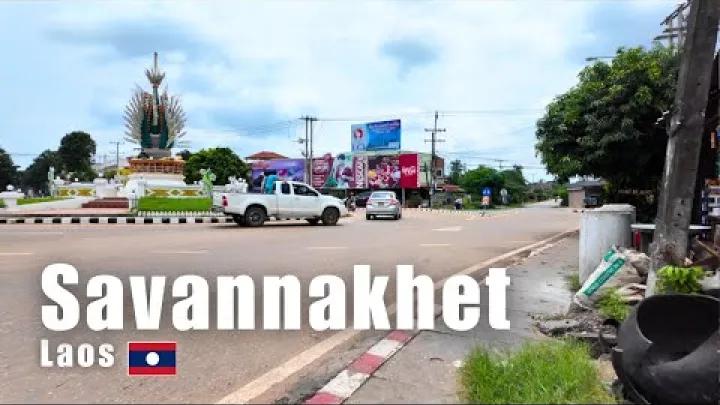
Late October and early March can also work if you adjust expectations: late October may still bring showers, while early March rewards an earlier start. Wet-season visits are possible for travelers who prefer a slower schedule and are content to shift between outdoor and sheltered activities. Do not assume all cultural sites keep identical seasonal schedules; check current opening information locally once you arrive.
For rural scenery, walking, cycling, and riverfront experiences
The dry-season core from December through February is the easiest period for outdoor movement and predictable day plans. It is the better choice for visitors who want to walk or cycle beyond the immediate center, spend extended time at the riverfront, or travel overland with minimal weather complications.
May through July can be appealing for greener rural scenery, but rain and mud change the character of the experience. August through October may offer dramatic high-water views and lush floodplain landscapes, yet those visual qualities do not make routes automatically suitable for all activities. Travelers should separate the desire for monsoon scenery from the need for reliable access.
Savannakhet is not a beach destination, and weather planning should focus on city walking, riverfront time, road travel, and countryside conditions rather than sea conditions or invented hiking expectations. Choose the dry season for ease; choose the greener months only when the changing weather is part of the trip's appeal.
For budget travel and quieter visits
The wet season may be less attractive to travelers focused on dry weather, so it can sometimes bring quieter accommodation or more flexible value. However, there is not enough reliable city-specific evidence to promise lower prices or a clear crowd pattern in Savannakhet. Rates can also depend on weekends, holidays, room type, and local demand.
Check current accommodation prices for several date ranges rather than assuming a monsoon discount. Any possible saving should be balanced against practical costs: a greater need for air conditioning during hot periods, rain protection in the monsoon, extra time for delays, and the possibility of changing an excursion. Choose the dry season when avoiding disruption matters more than maximizing possible savings.
For flexible travelers who want green landscapes and monsoon atmosphere
June and July can be good choices for flexible travelers who enjoy lush scenery, dramatic skies, and quieter hours between showers. The experience is less about following a fixed list of sights and more about allowing weather to shape the day's pace. City attractions, cafés, covered market areas, and indoor stops become useful alternatives when rain arrives.
August and September intensify the wet-season character and are better suited to travelers comfortable with a higher chance of altered outdoor plans. October may offer a middle path, with greenery still present and a possible gradual improvement in weather, though rain remains possible. Monsoon travel is most rewarding when flexibility is a genuine preference, not merely a backup plan.
Practical Weather Planning for Savannakhet
Good timing improves a trip, but simple daily preparation matters in every month. Savannakhet's warm climate means that clothing, pacing, and a distinction between climate patterns and a live forecast are useful parts of planning.
What to wear and how to plan each day
Pack lightweight, breathable clothing for any season. In the wet months, add a compact rain layer and quick-drying footwear with reasonable grip for wet pavements. A light extra layer can be useful on cooler dry-season mornings or evenings, but it should not replace sun protection for the daytime.
Bring drinking water, a hat or other sun protection, and footwear suited to the month. Sandals may be convenient in humid weather but are less useful if you expect muddy ground outside the city; closed quick-drying shoes can be more versatile. In the dry season, comfortable walking shoes are often the priority.
Plan outdoor activities earlier in the day, reserve the hottest period for a rest or indoor visit, and use the later afternoon for a slower walk or riverfront time. During the monsoon, leave room between important stops rather than scheduling every hour. This simple rhythm makes both heat and rain easier to manage without reducing the trip to weather watching.
Climate averages versus the live forecast
Climate averages help choose a month, while a short-term forecast helps plan each day. A dry-season visit can still include a shower, and a relatively dry week in the rainy season does not erase the wider monsoon pattern. Use seasonal information to select your travel window, then refine daily activities with current conditions.
Before each outdoor day, recheck a short-term forecast and any official warnings. A forecast service such as the Met Office can show near-term temperature, rain, wind, visibility, humidity, UV, and weather warnings. For local official information, look for updates from the Laos Department of Meteorology and Hydrology where available.
This two-step method is more reliable than treating a monthly climate chart as a daily forecast. It is especially important in the monsoon, when a heavy-rain day can affect the comfort and timing of a city itinerary even if the overall trip month remains a reasonable choice.
Planning around rain, flooding, and route changes
Heavy monsoon rain can affect low-lying areas, rural roads, riverfront conditions, and excursions outside the city even when central Savannakhet remains functional. The Mekong and its surrounding floodplain are the relevant local setting, but impacts vary by location, rainfall event, and year. Historical flood management information from FAO illustrates why Mekong flooding is a serious seasonal planning consideration in Laos, not a prediction for every visit.
The plans most exposed to disruption are rural road trips, travel through low-lying floodplain areas, and activities dependent on river conditions. Keep a city-based alternative ready, such as museum time, market browsing, or a shorter architectural walk when conditions permit. This avoids losing an entire day if an outward excursion changes.
Before rural travel, confirm current road and flood conditions with local accommodation or transport staff. Ask specifically about the route you plan to use, not only the general weather in Savannakhet. This is most important from late in the wet season through the transition toward November, when conditions can differ substantially between the city and surrounding areas.
Final Recommendation: When to Visit Savannakhet
Choose November to February for the best overall balance of drier weather, lower humidity, and comfortable conditions for Savannakhet's temples, historic streets, markets, museum visits, and Mekong riverfront. December and January are the safest choices for travelers who value comfort and predictable outdoor time.
Choose late October to early November for greener surroundings with some remaining rain risk, or early March if you prefer dry conditions and can organize days around the heat. Visit from May to October for monsoon scenery only if you accept a wetter, more flexible travel style. April is best for heat-tolerant visitors, while August and September require the greatest allowance for rain and route changes. Whatever month you choose, use climate patterns to select dates and a live forecast to shape each day's plans.
Select area
Create a post
Posting is free and no registration is required.