Champasak Getting There: Routes and Transport
Getting to Champasak usually involves one important decision: how you will reach Pakse and how you will complete the final journey to Champasak town. There is no airport in Champasak, and local transport on the last leg is less standardized than flights or long-distance buses. This guide compares the main gateways, including Pakse International Airport, Vientiane, Ubon Ratchathani, Bangkok, and southern Laos. It also explains when a direct road transfer is the simplest choice and when the Route 13 and Mekong crossing route may suit a slower, more flexible trip.
The Main Way to Reach Champasak
Pakse is the practical transport hub for most visitors heading to Champasak. It has the area’s principal airport, receives long-distance buses, and is the main place to arrange a car, taxi, tuk-tuk, or onward local connection. From Pakse, you can either travel by road directly to Champasak town or follow Route 13 south to the river crossing near Ban Muang.
Why Pakse is the practical staging point
Champasak town lies on the west bank of the Mekong River, while Pakse is the nearest major urban center with regular long-distance transport links. Whether you arrive by air, bus from Vientiane, or from Thailand, Pakse is normally where the organized part of the journey ends and the local part begins.
There are two common final-leg patterns. The straightforward option is a private road transfer from Pakse to your accommodation in Champasak. The more local option is to travel south on Route 13 to Ban Muang, cross the Mekong by boat toward Ban Phapin, then continue a short distance into town. The second route can be rewarding if you are already travelling along Route 13, but it consists of separate transport segments rather than one unified public service.
Do not expect a single, standardized ticket that covers every step into Champasak town. Flights and intercity buses can usually be booked through formal channels, while boats, shared vehicles, and local tuk-tuks may be arranged on the day. This distinction matters if you have large luggage, a late arrival, a group, or a fixed hotel check-in.
Choose between the direct road and river-crossing approaches
A direct road transfer from Pakse is usually the best option for travelers who value simplicity. A hired car, taxi, or tuk-tuk can take you from the city or airport area to a named hotel or guesthouse in Champasak. It avoids a boat handoff, reduces luggage handling, and is generally easier for families, small groups, or anyone arriving after a flight.

The Route 13 and river-crossing approach can be less expensive when shared transport is available, but it requires more time and patience. You may need to wait for a suitable vehicle to Ban Muang, arrange a boat at the landing, and find a final ride after reaching the west bank. It is more appropriate for independent travelers who are not working around a tight onward connection.
| Approach | Best for | Main advantage | Main limitation |
|---|---|---|---|
| Direct road transfer | Groups, luggage, fixed plans | Simple door-to-door travel | Usually costs more than shared local transport |
| Route 13 and river crossing | Flexible independent travelers | Can fit a southbound Route 13 trip | Several handoffs and possible waiting |
| Shared local vehicle | Budget travelers with time | Potentially lower cost | Departure and drop-off can be variable |
Choose based on your arrival time, luggage, group size, budget, and need for certainty. A private transfer can be relatively better value when its cost is shared among several passengers. A river route is more appealing when the journey itself is part of the experience and an extra delay will not cause a problem.
Flying to Pakse International Airport
Pakse International Airport, identified by the airport code PKZ, is the main air gateway for Champasak. Flying removes the longest overland segment, but it does not remove the need to arrange the onward journey to Champasak town.
What to check for flights into Pakse
Flights to Pakse may be available from Vientiane and, at times, from selected regional gateways. Airline networks in Laos can change with season, demand, and operating conditions, so treat any route displayed by a search site as a starting point rather than a guarantee. Check the current timetable, flight number, operating day, baggage allowance, and booking conditions directly with Lao Airlines or the airline operating your chosen flight.
The most useful flight is not always the cheapest one. Consider when it lands in Pakse and what that means for your transfer. An early arrival gives more time to arrange a vehicle or use the Ban Muang route. A late arrival may make a pre-arranged road transfer or an overnight stay in Pakse the more realistic choice. Leave room in your plan for a changed flight time or a missed onward connection rather than treating local transport as a guaranteed airport service.
When comparing flights, check whether the fare includes checked baggage and whether your booking is on one ticket or separate tickets. Separate bookings can be less protected if the first flight is delayed. If you are connecting from an international arrival in Vientiane, allow enough time for immigration, baggage collection, and any terminal or airline procedures before a domestic flight.
Transfer from Pakse to Champasak
For an airport-based trip, a direct road transfer is usually the least complicated continuation. It can be arranged as a point-to-point journey or as a vehicle hire. These are not always the same product: a point-to-point price normally covers travel to the agreed destination, while a hire may include waiting time, multiple stops, or a visit to an attraction if that is agreed in advance.
Journey planners list a road car or taxi connection between Pakse and Champasak, including indicative route and travel-time information, but this should be used for broad planning rather than a promised door-to-door duration. The Rome2Rio route page is one comparison tool for this transfer. Actual timing depends on the pickup point, road conditions, stops, and the exact location of your accommodation.
When arranging the vehicle, state that your destination is Champasak town and provide the property name if possible. Ask whether the quoted amount covers the entire vehicle or each passenger, how much luggage is acceptable, and whether waiting or detours cost extra. If a driver offers a sightseeing stop, decide before departure whether it is included or changes the price. This prevents confusion between a simple transfer and a time-based hire.
Reaching Champasak Overland From Vientiane and Within Laos
Travel from Vientiane to Pakse is the main domestic overland or domestic-flight approach. Both options require a separate continuation to Champasak, so the key choice is whether you prefer a shorter flight or a lower-cost but much longer road journey.
Vientiane to Pakse by bus or flight
A flight from Vientiane to Pakse is normally the faster way to cover the country’s north-to-south distance. It is particularly useful if your time in southern Laos is limited or if you want to arrive with enough daylight to continue by road to Champasak. Flight schedules and frequencies should be treated as current-booking information rather than a permanent pattern.
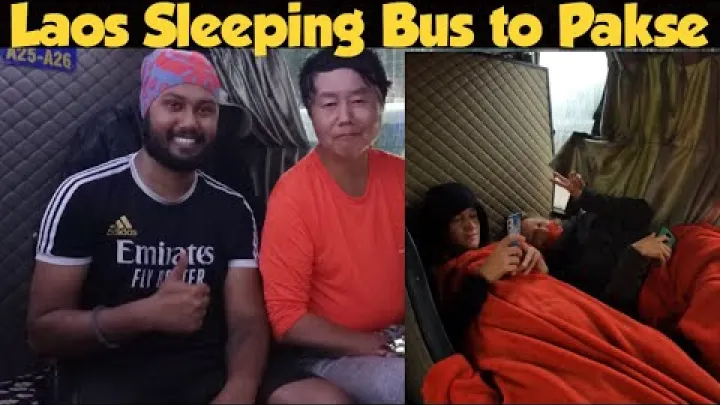
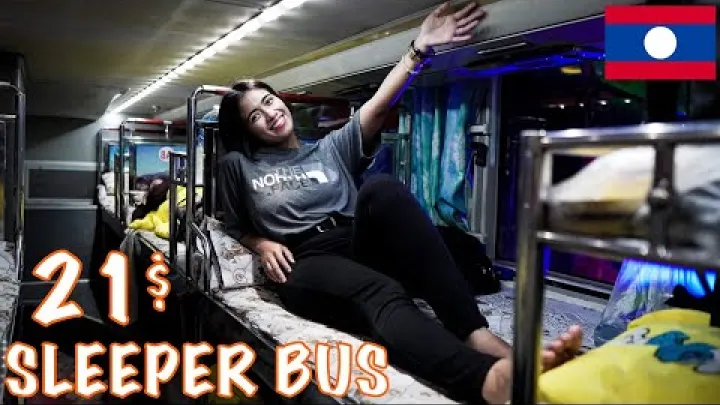
Long-distance buses, including daytime and night services, can cost less but take substantially longer. A night bus may preserve a daytime for sightseeing, while a daytime bus can feel easier for travelers who prefer to see the route and avoid sleeping on the road. Actual travel time can differ from an advertised estimate because of stops, traffic, road conditions, passenger pickups, and operational delays.
Neither the flight nor the long-distance bus ends in Champasak town. Plan the Pakse-to-Champasak transfer as its own leg, with a buffer if you have a reservation, a border crossing, or another fixed commitment. A same-day connection can work, but it should not depend on an exact arrival minute.
Using Pakse bus stations and local connections
Most long-distance buses arriving from within Laos terminate in Pakse rather than continuing to Champasak town. From there, travelers commonly change to a hired vehicle, a tuk-tuk, a songthaew, or a route involving the Mekong crossing. Departure points for local services can shift between stations, roadside pickup areas, and operator offices, so do not assume that every vehicle advertised for southern Laos will stop at the place you need.
Shared songthaews and similar local vehicles may cost less than a private transfer, but they often depart when there are enough passengers or when the driver is ready. They can also make additional stops. This can be suitable when your schedule is open, but a direct vehicle is generally more practical when you are carrying bulky bags or arriving after a long bus journey.
Before leaving a Pakse bus station or pickup point, ask a transport worker, your accommodation provider, or the Champasak Tourism Information Center where the next relevant vehicle actually departs. Confirm five details: the final destination, the expected departure trigger, the full fare, luggage space, and the exact drop-off point. A vehicle heading south on Route 13 may not automatically take you across the river or deliver you to your hotel.
Arriving From Thailand Through Ubon Ratchathani and Vang Tao
For travelers starting in northeastern Thailand, Ubon Ratchathani can be a useful gateway to southern Laos. The route normally combines Thai domestic transport, a land border crossing, travel onward to Pakse, and then the final Champasak transfer.
Crossing at Chong Mek–Vang Tao
The Lao-side crossing is Vang Tao International Border Checkpoint, opposite the Chong Mek area of Thailand. The official Lao Immigration information identifies Vang Tao as a southern Laos checkpoint bordering the Sirindhorn district of Ubon Ratchathani Province. It is the relevant gateway for an Ubon Ratchathani to Pakse route.
The practical sequence is simple in principle: travel from Ubon Ratchathani toward the border, complete exit and entry procedures, continue to Pakse, and arrange a Pakse-to-Champasak transfer. In reality, total travel time can be much longer than driving time because immigration processing and onward transport do not necessarily align. Online traveler reports may mention taxi prices or arrival times, but these are examples from individual trips, not official fares or guaranteed durations.
Before choosing this route, confirm the current crossing status and your required travel documents through official immigration information and the relevant authorities for your nationality. Do not rely on old visa advice, reported fees, or assumed border hours. Carry the documents required for your specific journey and allow enough time that a queue or transport wait does not force you into an unplanned late arrival in Pakse.
Bangkok to Pakse by bus or air
From Bangkok, a direct international bus to Pakse can be a possible low-cost overland option. It is a long journey and crosses an international border, so it is better for travelers who accept a full travel day or overnight travel in exchange for avoiding additional domestic flights. Booking platforms can show currently offered services; for example, BusOnlineTicket lists Bangkok–Pakse tickets and a starting fare, but departure days, operators, and prices can change.
Another approach is to fly from Bangkok to Ubon Ratchathani and continue via Chong Mek–Vang Tao. This breaks the trip into manageable segments but adds a border transfer and makes coordination more important. If a direct flight to Pakse appears in a current airline timetable, compare its total travel time and baggage rules with the Thailand-based alternatives rather than assuming it operates year-round.
For a Bangkok departure, choose the direct bus if minimizing transport cost matters most and you can tolerate a long journey. Choose the Ubon route if you prefer to split the trip and manage the border yourself. Choose a current direct flight to Pakse if it provides a suitable schedule and reduces the number of moving parts. Every option still requires the separate final journey from Pakse to Champasak.
The Route Via Route 13, Ban Muang, and the Mekong
The Route 13 and Mekong route is a useful local alternative to a direct road transfer. It is best understood as a chain of short connections: reach Ban Muang on the east bank, take a boat across, then continue from the Ban Phapin side to Champasak town.
Bus or minibus to Ban Muang
Ban Muang is an east-bank interchange used by some travelers connecting from Route 13 to the river crossing opposite Champasak. A bus, minibus, shared vehicle, or locally arranged ride may bring you there from Pakse or from points farther south. Some services on the wider Route 13 corridor may be useful for travelers moving between Pakse, Si Phan Don, Don Khong, or the southern border area, but their actual stopping patterns and departure arrangements are not uniform.
Think of this route as separate tickets and separate decisions. First, find a vehicle that will stop at or near Ban Muang. Second, reach the boat landing. Third, cross the river. Fourth, arrange the final short journey after landing on the Champasak side. A through-ticket may sometimes be offered by a local operator, but it is important to understand whether it truly includes every handoff or only the road portion.
This route can make sense if you are already travelling south on Route 13 and want to avoid returning to central Pakse for a private transfer. It is less suitable for a strict deadline because a minor delay in one segment can become a longer wait at the next one. Older fare and timetable examples can help you understand the type of service, but they should not be treated as current fixed prices or schedules.
Boat to Ban Phapin and the final ride into town
At the Ban Muang boat landing, ask for the crossing toward Ban Phapin on the west bank. Depending on conditions and what is operating locally, the available craft may be a shared passenger boat, a private boat arranged for your party, or a ferry capable of taking vehicles. These are different services and can have different prices, boarding points, and waiting periods.
After reaching Ban Phapin, Champasak town is still the final objective. A tuk-tuk may be available, or the remaining distance may be manageable on foot for some travelers, depending on your destination and luggage. The Champasak roundabout is a useful orientation point when explaining where you need to go, but give the name of your accommodation rather than relying only on a general town destination.
Ask locally on the day whether the Ban Muang boat and onward vehicles are operating, then leave time for waiting between the road, boat, and final ride. Before boarding, agree the total boat fare, confirm that it is going to the correct landing, and establish how you will reach town afterward. This is especially important when you arrive with luggage or when your party is too small to fill a shared boat.
Coming From Cambodia and Southern Laos
Travelers moving between Champasak, Si Phan Don, the southern Laos border region, and Cambodia often encounter multi-leg travel. The route can be practical, but it is not always a single end-to-end service with one operator responsible for every stage.
Southbound buses and multi-leg minibus itineraries
From southern Laos, an itinerary to Champasak may combine a bus or minibus on the Route 13 corridor, a stop near Ban Muang, a Mekong crossing, and a short local transfer. In the opposite direction, the same logic applies: leave Champasak, cross toward the east bank, then join a road vehicle south. Border-bound journeys can add immigration procedures, waiting for passengers, and changes between local operators.
Through-tickets can be convenient because they reduce the number of purchases you make yourself. However, a through-ticket may still involve several vehicle changes, a handoff at the border, and a final segment in a different vehicle. Individual traveler reports about particular companies, including Green Paradise Travel, should be treated as accounts of a specific experience rather than proof that every current service will operate the same way.
Before buying a cross-border or multi-leg ticket, confirm the number of expected vehicle changes, the point where the ticket officially ends, who manages the border segment, and whether the stated destination is Champasak town rather than a roadside junction or Pakse. Avoid tight connections to flights or other non-refundable bookings on a day that includes a border crossing. This allows for delays without turning an ordinary transport change into a costly disruption.
Booking, Costs, Timing, and Arrival-Day Decisions
Champasak transport is easiest to manage when you match the booking method to the service. Flights and major intercity buses are usually planned in advance. Local road transfers, boats, tuk-tuks, and shared vehicles may be arranged locally, with price and timing shaped by passenger demand and negotiation.
Compare speed, price, and booking difficulty
| Option | Speed | Booking method | Planning effort |
|---|---|---|---|
| Flight to Pakse | Fast for the long-distance leg | Airline or travel booking channel | Moderate, plus local transfer |
| Long-distance bus to Pakse | Slowest from Vientiane or Bangkok | Operator, agent, or booking platform | Moderate, plus local transfer |
| Thailand via Vang Tao | Variable | Separate Thai, border, and Lao segments | Higher |
| Private Pakse transfer | Usually the simplest final leg | Hotel, driver, or local arrangement | Low once arranged |
| Ban Muang river route | Variable | Mostly local arrangements | Highest |
A private Pakse transfer has the lowest planning effort for the final leg because it can be arranged around your own arrival. The Route 13 river option may have the lowest likely cost when shared services line up, but it has the greatest dependence on local availability. Flights save time over the largest distances; buses can reduce transport spending but require more endurance and schedule flexibility.
Do not compare only the headline ticket price. Consider hotel costs caused by a late arrival, the cost of a separate transfer, baggage charges, and whether a group can share a vehicle. Keep prices in the currency quoted by the provider and ask for the total amount before committing. Schedules and local transport prices should be checked close to travel because they can change.
What to verify locally before departure
The Champasak Tourism Information Center, your accommodation, current transport staff, and bus-station workers can be useful places to ask about services that have no dependable online timetable. They may know the day’s pickup point or whether a particular crossing is active, but treat their information as local guidance rather than a guaranteed reservation unless they arrange a confirmed vehicle for you.
Use clear, practical questions: Where exactly does it leave? Does it depart at a set time or when full? What is the total fare for me or for the vehicle? Is luggage included? How many passengers are needed? What is the last departure today? Where will I be dropped off? If you are using the river route, also ask whether there will be a tuk-tuk or other connection after the boat arrives.
Keep a backup option when timing matters. This might be a direct car from Pakse, a confirmed hotel pickup, or an overnight in Pakse before travelling onward. A backup is particularly valuable when you are relying on a demand-based boat, songthaew, or shared vehicle rather than a scheduled flight or bus.
Avoiding common transport problems
Most transport difficulties on this route are practical rather than unusual: a fare is not fully understood, a shared vehicle makes extra stops, a boat waits for more passengers, or an estimated journey takes longer than expected. The best response is clear communication before you leave, not assuming that one traveler’s experience will be repeated exactly.
Agree the total fare before boarding a boat or hiring a taxi or tuk-tuk. Clarify whether it includes all passengers, bags, waiting time, a river crossing, and any requested sightseeing stops. Carry enough local cash for small transport segments, since informal services may not accept cards or have change available. Keep your accommodation name and destination available in writing or on a map so a driver can confirm the correct drop-off point.
Try to reach Champasak in daylight when the final segment depends on local transport around Ban Phapin or town. If a later arrival is unavoidable, arrange a confirmed pickup with your accommodation or a driver in advance. This reduces the chance of arriving at a quiet landing or roadside point with limited onward choices.
A Simple Route Choice for Your Trip
For the simplest trip, fly or take a long-distance bus to Pakse and arrange a direct road transfer to Champasak town. For a Thailand-based journey, use Ubon Ratchathani and the Chong Mek–Vang Tao border route when it fits your documents and timing, then continue through Pakse. For a slower local journey along southern Route 13, use Ban Muang, cross the Mekong to Ban Phapin, and allow time for each handoff. In every case, treat Pakse as the main gateway and plan the final Champasak connection as a distinct part of the trip.
Select area
Create a post
Posting is free and no registration is required.