Cambodia Country Facts: Quick Facts and Profile
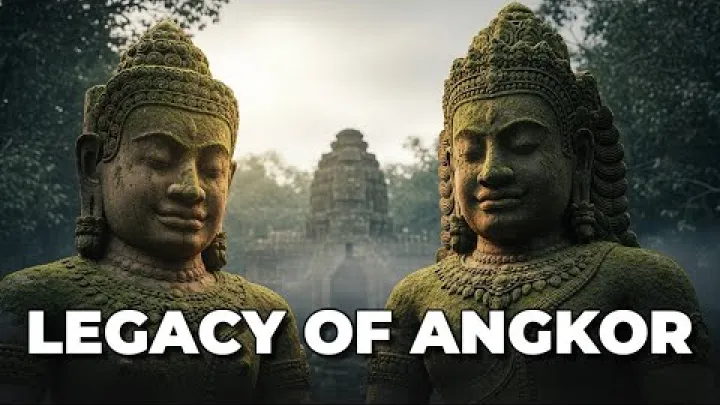
Cambodia country facts are useful for students, international readers, business researchers, and anyone who needs a clear Cambodia country profile. Cambodia is officially the Kingdom of Cambodia, a mainland Southeast Asian country known for the Khmer language, the Mekong River, Tonlé Sap, Phnom Penh, and the historical legacy of Angkor Wat. This guide begins with quick facts and then explains Cambodia basic information in more detail. It focuses on country facts, not travel advice.
Quick Facts About Cambodia
The quick facts below give a compact overview of Cambodia. Numerical country facts can vary by source and year, so population and area figures are labeled with reference years and definitions where available.
Official Name, Capital, Region, and Language
Cambodia country facts begin with its official identity: the country is the Kingdom of Cambodia. The Constitution of the Kingdom of Cambodia states that Phnom Penh is the capital and that the official language and script are Khmer.
| Fact | Cambodia |
|---|---|
| Official long name | Kingdom of Cambodia |
| Common English name | Cambodia |
| Capital | Phnom Penh |
| Largest city | Phnom Penh |
| Region | Mainland Southeast Asia |
| Continent | Asia |
| Official language | Khmer |
Phnom Penh is the country’s main political and administrative center. Khmer is central to national identity and is used in government, education, media, and everyday public life.
Population, Area, Currency, Codes, and Time Zone
The following table lists core Cambodia basic information, including population, area, currency, official identifiers, time zone, and government form. UN Data lists Cambodia’s surface area as 181,035 square kilometers for 2014 and a population projection of 15.827 million for 2016.
| Fact | Detail |
|---|---|
| Population | 15.827 million, UN projection for 2016 |
| Area | 181,035 sq km, surface area, 2014 |
| Currency | Cambodian riel |
| Currency code | KHR |
| Calling code | +855 |
| ISO alpha-2 code | KH |
| ISO alpha-3 code | KHM |
| Country-code top-level domain | .kh |
| Time zone | Asia/Phnom_Penh, UTC+07:00 |
| Government | Constitutional monarchy with a parliamentary system |
The Cambodian riel has the ISO 4217 currency code KHR, as listed by Exchangerate.com. Cambodia’s .kh country-code top-level domain is listed by IANA. These identifiers are stable country facts, but they should still be checked against official registries when exact technical accuracy is required.
Location, Geography, and Climate
Cambodia’s physical geography helps explain its settlement patterns, agriculture, transport corridors, and regional relationships. The country sits in mainland Southeast Asia, with river systems, plains, mountains, and a short coastline shaping national life.
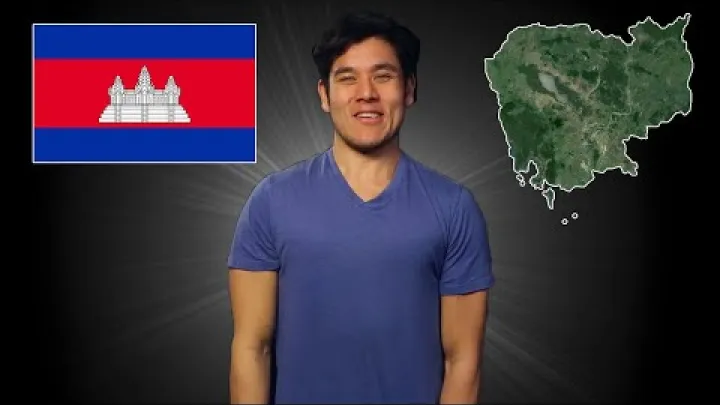
Cambodia in Southeast Asia
Cambodia is located in mainland Southeast Asia. It shares land borders with Thailand to the west and northwest, Laos to the north, and Vietnam to the east and southeast. To the southwest, Cambodia has access to the Gulf of Thailand.
This location places Cambodia within a historically connected region of river routes, overland trade, and cultural exchange. Phnom Penh is inland, near major river junctions, while coastal access connects the country to the Gulf of Thailand.
Area, Terrain, Rivers, and Lakes
Cambodia covers about 181,000 square kilometers, depending on whether a source uses surface area, total area, land area, or another definition. The older U.S. Department of State country profile describes Cambodia’s area as 181,040 square kilometers and identifies a central plain drained by the Tonlé Sap, Mekong, and Bassac river systems.
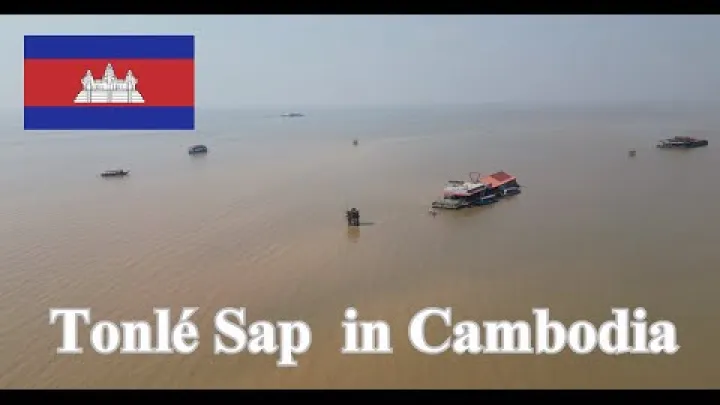
Much of Cambodia is made up of low central plains. Mountain and upland areas appear in the southwest and north, including the Cardamom Mountains. The Mekong River is one of the country’s major waterways, and Tonlé Sap is one of its most important freshwater features.
The Mekong River and Tonlé Sap matter because they influence settlement, fishing, rice agriculture, seasonal flooding, and inland movement. These features are central to understanding Cambodia as a country, not only as a map location.
Tropical Monsoon Climate
Cambodia has a tropical monsoon climate. Broadly, the year is shaped by a rainy season and a dry season, although exact month ranges can vary by source and local conditions. The rainy season is generally associated with the southwest monsoon, while the dry season is usually clearer and drier.
This climate pattern affects agriculture, river levels, flooding, and dry-season water conditions. Rice farming, inland fisheries, and rural livelihoods are closely linked to seasonal water cycles. For a country profile, the key point is that Cambodia’s climate is warm, seasonal, and strongly connected to the monsoon system.
Population, Cities, and Society
Cambodia’s population and society are shaped by Khmer language and culture, a strong rural heritage, growing urban centers, and the role of religion in public life. Exact demographic statistics differ by source, year, and estimation method.
Population Size and Demographic Profile
UN Data lists Cambodia’s 2016 population projection at 15.827 million. More recent estimates from other statistical sources may be higher because population changes over time and because agencies use different methods for projections, census updates, and demographic modeling.
For most country-profile uses, it is best to state the population with a year. A sentence such as “Cambodia had a UN population projection of 15.827 million in 2016” is clearer than giving an unlabelled number. Cambodia is often described as a developing country with a relatively young population structure, but exact age-profile claims should be read with a source year.
Phnom Penh and Other Major Urban Centers
Phnom Penh is Cambodia’s capital and its largest city. It is the center of national government, administration, finance, higher education, and many private-sector activities. The city’s role makes it especially important in any Cambodia country profile.
Other notable urban centers include Siem Reap and Battambang. Siem Reap is closely associated with the Angkor area and has cultural importance for understanding Cambodia’s historical identity. Battambang is an important provincial city in the northwest. These cities help show that Cambodia’s society is not limited to Phnom Penh, even though the capital has the greatest national influence.
Khmer Language, Ethnicity, and Religion
Khmer is Cambodia’s official language and the main language of public life. It is also a major marker of national identity. The Khmer script, public administration, education, and cultural expression all make the language central to the country’s identity.
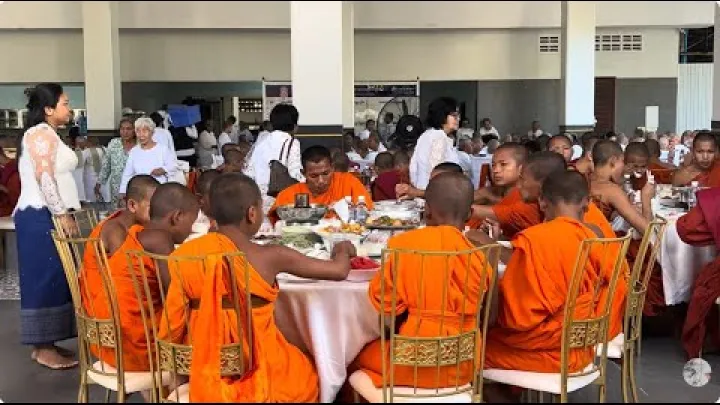
Cambodia is predominantly Khmer, but Cambodian society also includes minority communities such as Cham, Vietnamese, Chinese, and highland groups. These communities contribute to the country’s social and cultural diversity. Exact ethnic percentages should be used carefully because they depend on census categories and source years.
Theravada Buddhism is the majority religion and has a visible role in community life, festivals, temples, and social values. At the same time, Cambodia includes other religious communities and local traditions. A balanced Cambodia country profile should recognize the majority culture without reducing the country to a single identity.
Government, Constitution, and Political Context
Cambodia’s formal political system is based on a constitutional monarchy and parliamentary institutions. It is useful to separate the country’s constitutional structure from contemporary political practice.
Constitutional Monarchy and Parliamentary System
Cambodia is a constitutional monarchy with a parliamentary system. The King is the head of state, while the Prime Minister leads the government. The National Assembly and other institutions form part of the country’s formal constitutional order.
The modern constitutional framework is associated with the post-conflict political settlement of the early 1990s and the 1993 constitution. In simple country-profile terms, Cambodia combines monarchy, elected institutions, and parliamentary government.
Contemporary Political Context
The U.S. Department of State describes Cambodia as a constitutional monarchy with an elected parliamentary government and notes strong dominance by the ruling Cambodian People’s Party in the contemporary political system.
This distinction matters. Formally, Cambodia has constitutional and parliamentary institutions. In political practice, many reports describe limited competition and strong ruling-party control. A neutral country facts article should describe this context carefully and avoid opinionated labels that are not tied to a clear source.
Economy, Currency, and Development Profile
Cambodia’s economy has changed significantly in recent decades. Agriculture remains important, while manufacturing, garments, tourism, construction, and services also shape employment and growth.
Currency and Monetary Facts
Cambodia’s currency is the Cambodian riel, with the code KHR. The riel is the national currency and appears in official currency-code registries. Country profiles should avoid current exchange-rate claims unless they are updated at the time of use.
Some discussions of money in Cambodia mention the use of U.S. dollars in everyday transactions. That point can be useful, but it should be treated as practical monetary context rather than a replacement for the official currency fact. The official country fact is clear: the currency is the Cambodian riel, code KHR.
Main Economic Sectors and Growth Pattern
Cambodia’s economy is commonly described as being shaped by agriculture, garments and other manufacturing, tourism, construction, and services. The Green Fiscal Policy Network country profile notes rapid annual growth in the years before recent global disruptions, including growth of at least 7 percent annually since 2011 in the period discussed by that profile.
Growth has not been even across all people or sectors. Export manufacturing, urban construction, and tourism have generated major opportunities, while rural livelihoods and environmental pressures remain important. COVID-19 disrupted tourism and other economic activity, so older growth figures should not be read as current conditions unless the year is stated.
Human Development, Poverty, and Sustainability
Cambodia has made development progress over recent decades, but it still faces challenges related to poverty, education, health, skills, infrastructure, and environmental management. A fair country profile should include both progress and remaining constraints.
Environmental issues are also part of Cambodia’s development profile. Forests, fisheries, rivers, floodplains, and agricultural land are important national resources. Discussions of deforestation, water management, and sustainability should use recent data because environmental conditions and policies change over time.
History and Interesting Facts About Cambodia
Many facts about Cambodia are connected to its history. The country’s identity is strongly shaped by the Khmer historical legacy, the Angkor period, independence, conflict, and the rebuilding of modern state institutions.
Angkor and the Khmer Historical Legacy
The Khmer civilization and the Angkor period are central to Cambodia’s historical identity. Angkor was a major political, religious, and cultural center, and its monuments remain among the most recognized symbols of Cambodia.
Angkor Wat is especially important. It appears on Cambodia’s national flag and is widely recognized as a symbol of Khmer heritage. In a country facts article, Angkor Wat is best understood as a national cultural symbol, not only as a visitor attraction near Siem Reap.
Independence, Conflict, and the Modern State
Cambodia was under French protectorate rule before gaining independence in 1953. The country later experienced periods of war, political upheaval, and severe violence, including the Khmer Rouge period. This part of history should be discussed with care and respect.
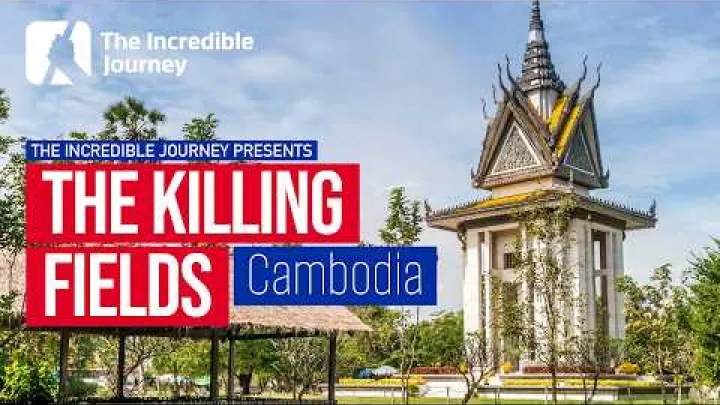
The peace process of the early 1990s and the 1993 constitutional framework were important steps in the formation of the modern Cambodian state. Present-day institutions, political structures, and development challenges are connected to this post-conflict period.
Notable Facts Readers Usually Remember
- Cambodia’s official name is the Kingdom of Cambodia.
- Phnom Penh is the capital and largest city.
- Khmer is the official language and script.
- The Mekong River and Tonlé Sap are major physical features.
- Angkor Wat is a major cultural symbol of Cambodia.
- Cambodia uses the Asia/Phnom_Penh time zone at UTC+07:00.
- The national currency is the Cambodian riel, code KHR.
- The country-code top-level domain is .kh.
Using Cambodia Facts Accurately
Country facts are most useful when the numbers, definitions, and reference years are clear. This is especially important for population, area, economic data, and official identifiers.
Check Reference Years and Definitions
Population is an estimate that changes every year. A census, a projection, and an international database may all give different figures for Cambodia because they use different methods and reference dates. Always read the year attached to the number.
Area figures also need definitions. One source may list total area, another may list surface area, and another may separate land and water area. Economic figures require the same care because GDP, growth, poverty, and income data depend on the year, currency basis, and method used.
Separate Official Identifiers From General Descriptions
Official identifiers are different from descriptive country facts. Examples include KH, KHM, KHR, +855, .kh, and UTC+07:00. These identifiers are usually more stable than population estimates or economic indicators.
General descriptions, such as “mainland Southeast Asian country” or “predominantly Khmer,” explain identity and context. Official identifiers support technical accuracy. Keeping these categories separate makes Cambodia facts easier to read, compare, and translate.
Key Takeaways About Cambodia
Cambodia is the Kingdom of Cambodia, a mainland Southeast Asian country in Asia with Phnom Penh as its capital and Khmer as its official language. Its country profile is shaped by the Mekong River, Tonlé Sap, the Gulf of Thailand, the Cardamom Mountains, and a tropical monsoon climate. Cambodia’s official identifiers include KH, KHM, KHR, +855, .kh, and UTC+07:00. Historically, the Khmer legacy and Angkor Wat are central to national identity, while the modern state reflects independence, conflict, peacebuilding, and constitutional development. For accurate Cambodia country facts, always check the source year and the definition behind each number.
Select area
Create a post
Posting is free and no registration is required.