Siem Reap Where to Stay: Best Areas and Bases

Choosing where to stay in Siem Reap is mostly a choice between a lively, walkable evening base and a quieter hotel with more space near the route to Angkor. The city is compact enough that many central hotels work well for temple visits, but the atmosphere can change significantly from Pub Street to Wat Bo Village or Charles de Gaulle Road. For most first-time visitors, a central location makes dining, markets, and transport arrangements easier. This guide compares the best Siem Reap neighborhoods, accommodation types, nighttime comfort, and the practical logistics of getting to Angkor and the airport.
Where to Stay in Siem Reap: The Short Answer
There is no single best hotel area for every trip. Start by deciding whether you value evening walkability, quiet sleep, resort facilities, low cost, or repeated early departures to Angkor Archaeological Park.
The default base for first-time visitors
For most first-time visitors, the Old French Quarter or a quieter edge of the Old Market area is the strongest all-round base. These locations place restaurants, the Old Market, the riverside, and evening activity within easy reach, while keeping tuk-tuk pickups for Angkor straightforward. Angkor itself is outside the urban center, so staying downtown does not mean walking to the temples, but it reduces the daily effort of finding meals and transport after a temple day.
Choose the Old French Quarter if you want a more polished central setting, or a side street near Old Market if you want closer access to budget dining and nightlife. The right property still depends on your tolerance for noise, your budget, the exact street, and how many sunrise temple outings you plan. Check live availability, room position, and current guest feedback for your travel dates rather than treating any area as a guarantee of hotel quality.
Choose your base by the priority that matters most
| Priority | Best base | Main trade-off |
|---|---|---|
| Nightlife and dining | Old Market, Pub Street, Night Market streets | More noise and crowds |
| Quiet but central | Wat Bo, riverside, Kandal or Taphul areas | Some trips need a tuk-tuk |
| Temples and resort space | Charles de Gaulle Road or near-Angkor resorts | Less evening walkability |
| Low-cost social travel | Sok San Road and central market area | Facilities vary widely |
Use this as a starting point, not a strict boundary. A hotel one street away from Pub Street may be much quieter than a hotel directly above a late-night venue, while a riverside property may be central in daytime but less convenient for a late return on foot.
How Siem Reap's Lodging Areas Fit Together
Siem Reap’s visitor accommodation is spread across a connected central core and a northbound corridor toward Angkor. Understanding that layout helps you avoid booking a property that sounds central but is inconvenient for your actual plans.
The central walkable core
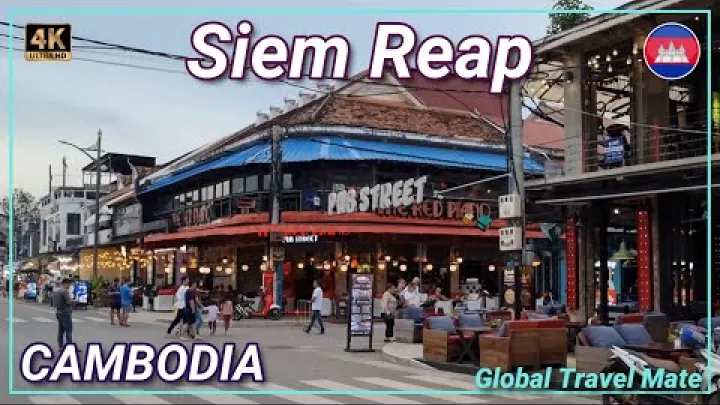
The central core includes the Old Market, Pub Street, Angkor Night Market, Old French Quarter, Siem Reap riverside, and the streets extending toward Wat Bo Village. It is the best part of town for combining early Angkor departures with an easy dinner, massage, shopping visit, or drink in the evening. Many restaurants and services are close enough for daytime walking, and short tuk-tuk rides cover the gaps.
Within this core, the street matters as much as the district name. Pub Street and the lanes nearest the Angkor Night Market are busiest at night. The Old French Quarter generally feels more hotel-oriented. Wat Bo and riverside streets can feel more relaxed. Taphul Village, Sala Kamreuk, and Kandal Village offer residential or calmer alternatives near the tourism zone, though a listing described as “central” can still be far from the places you expect to walk to. Use a map to inspect the route between the hotel, Old Market, and your likely dinner options.
For a one- or two-night visit, centrality usually matters more than having a large resort because you can spend less time arranging short trips for meals and evening activities. With three or more temple days, the value shifts slightly: a pool, quiet room, breakfast available for early departures, and dependable hotel transport may matter more than being a few minutes closer to the Old Market.
The northbound temple corridor and outer bases
Charles de Gaulle Road is the main accommodation corridor running north from central Siem Reap toward the Angkor National Museum and the broader Angkor Archaeological Park area. It has larger hotels, resorts, villas, and boutique properties that appeal to travelers who want pools, gardens, and more space after hot temple days.
This is a practical choice for families, wellness-focused stays, and visitors planning several Angkor days. However, a property described as near Angkor may not be close to the official ticket office, and it may still be a substantial journey from the city’s restaurants and markets. Outer and semi-rural resorts require more deliberate planning for dinner, airport transfers, and late-evening transport. Choose them for the hotel experience and temple-oriented routine, not because they are automatically better located than a central base.
Before choosing an outer property, look at the route in both directions: hotel to the Road 60 ticket office or temple pickup point in the morning, and hotel to the Old Market or riverside in the evening. A hotel can be convenient for one part of the itinerary but inconvenient for another, particularly if you expect to return to town between temple visits.
Best Areas to Stay in Siem Reap
These are the main areas to compare when deciding where to stay in Siem Reap. Each can work well when it matches the rhythm of your trip.
Old French Quarter: the balanced first-time option
The Old French Quarter is a central, hotel-dense area that often feels more refined and less party-focused than the streets immediately around Pub Street. It offers practical access to restaurants, markets, the riverside, tour pickups, and the northbound road toward Angkor. That balance makes it a strong choice for first-time visitors, couples, solo travelers, and people looking for mid-range or boutique accommodation.
You can still reach Pub Street easily without committing to a room in its noisiest section. The trade-off is that popular dates can bring higher prices, and central traffic or nearby venues can affect individual properties. Check the exact address and recent comments about room orientation, rather than assuming every hotel under the Old French Quarter label has the same atmosphere. A broad overview from Im Jess Traveling also identifies the French Quarter as one of the city’s principal lodging areas.
Old Market, Pub Street, and Night Market streets: best for activity
The Old Market, Pub Street, and Angkor Night Market area is Siem Reap’s most active visitor district. It has a dense mix of restaurants, bars, shopping, tour services, hostels, guesthouses, simple hotels, and boutique stays. It is especially useful for short stays, budget travelers, and anyone who wants to step outside and have plenty of evening options.
Staying near Pub Street does not have to mean staying directly in the loudest nightlife zone. A nearby lane, the riverside edge, or a hotel set back from the main strip can offer much easier access with less sound. Properties directly facing nightlife streets can be less suitable for light sleepers, families, and travelers leaving before sunrise for Angkor. Current booking listings show the variety of accommodation close to the district, but they should be treated as a date-specific snapshot rather than a permanent ranking; browse Booking.com for the accommodation mix and then assess each exact location.
Wat Bo Village and the riverside: quieter while remaining central
Wat Bo Village and parts of the riverside offer a calmer alternative for travelers who still want access to central Siem Reap. This area has boutique hotels, garden settings, pools, restaurants, and a more relaxed evening rhythm than the nightlife core. It is particularly well suited to couples, solo travelers who prefer quieter nights, and visitors staying long enough to value a calmer daily routine.

Many central attractions remain walkable, but the Old Market, Pub Street, or a specific restaurant may be more comfortable by tuk-tuk, especially late at night or in heavy rain. This is a useful compromise if you want to visit the lively center without sleeping beside it. For any quiet side street, assess the actual approach to the hotel, street lighting, activity nearby, and how easily transport can collect you after dark.
Charles de Gaulle Road and near-Angkor resorts: best for temple-focused stays
Charles de Gaulle Road sits between the city center and Angkor, with accommodation ranging from large resorts to boutique hotels and residence-style properties. It is a good fit for families, older travelers, resort-oriented visitors, and anyone planning a temple-heavy itinerary. Pools, gardens, restaurants, and larger rooms can make recovery after early starts more comfortable.

The main disadvantages are reduced evening walkability and greater dependence on tuk-tuks or cars for the Old Market and Pub Street. A Charles de Gaulle address does not mean a hotel is immediately beside Angkor Wat, so compare the exact position, hotel transport options, nearby dining, and arrangements for a late arrival. Current listings illustrate the range of properties in this corridor on Booking.com, but availability and facilities can change.
Choose Lodging by Budget, Purpose, and Length of Stay
Area choice comes first, but accommodation type determines how comfortable the base will be. A low-cost private room, a boutique hotel, and a resort can all be sensible choices in Siem Reap when they support the way you plan to spend your days.
Hostels and budget guesthouses for social and low-cost trips
Hostels and budget guesthouses are concentrated around Pub Street, the Night Market, Sok San Road, and the wider Old Market area. Dormitories are useful for social travelers and short visits, while private rooms can provide a lower-cost central base for couples or solo travelers. Facilities vary substantially: some properties have pools, lockers, communal spaces, or organized activities, while others are simple rooms with limited services.
This category works best for backpackers, students, and travelers who value location and social contact over extensive amenities. Before booking, read recent reviews for cleanliness, air conditioning, Wi-Fi, reception hours, and whether the property is party-oriented or quiet. Use lockers where available and keep passports, money, and electronics secured rather than leaving valuables in shared areas.
A low room rate is not necessarily the lowest total cost if breakfast, airport transfers, laundry, or a daily ride to the temples are extra. Compare what is included with the way you will travel, especially if a cheaper property sits outside the central area and adds transport time or fares.
Mid-range hotels and boutique properties for comfort and access
Mid-range hotels and boutique properties are often the best overall fit for a first Siem Reap visit. They commonly provide private rooms, reception support, breakfast, a pool, and convenient tour or tuk-tuk pickup. The Old French Quarter, Wat Bo Village, and the riverside are especially useful for smaller boutique settings, while central streets also have larger city hotels.
For this category, the location and room setup are often more important than a formal star rating. Compare soundproofing, the room’s distance from the street or bar area, breakfast start time for temple mornings, pool access, and cancellation terms. A boutique hotel may feel personal and quiet, while a larger hotel may offer more consistent facilities; neither format is automatically better.
Resorts and villas for families, recovery, and temple-heavy itineraries
Resorts and villas can be valuable after early starts and long, hot days at Angkor. They may offer larger rooms, gardens, pools, restaurants, wellness services, and space for children to rest. This makes them attractive for families, couples, older travelers, and visitors who expect to spend several days at the temples.
A central resort gives easier access to restaurants and evening activity, while a Charles de Gaulle or outer property can provide a more self-contained retreat. The latter may be less convenient if your group wants to explore town independently each night. Confirm family room layouts, child policies, accessibility needs, meals, and the hotel’s transfer arrangements directly before reserving.
Serviced apartments and longer-stay accommodation
For several weeks or longer, serviced apartments, residence-style units, and co-living accommodation can be more practical than a standard hotel room. They suit remote workers, families, and travelers who need kitchen access, a workspace, laundry, storage, and regular but not daily hotel-style service. Central and near-central neighborhoods are usually easier for groceries, cafés, and everyday errands.
Some residence-style options are found around the wider city center, including areas near Rose Apple Square, while quieter residential pockets such as Taphul Village, Sala Kamreuk, and Kandal Village may suit a slower routine. Confirm whether utilities, cleaning, kitchen equipment, internet, and maintenance are included. Also establish whether the apartment is professionally managed and how far it is from the places you will use most often.
Safety and Nighttime Comfort When Choosing a Base
Location affects comfort after dark, but no neighborhood label replaces ordinary travel awareness and a careful look at the specific property.
What the available safety evidence means for visitors
Official guidance advises travelers to exercise increased caution in Cambodia because of crime and landmines. The landmine and unexploded-ordnance concern is particularly relevant to remote areas and should not be treated as equivalent to staying in central Siem Reap. For lodging decisions, focus on established urban routes, conventional tourist areas, and organized transport rather than remote off-road exploration.
There is limited authoritative evidence for declaring one central neighborhood completely safe or unsafe. A practical interpretation is to choose a well-reviewed property on an accessible street, remain aware of your surroundings, and follow established routes. Before booking, check the current Cambodia advisory from Travel.State.gov and use it alongside your own itinerary.
Walkability, lighting, noise, and the feel of each area after dark
Pub Street and the Angkor Night Market area remain active and crowded late into the evening, which can feel convenient if you want restaurants and people nearby but disruptive if you need early sleep. The Old French Quarter, Wat Bo, and parts of the riverside generally offer a quieter feel, while outer corridors become less practical for spontaneous walks after dinner.
A hotel can be very walkable by day but less appealing after dark if it is on a poorly lit side street or far from regular activity. Review the route from the hotel to restaurants, Old Market, Wat Bo, or the pickup point you expect to use. This matters for solo travelers, families, light sleepers, and anyone planning sunrise departures.
Petty theft, scams, and transport behavior around nightlife areas
Crowded markets, nightlife streets, and open-air transport can create opportunities for phone or bag theft and misunderstandings about fares. Keep belongings secured and avoid leaving drinks unattended in busy venues. The difference between Pub Street and a quieter base is usually the level of crowd exposure and late-night activity, not a simple safe-versus-unsafe boundary.
For a tuk-tuk ride, use a hotel-arranged or app-based option when that suits your plans, and confirm both the destination and fare before setting off. This simple step is especially useful after an evening out, when a return trip may be less predictable.
Airport, Angkor, and City Transport Logistics
Transport is the main reason to avoid choosing solely by a hotel photograph. Central hotels simplify many daily movements, while outer resorts can work very well when their transfer service matches your schedule.
Siem Reap Angkor International Airport and the town connection
Siem Reap Angkor International Airport is well outside the central city, so airport access deserves attention before choosing accommodation. The official airport shuttle provides a connection between the airport and Siem Reap town, but many travelers will need a separate ride from the shuttle stop to their hotel. Central bases are usually simpler for this final connection than remote resorts.
Properties outside the core may be best served by a pre-arranged private car or hotel transfer, particularly for late arrivals, families, or substantial luggage. The route into town uses the broader National Road 6 and 7 Makara Road area, but the useful detail is your final hotel connection. Check the current timetable, fare, operating hours, and stop information with the Siem Reap Airport Bus and arrange the last part of the journey before arrival.
Angkor ticket office, sunrise departures, and temple access
The Angkor ticket office on Road 60 is separate from both central Siem Reap and the temple complex. This means that a hotel near Old Market, a property on Charles de Gaulle Road, and a near-Angkor resort can produce different early-morning routes. Do not confuse being close to Angkor Wat with being close to the ticket office.
A central hotel remains an excellent choice for a multi-day Angkor visit when a driver or organized tour handles the route. A northbound resort may make the temple routine feel easier, but can reduce evening flexibility. Before a sunrise day, confirm the ticket-office stop, pickup time, breakfast availability, and return transport with the hotel or driver.
Walking, cycling, tuk-tuks, and everyday city movement
Central areas support walking between the Old Market, riverside, Wat Bo, restaurants, and many cultural stops. Tuk-tuks are useful for Angkor days, airport-shuttle connections, the Angkor National Museum, longer city trips, and late-night returns. They also make a quieter hotel practical when it is not within comfortable walking distance of dinner.
Cycling can work for confident riders who are prepared for heat, traffic, and varying road conditions, but it is not the easiest answer for every route or every temple day. Central lodging offers more independence for casual movement; outer and near-Angkor resorts work best when you are comfortable organizing transport as part of the day.
How to Make the Final Booking Decision
Once you have selected an area, compare individual properties carefully. The final decision should be based on the actual room, street, and service pattern rather than promotional wording alone.
Check the exact location, noise, access, and current booking details
Use a short checklist before paying:
- Open the map and inspect the route to Old Market, restaurants, or your planned pickup point.
- Check whether the room faces a busy road, bar, construction site, or quiet inner courtyard.
- Confirm air conditioning, Wi-Fi, breakfast hours, pool or kitchen access, and reception hours.
- Check road access for luggage, airport transfer support, and late-night arrivals.
- Read recent reviews for maintenance, noise, construction, and changes to advertised facilities.
A hotel labeled Old Market, Wat Bo, or Charles de Gaulle can differ greatly from another property in the same broad area. Compare the total price, cancellation conditions, taxes or fees where shown, and included facilities for your exact dates before paying. Static guide prices are less useful than current availability and a clear understanding of what the rate includes.
Final recommendations by traveler profile and trip length
For most first-time and short-stay visitors, choose the Old French Quarter or a quieter central edge near Old Market. You will have the easiest balance of dining, city exploration, and Angkor transport. Choose Old Market or nearby Night Market streets for nightlife, social travel, and budget convenience, while accepting a greater chance of noise.
Choose Wat Bo Village or the riverside if you want a calmer central base, especially for a couple, solo trip, or longer stay. Choose Charles de Gaulle Road or a near-Angkor resort for family comfort, resort facilities, or repeated early temple departures. For longer visits, a serviced apartment or a quieter residential setting in Taphul Village, Sala Kamreuk, or Kandal Village may be worth the reduced hotel-service model.
Trip length should guide the final compromise. A short city break usually benefits from being central because every evening is easier to use. A longer itinerary can justify moving farther north or choosing a residential base if you value pool time, laundry, kitchen facilities, or a quieter routine. The best Siem Reap base is the one that gives you the Angkor access you need without sacrificing the kind of evening environment you want.
Select area
Create a post
Posting is free and no registration is required.