Kampong Cham Travel Guide: What to Know Before You Go

Kampong Cham is a relaxed Mekong-side destination in Central Cambodia, well suited to travelers who want to slow down between Phnom Penh and the country’s eastern or northeastern routes. Its appeal is not a long list of major ticketed attractions, but a combination of river life, island cycling, active temples, markets, and rural day trips. This Kampong Cham travel guide explains where to stay, how to arrive, when to go, and how to build a realistic visit. Plan for a gentler pace than Phnom Penh or Siem Reap, and leave room for heat, rain, and road travel.
A useful way to plan is to separate the compact city from the wider province. You can experience the riverfront, market, Wat Nokor, and local streets without a car, while Koh Paen and the more distant temples require extra time and transport. That distinction helps you choose between a quick overnight stop and a deliberate two- or three-night stay.
Is Kampong Cham Worth Visiting?
Kampong Cham is worth adding if you value everyday Cambodian life, Mekong scenery, religious heritage, and short rural excursions. It is less suitable for travelers seeking a dense concentration of museums, nightlife, polished tour infrastructure, or tightly scheduled sightseeing.
Kampong Cham City, Province, and Riverside Character
Kampong Cham can mean both the provincial capital and the larger province around it. Most short-stay visitors base themselves in Kampong Cham city, a compact settlement beside the Mekong with a riverside promenade, central market streets, accommodation, restaurants, and transport connections. The city is an easy place to walk in the cooler hours, especially along the river and around the market area.
The wider province provides the deeper experience: Koh Paen Island across the river, temple sites, village landscapes, and roads leading toward more rural attractions. This is a destination for observing local routines and traveling at a measured pace rather than collecting famous landmarks. Services exist, but choice can be narrower and information less standardized than in Cambodia’s main visitor centers. The Tourism Cambodia province guide is a useful broad reference for the city and surrounding destination context, while on-the-ground details can vary.
Expect a working provincial city rather than a resort town. A riverside walk may be more rewarding than a formal attraction, and an unhurried meal or market visit can be part of the itinerary rather than time between major sights. Travelers who need extensive English-language services, late-night entertainment, or many organized tours should plan accordingly.
How Kampong Cham Fits a Cambodia Itinerary
For most first-time visitors, two nights is enough for the city, Koh Paen, and one temple excursion. Three nights gives you a more comfortable pace and room for Wat Hanchey or a rural outing such as Wat Moha Leap. A single night works as a transport stop, but it leaves little time to experience the riverfront and surrounding countryside.
Kampong Cham can work well after Phnom Penh and before continuing toward Kratie or other eastern routes. Connections are not always as simple as a map suggests, however, and some onward journeys require a transfer or a private arrangement. Choose it as a deliberate short stay if you enjoy cycling, provincial markets, riverside walks, and living religious sites; skip it if every day of a short Cambodia trip must focus on major archaeological or urban attractions.
For a dedicated visit, allow a buffer around arrival and departure rather than scheduling a distant excursion immediately before an onward bus. A two-night stay suits travelers who want a focused introduction. Three nights is better for slower cycling, weather flexibility, or a private vehicle day. If you have only one night, stay central and treat the city itself as the experience instead of trying to reach several rural sites.
Plan Around Safety, Conditions, and Local Etiquette
A successful visit depends on practical preparation as much as sightseeing. Use current information for the wider journey, especially when travel plans include border regions, remote provinces, or cross-border transport.
Check Current Travel Advice Before You Travel
Read official Cambodia travel advice before departure and check it again close to travel dates. Look at the page’s latest update date, as national warnings, border conditions, and restrictions can change. They may affect an itinerary beyond Kampong Cham even when the city itself is not specifically named. The UK Foreign Travel Advice page is one current reference point for travelers who need to review national security and route considerations.
Treat national guidance as a framework for planning, not as a city-specific assessment. If your route includes border areas or isolated countryside, follow the advice relevant to those places and avoid unplanned detours. Keep travel documents, insurance details, accommodation contacts, and enough time for transport changes accessible during the journey. If an advisory changes after you have booked, reassess the affected route rather than assuming that a previously workable itinerary remains suitable.
Respect Active Religious Sites and Rural Communities
Wat Nokor, Wat Hanchey, and Wat Moha Leap are active religious places, not only heritage stops. Wear clothing that covers shoulders and knees, speak quietly, and follow signs or instructions from monks, caretakers, and local residents. Ask before taking close photographs of people, ceremonies, or prayer activities.
Rural temple visits can involve strong sun, uneven ground, stairs, and basic visitor facilities. Carry water, use footwear suitable for walking, and allow more time than a city map may imply. A respectful visit is usually simple: observe local behavior, avoid interrupting worship, and do not assume that every area is intended for visitors. Remove hats or shoes when local instructions call for it, and avoid climbing on structures or treating worship spaces as photo props.
Best Time to Visit Kampong Cham
Weather affects comfort more than it affects whether Kampong Cham is possible to visit. Plan outdoor activities for early morning or late afternoon in every season, when riverside walks, cycling, and temple visits are more manageable.
Dry Season, Wet Season, and Shoulder-Season Trade-Offs
Kampong Cham is hot throughout the year. Broadly, November to April is the drier part of the year, while May to October is wetter. Drier months are often easier for cycling, longer temple visits, and travel on rural roads. They can also feel hotter and busier during holiday periods.
The wetter months can bring greener fields and a softer landscape, with fewer visitors at some times. Rain may arrive in heavy bursts rather than lasting all day, but it can alter the comfort of outdoor plans and the condition of less-developed roads. Pack sun protection, drinking water, light rain protection, and footwear that can handle wet ground. Before scheduling exposed activities, check a current local forecast and keep time available to move an outing if rain, heat, or road conditions make it less appealing.
There is no single best season for every traveler. Choose the drier period if reliable cycling and rural access matter most; consider wetter months if you prefer greener scenery and can accept changing plans. Shoulder periods can offer a useful compromise, but seasonal labels are not a promise about the weather on your dates. Air-conditioning, a refillable water bottle, quick-drying clothing, and a small waterproof bag are practical additions in any month.
Seasonal Bamboo Bridges and Festival Periods
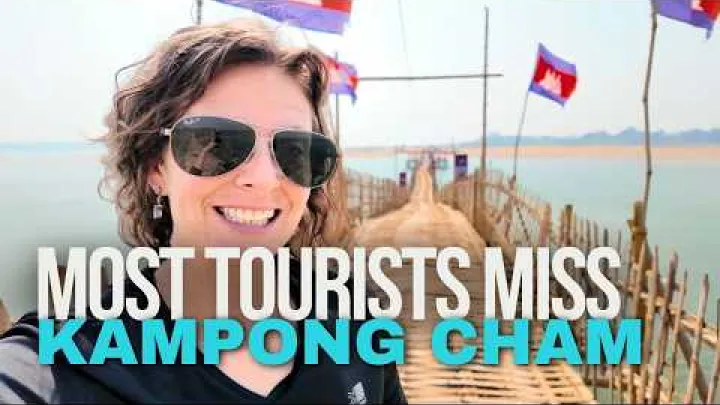
The well-known Koh Paen bamboo bridge is seasonal and linked to Mekong water levels. Its presence is not guaranteed on any particular date. A concrete bridge provides the dependable crossing to the island when the bamboo structure is absent, so Koh Paen remains accessible even if the seasonal attraction is not standing.

Khmer New Year can bring a notably livelier atmosphere, with increased domestic travel and higher demand for rooms and transport. This can be rewarding for travelers looking for local energy, but it may also mean crowds, traffic, and fewer flexible bookings. Confirm the year’s festival dates and current bridge status before making plans; use the concrete bridge if the bamboo crossing is unavailable.
How to Get to Kampong Cham
Road travel is the usual way to reach Kampong Cham. Phnom Penh is the most practical gateway for many international visitors, while other Cambodian and Vietnamese routes may need more coordination.
From Phnom Penh by Bus, Minivan, or Private Taxi
Bus and minivan services from Phnom Penh are usually the lower-cost option, while a private taxi or car offers direct hotel drop-off and greater control over stops and departure time. This can be useful for families, small groups, travelers carrying substantial luggage, or those combining Kampong Cham with other places on the road.

Live listings from BookMeBus show that some Phnom Penh to Kampong Cham services can take around two to just over three hours, but this is only an indication. Confirm the carrier, departure time, expected duration, fare, luggage rules, and exact arrival point shortly before traveling. Check the actual terminal and stop name, not just the destination city, and avoid relying on a late arrival if you still need a local transfer and hotel check-in.
When comparing services, consider the whole journey rather than the advertised road time. A minivan may be convenient but can have a different departure point or luggage arrangement from a full-size bus. A private car costs more but can stop at Wat Nokor or another agreed location en route. Ask your accommodation how far the arrival point is from the hotel and arrange a local ride in advance if you will arrive after dark or with heavy bags.
From Other Cambodian Destinations or Vietnam
From eastern and northeastern Cambodia, Kampong Cham can fit naturally into an overland route, though direct public services may be limited on some days. Build the itinerary around the starting point rather than assuming every route is direct. Phnom Penh is often the simplest place to change transport if schedules do not align.
Traveling from Vietnam generally requires a longer, multi-stage plan, often involving Ho Chi Minh City, Phnom Penh, and a separate onward journey to Kampong Cham. A through-ticket and separate bookings are not the same: separate tickets can be flexible but leave you responsible for missed connections. Check current border requirements, carrier procedures, and operating schedules independently before committing to a tight connection.
For any multi-leg journey, leave a generous connection window and keep the address of your next accommodation in Khmer or in a map-ready format. Do not assume that an international arrival, border crossing, and onward road transfer will run to one timetable. If the route is important to a fixed event or flight, consider spending a night in the transfer city rather than building the itinerary around a narrow connection.
Where to Stay and How to Get Around
Choose a base based on how much walking you want to do and whether you plan to hire transport for rural excursions. For a first visit, staying near the river or central streets is usually the simplest choice.
Best Base Areas: Riverside, Central Market, or Quieter Outskirts
The riverside and nearby central streets are the best base for most travelers. They put the Mekong promenade, food options, central sights, and evening walks within easy reach. A room with river access or a short walk to it can make a brief stay feel more connected to the city.
The central market area is practical for morning activity, local food, shopping, and transport access. It may be noisier than the riverfront, especially near busy streets. Accommodation outside the center can offer more space or quiet, but it normally makes tuk-tuks or a hired driver more necessary. Read recent guest feedback for noise, room condition, air-conditioning, and the property’s actual location.
Use the riverside for atmosphere and easy evening walks, the market area for practical access and early activity, and the outskirts only when quiet, space, or a particular property outweighs the need to walk everywhere. On a short stay, a central room can save both time and repeated local fares. If you plan a private-driver day, being slightly outside the center is less inconvenient, but confirm pickup access and the return arrangement with the property.
Walking, Cycling, Tuk-Tuks, and Motorbikes
Walking works well for the riverfront, central market, and nearby streets, particularly before midday and near sunset. A bicycle is a good match for Koh Paen’s slower village lanes and agricultural scenery. For Wat Hanchey, Wat Moha Leap, and more distant locations, a tuk-tuk or hired driver is generally the more practical option.
Motorbike rental can offer independence, but it is best reserved for travelers who are genuinely comfortable with Cambodian traffic, changing road surfaces, legal requirements, and insurance responsibilities. Before setting off with any driver, agree the route, waiting time, return journey, and total price. This is especially important for rural temple trips where a driver may wait while you visit. Carry water and a phone with your accommodation details, but do not assume that every rural road has reliable lighting, fuel access, or mobile coverage.
Accommodation Types, Prices, and Booking Timing
Kampong Cham’s accommodation is mainly guesthouses and small hotels, with a smaller number of boutique-style options. Online listings show a spread from simple budget rooms to more comfortable mid-range stays. The Expedia listings illustrate that guesthouse prices can begin at low levels, but rates are never fixed: room type, air-conditioning, private bathrooms, river views, season, and booking channel all affect the final price.
Book ahead for Khmer New Year and other major domestic travel periods. At quieter times, you may find more flexibility, but advance booking still reduces stress after a long road journey. Before confirming, check the map location, room facilities, cancellation terms, check-in arrangements, likely noise level, and whether staff can help arrange an onward transfer or local driver.
For a short stay, prioritize the facilities that affect comfort in Kampong Cham’s climate: working air-conditioning or a suitable fan, a private bathroom if required, secure luggage storage, and a clear late-arrival process. Recent reviews can reveal practical issues such as street noise, stairs, water pressure, or the distance between the advertised property and the river. Ask whether the quoted rate includes the room type you want rather than assuming that the lowest displayed rate applies to every date.
Best Things to Do in Kampong Cham
The strongest Kampong Cham itinerary combines the compact city with one or two excursions. Avoid trying to fit every rural attraction into one day; the value of the area is in a slower rhythm and time spent between stops.
Explore the Mekong Riverfront, Market, and Colonial Streets
Start with a half-day in the city. Walk the Kampong Cham riverside and Mekong promenade in the morning or near sunset, then continue toward the central market for a view of daily trading and local food. Use the walk to notice older shophouses and colonial-era streets rather than expecting a formally restored heritage district.

This is an experience of a working provincial city, not a curated open-air museum. Early morning brings market activity and cooler temperatures; late afternoon is better for the river and a slower meal. Leave room to wander rather than planning the area as a sequence of timed attractions.
A simple city circuit can begin at the river, continue through the market area, pause for breakfast or a drink, and finish at a nearby temple or shaded street. Keep valuables secure in crowded market areas and ask before photographing vendors or residents. The best time for this circuit depends on heat and local activity, so use it as a flexible half-day rather than a fixed tour with promised opening times.
Visit Koh Paen and the Bamboo Bridge
Koh Paen is one of the easiest ways to see a rural contrast to Kampong Cham city. Across the Mekong, the island offers village lanes, agricultural scenes, and a pace well suited to cycling. It can be explored independently by bicycle or as part of a half-day with a driver.
The bamboo bridge is the memorable version of the crossing when it is in place, but do not make it the sole reason for the trip. Ask locally whether it is standing for your travel dates, then use the concrete bridge if it is not. Take water, pace yourself in the heat, and remain alert to bicycles and other traffic on the crossing and island lanes. Allow time for unplanned village stops rather than treating Koh Paen as a quick photo stop.
Start early if you plan to cycle, particularly during hotter months, and bring sun protection because shade may be limited on exposed stretches. A driver can be more suitable for travelers who do not want to cycle in heat or who are combining the island with another stop. Keep the route flexible: the bridge experience, village roads, and time spent stopping for views matter more than completing a strict loop.
See Wat Nokor and Banteay Prei Nokor
Wat Nokor is also known as Nokor Bachey or Banteay Prei Nokor. Knowing these naming variations is useful when searching maps, asking drivers, or comparing travel information. The complex brings together older stone architecture and an active Buddhist setting, making it different from a purely archaeological monument.
Its location near the city makes it a practical short excursion, often combined with the riverfront or a relaxed city afternoon. Visit with the same consideration you would give any functioning temple: dress modestly, keep noise low, and follow local guidance. The site is most rewarding when approached as both a place of worship and a historical landmark.
Make Time for Wat Hanchey
Wat Hanchey is a hilltop religious and heritage site north of Kampong Cham, known for wide views over the Mekong and surrounding countryside. It is better treated as a substantial half-day outing than a short urban stop. The setting combines older religious history with active Buddhist use and a change of scenery from the city.
Access may involve a road approach, a significant stair climb, or both depending on the route and current arrangements. Allow extra time for heat, stairs, and a waiting vehicle if you hire one. Do not assume that ceremonies, blessings, or specific visitor services will be available; follow the guidance provided on the day. A hired driver is useful because the return trip and waiting time need to be planned together, especially if you are visiting without a formal tour.
Add Wat Moha Leap and Other Rural Excursions
Wat Moha Leap, also called Wat Maha Leap, offers a different kind of heritage visit: a working wooden pagoda rather than a stone temple complex. It can be paired with rural landscapes, rubber-growing areas, or selected stops farther from town, but only if you have enough time and suitable transport.
Haong Waterfall and Preah Theat Teuk Chhar are optional additions rather than essential stops on a short visit. National Road 7 and National Road 60 are useful orientation points for some provincial routes, including approaches toward Preah Theat Teuk Chhar. Before committing to a remote rural excursion, ask your accommodation provider or an experienced driver about current road and site conditions, whether the route is practical as a combined trip, and what facilities are actually available.
These additions are best for travelers with a full extra day, private transport, or a strong interest in rural landscapes. They are less suitable when you have a fixed onward departure or when heavy rain has made unpaved access uncertain. Clarify whether the driver will wait, return at a set time, or make multiple stops, and carry food, water, and a backup plan rather than assuming services will be available at every site.
Costs and a Practical Two- or Three-Night Plan
Kampong Cham can be affordable, but the final cost depends less on attraction tickets than on transport choices. A simple guesthouse, local meals, shared intercity transport, and cycling keep spending lower; private vehicles and longer rural excursions raise it quickly.
Build a Realistic Kampong Cham Budget
Build your own budget from accommodation, transport to and from the city, local rides, food, bicycle or driver hire, temple contributions, and contingency money. Prices vary by season, provider, room standard, and negotiation, so a single online fare is not a reliable daily budget.
| Cost area | Lower-cost approach | Higher-cost approach |
|---|---|---|
| Stay | Simple guesthouse room | Comfortable small hotel |
| Arrival | Bus or minivan | Private car or taxi |
| Local travel | Walking and bicycle | Driver for rural sites |
| Meals | Local eateries and market food | More restaurant meals |
Confirm the price before accepting a ride, arranging a waiting driver, booking a room, or entering a site where contributions or charges may apply. Keep a modest cash reserve for small purchases and transport, while checking with your accommodation about the payment methods it currently accepts.
One practical budgeting method is to set a fixed base for your room and intercity transport, then add a separate amount for each excursion. A bicycle-based day usually has a different cost profile from a private-driver day, and a longer rural route may involve waiting time as well as distance. Keep a contingency for an extra local ride, a weather-related change, or a more comfortable room if the heat makes basic accommodation unsuitable.
A Flexible Two- or Three-Night Itinerary
One night: Arrive, walk the riverfront, visit the central market area, and fit in Wat Nokor if your arrival time and energy allow. This is best viewed as an introduction or a stop between destinations.
Two nights: Use the first day for arrival, the riverside, market streets, and Wat Nokor. On the full day, cycle or drive to Koh Paen using the bamboo bridge if it is present or the concrete bridge if it is not. Travelers who prefer a longer temple outing can choose Wat Hanchey instead of the island.
Three nights: Keep the two-night plan, then add Wat Moha Leap or another rural route on the extra day. Alternatively, use the third morning for a slow riverfront walk before continuing toward Phnom Penh, Kratie, or the next destination. Treat this as a decision framework, not a rigid timetable: adjust the order around weather, transport timing, and the activities that matter most to you.
If weather disrupts the island or a rural road, use the city day as the fallback rather than abandoning the destination. A useful priority order is the riverfront and Wat Nokor first, Koh Paen or Wat Hanchey second, and the more remote excursions only when conditions and transport allow. That approach keeps the essential experience intact while protecting departure plans.
Final Takeaways for Your Kampong Cham Visit
Kampong Cham rewards travelers who make time for its riverfront, Koh Paen, temple life, and provincial landscape. Base yourself near the riverside or central market for the simplest first stay, allow two or three nights when possible, and use a driver for the more distant sights. With realistic transport planning and a flexible outdoor schedule, it offers a calm and memorable side of Central Cambodia.
Select area
Create a post
Posting is free and no registration is required.