Koh Kong Where to Stay: Best Areas and Accommodation

Choosing where to stay in Koh Kong is less about selecting a city neighborhood and more about choosing the kind of trip you want. Koh Kong town offers the easiest access to transport, food, and flexible plans, while Tatai, Chi Phat, and coastal islands are destination bases for nature, trekking, or seclusion. The places grouped under “Koh Kong” on booking sites can be far apart, so a scenic property may not be a practical base for a short visit. This guide compares the main options and helps you match accommodation to your time, budget, and priorities.
The Short Answer: Stay in Koh Kong Town Unless Nature Is the Main Goal
For most first-time visitors, Koh Kong town is the most useful default. Choose a remote river lodge, community bungalow, or island resort when the property and its activities are the central reason for the trip, rather than simply a place to sleep.
Why Koh Kong town is the default base for first-time visitors
Koh Kong town, also known as Krong Khemara Phoumin, is the practical starting point for travelers arriving overland, continuing toward Thailand, or keeping their itinerary open. It has the strongest concentration of everyday services in the area: places to eat, markets, small shops, accommodation choices, and local transport connections. This makes it easier to arrive late, find a meal, arrange a ride, or adjust plans without relying entirely on one property.
Staying in town does not mean giving up the wider province. It lets you take a daytime trip or arrange an activity while retaining a straightforward place to return to. This is especially useful when a traveler is unsure whether a remote lodge, river transfer, or island stay fits their pace. Current accommodation listings show a mix of hotels, guesthouses, and resorts in and around the town, although listings and standards can change; use Tripadvisor as one starting point for checking recent options and reviews.
Choose town if transport convenience, independent meals, modest lodging, or a short stay matters more than isolation. It is comparatively connected, but it should not be treated as a guarantee that every street, hotel, or evening route is equally convenient. The exact position of the property still matters.
When Tatai, Chi Phat, or an island is the better base
Koh Kong can refer to the town, the province, and a broad set of accommodation search results. Tatai River, Chi Phat, Koh Sdach, and other coastal or island properties are not adjacent alternatives to a town hotel. Each is a separate base with its own access pattern, surroundings, and purpose.
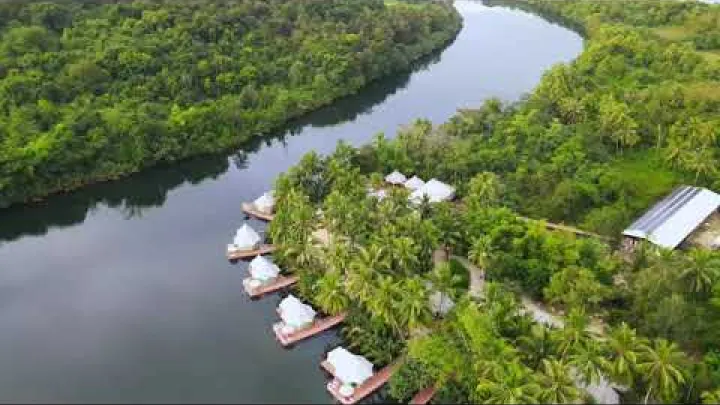
Choose Tatai when river scenery, forest surroundings, lodge-based relaxation, and nature activities are the main priorities. Choose Chi Phat when you want community-based ecotourism, trekking, wildlife-oriented activities, or a more rural Cardamom interior experience. Choose an island or coastal resort when privacy, beach time, marine scenery, and a self-contained stay matter more than easy access to shops and restaurants.
These specialist bases work best when their activities justify the extra planning. They generally offer less walkability, fewer independent services nearby, and a greater dependence on scheduled transport than Koh Kong town. A property appearing in a Koh Kong search is therefore not necessarily close to the town transport area or suited to the same itinerary.
Koh Kong Town: Best for Transport, Food, and Flexibility
Koh Kong town is the area’s functional base. It is the sensible choice for travelers who want to arrive, eat, sleep, and continue their journey with the fewest moving parts.
What staying in town makes easier
The town is useful because practical services are more concentrated here than at remote lodges or island resorts. The area around the Koh Kong Roundabout and the local transport area is particularly relevant for people using buses, arranging onward rides, or arriving with uncertain timing. Nearby markets, restaurants, cafés, and basic services make an ordinary travel day easier to manage.
This matters for several types of visitor. Overland travelers from Phnom Penh can use town as their arrival point. Travelers heading toward the Thai border can avoid committing to a distant property before they know their onward timing. Visitors with only one or two nights can also spend less time coordinating transfers and more time resting or exploring locally.
Town accommodation ranges from simple guesthouses to private-room hotels and riverside-style resorts. Names in current listings, such as town hotels and smaller local properties, are useful examples of market variety rather than a reliable ranking of quality. Look at the most recent room-condition comments, not only the overall score or property photos. In a small accommodation market, management, maintenance, and available facilities may change quickly.
How to choose a town location
For the greatest convenience, choose a property within a comfortable walk of food and the transport area, especially if you will arrive without a prearranged driver. A central or roundabout-adjacent location can make morning departures and meal stops simpler. It may also bring more traffic, music, or local activity noise than a quieter property farther from the center.

The town riverfront and slightly outlying properties can suit travelers who value a calmer setting or more space. The trade-off is that restaurants and transport may be less convenient on foot, particularly in the evening. A pleasant view is not the same as a walkable location, so use the map to measure the actual route to places you expect to use.
Before choosing, check recent guest comments for noise, room cleanliness, air conditioning, water supply, and staff availability. Also look at the roads immediately around the property rather than assuming that a central map pin means continuous sidewalks, lighting, or late-night services. If you expect to return after dinner, ask the reception whether local tuk-tuks are commonly available and what a ride back may involve.
Tatai River: Best for Eco-Lodges and Quiet Nature
Tatai is not a quieter extension of town. It is a nature-focused base where the accommodation itself, the river setting, and arranged activities usually shape the stay.
What a Tatai River stay is like
A Tatai River stay is designed around river scenery, forest surroundings, waterfalls, and a slower routine. Depending on the property, days may include kayaking, fishing, boat outings, relaxing by the water, or visiting natural attractions such as Tatai Waterfall. The experience is generally lodge-centered rather than neighborhood-centered: guests spend much of their time at the property or on an organized activity instead of walking between many independent restaurants and shops.
Canvas and Orchids Retreat is one documented example near Tatai Waterfall. Its listing describes a nature-oriented stay with kayaking and fishing, alongside onsite spaces including a restaurant and bar. The details illustrate the Tatai model: an accommodation base that combines lodging, meals, and leisure in one setting. Read the current property information through Expedia, but do not assume every Tatai lodge has the same facilities or activity program.
This setting can be rewarding for travelers who want quiet and immersion. It can feel limiting for visitors who prefer choosing a different café for each meal, walking around after dinner, or changing plans independently. Connectivity, room design, service levels, and the degree of remoteness vary considerably between properties.
Who should choose Tatai and what to verify
Choose Tatai if your priority is river and jungle scenery, a retreat-style stay, or activities based around the lodge. It can suit couples, small groups, and travelers who are happy to spend time in one place. It is less suitable for a brief stopover, a traveler who needs frequent independent transport, or anyone who mainly wants town food and market access.
The main trade-off is convenience. Remote accommodation can mean fewer nearby services, less spontaneous movement, structured arrival arrangements, and a higher total trip cost once private transport, transfers, meals, or activities are included. The value lies in the experience, not necessarily in using it as a low-cost base for the province.
Before reserving, ask the property for the exact pickup point and the current route required to reach it. Confirm whether the transfer is by road, boat, or both; whether it is included or paid separately; and whether it operates at the time you expect to arrive. Also ask about reception hours, late-arrival arrangements, meal availability, mobile signal or internet access, and the practical facilities in the room. These questions help distinguish a comfortable self-contained lodge from a stay that may feel too isolated for your needs.
Chi Phat and Island Stays: Specialist Bases for Focused Trips
Chi Phat and island resorts are best approached as dedicated destinations. They can be memorable choices, but they are usually poor substitutes for a convenient town base when time is short or plans are still uncertain.
Chi Phat for community-based ecotourism
Chi Phat is better suited to travelers who intend to spend their time on trekking, wildlife-oriented experiences, kayaking, or community-based ecotourism in the Cardamom interior. The appeal is participation in a rural nature trip rather than ordinary town sightseeing. Visitors should arrive ready for a simpler accommodation style and an itinerary shaped by local activities.
Examples listed for the area include Sun Bear Bungalow, Cardamom Cottages, and Jungle Bungalows at Wildlife Release. These names indicate the types of smaller bungalow and cottage accommodation a visitor may encounter, not a guaranteed shortlist or quality comparison. The better choice depends on the activity program, room needs, and current access arrangements rather than a generic hotel category.
Chi Phat can reward travelers who are comfortable with basic infrastructure and who want their accommodation linked to the landscape and local activity network. It is less convenient for visitors seeking a broad choice of restaurants, standard hotel amenities, or independent evening entertainment. Plan activities in advance, and treat nighttime movement as limited rather than expecting a walkable village-center experience.
Choose this base when the trek, nature program, or community experience is the purpose of the visit. If you only want a brief introduction to the region, Koh Kong town with a daytime activity may be simpler and less demanding logistically.
Island and coastal resorts for seclusion
Island and coastal stays serve a different purpose again. Properties around Koh Sdach and other island bases are usually selected for privacy, beach time, marine scenery, and a slower resort routine. Dining, activities, and relaxation are often concentrated within the property because there may be little practical reason, or ability, to move around independently.

Booking platforms sometimes place island resorts and mainland accommodation in the same broad Koh Kong results. That is useful for discovering options but can hide the real distance and transfer requirements. A coastal or island listing should never be assumed to be near Koh Kong town merely because the search page uses the same province name.
Boat-dependent access has practical consequences. Arrival and departure may need to match a resort transfer, and off-property mobility can be limited. This style of stay can also leave fewer immediate alternatives if a service is unavailable or a traveler needs to change plans. Confirm the island’s exact location, the mainland departure point, whether the boat transfer is included, luggage limits if any, and the cancellation terms that apply to the transfer as well as the room.
Choose Accommodation by Budget, Comfort, and Travel Style
In Koh Kong, the lowest advertised room rate is only one part of the cost. A remote property can add transfers and require onsite meals, while a simple town room may reduce transport expenses and keep more choices within reach.
Hostels, guesthouses, and budget hotels
Town-based hostels, guesthouses, and simple private-room hotels are the most natural fit for backpackers, overland travelers, and visitors focused on a low-cost, flexible stay. They place you closer to food, transport, and alternative places to sleep if your plans change. They can also reduce the need to pay for a separate transfer to a remote accommodation base.
There is an active budget accommodation segment in Koh Kong, with hostel listings available through platforms such as Hostelworld. Availability online does not establish that every property is comparable in cleanliness, security, or comfort. Smaller guesthouses may have very different room types even when their names and photos appear similar.
For a budget booking, inspect recent reviews for the details that affect a one- or two-night stay: air conditioning or fan quality, hot water, room locks, bed comfort, noise, Wi-Fi if needed, and reception availability. Read the cancellation rule before paying. A low price can be good value, but it should not be confused with a consistent service standard.
Town hotels and riverside resorts for comfort
Town hotels and riverside resorts suit travelers who want a private room, air conditioning, onsite food, or a calmer setting without making the full commitment to a remote lodge. They can work well for couples, families, and travelers who value a more settled overnight stop while retaining access to the town.
Properties such as NOV Koh Kong Resort show that there are resort-style choices associated with Krong Khemara Phoumin, alongside more conventional town hotels. Treat such names as examples to compare, not as a fixed ranking. A riverside setting may offer more peace and scenery, but it can be farther from markets, the roundabout, or the restaurants you would otherwise reach on foot.
Compare the latest reports on room condition and service with the map position. A family may prefer a property with food onsite and enough space to rest, even if a short tuk-tuk ride is needed. A traveler with an early bus may prefer a simpler central room over a more scenic resort. The right choice is the one that reduces the friction in your own itinerary.
Eco-lodges and destination resorts for experience-led stays
Eco-lodges, community bungalows, and island resorts are experience-led accommodation. Their main strengths are scenery, quiet, organized activities, and immersion in a particular river, forest, or coastal setting. Their limitations are equally important: nearby dining may be limited, transfers may run to a schedule, connectivity can be weaker, and practical help may be farther away than in town.
| Accommodation type | Best for | Access pattern | Cost pattern |
|---|---|---|---|
| Town guesthouse or hostel | Budget and flexible travel | Closest to food and transport | Lower room cost; fewer transfer costs |
| Town hotel or riverside resort | Private comfort and short stays | Easy town access; some may need rides | Mid-range comfort varies by property |
| Tatai lodge | River, forest, and relaxation | Prearranged arrival is often important | Experience costs may include meals or transfers |
| Chi Phat bungalow | Trekking and community ecotourism | Built around local activities and access plans | Simple lodging, activity costs vary |
| Island resort | Beach privacy and seclusion | Boat-linked and largely self-contained | Transfers and onsite spending can add up |
A split stay can be the best compromise for a longer trip. Spend a town night before or after the destination stay, then use the lodge, community base, or island resort for the focused experience. This avoids asking one accommodation type to deliver both maximum convenience and maximum seclusion.
Access, Safety, and Booking Checks Before You Reserve
Good Koh Kong accommodation planning depends on matching the property to your arrival time, comfort needs, and ability to manage a more remote setting. The following checks are more useful than relying on a broad area label.
Arriving from Phnom Penh and arranging onward transfers
Koh Kong town is the natural overland arrival base for travelers coming from Phnom Penh. A route listed by Redbus reports a journey of roughly five hours, but departure times, operators, travel duration, and ticket conditions are booking information rather than permanent facts. Recheck the actual service close to travel.
Once you arrive in town, the question is whether your accommodation can receive you that same day. Match the bus arrival time with the property’s check-in window, staffed reception hours, pickup schedule, and any road or boat connection required after town. A late bus arrival can make an otherwise attractive remote booking impractical.
When a remote lodge or island transfer cannot be confirmed for the same day, book a town night first. It gives you a place to sleep, eat, and make arrangements without rushing to catch an uncertain connection. This is often the most sensible way to protect a trip with a fixed onward departure.
Walkability, nighttime movement, and emergency access
Koh Kong town provides the strongest chance of reaching restaurants, transport offices, and other people on foot. That does not mean every route is equally comfortable after dark. Choose a property near populated, reasonably well-lit areas if you expect to walk in the evening, and avoid solo nighttime travel in remote areas.
Tatai, Chi Phat, and island properties are generally self-contained after dark. This can be part of their appeal, but it means that dining, transport, and assistance are more likely to depend on the accommodation provider. Cambodia travel guidance from Smartraveller advises travelers to remain alert after dark, avoid traveling alone at night, and limit nighttime movement to well-lit public areas.
Emergency access is a separate issue from ordinary convenience. Medical support can be less immediate outside major cities, so travelers with a health condition, mobility need, or low tolerance for remote access may be better served by a town base. If selecting a remote property, ask how staff handle urgent transport and whether the route out is practical at the time you will be there.
Verify current property details before booking
Before committing, make a short check that covers the exact map location, the newest guest reviews, the room facilities you actually need, payment or deposit rules, cancellation conditions, check-in hours, and a working communication channel. Ask whether payment is accepted in the form you plan to use and whether the property can contact you if your arrival changes.
For a remote lodge, community stay, or island resort, confirm every transfer requirement in writing: pickup point, departure time, transfer price or inclusion, and what happens if you arrive late. Ask the property or transfer operator about current road, river, and boat conditions before finalizing a remote or island stay, especially when there is no buffer day in your itinerary.
Current reviews matter more than an older reputation. Focus on recent comments that describe the condition of rooms, meals, communication, transfer reliability, and whether the property delivered what its listing promised. This approach gives you a more reliable basis for booking than a star label or an old travel recommendation.
Build a Koh Kong Stay Plan by Trip Length
The length of your visit should shape the base choice. A short trip rewards simplicity, while a longer trip can justify time spent reaching a more specialized destination.
One or two nights: keep the base simple
For one or two nights, stay in Koh Kong town unless a remote lodge or island resort is the confirmed purpose of the trip. Town is the best fit for late arrivals, early departures, border crossings, or travelers who want to sample the area without losing time to complicated connections.
A town base preserves time for food, rest, transport arrangements, and a daytime outing. It also gives you a practical fallback if a bus is delayed or an activity changes. For a very short nature stay, a remote property can still work, but only when its transfer, check-in, and planned activity schedule fit together cleanly.
Longer trips: combine town with a nature base
With more time, a split stay can balance convenience and immersion. Use Koh Kong town before or after Tatai, Chi Phat, or an island stay to make onward travel easier and to absorb a transport delay without sacrificing the destination portion of the trip.
Match the second base to the activity you care about most. Tatai suits river scenery and lodge-based relaxation. Chi Phat suits trekking and community ecotourism. An island base suits seclusion, beaches, and a self-contained coastal stay. This approach is optional, not essential: travelers who only want one experience can stay in one place, but a split plan is useful when both practical access and nature time matter.
Final Recommendation for Where to Stay in Koh Kong
Stay in Koh Kong town if this is your first visit, your schedule is short, or you need easy access to transport, food, and flexible accommodation. Look near the town center, the Koh Kong Roundabout transport area, or a riverfront property only if its location still fits your daily plans.
Choose Tatai for a river-and-forest retreat, Chi Phat for a planned ecotourism trip, and Koh Sdach or another island base for beach-focused seclusion. These are excellent choices when the destination experience is your priority, but they require more deliberate planning than a town hotel. The most dependable Koh Kong plan is the one whose location, transfers, and comfort level match the time you actually have.
Select area
Create a post
Posting is free and no registration is required.