Siem Reap Getting There: Flights, Buses & Overland Routes

Getting to Siem Reap is straightforward when you plan the long-distance journey and the final transfer into town as one trip. Most visitors arrive by air at Siem Reap–Angkor International Airport, by road from Phnom Penh or Bangkok, or on a domestic bus or van from another Cambodian city. Slower rail-and-road and Tonle Sap boat combinations can also be rewarding, but they need more careful planning. This guide compares the main routes by speed, cost, comfort, booking effort, and reliability, then explains how to avoid common problems on arrival.
Your best route depends heavily on where you start. A short-stay visitor coming from Singapore or Bangkok will usually value a flight, while someone already in Phnom Penh may prefer a direct bus. Travelers crossing several mainland Southeast Asian borders should compare the simplicity of flying with the extra time and uncertainty of a through-ticket or multi-leg road journey.
Understand Siem Reap’s Current Gateways
Siem Reap sits in northwestern Cambodia. It is a major visitor destination, but it is not served by a direct rail route from every gateway, so road and air travel remain the practical choices for most people. National Road 6 is an important domestic corridor linking the area with Phnom Penh and other Cambodian routes.
When comparing itineraries, distinguish the long-distance gateway from the local destination. Siem Reap–Angkor International Airport is the main air gateway, while road services may use different operator offices or drop-off points around Siem Reap. That difference affects the final ride to your accommodation and can matter more than a small difference in the advertised ticket price.
The New Airport Changes the Arrival Plan
Siem Reap–Angkor International Airport is the current air gateway for Siem Reap. It replaced the former airport near the city, so older travel pages, hotel instructions, and saved map pins may describe an arrival arrangement that no longer applies. Use the passenger information and transport guidance published by Siem Reap Angkor International Airport when planning an air arrival.
The airport is well east of Siem Reap city center and Angkor Wat. The airport-to-town road journey is therefore a meaningful final stage, not a short ride after landing. Build it into your budget and arrival schedule, especially if you land after dark, are traveling with children, or need to reach accommodation outside the central area.
This change matters most for short stays. A flight that appears quick on an airline timetable can still require airport processing, baggage collection, and a substantial transfer into town. By contrast, a bus may arrive closer to central Siem Reap, although its long-distance travel time is usually much longer. If your accommodation is near the Old Market or central river area, confirm that the driver or shuttle will bring you to the hotel rather than only to a general town stop.
Check the Gateway and Airport Code Before Booking
Before paying for a flight, confirm that the itinerary names Siem Reap–Angkor International Airport and uses the current SAI airport code. Do not rely only on a search result, a legacy airport name, or an old hotel transfer message. Airline systems, travel agencies, and older route pages can use inconsistent wording while routes and airport arrangements change.
Check the arrival airport shown on the final booking page, the airline confirmation, and the transfer instructions sent by your hotel. This one check affects the time needed after landing, the likely cost of a ride into Siem Reap city center, and whether a scheduled shuttle is useful for your arrival time. It is particularly important for late-night arrivals, when fixed-route services may not match your flight.
If you are comparing two flights with similar fares, favor the itinerary whose arrival time gives you a realistic transfer choice. A daytime arrival may work with a scheduled shuttle, while a late arrival is more likely to require a pre-arranged car or van. Keep the airport name and code visible in your booking confirmation until the trip is complete.
Fly to Siem Reap–Angkor International Airport
Flying is usually the fastest and simplest way to reach Siem Reap from outside Cambodia or from a distant Cambodian gateway. It reduces border and luggage handling during the journey, but airport transfers and check-in time should be included in the total journey calculation.
International Flights Through Regional Hubs
International access to Siem Reap is mainly regional. Depending on the season and current airline network, travelers may find direct or connecting itineraries through Bangkok, Singapore, Kuala Lumpur, Hanoi, or Ho Chi Minh City. A connection through a regional hub is often more practical than attempting a long multi-country road journey, particularly for travelers with limited time or checked baggage.
Flying generally offers the best combination of speed, comfort, and simple luggage handling. It is also the easiest choice for travelers arriving from long-haul flights, families, business visitors, and anyone who does not want an uncertain border crossing. The trade-off is that fares can rise near travel dates, checked-bag rules differ by fare type, and the airport is not beside the city.
When comparing options, look beyond the flight duration. Add time for reaching the departure airport, airline check-in, security, a connection if applicable, arrival formalities, and the road transfer from SAI. Check the operating carrier, baggage allowance, connection rules, and final arrival airport close to departure; regional services can be seasonal or altered with limited notice.
Pay attention to whether the itinerary is sold as one protected connection or as separate tickets. A single booking may offer clearer rebooking arrangements if the first flight is delayed, while separate tickets can require you to collect baggage and allow more time between flights. The cheaper option is not automatically better if it creates a difficult overnight connection or leaves no practical way to reach Siem Reap after landing.
Domestic Flights from Phnom Penh and Sihanoukville
A domestic flight can be a useful alternative to a long road journey from Phnom Penh or Sihanoukville. It is most attractive when your schedule is tight, when you have a same-day onward plan, or when the convenience of avoiding a full day on the road outweighs the higher total cost.
Route availability should not be assumed to be daily or year-round. Check a current airline timetable rather than treating an old booking page as a schedule. Air Cambodia lists its current network and is a useful starting point for checking domestic options involving Phnom Penh, Siem Reap, and Sihanoukville.
Compare the complete trip rather than the airborne time alone. Flying requires travel to the departure airport, early arrival, and the longer SAI-to-town transfer at the end. A bus or van can be slower but may offer more departure choices and a drop-off that is easier for your accommodation. For a group, a private road transfer can also make the price difference less clear than it first appears.
Domestic flights are most useful when the departure airport is already part of your itinerary. If you must cross Phnom Penh to reach the airport or wait several hours for a flight, a direct bus may be simpler. Check the baggage allowance particularly carefully when traveling with photography equipment, sports gear, or multiple large cases.
Travel from SAI Airport to Siem Reap City
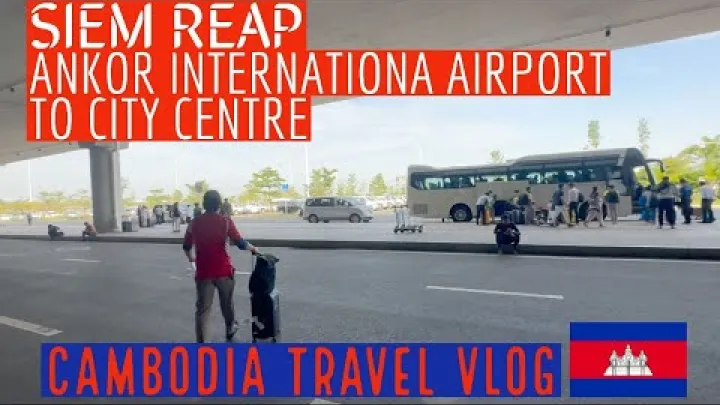
There are four practical ways to complete the airport-to-city leg: a scheduled airport shuttle, a pre-booked private car or van, a hotel-arranged transfer, or another formally booked vehicle at the airport. The best choice depends on arrival time, group size, luggage, and how important a direct hotel drop-off is.
| Option | Best for | Main advantage | Main limitation |
|---|---|---|---|
| Airport shuttle | Solo travelers with daytime arrivals | Lower fixed cost | Fixed stops and timetable |
| Private car or van | Families, groups, late arrivals | Direct hotel transfer | Usually higher cost |
| Hotel transfer | First-time visitors | Clear meeting arrangement | Must be arranged in advance |
| Booked airport vehicle | Travelers needing flexibility | Can suit a specific flight | Confirm inclusions and meeting point |
The Siem Reap Airport Bus publishes shuttle information, including departures and fares, on its Siem Reap Airport Bus site. A shuttle can be a sensible value choice if its departure matches your flight and its town stop is convenient for your hotel. It may not be ideal with bulky luggage, a sleeping child, or accommodation far from the central drop-off point.
For an early flight or a late arrival, a private transfer is usually the simpler arrangement. Ask for the full price, whether waiting time is included if the flight is delayed, and the exact airport meeting instructions. A hotel transfer is often worth considering for a first arrival because the driver already has the accommodation address and knows the intended drop-off.
Do not assume that a scheduled shuttle will wait for a delayed flight. Compare its published departure times with your actual arrival, including immigration and baggage collection. If the timing is close, choose a later service or arrange a private vehicle rather than building your first evening around a connection that may be missed.
Travel Overland Within Cambodia
Road travel provides broad coverage within Cambodia and can be much less expensive than flying. Buses and vans are the usual choices. Comfort, luggage space, stops, and departure locations differ substantially, even when two tickets appear to cover the same route.
Phnom Penh to Siem Reap by Bus or Van
The Phnom Penh–Siem Reap corridor is Cambodia’s principal domestic overland route to the city, largely following the National Road 6 corridor. It is a practical option for travelers arriving in Phnom Penh, residents moving between the two cities, and visitors who prefer to avoid another airport transfer.

| Mode | Typical use | Booking effort | What to confirm |
|---|---|---|---|
| Economy bus | Lowest-cost travel | Usually simple | Terminal, baggage and stops |
| Premium bus | More comfort on a long route | Simple to moderate | Seat type and onboard facilities |
| Van | Smaller groups and flexible departures | Moderate | Luggage capacity and pickup point |
| Private transfer | Families or door-to-door travel | Pre-arrangement needed | Vehicle size and complete price |
Economy buses suit travelers whose priority is price. Premium services may offer more comfortable seating or a more structured boarding process, while vans can have useful departure times but less room for large cases. Journey estimates are only guides: traffic, roadwork, weather, rest stops, and the operator’s route can change the actual duration.
Book directly with an operator when its route page and customer support are clear, or use a reputable multi-operator platform when you need to compare times. In either case, read the confirmation carefully. A low fare is not necessarily the lowest door-to-door cost if the departure point or Siem Reap arrival point requires an extra ride.
For a same-day hotel check-in or a timed activity, choose a departure that leaves room for road delays rather than relying on the shortest displayed duration. Travelers with large luggage should compare the baggage policy and vehicle type, since a van may have less practical storage than a full-size bus. If comfort matters, a premium bus or private vehicle can be better value than saving a small amount on a cramped journey.
Battambang, Sihanoukville, and Other Domestic Routes
Battambang is a common northwestern starting point for Siem Reap. Buses and vans are generally the practical choices, as the journey is shorter than cross-country routes and does not normally justify an airport detour. Current listings commonly show both bus and van choices, but operators, departure points, and availability can change.
Sihanoukville is farther away, making the decision more dependent on your travel style. A road-based itinerary can be the lower-cost option and can work well when you want to travel overland through Cambodia. A domestic flight, if available for your date, can save time but must be evaluated with airport transfers included. Some advertised itineraries combine more than one vehicle, so read the connection details rather than assuming a single ticket means one vehicle throughout.
From smaller Cambodian towns, a change in Phnom Penh, Battambang, or another hub may be necessary. Compare the total itinerary: waiting time, transfer distance, luggage handling, and final arrival location can matter more than the headline ticket price. Do not assume that a route sold through an aggregator is a guarantee of the exact vehicle or timetable; confirm the operator details in the days before travel.
Battambang can fit naturally into a northwestern itinerary, but it is not a substitute for checking the exact Siem Reap arrival point. Sihanoukville itineraries deserve extra attention because the long distance increases the effect of a late departure, a vehicle change, or a missed connection. If you are traveling onward to Phnom Penh or another gateway after Siem Reap, compare the full sequence rather than treating each ticket as an isolated purchase.
Booking, Departure Points, and Arrival Checks
Direct booking can be useful when you already know the operator and its departure terminal. A multi-operator platform can be useful for comparing routes, but it may show several suppliers with different pickup points, cancellation policies, and luggage rules. Neither method removes the need to read the confirmation line by line.
Use this checklist for every bus or van booking:
- Confirm the operator name and contact method.
- Check the exact departure terminal, office, or pickup address.
- Confirm the latest time you must arrive for boarding.
- Check whether your baggage is included and whether oversized items need approval.
- Identify the seat type, vehicle type, and any stated rest stops.
- Find the exact Siem Reap arrival point and whether hotel drop-off is included.
- Keep the booking confirmation available offline in case mobile data is unavailable.
Do not assume every service uses one universal terminal in Siem Reap. Operators can use separate offices, roadside pickup points, or different city drop-offs. Allow extra time for vehicle changes, traffic, roadside stops, and substitutions, particularly on a long domestic journey.
If a booking shows a hotel pickup, check whether the service means collection from your Phnom Penh accommodation or only from a central office. For a city departure, arrive with the address, booking name, and operator telephone number saved separately from the booking application. These details are useful if the vehicle is parked away from the advertised office or the driver cannot immediately identify your reservation.
Reach Siem Reap from Neighboring Countries
Neighboring-country routes can be economical and appealing for a multi-country journey. They also add border formalities, possible vehicle changes, and a larger risk that one delay affects the rest of the day. A flight is normally easier; an overland route is best chosen by travelers who value the journey itself or have time flexibility.
Bangkok to Siem Reap via Poipet
From Bangkok, the two main approaches are flying or traveling overland through the Thailand–Cambodia border. Flying is generally faster and avoids border uncertainty. A direct international bus can cost less and removes some connection planning, but it is a long travel day and border processing can make arrival timing unpredictable.

The usual road sequence is Bangkok to the Aranyaprathet area on the Thai side, crossing at Poipet, then continuing by road to Siem Reap. Some travelers use a through-ticket; others make the trip in separate stages. A through-ticket may simplify the transport side, but you should still understand where you leave the vehicle, cross immigration independently, and rejoin or find onward transport.
Use official immigration counters, keep your passport with you, and decline unsolicited offers to handle your visa or documents. Do not hand over your passport or visa payment to an uninvited border agent. Confirm the onward vehicle and meeting point before you cross, especially if the ticket involves a transfer. Nattakan route listings can be a useful starting point for checking Bangkok–Siem Reap bus availability, but confirm the current departure point and service conditions directly in your booking confirmation.
Plan the border as a sequence of separate tasks: reach the Thai-side departure area, complete the required exit and entry formalities at the official counters, locate the onward vehicle, and continue by road. Keep enough time for each stage and avoid booking a non-refundable evening activity in Siem Reap immediately after arrival. A through-ticket can reduce searching at the border, but it does not remove the need to follow immigration procedures yourself.
Overland Routes from Vietnam and Laos
Overland travel from Vietnam or Laos to Siem Reap is possible, but it is usually a long, multi-segment journey rather than a simple direct route. From Ho Chi Minh City, travelers may travel through Cambodia by a combination of international bus and domestic transport. From southern Laos, an itinerary can involve a border crossing followed by one or more Cambodian road segments.
Think of these routes as a sequence: reach the border town, complete immigration, travel to a Cambodian transport hub, then continue toward Siem Reap. The exact hub, vehicle change, and waiting arrangement depend on the operator and date. A single booking can cover multiple legs, but it does not necessarily mean the same vehicle, driver, or standard of service all the way.
Compared with flying, an overland itinerary may reduce the ticket cost but increases travel time, luggage handling, border exposure, and the chance that a delay disrupts the next leg. It can be a good choice for a flexible multi-country trip, but it is a poor fit for a short visit built around a fixed arrival date. If you choose it, keep accommodation and onward plans adjustable where possible.
These routes suit travelers with flexible schedules who want an overland experience and can manage luggage during changes. They are less suitable for a short Angkor visit, a fixed hotel check-in, or a same-day international flight connection. Confirm border opening conditions and leave a substantial connection buffer for any Vietnam- or Laos-origin road itinerary.
Consider Rail and Boat Connections Carefully
Rail and boat travel can add interest to a Cambodia itinerary, but neither should be treated as the default way to reach Siem Reap. They work best as experience-led choices with a clear onward road plan.
Rail Plus Road via Battambang or Poipet
Rail is an indirect option for Siem Reap unless a current official railway timetable specifically confirms a direct service. Do not plan around proposed extensions, old reports, or map lines that do not represent an operating passenger route. In practice, rail can be combined with a bus, van, taxi, or private transfer from rail-accessible towns such as Battambang or the Poipet area.
This can be enjoyable for travelers who prefer a slower journey and are willing to make a separate onward arrangement. It is not the most efficient option for most visitors because the road connection adds another booking, another luggage transfer, and a possible wait. Avoid booking non-refundable accommodation or onward transport based on an assumed rail connection.
If you choose rail plus road, obtain the current rail timetable from the operator, then arrange the onward vehicle with a realistic buffer. Treat the rail segment and the road segment as separate journeys unless the provider explicitly confirms a coordinated transfer. Battambang is the more natural stop for a northwestern itinerary, while using Poipet as a rail gateway may add border-area complexity without improving the final connection.
Tonle Sap Boat Trips from Phnom Penh
A Tonle Sap journey between Phnom Penh and the Siem Reap area can be a memorable sightseeing experience, but it is not the most dependable form of public transport. These trips are often tourist-oriented services rather than frequent, all-season commuter connections.
Boat travel may offer views of the lake and riverside life, but it can cost more and take longer than a road journey. Water levels, seasonal conditions, vessel operations, and demand can affect whether a trip runs and where passengers board or disembark. The arrival point may also require a further road transfer to Siem Reap city center.
Confirm directly with the boat provider that the service is operating on your intended date, identify the precise meeting and arrival points, and keep a road journey as a backup. Choose this option because you want the experience, not because you need the most predictable arrival time. Protect electronics and other sensitive luggage from spray or weather, and avoid scheduling an important same-day connection after the boat trip.
Handle the Last Mile and Common Travel Traps
A successful journey does not end when the bus, van, or plane reaches Siem Reap. Knowing where you will be dropped off, how you will reach your accommodation, and how you will handle documents and payment prevents many avoidable problems.
From Bus Arrival Points to Your Accommodation
Bus and van arrival points may be an operator office, a terminal, a hotel-area drop-off, or another location chosen by the service. Ask for the precise location before departure rather than assuming it will be in Siem Reap city center. This is especially important for travelers arriving in rain, heat, or darkness, and for anyone carrying large bags.
A hotel pickup is often the lowest-stress choice if it is available. Otherwise, arrange a clearly priced local ride after confirming the address and route. Walking can work for nearby accommodation with light luggage, while tuk-tuks and app-based rides may be more suitable for longer distances. Their usefulness depends on distance, weather, luggage, and the time of arrival.
Save your accommodation’s name, phone number, and map location before leaving the departure city. Keeping the address in Khmer or showing a map pin can reduce misunderstandings if you need help finding the correct entrance.
If the bus stops outside the central area, do not accept the first vague offer of transport simply because you are tired. Check the destination on your saved map, agree on the complete fare before boarding, and confirm whether the ride is direct. Travelers arriving late should prioritize a pre-arranged meeting point over trying to find a cheaper option while carrying luggage in an unfamiliar area.
Protect Your Documents and Confirm the Price
Most transport problems are prevented by using clear arrangements rather than reacting to pressure after arrival. Keep passports, cash, cards, phones, and other valuables with you rather than placing them in an unattended bag. For immigration matters, use official counters and follow the instructions of official staff.
Be cautious with transport touts, vague offers of visa help, and rides where the fare or destination is not clear. Before boarding a private vehicle, agree on the complete price, currency, destination, and whether the amount includes luggage, waiting, tolls, or a hotel drop-off. A low quoted figure can become expensive if key parts of the ride were not included.
Booking with a recognized operator, arranging a transfer through your accommodation, or using a transparent app-based service where available can make the price and route easier to understand. This is practical caution, not a reason to avoid local transport: clear details protect both the traveler and the driver.
Choose a Route and Verify It Before Departure
The best way to get to Siem Reap depends on your available time, budget, tolerance for transfers, and need for a predictable arrival. Consider the whole door-to-door journey, not only the headline fare or flight time.
Choose by Time, Budget, Comfort, and Flexibility
| Traveler need | Best starting choice | Why | Key trade-off |
|---|---|---|---|
| Short stay | Flight to SAI | Fastest long-distance option | Airport transfer adds time and cost |
| Lower budget | Domestic bus or van | Broad route coverage | Longer travel time |
| Family or group | Flight plus private transfer | Simple luggage handling | Higher upfront cost |
| Multi-country traveler | Flight or Bangkok overland route | Choice of speed or experience | Border planning if traveling by road |
| Scenic itinerary | Rail-plus-road or boat | Journey is part of the trip | Less predictable and slower |
Flights are generally fastest and easiest to book for long distances, especially for short-stay visitors. Buses provide the widest domestic reach and are often the lowest-cost choice. Vans can be useful for flexibility but require close attention to luggage and pickup details. Rail and boat combinations are for travelers who prioritize the experience and have a backup plan.
Separate the ticket price from the total cost. An inexpensive flight can require an airport transfer, while a cheaper bus can require rides to both terminals. A direct hotel transfer may cost more than a shared shuttle but can be better value for a family, a group, or a late arrival.
For the simplest arrival, choose the option with the fewest independent connections. For the lowest likely cost, compare buses or vans from the gateway where you already are. For maximum flexibility, avoid tightly connected non-refundable legs. For a scenic itinerary, accept that a backup road plan and a wider arrival window are part of the price of the experience.
Complete a Current Transport Checklist
Before departure, confirm these final details:
- For flights, confirm the operating airline, SAI airport code, baggage rules, and arrival time.
- For buses and vans, confirm the operator, departure terminal, boarding time, luggage allowance, and Siem Reap drop-off point.
- For international road travel, confirm your border requirements and the point where you rejoin onward transport.
- For airport arrivals, choose a shuttle, hotel transfer, or private vehicle that fits your flight schedule.
- For rail or boat plans, confirm the service is operating and identify the separate road connection.
- Save booking confirmations, accommodation details, and a backup contact method offline.
- Keep a practical backup option if a seasonal service, connection, or border crossing does not operate as expected.
Recheck service status close to travel, as routes, fares, operating days, and seasonal services can change. Siem Reap is easy to reach when the gateway and the final city transfer are planned together, leaving you free to begin your visit without an avoidable transport surprise.
Select area
Create a post
Posting is free and no registration is required.