Kampong Thom Travel Guide: Temples, River & Practical Tips
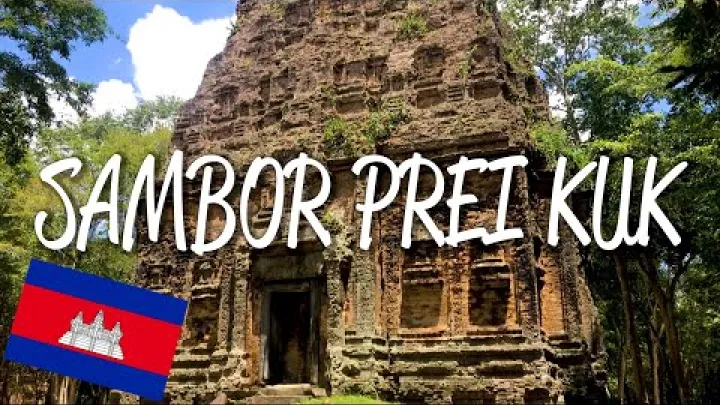
Kampong Thom offers a slower view of Central Cambodia between Phnom Penh and Siem Reap. It is best known for the forest temples of Sambor Prei Kuk, but the province also rewards travelers who make time for river life, religious sites, markets, and rural landscapes. This Kampong Thom travel guide explains where to base yourself, how to move around, how long to stay, and how to plan activities with realistic expectations. It is especially useful for first-time visitors deciding whether to make a short stop or build a deeper stay around the province.
Understand Kampong Thom Before You Go
Kampong Thom is not a destination built around a dense concentration of hotels, museums, and organized attractions. Its appeal is the combination of an accessible town base and a wider province where heritage, farming communities, wetlands, and sacred places are spread out.
What Kampong Thom Is Like
Kampong Thom lies on the main overland route between Phnom Penh and Siem Reap, making it a useful stop for travelers crossing Central Cambodia. The provincial capital is Stung Saen, often referred to simply as Kampong Thom town. It sits beside the Stung Sen River and provides the most practical concentration of accommodation, food, transport connections, and everyday services. The provincial setting and the town’s river location are outlined by Tourism Cambodia.
Expect a low-key provincial town rather than a highly international tourism center. English-language services may be limited outside hotels and established guides, and many worthwhile places require a vehicle rather than a short walk. That is a strength for travelers seeking a quieter Cambodia experience, pre-Angkorian history, and more time outdoors. It may be less suitable for visitors who want nightlife, frequent organized tours, or fully standardized transport and activity booking.
Kampong Thom is a good match for independent travelers, culture-focused visitors, and anyone who prefers seeing a working provincial town instead of moving between major tourist hubs. Families and slower travelers can also enjoy it if they allow extra time for road transfers and midday heat. If your priority is nightlife, a large choice of international restaurants, or effortless last-minute excursions, Siem Reap or Phnom Penh may be a better base.
Choose the Right Trip Length
One night is enough for a practical break between Phnom Penh and Siem Reap, particularly if you can arrive early enough to see the town and organize a visit to Sambor Prei Kuk. It is a sensible choice when the temple complex is your main reason for stopping.
Two or three nights is the better option for most travelers who want more than a transit stop. This gives you a full day for Sambor Prei Kuk, another for Phnom Santuk or a rural activity, and some flexibility for the riverside, Kampong Thom old market, or a locally arranged water-based outing. Longer stays work well for cyclists, travelers interested in crafts or community visits, and anyone comfortable with slower logistics. The real limiting factor is not the town itself, but the travel time needed to reach sites in different districts.
Build your stay around the activity that matters most. A heritage-focused visit can be completed with one full excursion, while a river or wetland trip deserves more flexibility because departure arrangements and water conditions may change. Do not count the arrival or departure day as a full sightseeing day unless your transport timing is already clear.
Read the Town Layout and Province Map
Stung Saen is relatively compact around the riverfront, the old market area, and National Highway 6. Central errands, meals, and an evening walk can often be managed on foot, while the highway corridor is important for intercity transport and roadside accommodation. The riverfront offers a calmer orientation point than the busier main road.
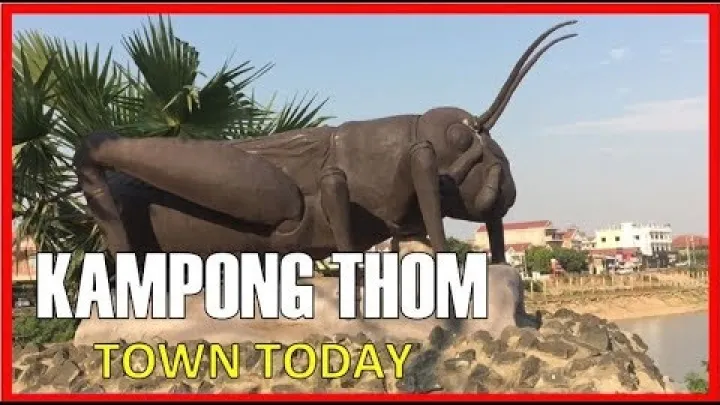
Do not confuse the walkable town with the full geography of Kampong Thom province. Sambor Prei Kuk, Phnom Santuk, Santuk Silks, wetland communities, and the Stung Sen Ramsar landscape are separate excursions. When you arrive, ask your accommodation to confirm the exact bus drop-off point, hotel pickup point, and meeting place for any driver or guide. These practical locations can change, and online map listings are not always current.
Use Stung Saen as a service base rather than assuming every attraction is close to the town center. Check the direction and approximate road time for each excursion before combining stops. That simple planning step helps avoid paying for a vehicle that spends most of the day retracing the same route.
Top Experiences in and Around Kampong Thom
The best experiences balance one major heritage visit with time for the province’s living landscapes. Choose a few places that fit the direction of travel rather than trying to cover every attraction in a single day.
Visit Sambor Prei Kuk
Sambor Prei Kuk is the principal heritage reason to visit Kampong Thom. Its pre-Angkorian temples are set among forest, creating a very different experience from the monumental and heavily visited Angkor sites near Siem Reap. The setting is quieter, more dispersed, and best appreciated at an unhurried pace.
The complex includes several temple groups rather than one single monument. A local guide or reliable site interpretation can help explain the religious history, brick construction, sculptural details, and the relationship of the groups to one another. Without context, it is easy to see only ruins in the trees; with it, the site becomes a clearer introduction to Cambodia’s earlier architectural traditions.
Allow a substantial part of a day once transport from Stung Saen is included. Wear shoes suitable for uneven paths, carry water, and use sun and insect protection. Before setting out, confirm current admission arrangements, opening conditions, road access, and guide availability directly with your hotel, driver, or an official local contact. This avoids planning around outdated prices or hours.
Plan the visit as a walking experience rather than a quick roadside photo stop. Forest shade can make some sections more comfortable, but paths may still be uneven and warm. If you are traveling without a private vehicle, settle the return arrangement before entering the site so you are not relying on an uncertain ride after the visit.
Explore Phnom Santuk
Phnom Santuk is a sacred hill destination with temples, Buddhist imagery, and broad views over the surrounding countryside. It should be approached as an active religious place as well as a viewpoint. Dress respectfully, keep voices low around worship areas, and avoid interrupting ceremonies or people making offerings.
Visitors may climb the stairs or arrange access by road, depending on current conditions and their fitness. The climb can be demanding in heat, so choose supportive footwear and carry water. An early morning or later afternoon visit is generally more comfortable than the middle of the day. Do not rely on fixed reports of stair numbers, climbing times, or wildlife encounters; conditions and access patterns can differ.
Allow time to pause rather than treating the ascent as a race. A road transfer may reduce the physical effort, but it does not remove the need for respectful behavior once you reach the religious areas. Combine the hill with nearby rural stops only after confirming how long your driver will wait.
Follow the Stung Sen River Toward Tonle Sap
The Stung Sen River links Stung Saen town with communities and landscapes farther toward Tonle Sap Lake. A short outing near town can provide a simple view of river life, while longer journeys may aim toward Phat Sanday, floating or waterside communities, and wetland scenery.
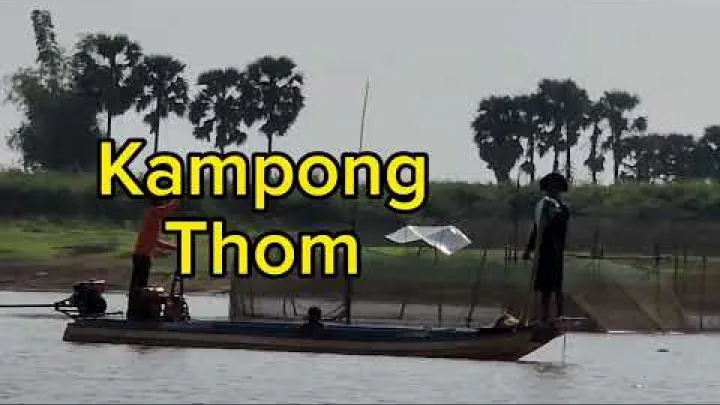
These longer journeys are not a standard daily attraction in the way a city tour might be. Their character depends on water levels, local routes, season, and community access. The Stung Sen Ramsar Site lies along the south-eastern edge of Tonle Sap Lake in Kampong Thom Province, and IUCN describes the area as a wetland landscape shaped by environmental variability. Birdlife, navigation, and the appearance of the floodplain can therefore differ greatly across the year.
Choose a river excursion if you value landscapes and local context more than a tightly scheduled sightseeing list. A short trip is easier to fit into a two-night stay; a journey toward Tonle Sap may require a full day or an overnight plan.
Ask whether the proposed route is primarily a scenic ride, a village visit, or a transfer to a wetland destination. Those are different experiences with different time and comfort requirements. Bring water, sun protection, and a flexible attitude, especially when the boat is arranged locally rather than through a fixed online itinerary.
Add Rural Crafts, Secondary Temples, and Community Visits
Travelers with extra time can look beyond the headline sites. Santuk Silks and locally guided village or craft visits can add a more direct connection to rural livelihoods. Secondary temple sites may also be rewarding for people who have already seen Sambor Prei Kuk and want a less formal day in the countryside.
These additions require more planning than the main temple circuit. Signage can be limited, transport takes time, and not every workshop, homestay, or community activity operates every day. Where possible, arrange visits through an established local guide, a community-based provider, or accommodation staff with direct local contacts. This improves communication and helps ensure that the visit is welcomed and useful to the host community.
Choose an activity that fits the local setting rather than expecting a polished attraction with fixed visitor hours. Ask what is included, whether photography is welcome, and how long the visit will take. A smaller craft or village experience is most rewarding when hosts have agreed to receive visitors and the schedule leaves room for conversation.
Getting to Kampong Thom and Getting Around
National Highway 6 is the practical backbone for reaching Kampong Thom. Once in town, transport becomes more individualized: walking works in the center, while day trips usually require a hired vehicle.
Travel from Phnom Penh or Siem Reap
National Highway 6 connects Kampong Thom with Phnom Penh to the south and Siem Reap to the north-west. Buses, minibuses, vans, shared taxis, and private cars are the main overland choices. Buses are usually the lowest-cost option; vans may offer a more direct or faster-looking schedule but can feel less spacious; a private car gives the most flexibility for stops and hotel-to-hotel travel.
Booking sites can show current options, but they should be treated as a starting point rather than a promise. For example, 12Go lists buses, vans, and taxis for the Siem Reap–Kampong Thom corridor, while availability and prices vary. There is no regular rail, ferry, or flight connection to rely on for this route.
Before booking, confirm the departure point, arrival point, current schedule, baggage policy, and whether you will arrive in daylight. Build a buffer if you hope to visit a temple the same day or connect onward. A daytime departure is usually the easier choice for finding your hotel, organizing local transport, and avoiding pressure to rush after arrival.
| Option | Best for | Main trade-off |
|---|---|---|
| Bus | Lower-cost travel | Fixed stops and timing |
| Van or minibus | Convenient scheduled travel | Less space and variable comfort |
| Shared taxi | Flexible local arrangement | Comfort and departure depend on demand |
| Private car | Families, luggage, sightseeing stops | Higher total cost |
Use Tuk-Tuks, Motos, Cars, and Bicycles Locally
Central Stung Saen is suitable for walking between a hotel, the riverside, food stalls, and the market. Tuk-tuks and moto-taxis are useful for short trips around town. For Sambor Prei Kuk, Phnom Santuk, or several rural stops, a hired car or tuk-tuk with a clear day arrangement is generally more practical than trying to find separate rides at each location.
Agree the destination, total price, waiting time, included stops, and return plan before leaving. A low price for an outward journey is not useful if no return transport is available. Ask your hotel about current rates and compare more than one offer when arranging a full-day driver. Rural roads may become slower after rain, and visitors unfamiliar with local routes often find a local driver safer and simpler than self-riding.
For a short town ride, confirm the destination before getting in and keep small notes available for payment. For a full-day arrangement, write down the agreed inclusions or ask the hotel to help translate them. Bicycles can suit confident riders near town, but heat, traffic, road shoulders, and the distances between attractions make them less practical for an ambitious province-wide sightseeing day.
Plan Boat Trips and Wetland Excursions Carefully
A boat trip near Stung Saen is very different from a longer journey toward Tonle Sap Lake. The latter can take most of a day, may involve more remote departure points, and can require overnight accommodation depending on the route and season. Decide first whether you want a short river experience or a destination-focused wetland journey.
Before paying, ask who operates the boat, where it departs, the total travel time, planned stops, food arrangements, boat capacity, and the return plan. Confirm the boat’s condition, whether properly fitted life jackets are available, and the operator’s cancellation approach if weather changes. Storms, water levels, currents, and local operating decisions can affect whether a trip runs and whether a route is appropriate that day.
Where to Stay in Kampong Thom
Accommodation in Kampong Thom ranges from simple guesthouses to more full-service hotels. The best choice is usually the one that makes your transport and day trips easier, not simply the one with the lowest room rate.
Base Yourself in Stung Saen Town
For a first visit, central Stung Saen is the best base. It keeps you close to intercity transport, food, basic services, the market, and the Stung Sen River. It also makes it easier to arrange a driver for Sambor Prei Kuk or Phnom Santuk without committing to a remote stay.
Properties near National Highway 6 can be convenient for early arrivals and departures, but traffic noise may be greater. Riverside accommodation may feel more relaxed and can be pleasant for evening walks. Quieter side streets can suit light sleepers, although they may be farther from the main road and transport pickup points. Staying in town is normally the most efficient option when you plan several day trips in different directions.
Choose the town base especially if you are using public transport, arriving late, or visiting for only one or two nights. A central room also makes it easier to replace supplies, arrange a driver, or change plans if weather affects a rural excursion. A remote property can be worthwhile, but only when its transfer and meal arrangements are clear.
Match Your Accommodation to Your Itinerary
Choose a hotel or guesthouse that can help arrange reliable transport if Sambor Prei Kuk, Phnom Santuk, or rural visits are priorities. This can be more valuable than a slightly lower room price, particularly if you arrive late or have limited time. Ask whether staff can arrange a driver, whether the driver waits at sites, and how payment is handled.
A rural or heritage-area stay may appeal to travelers focused on cycling, quiet surroundings, or community experiences. Accept that food choices, Wi-Fi, late check-in, and onward transfers may be more limited. Before booking any property, read recent guest feedback and confirm practical details that matter to you: air conditioning, backup power, water pressure, Wi-Fi, payment method, and late-arrival procedures. Room prices and facilities change, so confirm directly with the property.
Best Time to Visit and What to Budget
Season affects comfort, road conditions, and the look of river and wetland landscapes. Costs are usually driven less by daily meals than by private transport, guiding, and any long-distance water excursion.
Choose Between Dry, Hot, and Wet-Season Travel
The drier part of the year is generally easier for temple walking, cycling, and road-based day trips. The hot season can make exposed temple paths and hill climbs tiring, especially around midday. Wet-season travel brings greener scenery and changing water landscapes, but it also makes plans less predictable.
For Sambor Prei Kuk and Phnom Santuk, cooler parts of the day matter more than a rigid calendar rule. For the Stung Sen River and Tonle Sap-connected wetlands, higher water can transform the landscape but may also alter boat routes and access. During rainy periods, check a current local forecast and confirm road or boat access before committing to a wetland excursion. Showers, muddy secondary roads, storms, and water conditions can change the practical plan quickly.
Pack for changeable days rather than relying only on the season label. Light clothing, a layer for transport, rain protection, and shoes that can handle uneven or damp paths are more useful than a fixed assumption about conditions. If an excursion is important, leave a spare half-day or day so a weather delay does not disrupt your onward journey.
Plan a Realistic Daily Budget
Build your budget from separate categories: transport into Kampong Thom, accommodation, meals, local rides, admission or guiding at heritage sites, and optional private-car or boat excursions. Basic food and town travel can be comparatively affordable, but a driver waiting for a full day, a private intercity transfer, or a long boat trip can become the largest expense.
Costs vary with group size, vehicle type, distance, season, waiting time, and whether your hotel arranges the service. Rather than relying on an old fare table, request the full price before departure and clarify what is included. Carry Cambodian riel for small purchases and keep backup cash, as card acceptance may be limited outside larger hotels and more formal businesses. Keep enough cash for the return journey rather than spending all of it at the first stop.
When comparing transport offers, ask whether fuel, tolls, waiting time, site parking, meals, and the return leg are included. A shared vehicle may be economical for one traveler, while a private car can make more sense for a small group splitting the cost. Treat online prices as indicative and confirm the final amount, currency, and payment timing locally.
Safety, Health, and Responsible Travel
Kampong Thom can be enjoyed with the same practical care used elsewhere in Cambodia. A measured approach to road safety, valuables, rural access, heat, and water activities will make the trip more comfortable.
Manage Road, Theft, and Nighttime Risks
Current government advice for Cambodia calls on travelers to exercise increased caution because of crime and landmines. The U.S. Department of State advisory is a useful reminder to treat road travel and personal security seriously without assuming that a quieter provincial town removes ordinary risks.
Use reputable intercity operators, keep bags and phones secure in busy pickup areas, and take extra care around traffic. Avoid isolated walks or road travel after dark, especially when you do not know the route. Store passports, cash, and electronics carefully in basic accommodation, and use a secure bag rather than leaving valuables in an unattended vehicle. If a transport plan feels rushed, unclear, or unsafe, change it rather than trying to preserve a tight itinerary.
Respect Landmine and Unexploded-Ordnance Warnings
Conflict legacies remain relevant in Cambodia, particularly for people moving beyond established visitor areas. At temples, hills, village edges, forest, scrub, and rural landscapes, stay on known paths and follow the directions of local guides and residents. Do not treat an unmarked shortcut as an adventure.
Never touch, pick up, or move unfamiliar metal objects. If you see something suspicious, move away and report it through an appropriate local authority or your accommodation provider. This warning is about off-trail behavior; it does not mean that established visitor routes should be avoided. It means visitors should respect marked access and local knowledge.
Prepare for Heat, Mosquitoes, and River Conditions
For outdoor days, carry drinking water, sun protection, mosquito repellent, breathable clothing, suitable footwear, and any essential medication. A small day bag is useful for temple paths and hill visits. Medical services in a provincial town may be more limited than in Phnom Penh or Siem Reap, so travel insurance details and basic preparation are worthwhile for rural activities.
On the river, pay attention to weather, currents, loading, and boat stability. Wear a life jacket when one is provided and do not assume that water conditions are calm simply because a trip began in good weather. If you are prone to motion sickness, bring suitable medication and tell the operator before a long journey.
Build a Kampong Thom Itinerary
A successful itinerary leaves room for transport and does not force distant activities into one day. Use Sambor Prei Kuk as the anchor, then add only the experiences that fit your time and preferred pace.
One Night Between Phnom Penh and Siem Reap
For a one-night stop, arrive during the day if possible, check in, and choose one manageable activity. A walk along the riverfront or a visit to the old market can work well after arrival. If timing permits, make Sambor Prei Kuk the main experience and keep the rest of the day simple.
Do not try to combine distant temples, Phnom Santuk, and a long Tonle Sap trip in this short window. A private transfer with a sightseeing stop can be more efficient than separate public transport and local rides when time is limited, especially for a couple, family, or small group. The trade-off is a higher cost; public transport is cheaper but gives you less control over arrival time and sightseeing stops.
If you are traveling by scheduled bus or van, treat the arrival day as an orientation day unless the operator’s timing is dependable and daylight remains. Arrange the next morning’s vehicle before going to bed, and keep your onward ticket or departure plan separate from an excursion that could run late.
Two or Three Nights for a Deeper Stay
With two or three nights, use one full day for Sambor Prei Kuk. Reserve another day for Phnom Santuk, Santuk Silks, a village-focused activity, or secondary temples in the same general direction. Grouping places by direction reduces repeated vehicle travel and gives you more time at each stop.
Keep the final part of the stay flexible for a river outing, wetland visit, or relaxed time in Stung Saen. This is the best place in the itinerary for the activity most dependent on weather and local operators. A deeper stay is most rewarding for travelers who enjoy unhurried schedules, simple logistics, and destinations where not every experience comes with fixed daily departures.
Make the Trip More Responsible and Comfortable
At temples and active religious sites, dress modestly, follow local guidance, and ask permission before photographing people. Support local guides, craftspeople, homestays, and community-based tourism when the arrangement is transparent and respectful. These choices can make the visit more meaningful while directing spending toward local hosts.
Carry a reusable water bottle when practical, reduce unnecessary single-use plastic, and avoid activities that disturb wildlife or wetland communities. Leave time for ordinary moments in Stung Saen: a riverside meal, the market, or a slow walk through town. Kampong Thom works best when it is not treated only as a checklist of monuments.
Kampong Thom Planning Takeaways
Kampong Thom is worth adding to a Cambodia itinerary if you want pre-Angkorian temples, a quieter town base, and a glimpse of riverine and rural Central Cambodia. One night is enough for a focused heritage stop, while two or three nights allow a more balanced visit with Phnom Santuk, local crafts, or a weather-dependent river experience. Base yourself in Stung Saen, arrange regional transport in advance, and keep the most remote activity flexible. With realistic timing and respectful local planning, Kampong Thom can be far more than a stop on Highway 6.
Select area
Create a post
Posting is free and no registration is required.