Timor-Leste National Anthem: Pátria, History & Meaning
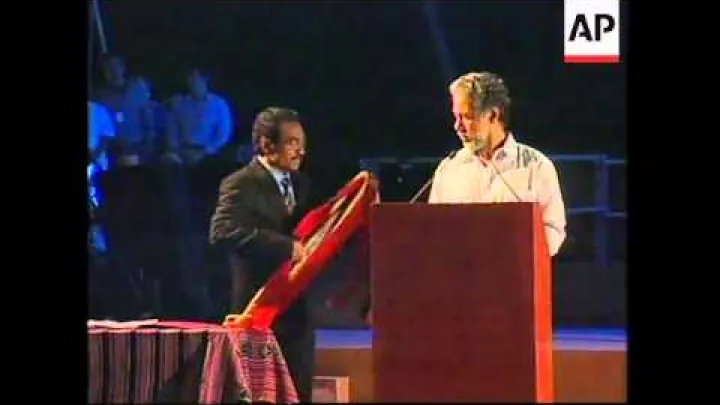
The national anthem of Timor-Leste is Pátria. Its Portuguese title is commonly translated into English as Fatherland, Motherland, or Homeland. Created during the country’s first declaration of independence in 1975, the anthem connects state ceremonies today with Timor-Leste’s long struggle for self-determination. This guide explains its official title, authors, history, language, themes, legal standing, and role at national ceremonies.
What Is the National Anthem of Timor-Leste?
Pátria is one of the central national symbols of the Democratic Republic of Timor-Leste. Like the national flag and emblem, it represents the country in official civic settings and marks important moments in its national calendar. The Government of Timor-Leste lists “Pátria” as the national anthem of the republic.
\".")
For someone looking up the national song or anthem name, the short answer is therefore straightforward: Timor-Leste’s official national anthem is Pátria. The title, authorship, and official musical form should be distinguished from translations, recordings, or other patriotic songs that may be used in cultural settings.
The Official Name and Its English Meaning
The official name of Timor-Leste’s national anthem is Pátria. The title is in Portuguese, one of the country’s official languages. In English, pátria may be rendered as Fatherland, Motherland, or Homeland, depending on the translator’s choice.
These English terms are translations of the Portuguese word, not separate official names for the anthem. When referring to the national anthem in a formal or international context, using the original title, Pátria, is the clearest approach. The word has a broad civic meaning: it refers to the homeland as a shared national community, rather than simply to a geographic territory.
That meaning is important to understanding why the anthem is closely tied to independence, sacrifice, and public remembrance. It also explains why an English-language search result may use “Fatherland” or “Homeland” while official Timorese references retain the Portuguese title.
The Lyricist, Composer, and Adoption Date
Pátria was composed in 1975. Its lyrics were written by Francisco Borja da Costa, and its music is attributed to Afonso Redentor de Araújo, also commonly referred to in government material as Afonso de Araújo.
| Item | Official information |
|---|---|
| Anthem | Pátria |
| Lyrics | Francisco Borja da Costa |
| Music | Afonso Redentor de Araújo |
| Historical adoption | 1975 |
| Statutory codification | Law No. 2/2007 |
The date needs a small distinction. Pátria belongs historically to the 1975 proclamation of independence, when it emerged as a symbol of the new republic. Its detailed legal definition, including the authoritative text and musical score for official purposes, came later under Law No. 2/2007. In other words, 1975 explains the anthem’s origin, while the later law explains its formal place in the post-restoration legal framework.
How the Anthem Emerged from Timor-Leste's Independence Struggle
Pátria cannot be separated from Timor-Leste’s modern national history. It was created at a decisive moment, then retained its symbolic importance through years in which the country’s independence was not fully realized in practice. The anthem is consequently both a legal state symbol and a historical record of the independence movement that preceded the modern republic.
Creation During the 1975 Proclamation of Independence
Timor-Leste proclaimed the Democratic Republic of East Timor on 28 November 1975, following the end of Portuguese colonial rule. Pátria was created in this political transition and became a founding symbol of that first declaration of independence.
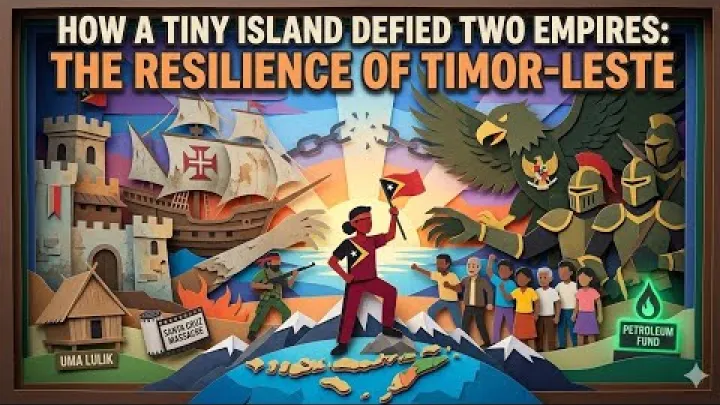
The sequence is important: Portuguese rule ended, Timorese leaders proclaimed a republic, and the new state adopted symbols—including an anthem—to express its political identity. The anthem’s creation gave the republic a shared ceremonial voice alongside its flag and emblem. It expressed the aspirations of a people claiming political independence and defining their homeland on their own terms.
This is why Pátria carries more than a musical function: it is also a document of national purpose from a formative period. Its language of freedom and collective determination makes sense in the context of decolonization, rather than as a detached piece of ceremonial music.
The 1975 proclamation was followed by Indonesian invasion and occupation, so the first independent republic was short-lived. Even so, the date remained constitutionally significant. The Constitution of Timor-Leste recognizes 28 November 1975 as the Day of the Proclamation of Independence, preserving the importance of that founding act within the national story.
Suppression, Resistance, and Restoration in 2002
After the Indonesian invasion, Pátria could not function openly and continuously as the anthem of a fully sovereign state within Timor-Leste. Its connection with the 1975 declaration and the independence movement nevertheless remained part of the country’s historical narrative. This cautious description avoids assuming that every performance or form of circulation during the occupation followed one documented pattern.
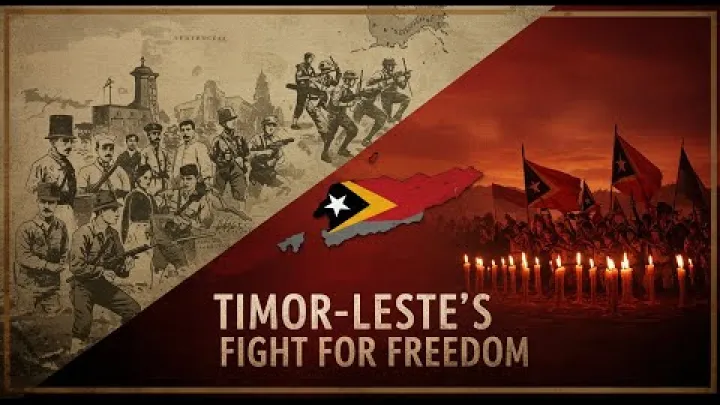
On 20 May 2002, Timor-Leste restored its independence and established the modern Democratic Republic of Timor-Leste. Pátria returned to public state life in a country able once again to use its own constitutional institutions and national symbols.
The dates 28 November 1975 and 20 May 2002 refer to related but different milestones. The first marks the proclamation of independence; the second marks the restoration of sovereignty after the occupation and the international transition. Understanding both dates helps explain why official commemorations may refer to either proclamation or restoration, and why the anthem has meaning at both.
For visitors and students, this two-date history is a useful guide to ceremony names. A commemoration of the Proclamation of National Independence looks back to 1975, while a Restoration of National Independence event marks the return of sovereign state institutions in 2002. Pátria provides continuity between those milestones without making them interchangeable.
Language, Lyrics, and the Anthem's Main Themes
The language and message of Pátria reflect the era in which it was written. Its words are concise but strongly political, linking the homeland with liberation, unity, and the refusal of domination.
Portuguese Original and Other Language Versions
The legally codified anthem is based on Portuguese lyrics. Portuguese has a central place in Timor-Leste’s historical and constitutional framework, while Tetum is also an official language and is widely used in public life.
English translations are useful for international readers, but they are translations rather than official alternative titles or replacement texts. Tetum adaptations, explanatory versions, or versions used in educational settings may also circulate, yet they should not automatically be treated as having the same statutory status as the Portuguese text.
This distinction matters at formal events. The official national anthem is Pátria as defined in national law, including its approved text and musical score. A translated explanation can help listeners understand its message, but it does not change the anthem’s official identity. Where an event program supplies a translation, readers should treat it as a language aid unless the responsible Timorese authority identifies it as an approved official version.
Liberation, Unity, and National Identity in the Lyrics
The lyrics of Pátria focus on liberation and attachment to the homeland. They invoke Timor-Leste as a country whose people seek freedom and whose national future must be defended. The language also rejects colonialism, imperialism, and exploitation, reflecting the political environment of 1975.
Other prominent themes include unity, determination, the people, and the heroes of liberation. These ideas present independence not as the achievement of one individual but as a collective national effort. The anthem’s message therefore connects citizenship with memory of the struggle that shaped the republic.
The title and opening address to the homeland give the song an immediate sense of belonging. At the same time, its revolutionary language should be understood in its historical setting. It arose from a decolonization and independence movement, rather than serving as a statement of a specific present-day government policy.
These are summaries of the documented lyrical themes, while the conclusion that the anthem functions as civic memory is an interpretation of how those themes work in a national ceremony. Different listeners may place different emphasis on liberation, homeland, unity, or remembrance. The full lyrics are not needed to understand the central message, and long reproductions are best avoided when publication rights are uncertain.
Short summaries are generally more useful for visitors and students, while official texts and scores should be consulted when a formal performance, study project, or publication requires exact wording. A school or event organizer can also clarify which language and arrangement are expected for a particular occasion.
The Legal Status and Ceremonial Use of Pátria
Pátria is not simply a well-known patriotic song. It is the legally designated national anthem of Timor-Leste, with a constitutional basis and a later national symbols law setting out its official form.
Constitutional Recognition and Law No. 2/2007
The Constitution places the national anthem among Timor-Leste’s essential national symbols, together with the national flag and national emblem. Its transitional provisions addressed the anthem’s use while ordinary legislation was still to approve it in detail. The constitutional text provided that the anthem would be sung at official ceremonies during that period.
The subsequent national symbols legislation gave the anthem a more specific statutory foundation. Law No. 2/2007 identifies Pátria as the national anthem, names its lyricist and composer, and establishes the official text and musical score used for state purposes.
This sequence is important. Pátria had historical recognition from its 1975 adoption and was contemplated in the constitutional transition after independence was restored. The 2007 law did not create its historical significance; it formally codified the anthem’s detailed legal form within the institutions of the independent state.
The distinction also prevents two common misunderstandings. The 2007 law should not be treated as the year the anthem was first created, and the constitutional transitional provision should not be read as proof that Pátria had no practical recognition before the law was enacted. Those are different questions: origin, constitutional treatment, and statutory specification.
For a reader preparing material for a ceremony, school activity, official program, or translation, the law is the most appropriate reference point for the anthem’s legal name, authorship, text, and score. General descriptions may be helpful background, but they do not replace the authoritative legal version.
Independence Ceremonies, Flag Raising, and Respectful Conduct
Pátria is closely associated with national ceremonies, especially observances of 28 November, the Proclamation of National Independence, and 20 May, the Restoration of National Independence. At these events, the anthem helps connect civic ritual with the country’s founding history.
Government accounts of independence observances describe highly formal flag ceremonies, including the entry, raising, or lowering of the national flag. The anthem forms part of this solemn symbolic setting. These named national occasions are stronger evidence of official use than assumptions based on how anthems are performed in other countries.
At the relevant ceremonial moment, attendees are expected to stand. Military and police personnel salute in accordance with their official responsibilities. This is a specific ceremonial practice connected with respect for national symbols, rather than a reason to assume that every informal performance follows identical rules.
Government and educational institutions have also used solemn flag-raising ceremonies to encourage respect for the national flag and anthem. For visitors, the practical approach is simple: follow the guidance of the host institution, stand quietly when the anthem is played in a formal ceremony, and observe the conduct requested by event organizers. Requirements can depend on the institution and event, so local organizers are the appropriate source for any special protocol.
How the National Anthem Differs from Other Patriotic Songs
Every country can have songs associated with history, religion, local communities, or political movements. Legal designation is what distinguishes a national anthem from other meaningful music. This distinction is especially useful for searches using “national song,” since that phrase can describe a patriotic song informally without identifying the state’s legally designated anthem.
Pátria as the Legally Designated National Anthem
Pátria is Timor-Leste’s official national anthem because it is recognized in the country’s constitutional and statutory national-symbol framework. The national symbols law gives it a defined title, authorship, words, and score for official use.
Other patriotic, resistance, commemorative, religious, or cultural songs may be important in Timorese society without holding the same legal status. A song can be meaningful at a local event or within a particular community and still not be the state’s national anthem. The term “patriotic song” is therefore broader than “national anthem.”
Timor-Leste is a republic. The available official national-symbol material identifies Pátria as its national anthem and does not identify a separate royal anthem with competing official status. For formal references, it is therefore accurate to describe Pátria as the legally designated national anthem.
Why the Anthem Still Matters in Timor-Leste
Pátria serves several roles at once. It is a state symbol used in formal ceremonies, a reminder of the 1975 declaration of independence, and a vehicle for civic memory in the independent republic that emerged in 2002.
When it is performed at a flag ceremony or independence commemoration, the anthem links the present-day state with the people and ideals remembered from the struggle for self-determination. Its message of liberation and unity remains embedded in the national story, even as Timor-Leste functions through democratic institutions and constitutional law.
For international visitors and students, recognizing Pátria as more than a ceremonial song helps make official occasions easier to understand. It represents the homeland, the history of independence, and the public dignity attached to Timor-Leste’s national symbols. Its continuing role does not require every listener to interpret each line identically; its official status and historical setting provide the common framework.
Conclusion: What to Remember About Timor-Leste's National Anthem
Timor-Leste’s national anthem is Pátria, a Portuguese title commonly translated as Fatherland, Motherland, or Homeland. Written by Francisco Borja da Costa and composed by Afonso Redentor de Araújo in 1975, it emerged from the first proclamation of independence and was later formally codified under Law No. 2/2007.
Its themes of liberation, unity, and national identity explain its lasting importance at flag ceremonies and independence commemorations. Knowing its original title and historical context is the best starting point for understanding one of Timor-Leste’s most important national symbols. For the authoritative wording, score, and event protocol, consult the applicable national law and follow instructions from the local ceremony organizer.
Select area
Create a post
Posting is free and no registration is required.