Gleno Getting There: Transport from Dili, Timor-Leste
Gleno getting there is mainly a road-planning question. The town is inland in Ermera municipality, so most visitors first organize their transport through Dili and then continue by bus, minibus, taxi, private car, or a suitable rental vehicle. This guide explains the practical departure points, reported travel times and fares, the difference between Gleno and Ermera in route listings, and the checks that matter before boarding. It also covers late arrivals, the Kupang land-border option, weather, roadworks, and onward travel beyond Gleno town center.
What to Know Before Going to Gleno
Understanding Gleno’s location makes the transport choices easier. There is no single central booking system for every road service, and route information may use Ermera as a destination label even when the traveler wants Gleno.
Gleno Is a Road-Access Destination
Gleno is an inland town in Ermera municipality. It is not a coastal arrival point, an airport city, or a ferry gateway. References that connect Gleno with the Timorese North Coast usually describe a road journey from Dili through the inland corridor; they do not mean that Gleno is physically on the coast.
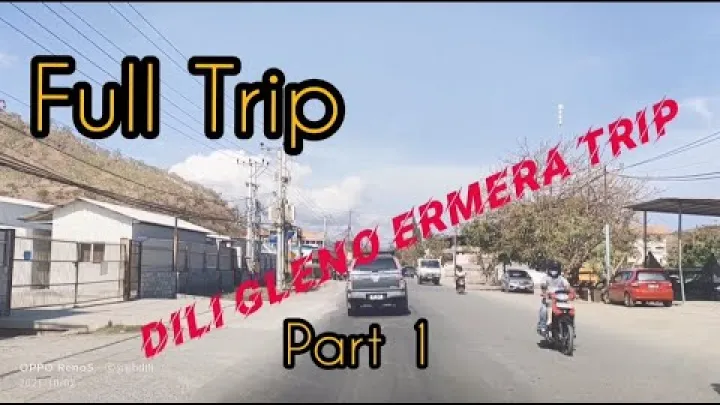
The available route information does not identify a direct airport, railway, or ferry connection to Gleno. In practical terms, travelers should plan to reach the town by road. The Tibar–Gleno road corridor is an important planning reference, and names such as Railaco may also appear in local directions or travel itineraries in the wider Ermera approach. These names should be treated as route anchors, not as proof of a particular stop, timetable, or road condition.
Exact journey times can change with the departure point, vehicle type, traffic, roadworks, rain, and the number of stops. For that reason, a plan based on a broad travel estimate is more reliable than an itinerary that depends on arriving at a precise minute.
Dili Is the Practical Starting Point
Dili is the practical planning hub for most visitors arriving in Timor-Leste by air and for many people making a domestic road connection. The relevant international arrival point is Presidente Nicolau Lobato International Airport. After reaching Dili, the main decision is whether to use an early public service from a local terminal or arrange a private road vehicle.
Dili is also useful for confirming the details that are difficult to find online. Travelers can ask at a terminal about the departure point, destination label, fare, and vehicle availability, or ask accommodation staff and a trusted local contact to help arrange a private car. Not every itinerary must pass through Dili, but it is the clearest base for visitors who are arriving internationally or who need a well-established transport hub before heading inland.
Getting to Gleno From Dili
The road journey from Dili can be low-cost or flexible, depending on how much time, luggage, and certainty you need. Public transport is usually the budget choice, while a private vehicle removes some transfer problems but costs more.
Public Buses and Minibuses
Public transport information for Gleno is often published under Ermera rather than Gleno. This creates an important distinction: a vehicle advertised for Ermera may be traveling toward the municipality, a town called Ermera, or a route that does not stop in Gleno town center. Ask specifically for Gleno before boarding, rather than assuming that every Ermera service is a direct Gleno connection.
One route listing on Rome2Rio identifies Taibessi as part of a reported Dili-to-Ermera bus option and gives an indicative fare of about US$3 with a journey of roughly one hour. The same listing warns that a direct bus from a vaguely named Dili station should not be assumed. These details are useful for planning the scale of the cost, but they are not a guaranteed Gleno timetable or a current ticket price.
A separate local terminal account points to Tasi Tolu for western and inland services, including routes associated with Gleno and Ermera. The departure window and fare information from that type of local account should be checked on the day because vehicles can fill, change destination, or not operate as expected. Public transport is attractive because it is inexpensive, but it is harder to book in advance than a private car.
- Cost: Usually the lowest-cost option, with reported figures varying by terminal and destination.
- Booking: Often handled in person rather than through a central online ticket system.
- Comfort: Basic, with possible crowding and passengers or cargo sharing the vehicle.
- Flexibility: Limited once the vehicle has departed, especially if there are few services that day.
- Payment: Expect to pay locally and keep the destination clear before handing over luggage or boarding.
Public transport works best for travelers who have an open schedule, light luggage, and enough time to ask questions at the terminal. It is less suitable for a late arrival, a fixed meeting in Gleno, or a same-day onward connection that cannot move.
Taxi, Private Car, or Charter
A taxi or private car is the simplest option when several people are traveling together or when the public departure point is difficult to match with your schedule. A Rome2Rio estimate for reaching Gleno reports approximately 42 minutes and a fare of about US$50–65. Use this only as a planning benchmark. It is not a fixed local tariff, a guaranteed journey time, or proof that a taxi will be available at the moment you need one.
For a longer trip outside central Dili, agree on the price before departure. Ask whether the quote is for the whole vehicle or for each passenger. Also clarify whether it covers one-way travel only, waiting time, a return journey, fuel, or stops along the route. A low initial quote can mean something different from a full-day charter price, so the terms matter as much as the headline fare.
A private road vehicle can be good value for a group because the cost is shared across passengers. It may also be preferable for travelers with heavy luggage, visitors who need a direct pickup, people who want to stop near Railaco or elsewhere along the corridor, and anyone with a fixed arrival plan. The vehicle may be arranged through accommodation, a guide, or a local contact, but the arrangement should still include a clear pickup location and destination.
Choose a private car when the benefit is flexibility, not simply speed. Ask the driver to describe the route and expected drop-off point. If you need a return trip, agree on the date, waiting terms, and meeting place before leaving Dili. This is especially important if you will continue from Gleno into a rural part of Ermera where finding another vehicle may take time.
Self-Driving to Gleno
Self-driving should be treated as a secondary option. It is practical only when you have confirmed access to a suitable rental or local vehicle, understood the insurance arrangement, and obtained current information about the road. A car that is adequate for city driving is not automatically suitable for a winding inland route with variable surfaces, slopes, traffic, and possible roadworks.
Drivers unfamiliar with Timor-Leste should plan a daylight journey and use a conservative speed. Allow extra time for slow vehicles, animals, loading activity, drainage problems, or sections where the surface is less predictable. Night driving adds difficulty because lighting and roadside assistance cannot be assumed to be continuous.
Use this short go-or-no-go checklist:
- Do you have a vehicle in good condition for the road, with a clear rental and insurance arrangement?
- Are you comfortable driving on winding mountain roads and passing slower traffic?
- Is there enough daylight for the complete journey, including an unexpected delay?
- Have you considered the day’s road and weather information?
- Do you have fuel planning, water, a charged phone, and offline directions?
If any answer is uncertain, a local driver may be a better choice than taking a rental vehicle beyond your experience level.
Dili Departure Points and Local Connections
Finding the correct Dili departure point is often more important than choosing between two similar route descriptions. Gleno-bound travel may involve a western terminal, a connection from accommodation, or a separate service listed under Ermera.
Tasi Tolu for Western and Inland Routes
Tasi Tolu is a reported departure point for road services toward Gleno, Ermera, Liquiçá, Balibo, Maliana, and other western destinations. A local terminal guide from Eye in the Middle describes reported departures between approximately 3 a.m. and 8 a.m. and indicative fares of about US$5–12, depending on the destination. Treat these figures as local reference points, not as a dependable current timetable or a fixed fare.

Before relying on Tasi Tolu, ask directly at the terminal:
- Which vehicle is going to Gleno or through Gleno today?
- What time will it leave, and is it waiting for more passengers or cargo?
- What is the exact fare, and is luggage included?
- Does the vehicle stop in Gleno town center or continue elsewhere?
Arrive early enough to ask these questions and still find another option if the first vehicle is full or not running. The reported early departure window is important because a late start can reduce the daylight available for the inland road. Keep your passport, money, phone, and other important items with you rather than placing them in external cargo.
Taibessi and Reported Ermera Services
Travel information may use both Taibessi and Taibissi for the Dili departure area. Recognizing both spellings can help when asking for directions or comparing a transport listing with what a local person says. They should not automatically be treated as two different destinations.
The reported Taibessi-to-Ermera bus is a separate lead from the Tasi Tolu information. It is not evidence of a fixed daily Gleno timetable. A listing that says Dili station is also too vague for this journey because Dili has more than one place where long-distance vehicles may gather or leave.
Confirm the departure point before leaving your accommodation. Ask whether the vehicle goes to Gleno town, Ermera town, or another stop within Ermera municipality. If you are meeting someone, give the exact written destination and ask where the passenger should get off. This avoids reaching a general area while still being far from your accommodation or meeting point.
When the answer is unclear, do not rely only on a destination painted on the windshield. Ask another passenger or terminal worker to confirm the same place, and compare the answer with your written address. A few minutes of checking in Dili can prevent a difficult transfer after the vehicle has left the capital.
Connecting From Central Dili
Dili microlets are urban feeder vehicles. They are useful for moving around the capital and may help a traveler reach a departure terminal, but they should not be described as direct transport to Gleno. The correct route, direction, and stop depend on the current local network and the terminal you need.

If you are traveling with a small bag and have time, ask locally which microlet goes toward the relevant terminal or where to change. Do not rely on a route number remembered from an old map. A route that is convenient during the day may be less useful before sunrise, when you may need to reach a reported early departure.
A taxi from accommodation is usually easier when you have several bags, are leaving very early, or do not want to make a transfer in an unfamiliar part of Dili. The cost will be higher than an urban feeder ride, but the simpler movement can reduce the chance of missing the inland vehicle.
The basic sequence is:
- Confirm the Gleno or Ermera service and its departure point.
- Travel from accommodation to that terminal by microlet or taxi.
- Show the written destination to the conductor or driver.
- Board only after the fare and expected drop-off are clear.
Arriving in Gleno and Continuing Through Ermera
Reaching Gleno town is not always the same as reaching a village, coffee area, trailhead, or other location in Ermera municipality. Plan the last part of the trip separately if your accommodation or activity is outside the town center.
Confirming Gleno Versus Ermera
The names Gleno and Ermera can create confusion in route listings. Ermera may refer to the municipality, while travelers may also use it to mean a town or a broader destination area. A vehicle traveling toward Ermera is therefore not automatically a direct service to every place associated with the municipality.
Before the vehicle leaves, ask the driver or conductor whether it stops in Gleno town or continues to another place called Ermera. This is the key operator check for the journey. Show the destination in writing, including the name of your accommodation or meeting point if possible. If the answer is only a general place name, ask which stop is closest to Gleno town center.
The correct drop-off matters for more than convenience. It may determine whether your host can find you, whether you can walk to accommodation, and whether another vehicle is available for the final section. Do not assume that a route heading into Ermera stops at every Gleno-area location or uses one universal terminal layout.
Last-Mile Travel in Ermera
Gleno town center is a useful arrival anchor, but it may be only the first point on your itinerary. Villages, coffee-growing areas, walking routes, and other parts of Ermera municipality can require a separate local ride. Information about these connections is less centrally documented than the main Dili road corridor.
Depending on the destination and the day, onward travel may involve a local minibus, a shared vehicle, a motorcycle, or a hired driver. Availability can depend on where you are staying and whether a vehicle is already traveling in that direction. Accommodation staff, a local host, a guide, or a verified tourism contact may be able to arrange the most practical connection.
Ask about the return journey before leaving Gleno. Find out where the vehicle returns, what time you need to be back, and whether the driver will wait or collect you later. This is more important for rural visits than for a short walk around the town center. If the last local connection is uncertain, arrange both directions before starting the outing.
Reaching Gleno From Other Gateways
Dili remains the easiest base for most long-distance planning, but travelers may approach Timor-Leste through an international flight, the land border near Kupang, or another domestic destination. Each route adds a different timing problem before the final inland road.
From an International Flight to Dili
The basic sequence is international arrival at Presidente Nicolau Lobato International Airport, time in or across Dili as needed, and then an overland journey toward Gleno. The airport itself is not a Gleno transport terminal, so the road connection must be planned separately after arrival.
Early public departures may not match a late flight arrival. Do not assume that landing in Dili gives you an immediate public-transport connection to Gleno. If your flight arrives after the early departure period or close to nightfall, arrange a Dili overnight stay or use a confirmed daylight vehicle rather than depending on an unplanned connection.
Compare the flight arrival time with the reported departure window, the time needed to collect luggage and reach the terminal, and the daylight available for the road. A pre-arranged private vehicle may make a same-day journey possible, but it should be confirmed in advance and should not be treated as a reason to rush after a delayed flight.
From Kupang and the Land Border
Kupang is a separate international gateway for travelers approaching Timor-Leste overland from Indonesia. The practical pattern is a long journey from Kupang to the land border and then onward to Dili before continuing by road toward Gleno. No direct border-to-Gleno public connection is established in the route information used for this guide.
A same-day continuation from the border to Gleno can be uncertain. Border formalities may take time, the Kupang-to-Dili journey is long, and the remaining inland road is best planned with daylight in mind. Travelers who arrive in Dili late may need to stay there rather than continue immediately to Gleno.
Before leaving Kupang, check the current land-entry and visa requirements for your nationality with an official source. Also confirm border opening arrangements, the transport operator on the Indonesian side, the vehicle available after crossing, and whether a Dili connection is realistic that day. Do not treat a cross-border bus or a border transfer as guaranteed simply because it appears in an online itinerary.
From Other Timor-Leste Destinations
Travelers starting in Baucau, Suai, or Atauro should usually investigate a connection through Dili as the clearest planning pattern. From Baucau or Suai, this may mean reaching the capital first and then crossing Dili to the departure point for Gleno. From Atauro, it means returning to Dili by the available boat service before making the inland road journey.
This approach adds time because the traveler must reach Dili, move across the capital, and match an inland departure window. It may also require an overnight stop if the arrival into Dili does not fit the early road services.
Direct routes that bypass Dili may exist locally or operate only on particular days, but the available information is not strong enough to promise them. If your itinerary is fixed, ask current local operators, accommodation staff, or a trusted contact whether a direct or seasonal alternative is running. Treat any shorter route as an option to confirm, not as the default connection.
Comparing Time, Cost, and Reliability
The figures below are indicative planning estimates, not official tariffs or guaranteed schedules. The reported bus figure is for an Ermera-related listing rather than proof of a direct Gleno service, and the taxi figure is a benchmark rather than a negotiated Dili fare. Road conditions, departure point, passenger loading, and waiting time can change the result.
Public Transport Versus Private Road Travel
Public transport is the best starting point for a traveler whose main priority is price. A taxi or private car is more useful when the priority is a direct pickup, group value, luggage space, or control over the departure time. Self-driving adds independence but also places responsibility for the vehicle, route, insurance, and road decisions on the traveler.
| Option | Indicative time | Indicative one-way cost | Booking | Flexibility | Main uncertainty |
|---|---|---|---|---|---|
| Public bus or minibus | About 1 hour to Ermera in one report; Gleno may differ | About US$3 in one listing; other terminal estimates are higher | Usually local and in person | Low | Destination, departure time, loading, and stop |
| Taxi | About 42 minutes in one route estimate; may take longer | About US$50–65 as a reported benchmark | Negotiate or arrange locally | High | Fare terms, vehicle availability, and road conditions |
| Private car or charter | Depends on driver, stops, and road conditions | Variable; request a complete vehicle quote | Best arranged ahead | High | Driver, vehicle standard, waiting terms, and price |
| Self-driving | Depends on route choice, stops, weather, and road conditions | Rental, fuel, and insurance costs vary | Rental or vehicle arrangement needed | High | Road knowledge, vehicle suitability, and support |
For a solo budget traveler, the bus or minibus can be the most economical choice if the departure and destination are confirmed. For two or more travelers, compare the total private-vehicle quote with the combined public fares, terminal transfers, and the value of a direct trip. A private car may also make sense when missing a connection would damage the rest of the itinerary.
No mode should receive an unconditional safest label. Vehicle condition, driver experience, passenger loading, weather, and the actual road section all matter. Choose the option that matches your experience and schedule, not only the lowest advertised price.
Roadworks, Rain, and Daylight
The road is an active part of the Gleno transport decision. A Timor-Leste Government report describes a 31.89-kilometer Tibar–Gleno road rehabilitation project involving reconstruction and maintenance. That project reference should not be read as confirmation that every section is complete or that conditions are uniform along the corridor.
Road quality can vary by section. Construction activity, maintenance, rain, slopes, slow traffic, and temporary surface changes can all affect the practical journey time. A short online route estimate may therefore be much less useful than the driver’s local assessment on the day.
Weather information should be treated as a current-condition warning, not as proof of a permanent seasonal pattern. If a current Ermera driving forecast shows poor conditions or heavy rain is affecting the mountain route, delay the trip or add substantial time. Check the local weather and road situation on the day of travel, choose daylight for the main road journey, and avoid making a rural arrival depend on the last possible connection.
Building Flexibility Into the Itinerary
A tightly timed Gleno connection can be fragile because public departures may be limited, terminal information may be informal, and the road journey may take longer than a basic estimate. Leave room before a tour, meeting, domestic departure, or return trip from Gleno. If the activity has a fixed start time, arriving in Gleno the previous day may be more practical than trying to connect immediately before it.
Plan the main road journey during daylight and avoid an itinerary that requires arriving late and then finding a rural connection. If the schedule is important, a private vehicle may justify its additional cost, particularly for a group or for travelers carrying equipment. The extra flexibility can be more valuable than a small difference in the quoted travel time.
Practical Checks Before Departure
A few simple preparations reduce confusion at the terminal and after arrival. Keep the information you need in writing and plan for a trip that may require local questions rather than online booking.
Cash, Language, and Offline Directions
Carry cash in small US-dollar notes. Small denominations are useful for public transport, terminal fares, and negotiated rides because exact change may not be available. Confirm the exact fare before boarding a bus, microlet, taxi, or private vehicle, and do not assume that a price quoted for one passenger applies to the whole car.
Write both Gleno and Ermera clearly, along with the name of your accommodation, host, or meeting point. Use short questions such as whether the vehicle goes to Gleno town, where it stops, and how much the fare is. Written place names are especially useful when pronunciation, spelling, or language becomes a problem.
Save the following information offline before leaving Dili:
- Your accommodation address and phone number in Gleno.
- The name of the Dili terminal and the planned departure point.
- The driver’s phone number if you have arranged a private car.
- A map pin or offline description of the Gleno drop-off point.
- Emergency contacts, passport details, and essential medication information.
Do not depend on an ATM, continuous mobile coverage, or English-language assistance outside major visitor services. Prepare the information before you reach the terminal, when you still have time to ask for help.
Booking and Vehicle Checks
Public transport may require on-the-ground confirmation. Private cars are more likely to be arranged through accommodation, a guide, or a local contact. Booking through accommodation can be convenient, but it does not by itself guarantee that a service is licensed, insured, or suitable for the entire route.
Before a private vehicle leaves, confirm:
- The vehicle type and the driver’s name or contact number.
- The pickup point and the expected arrival point in Gleno.
- The total price and whether it is for one vehicle or each passenger.
- Whether the price includes fuel, stops, waiting, or a return journey.
- The plan if the vehicle is delayed or the road journey takes longer.
Use a vehicle that appears roadworthy and use a working seatbelt when one is available. Keep passports, money, medication, phones, cameras, and other important electronics with you in the passenger area. Do not place essential items in roof storage or external cargo where they may be difficult to access during a stop.
Avoiding Common Transfer Mistakes
The first person offering help at a terminal may not represent the service you need. Ask where the vehicle is going, identify the destination on the vehicle or with the driver, and compare the answer with the written name Gleno. A confident answer is not enough if the vehicle is actually headed to another Ermera-area stop.
Use this short pre-boarding checklist:
- Confirm the terminal and the vehicle destination.
- Confirm Gleno town or the exact drop-off point.
- Agree on the fare before loading luggage.
- Keep your passport and valuables with you.
- Save the driver’s contact details if the trip is private.
Spelling variations such as Taibessi and Taibissi, similar references to Gleno and Ermera, early departures, and limited signage can cause more trouble than the road distance itself. If the destination or price changes at the last moment, pause and ask another passenger, terminal worker, accommodation contact, or trusted local person before handing over your luggage.
The Best Gleno Arrival Plan for Most Visitors
For most visitors, the most practical plan is to use Dili as the base, confirm a Gleno-bound service at Tasi Tolu or another relevant terminal, and travel early enough to preserve daylight. This is the lowest-cost approach when you have light luggage and a flexible schedule. A private car or charter is usually more suitable for groups, heavy luggage, fixed appointments, or a need for a direct pickup.
If you arrive in Dili late, stay overnight or use only a confirmed daylight vehicle. Before leaving, make sure the driver or conductor understands whether you need Gleno town or another place in Ermera. With the destination, fare, departure point, weather, and road plan clearly checked, Gleno is a manageable overland journey from Dili rather than a complicated gateway connection.
Select area
Create a post
Posting is free and no registration is required.