Gleno Best Time to Visit: Weather, Seasons & Planning

The best time to visit Gleno is generally from late May to September, when the highland climate is usually drier and travel plans are easier to manage. Gleno is inland in Ermera municipality, so its cooler mornings, cloud cover, and mountain roads can feel very different from coastal Dili and Timor-Leste's North Coast. This guide explains the wet and dry seasons, the weather by month, the best dates for hiking and coffee experiences, and the practical steps that make a highland visit more comfortable.
The Best Time to Visit Gleno at a Glance
Gleno has its strongest overall travel conditions during the drier part of the year, but the ideal month depends on how much flexibility you have and what you want to do. Regional climate guidance from Climate to Travel is useful for understanding the broader seasonal pattern, although it should not be treated as a Gleno-specific official climate normal.
Best Overall Window: Late May to September
Late May to September is the best general window for visiting Gleno if you want a reasonable combination of drier weather, more dependable highland access, clearer views, and comfortable conditions for walking. June, July, and August are normally the most stable part of the dry season. September can still be a good choice, although showers may gradually become more likely as the next rainy period approaches.
Late May is useful for travelers who want greener hills after the rains while accepting some remaining showers or damp surfaces. The dry-season recommendation is comparative, not absolute. Gleno is not guaranteed to be rain-free, and a particular year can bring unusual rain, cloud, or road conditions.
Best Shoulder Months: April and October
April can be attractive because the hills may remain very green while rainfall begins to ease. It is still a transition month, so mountain roads and walking routes may retain mud or damage from earlier rain. October often begins with favorable late-dry-season conditions, but showers and thunderstorms can become more frequent later in the month.
These months suit travelers who value changing scenery and can adjust a day of activities. If your itinerary is fixed or includes an important overland connection, the middle of the dry season is the safer planning choice. April and October should be considered useful alternatives, not universally better or cheaper months.
When to Reconsider a Visit
December through March is the period most likely to create difficulty for a time-sensitive trip into the Ermera highlands. Heavy rain can slow road travel, reduce visibility, affect steep slopes, and make rural crossings or paths harder to use. A traveler with a fixed schedule, limited transport options, or a same-day connection may prefer to move the Gleno visit to a drier month.
The wet season can still appeal to visitors who want lush hills, flowing streams, cloud-covered landscapes, and flexible rural experiences. Reconsidering a trip does not always mean canceling the entire Timor-Leste itinerary. It may mean postponing a remote excursion, choosing a shorter local visit when conditions are settled, or keeping an extra day available for delays.
Why Gleno's Highland Climate Differs from Timor-Leste's North Coast
Gleno's location explains why a weather plan based only on Dili can be misleading. The World Bank Climate Change Knowledge Portal shows the importance of regional differences in temperature and precipitation across Timor-Leste. Gleno-specific station data are not always easy for travelers to find, so national and regional patterns should be used as context rather than as an exact forecast for the town.
Gleno, Ermera, and the Dili Gateway
Gleno is a highland town in Ermera municipality, inland from the hotter coastal environment around Dili. The surrounding Ermera coffee-growing hills are an important local anchor for visitors, and the upland setting usually brings a different daily feel from the North Coast. Mornings and evenings can feel cooler, while daytime conditions may still be warm and humid.
Dili is a common gateway for a Gleno trip, but the climate can change as the route rises and moves inland. A sunny morning in Dili does not describe every part of the journey or the conditions around Gleno. Plan clothing, departure timing, and outdoor activities for the highlands rather than assuming that coastal weather will continue unchanged.
Elevation, Rainfall, and Cloud Cover
Timor-Leste follows a broad monsoon-driven wet and dry cycle. Upland terrain can encourage more cloud, mist, and rainfall than the comparatively dry North Coast, even when Dili has clear skies. In Gleno, this can affect the experience more than the temperature alone: views over Ermera may disappear into low cloud, clothes may dry slowly, and paths can become slippery after rain.
During the drier months, the same highland setting can make walking more comfortable than in coastal heat. Visibility is often more useful for landscape photography and rural travel, but cloud can still form without prolonged heavy rain. Treat the difference between Dili and Gleno as a practical planning factor, not as a promise of a particular amount of rain.
Climate Averages Versus Live Conditions
Climate averages help you choose a travel season, but they cannot predict a storm on a particular afternoon, a misty morning, a local road problem, or a clear period during the rainy season. Modelled diagrams and nearby-location data are helpful for orientation, especially where a Gleno climate normal is unavailable, but they have limits at highland and local scales.
Use seasonal information to choose a date range. Use the live forecast, rainfall warnings, local route information, and conditions on the day to decide whether to make a particular journey. A dry forecast for Dili does not automatically confirm dry weather or safe access in Gleno.
Gleno's Wet and Dry Seasons
Timor-Leste is commonly described as having a wet season and a dry season, but the start and end of each period vary by year and location. A Timor-Leste climate assessment describes the country's tropical conditions, high humidity, and regional rainfall differences. These broad patterns are useful for planning Gleno, while local conditions determine whether a road, path, or rural visit is practical on a specific day.
Wet Season: Green Hills and Higher Disruption Risk
The wet season is broadly November or December through April, although some climate summaries extend the rainy pattern into May. The most disruptive conditions are commonly concentrated from December through March. Gleno's hills can look especially lush during this period, with fuller vegetation, flowing streams, and frequent cloud. Highland temperatures may also feel comfortable for short walks when rain is not falling.
The practical cost is uncertainty. Intense rain can contribute to flash flooding, landslides, muddy paths, poor visibility, and interruptions on roads around Ermera. A four-wheel-drive vehicle may improve mobility on rough surfaces, but it does not remove the danger from unstable slopes or flooded crossings. Do not drive, hike, or cross a flooded section during heavy rain. Postpone the journey when slopes, drainage channels, or crossings are unsafe.
Wet-season travel is most suitable for people with flexible dates, current local information, and a plan that can change. Green scenery is not a sufficient reason to take a route that is actively hazardous.
Dry Season: More Reliable Highland Travel
May through October is generally the drier period, with June through August offering the most dependable conditions for road travel, walking, and views across the hills. Paths are more likely to be firm, weather-related interruptions are less common, and it is easier to schedule several outdoor activities in one visit. Roads may still be rough or dusty, especially after months of use and earlier rain.
Dry does not mean cloudless or rainless. Occasional highland showers remain possible, and local cloud can reduce visibility even during a generally favorable week. Nights and early mornings can feel cool at Gleno's elevation, so a light layer is useful even when a daytime plan includes warm conditions.
ENSO and Year-to-Year Variation
El Niño and La Niña can change the timing and strength of the usual wet and dry pattern. La Niña may bring a wetter or longer rainy period, while El Niño may contribute to a drier season and greater water stress. These are broad climate influences, not a year-specific prediction for Gleno.
Unusual monsoon events or the remnants of tropical systems can also produce disruptive rain outside a simple calendar template. For that reason, travelers should avoid treating a typical dry-season month as a guarantee. Flexible dates are especially valuable in a year with unusual rainfall or an active climate alert.
Gleno Weather Month by Month
The following overview gives a practical feel for the year without implying exact Gleno rainfall totals. Conditions can shift earlier or later, particularly at the transitions between wet and dry seasons.
| Months | Typical feel | Planning value |
|---|---|---|
| January to February | Peak wet-season pattern | Best for flexible travelers |
| March | Wet, cloudy, saturated slopes | Low reliability for fixed plans |
| April | Green transition, showers easing | Possible with flexibility |
| May to June | Rain easing, access improving | Good transition to stable travel |
| July to August | Core dry season, cool nights | Strongest general window |
| September | Still generally dry, gradually warmer | Very good for outdoor plans |
| October | Late dry season becoming variable | Good early, less certain later |
| November to December | Rainy season building or beginning | Allow extra time and flexibility |
January to March: Peak Wet Season
January and February usually feel like the wettest part of the year in Gleno, with frequent heavy showers, cloud, and damp conditions. March remains firmly within the wet season. Slopes and rural surfaces may be saturated, and remote roads are more vulnerable to delays than during the dry season.
The hills may be at their greenest, which can appeal to photographers and travelers who do not need a strict schedule. Fixed itineraries, long walks, and plans that depend on one road are more exposed to disruption. Choose these months only if you can use current local information and accept that an outdoor activity may need to move or be shortened.
April to June: Easing Rain and Improving Access
April is a green transition month. Rain may be easing, but heavy showers, muddy paths, and residual washouts can still affect mountain travel. May usually marks a clearer move toward drier conditions, with more usable walking routes and improving road surfaces, although not every route will be repaired or fully dry.
June is usually a stronger choice for travelers seeking a balance of comfortable highland conditions, green scenery, and more reliable access. The transition does not occur on the same date every year, so May and June should be treated as a progression from uncertain to more stable rather than as fixed boundaries.
July to September: Drier Days and Cool Nights
July and August are the core dry-season months and are generally favorable for hiking, coffee-area visits, photography, and road-based exploration. Regional climate patterns often use August as a useful clear-sky reference, but highland Gleno can still have more cloud than coastal Dili. September usually remains a good travel month, with a gradual increase in warmth and shower risk toward the next wet season.
These months are also practical for visitors who want to combine several rural activities because the weather is usually less disruptive. Pack a light layer for early mornings and evenings. Do not assume that every day will have uninterrupted clear views.
October to December: Warming, Storms, and Wet-Season Onset
October often begins as a favorable late-dry-season month but becomes more variable as showers and thunderstorms return. November is warmer and increasingly humid, with a growing chance of wet-season rain, although Gleno can still feel cooler than Dili. December should be treated as the beginning of a more disruptive wet-season period, especially for mountain routes and time-sensitive plans.
Early October and late December should not be treated as equivalent conditions. If you plan to travel during this transition, pay attention to when the first substantial rains arrive in your travel year and avoid building the entire itinerary around one remote excursion.
Best Time to Visit Gleno for Different Travel Goals
The best time to visit Gleno changes slightly according to the activity. Dry-season dates are easiest for outdoor access, while shoulder months can work when the scenery and a flexible schedule matter more than maximum reliability.
Hiking, Walking, and Highland Views
June through September is the strongest period for hiking, walking, and viewing Gleno's hills and valleys. Firmer paths, lower rainfall, and generally better visibility make it easier to plan a short walk or a longer rural excursion. Daylight, secure footwear, and the actual condition of the route remain important because rough surfaces can persist after the rains.
April, May, and October can also suit flexible walkers. They may offer greener scenery or changing cloud patterns, but showers can alter the comfort and visibility of a walk. Low cloud can reduce views even when rain is not heavy, so avoid promising yourself a particular landscape view on a particular day.
Coffee Experiences and Rural Visits
Ermera's coffee-growing hills are one of the most useful local anchors for a Gleno visit. The drier months generally provide more dependable access to plantations and rural communities, making it easier to arrange transport and spend time outdoors. The best timing for a specific farm activity, such as a production visit, flowering observation, or harvest-related experience, can vary.
Do not assume that every plantation or community visit operates throughout the year. Contact the producer, guide, or community representative before making coffee activities the sole reason for the trip. A general visit to the coffee landscape is different from a scheduled production experience, which depends on local availability and seasonal work.
Culture, Budget, and Flexible Itineraries
Cultural and rural visits can be planned in several seasons, but dry-season access is simpler when the itinerary includes multiple outdoor stops. April and October can be reasonable compromise months for flexible travelers who value green or changing scenery and can accept more uncertainty. There is not enough reliable Gleno-specific information to promise lower crowds or seasonal discounts.
For a budget decision, compare current accommodation, driver, and transport prices rather than assuming that a rainy month will be cheaper. Flexibility is often the most useful budget protection: it can reduce the chance of losing a prepaid activity or paying for an unexpected extra night when weather delays a route. Keep more than one realistic activity available instead of paying in advance for a single weather-sensitive plan.
Combining Gleno with Dili and North Coast Beaches
Gleno is an inland highland destination, so beach conditions and sea conditions belong to the Dili or North Coast part of a combined itinerary. A dry Gleno forecast does not guarantee suitable coastal water, swimming conditions, or boat weather. Check land weather for the highlands separately from coastal and marine forecasts for beach activities.
The dry season is the simplest general period for combining Gleno with Dili and the North Coast. Even then, make the coastal decision using current conditions rather than treating the highland forecast as a guide to the sea. Gleno itself should not be presented as a beach stop.
Road Access and Weather-Smart Travel Planning
For Gleno, weather planning is also route planning. The journey from Dili into Ermera involves highland terrain, and heavy rain can affect road surfaces, drainage, slopes, and crossings. Seasonal averages describe the likelihood of rain, not the condition of the route on the day you want to travel.
Check the Dili–Gleno Route Before You Leave
Before leaving Dili, confirm that the Dili–Gleno route is passable with an experienced local driver, your accommodation, a tour provider, or a current local authority update. Ask specifically about recent rain, damaged surfaces, flooding, landslides, and any restrictions affecting the route. This local confirmation is important because current, Gleno-specific transport information is not always available in public travel sources.
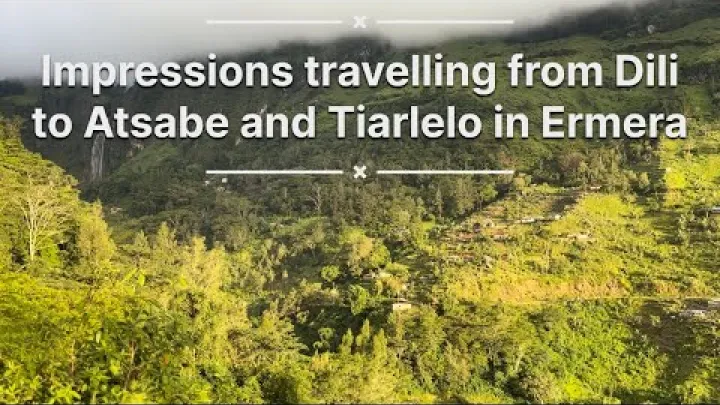
Do not infer that a route is open simply because it is the dry season, or that it is closed everywhere because rain has fallen. The useful question is whether the route and the particular section needed for your plan are currently suitable for travel.
Build Flexibility into Mountain Travel
Allow extra time for a highland visit, especially in April, October, and the wet season. Avoid scheduling a tight same-day onward connection after traveling through mountainous areas. A late departure, slow surface, or changed route can make an apparently short transfer take longer than expected.
Keep a fallback plan, such as delaying a remote excursion, spending additional time in Dili, or choosing a less exposed local activity. A flexible day protects safety and can also protect your budget by reducing the need to rebook transport or accommodation at short notice. This does not mean every wet-season trip will experience a closure; it means the itinerary should not depend on perfect conditions.
Use Live Forecasts and Official Advisories
Check a current Gleno forecast immediately before travel and again before leaving Dili. Review any official rainfall, flood, landslide, disaster, or travel advisory when unusual rainfall or an ENSO event is reported. OSAC Timor-Leste alerts can provide useful context about periods of above-average rainfall and hazards such as flooding.
Use a simple decision rule. Go when the local forecast and route information are favorable. Delay when heavy rain is active or information about the route is unclear. Reroute or replace the excursion when local authorities, an experienced driver, or your accommodation reports unsafe access. Climate diagrams and nearby coastal data can guide the season choice, but they cannot replace a live warning.
What to Pack for Gleno's Highland Conditions
Gleno's highland conditions are usually easier to manage with a small amount of preparation. Pack for a warmer daytime period, cooler mornings and evenings, changing cloud, and the possibility of rain rather than dressing only for coastal Dili.
Dress for Warm Days and Cool Nights
Choose lightweight clothing for daytime conditions and add a light insulating layer for early mornings and evenings. A packable rain layer is useful in April, October, and the wet season, but it is also sensible during a generally dry trip. Cloud, wind, and dampness can make Gleno feel cooler than Dili even when no heavy rain is present.
For an overnight stay, bring a spare dry layer. Adapt the final clothing choice to the live forecast and the length of your outdoor activity, rather than relying only on a typical monthly description.
Choose Footwear and Rain Protection
Wear shoes with a secure grip for uneven paths and rough rural surfaces. Dry-season roads may remain dusty or irregular, while wet-season paths can become slippery. A small waterproof bag or cover can protect a phone, documents, camera, and spare clothing during a sudden shower.
These items improve comfort and mobility, but they are not a substitute for checking whether a route is open. If the surface, slope, or crossing is unsafe, the correct equipment choice is to postpone the activity.
Final Recommendation for Visiting Gleno
For most travelers, late May to September is the best time to visit Gleno, with June through August offering the most dependable general conditions for highland travel. Choose April or early October when you want greener scenery and can accept changing weather. December through March requires the most flexibility because rain can affect access and outdoor plans. Whatever month you choose, confirm the current Gleno forecast and Dili–Gleno route before departure, and leave enough time for the highland visit to change without putting your onward journey at risk.
Select area
Create a post
Posting is free and no registration is required.