Gleno Travel Guide: Timor-Leste Coffee Country

Gleno is a practical inland extension to a Timor-Leste itinerary, not a resort town or a checklist destination. The compact highland town offers cooler conditions, everyday local life, and access to the coffee-growing areas of Ermera and Letefoho. This Gleno travel guide explains what to expect, how to compare public transport with private travel, where to base yourself, and how to plan around limited tourism services. It also separates a visit to Gleno town from a rural coffee excursion, which usually needs additional arrangements.
What to Expect in Gleno
Gleno works best for travellers who enjoy flexible overland travel and ordinary town life. It rewards curiosity and preparation more than a fixed list of conventional tourist attractions.
What Gleno is like
Gleno is a compact highland town and the administrative centre of Ermera Municipality. It is reached overland from Dili, with the route leading inland to a setting associated with rural landscapes and coffee production. The town sits in a cooler upland environment than the capital, although visitors should expect normal tropical highland variation rather than a guaranteed cold climate.
The central area is shaped by daily activity rather than a developed visitor district. A market, stadium, churches, civic streets, and small local businesses provide the main points of orientation. The town centre can generally be explored on foot, but the experience is more about observing local routines, buying food, and understanding the setting than visiting ticketed monuments or large museums.
Tourism infrastructure is limited compared with Dili. Accommodation, meals, transport connections, connectivity, and opening hours may not be easy to confirm online. That is not a reason to exclude Gleno, but it does change the type of trip to plan. Gleno suits visitors who value local atmosphere, coffee country, and a slower inland route. It is less suitable for travellers who need a full choice of hotels, frequent scheduled transport, or a large selection of formal attractions.
Who should visit Gleno, and for how long?
A Gleno day trip from Dili is possible when the main goal is to see the town and experience the highland road. An overnight stay is more useful when coffee country, a rural side trip, or a slower pace is the reason for travelling inland. The right choice depends on confirmed transport and accommodation as much as on the number of things to do.
| Trip style | Best for | Main planning need |
|---|---|---|
| Day trip | First-time visitors and town sightseeing | Early transport and a realistic return plan |
| One night | Slower travel and rural or coffee excursions | Confirmed room and a next-day vehicle |
| Flexible independent trip | Travellers comfortable with local arrangements | Extra time for informal connections and changes |
Choose a day trip if you mainly want to walk around the market, see the stadium and churches, and add one nearby stop if the road plan works. Do not try to combine every Gleno landmark with Ermera and Letefoho in one rushed loop. Travel time, waiting, and local connections can take more of the day than a map suggests.
Choose one night if you want to avoid making the highland journey feel like a race. Staying locally gives you time to arrive, orient yourself, arrange a rural visit, and observe the town at a less hurried pace. It can also make an early departure toward coffee-growing areas more practical. The additional night is worthwhile only when a room and check-in arrangement are already settled.
Gleno is a good match for independent travellers, photographers, coffee-interested visitors, and people who prefer places with a modest tourism footprint. Visitors looking for a beach stay should use Dili or the Timorese North Coast as the coastal part of the itinerary and treat Gleno as an inland complement.
Gleno, Ermera, and the Inland Route from Dili
Understanding the names is important because Gleno, Ermera, and Letefoho are connected but are not interchangeable destinations. Gleno is the town base, Ermera is the wider municipality and coffee-country reference, and Letefoho is a separate inland area associated with coffee landscapes and rural visits.
Gleno’s role in coffee country
Gleno is a useful gateway between Dili and the interior of Ermera. Travellers can use the town as a pause on the way toward coffee-growing areas, or as the main destination for a short highland visit. A town visit and a coffee-farm visit are different experiences: the first can centre on public streets and landmarks, while the second may require a driver, extra road time, permission, language help, and a prior arrangement.
Ermera and Letefoho should therefore be treated as possible extensions rather than as attractions automatically included in a Gleno itinerary. A vehicle going toward Ermera municipality may not be travelling to the particular village, farm, or viewpoint that you have in mind. Ask for the exact place, the final road access, and the expected time needed for the return journey.
A local account from Notes on Traveling describes Gleno as a compact plateau town and places it in the context of visiting Ermera and Letefoho coffee country. That context is useful, but it should not be read as evidence that every farm is prepared for visitors. The landscape may be the attraction even when there is no formal visitor centre, tasting room, or public tour schedule.
The Timorese North Coast and Dili provide a practical coastal complement. Dili is where most visitors arrange money, communications, transport, and other supplies, while the North Coast is associated with coastal scenery and marine activities. Gleno itself is an inland highland destination, so it should not be planned as a beach stop.
How to orient yourself in town
Use stable public landmarks rather than relying on an online map of neighbourhood boundaries. The market is a useful arrival reference, while the stadium, the main church, other churches, the bridge, and the compact central streets can help you understand the town’s layout. These places are practical anchors for walking and for explaining your location to a driver or local contact.
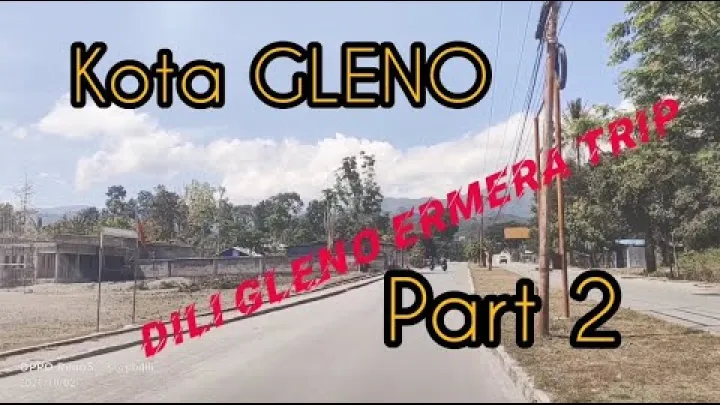
The central area is suitable for a short walk, especially if you want to combine the market with nearby streets, civic buildings, churches, and the stadium. Beyond the centre, the planning changes. Ermera and Letefoho, coffee farms, roadside viewpoints, and rural villages should be considered vehicle-dependent unless a local person tells you that a particular route is easily walkable.
On arrival, ask to be taken to the Gleno town centre or market area and then orient yourself from there. Avoid depending on an unverified business name or an exact guesthouse direction. Public landmarks are more likely to remain useful than online listings, and they make it easier to arrange a later pickup without needing a precise street address.
Best Time to Visit Gleno
Season affects both the comfort of the visit and the reliability of the inland road. A broad seasonal approach is more useful than a precise monthly table when local weather and road information are limited.
Dry-season and wet-season trade-offs
The drier part of the year is generally the easier period for travelling by road, walking around town, viewing rural scenery, and arranging outdoor coffee-country visits. Roads may still be slow or uneven, but there is usually less risk of rain disrupting a short itinerary than during wetter periods.
Wet-season travel can still be rewarding, particularly for travellers who accept changes to the plan. Rain can affect visibility, road surfaces, travel speed, and access to side roads. A viewpoint may be cloudy, and a rural stop may not be sensible even when the town itself remains accessible. Avoid treating a map distance or a previous traveller’s journey time as a guarantee.
Gleno’s higher setting can bring cooler nights and milder daytime conditions than Dili. Exact temperatures vary with elevation, season, cloud, and time of day, so pack a light warm layer as well as protection from sun and rain. The practical rule is simple: check a current forecast and local road conditions immediately before departure. Ask the driver, host, or another trusted local contact whether the specific route you intend to use is operating normally.
For a short day trip, the dry-season advantage is mainly logistical. For an overnight stay, wet-season conditions may be manageable if the room, vehicle, and fallback plan are secure. Neither season guarantees clear views or open activities.
Planning around the coffee harvest
May to October is an indicative coffee-harvest window for planning in the Ermera and Letefoho area. The timing can differ by location and year, and agricultural work does not automatically mean that a farm is open to visitors. Harvest activity may make the landscape more interesting, but it can also mean that farmers are busy and have less time for informal visits.
A coffee-focused traveller should decide whether the priority is seeing agricultural activity, learning about production, or simply travelling through the growing areas. Those goals require different arrangements. A formal tour may provide a clearer schedule, while an independent visit may offer more flexibility but requires a local introduction and permission.
Contact the coffee farm, tour operator, or local host directly before travelling. Confirm the operating date, meeting point, language, transport, duration, cost, what is included, and whether tasting or farm access is actually part of the visit. Do not arrive at an isolated farm expecting an unannounced tour. The May-to-October period is a planning guide, not a guaranteed annual programme.
How to Get to Gleno and Travel Locally
Overland travel from Dili is the normal way to reach Gleno. The choice is between an informal public connection, a shared vehicle, a private taxi, or a driver arranged for a wider Ermera itinerary.
Public buses and shared vehicles from Dili
Reported Dili departure areas include Taibessi or Taibissi and Tasi Tolu, but these names should be treated as local reference points rather than a permanent, published terminal system. Departure arrangements can change, and a traveller may need to ask locally which area currently serves vehicles heading inland. There is no useful fixed timetable to publish from the available information.
Vehicles may be labelled for Ermera, Letefoho, or Atsabe rather than Gleno. That label may indicate the general direction or final destination, not every stop along the road. Say Gleno clearly before boarding and ask whether the vehicle stops in Gleno town. If you are continuing toward a village, confirm where you must change or leave the vehicle.
An online route listing from Rome2Rio gives an indicative Dili–Ermera public-transport benchmark of about US$3 and roughly an hour of travel, while also noting that a direct bus from a Dili station may not be available. This is not a guaranteed Gleno fare or schedule. Informal vehicles may take longer because of stops, loading, traffic, and road conditions.
Use this process when arranging a public journey:
- Go to the departure area identified locally for the day of travel, allowing time to ask more than one person if necessary.
- Confirm that the vehicle is going toward Gleno and ask where you will get off, rather than assuming that an Ermera sign means a Gleno stop.
- Agree the destination and fare before boarding. Ask whether luggage is charged separately if you have more than a small bag.
- Keep luggage manageable and retain essentials where you can reach them during the journey.
- Allow a generous time buffer. A low fare is useful only if the connection fits your return or accommodation plan.
Before boarding, confirm the current Dili departure point, destination, departure time, and fare with a local transport contact. This is especially important when travelling on a day trip, because a late outbound departure may leave too little time for the return.
Private taxis, drivers, and four-wheel-drive trips
A direct taxi or private car is easier when you want door-to-door travel, have limited time, carry substantial luggage, or are sharing the cost with other travellers. It also makes it simpler to combine Gleno with a planned stop along the road or to continue toward a specific coffee area without changing vehicles.
For comparison, a Rome2Rio route estimate lists Dili to Gleno as approximately 44.4 kilometres, around 42 minutes, and about US$50–65 by taxi. The estimate is a benchmark rather than a standard fare. Actual travel can take longer, and a driver’s quote may be based on a return journey, waiting time, fuel, road access, or a full-day arrangement.
Ask exactly what a private quote includes. Clarify fuel, waiting time, return travel, meals for the driver if relevant, planned stops, a guide or interpreter, and the cost of reaching a rural farm or village. Before accepting the vehicle, check its general condition and seatbelts, agree where the driver will wait, and ask what happens if the itinerary changes or a side road cannot be used.
A four-wheel-drive vehicle can be useful for a longer rural itinerary or difficult side roads, but it is not automatically necessary for every trip to Gleno. Vehicle choice should match the confirmed route, the road surface, the season, and the number of passengers. For coffee villages, a driver with local route knowledge may be more valuable than a particular vehicle type.
Getting around Gleno and reaching nearby villages
Plan to walk within the central Gleno area and arrange transport for almost everything beyond it. A short town visit can be independent, but reaching Ermera, Letefoho, farms, or reported viewpoints involves distances, road decisions, and connections that are difficult to manage from a simple sightseeing map.
Travellers may hear informal local terms such as anggunas for shared vehicles, but terminology and departure points are not consistent enough to use as a dependable timetable. These services may leave when sufficiently full, follow a route that changes by day, and offer limited space for large luggage. Ask a host, driver, or local contact what vehicle serves your exact destination and where it departs.
For an onward village visit, ask three practical questions: where is the vehicle leaving from, when is the likely next connection, and how will you return to Gleno? If the answer is unclear, make the town your main plan and treat the rural stop as optional. That approach is safer and more realistic than building an itinerary around an unconfirmed connection.
Where to Stay, Eat, and Budget for Gleno
Gleno can be a useful overnight base, but Dili remains the easier place to arrange services and recover from travel. Decide where to sleep according to your priorities and the level of logistical certainty you need.
Choosing Gleno or Dili as your base
Choose Gleno when you want more time in the hills, prefer a low-key town atmosphere, or plan an early start toward Ermera or Letefoho. An overnight stay removes the pressure to complete the inland journey, town visit, and return to Dili on the same day. It can also make a locally arranged coffee or rural excursion more practical.
Choose Dili when your itinerary is short, your onward flight or coastal plans are fixed, or you need a broader choice of accommodation, restaurants, communications, transport, and medical preparation. A Dili base is also the better option when a Gleno room cannot be confirmed clearly. You can then attempt a focused day trip without making an uncertain lodging situation part of the journey.
For Gleno accommodation, direct communication matters more than relying on an old listing. Contact the property or local host and confirm a room, room type, check-in arrangement, and arrival instructions before leaving Dili. Ask whether someone will be available when you arrive and what to do if the transport reaches Gleno later than expected.
Accommodation, meals, and daily services
Expect simple, locally run lodging rather than a large, easy-to-search hotel market. Online booking visibility may be limited, and the facilities offered by one property should not be assumed to be available everywhere. A room can be suitable for one traveller and unsuitable for another depending on bathroom arrangements, power, water, or connectivity.
Confirm the practical details in advance:
- room type and whether the bathroom is private or shared;
- water and electricity arrangements;
- mobile signal or internet access, if needed for work or communication;
- whether breakfast or another meal is available;
- check-in time and the person who will meet you;
- the payment method and whether the quoted amount is per room or per person.
Food is likely to be easiest to find around the market and local food stalls during the day. Evening choices may be more limited or may depend on which businesses are open, so identify a dinner option early or ask your host whether a meal can be arranged. Carrying a small snack is sensible for the road and for gaps between informal transport connections.
A power bank is a useful precaution for any inland trip. It does not mean that every Gleno property has regular outages, but it reduces dependence on a particular socket or on charging at a specific time. The same principle applies to offline directions and important contact details: prepare them before departure instead of assuming that mobile data or Wi-Fi will work at every point.
Cash and realistic trip costs
Use US dollars as the planning currency and obtain enough cash in Dili, including small denominations, before travelling inland. Do not build the budget around card payments or an easy local cash withdrawal. Small notes are useful for shared transport, market food, and other modest purchases, while larger private arrangements should be agreed directly with the provider.
A realistic Gleno budget is best built by category rather than by a single daily average:
- transport from Dili to Gleno and back;
- local connections or a driver for Ermera, Letefoho, or a rural stop;
- the room and any check-in or meal arrangement;
- market meals, snacks, and drinking water;
- coffee tours or farm activities, if arranged;
- mobile data or communications;
- a contingency for delays, extra waiting, or a changed vehicle.
The transport examples above show the difference between public and private travel. An indicative public benchmark for the Dili–Ermera route is only a few US dollars, while the listed Dili–Gleno taxi benchmark is in the tens of dollars. Neither figure is a universal Gleno fare. A private car becomes more reasonable when several travellers share it, especially if the same vehicle also covers a rural excursion and the return.
Ask coffee operators to quote their service separately from the road transfer. Confirm whether a price covers transport, food, guiding, farm access, tasting, or only a particular activity. Do not turn one operator’s package price into an average cost for all Gleno trips. Prices and inclusions can vary by group size, weekday or weekend, route, and season.
Before departure, make a simple cash plan: estimate the confirmed room, the outbound and return transport, meals, and any arranged activity, then add a reserve for an unplanned night or vehicle change. Carry the reserve separately from the money used during the day.
Things to Do in Gleno and Around Ermera
The most rewarding Gleno activities are modest and place-based. Concentrate on town landmarks first, then add coffee country or a rural stop only when the arrangement fits the day.
Explore the market, stadium, churches, and streets
Begin in the town centre with the market. A morning visit gives you the best chance to see ordinary trading activity and find simple food, although the exact range of stalls and opening times can vary. Walk from the market through the central streets and use the stadium, the main church, the bridge, and other churches as orientation points.
The stadium can add a sense of the town’s public life, particularly if football or another activity is taking place. Treat it as a public landmark, not as a guaranteed scheduled attraction. Observe from an appropriate public area, follow any local instructions, and do not assume that an event or building will be open for visitors.
Churches and civic streets are valuable for understanding Gleno’s character, but they are active community spaces rather than photographic sets. Ask before entering during a service or event, dress respectfully, and seek permission before photographing people. The aim of a town walk is respectful observation: notice how the town functions, rather than trying to turn every ordinary space into a formal attraction.
Visit coffee farms and Letefoho
Coffee is the main reason many travellers extend beyond Gleno. Ermera and Letefoho can provide a stronger sense of the highland landscape and the communities connected with coffee production than a walk around the town alone. They are potential focus areas, not guaranteed day-trip attractions with uniform access.
An organized coffee tour and an independent farm visit should be planned differently. A tour may have a meeting point, a set route, a language arrangement, and defined activities. An independent visit may depend on a local introduction, permission from the landholder, road access, and the availability of someone to explain the work. Neither option should be assumed to include harvesting, processing, tasting, or entry into farm buildings.
If the harvest period is your priority, use May to October as an approximate planning window and allow for local variation. Ask whether the activity is actually taking place during your visit and whether visitors can observe it without interfering with work. A coffee-growing landscape can still be worthwhile when no formal activity is available; in that case, treat the journey as a rural and cultural excursion rather than advertising it as a farm tour.
Add rural viewpoints and cultural stops responsibly
Churches along the Dili–Gleno road and the Railaco area are sometimes mentioned as possible roadside stops. Reports also refer to viewpoints and cliffs near Railaco, but these should be treated as locally reported possibilities, not as established attractions with guaranteed access, signs, or safety arrangements.
Ask a driver or local host whether a proposed stop is public, whether it is appropriate to enter, and how close the vehicle can safely remain. Do not cross private land, enter a farm, or approach a cliff simply because a location appears on a photograph or map. A scenic stop is optional; it should not be allowed to determine an unsafe route or a late return.
Use the same etiquette at churches and rural homes as in Gleno town. Ask before photographing people, houses, farms, or religious events. Dress modestly at churches, keep voices low, and follow local guidance about where to stand. If a community activity is underway, watching quietly from an appropriate place is usually more respectful than interrupting to take photographs.
Safety and Practical Preparation
Gleno should be approached as a place requiring normal travel preparation and conservative road planning, not as a destination that can be judged from a generic safety label. Conditions can change between Dili and the highlands.
Road safety, crime, and changing conditions
Check the latest official travel advisory before deciding whether to travel. The Canadian Travel advice and advisories page advises a high degree of caution in Timor-Leste because of a fragile security situation and crime, and it also highlights serious road-accident risk. Such advice should inform the go or no-go decision for the whole route, not only the time spent in Gleno.
Avoid demonstrations, political gatherings, and local disputes. Do not assume that a motorcycle, minibus, or informal public vehicle is safe simply because it is commonly used. Pay attention to the driver’s conduct, the vehicle’s condition, and whether the journey can be completed in daylight. If the situation on the road or in a town changes, leave the area or postpone the excursion rather than trying to preserve an itinerary.
Keep road movements in daylight and avoid unnecessary movement after dark. This matters for navigation, road visibility, finding a driver, and responding to a change in conditions. A day trip should have a firm point at which you stop adding rural stops and begin the return. An overnight plan should also avoid arriving with no confirmed room or no way to contact the host.
Do not describe Gleno as uniquely dangerous when the available advisory is country-level, but do not guarantee that it is safe either. Use the current advisory, local information, and your own travel experience to decide whether the route is appropriate. Travellers who are uncomfortable with informal road transport may prefer a private driver or a Dili-based excursion.
Health, connectivity, and backup planning
Prepare for fewer medical, communications, and service options than you would find in Dili. This does not establish that a particular clinic, mobile network, pharmacy, or internet connection will be unavailable; it means that you should not depend on a specific service without confirming it.
Bring travel insurance appropriate to a road-based inland itinerary, essential prescription medication, basic first-aid supplies, and any personal health items that would be difficult to replace. Use current official travel-health guidance for vaccinations, food and water precautions, and disease risks. Keep emergency contacts written offline as well as saved on your phone.
Download maps before leaving Dili, save accommodation and driver details, and carry a charged phone and power bank. If you need reliable connectivity for work, a complex medical arrangement, or an urgent onward booking, use Dili as your preparation and recovery base. Gleno is better suited to travellers who can tolerate a limited-service environment and a plan that may need adjustment.
Build a One- or Two-Day Gleno Itinerary
The simplest itinerary keeps Gleno town as the dependable core and treats coffee country as an addition. That structure gives you something worthwhile to do even when an onward vehicle, farm visit, or viewpoint does not work out.
A focused day trip from Dili
Start with a morning departure from Dili so that the road journey does not consume the entire day. Once in Gleno, use the market as your arrival point, walk through the central streets, and see the stadium, churches, and other public landmarks that are accessible. Allow time for a meal and for asking about any nearby stop before committing to a longer route.
Add no more than one pre-arranged rural or roadside stop unless a private driver has clearly planned the route and return. A confirmed coffee-country visit can be worthwhile, but Gleno, Ermera, and Letefoho should not be treated as a guaranteed single-day circuit. Informal transport, waiting, and road conditions can make a short map route take most of the available daylight.
Keep the return decision conservative. If the onward connection, viewpoint, or farm visit is not confirmed, stay within Gleno and enjoy the town walk. Begin the return while there is still a practical transport option and enough daylight for the road. A successful day trip is one that leaves time for the journey home, not one that collects the largest number of place names.
A slower overnight coffee-country plan
For an overnight itinerary, travel to Gleno with the room and arrival arrangement already settled. After arriving, orient yourself around the market and town centre, take a short walk to the stadium or churches, and use the remaining time to speak with your host or driver about the next morning. This keeps the first day manageable after the journey from Dili.
Use the following morning for one confirmed coffee-country or rural excursion toward Ermera or Letefoho. Agree the destination, route, duration, cost, and return plan rather than assuming that every village or farm can be reached. If the excursion does not operate, a slower morning in Gleno is still a complete plan: revisit the market, walk the central streets, and observe the town’s daily rhythm.
The extra night provides less rushed road travel, more time for local arrangements, and a better chance to experience Gleno beyond a quick stop. Choose Gleno for a flexible, low-key highland extension when the room and transport are confirmed. Choose to remain in Dili when predictable bookings, broader services, or a fixed schedule matter more than spending a night inland.
Select area
Create a post
Posting is free and no registration is required.