Timor-Leste Capital: Dili, Location, History & Population
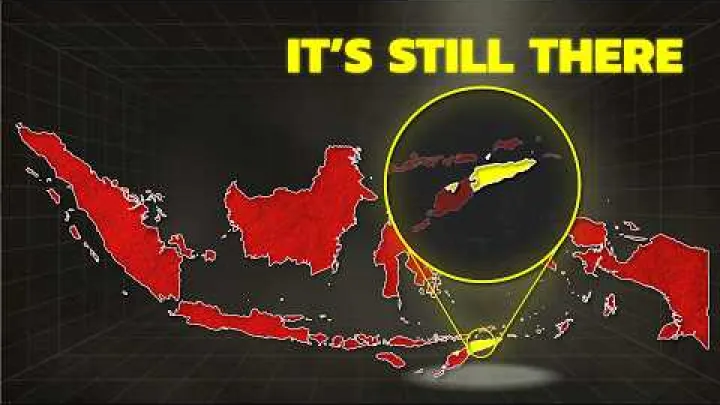
Dili is the capital of Timor-Leste. It is also the country’s largest city and its principal center for government, public services, business, and international engagement. Located on the northern coast of the island of Timor, Dili has been the territory’s main political center for centuries and became the capital of the independent state when Timor-Leste restored independence in 2002. This guide explains where Dili is, why it is the capital, how its population is measured, and what its continuing national role means.
What Is the Capital of Timor-Leste?
The capital city of Timor-Leste is Dili. The city is the country’s political and administrative center as well as its largest urban center, so there is no distinction between a separate capital and a larger commercial city.
Dili Is the Capital and Largest City
Dili is both the capital and the largest city of Timor-Leste, also known as East Timor. It is the place most closely associated with national institutions, major public services, higher education, national commerce, and international organizations operating in the country.
This matters because some countries separate their constitutional capital, government seat, and largest city. Timor-Leste does not operate in that way: Dili is the capital city and the country’s leading urban center. Official government historical information identifies Dili as the capital of independent Timor-Leste, as described by the Government of Timor-Leste.
For a straightforward answer to the question “What is the capital of Timor-Leste?”, Dili is the complete answer. Its importance, however, extends beyond the title of capital. The city is where national decisions are commonly made and where many residents from other parts of the country come to access administration, education, employment, health services, and transport connections.
Dili as the Legal and Practical Center of Government
Dili is the national seat of government and the practical center of political administration. Central executive institutions, the national parliament, courts, ministries, and many diplomatic and development-partner activities are concentrated in or around the capital. This concentration makes Dili the main place for conducting national public affairs.

These functions are concentrated in Dili because national institutions need to work together in one accessible administrative center. The arrangement also makes the city the main point of contact for citizens dealing with central government, although local administration and public services are delivered in municipalities throughout Timor-Leste. Dili’s role is therefore national rather than limited to its own municipal population.
Landmarks help make that role visible. The Government Palace is associated with the work of the prime minister and the Constitutional Government, while the Nicolau Lobato Presidential Palace is an important presidential and ceremonial site. These locations are not simply city landmarks; they represent Dili’s role in the daily operation and public life of the state.
The available official material identifies Dili as the capital and does not indicate a split-capital arrangement in which another city carries a separate national legislative, judicial, or administrative capital role. Institutional locations and administrative arrangements can evolve, however. Anyone relying on this information for a current legal or administrative purpose should consult current announcements and official information from the Timor-Leste government.
Where Is Dili Located?
Dili lies in the northern part of Timor-Leste and faces the sea. Its coastal position, combined with the mountains that rise behind the city, has shaped both its growth and its importance as a national gateway.
Dili on the Northern Coast of Timor
Dili is on the northern coast of the island of Timor, beside the Bay of Dili. It occupies a coastal plain between the water and higher mountainous terrain inland. This setting gives the city a compact relationship with its surrounding landscape: the coast is immediately important to urban life, while roads leading away from the city soon meet more rugged ground.
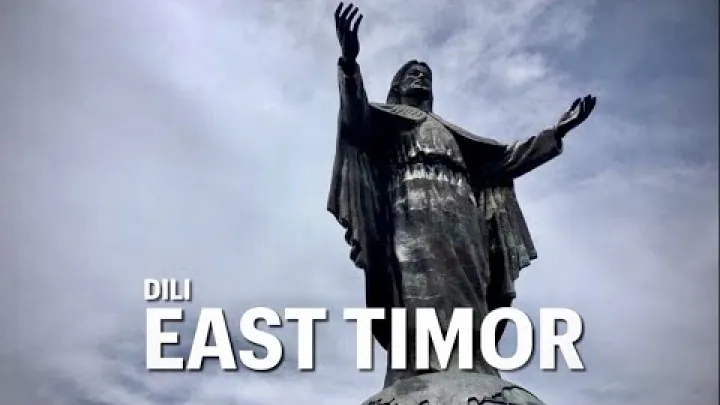
The northern coast has long supported Dili’s role as a connection point between Timor-Leste and the wider region. Government institutions, commercial activity, and key transport links are concentrated in the capital partly because it is a coastal city with the country’s most substantial urban infrastructure.
Dili’s coastal setting also helps explain why the city functions as a gateway even though Timor-Leste is mountainous in many areas. The capital brings together road connections, public institutions, commercial services, and links to overseas partners. Its location does not make the entire northern coast part of Dili; it simply places the capital in one of the country’s most connected urban settings.
Atauro Island lies offshore to the north of Dili and is administered within the wider national context of Timor-Leste. It is closely associated with Dili as a nearby island destination and administrative area, but it should not be confused with the built-up capital city itself. Dili remains a mainland city on Timor’s northern coast.
Dili Within Timor-Leste's Municipal Structure
Dili is both a city and a municipality in Timor-Leste’s administrative system. The municipality includes the capital’s core urban neighborhoods as well as areas that are less densely built up. As a result, “Dili” can describe different geographies depending on whether a person means the city, the urban area, or the municipality.
This distinction is useful when comparing Dili with other regional centers. Baucau, for example, is an important city in the eastern part of the country, but it does not have Dili’s national capital functions or comparable scale of urban concentration. Municipal boundaries are administrative boundaries, not necessarily a precise outline of the continuously built-up city.
The municipal level is especially important for public planning because it can include neighborhoods and settlements with different levels of urban density. A city-center description may focus on the continuous built-up area, while a municipal description can include more extensive administrative territory. The two descriptions refer to the same capital but answer different geographic questions.
For practical matters such as census data, government services, planning, or addresses, readers should check which geographic definition is being used. Administrative classifications and local boundaries can be updated, and a municipal figure should not automatically be treated as a figure for the central city alone.
History of Dili as the Capital
Dili’s capital role is rooted in the history of Portuguese Timor, but its present status belongs to the sovereign state of Timor-Leste. Understanding the main transitions helps explain why the city has remained the country’s leading political and urban center.
From Lifau to Dili in Portuguese Timor
Before Dili became the main colonial center, Lifau in the Oecusse enclave was the capital of Portuguese Timor. In 1769, the colonial capital was transferred from Lifau to Dili. The move established the basis for Dili’s long-term political importance and helped make it the territory’s principal administrative settlement.
The transfer was a colonial administrative decision made in a historical setting very different from the modern republic. It is best understood as the origin of Dili’s long-standing role as a political center, not as the source of Timor-Leste’s present constitutional legitimacy. The country’s own official historical overview places Dili within the longer history of Portuguese rule and later independence.
Over time, the concentration of administration in Dili encouraged the development of services, institutions, and population around the city. That accumulated role helps explain why Dili remained central through later political changes.
Dili Through Occupation, Transition, and Independence
Dili remained the principal political and urban center through major changes in the territory’s status. It was the administrative center during Portuguese rule, remained central during the Indonesian occupation, and was a focal point during the transition that followed the 1999 referendum.

The referendum opened the way for a United Nations-administered transition before full sovereignty was restored. During this period, Dili remained the main location for international administration and the rebuilding of national institutions, reinforcing its practical importance even though the country was not yet fully sovereign.
Timor-Leste restored independence on 20 May 2002, and Dili became the capital of the independent state. The city’s capital status therefore continued across several periods, but the political meaning of that role changed fundamentally when Timor-Leste became sovereign.
This distinction is important. Dili’s institutional continuity does not mean uninterrupted national sovereignty. Rather, the city remained the main urban and administrative center while the territory moved from colonial rule, through occupation and transition, to an independent republic.
Population of Dili: City, Municipality, and Urban Area
Population figures for Dili are useful, but they need careful labels. Different totals can all be accurate when they refer to different boundaries and statistical definitions.
Why Dili Population Figures Differ
The 2022 population census recorded approximately 324,738 residents in Dili municipality. This is a municipality-level total, covering more than the dense central city. The official Timor-Leste Population and Housing Census 2022 presents many results at municipality level, which is the appropriate context for this larger figure.
A separate 2022 figure of 267,623 is commonly reported for the Dili urban place. This refers to a more specifically defined urban settlement rather than the entire municipality. The distinction is shown in the urban-place compilation by City Population, which draws on Timor-Leste statistical data.
| Geographic measure | Population | Reference year |
|---|---|---|
| Dili municipality | About 324,738 | 2022 |
| Dili urban place | 267,623 | 2022 |
These are not competing estimates for exactly the same area. The municipal number includes a broader administrative territory, while the urban-place number is intended to describe the urban settlement. Before comparing Dili with another capital or city, confirm whether the other figure uses a municipality, city-proper, urban-area, or metropolitan definition. A metropolitan population should not be assumed without a clearly defined official dataset.
Dili's Urban Concentration and Growth
Dili is much more urbanized than most parts of Timor-Leste and contains a large share of the country’s urban population. The 2022 census indicates that about 82.4 percent of residents in Dili municipality lived in areas classified as urban. That figure reinforces Dili’s position as the country’s dominant urban concentration.
Urban concentration reflects the capital’s practical pull. National administration, education, commercial services, health facilities, and employment opportunities are more concentrated in Dili than in many other municipalities. People may travel to or settle in the capital to access institutions and services that are less available in smaller towns or rural areas.
This concentration also affects how Dili is experienced and planned. A large urban population creates demand for housing, roads, utilities, schools, health services, and employment, while less densely settled parts of the municipality may have different needs. Population growth should therefore be discussed alongside the geographic definition being measured, rather than treated as a single total for every part of Dili.
At the same time, the municipality is not identical to the core city. Some residents live outside the densest urban neighborhoods, which is why municipal and urban-place totals should be kept separate. Census benchmarks are generally the soundest basis for discussing Dili’s size; later estimates should always identify their date, method, and geographic coverage.
Dili's National Role and Future Outlook
Dili’s role as capital is not only ceremonial. It affects how public administration, diplomacy, development, and urban planning are organized across Timor-Leste.
Government, Diplomatic, and National Functions
Dili is the location of central government institutions and much of the country’s national political activity. It is where the work of national leadership, ministries, parliament, courts, and other public bodies is most visibly concentrated. For residents and visitors, this makes Dili the main place to encounter the institutions of the state.
Because ministries and national institutions operate close to one another, Dili is also a place where policy, budgeting, public administration, and development coordination intersect. Decisions made there can affect municipalities far beyond the capital, while regional authorities and residents use the city to connect with national institutions. This is one reason Dili’s national role is larger than its boundaries or population alone would suggest.
The Government Palace and the Nicolau Lobato Presidential Palace illustrate two sides of this role: the working center of government and the symbolic presence of the presidency. Their presence in Dili reflects the city’s function as both an administrative hub and a national civic center.
Dili also serves as the country’s main interface with foreign diplomatic representatives, international agencies, development partners, and many non-governmental organizations. This function matters because Timor-Leste’s international cooperation, public investment discussions, and national policy engagement are often coordinated through institutions based in the capital. The city’s importance therefore reaches beyond its municipal boundary and affects communities across the country.
Current Capital Status and Future Planning
Dili remains Timor-Leste’s capital. The official materials used for national history and development planning continue to identify Dili in that role. Long-term planning can involve infrastructure, public services, tourism, housing, environmental management, and economic development without changing which city is the capital.
The Timor-Leste Strategic Development Plan 2011–2030 addresses national development priorities, including the importance of infrastructure and urban development. A planning document should not, however, be read as a capital-relocation announcement. Development proposals can alter how a city grows or how services are delivered while leaving its legal and practical capital status unchanged.
No relocation of the capital or division of Dili’s core capital functions should be assumed without a current official announcement. Readers following future plans should distinguish between confirmed government decisions, long-term planning proposals, and public discussion, and should consult current government announcements before treating a proposed project as a change to Dili’s capital status.
Conclusion: Dili as the Capital of Timor-Leste
Dili is the capital and largest city of Timor-Leste. On the northern coast of Timor beside the Bay of Dili, it is the country’s principal center for government, national institutions, diplomacy, services, and urban life.
Its capital role developed after the transfer from Lifau in 1769 and continued through profound political changes until Timor-Leste restored independence in 2002. When considering Dili’s population or future growth, the most important point is to distinguish the city’s urban area from the broader Dili municipality. Whatever definition is used, Dili remains the country’s central urban and political hub.
Select area
Create a post
Posting is free and no registration is required.