Viqueque Where to Stay: Best Bases in Timor-Leste

Where to stay in Viqueque is less about choosing from a long hotel ranking and more about choosing the right base for your route. For most first-time visitors, Viqueque town is the practical default because it keeps arrival, food, local transport, and backup options simpler. Loihuno, also written Loi-Huno, and Ossu can be better for a deliberate rural, community, or inland highland experience, but they require more planning. This guide compares the main places to stay, realistic lodging types, indicative costs, transport, and the checks that matter before you commit to a remote stay.
The Best Base in Viqueque for Most First-Time Visitors
Viqueque is not a destination where a long list of standardized hotels makes the choice easy. The better question is whether your accommodation reduces transport uncertainty or gives you the rural experience you came for.
Why Viqueque Town Is the Practical Default
For most first-time visitors, stay in Viqueque town. It is the most practical starting base for travelers arriving by public transport, staying for one to several nights, or wanting flexibility while exploring the Timorese South Coast. A town stay can reduce the number of transfers you need to arrange and gives you a more convenient point from which to organize food, local transport, or a change of plan.
This is a logistics recommendation, not a claim that Viqueque town is universally the safest or most attractive area. The local lodging market is small and locally operated, so the standard of rooms, staff availability, and included services may vary more than in a large tourist center. A practical base is therefore more valuable than an unverified hotel ranking.
One documented town example is Esperanca Guest House. Tourism Timor-Leste lists it on Rua Boramatan, within the wider community, and describes a restaurant and a reference to Tum-Tum local transport. The listing also gives an indicative price range of about USD 20 to USD 50. Its community setting may suit visitors who want more contact with local life, while the restaurant can reduce the need to arrange every meal independently.
Use Esperanca as a documented example of the type of accommodation available in town, not as a guaranteed current recommendation or a definitive winner. The useful question is whether a property can support your actual arrival time, transport needs, meal plans, and room requirements.
When Loihuno or Ossu Is a Better Choice
Choose Loihuno or Ossu when the setting itself is a main reason for the trip. These areas are better suited to travelers who want rural community contact, an inland experience, nature, or a slower stay and who can accept less predictable access to independent services.
- Choose Viqueque town if you are arriving on the Dili-Viqueque bus, staying only one to three nights, or have not arranged onward transport.
- Choose Loihuno or Loi-Huno if a rural or community-based experience is more important than convenience and the host can explain the arrival route and meal arrangements.
- Choose Ossu if you want an inland highland base, have several nights available, and can arrange the transfer from your arrival point before you travel.
Travelers arriving late should generally avoid making a remote locality their first base unless the onward transfer and arrival plan are already arranged. The names Loihuno and Loi-Huno can appear in different forms, and Ossu is used as a broader locality reference. Confirm the exact property name, locality, and map position with the accommodation rather than relying only on a similar spelling in a booking message.
Compare the Main Areas Where You Can Stay
Viqueque town, Loihuno or Loi-Huno, and Ossu are not interchangeable neighborhoods. They represent different levels of access, service availability, and travel independence. The comparison below is a planning guide; it does not rank individual properties.
| Area | Best for | Main trade-off | Indicative cost guidance |
|---|---|---|---|
| Viqueque town | First arrivals, short stays, public transport | More practical than secluded | Esperanca about USD 20-50; another room figure about USD 45 |
| Loihuno or Loi-Huno | Rural community immersion | Limited public information and services | No reliable public range |
| Ossu | Inland setting, nature, longer stays | Extra transfer planning | Confirm the current quote directly |
Viqueque Town: Access and Everyday Convenience
Viqueque town works best as the main arrival and service reference point. It is the most sensible base for travelers who need to arrange local transport, find meals, or keep their itinerary flexible without moving between several remote locations. This is especially useful when the trip is short or when you are depending on public transport rather than a private vehicle.
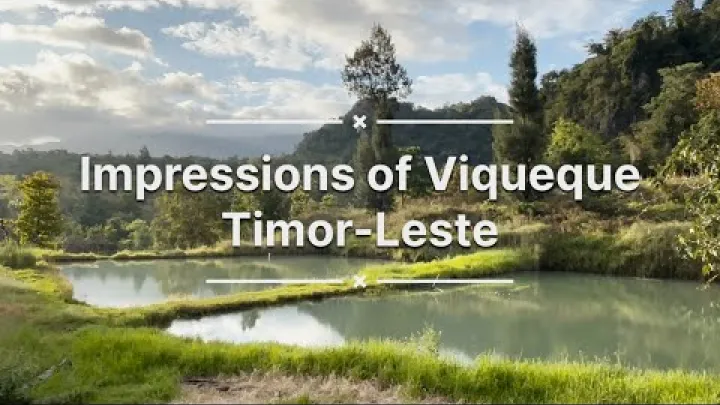
Do not assume that every property described as being in Viqueque is equally close to food, markets, transport, or the area you consider the town center. Precise street-level information is limited, so ask the property how far it is to the nearest meal option and transport point, whether the route is easy to walk in daylight, and whether the immediate surroundings are quiet or exposed to street noise. If you plan to visit a particular sight, ask for a current local route estimate instead of choosing solely from a broad town label.
Price information should be treated as indicative and date-sensitive. Esperanca Guest House is listed at approximately USD 20 to USD 50, while an indicative figure associated with Hotel Wailakurini is about USD 45 for a room. These figures do not create a standardized budget or mid-range category. Room type, meals, season, length of stay, and current availability can change the final price. A central or easily reached property may reduce the need for additional transport, but convenience alone does not establish a uniform safety level.
Loihuno and Loi-Huno: A Rural Community Base
Loihuno and Loi-Huno are spelling variations that travelers may encounter when searching for a rural base near Ossu. Map references identify Loi-Huno as a locality in Ossu, Viqueque District. Because similar names can refer to different local places or be written differently by hosts and travelers, confirm the exact locality before arranging a transfer.
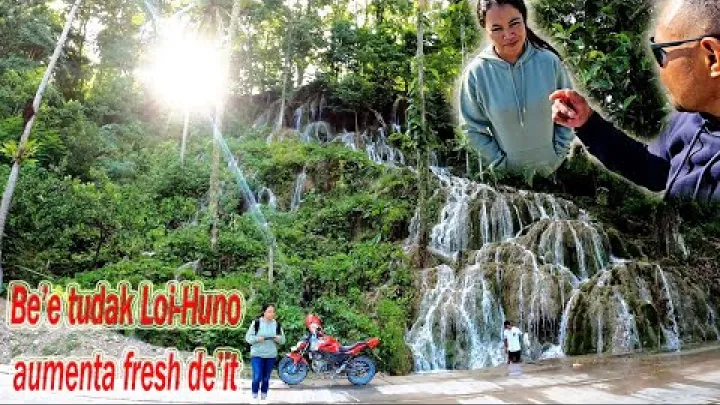
A named lodging example associated with this area is Village Hotels Timor-Leste. It is better understood as an option for rural atmosphere and community immersion than as a verified hotel ranking. This type of stay may appeal to travelers who value local contact and a quieter setting over immediate access to a range of restaurants, shops, or transport services.
The available information does not support a definite cost, walkability assessment, night-noise description, or complete list of facilities for Loihuno. Ask directly whether meals are available, how transfers are arranged, what services are nearby, and whether the property can receive guests at your planned arrival time. If you need independent food options or easy changes to your itinerary, the trade-off may favor Viqueque town.
Ossu: An Inland Highland Base
Ossu is an inland and highland alternative for travelers who prioritize scenery, local life, nature, or a longer stay rather than immediate convenience on arrival. It can work well when the purpose of the trip is to spend time in the area itself, not simply to use Viqueque as a quick overnight stop.
Leonardo Guesthouse is an available local example. A Leonardo Guesthouse property post advertises rooms, hot water, local food, and capacity of up to about 14 rooms. These details should be treated as information to confirm directly because a social-media post does not establish current availability, exact prices, or the full service inventory.
Do not infer exact transfer times, trail access, medical access, or night-time conditions from scenic descriptions or social-media promotion. Compared with Viqueque town, Ossu may provide a more deliberate inland experience but can be less convenient as an unplanned first base. It is most appropriate when the route, meals, and local arrangements are already understood.
Accommodation Options You Can Realistically Expect
Travelers should expect a market centered on small guesthouses, simple hotels, bed-and-breakfast-style stays, and community lodging rather than a broad selection of international hotels. This can be a strength for visitors seeking local contact, but it also means that basic amenities and booking practices may not be standardized.
Guesthouses, Small Hotels, and Community Lodging
Guesthouses are the most realistic starting point for a short visit to Viqueque. They may offer a private room, simple shared areas, local meal arrangements, or advice about transport. Community-run accommodation can add local connection, while a small hotel may be preferable if you place greater value on a predictable private room or a more conventional check-in process.
Esperanca Guest House and Hotel Wailakurini are useful indicative examples for comparing town lodging, but neither should be presented as a definitive winner. Online descriptions and small review samples are not enough to prove current quality, consistency, or availability. Instead, compare the features that will affect your daily experience:
- Whether the room is private and what type of bed or bathroom it has.
- Whether breakfast, dinner, or other meals are included or available on request.
- Whether hot water, water storage, ventilation, and mosquito protection are provided.
- Whether electricity is reliable enough for charging phones and other essential devices.
- Whether internet access and mobile signal are usable for your needs.
- Whether staff are present when you arrive and can help with local transport.
- Whether the property is close to food or has a dependable on-site meal arrangement.
In this context, budget lodging usually means simple, locally operated accommodation rather than a standardized international budget brand. A higher room price may reflect location, meals, or limited local supply rather than a formal hotel category. Ask what is included before comparing two prices as if they offered the same service.
Longer-Stay Rentals and the Limits of Online Inventory
Longer-stay travelers may find a different type of accommodation in Ossu. Online rental listings have presented stays of roughly 7 to 60 days and categories such as private homes, villas, cottages, or whole vacation homes. This shows that a rental category exists in online inventory, but it does not prove that a particular property is currently available, staffed, or suitable for your dates.
A rental may suit someone who wants privacy, self-catering, or a base for work, study, volunteering, or research. It may also make sense for a traveler staying several weeks rather than changing rooms every few nights. The trade-off is that a self-contained home may not have a reception desk, daily assistance, on-site meals, or an immediate local contact when plans change.
There is no reliable evidence of a substantial hostel, resort, serviced-apartment, or chain-hotel market in Viqueque. Travelers expecting conventional hotel choice should plan around guesthouses and direct local arrangements instead of assuming that a major booking platform shows the full market.
Before paying for a rental or remote guesthouse, contact the property directly and reconfirm the following:
- The exact address, locality name, and a usable map pin or arrival landmark.
- The current price, currency, deposit, included utilities, and any meal charges.
- The room configuration, bathroom arrangement, water supply, hot water, ventilation, and mosquito protection.
- Power availability, charging arrangements, internet access, and phone signal.
- The accepted payment method, including whether payment must be made in cash.
- Cancellation terms and what happens if transport delays your arrival.
- The name and phone number of a local contact who will meet or guide you.
- Arrival instructions, including whether the property can receive you during daylight.
If a host cannot give a clear answer about the location, services, price, or arrival process, a staffed guesthouse in Viqueque town is the more dependable fallback. This is particularly important when the rental would be your only base.
Choose Where to Stay by Trip Purpose and Length
The best place to stay changes with the shape of your itinerary. A short public-transport trip benefits from simplicity, while a longer trip can justify the extra planning needed for a rural or inland base.
Best for First-Time Visitors, Public Transport, and Short Stays
Viqueque town is the strongest default for travelers staying one to several nights, arriving from Dili, or wanting one flexible base for exploring the South Coast. It avoids the need to make a second transfer immediately after a longer intercity journey and leaves more room to adjust plans once you arrive.
Prioritize a guesthouse that is easy to reach and has a clear staff contact, food available on-site or nearby, and a straightforward daylight arrival plan. A centrally located property may be convenient, but the word central should be confirmed with the host rather than assumed from a listing title. Ask how guests normally reach the property and whether transport can be arranged for onward trips.
Keeping one town base is usually more practical than changing locations during a short visit. Budget travelers can focus on a clean private room and meal access, while visitors who need basic comfort should give more weight to hot water, ventilation, power, and staff availability. There is no uniform service standard across every Viqueque property, so a few direct questions can be more useful than a small review score.
Best for Rural Immersion, Nature, and Highland Experiences
Loihuno is the more natural match for travelers whose priority is rural or community-based immersion. Ossu is the better fit for those seeking an inland highland setting, local life, nature, or a longer stay. These are purpose-driven choices, not automatic upgrades from Viqueque town.
Spend multiple nights in either area only when the property can explain meals, transport, local guidance, and the exact arrival route. Do not assume that a remote stay will have several independent food options, regular local transport, or staff available at all hours. The value of the experience may come from the setting and community connection rather than from a larger room inventory or wider hotel facilities.
A split stay can work on a longer itinerary, with Viqueque town used as the practical arrival or departure base and a rural area used for the central part of the trip. However, do not build the plan around specific hikes, beaches, cultural events, or wildlife encounters unless current local information confirms them. Remote accommodation is not automatically cheaper either; meals, transfers, and limited supply can affect the total cost.
Check Transport, Safety, and Amenities Before Booking
Accommodation choice in Viqueque is closely connected to how you arrive and what support you need after arrival. Transport information, safety planning, health preparation, and basic room checks should be part of the booking decision rather than last-minute details.
Plan Transport, Roads, and Seasonal Conditions
For route orientation, Rome2Rio reports a Dili-Viqueque bus journey of approximately 3.5 hours, a fare of about USD 8, and service reportedly once daily. Treat these figures as a planning snapshot, not a guaranteed timetable. Departure times, fares, boarding arrangements, and service frequency can change, so confirm the current Dili-Viqueque details before leaving Dili.

If you intend to continue to Ossu or Loihuno, arrange the onward transfer before you travel rather than assuming that a convenient connection will be available when the bus arrives. Build time into the plan for delays, and schedule rural road movements in daylight. A late arrival can turn an apparently simple town-to-rural transfer into the most difficult part of the day.
Weather and seasonal access also deserve a cautious approach. Road conditions and access to outdoor or coastal activities can vary, but the available information does not support a dependable month-by-month calendar for Viqueque. Check current local weather and road conditions before committing to a remote base. If conditions or transport information are uncertain, keep Viqueque town as a practical fallback rather than forcing an onward journey.
Check Night-Time Security and Walkability
Timor-Leste should be approached with increased caution. The national advisory from SafeTravel refers to crime and isolated incidents of civil unrest. This is national guidance, not a Viqueque-specific crime ranking, so it should not be used to label one local area safe or unsafe without local evidence.
Turn general safety advice into concrete accommodation questions. Ask whether the immediate route is lit after dark, whether the entrance can be locked, whether staff are present at night, whether valuables can be stored securely, and how far it is to the nearest food option. Also ask whether a host can arrange a pickup or advise on a reliable arrival point if you will reach town late.
Avoid unnecessary driving after dark and avoid walking alone at night, particularly when you do not know the area or the road conditions. For solo travelers, an on-site restaurant or a reliable meal arrangement can be more than a convenience because it reduces the need to search for food after dark. Choose lodging with a clear after-dark arrival plan, even if your main travel is expected to take place during the day.
Verify Health Needs, Room Basics, Payment, and Connectivity
Remote accommodation requires more health preparation than a stay near a major city. National travel guidance notes limited medical infrastructure and pharmaceutical access in Timor-Leste, with dengue and rabies among the health concerns travelers should consider. This is general national guidance, not a diagnosis of conditions at a particular Viqueque property, but it is a reason to avoid relying on a remote shop or guesthouse to supply essential items.
Before confirming a remote stay, ask about mosquito protection, drinking and washing water, hot water, ventilation, power, phone signal, internet, meal availability, and emergency contact arrangements. Amenities should be treated as items to confirm, not features that every listing in Viqueque automatically provides. If you need reliable connectivity for work or study, ask what guests experience in practice rather than accepting a generic claim that internet is available.
Also confirm whether the property accepts cash, card, or another payment method, and whether a deposit is required. Carry personal medicines, mosquito repellent or other suitable protection, insurance details, and backup funds. Keep enough practical supplies for a delay, and make sure someone you trust has your accommodation name, local contact, and planned route. These simple preparations are especially useful when your base is outside Viqueque town.
- Confirm the room, bathroom, water, ventilation, mosquito protection, and power arrangements.
- Confirm food options, phone signal, internet access, and an emergency contact.
- Prepare personal medicines, insurance information, mosquito protection, and backup funds.
- Save the exact property location and arrival instructions before starting the journey.
Final Recommendation for Where to Stay in Viqueque
For most first-time visitors, Viqueque town is the best base. It is the practical choice for public-transport arrivals, short stays, flexible plans, and travelers who want simpler access to food and local arrangements. A guesthouse such as the documented Esperanca example can provide a useful starting point, but its current price, availability, and services should be treated as property-specific details.
Choose Loihuno or Loi-Huno for a rural community experience, and choose Ossu for an inland highland or longer local stay, when that setting is central to your purpose and the transport and meal arrangements are clear. If you are uncertain, use Viqueque town as your fallback. The best Viqueque accommodation is not necessarily the most highly rated listing; it is the place with a clear location, realistic services, and an arrival plan that matches your trip.
Select area
Create a post
Posting is free and no registration is required.