Viqueque Getting There: Routes, Transport and Tips

Getting to Viqueque is less about finding one fixed timetable than choosing a workable chain of connections. For most international visitors, the practical plan is to reach Dili, continue overland toward Baucau and then Viqueque, and arrange the final local transfer separately. A bus is a useful low-cost starting option, a private vehicle gives more control, and a flight is worth considering only when an operator confirms that it is bookable. This guide compares the main Viqueque transport routes and explains how to plan around weather, daylight, changing road conditions, and limited last-mile services.
Choose the Best Way to Get to Viqueque
Your best route depends on whether you value price, flexibility, comfort, or speed. The important first decision is not only how to reach Viqueque town, but also how you will continue to your accommodation or a more remote place in the municipality.
What Most Visitors Should Plan First
For most itineraries, plan around reaching Dili first and then traveling east and south toward Viqueque, commonly through the Baucau corridor. This is the practical baseline because roads and shared vehicles are more broadly relevant to travel in Timor-Leste than limited domestic aviation. The exact vehicle, transfer point, and departure practice may change, so the route should be treated as a planning corridor rather than a guaranteed timetable.
A simple route sequence is Dili, Baucau, and then Viqueque. Some travelers may find a direct vehicle, while others may need to change vehicles or confirm that a Baucau-bound service continues farther south. Reaching the Viqueque municipal center also does not automatically solve the last mile to a village, guesthouse, host organization, or coastal site.
- For a lower-cost trip: investigate the long-distance bus and allow extra time for loading, stops, and changes.
- For flexibility or a group: compare a private vehicle with driver, especially if you have luggage or several local stops.
- For a time-sensitive trip: ask whether a current small-aircraft service is genuinely bookable, but keep an overland alternative.
Do not declare one route the fastest or cheapest based on an old fare, a theoretical driving duration, or an online listing. Those details are useful only when they match the current operator, departure point, and road situation.
When to Choose Air or a Private Vehicle
A private vehicle or local driver is most useful when you need control over the departure time, luggage, stops, and final destination. It can take you directly to accommodation or a village instead of leaving you to arrange another ride from the municipal center. A local driver may also understand route changes and difficult sections better than a visitor who is driving for the first time.
Small-aircraft travel is a conditional option. It may suit a traveler with little time who accepts limited seats, changing operations, and a more difficult booking process. It is not a default choice for every visitor: service may not be available on the date you need, and the airport arrival still requires a local transfer.
Compare your budget, available days, group size, luggage, confidence on unfamiliar roads, and willingness to change plans. A private 4WD may be appropriate for a particular remote route, but it is not automatically necessary for reaching Viqueque town. Conversely, neither a private vehicle nor a flight removes the need to consider weather, daylight, and the final road to your accommodation.
Reach Dili Before Continuing to Viqueque
Dili is the practical starting point for most international journeys to Viqueque. A regional overview from Wikivoyage can help with broad orientation, but it should not be used as proof of a current bus, flight, or border timetable.
Use Dili as the Main International Gateway
International visitors generally organize the Viqueque journey through Dili, where international air access and the main onward road connections are concentrated. The practical implication is that an international flight normally begins a two-part journey: first reach Dili, then arrange domestic transport toward Viqueque. The airport itself is not the main subject here; what matters is how its arrival time affects your next connection.

Do not rely on a static list of airlines or regional routes without current information from the relevant airline or airport. Connections can change, and an arrival shown in a search result does not guarantee that it fits an onward journey to eastern Timor-Leste. Once your international ticket is chosen, check whether you arrive early enough to reach the city and the relevant departure point with a useful daylight buffer.
A late arrival can be a serious planning issue when long-distance vehicles leave early and rural services become less practical later in the day. If the arrival time is uncertain, treat Dili as the first overnight stop rather than building the entire itinerary around a same-day connection.
Consider the Kupang-to-Dili Overland Entry
Travelers already in Indonesian Timor may consider an overland connection from Kupang to Dili. This can be useful for a regional trip, but it only gets you to Dili. You still need a separate road journey or a confirmed domestic flight from Dili toward Viqueque.
Border procedures, entry permissions, visa rules, departure points, fares, and journey times can change. Check current Timor-Leste entry rules and Indonesia–Timor-Leste border requirements with the relevant official authorities before booking the Kupang route. Confirm the current bus or other operator directly rather than relying on an old traveler account.
Allow room for queues, document checks, vehicle delays, and a possible late arrival in Dili. A cross-border trip should not be tightly connected to an inflexible Viqueque booking. There is also no reason to assume that a rail or passenger ferry route provides practical direct access to Viqueque; treat those as possibilities only if current national transport information confirms them.
Allow Time in Dili Before the Onward Journey
An overnight in Dili is the normal fallback when an international arrival is late or its timing is uncertain. It reduces the risk of missing an early bus and gives you time to confirm the actual departure point, ask about the road, and organize a last-mile contact in Viqueque.
For example, you might arrive in Dili, stay near a location that makes an early departure manageable, and travel toward Viqueque the following morning. This is usually more realistic than arriving late and expecting a rural connection to remain available. Choose accommodation that can help you arrange an early departure and keep enough time for the journey to finish in daylight when possible.
Travel Overland from Dili via Baucau
The Dili–Baucau–Viqueque corridor is the main route to investigate for a road journey. Your transport choice changes the comfort and flexibility of the trip, but the broad geographic sequence remains similar.
The Dili–Baucau–Viqueque Road Corridor
The principal overland logic is to travel east from Dili toward Baucau and then continue south toward Viqueque along the Baucau–Viqueque corridor. Baucau is therefore an important route anchor even when your final destination is Viqueque. The exact alignment can vary by vehicle and local operating practice, so ask whether a service is direct or requires a change in Baucau.

The Asian Development Bank identifies the Baucau to Viqueque Highway Project and lists the project status as active. That confirms the corridor's strategic importance, but a project page does not provide a guaranteed travel time or a same-day description of every road section. Construction or completed infrastructure work may affect surfaces, detours, traffic flow, and vehicle patterns.
Use the corridor to plan the direction of travel, not to calculate a precise public transport schedule. An estimated private driving time cannot be treated as the duration of a shared bus journey, which may include stops, passenger loading, transfers, or delays.
Taking the Long-Distance Bus
For many visitors, the long-distance bus is the most locally relevant overland option. Shared buses and minibuses are generally more accessible and less expensive than a private vehicle, but they may involve early departures, flexible loading, frequent stops, and variable arrival times. Comfort can be basic, particularly when the vehicle is full or the trip includes rough sections.
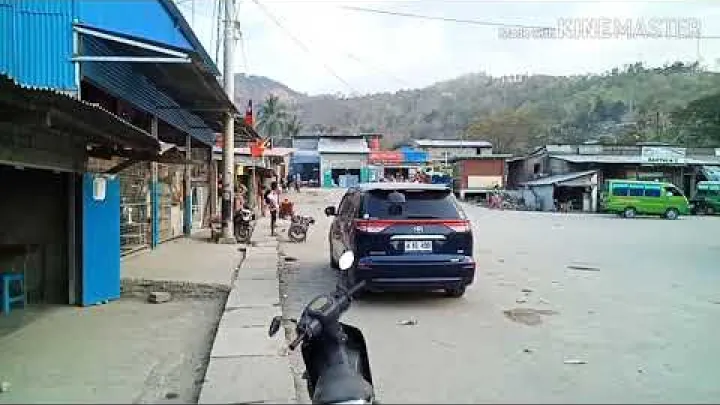
Becora Terminal in Dili is a reported departure point for services toward eastern districts. Treat that as a starting lead, not a complete timetable. Confirm the current terminal location, bay, departure practice, destination wording, and next available service in person or with the current operator. Ask specifically whether the vehicle goes to Viqueque town, stops in Baucau only, or requires a second vehicle.
Before boarding, establish where you will get off and how you will continue to your accommodation. Bring small cash, keep valuables close, and protect luggage from dust or weather. Leave a buffer for a late departure or a slow road journey. Online journey aggregators can help you identify a possible route, but they should not be treated as proof of a formal daily timetable.
Because current fare evidence is limited, do not treat an old published price as fixed. Ask for the fare at the time of travel, whether luggage costs extra, and whether the quoted amount covers the full journey or only the first leg to Baucau.
Hiring a Car or Local Driver
Hiring a car with a local driver is the most flexible road option when it is available and affordable. You can choose a departure time, make necessary stops, carry more luggage, and request direct arrival at a guesthouse, host organization, or village. This can be particularly useful for groups or for travelers continuing beyond the town.
Self-driving is different from hiring a driver. A self-drive arrangement may offer independence, but you must be comfortable with navigation, road conditions, fuel planning, and the responsibilities of driving an unfamiliar route. A local driver can add route knowledge, especially where roadworks, mountain sections, or changing access affect the journey.
Agree on the vehicle type, fuel, driver hours, one-way or return price, waiting time, planned stops, and responsibility for unexpected delays. Put the agreement in writing by message when possible. Ask whether the vehicle is suitable for the entire route; a 4WD can be useful on a particular secondary road, but it is not a universal requirement and cannot guarantee passage through a closure or flooded section.
Consider Alternative Overland Approaches
Not every traveler needs to start in Dili. If you are already touring eastern or southern Timor-Leste, another approach may reduce backtracking, but less-documented routes require more local planning than the main corridor.
Arriving from Baucau or Lautém
Travelers already in Baucau may be better positioned to continue toward Viqueque than to return to Dili first. Ask locally whether a vehicle is going directly to Viqueque, whether you need to change in another town, and where the service arrives. Avoid backtracking simply because Dili is the best international gateway; it is not necessarily the best intermediate stop for an east-Timor itinerary.
Lautém and other eastern municipalities can also be possible starting points for a broader regional route. Do not assume that a direct connection operates daily, or that a vehicle described as going to Viqueque reaches the municipal center rather than a nearby settlement. Confirm the departure town, departure point, arrival point, fare, and any transfer before leaving Baucau or Lautém.
This approach is most suitable for travelers who already have local contacts and flexible accommodation. If a connection is unclear, compare the time and effort of waiting for a regional service with returning to the more established Dili–Baucau planning corridor.
Approaching from the Western South Coast
Natarbora and the wider western South Coast can be relevant for travelers already moving along the southern side of Timor-Leste. This is an alternative approach, not the default route for a first-time visitor starting in Dili. Some sections may be rougher or less documented, and route descriptions from older social-media posts should not be treated as current access or safety certification.
Before choosing this approach, obtain a current road update and speak with a local driver who knows the route. Motorcycle or scooter travel should be considered only when the vehicle is suitable, the rider has the necessary experience, and local advice supports the plan. A highway or corridor project, including development associated with the Tasi Mane area, does not prove that every western approach is fast or dependable.
A practical go/no-go decision is simple: choose the South Coast approach when you have suitable transport, enough experience, current local guidance, and flexibility to change direction. Otherwise, use the Dili–Baucau corridor as the safer planning baseline for reaching Viqueque.
Fly to Viqueque Airport
Air access may appear attractive because it can reduce surface travel, but a small local airfield should be assessed differently from a major commercial airport. The key question is not whether Viqueque has an airport identifier; it is whether a current, bookable passenger service matches your date and needs.
What Viqueque Airport Offers
Viqueque Airport is identified as VIQ, with the ICAO code WPVQ, in airport information such as the Flightradar24 airport page. It is a small local airfield and should not be described as having regular large-aircraft commercial service unless a current operator confirms that directly.
An airport appearing in flight-tracking data, a route database, or a historical listing does not mean that an independent traveler can buy a confirmed scheduled ticket. Tracking pages may show an airport identity or indicative activity without providing a reliable booking channel, operating calendar, or current seat availability.
Flying also solves only the air segment. You still need to know where the airfield is in relation to your accommodation and arrange a pickup or local vehicle. Ask your host or accommodation provider to confirm the meeting point, phone contact, luggage handling, and a backup plan if the arrival changes.
How to Check Small-Aircraft Service
At the time of planning, investigate whether MAF or another current operator offers a scheduled, shuttle, or charter flight to Viqueque. Direct written confirmation is more useful than a flight tracker or an old traveler post. Ask whether independent tourists can book, or whether the service is mainly arranged for organizations or essential travel.
Confirm all of the details that can affect the decision: operating days, the date and seat, fare, baggage allowance, check-in location, weather limits, cancellation terms, and what happens if the flight is postponed. Also ask whether the operator's current operational priorities affect passenger availability. Do not publish or rely on approximate historical fares, frequencies, aircraft capacities, or flight durations as if they were current facts.
Use air travel only when the service is confirmed and your itinerary can absorb a change. Keep an overland backup, because limited aviation service should not be the only way home or the only way to reach Viqueque.
Compare Routes by Time, Cost, and Booking Difficulty
There is no reliable single figure for the Viqueque journey when departure practices, road conditions, transfers, and service availability can vary. The comparison below uses relative labels rather than unsupported prices or journey times.
Compare the Main Options at a Glance
| Transport | Relative cost | Speed | Comfort and flexibility | Booking difficulty | Main uncertainty |
|---|---|---|---|---|---|
| Public bus | Lower-cost baseline | Variable and usually slower | Basic shared travel | Local confirmation often needed | Departure, stops, and transfers |
| Private vehicle with driver | Higher and quote-based | Potentially quicker | Most control over stops | Direct arrangement | Road conditions and availability |
| Self-drive | Vehicle and fuel dependent | Flexible but road dependent | Independent, with driving demands | Vehicle and legal details need confirmation | Navigation and changing access |
| Confirmed small aircraft | Often higher; operator quote | Potentially fastest | Limited seats and baggage | Difficult unless currently bookable | Operator, weather, and cancellation |
The table is a decision aid, not a promise. A private car may be faster in theory but slower if it starts late or meets a road delay. A bus may be the best value even when its arrival time is less predictable. A flight is useful only if it has confirmed seats, a clear check-in process, and a realistic transfer after landing.
Match the Option to Your Travel Priorities
Choose the public bus when your main priority is cost and local access, and when you can tolerate a physically demanding journey with flexible timing. Allow an extra day or an overnight buffer rather than booking an activity that begins immediately after your estimated arrival.
Choose a private vehicle or driver when you are traveling as a group, carrying substantial luggage, need several intermediate stops, or will continue beyond Viqueque town. Ask for a complete route quotation rather than comparing only the first leg. Self-drive can suit an experienced traveler when a suitable vehicle is legally and practically available, but it should not be selected solely because a map shows a short distance.
Choose a flight only when the current operator confirms that independent travelers can book it for your date. This may suit a time-sensitive traveler who accepts a higher cost and has flexibility if operations change. If the flight is not confirmed, a private vehicle may be the more controllable alternative, while a bus remains the lower-cost baseline.
Build a primary choice and a fallback before leaving Dili. For example, a budget traveler can plan a bus and an extra night; a group can identify a driver and keep a bus contact; and a time-sensitive traveler can confirm air service while retaining a road option.
Plan for Weather, Road Conditions, and Daylight
A distance estimate does not capture the practical difficulty of traveling through Viqueque. Mountainous terrain, rivers, and the wetter South Coast can make road conditions more variable, especially when a trip continues beyond the municipal center.
Check Weather and Road Conditions
Rain can slow vehicles and contribute to damaged surfaces, washouts, landslides, or difficult secondary roads. These are risks to assess on the day, not reasons to claim a fixed month-by-month closure pattern. Conditions can differ between the Dili–Baucau corridor and a local road toward a coastal or rural destination.
Ask your accommodation provider or driver for a same-day road update before leaving Dili. If there has been heavy rain, ask specifically about river crossings, mountain sections, detours, and the final road to your destination. If a route is closed or unsafe, postpone, reroute, or remain overnight rather than treating the original plan as mandatory.
A 4WD may improve capability on a particular rough section, but it cannot guarantee passage through a flooded road, washout, landslide, or official closure. The vehicle choice should follow the current route information, not replace it.
Plan for Daylight and Early Departures
Daylight planning matters because long-distance vehicles may leave early, night transport can be limited, and winding roads and basic rural infrastructure make late arrivals harder to manage. Avoid building a tight same-day connection around an international arrival, a delayed border crossing, or an unconfirmed domestic flight.
Carry water, food, a charged phone, offline route information, and enough cash for an unplanned overnight or local ride. If the vehicle is delayed, contact your accommodation or host, update your expected arrival, and ask the driver what stopping or continuing means for the remaining daylight. Do not rely on an exact arrival hour when there is no comprehensive current timetable.
Manage Arrival and Local Transport in Viqueque
Transport planning does not end when you reach the municipal capital or land at the local airfield. The wider municipality includes rural and coastal places where the available vehicle, road condition, and return arrangements may be different from those in town.
Arrange the Last Mile to Your Accommodation
Reaching the Viqueque municipal center is different from reaching a particular guesthouse, host organization, village, or rural attraction. Before leaving Dili, send your accommodation provider or local contact your expected arrival day, likely arrival point, and approximate arrival window. Ask whether they can arrange a pickup or explain the final route.
Keep the municipal center and Viqueque Airport as separate arrival points in your plan. A person meeting you at the airport may not be the same person who can collect you at a bus arrival point. Small-town and rural transport may be less formalized than Dili's network, so do not assume that a taxi, ride-hailing vehicle, or fixed local fare will be available when you arrive.
- Confirm the meeting point and a recognizable landmark.
- Record a phone number and an alternative contact.
- Agree what to do if the bus, car, or flight arrives late.
- Ask where to wait if the driver cannot meet you immediately.
Continue from Viqueque to Rural and Coastal Places
Local onward transport matters if your destination is outside the municipal center. The Viqueque Municipal Authority lists local anchors including Beaco Beach, Bebui Bridge, the We Luli spring, Mount Perdido, and Lariguto Hill. These names are useful when discussing your destination with a driver or host, but they do not by themselves establish a regular public service or a fixed travel time.

Depending on the destination and current conditions, the final journey may require a local car and driver, microlet, van, truck, or another arrangement. Ask what vehicle is suitable, whether a driver should wait, when the return journey must begin, and whether a guide or local contact is needed. Confirm whether the road is passable for the whole route rather than assuming that reaching Viqueque town means every municipal site is easy to access.
Keep local activities flexible. A site visit can take longer when transport is shared or when the return vehicle is arranged informally, and a remote trip may require a different plan after rain.
Avoid Common Terminal and Fare Problems
At Becora, in Baucau, at the airport, or on arrival in Viqueque, take a moment to establish exactly what you are boarding. Unsolicited offers, unclear destinations, unexpected fare changes, or a vehicle going only part of the way can create avoidable problems. These situations do not mean that local transport is inherently unsafe, but clear communication is important.
Before boarding, confirm the destination, total fare, luggage arrangement, and intended arrival point. If a private ride is offered, agree on the fare and destination before departure. Keep valuables secure in crowded vehicles, and use your known accommodation or host contact when arranging a ride. If the price or destination remains unclear, decline and ask the terminal, operator, or host for another option.
Confirm Current Details and Build a Backup Plan
Because Viqueque transport information is not always consolidated in one current online timetable, the final stage of planning should be direct confirmation. Separate what is confirmed from what is only indicative, and record enough information to change plans without starting again.
Verify Schedules, Fares, and Service Status
Use a same-week check for the broad plan and a same-day check for the actual departure. Prioritize the current transport operator, terminal staff, airport, government notice, accommodation provider, or another recent local source. Ask for the next service rather than relying only on a date shown in a search result.
- Bus: confirm the departure town, exact terminal or bay, next service, destination, whether a transfer is needed, fare, and luggage practice.
- Road: ask about reported roadworks, detours, and the expected arrival point for the chosen vehicle.
- Private vehicle: confirm the driver, vehicle type, total price, fuel arrangement, stops, waiting time, and one-way or return terms.
- Flight: confirm the operator, operating day, seat, fare, baggage rules, check-in location, weather limits, and cancellation or postponement policy.
- Last mile: confirm the pickup point, local phone contact, expected arrival window, and backup meeting plan.
Online aggregators, social-media posts, and flight trackers can help identify possibilities, but they may not reflect current availability. Treat a route as confirmed only when the relevant operator or local contact has provided current details. Record the contact name or number, departure point, expected arrival point, and a fallback contact before leaving Dili.
Keep a Realistic Fallback Plan
Make the backup match the main transport choice. If you miss a bus, an overnight in Dili may be more realistic than searching for a late rural connection. If a bus is unavailable, investigate a private vehicle in advance. If a confirmed flight is canceled, keep an overland route as an option rather than assuming another flight will be available immediately.
Use flexible accommodation and activity bookings where possible. Delays can affect both arrival in Viqueque and travel to rural or coastal places. The core plan is straightforward: organize the journey through Dili, treat the Baucau corridor as the main overland route, consider air only after direct confirmation, and allow time for local uncertainty.
Viqueque is reachable when the itinerary is built around flexibility rather than a rigid timetable. Plan separately for the municipal center, your accommodation, and any wider-municipality destination so that the last mile is not left to chance.
Select area
Create a post
Posting is free and no registration is required.