Timor-Leste Traditional Clothing: Tais, Dress & Meaning
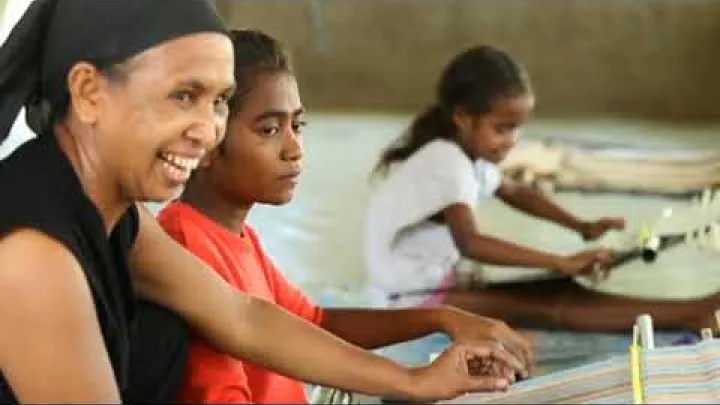
Timor-Leste traditional clothing is best understood through tais, the country’s distinctive handwoven textile tradition. Tais can be made into clothing, worn as an accessory, exchanged between families, or displayed during important occasions. Rather than representing one fixed national costume, it connects many local practices shaped by community, language, place, and ceremony. This guide explains the main forms of tais dress, its cultural roles, regional diversity, and how visitors can approach it with respect.
What Is Timor-Leste Traditional Clothing?
For many readers, the most useful starting point is the textile rather than a single outfit. Traditional dress in Timor-Leste includes wrapped and tailored forms made from tais, but a cloth may also have a role beyond what someone wears.
Tais as the Central Handwoven Textile
Tais is the handwoven traditional textile of Timor-Leste. It is used for decoration and for traditional clothing with distinct forms for men and women, as described by UNESCO. A tais may be a garment, a shoulder cloth, a ceremonial gift, a household textile, or an object kept because of its family and cultural importance.
This is why the terms traditional clothing, traditional dress, traditional clothes, and national costume overlap but are not exact synonyms. “National costume” can help a visitor find the subject, especially when looking at formal photographs. In lived practice, however, the woven cloth is often more central than one standard cut or silhouette. Its making and use can express community knowledge, relationships between families, and continuity across generations.
Why Timor-Leste Does Not Have One Universal National Costume
It is misleading to imagine that every person in Timor-Leste wears the same traditional outfit. Tais patterns, colors, weaving methods, garment arrangements, and ceremonial uses can differ by region, language community, family tradition, and event. A cloth worn at an official celebration may communicate national identity, while another cloth may carry a much more local meaning.
For this reason, a photograph of one ceremonial ensemble should not be treated as a complete picture of Timor-Leste ethnic clothing. The country’s traditional dress is better described as a connected group of textile traditions. When a specific style is identified, the most useful question is not only “What is this costume?” but also “Which community, place, or occasion does it belong to?”
Main Traditional Garments and How They Are Worn
Tais can take several forms. The following names help explain what appears in photographs and ceremonies, but local construction and styling should not be assumed to be identical throughout the country.
Tais Mane: The Men's Cloth
Tais mane, meaning men’s cloth, is a traditional male form of tais. It is commonly described as a woven cloth, often assembled from panels, wrapped around the waist. Its appearance is not simply equivalent to a generic sarong: the textile’s woven structure, patterning, and ceremonial context are part of what gives it meaning.
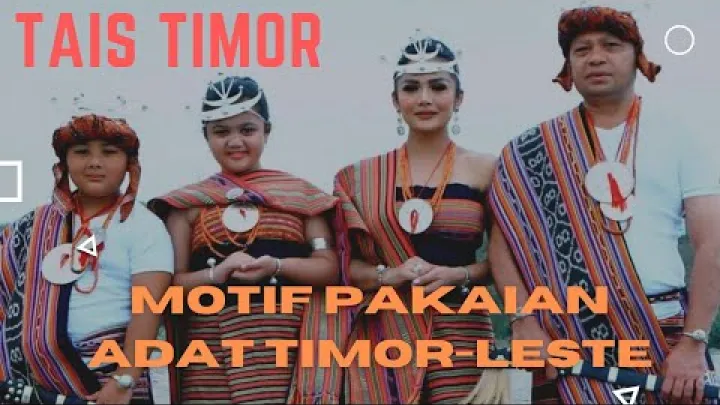
At formal occasions, a man may pair tais mane with a shirt, jacket, or other dress elements. The combination depends on local custom and the event. It may be seen at weddings, festivals, public cultural programs, and ceremonies, rather than functioning as the everyday clothing of all Timorese men. The way a cloth is folded, secured, and combined with other garments can vary locally.
Tais Feto: The Women's Cloth
Tais feto, or women’s cloth, is a women’s form often made or arranged as a tube-like textile. It may be worn as a skirt or as a dress, depending on the community and setting. This is the form many searches for female national costume or women’s traditional clothes are trying to identify.
There is no single way that every woman positions or styles tais feto. Choices can reflect regional practice, the ceremony, personal preference, age, and family custom. In a formal setting, it may be combined with a blouse, a separate shoulder cloth, or jewelry. The important point is that its shape belongs to the wider tais tradition: the woven fabric is not merely decorative material but a carrier of knowledge and relationships.
Selendang and Other Tais-Based Forms
A selendang is a narrower cloth that can be worn around the shoulders, neck, or torso. It can complete a formal outfit, offer a visible connection to tais in public settings, or serve as a ceremonial element. Compared with a full wrapped ensemble, a selendang is often easier to combine with modern clothing.
| Form | Typical wearer or use | General form |
|---|---|---|
| Tais mane | Men | Waist-wrapped cloth |
| Tais feto | Women | Tube-like skirt or dress cloth |
| Selendang | Various wearers | Narrow shoulder or body cloth |
Contemporary makers also adapt tais into scarves, bags, tailored garments, and other products. These can be meaningful ways to support textile work and to wear woven fabric in daily life. At the same time, a modern item using tais or a tais-inspired pattern is not automatically the same as a traditional wrapped garment or a cloth reserved for a particular ceremonial purpose.
When and Why Tais Clothing Is Worn
Tais appears at important moments in social life. Its role can change from one event and community to another: a cloth may be worn, presented as a gift, used in preparation, or displayed as part of a ceremonial setting.
Weddings and Tais Kaben
Wedding textiles show especially clearly why tais is more than clothing. In documented traditional wedding practice, women may wear three tais, and aunts and sisters from the bride and groom’s families dress the bride for the marriage ceremony. The Australian War Memorial describes this dressing as part of a wider connection among textile, culture, family exchange, and memory.

The term tais kaben refers to wedding-related tais. Names such as Nunukala and Naeleki appear in documented wedding traditions, but they should be understood as examples connected to particular communities and practices, not as a nationwide rule for every Timorese wedding. In these settings, relatives may take an active role in dressing the bride, and the cloth can represent kinship, obligation, and family unity as well as formal attire.
A wedding tais can therefore be both something worn on the body and a valued ceremonial object. Its significance may lie in who made it, who gives it, its connection to a family, and the occasion in which it is exchanged. Details such as the number of cloths, their names, and the dressing sequence should be interpreted in their local context.
Birth, Funerals, Religious Ceremonies, and Festivals
Tais may accompany major life events, including births, marriages, funerals, religious observances, festivals, welcomes, and community gatherings. The same textile tradition can serve different roles: a full garment in one event, a wrap or gift in another, and a decorative or symbolic object in another.
In documented practices, tais has a broad ceremonial importance rather than one fixed dress code. It can be present in community rituals and formal occasions, and its use may overlap with Catholic, civic, or family settings where local practice supports that role. Visitors should avoid assuming that a particular color, arrangement, or garment is required for every funeral, church event, or festival. Those details belong to communities and occasions, not to a universal rulebook.
Tais in Exchange, Dowry, and Community Relationships
Tais can be exchanged between families and communities as a valued item, including in marriage-related relationships sometimes described in English as dowry or bridewealth contexts. These translations can be incomplete because the cloth is not only a payment or an accessory. It can communicate hospitality, respect, enduring obligations, and a relationship between households.
A cloth’s value may depend on its craftsmanship, history, pattern, community association, and ceremonial role. It may be newly woven for an event or retained as a meaningful family object. This wider role explains why “costume” is a limited description: it captures the visible garment but not the social life of the textile.
Regional and Ethnic Variation in Timor-Leste Dress
Regional diversity is essential to any accurate account of Timor-Leste traditional clothing. Local identity can shape how weaving knowledge is maintained and how a cloth is recognized, named, worn, or exchanged.
Lautém and Fataluku Textile Traditions
Lautém, in the eastern part of Timor-Leste, offers a useful example of why location matters. The municipality includes Lospalos and areas associated with Fataluku communities. Fataluku is one of the country’s distinct language and cultural communities, with its context outlined by the LDD Journal.
It is appropriate to connect local weaving activity and community knowledge in Lautém with the preservation of patterns, techniques, and ceremonial meanings. It is not appropriate to claim that all Fataluku people wear identical clothing or that every textile from the area has one fixed motif meaning. Regional identity and language provide important context, but a specific garment form or design should be identified through local knowledge, the weaver, or reliable documentation.
How Communities and Municipalities Differ
Tais traditions occur across Timor-Leste, yet colors, motifs, weaving techniques, garment arrangements, and ceremonial roles may differ. Baucau, Viqueque, Oecusse-Ambeno, and central mountain areas are examples of places where local interpretation matters. Atauro Island also has its own community context and should not be folded automatically into a mainland style.
The country’s cultural and linguistic diversity makes a single nationwide clothing map unreliable. Timor-Leste includes many indigenous communities, and accounts of the country’s diversity include groups such as Bunak, Fataluku, and Makasae, as noted by Minority Rights Group. A responsible description of a particular tais should name its municipality or community whenever that information is known. For deeper interpretation, local museums, cultural organizations, and weavers are better guides than generalized motif lists.
Materials, Weaving, Colors, and Motifs
The appearance of tais comes from a combination of material, skill, pattern, and use. These features are important, but they should be read carefully rather than turned into a simple visual code.
Cotton, Natural Dyes, and Handweaving
Traditional tais is associated with handweaving, cotton, loom-based work, and knowledge passed between generations. Women are widely recognized as central keepers of weaving knowledge, although textile production can also involve others who help obtain materials, prepare equipment, or support the work around the loom.
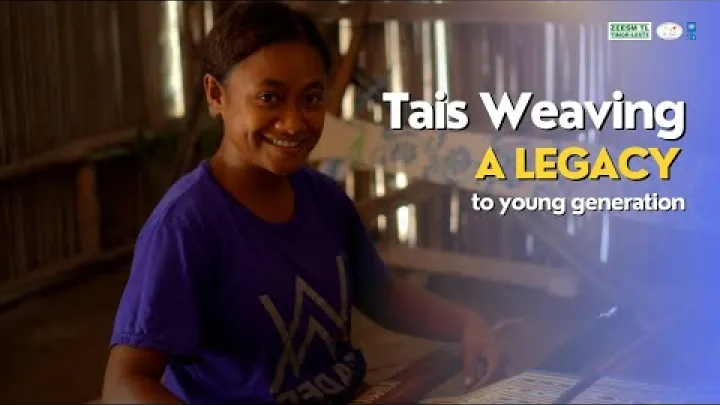
Traditional production may use cotton and natural dyes, but not every cloth uses hand-spun cotton or natural colorants. Contemporary weavers and makers may use commercial yarns, dyes, or mixed production methods. These changes can affect texture, cost, durability, and appearance, but they do not by themselves decide whether a cloth has cultural value. A better understanding comes from knowing who made it, how it was made, and what role it has in its community.
What Colors and Motifs Can Mean
Colors and motifs can communicate community identity, status, ancestry, historical memory, ritual meaning, or personal and family connections. Their meanings are not universal across Timor-Leste. A design that carries a clear association in one place may be read differently elsewhere, and some meaning may be known only to the people who made, inherited, or use the cloth.
It is tempting to assign a fixed meaning to red, black, yellow, white, geometric bands, or figurative motifs. That approach is too simple. National colors or resistance-related imagery may have particular meanings in a documented political or public context, but they should not be used to decode every tais. Visual similarity alone does not give an outside viewer enough information to interpret a textile reliably.
Traditional Clothing in Modern Timor-Leste
Tais is a living tradition, not only historical clothing. It remains visible in ceremonial and public life while adapting to contemporary work, urban living, fashion, and economic realities.
Everyday Clothing and Hybrid Styles
Ready-made and imported clothing are common in modern daily life, including in Dili. Tais nevertheless remains important in many family, rural, ceremonial, and community contexts. Rather than replacing one wardrobe with another, people may combine a tais cloth or selendang with shirts, blouses, jackets, and other contemporary garments.
These hybrid styles can make a textile visible in settings where a complete ceremonial ensemble would not be practical. They also show that cultural continuity does not require clothing to remain unchanged. The frequency and form of wearing vary by person, generation, work setting, and location, so broad claims about what “everyone” wears should be avoided.
Official Events, Festivals, and Cultural Expression
Tais can appear at national celebrations, cultural performances, official ceremonies, and international presentations of Timor-Leste. In these settings, it can express cultural pride, historical memory, community identity, and national visibility. The Government of Timor-Leste describes tais as a symbol of intangible cultural expression with an important role in community rituals and in the country’s social and economic life.
Public display helps keep textile knowledge visible, but an official event outfit should not be treated as the complete dress tradition of every community. Performance clothing and formal national presentation can draw on local textiles while serving a contemporary public purpose. The original ceremonial meaning of a particular cloth may remain more specific than its role on a stage or at a state occasion.
Safeguarding Weaving and Supporting Weavers
UNESCO’s recognition of tais as intangible cultural heritage highlights both its cultural importance and the need to safeguard the knowledge involved in its making and use. Weaving depends on skilled labor, access to suitable materials, opportunities for younger generations to learn, and incomes that make the work sustainable.
Support can include public awareness, respectful product development, and direct recognition of weaving communities. It should not romanticize difficult or poorly paid craft labor. Buying with care, crediting makers when their work is shared, and learning the origin of a cloth can support a future in which weaving knowledge remains connected to the people who hold it.
How Visitors Can Approach Timor-Leste Traditional Clothing Respectfully
Visitors do not need to become experts before appreciating tais. A respectful approach begins with curiosity, clear questions, and recognition that a woven object may have a purpose beyond decoration.
Buying Tais at Markets and From Weavers
Dili and the Tais Market are useful starting points for visitors looking for woven cloth or tais-based products. Market items can include locally handwoven textiles, contemporary fashion pieces, and industrial goods that imitate tais patterns. Price, rough texture, or muted color alone cannot prove that an item is traditionally handwoven or suitable for ceremony.

Before buying, ask the seller where the cloth was made, who wove it, which materials were used, how it was woven, and whether it is intended for ceremonial use, everyday wear, or visitors. These questions make provenance and intended use more important than appearance alone. When available, transparent artisan groups, cooperatives, and fair-trade channels can offer a clearer connection between a purchase and the people who made it.
Wearing Tais as a Visitor
Wearing a selendang or a contemporary tais accessory can be different from wearing a full ceremonial ensemble. At weddings, religious events, festivals, and village ceremonies, ask a local host or cultural organization before wearing a complete cloth arrangement or a garment associated with a particular region. They can explain what is welcome in that setting.
Do not treat wedding, funerary, sacred, or community-specific cloths as generic party costumes or photo props. A respectful alternative is to learn the cloth’s name and place of origin, buy directly from artisans where possible, and ask permission before photographing people or ceremonies. Interest is welcome, but local people and communities determine what appropriate use looks like.
Conclusion: A Living Textile Tradition, Not a Single Costume
Timor-Leste traditional clothing is rooted in the living art of tais. From tais mane and tais feto to wedding exchanges, regional weaving knowledge, and modern public expression, the textile has roles that go far beyond a single national costume. Looking for the community, maker, and occasion behind a cloth offers a more accurate and respectful way to understand this important Timorese tradition.
Select area
Create a post
Posting is free and no registration is required.